矿工抛售,比特币横盘不涨,降息降至,现在该如何布局?

ambcryptoPublished on 2025-09-15Last updated on 2025-09-15

Abstract

尽管有两波大规模抛售和 CDD 飙升,BTC 仍继续上涨。

比特币 [BTC] 始终牵动着交易者的神经,7 月的市场表现同样不例外。

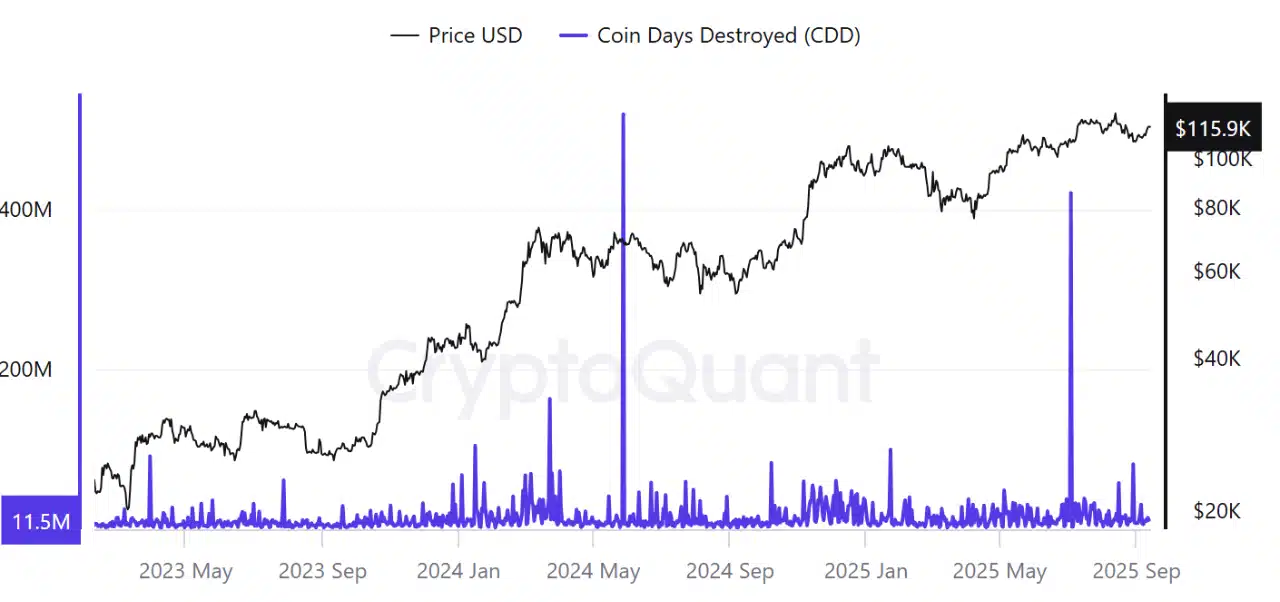
本月,比特币销毁币日数(CCD)意外飙升,背后是价值超 4.21 亿美元的长期休眠比特币重新进入流通。通常而言,此类大规模旧币移动易引发市场对长期持有者(LTH)在高位离场的担忧,但数据却揭示了不同逻辑 —— 这并非恐慌性出逃,而是获利了结行为。

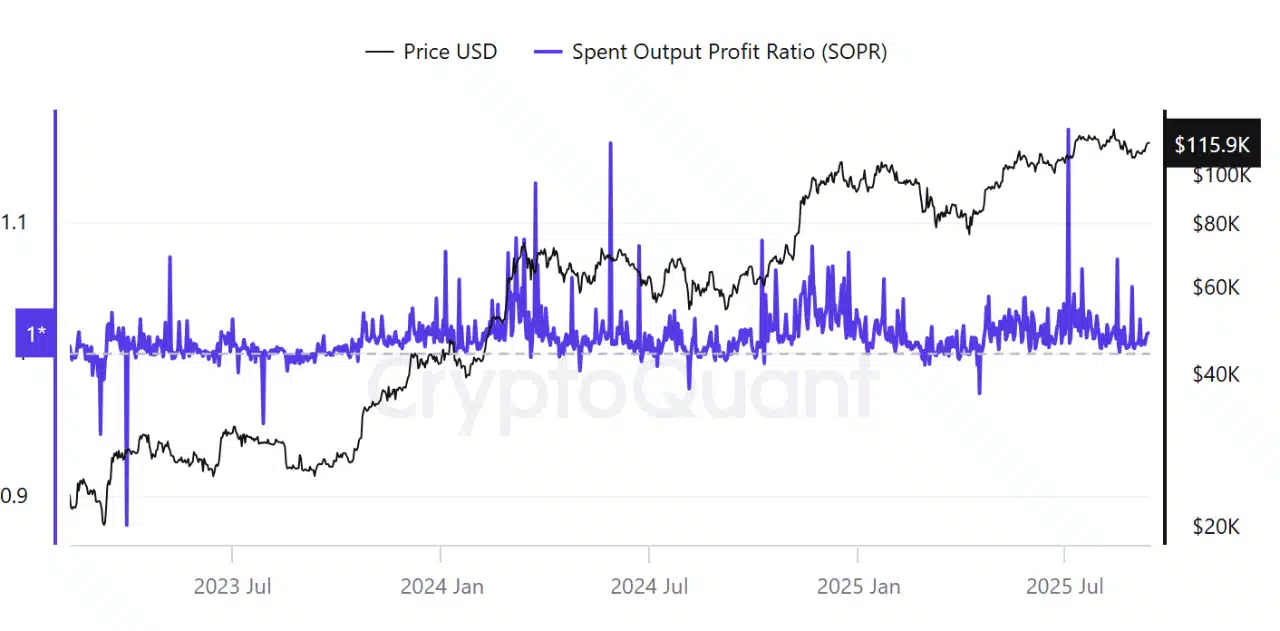
这一判断也得到了 SOPR(已实现盈利出售比率)数据的支撑:SOPR 指标跃升至 1.17,表明卖家成功锁定了健康收益,对比 2023 年 3 月 0.88、2025 年 4 月 0.97 的低位,当前市场获利情绪显著;即便如此,比特币的看涨市场结构仍未动摇。

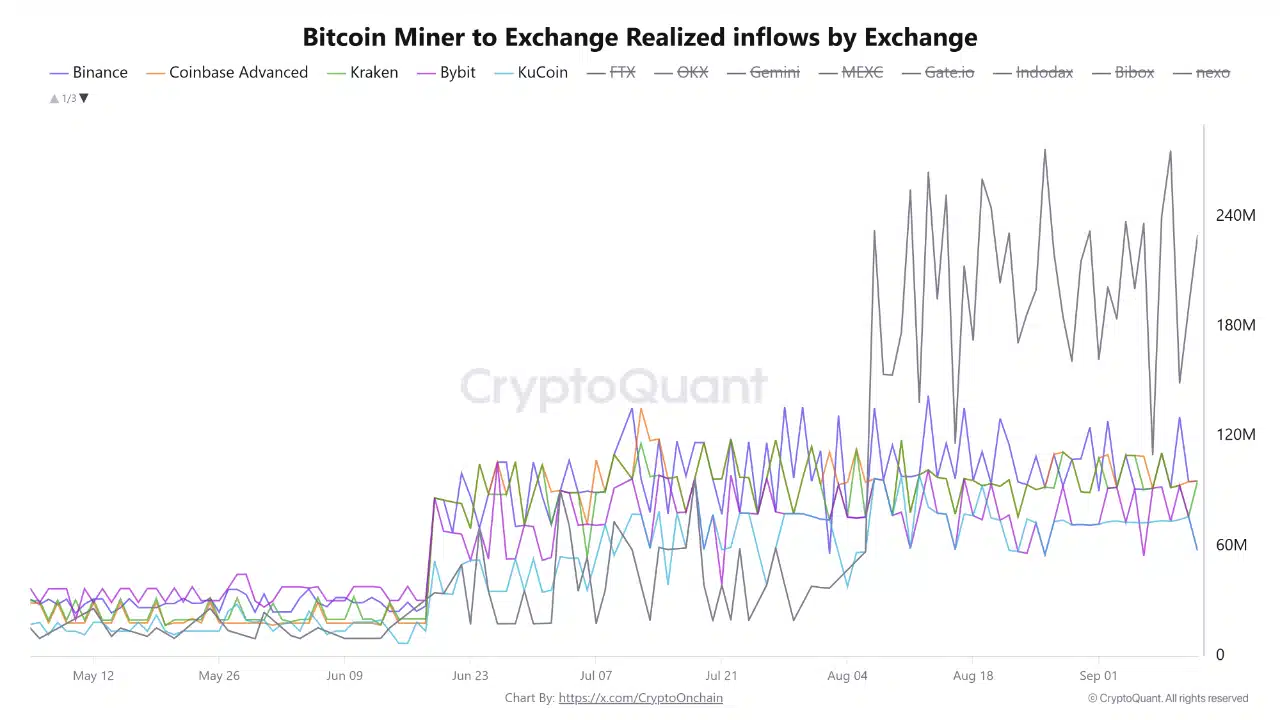
从矿工动向来看,2025 年 6 月至 8 月间,矿工曾出现两次大规模代币转移:6 月 19 日,ViaBTC 将大量比特币转入 Binance 与 Coinbase Advanced;8 月 7 日,F2Pool 亦推动代币流向多家小型交易所。这两次转移一度推动矿工流入量创下历史新高,引发市场对短期波动与集中抛售的担忧。

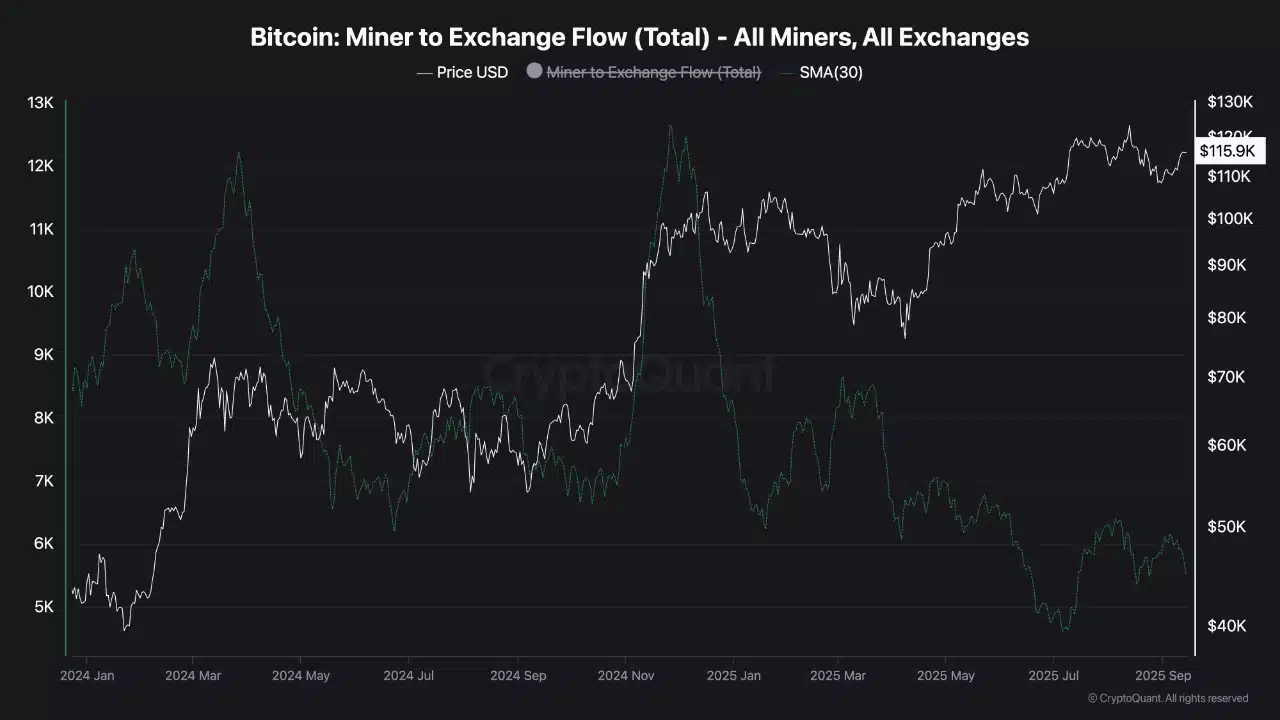
不过,后续市场基调已明显转变:矿工向交易所转账的 30 天移动平均线已降至短期低点,意味着矿工抛售力度减弱,甚至显现出一定的积累迹象。而比特币价格始终维持在 11.6 万美元上方,矿工的克制态度进一步为近期反弹注入信心。

当前,11.7 万美元成为比特币的关键关注点位。从 CVDD 通道与斐波那契调整后的市场平均价格来看,价格触及该水平时,市场往往会出现犹豫或触顶反应,使得这一区域既备受瞩目,又充满不确定性。对交易者而言,更稳妥的策略是等待明确信号 —— 例如比特币突破 11.8 万美元后,再对后续上涨空间做出判断。

历史经验显示,这类关键点位的信号通常具有较高参考价值。截至发稿,比特币再次逼近 11.7 万美元这一 “成败门槛”,所有交易者正密切关注其后续走势。

Trending Cryptos

Related Reads

Automotive Chips Initiate a New Round of Game

After two years of deep inventory correction, the global automotive semiconductor industry is signaling a turning point in the second half of 2026, entering a structural upcycle. Unlike the broad-based shortages of 2022, this recovery is characterized by significant divergence across different chip segments, driven by 800V high-voltage platforms, high-level autonomous driving, and ongoing localization of supply chains in China. The industry-wide destocking cycle has concluded, with inventory levels at automakers and Tier 1 suppliers returning to healthy ranges. Key indicators, including rising OEM orders, lengthening component lead times, improving vendor revenues, and the initiation of price hikes by major suppliers like Infineon and Texas Instruments, confirm the start of a replenishment cycle. Segments are diverging into three tiers based on demand and supply dynamics. The first and strongest tier includes Silicon Carbide (SiC), high-voltage IGBTs, and automotive power management chips, fueled by the rapid adoption of 800V platforms. The second tier, experiencing a moderate recovery, comprises high-end 32-bit MCUs and automotive NOR Flash/DRAM, benefiting from advanced compute domains and AI-driven capacity constraints on mature nodes. The third tier, consisting of low-voltage MOSFETs and basic body electronics, remains stable with ample supply. The core growth logic has shifted from pure vehicle sales volume to increasing semiconductor content per vehicle. This is propelled by the transition to domain/centralized E/E architectures, software-defined vehicles, and new applications like commercial vehicle electrification and V2X communications. While the domestic Chinese supply chain is seizing this window for localization, risks remain, including potential softness in end-demand, future SiC oversupply, and possible easing of 8-inch wafer capacity constraints. In the near term, key segments are expected to see simultaneous volume and price increases, with the industry's cyclicality gradually giving way to more prominent long-term growth characteristics.

marsbit6m ago

Automotive Chips Initiate a New Round of Game

marsbit6m ago

Domestic RF Filters, Finally Starting to Compete?

China's domestic filter industry, particularly in the challenging BAW (Bulk Acoustic Wave) segment, has reached a significant inflection point, moving from solving the "availability" problem to entering a phase of commercial competition and scale. The market is attractive, with the global mobile terminal RF filter market projected to reach $9.2 billion in 2025, and BAW filters showing strong growth. However, the sector is historically dominated by giants like Broadcom and Qorvo, protected by deep patent walls, as evidenced by lawsuits that have bankrupted competitors like Akoustis. Previously, high-frequency BAW filter production in China was nearly zero. Now, domestic players like Nous Micro, Wuhan Memsensing, Hansky, and others are forming a genuine industrial cluster, achieving mass production and shipping hundreds of millions of chips to clients. Different business models are emerging, including IDM and fab-lite approaches through partnerships with foundries like Sai Microelectronics and Runxin Sensing. A key signal of this new competitive phase is a patent lawsuit filed by Nous Micro against Wuhan Memsensing in June 2025, alleging infringement of a core BAW resonator patent. This conflict, rather than mere internal friction, underscores that the industry now has substantial products and market stakes to contest. The challenge is no longer just technical breakthrough but transforming technological leads into sustainable commercial success through superior patents, product performance, cost control, and customer acquisition. Chinese companies are finally positioned to compete for a share of this lucrative market long held by foreign leaders.

marsbit31m ago

Domestic RF Filters, Finally Starting to Compete?

marsbit31m ago

Zhang Lei: How He Became the Biggest Money-Maker This Year

Zhang Lei's company Pinzhun Laser (频准激光) became the biggest "meat sign" (highly profitable new share) of the year on its A-share market debut. Its stock price skyrocketed nearly 600% from its IPO price, generating potential single-lot profits of over 550,000 RMB for lucky subscribers. Founded by Zhang Lei, a 2014 Ph.D. graduate from the Shanghai Institute of Optics and Fine Mechanics, Pinzhun Laser specializes in ultra-stable, narrow-linewidth lasers critical for quantum computing. Its lasers are used by leading global research teams at Harvard, Caltech, and France's PASQAL. The company later successfully applied its core frequency conversion technology to the semiconductor sector, developing deep-ultraviolet lasers for advanced chip manufacturing and inspection. This move diversified its revenue, with semiconductor sales growing rapidly to account for over 25% of its business by 2025. The company boasts gross margins consistently above 69%. Remarkably, Pinzhun Laser required only two major external funding rounds before its IPO, a testament to its early profitability. Key strategic investors in its IPO included major downstream players like BOE,佰维存储 (BIWIN), and中微半导体 (AMEC), signaling strong industry validation. The article highlights the crucial early-stage support from Hangzhou-based capital, particularly funds associated with the Hangzhou Institute of Optics and Fine Mechanics. This "patient capital" model, part of Hangzhou's broader 300-billion-yuan industrial fund strategy, focuses on partnering with scientist-entrepreneurs through the risky valley of death from lab to market. The success of Pinzhun Laser and another Hangzhou-backed firm,宇树科技 (Unitree Robotics), showcases how this supportive ecosystem helps build leading hard-tech companies.

marsbit36m ago

Zhang Lei: How He Became the Biggest Money-Maker This Year

marsbit36m ago

3-Month Loss of $10 Billion, DAT Companies Begin to Return to Rationality

During the recent earnings season, major Digital Asset Treasury (DAT) companies reported staggering combined losses of approximately $10 billion for Q2 and over $30 billion for the first half, primarily due to markdowns on their bitcoin holdings. However, contrary to expectations, their stock prices have rebounded from June lows, indicating the market had already priced in these losses. The key shift is a collective return to rationality. Companies like Strategy, Sharplink, and Metaplanet are now prioritizing a new core metric: increasing the amount of crypto assets per share. This marks a departure from last year's aggressive growth-at-all-costs narrative. To achieve this, they are adopting disciplined capital allocation—issuing stock to buy crypto when trading at a premium, and halting dilution or initiating buybacks when at a discount. Some, like Strategy, have even broken "never sell" pledges to uphold this discipline. A major tool enabling this strategy is the STRC model—perpetual preferred shares offering high dividends (e.g., 12-13%) to raise fixed-income capital for purchasing bitcoin. Strive, Bitmine, and Metaplanet have launched their own variants. Sharplink pursues a different path, staking its vast Ethereum holdings to generate native yield. While the premium of DAT stocks over their underlying crypto asset value has declined and may not fully return, the model is evolving rather than ending. Stripped of hype, DAT firms are becoming actively managed, leveraged thematic funds. Their survival through massive losses and continued institutional investment (with major funds adding billions to positions during downturns) suggests the industry is maturing into a more calculated, long-term business focused on compounding crypto per share.

marsbit41m ago

3-Month Loss of $10 Billion, DAT Companies Begin to Return to Rationality

marsbit41m ago

Trading

Spot

Hot Articles

What is $BITCOIN

DIGITAL GOLD ($BITCOIN): A Comprehensive Analysis Introduction to DIGITAL GOLD ($BITCOIN) DIGITAL GOLD ($BITCOIN) is a blockchain-based project operating on the Solana network, which aims to combine the characteristics of traditional precious metals with the innovation of decentralized technologies. While it shares a name with Bitcoin, often referred to as “digital gold” due to its perception as a store of value, DIGITAL GOLD is a separate token designed to create a unique ecosystem within the Web3 landscape. Its goal is to position itself as a viable alternative digital asset, although specifics regarding its applications and functionalities are still developing. What is DIGITAL GOLD ($BITCOIN)? DIGITAL GOLD ($BITCOIN) is a cryptocurrency token explicitly designed for use on the Solana blockchain. In contrast to Bitcoin, which provides a widely recognized value storage role, this token appears to focus on broader applications and characteristics. Notable aspects include: Blockchain Infrastructure: The token is built on the Solana blockchain, known for its capacity to handle high-speed and low-cost transactions. Supply Dynamics: DIGITAL GOLD has a maximum supply capped at 100 quadrillion tokens (100P $BITCOIN), although details regarding its circulating supply are currently undisclosed. Utility: While precise functionalities are not explicitly outlined, there are indications that the token could be utilized for various applications, potentially involving decentralized applications (dApps) or asset tokenization strategies. Who is the Creator of DIGITAL GOLD ($BITCOIN)? At present, the identity of the creators and development team behind DIGITAL GOLD ($BITCOIN) remains unknown. This situation is typical among many innovative projects within the blockchain space, particularly those aligning with decentralized finance and meme coin phenomena. While such anonymity may foster a community-driven culture, it intensifies concerns about governance and accountability. Who are the Investors of DIGITAL GOLD ($BITCOIN)? The available information indicates that DIGITAL GOLD ($BITCOIN) does not have any known institutional backers or prominent venture capital investments. The project seems to operate on a peer-to-peer model focused on community support and adoption rather than traditional funding routes. Its activity and liquidity are primarily situated on decentralized exchanges (DEXs), such as PumpSwap, rather than established centralized trading platforms, further highlighting its grassroots approach. How DIGITAL GOLD ($BITCOIN) Works The operational mechanics of DIGITAL GOLD ($BITCOIN) can be elaborated on based on its blockchain design and network attributes: Consensus Mechanism: By leveraging Solana’s unique proof-of-history (PoH) combined with a proof-of-stake (PoS) model, the project ensures efficient transaction validation contributing to the network's high performance. Tokenomics: While specific deflationary mechanisms have not been extensively detailed, the vast maximum token supply implies that it may cater to microtransactions or niche use cases that are still to be defined. Interoperability: There exists the potential for integration with Solana’s broader ecosystem, including various decentralized finance (DeFi) platforms. However, the details regarding specific integrations remain unspecified. Timeline of Key Events Here is a timeline that highlights significant milestones concerning DIGITAL GOLD ($BITCOIN): 2023: The initial deployment of the token occurs on the Solana blockchain, marked by its contract address. 2024: DIGITAL GOLD gains visibility as it becomes available for trading on decentralized exchanges like PumpSwap, allowing users to trade it against SOL. 2025: The project witnesses sporadic trading activity and potential interest in community-led engagements, although no noteworthy partnerships or technical advancements have been documented as of yet. Critical Analysis Strengths Scalability: The underlying Solana infrastructure supports high transaction volumes, which could enhance the utility of $BITCOIN in various transaction scenarios. Accessibility: The potential low trading price per token could attract retail investors, facilitating wider participation due to fractional ownership opportunities. Risks Lack of Transparency: The absence of publicly known backers, developers, or an audit process may yield skepticism regarding the project's sustainability and trustworthiness. Market Volatility: The trading activity is heavily reliant on speculative behavior, which can result in significant price volatility and uncertainty for investors. Conclusion DIGITAL GOLD ($BITCOIN) emerges as an intriguing yet ambiguous project within the rapidly evolving Solana ecosystem. While it attempts to leverage the “digital gold” narrative, its departure from Bitcoin's established role as a store of value underscores the need for a clearer differentiation of its intended utility and governance structure. Future acceptance and adoption will likely depend on addressing the current opacity and defining its operational and economic strategies more explicitly. Note: This report encompasses synthesised information available as of October 2023, and developments may have transpired beyond the research period.

1.9k Total ViewsPublished 2025.05.13Updated 2025.05.13
What is $BITCOIN

Discussions

Welcome to the HTX Community. Here, you can stay informed about the latest platform developments and gain access to professional market insights. Users' opinions on the price of BTC (BTC) are presented below.

活动图片