7 天狂揽 3 亿美元,TechnoRevenant 是内幕还是新晋链上皇?

深潮Published on 2025-09-02Last updated on 2025-09-03

这个用仿生人形象爱好 Techno 音乐的神秘人在短短的一周内却从链上市场收获了近 3 亿美元。

撰文:BUBBLE,BlockBeats

近期链上引发最多人讨论的两个话题,一个是头部 Perp DEX Hyperliquid 的 XPL「套利事件」,另一个便是特朗普家族主导的 WLFI 的项目上线。而 TechnoRevenant(科技亡灵)这个名字却在这两个话题中多次出现。网络上找不到他的照片、不知道他的真名、不清楚的他的背景,但这个用仿生人形象爱好 Techno 音乐的神秘人在短短的一周内却从链上市场收获了近 3 亿美元。

20 分钟内在 Hyperliquid 用户失去上亿美元的时候赚取 3800 万美元,又在年初就投入 1500 万美元布局成为 WLFI「大户」的 TechnoRevenant 究竟是谁?他是怎么做到的?

WLFI 大户的「胖手指」

9 月 1 日晚,因许多打了预售的地址争先 Claim WLFI 代币以求在开盘时的高点卖出,导致以太坊 Gas 费久违的超过 100Gwei 时,躺了 10 亿 枚 WLFI 代币的地址 moonmanifest.eth 却不慌不忙的认领了自己的代币。后经社区查证才得知,这便是上周因在 Hyperliquid 上获利 3800 万美元而知名的 TechnoRevenant。

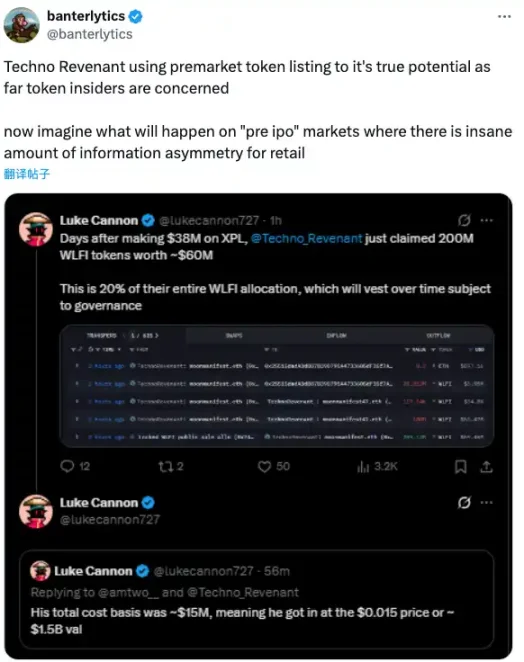
TechnoRevenant 早在 2025 年 1 月就开始布局 World Liberty Financial 项目,彼时特朗普还未正式上任美国总统,而官网的「Gold Paper」也写着 WLFI 无法转移。但 TechnoRevenant 还是通过 moonmanifest.eth 这个钱包投入了 1300 万 USDC 和 201 万 USDT,总计约 1500 万美元参与 WLFI 首轮公募购买了约总供应量 1.5% 的份额。

2025 年 9 月 1 日,WLFI 正式开始交易后 TechnoRevenant 领取了 2 亿枚 WLFI 作为 20% 的解锁份额,价值约 4900 万美元,而剩余的 8 亿枚仍处于锁定状态。按照当前 0.245 美元的价格计算,其 10 亿枚 WLFI 的总价值达到 2.45 亿美元,实现了 8-16 倍的账面收益。

而除了是特朗普家族项目 WLFI(worldlibertyfi)的大户,他作为「合约新手」在 Hyperliuquid 上「意外」通过做多 XPL 而获取的丰厚回报才真正让市场惊讶。

2025 年 8 月 27 日的清晨发生的事,对在 Hyperliquid 上对 Plasma 项目代币 XPL 进行套保或做空的人来说是惨烈的教训。

8 月 27 日早 5:36 分开始到接下来的 2 个多小时内,Hyperliquid 上约 1.59 亿美元持仓被清算,波及 1000 多名交易者。有人发现几个地址在大量的买入代币以「操控」Hyperliquid 上流动性本就不高的 XPL 盘前市场,但事后这个第五次进行合约操作的「新手」TechnoRevenant 却跳出来承认这是自己的「胖手指」意外所造成的。

TechnoRevenant 称因看好 XPL 却没有参加预售,因此在 Hyperliquid 上线其盘前市场永续合约交易遍开始建立敞口,在此之前,他用三个钱包以每次 4.4 万美元的尺度购入,两天的时间累积持有了 5,440 万枚 XPL,按当时的市值计算价值在 3100 万至 3300 万美元之间。

但在 05:36:05 至 05:36:20 的短短 15 秒内,他称因「睡眼惺忪」,不小心把购入的金额中多打了一个「4」并重复了 10 遍,这也让他单次购买量,从 4.4 万美元切换至 44.4 万美元,投入约 444 万美元猛买了 7,288,505 枚 XPL,这一金额占当时总做多量的 77.37%。这一举动也在一分钟内将 XPL 价格从 0.587 美元推升至 0.65 美元,涨幅高达 10.8%。

等他意识到问题时,市场开始小幅回落。他甚至紧张的借了 300 万美元以防不测,他尝试关闭做多头存,但没意识到自己的持仓量之多让他的做多仓位是安全的,hyperliquid 在此期间启动了自动减仓的机制,在接下来的 15 分钟内他依旧以单次 4.5 万美元的体量持续买入,而后开始逐渐关闭自己的多单。
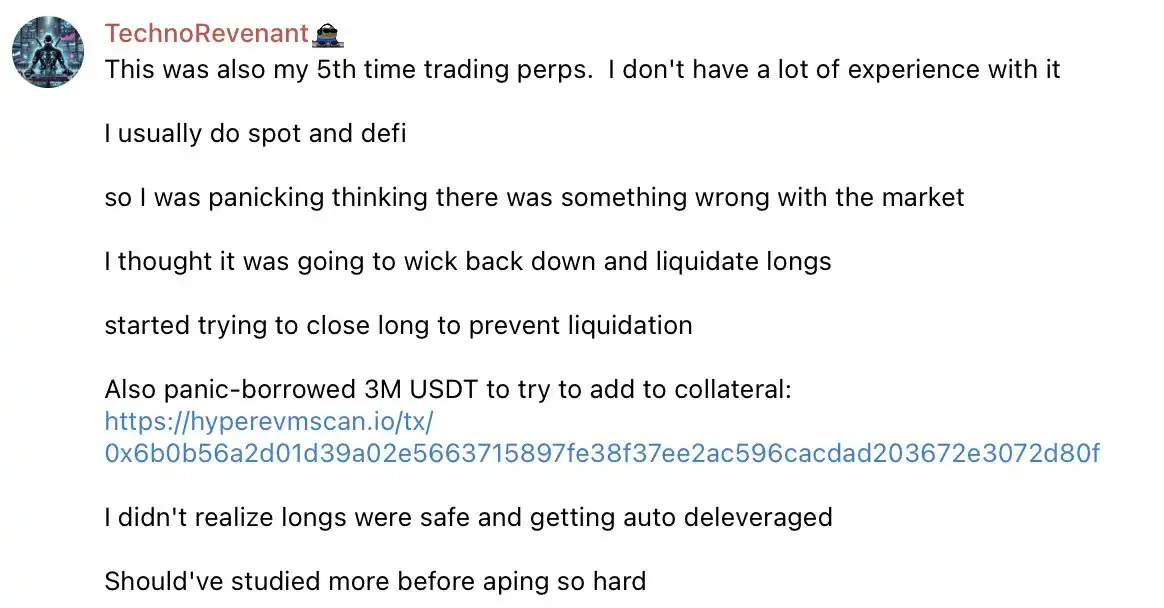
最后在这个交易里他赚取了 3800 万美元,而直到现在他依然持有超过 3000 万美元的 XPL 多单头寸,占 hyperliquid 上未平仓合约总额的 87%,且账户上还躺着 2600 万美元的子弹持续购入。这也让 Hyperliuquid 上的 XPL 价格相比其他交易平台一直维持着 20~30% 的溢价。

激进的机会主义者还是操纵市场的屠杀者

TechnoRevenant 的操作在加密社区引发了激烈讨论。支持者将其奉为「神级市场解读者」,认为其连续获胜令人称赞。社区甚至将「胖手指」事件 meme 化,称之为「史上最佳打字错误」。尽管让许多交易者蒙受了巨大的亏损,而社区讨论其利用大额资金操控市场。

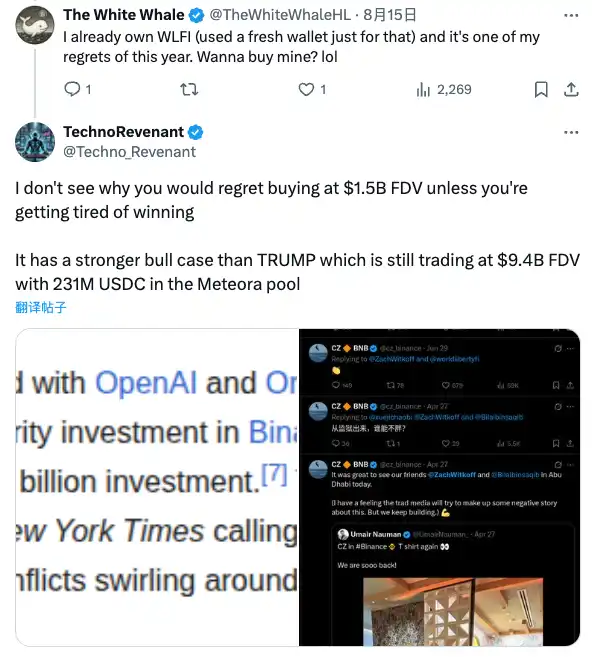
但包括 Zhu Su 在内的一些意见领袖表示,认为其并非利用合约漏洞而是正常的交易行为。加之因其与近期出现的其他 DEGEN 的合约交易者的不同,他的交易更加充满理性而不是一昧的偏激,也让许多交易者当时选择跟着他进行做多 WLFI 操作(现如今 FDV 已经跃升至 24.6B 美元)。
根据链上数据显示,moonmanifest.eth 与 Jump Trading 有 8 次 USDC 转账往来,总计 2700 万美元,与 Wintermute 和 Amber 等顶级做市商频繁互动,加上在 WLFI 超早期且不确认代币是否能够「解锁转移」时便重仓 1500 万美元。这些迹象暗示 TechnoRevenant 可能并非普通散户,而是拥有机构背景的专业交易员。

这也进一步引发了社区对近期火热的链上股权(Pre IPO)模式的担忧。KOL banterlytics 在 X 上表示,「看到了 TechnoRevenant 在代币的 Premarket 上已经产生了如此大的影响,想象如果发生在拥有更多内幕的 Pre IPO 上会如何」
TechnoRevenant 在链上疯狂「Print Money」的行为仍在继续,这位神秘交易员再一次展现了鲸鱼如何轻易的操控流动性薄弱的市场。随着万物上链的时代的到来,链上造成的影响可能将不限于链上,它影响的可能会是一个地区的房价、它影响的可能是一家新创公司的估值。在迎来「新时代」之前区块链的流动性和机制本身能否承载它们将是我们绕不开的课题。
Related Reads

BTC Sees Largest Single-Day Short Liquidation in History: Overnight $1.1 Billion Short Positions Evaporate, But Calling a Bull Return is Premature

Bitcoin experienced its largest single-day short liquidation in history, with approximately $1.191 billion in short positions being forcibly closed within 24 hours as the price surged nearly 7% to approach $70,000. This event, occurring on the evening of August 19, resulted in total liquidations of about $1.345 billion across the network. The massive short squeeze was attributed to a combination of catalysts: a White House meeting between former President Trump and crypto industry executives fueling regulatory optimism, and a more substantial signal from the U.S. Treasury doubling its liquidity support for long-term bond repurchases, hinting at looser macro liquidity for risk assets. Data showed strong institutional buying, with U.S. spot Bitcoin ETFs seeing significant inflows. The liquidation process itself created a feedback loop, accelerating the price rise as forced buy-backs pushed prices higher. This event surpassed the previous record for BTC perpetual short liquidations set during the volatile "5.19" period in 2021. While such extreme short liquidations have historically signaled a potential medium-term bottom formation, analysts caution that the market often undergoes weeks of consolidation and "cooling off" afterward. Current sentiment remains mixed, with the Fear & Greed Index still in "Fear" territory, and the key test for the rally being whether it can sustain momentum to challenge higher resistance levels like $75,000. The article concludes by warning against immediate "bull market is back" assumptions, emphasizing that history provides context but not guaranteed outcomes.

marsbit17m ago

BTC Sees Largest Single-Day Short Liquidation in History: Overnight $1.1 Billion Short Positions Evaporate, But Calling a Bull Return is Premature

marsbit17m ago

Websea Global RWA Summit Successfully Held: Focusing on New Opportunities in China-Kazakhstan Digital Economy, Releasing Signals of Cross-border Collaboration

Websea Global RWA Summit Successfully Held: Focusing on China-Kazakhstan Digital Economy Opportunities, Releasing Signals for Cross-Border Synergy When traditional industries seek new channels for globalization and digital technologies reshape capital, assets, and collaboration methods, an industrial dialogue connecting China, Kazakhstan, and global markets took place in Almaty. On August 18, 2026, the "2026 Global RWA Real-World Asset Tokenization Enterprise Globalization Resource Matching & China-Kazakhstan Industrial Investment Conference," co-hosted by Websea, concluded successfully in Almaty, Kazakhstan. Centered on RWA digitization, cross-border industrial synergy, and investment promotion, the summit gathered industry representatives, investors, digital economy practitioners, creators, and media from China and Kazakhstan to explore the future of a digital economy community. The event shifted focus from mere "project showcases" to fostering deeper "industrial synergy." It featured project roadshows and panel discussions on topics like "Mining Future·Digital Empowerment," "Real Estate Renewal·Urban Evolution," "Green Energy·RWA Opportunities," and "The Globalization Logic of Real Economy." Mr. Yerbol Kharbayev, Chairman of the Kazakhstan Association of Special Economic Zones, emphasized that RWA's significance lies not only in technology but in enhancing asset transparency, collaboration efficiency, and cross-border connectivity through digitization. The discussions highlighted a move towards a deeper "Digital Economy Community" between China and Kazakhstan. Key points included the need for an open, transparent, and stable business environment to attract long-term investment and the crucial role of synergy between governments, enterprises, platforms, and communities. The summit facilitated strategic cooperation signings and targeted B2G/B2B matching, providing a direct channel for Chinese enterprises exploring the Central Asian market. As an invited digital asset platform, Websea participated in brand presentations and the launch of initiatives like a Creator Alliance and a Web3 MCN agency. Herbert Sim, Global CMO of Websea, stated that platform development is fundamentally rooted in user trust and real experience. He expressed gratitude for user and partner trust, underscoring Websea's commitment to asset security, transaction experience, risk awareness, and user rights protection. Websea aims to contribute to the global digital economy through optimized services and open collaboration. The summit also launched the Web3 Beauty Alliance - Central Asia Chapter, a China-Kazakhstan Quality Creator Alliance, and Web3 MCN agencies, expanding the dialogue beyond industry and capital to include technology, content, community, and brand building. The event concluded by signaling that the future of the digital economy will be co-created by a broad range of participants. It requires institutional and infrastructural support, long-term commitment from enterprises, and the sustained trust of users, partners, and communities. With the summit's conclusion, a new chapter in China-Kazakhstan industrial synergy and digital economy cooperation has begun. Websea will use this as a starting point to continue exploring a secure, open, and sustainable digital future alongside global users and partners.

marsbit26m ago

Websea Global RWA Summit Successfully Held: Focusing on New Opportunities in China-Kazakhstan Digital Economy, Releasing Signals of Cross-border Collaboration

marsbit26m ago

Russia's Banking Bleed and the Crypto Hunt: Citizens Have Withdrawn 24 Billion Euros from Banks This Year; Bill Limiting Total Crypto Purchases Set to Take Effect

**Title: Russia's Banking System Bleeds Cash as Citizens Turn to Crypto, But New Law Imposes Strict Limits** **Summary:** Russia is witnessing a significant outflow of cash from its banking system, with citizens withdrawing approximately €24.4 billion in the first seven months of 2026. This trend accelerated in July, marking the highest monthly increase for the year. Major banks like Gazprombank and Sberbank have reported substantial deposit losses. Simultaneously, cryptocurrency transaction volumes have surged, with an estimated daily trading volume of around $650 million. Officials note that annual crypto transactions exceed 10 trillion rubles, largely occurring outside regulated channels. Citizens are increasingly using crypto as a tool to hedge against currency depreciation and financial uncertainty. In response, President Putin signed the "Digital Currency and Digital Rights Law," with key provisions taking effect on September 1, 2026. This law severely restricts access for ordinary citizens. Non-qualified retail investors will be limited to purchasing only about $3,600 worth of cryptocurrency (initially Bitcoin, Ethereum, and USDT) per year through any single licensed intermediary. Qualified investors and businesses face no such limits for cross-border settlements. Official explanations for the cash exodus cite technical factors like tax changes and digital payment disruptions. However, analysts and media point to deeper public concerns over potential asset freezes, economic instability related to the war, and a lack of trust in the financial system. Notably, September 1 also marks the public launch of the Digital Ruble, Russia's central bank digital currency (CBDC). This creates a dual dynamic: tightening control over decentralized crypto assets while introducing a state-controlled digital currency for payments. For ordinary Russians, traditional banking is losing appeal, crypto access is being capped, and the new Digital Ruble offers a third, fully state-managed pathway.

marsbit50m ago

Russia's Banking Bleed and the Crypto Hunt: Citizens Have Withdrawn 24 Billion Euros from Banks This Year; Bill Limiting Total Crypto Purchases Set to Take Effect

marsbit50m ago

Household & Personal Care Giant Quietly Becomes the Champion in 'Chip Cleaning'

Kao, the renowned Japanese consumer goods giant known for laundry detergent and facial cleansers, has quietly become a leader in the semiconductor precision cleaning agent market, as revealed in its recent financial report. The company's chemical business, which includes semiconductor precision cleaning agents, achieved net sales of 2472 billion yen (approx. RMB 104.4 billion) in the first half of fiscal 2026, growing 9.4% year-on-year and becoming its fastest-growing segment. Notably, Kao holds about a 60% market share in cleaning agents for package substrates and is also a leader in specific chemicals for NAND flash manufacturing processes. Its products have entered the supply chains of major chipmakers like TSMC, Samsung, and Kioxia. Kao's journey into semiconductors began with its core expertise in surface science, developed from its origins in soap and detergent manufacturing. The 1987 Montreal Protocol, which phased out ozone-depleting solvents like Freon, created a demand for alternative cleaning solutions. Leveraging its deep knowledge of surfactants and purification, Kao launched its "CLEANTHROUGH" aqueous cleaning agent in 1991, entering the precision cleaning market. Over the past three decades, Kao has expanded its product line to cover both front-end (wafer fabrication) and back-end (packaging) semiconductor processes. Its "precision interface control technology" addresses key challenges like particle removal, photoresist stripping, and cleaning complex structures in advanced packaging without damaging delicate materials. Beyond cleaning, Kao's portfolio extends to adjacent processes like dry film photoresist stripping. A key to Kao's success is its customer-centric business model. The company operates "Fine Cleaning Centers" in Japan and Taiwan, where it collaborates directly with clients on process development. This deep integration, coupled with the high cost and risk of switching validated materials in semiconductor production, creates strong customer loyalty. As the AI boom drives demand for complex chip packaging like CoWoS, which requires more numerous and difficult cleaning steps, Kao is strategically positioned. The company plans to defend its back-end dominance while expanding into DRAM and logic semiconductor markets. Kao's story mirrors that of other Japanese firms like Ajinomoto (ABF film) and TOTO (electrostatic chucks), which leveraged deep-rooted core technologies from seemingly unrelated industries to achieve leadership in critical, niche segments of the semiconductor supply chain.

marsbit51m ago

Household & Personal Care Giant Quietly Becomes the Champion in 'Chip Cleaning'

marsbit51m ago

Trading

Spot
活动图片