巨鲸11.5万美元空头押注!是比特币大涨前的“最后一搏”吗?

ambcryptoPublished on 2025-09-01Last updated on 2025-09-01

Abstract

未平仓合约大幅上涨,而 USDT 流出量则进一步加深,这引发了人们对比特币是否将面临逆势反弹的疑问。

关键要点

比特币测试支撑位,未平仓头寸接近极端,稳定币流动受到限制,情绪重置暗示可能出现逆势设置。

比特币[BTC]价格走势在犹豫不决中反复,目前仍坚守关键支撑位。过去一周,比特币价格创下两次更低的低点,8月25日的反弹尝试也未能成功。

结果如何?

BTC本周下跌4%,创下八周新低,至107,452美元。然而,未平仓合约飙升至849.3亿美元,表明杠杆率极高。

这就是为什么流动性清扫几乎是不可避免的。

AMBCrypto 认为,此次重置可能为市场复苏奠定基础,也可能为进一步下跌铺平道路。无论如何,风险都很高,市场耐心正在逐渐消磨。

比特币跌破支撑位,避险情绪加深

只要跌破 11 万美元,市场情绪就会发生转变。

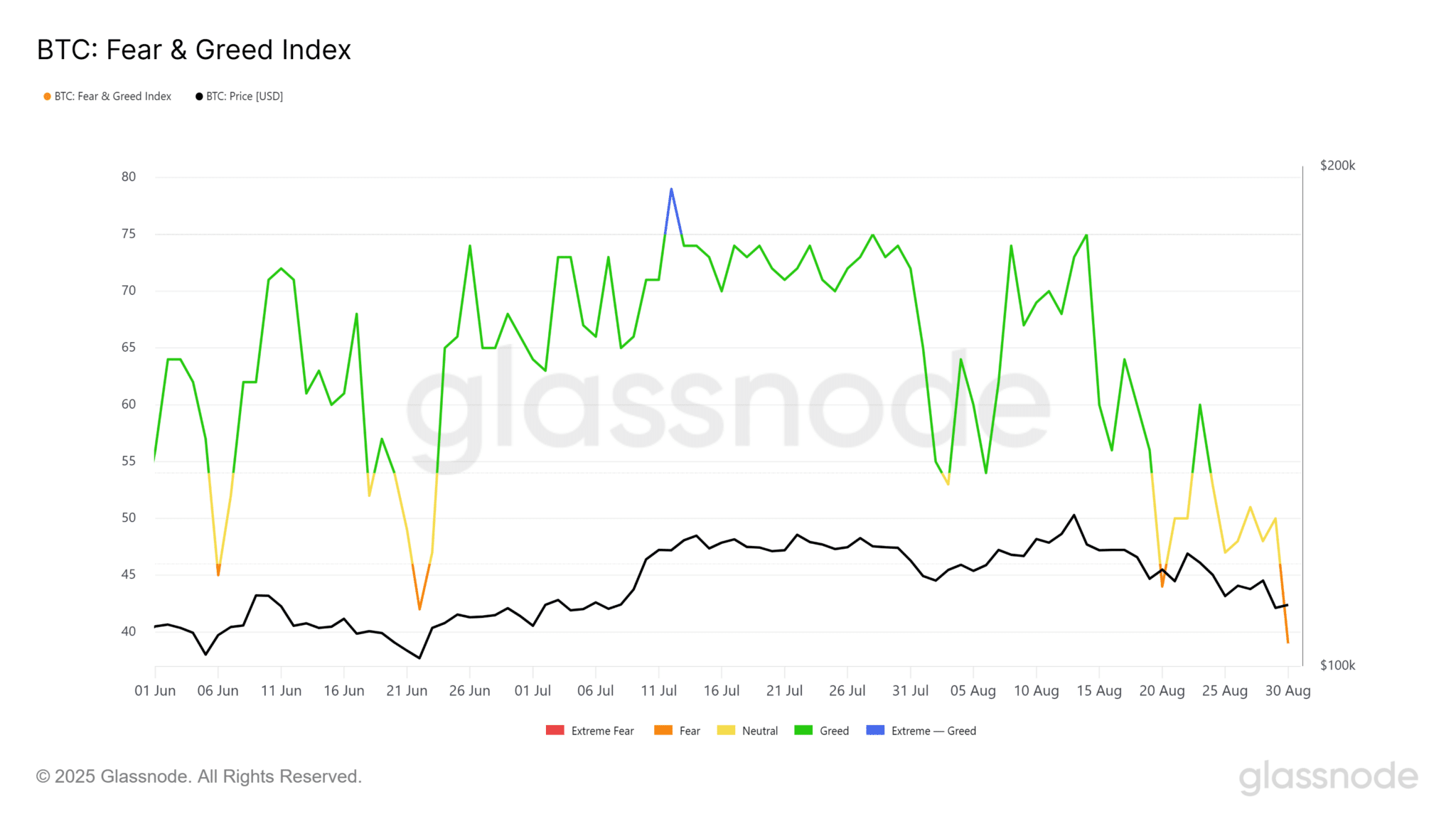
比特币的恐惧与贪婪指数刚刚创下四个月新低,降至39(恐惧),而前一天还只有50(中性)。虽然尚未出现投降潮,但信心明显正在减弱。

另一方面,最近三次跌入该区域都引发了强劲反弹。

最重要的是,当该指数达到 42 时,它在不到三周的时间内推动 BTC 上涨至当时的最高价 123,000 美元。

但这一次,出现了一个关键的分歧。

在过去三次反弹中,10.7万美元至11万美元区间与“贪婪”区域一致,预示着仓位过热和触顶风险。现在,同一区域正受到“恐惧”区域的考验,预示着市场情绪的重置。

简而言之,曾经的阻力位现在变成了潜在的支撑位。从技术角度来看,这种反转通常会形成比特币的反向反弹结构,尤其是在流动性开始向买入方聚集的情况下。

流动性积累增加了牛市陷阱崩溃的风险

稳定币铸造是流动性流动的可靠代表。

仅在过去三天,发行人就已发行了总计 40 亿美元的债券。

然而,BTC 却接连失去支撑位,表明新的流动性并没有直接流入现货买盘。

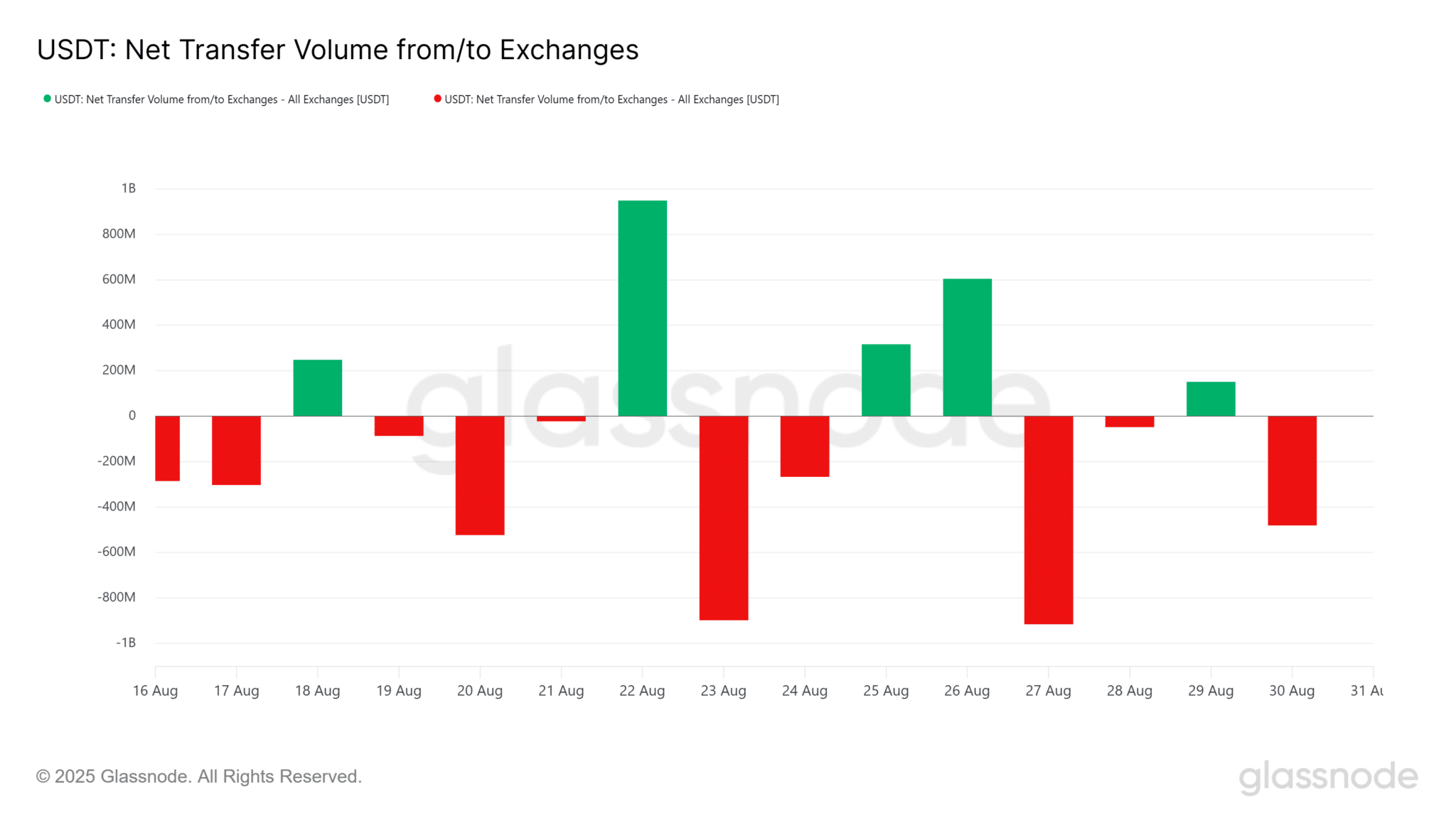
更糟糕的是,8月27日,USDT净流出量达到9.15亿美元,与BTC随后48小时内3.67%的跌幅一致。简而言之,由于买盘清淡,11万美元的跌幅并未被消化。

在这种情况下,比特币风险偏好的减弱倾向于看跌。

现货买盘稀少,流动性处于观望状态,市场情绪陷入恐慌。

总而言之,目前还没有明显的底部。20亿美元的空头壁垒(11.5万美元)仍未触及,这表明多头并未瞄准这种流动性。

除非他们这样做,否则上行空间似乎受限。比特币仍然容易受到更大幅度下跌的影响,除非市场情绪重新转向贪婪,否则阻力最小的路径仍然是下行。

Trending Cryptos

Related Reads

Circle Q2 Investor AMA: 11 Q&A Transcript on USDC, Arc, and the Future of Finance

**Circle Q2 2026 Investor AMA: Summary** On August 19, 2026, Circle CEO Jeremy Allaire hosted an AMA, addressing key topics on USDC, Arc, and the future of finance. **Team & Execution:** Allaire expressed confidence in Circle's execution, citing strong cross-functional collaboration, controlled growth, institutional depth, and the integration of AI as a "capability amplifier." Key areas for enhancement are cybersecurity and global/local operational capabilities. **Stablecoin Use Cases & Opportunities:** Allaire identified several areas with strong product-market fit: 1) **Digital asset markets** (operational capital, collateral), 2) **Digital dollar storage** in emerging markets, and 3) **Cross-border settlement**. Significant future opportunities lie in **AI agentic payments** and **retail merchant payments** (via stablecoin cards and QR codes), driven by instant settlement and low fees. **Circle's Economic Model:** While **reserve income** from a multi-trillion dollar future stablecoin market remains a core engine, Circle is diversifying. New revenue streams include **transaction fees** from the growing Circle Payment Network (CPN) and **platform fees** from **Arc**, envisioned as an "Economic Operating System" or "Economic Cloud" with AWS-scale potential. **Arc's Vision:** Arc, launching its mainnet on September 16, is designed as a **stablecoin-native chain** (using USDC for fees) to make blockchain invisible to end-users. It aims to host the future "onchain world," where companies and economic activities become increasingly software-coordinated and agentic. Its developer-friendly model allows builders to absorb minimal transaction costs, similar to cloud services. **AI & Trust:** For an AI agent economy, foundational "trust primitives" are essential: **Know Your Agent (KYA)** verification, robust **reputation systems**, and **programmable spending policies** for wallets. **EURC Growth & Regulatory Outlook:** EURC's rapid growth to over €400 million is attributed to early preparation for EU regulation (MiCA) and leveraging Circle's existing distribution. Allaire is bullish on **global stablecoin adoption**, noting that USDC growth is independent of the U.S. CLARITY Act's passage, supported by frameworks like the GENIUS Act and worldwide regulatory advancements. **Personal Philosophy:** Allaire shared that maintaining discipline in **diet, sleep, mindfulness, and exercise** is crucial for sustaining the energy and clarity needed for Circle's long-term mission.

marsbit10m ago

Circle Q2 Investor AMA: 11 Q&A Transcript on USDC, Arc, and the Future of Finance

marsbit10m ago

190 Million: 688286 Completes Two Acquisitions Within Two Months

In August 2026, Suzhou MEMSIC Semiconductor Co., Ltd. (688286.SH), despite reporting a net loss of RMB 20.62 million for the first half of the year, announced two significant acquisitions within two months, totaling approximately RMB 189 million. The company first acquired a 51.82% stake in Suzhou Novosense Electronic Technology Co., Ltd., entering the industrial gas sensor market. Shortly after, it launched a fundraising plan to acquire a 54% stake in Beijing Pudan Optoelectronics Co., Ltd., targeting the fiber-optic gyroscope core components sector. These moves represent a strategic pivot for MEMSIC, historically reliant on the consumer electronics market (e.g., MEMS microphones, pressure sensors), which is facing slowing growth and intense price competition. By acquiring Novosense and Pudan, MEMSIC aims to diversify into higher-margin industrial (e.g., chemical safety, environmental monitoring) and high-reliability sectors (e.g., aerospace, defense), leveraging their respective expertise in chemical sensing and high-precision inertial navigation. The article details the background of founder Li Gang and MEMSIC's 19-year journey, from its pioneering role in China's MEMS industry to its 2020科创板 listing and subsequent financial struggles amidst market downturns. The recent acquisitions are framed as a critical attempt to transform from a consumer electronics-focused chipmaker into a "full-scenario sensing platform" company. However, risks are noted, including the challenge of integrating the acquired companies, Pudan Optoelectronics' current unprofitability, and the overall financial strain on MEMSIC as it navigates this transition. The success of this strategic shift remains uncertain.

marsbit21m ago

190 Million: 688286 Completes Two Acquisitions Within Two Months

marsbit21m ago

Lawson Convenience Store Tests Stablecoin Payments Again: Three Coins, Three Chains, But Japanese Regulators Haven't Given the Nod

Lawson convenience stores have conducted a second-phase pilot test of stablecoin payments in partnership with payment solution provider NetStars, moving stablecoins from exchanges to physical checkout counters. The experiment, conducted at a Tokyo store, tested payments using three stablecoins—USDC, USDT, and JPYC—across three blockchains: Solana, Morph, and Polygon. A key development was the inclusion of USDT, which is not currently on Japan's approved list of electronic payment assets. The test linked Lawson's existing POS system with NetStars' "Stablecoin Pay" service to verify that stablecoin payments could be processed without disrupting store operations. It assessed payment speed, user experience, and handling of various transaction scenarios. Payments were typically completed within five seconds. Users paid with stablecoins via MetaMask, while stores received yen settlements. NetStars covered the blockchain gas fees upfront, charging users a separate "processing fee" that also included potential foreign exchange costs for dollar-denominated stablecoins. Company executives stated the pilot was preparatory, aimed at understanding technical feasibility and challenges ahead of potential wider adoption. They highlighted the appeal of globally-traded stablecoins like USDC and USDT for foreign visitors to Japan, alongside the domestic use case for yen-pegged JPYC. However, the legal and operational framework for converting received USDT into yen remains under discussion with Japanese financial authorities. No timeline for a commercial rollout was given, pending further market demand, user needs, and final economic conditions like fee structures.

marsbit22m ago

Lawson Convenience Store Tests Stablecoin Payments Again: Three Coins, Three Chains, But Japanese Regulators Haven't Given the Nod

marsbit22m ago

Trading

Spot

Hot Articles

What is $BITCOIN

DIGITAL GOLD ($BITCOIN): A Comprehensive Analysis Introduction to DIGITAL GOLD ($BITCOIN) DIGITAL GOLD ($BITCOIN) is a blockchain-based project operating on the Solana network, which aims to combine the characteristics of traditional precious metals with the innovation of decentralized technologies. While it shares a name with Bitcoin, often referred to as “digital gold” due to its perception as a store of value, DIGITAL GOLD is a separate token designed to create a unique ecosystem within the Web3 landscape. Its goal is to position itself as a viable alternative digital asset, although specifics regarding its applications and functionalities are still developing. What is DIGITAL GOLD ($BITCOIN)? DIGITAL GOLD ($BITCOIN) is a cryptocurrency token explicitly designed for use on the Solana blockchain. In contrast to Bitcoin, which provides a widely recognized value storage role, this token appears to focus on broader applications and characteristics. Notable aspects include: Blockchain Infrastructure: The token is built on the Solana blockchain, known for its capacity to handle high-speed and low-cost transactions. Supply Dynamics: DIGITAL GOLD has a maximum supply capped at 100 quadrillion tokens (100P $BITCOIN), although details regarding its circulating supply are currently undisclosed. Utility: While precise functionalities are not explicitly outlined, there are indications that the token could be utilized for various applications, potentially involving decentralized applications (dApps) or asset tokenization strategies. Who is the Creator of DIGITAL GOLD ($BITCOIN)? At present, the identity of the creators and development team behind DIGITAL GOLD ($BITCOIN) remains unknown. This situation is typical among many innovative projects within the blockchain space, particularly those aligning with decentralized finance and meme coin phenomena. While such anonymity may foster a community-driven culture, it intensifies concerns about governance and accountability. Who are the Investors of DIGITAL GOLD ($BITCOIN)? The available information indicates that DIGITAL GOLD ($BITCOIN) does not have any known institutional backers or prominent venture capital investments. The project seems to operate on a peer-to-peer model focused on community support and adoption rather than traditional funding routes. Its activity and liquidity are primarily situated on decentralized exchanges (DEXs), such as PumpSwap, rather than established centralized trading platforms, further highlighting its grassroots approach. How DIGITAL GOLD ($BITCOIN) Works The operational mechanics of DIGITAL GOLD ($BITCOIN) can be elaborated on based on its blockchain design and network attributes: Consensus Mechanism: By leveraging Solana’s unique proof-of-history (PoH) combined with a proof-of-stake (PoS) model, the project ensures efficient transaction validation contributing to the network's high performance. Tokenomics: While specific deflationary mechanisms have not been extensively detailed, the vast maximum token supply implies that it may cater to microtransactions or niche use cases that are still to be defined. Interoperability: There exists the potential for integration with Solana’s broader ecosystem, including various decentralized finance (DeFi) platforms. However, the details regarding specific integrations remain unspecified. Timeline of Key Events Here is a timeline that highlights significant milestones concerning DIGITAL GOLD ($BITCOIN): 2023: The initial deployment of the token occurs on the Solana blockchain, marked by its contract address. 2024: DIGITAL GOLD gains visibility as it becomes available for trading on decentralized exchanges like PumpSwap, allowing users to trade it against SOL. 2025: The project witnesses sporadic trading activity and potential interest in community-led engagements, although no noteworthy partnerships or technical advancements have been documented as of yet. Critical Analysis Strengths Scalability: The underlying Solana infrastructure supports high transaction volumes, which could enhance the utility of $BITCOIN in various transaction scenarios. Accessibility: The potential low trading price per token could attract retail investors, facilitating wider participation due to fractional ownership opportunities. Risks Lack of Transparency: The absence of publicly known backers, developers, or an audit process may yield skepticism regarding the project's sustainability and trustworthiness. Market Volatility: The trading activity is heavily reliant on speculative behavior, which can result in significant price volatility and uncertainty for investors. Conclusion DIGITAL GOLD ($BITCOIN) emerges as an intriguing yet ambiguous project within the rapidly evolving Solana ecosystem. While it attempts to leverage the “digital gold” narrative, its departure from Bitcoin's established role as a store of value underscores the need for a clearer differentiation of its intended utility and governance structure. Future acceptance and adoption will likely depend on addressing the current opacity and defining its operational and economic strategies more explicitly. Note: This report encompasses synthesised information available as of October 2023, and developments may have transpired beyond the research period.

2.0k Total ViewsPublished 2025.05.13Updated 2025.05.13
What is $BITCOIN

Discussions

Welcome to the HTX Community. Here, you can stay informed about the latest platform developments and gain access to professional market insights. Users' opinions on the price of BTC (BTC) are presented below.

活动图片