Author: New Economy
Compiled by: Deep Tide TechFlow
Deep Tide Introduction: Stablecoins are moving from exchanges to convenience store counters. Lawson's pilot test simultaneously validates three assets—USDC, USDT, JPYC—across three chains, and for the first time brings USDT, which is not on Japan's regulatory list, to the forefront. For professionals focusing on stablecoin payment adoption and regulatory boundaries, this is an important case study.
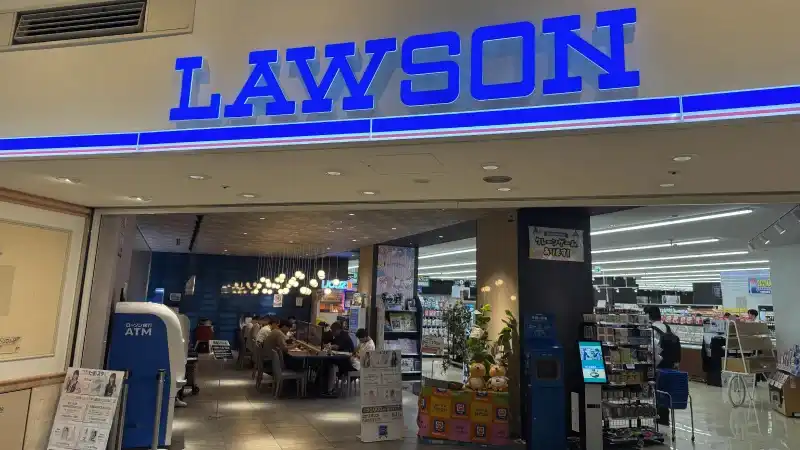
Image: Lawson Gate City Osaki Atrium Store
NetStars, which provides the multi-method cashless payment solution 'StarPay', conducted an in-store pilot test of stablecoin-based payments at Lawson convenience stores on August 17.
This pilot is the second phase of the POS-linked stablecoin payment test Lawson implemented on August 6. The first phase was conducted by three blockchain-related companies—HashPort, KDDI, and Lawson—at the 'Lawson Takanawa Gateway City Store'. At that time, they used the yen-denominated stablecoin 'JPYC' on Polygon and the 'HashPort Wallet'.
NetStars conducted this second-phase pilot at the Lawson Gate City Osaki Atrium store, targeting parties related to NetStars, Lawson, etc.
In this test, Lawson's existing POS cash register system was integrated with NetStars' merchant stablecoin payment service 'Stablecoin Pay' based on StarPay. The aim was to verify whether stablecoin payments could be executed without disrupting current store operations.
They also tested payment processing, speed, user operability, and impact on store operations across multiple stablecoin and blockchain combinations, and confirmed behavior in various payment scenarios, including error cases.
The stablecoins used in the test included the USD-denominated 'USDC' and 'USDT', and the yen-denominated 'JPYC', totaling three types. USDC and USDT supported payments on Solana, Morph, and Polygon chains, while JPYC supported payments on Polygon. The accompanying wallet used was 'MetaMask'.
NetStars stated that this pilot confirmed that besides yen stablecoins, using globally circulated USDC and USDT for in-store payments could also be processed without disrupting existing store operations.
The company explained that for stablecoin adoption in Japanese physical stores, "seamless integration with POS systems managing product information is indispensable." Furthermore, regarding the results of verifying the practicality of various stablecoins and blockchain payments in a high-traffic convenience store setting, the company said, "This demonstrates potential not only for domestic Japanese users but also as a new payment option for foreign visitors to Japan."
Interview with Lawson and NetStars Executives
The New Economy editorial team interviewed Taro Tamura, General Manager of Marketing Strategy and also of Lawson Financial Company, and Hiroshi Nagafuku, Director, COO, and General Manager of Business Division at NetStars, at the pilot store.

Image: Taro Tamura, General Manager of Marketing Strategy, Lawson Financial Company
Tamura stated that the purpose of this pilot was to verify whether stablecoins, as their usage gradually expands, can be used for offline payments and to make technical preparations in advance for broader adoption.
Currently, franchise stores have not requested the introduction of stablecoin payments. He said, "This is just a preparatory experiment," with the intent to identify whether it can withstand commercial use and what challenges exist.
This series of pilots is positioned as part of the "preparations for new payment methods" overseen by Lawson Financial Company. Lawson solicited pilot proposals from multiple companies this spring, selecting partners based on user base and market potential.
Furthermore, Lawson plans to conduct a digital funds pilot with two unnamed companies on August 20. Tamura did not disclose the company names but said, "I hear they will announce it within 3 days."
In this pilot, settlement between the store and NetStars was conducted in Japanese yen. On the user side, various stablecoins were used for payment, while the store side received yen as in traditional barcode payments. Direct receipt of stablecoins by Lawson was not part of this test.
The store side did not add a new payment button on the POS cash register for this test. The cashier selects the existing barcode payment option and scans the user's payment QR code. The POS system then automatically identifies the payment method and sends the information to NetStars. After NetStars completes the payment processing, it returns the result to the POS system.
Users access a website prepared by NetStars via the MetaMask built-in browser and connect their MetaMask wallet. The website generates and displays a payment QR code based on the stablecoin and blockchain used. This functionality is not a standard MetaMask feature but was developed by NetStars specifically for this pilot.
Nagafuku stated they verified the ability to use multiple stablecoins across multiple blockchains for POS payments. Payments confirmed during the interview were mostly completed within 5 seconds. He said that especially during crowded times like lunch hours where fast checkout is needed, "passing the test on payment speed is a significant achievement."
Additionally, users do not need to separately prepare native tokens like SOL or POL for each chain for gas fees. The design is such that NetStars advances the gas fees and then charges the user in the form of a "processing fee."
When using USD stablecoins for payment, costs related to exchange rates are included in the processing fee along with the gas fee. When using the yen-denominated JPYC, no exchange rate costs are incurred. Users see the total payment amount (product price plus fee) and confirm before paying.
However, since sometimes the necessary currency conversion and gas fee handling can be completed on the wallet side, the fee may vary depending on the wallet used and user circumstances. Furthermore, this user-facing fee is different from the 0.98% merchant payment processing fee announced by NetStars.
Nagafuku said that since most globally circulated stablecoins are USD-denominated, there is higher demand from foreign visitors to Japan for USDC and USDT. On the other hand, there is also demand for the yen stablecoin JPYC, which is more accessible to Japanese users. The company plans to design services tailored to different users and use cases.
Method for Converting USDT to Yen Still Needs Design
One of the biggest differences in this pilot compared to previous ones is the use of USDT for in-store payments. The latest registration list published by Japan's Financial Services Agency (FSA) does not include USDT as an asset that can be handled by Japanese Electronic Payment Methods and similar transaction institutions.
Regarding the legal positioning of using USDT for payments in Japanese stores, Nagafuku explained that it is a mechanism where users pay for goods using USDT held in their non-custodial wallets.
He stated that in this method, NetStars does not hold user assets as a financial institution. Regarding the point that it does not premise user identity verification (KYC), the concept is similar to purchasing goods in a store with cash.
Regarding the handling of USDT received from users as payment for goods and its disposition during the period NetStars holds it, they are in discussions with the FSA. On the other hand, the details of how NetStars will safely convert the received USDT into Japanese yen still need to be finalized with the FSA going forward.
It is also undecided whether conversion will use overseas institutions or transactions with domestic Japanese institutions. Nagafuku said specific plans for converting USDT and USDC into yen will be designed in the future.
Regarding user operability, first-time use requires opening the payment URL from the MetaMask built-in browser. However, once accessed, it is not necessary to enter the URL every subsequent time.
Nagafuku said MetaMask was used for this pilot because its mechanism is relatively open and easy to develop for. Future plans include improving the user experience through collaboration with various wallet providers, for example, allowing Stablecoin Pay to be launched directly from a wallet's home screen.
Tamura pointed out that regarding support for multiple stablecoins and blockchains, "If it could be unified in some form, that would be easiest to handle." Blockchain is a highly specialized field for retail companies, and progress requires collaboration with wallet providers and others.
Regarding commercialization, no specific timeline has been set yet. Tamura stated that a decision will be made after confirming market, user, and store-side demand, with economic conditions such as processing fees also being important factors influencing adoption.