魔鬼九月来袭:BTC 迎关键测试、ETH 抗跌 + WLFI 热炒 ENA/DOT/CRV 成抄底备选?

金色财经Published on 2025-09-01Last updated on 2025-09-01

Abstract

未来若 DeFi 叙事重新崛起,Curve 仍是绕不开的基础设施,但从投资角度看,CRV 已不再是赛道龙头,属于高风险筹码,若要布局,本质是赌 DeFi 整体行情的复兴。

主流币 “魔鬼九月”:BTC 迎关键测试,ETH 相对抗跌


九月历来是加密与传统市场的 “考验期”—— 对 BTC 而言,这是年度表现最差的月份,历史平均回报率低至 - 3.7%,美股也常在此月陷入疲软。


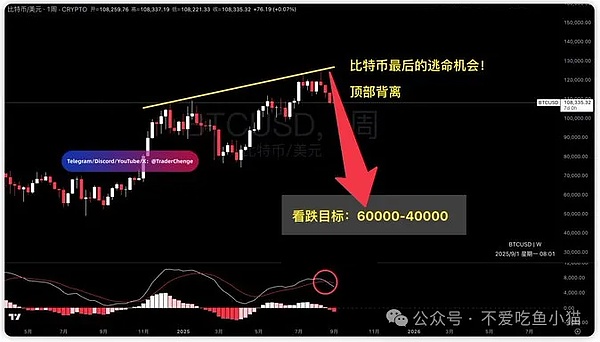
从技术面看,BTC 周线 MACD 已确认死叉并伴随顶背离,
图片


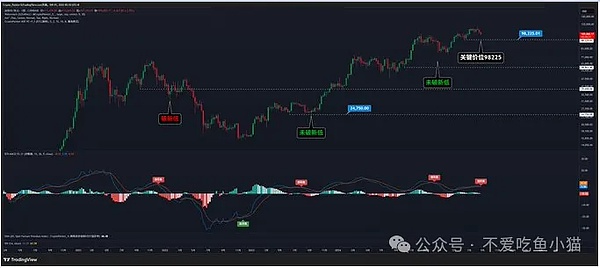
回顾近 5 年类似形态:2022 年那次背离直接引发破新低的熊市回调,而本轮牛市中的两次背离,因未跌破关键低点最终回调收场。


当前 BTC 的牛熊分界点已明确:98225 美元。若跌破该价位,市场或显走熊信号;若守住,牛市动能有望延续,甚至吸引空头流动性助推新高。
图片


走势预判上,九月大概率 “先扬后抑”:上半月因连续下跌后的盘整需求,可能出现像样反弹;下半月则需警惕筹码密集区抛压,今明两日行情对方向确认至关重要 —— 无论回踩二次确认还是短期新低,只要获得有效支撑,随时可能止跌回升,调整结束后或重启上涨。

相比之下,ETH 表现更显韧性。其日线级别尚未跌破前期低点,技术支撑稳固,反弹时动能大概率强于 BTC,甚至有测试前期高点的可能,成为九月波动中的相对稳健选择。

Image


WLFI 短期冲高:叙事驱动为主,长期价值存疑


近期特朗普家族关联代币 WLFI 成为市场热点,9 月 1 日登陆 Binance、Uniswap 等主流交易所后短期冲高,但核心驱动力以叙事和机制设计为主,长期隐忧明显。


#WLFI 暴涨的核心逻辑


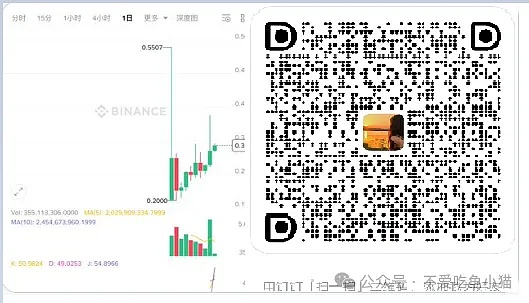
• 叙事驱动:由特朗普家族成员(埃里克・特朗普、小唐纳德・特朗普)发起,定位 “美国加密货币官方叙事”,借 2025 年美国大选周期放大政治背书效应,类似此前 $TRUMP 从低价冲至 80 美元的路径,且叠加 USD1 稳定币的实用属性;


• 供应稀缺设计:总供应量 100 亿枚,但初始流通仅 20%(约 2-5 亿枚),预售需通过 Lockbox 智能合约激活,减少早期抛压,“薄流通” 特性让需求一涌即推高价格;


• 机构背书托底:纳斯达克上市公司 ALT5 Sigma(ALTS)以 1.5 亿美元收购 7.5% 代币(约 7.5 亿枚),锁定 12 个月,效仿 MicroStrategy “企业储备” 模式提供价格支撑;


• 实用与通缩机制:旗下 USD1 稳定币由美国国债储备支持、BitGo 托管,市值已达 24 亿美元,其收益部分用于回购 WLFI,形成通缩循环;


• 上市时机催化:恰逢 2025 年牛市(BTC 破 10 万、ETH 冲 4000 美元),主流交易所上线即时激活流动性,助推短期热度。
图片


WLFI 的长期隐忧


该代币缺乏原创技术与新概念,仅延续特朗普相关概念,而币圈对名人效应向来有 “祛魅” 倾向 —— 唯有原生自币圈的概念,才能持续吸引资金。从长期看,依赖外部名人叙事而非自身生态,大概率难逃 “开局冲一波,后续拉垮” 的命运,投资者需警惕短期热炒后的回调风险。


几款高潜力山寨币


#ENA:波动中藏支撑,反弹需借大盘东风


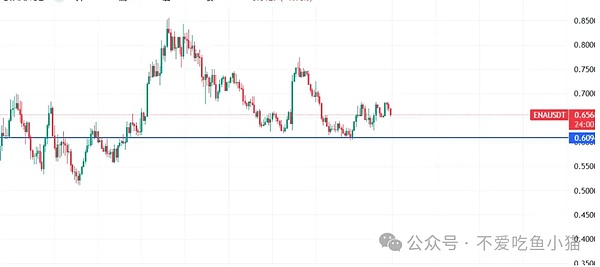
ENA 从 0.85 美元跌至 0.6 美元后,当前已基本企稳。这款代币的特点十分鲜明:上涨时能冲上榜首,下跌时也常居跌幅前列。此前给社群的策略中,0.6 美元始终是关键买点,该位置已两次得到市场验证。
图片


若大盘稳住,ENA 重回涨幅榜的概率较高;即便市场暴跌,在不知抄底标的时,ENA 也比空气币更具确定性,是相对稳妥的选择。


#DOT:技术硬核却陷商业化困局,难成周期主角


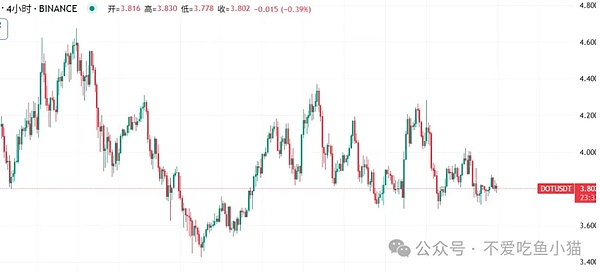
波卡作为老牌跨链项目,早年以 “多链互通、打破区块链孤岛” 为定位,技术层面确实硬核 —— 平行链插槽、跨链消息传递等技术均走在行业前列。


但短板也很突出:技术迭代超前于市场需求,生态建设喊了多年却始终未能破圈。开发者觉得入门门槛高,资金方嫌回报周期长,导致 DOT 越来越像 “科研院所”—— 技术论文产出多,商业化落地进展慢。
图片


当前 DOT 虽能分到部分跨链需求的红利,但更多是低位价值博弈,想再成为周期内的核心主角已不现实。


#CRV:DeFi 老基建,命运系于赛道复兴


Curve 在 2020-2021 年 DeFi Summer 期间是绝对核心,作为稳定币流动性 “黑洞”,曾是众多项目方的流动性兜底工具。


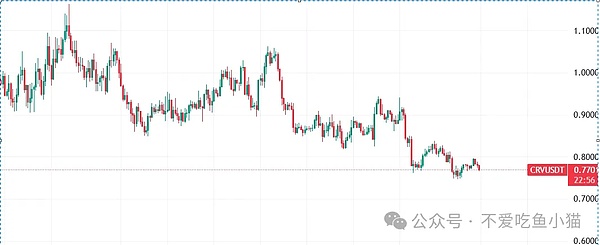
如今却面临多重压力:热度被 L2、RWA、AI 链等新叙事分流,CRV 自身通胀压力较大,价格持续承压,创始人 Michael 的抛售行为更进一步冲击了市场信心。
图片


未来若 DeFi 叙事重新崛起,Curve 仍是绕不开的基础设施,但从投资角度看,CRV 已不再是赛道龙头,属于高风险筹码,若要布局,本质是赌 DeFi 整体行情的复兴。

Trending Cryptos

Related Reads

Jameson Lopp's BIP-110 Postmortem: Bitcoin Is Driven by Game Theory, Not Morality

Jameson Lopp's analysis concludes that BIP-110, a proposal to restrict arbitrary data (like inscriptions) on Bitcoin, failed due to economic and technical realities, not moral arguments. The proposal, championed by Luke Dashjr and others, aimed to "cleanse" the chain but never reached its 55% miner activation threshold. Upon its forced signaling deadline in August, only the OCEAN pool (with ~1% hash rate) supported it, creating a short-lived fork that quickly died as miners faced unredeemable block rewards. Lopp's earlier predictions about its economic infeasibility were proven correct. Technically, BIP-110 was flawed; workarounds to embed data compliant with its rules were demonstrated almost immediately, proving it couldn't achieve its stated goal. The debate often devolved into moralistic rhetoric, with supporters accusing opponents of supporting child exploitation material—a tactic Lopp criticizes as ineffective for building consensus. Lopp argues Bitcoin is driven by incentives and game theory, not morality. Past forks like Bitcoin Cash promised economic benefits, while BIP-110 offered only restrictions and reduced miner fees, gaining no substantial support from major economic players. He predicts the "puritans" behind the failed fork will continue complaining but their new chain will remain insignificant. The episode reaffirms that attempting to censor data on a permissionless, anti-censorship network like Bitcoin is a futile battle.

marsbit9m ago

Jameson Lopp's BIP-110 Postmortem: Bitcoin Is Driven by Game Theory, Not Morality

marsbit9m ago

Tokenization Scale Soars to $4.3 Billion, But Why Did Securitize Incur a $5.5 Million Loss?

Securitize's first quarterly report post-IPO reveals a paradox: while its tokenized assets under management hit a record $4.3 billion (up 16% YoY) and platform trading volume surged 147% to $5.3 billion, total revenue fell 5% to $14.4 million. Tokenization revenue specifically dropped ~12% to $7.8 million, leading to an adjusted EBITDA loss of $5.5 million. CFO Francisco Flores explained that most trading volume is not yet monetized, with the majority of tokenization revenue still coming from one-time projects like new protocol integrations. In contrast, asset servicing revenue, a more recurring stream, grew slightly to $6.6 million. The company has lowered its full-year revenue guidance to $70-$80 million from an initial projection of $110 million. Industry experts note this highlights a structural challenge for the tokenization sector. Scaling assets on-chain doesn't automatically scale a profitable business model. Current implementations often rely on costly, customized projects for each new asset or jurisdiction. The future, they argue, lies in building standardized infrastructure that generates recurring "infrastructure revenue" from post-issuance activities like compliance, distributions, and secondary trading—similar to enterprise software. Analysts caution against misinterpreting high trading volumes as indicative of a mature fee-based model, as Securitize's broad volume metric includes many non-monetized actions. The key test for the industry is whether adding billions in new assets can generate sustainable revenue without constant new custom projects.

marsbit12m ago

Tokenization Scale Soars to $4.3 Billion, But Why Did Securitize Incur a $5.5 Million Loss?

marsbit12m ago

The Five Paradoxes of Artificial Intelligence

**Five Paradoxes of Artificial Intelligence** Artificial intelligence (AI) is an era filled with paradoxes, which we navigate as we advance. **1. The Prediction Paradox** AI experts, from pioneers like Marvin Minsky to contemporary figures like Geoffrey Hinton and Demis Hassabis, have a history of inaccurate forecasts regarding AI's capabilities and timelines, such as achieving human-level machine intelligence or surpassing radiologists. Predictions about Artificial General Intelligence (AGI) vary wildly between optimistic entrepreneurs and skeptical academics, highlighting the inherent unpredictability of technological futures. **2. The Employment Quantification Paradox** Despite numerous studies from institutions like the OECD, IMF, and McKinsey attempting to quantify AI's impact on jobs, estimates of affected employment range from 0.4% to 67%, revealing vast inconsistencies. This paradox arises because isolating AI's effect from other economic, social, and technological factors is virtually impossible, and forecasts depend on static assumptions about a dynamically evolving technology. **3. The Productivity Paradox** While AI is a transformative General Purpose Technology, significant productivity growth has not yet materialized in major economies like the EU and has only matched historical averages in the US. This disconnect between rapid innovation and slow productivity gains, reminiscent of the "Solow Paradox" from the computer age, is often explained by time lags. History shows it takes decades for such technologies to diffuse and trigger complementary innovations that boost productivity. **4. The Data Value Paradox** Data is hailed as the "new oil" and critical for AI, yet its economic value is paradoxical. Its worth is realized only in use, not in straightforward trade. Despite policy emphasis and initiatives for data asset recognition on corporate balance sheets in China, the monetized value remains negligible—accounting for only about 0.06% of major telecom operators' total assets—highlighting the gap between perceived utility and financial valuation. **5. The Industrial Revolution Paradox** For decades, nearly every major new technology, from the internet and nanotechnology to blockchain and now AI, has been proclaimed as the driver of a "Fourth Industrial Revolution." This constant reassignment suggests prior labels were premature. True industrial revolutions are typically identified in hindsight, not in real-time. Furthermore, the coexistence of such a proclaimed transformative revolution with ongoing economic crises would be historically anomalous. Whether AI truly defines a new industrial revolution remains a narrative for the future to decide.

marsbit15m ago

The Five Paradoxes of Artificial Intelligence

marsbit15m ago

Trading

Spot

Hot Articles

What is $BITCOIN

DIGITAL GOLD ($BITCOIN): A Comprehensive Analysis Introduction to DIGITAL GOLD ($BITCOIN) DIGITAL GOLD ($BITCOIN) is a blockchain-based project operating on the Solana network, which aims to combine the characteristics of traditional precious metals with the innovation of decentralized technologies. While it shares a name with Bitcoin, often referred to as “digital gold” due to its perception as a store of value, DIGITAL GOLD is a separate token designed to create a unique ecosystem within the Web3 landscape. Its goal is to position itself as a viable alternative digital asset, although specifics regarding its applications and functionalities are still developing. What is DIGITAL GOLD ($BITCOIN)? DIGITAL GOLD ($BITCOIN) is a cryptocurrency token explicitly designed for use on the Solana blockchain. In contrast to Bitcoin, which provides a widely recognized value storage role, this token appears to focus on broader applications and characteristics. Notable aspects include: Blockchain Infrastructure: The token is built on the Solana blockchain, known for its capacity to handle high-speed and low-cost transactions. Supply Dynamics: DIGITAL GOLD has a maximum supply capped at 100 quadrillion tokens (100P $BITCOIN), although details regarding its circulating supply are currently undisclosed. Utility: While precise functionalities are not explicitly outlined, there are indications that the token could be utilized for various applications, potentially involving decentralized applications (dApps) or asset tokenization strategies. Who is the Creator of DIGITAL GOLD ($BITCOIN)? At present, the identity of the creators and development team behind DIGITAL GOLD ($BITCOIN) remains unknown. This situation is typical among many innovative projects within the blockchain space, particularly those aligning with decentralized finance and meme coin phenomena. While such anonymity may foster a community-driven culture, it intensifies concerns about governance and accountability. Who are the Investors of DIGITAL GOLD ($BITCOIN)? The available information indicates that DIGITAL GOLD ($BITCOIN) does not have any known institutional backers or prominent venture capital investments. The project seems to operate on a peer-to-peer model focused on community support and adoption rather than traditional funding routes. Its activity and liquidity are primarily situated on decentralized exchanges (DEXs), such as PumpSwap, rather than established centralized trading platforms, further highlighting its grassroots approach. How DIGITAL GOLD ($BITCOIN) Works The operational mechanics of DIGITAL GOLD ($BITCOIN) can be elaborated on based on its blockchain design and network attributes: Consensus Mechanism: By leveraging Solana’s unique proof-of-history (PoH) combined with a proof-of-stake (PoS) model, the project ensures efficient transaction validation contributing to the network's high performance. Tokenomics: While specific deflationary mechanisms have not been extensively detailed, the vast maximum token supply implies that it may cater to microtransactions or niche use cases that are still to be defined. Interoperability: There exists the potential for integration with Solana’s broader ecosystem, including various decentralized finance (DeFi) platforms. However, the details regarding specific integrations remain unspecified. Timeline of Key Events Here is a timeline that highlights significant milestones concerning DIGITAL GOLD ($BITCOIN): 2023: The initial deployment of the token occurs on the Solana blockchain, marked by its contract address. 2024: DIGITAL GOLD gains visibility as it becomes available for trading on decentralized exchanges like PumpSwap, allowing users to trade it against SOL. 2025: The project witnesses sporadic trading activity and potential interest in community-led engagements, although no noteworthy partnerships or technical advancements have been documented as of yet. Critical Analysis Strengths Scalability: The underlying Solana infrastructure supports high transaction volumes, which could enhance the utility of $BITCOIN in various transaction scenarios. Accessibility: The potential low trading price per token could attract retail investors, facilitating wider participation due to fractional ownership opportunities. Risks Lack of Transparency: The absence of publicly known backers, developers, or an audit process may yield skepticism regarding the project's sustainability and trustworthiness. Market Volatility: The trading activity is heavily reliant on speculative behavior, which can result in significant price volatility and uncertainty for investors. Conclusion DIGITAL GOLD ($BITCOIN) emerges as an intriguing yet ambiguous project within the rapidly evolving Solana ecosystem. While it attempts to leverage the “digital gold” narrative, its departure from Bitcoin's established role as a store of value underscores the need for a clearer differentiation of its intended utility and governance structure. Future acceptance and adoption will likely depend on addressing the current opacity and defining its operational and economic strategies more explicitly. Note: This report encompasses synthesised information available as of October 2023, and developments may have transpired beyond the research period.

2.0k Total ViewsPublished 2025.05.13Updated 2025.05.13

What is $BITCOIN

Discussions

Welcome to the HTX Community. Here, you can stay informed about the latest platform developments and gain access to professional market insights. Users' opinions on the price of BTC (BTC) are presented below.

活动图片