Strategic Bitcoin Reserve Push Ignited By Japan’s Democratic People’s Party

bitcoinistPublished on 2025-08-28Last updated on 2025-08-28

Abstract

Japan’s debate over sovereign Bitcoin exposure moved from the fringe to the front row this week after JAN3 chief executive...

Trusted Editorial content, reviewed by leading industry experts and seasoned editors. Ad Disclosure

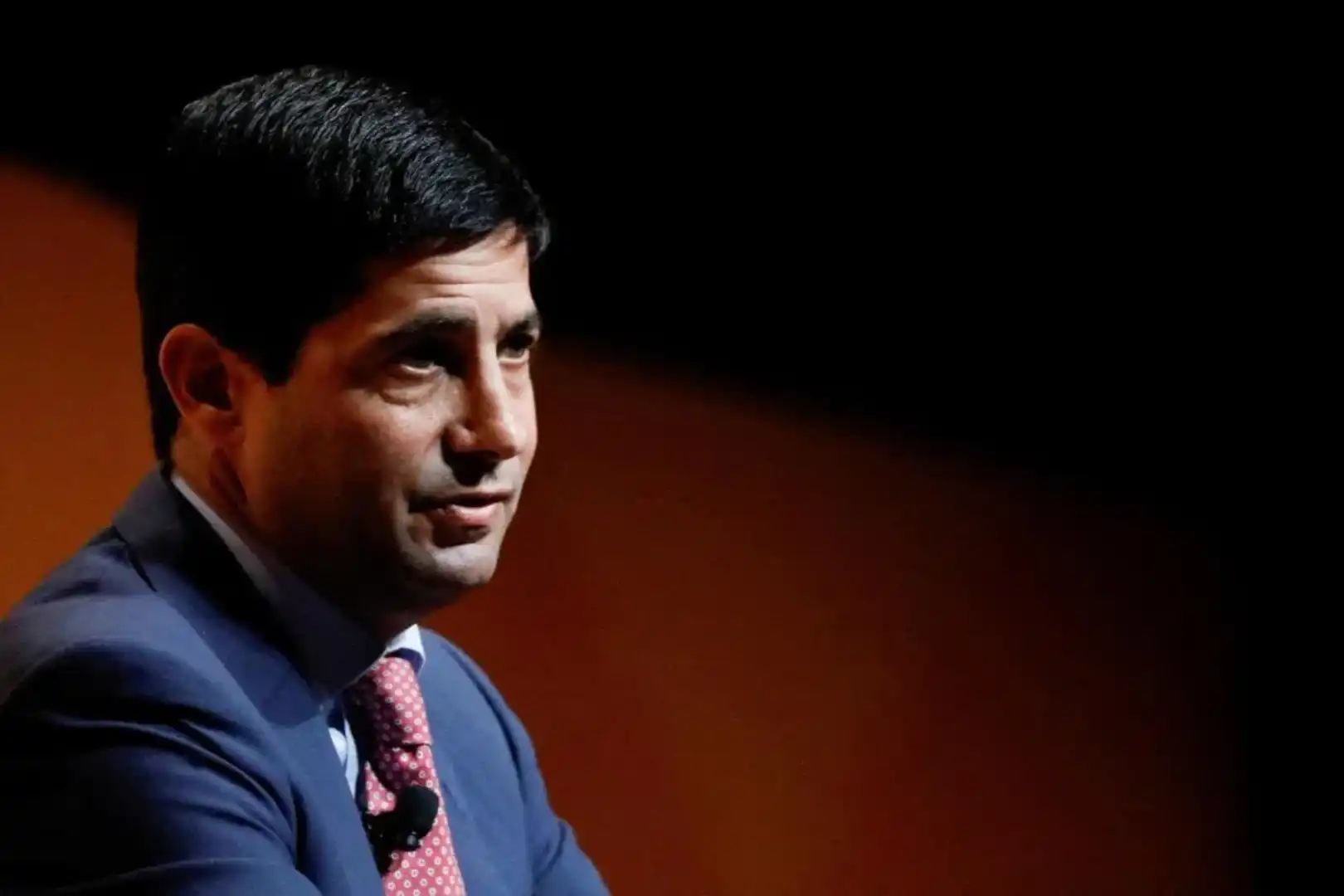
Japan’s debate over sovereign Bitcoin exposure moved from the fringe to the front row this week after JAN3 chief executive Samson Mow met in Tokyo with Yuichiro Tamaki, who leads the Democratic Party for the People (DPP), and Sōhei Kamiya, leader of Sanseitō.

Will Japan Establish A Strategic Bitcoin Reserve?

As Mow put it, “We had very productive meetings in Tokyo with Kamiya-san, leader of Sanseito, and Tamaki-san, leader of the DPP. Both leaders already had a great understanding of #Bitcoin so our discussions flowed very naturally… I focused mainly on the limited window of opportunity for a nation-state to accumulate significant amounts of BTC for a Strategic Bitcoin Reserve. We will likely have additional meetings later this year.”

Samson Mow Bitcoin reserve news Japan
Source: X @Excellion

The political substance of those conversations tracks long-running parliamentary activity by both leaders. In Mow’s words, “Kamiya-san has raised the idea of Japan holding Bitcoin reserves in the Diet and called for tax reform, reflecting his party Sanseito’s sovereignty-first stance. Tamaki-san has proposed lowering capital gains taxes on Bitcoin to 20% and exempting smaller swaps and payments from taxation, giving Bitcoin fairer treatment in law.” He then clarified that “these are activities they have done previously in the Diet.”

JAN3, for its part, framed the agenda in explicitly geopolitical terms. “JAN3 CEO @Excellion met with Sohei Kamiya, leader of Sanseito, and Yuichiro Tamaki, leader of the Democratic Party for the People (DPP), at their offices in Tokyo to discuss the urgency to create a Strategic Bitcoin Reserve for Japan. Diet Members understand the world has changed dramatically with the US SBR already established and the Bitcoin Act on the way.”

The reference is to the United States’ March 6, 2025 executive order establishing a Strategic Bitcoin Reserve (SBR), followed days later by the introduction of the BITCOIN Act in Congress to codify and scale that framework.

The Tokyo meetings were not confined to opposition figures. Mow also underscored engagement with gatekeepers in the ruling camp: “It was a pleasure to meet Satsuki Katayama at @WebX_Asia where she delivered a speech at the Bitcoin networking event. Katayama-san is a member of Japan’s House of Councillors, representing the Liberal Democratic Party (LDP) and also chair of the LDP Committee on Finance.”

Samson Mow Bitcoin reserve news Japan
Source: X @Excellion

Katayama indeed chairs the LDP’s Financial Research Commission and has recently fronted party policy work touching capital markets, banking supervision and digital-asset issues, a signal that Bitcoin policy sits squarely inside the LDP’s finance apparatus.

Japan’s Political Power Structure

Understanding how and where the DPP and Sanseitō sit in Japan’s power structure is essential to gauging the odds of near-term policy change. In the July 20, 2025 House of Councillors election, the LDP–Komeito ruling bloc lost its upper-house majority, while smaller parties surged. The DPP won 17 seats in that contest and now holds 22 seats in the chamber, making it the third-largest force after the LDP and the Constitutional Democratic Party (CDP). Sanseitō captured 14 seats, lifting its total to 15. Those tallies translate into real leverage for both parties in an upper house where the government must now assemble issue-by-issue majorities.

Percentages tell the same story. On the national proportional list, the DPP took roughly 12.88% of the vote, while Sanseitō drew about 12.55%, confirming that both parties converted a broad base of support into seats. With the LDP–Komeito alliance short of a majority, that performance gives Tamaki’s centrists and Kamiya’s sovereigntists greater committee-level bargaining power over any crypto tax rewrite or more ambitious reserve initiative.

Within that parliamentary geometry, tax reform is the most immediate vector. Tamaki has consistently pushed to replace today’s progressive treatment of crypto gains—which can run to the mid-50s percent when local levies are included—with a 20% separate tax, and to exempt small-value payments and crypto-to-crypto swaps from recognition, a de minimis regime designed to unlock everyday usage.

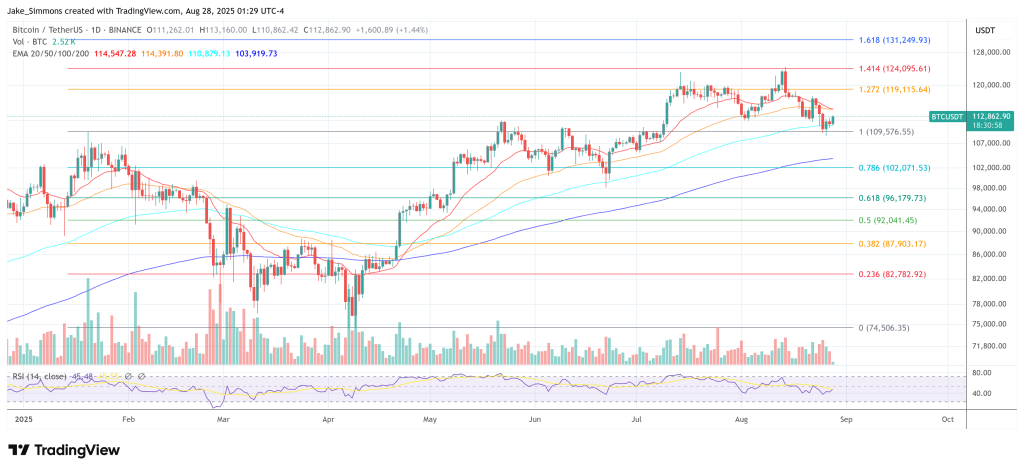
At press time, BTC traded at $113,862.
Bitcoin price
BTC holds above key support, 1-day chart | Source: BTCUSDT on TradingView.com
Featured image created with DALL.E, chart from TradingView.com
Editorial Process for bitcoinist is centered on delivering thoroughly researched, accurate, and unbiased content. We uphold strict sourcing standards, and each page undergoes diligent review by our team of top technology experts and seasoned editors. This process ensures the integrity, relevance, and value of our content for our readers.

Jake Simmons has been a Bitcoin enthusiast since 2016. Ever since he heard about Bitcoin, he has been studying the topic every day and trying to share his knowledge with others. His goal is to contribute to Bitcoin's financial revolution, which will replace the fiat money system. Besides BTC and crypto, Jake studied Business Informatics at a university. After graduation in 2017, he has been working in the blockchain and crypto sector. You can follow Jake on Twitter at @realJakeSimmons.

Trending Cryptos

Related Reads

Building the Bright Path While Secretly Crossing Chencang: Is Walsh Paving the Way for a September "Rate Cut"?

The title "Building the Plank Road Openly While Secretly Crossing at Chencang: Is Walsh Paving the Way for a September 'Rate Cut'?" suggests Federal Reserve Chair Kevin Walsh's hawkish stance may be a deliberate smokescreen. Academy Securities analyst Peter Tchir argues in a report that markets, currently pricing a 75% chance of a September hike, are missing a potential path to a September rate cut that Walsh himself might be quietly preparing. Tchir posits that Walsh's hawkish rhetoric aims to suppress long-term yield risks (with the 10-year Treasury yield falling recently) while creating room for a narrative shift based on upcoming data. The potential political endgame, according to this view, could be rate cuts in September and October, ahead of the midterm elections. This hinges on a political logic where the Trump administration's preference for lower rates remains unchanged. A core part of Tchir's argument involves redefining inflation metrics. He contends the Fed under Walsh may deprioritize the PCE index, criticizing its lagging components like Owners' Equivalent Rent (OER). Instead, he points to alternative, more real-time indicators like the New Tenant Repeat Rent Index (NTRR) and the Truflation daily index, which shows core inflation around 1.45%. He suggests the Fed could shift its data narrative to justify policy easing. Furthermore, Tchir downplays AI-driven inflation fears. He argues that consumer price sensitivity, evidenced by negative market reactions to price hikes (e.g., Apple), contradicts persistent inflation narratives. He also separates AI/data center spending—which he sees as relatively rate-insensitive—from broader consumer affordability issues, implying rate hikes are misdirected. Based on this analysis, Tchir sees a re-pricing of rate cut expectations as likely, creating opportunities in short-duration Treasuries. He maintains a neutral-to-slightly-bullish view on the long end of the yield curve. For equities, he recommends a significant overweight in energy (especially global nuclear assets) and, within defense/security themes, an overweight in biotech/pharma versus an underweight in semiconductors, expressing caution on AI/data center valuations.

marsbit28m ago

Building the Bright Path While Secretly Crossing Chencang: Is Walsh Paving the Way for a September "Rate Cut"?

marsbit28m ago

"King of Shilling" Hayes Strikes Again, This Time Setting His Sights on Deribit

On June 29, BitMEX co-founder Arthur Hayes acquired approximately 6.16 million SYN tokens via OTC platform Flowdesk, valued at around $2.2 million. Subsequently, Hayes publicly endorsed SYN on X, calling it one of the most asymmetric investments he's seen since HYPE and declaring it time for an on-chain options DEX to challenge industry leader Deribit, naming Hypercall as that challenger. The article details the evolution of the Synapse Protocol, originally launched in 2021 as a cross-chain messaging and liquidity network. While its TVL peaked above $1 billion during the last bull market, it has since declined. The protocol's team has since built Hypercall, an on-chain options trading platform on Hyperliquid's HyperEVM, which supports trading options on "any asset" with features like 24/7 trading and defined risk limited to the premium paid. Deribit, founded in 2016, is highlighted as the dominant centralized crypto options exchange, commanding roughly 85% market share in BTC and ETH options. Its strengths include deep liquidity and professional tools, though it faces critiques over custody risk, KYC requirements, and regulatory uncertainty. The analysis suggests Hypercall's potential lies in decentralization, permissionless access, and transparency, potentially carving a niche in DeFi-native and emerging asset options. However, it faces significant challenges competing with Deribit's established network effect and liquidity depth. The piece concludes by noting Hayes's recent and mixed "call" history, referencing his previous promotion and subsequent sale of HYPE, as well as a controversial price target report for CARDS from his family office, Maelstrom, which was followed by a significant price drop for the asset. This activity has drawn criticism, with some accusing Hayes of creating exit liquidity for his followers.

Foresight News1h ago

"King of Shilling" Hayes Strikes Again, This Time Setting His Sights on Deribit

Foresight News1h ago

One Year After the Crash of Crypto Treasury Companies, Copycats Are Already Making a Comeback

One year after the collapse of digital asset treasury (DAT) companies, which wiped out up to 99% for early investors, the scheme has returned in a new guise. Recently, Triller Group announced it would become a "SpaceX treasury company," causing its market cap to surge. This follows the rebranding of another firm, LGHL, now targeting a token called HYPE. The original model, popularized by MicroStrategy (MSTR) and its "Bitcoin yield" narrative, saw companies trading at massive premiums to their underlying crypto holdings. However, most followers like TwentyOne, Metaplanet, and Nakamoto have crashed 80-95%+ from their peaks, erasing nearly all value for late investors. The author argues these structures have no fundamental reason to trade at premiums when low-fee Bitcoin ETFs or direct ownership exist. The cycle persists due to speculative demand driven by FOMO, gamification, and a belief the system is rigged, met by insiders and promoters who profit from the pump-and-dump dynamics. Drawing a parallel to the 1637 Tulip Mania, the piece concludes that such frenzies are not a bug but a recurring product of markets, where greater fools provide demand and insiders supply the schemes. Despite holding Bitcoin personally, the author condemns this specific packaging of assets into leveraged corporate vehicles marketed as innovation, a cycle seemingly unstoppable until a major crash.

marsbit1h ago

One Year After the Crash of Crypto Treasury Companies, Copycats Are Already Making a Comeback

marsbit1h ago

Trading

Spot

Hot Articles

How to Buy PUSH

Welcome to HTX.com! We've made purchasing Push Protocol (PUSH) simple and convenient. Follow our step-by-step guide to embark on your crypto journey.Step 1: Create Your HTX AccountUse your email or phone number to sign up for a free account on HTX. Experience a hassle-free registration journey and unlock all features.Get My AccountStep 2: Go to Buy Crypto and Choose Your Payment MethodCredit/Debit Card: Use your Visa or Mastercard to buy Push Protocol (PUSH) instantly.Balance: Use funds from your HTX account balance to trade seamlessly.Third Parties: We've added popular payment methods such as Google Pay and Apple Pay to enhance convenience.P2P: Trade directly with other users on HTX.Over-the-Counter (OTC): We offer tailor-made services and competitive exchange rates for traders.Step 3: Store Your Push Protocol (PUSH)After purchasing your Push Protocol (PUSH), store it in your HTX account. Alternatively, you can send it elsewhere via blockchain transfer or use it to trade other cryptocurrencies.Step 4: Trade Push Protocol (PUSH)Easily trade Push Protocol (PUSH) on HTX's spot market. Simply access your account, select your trading pair, execute your trades, and monitor in real-time. We offer a user-friendly experience for both beginners and seasoned traders.

3.8k Total ViewsPublished 2024.03.29Updated 2026.06.02

How to Buy PUSH

Discussions

Welcome to the HTX Community. Here, you can stay informed about the latest platform developments and gain access to professional market insights. Users' opinions on the price of PUSH (PUSH) are presented below.

活动图片