Pump.fun surges 12% as holder count hits record high – 2 metrics could cap gains

ambcryptoPublished on 2026-06-29Last updated on 2026-06-29

Abstract

The token of memecoin launch platform Pump.fun (PUMP) surged 12% as sentiment improved alongside renewed interest in memecoins. On-chain data showed strong investor participation, with the holder count reaching a record high of 122,440. Total Value Locked (TVL) also saw a significant increase of roughly $15.7 million, rising to $217.7 million and indicating fresh capital inflows. However, key protocol performance metrics contrasted with this positive price action and investor growth. Data revealed substantial declines in launchpad volume (down 86.7% to $5.8M), generated fees (down 35.6% to $587,200), and protocol revenue (down 23% to $147.8M). These drops suggest underlying user activity and platform utility remain weak. While the recent surge is supported by growing holder numbers and TVL, the sustainability of the rally is uncertain. For gains to be firmly supported, a recovery in fundamental protocol usage metrics is likely needed.

Sentiment around cryptocurrency memecoin launch platform Pump.fun [PUMP] has turned positive again following renewed interest in memecoins over the past day.

The platform’s native token moved alongside that momentum, with PUMP surging 12% over the past day.

Even so, the rally remained tied to the platform’s underlying health, leaving investors exposed if protocol activity failed to recover.

Why are investors buying PUMP?

PUMP’s recent rally has coincided with growing investor participation. The token’s holder count reached a record 122,440, while retail investors accounted for roughly 38% of holders.

That increase also appeared in on-chain data, suggesting fresh capital supported the recent move.
Source: DeFiLlama

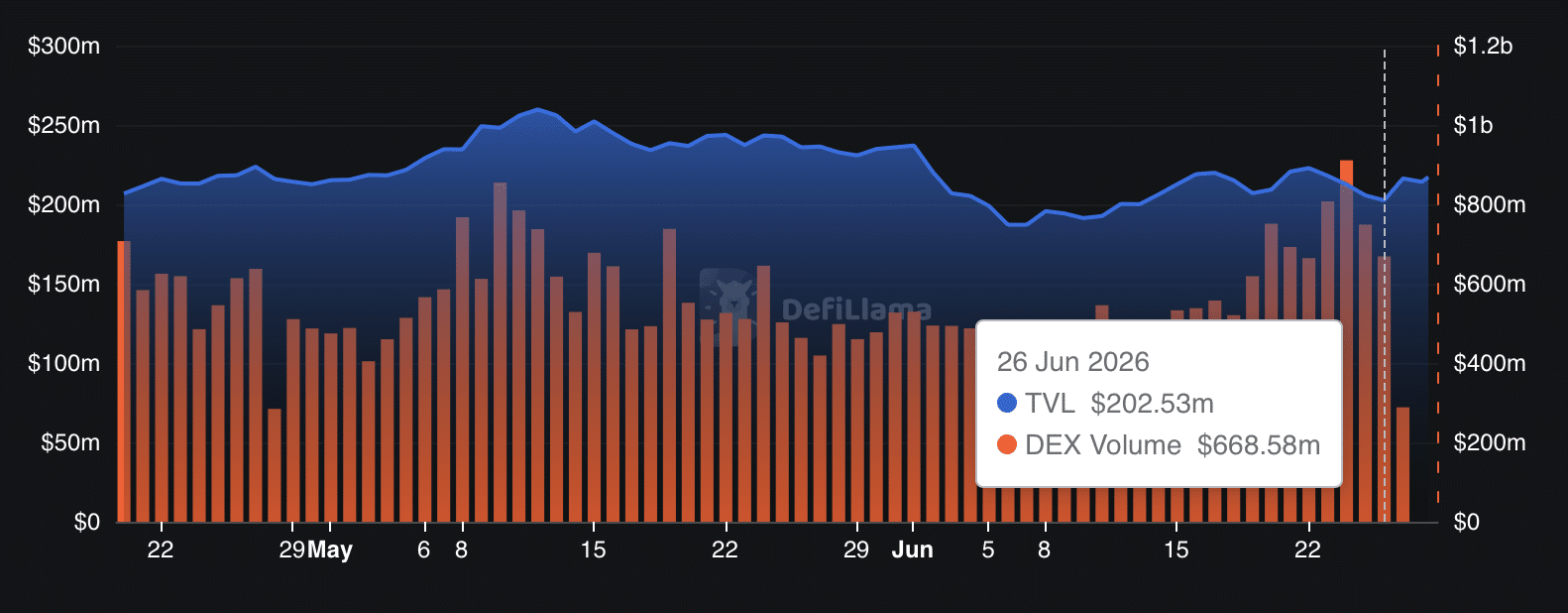
Between the 26th of June and now, investors added roughly $15.7 million to Total Value Locked (TVL), lifting it to $217.7 million. Those inflows suggested investors committed more capital despite recent volatility.

Total Value Locked measures assets deposited into DeFi protocols. Rising TVL often reflects stronger long-term conviction while investors earn yield.

Is the protocol keeping up?

However, rising TVL did not match the protocol’s underlying performance.

Pump.fun continued underperforming across key metrics, including revenue, fees, and launchpad volume.

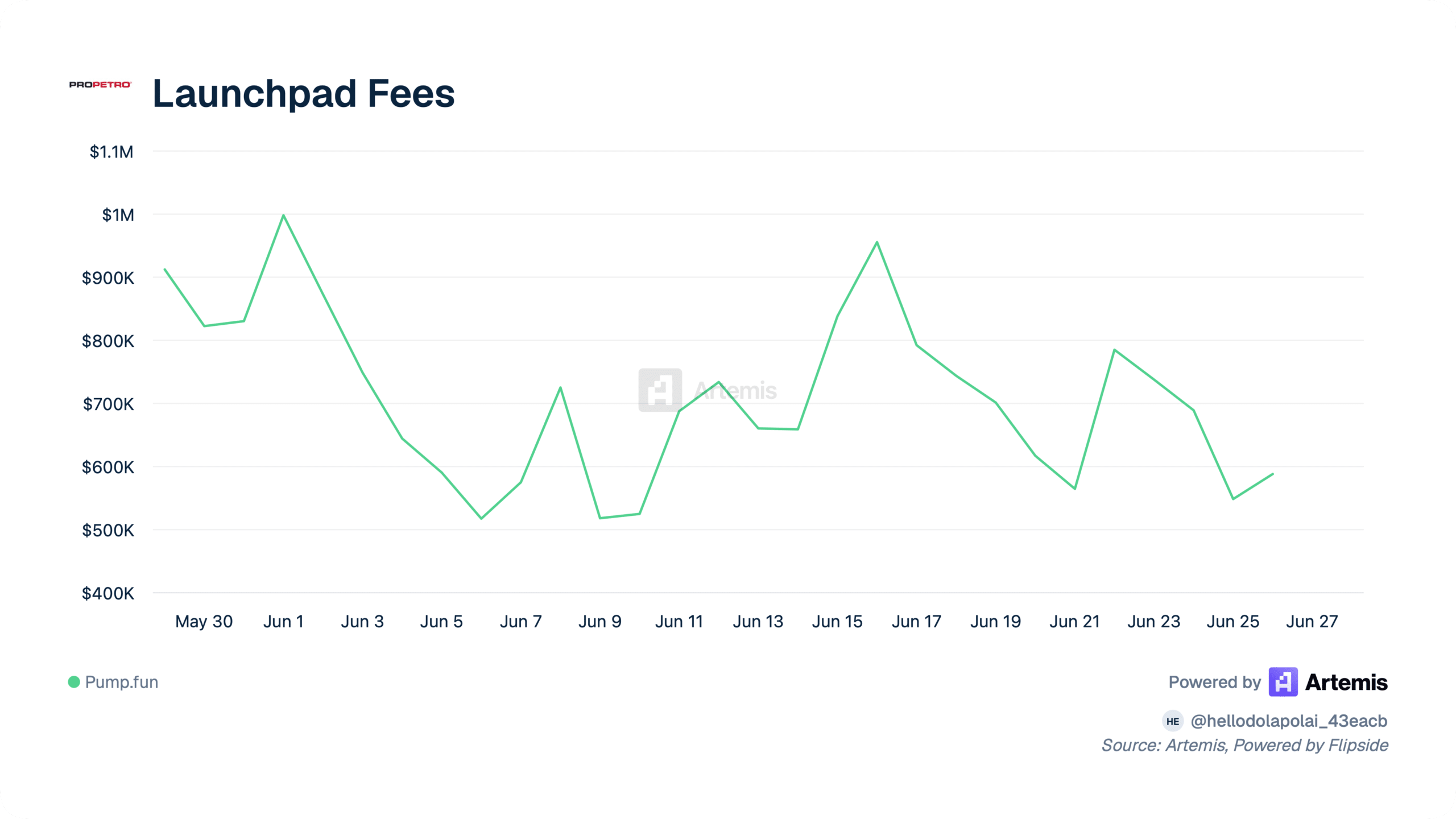
Data from Artemis showed launchpad volume and fees generated by memecoins on the platform fell 86.7% and 35.6% to $5.8 million and $587,200, respectively.
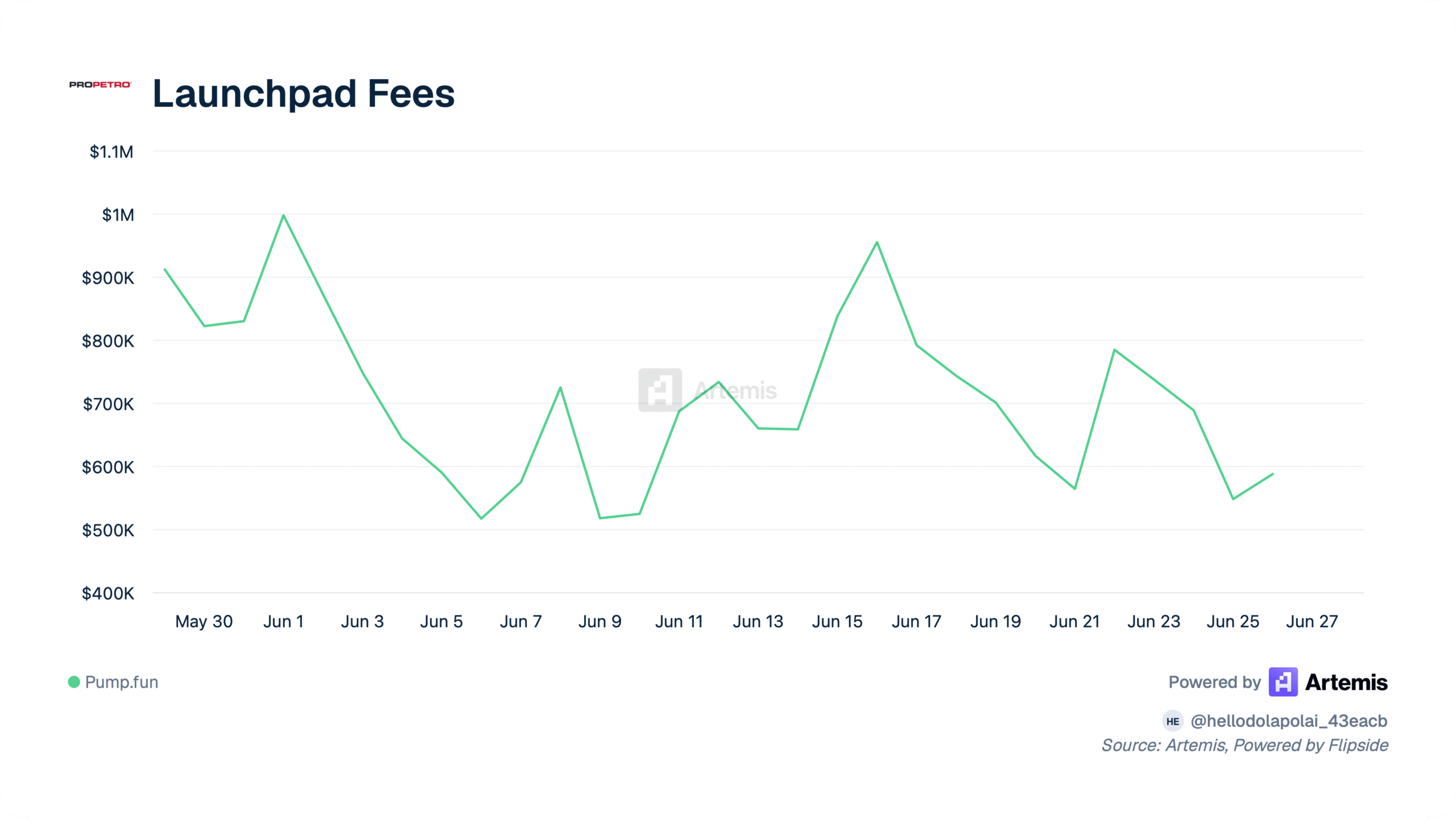
Source: Artemis

Those declines suggested user activity remained weak despite improving investor sentiment.

Lower activity reduced fee generation and limited protocol utility, making it harder for the recent price recovery to gain stronger fundamental support.

Revenue reflected the same trend.

Protocol revenue fell 23% to $147.8 million, reinforcing signs of slowing activity.

Historically, sustained token rallies have been easier to support when protocol usage improves alongside price. Until those metrics recover, PUMP’s recent optimism could remain vulnerable.


Final Summary

  • PUMP gained 12%, holder count hit a record, and TVL increased sharply, signaling renewed market interest.
  • If protocol metrics fail to recover, investor optimism may prove difficult to sustain.

Related Questions

QWhat happened to Pump.fun's native token price recently and by how much did it surge?

APump.fun's native token, PUMP, surged 12% over the past day.

QWhat record high was reached by the PUMP token according to the article?

AThe holder count for the PUMP token reached a record high of 122,440.

QWhat metric saw an increase of roughly $15.7 million since June 26th, indicating investor commitment?

AThe Total Value Locked (TVL) increased by roughly $15.7 million, lifting it to $217.7 million.

QAccording to data from Artemis, what was the percentage decline in launchpad volume on the Pump.fun platform?

ALaunchpad volume on the Pump.fun platform fell by 86.7%.

QWhat is the main concern for the sustainability of PUMP's recent price recovery, as highlighted in the article's summary?

AThe main concern is that if protocol metrics (like revenue, fees, and launchpad volume) fail to recover, the recent investor optimism and price gains may be difficult to sustain.

Related Reads

Number of Active XRP Addresses Reaches Two-Month High Amid Worsening Market Sentiment

On August 14th, activity on the XRP Ledger surged to a two-month high, with 49,929 active addresses recorded in a 24-hour period. This spike occurred despite market sentiment towards XRP hitting a three-month low, as the token traded below $1, highlighting a sharp divergence between on-chain activity and retail investor mood. The data from Santiment shows that average daily active addresses had already risen to around 35,700 by August 12th, up from approximately 26,400 in July—a nearly 35% increase. However, the number of new addresses remained flat, suggesting the surge was driven by existing addresses becoming more active rather than an influx of new users. Analysts caution that while high address activity indicates increased network participation, it doesn't specify whether the activity stems from new investors, institutional moves, exchange transactions, or existing holders. Concurrently, the bearish sentiment, tracked from social platforms like X and Reddit, reflects crowd psychology rather than fundamental network health. The report notes that the XRP Ledger's validator-based consensus allows for such on-chain activity to grow independently of short-term price pessimism. Furthermore, broader ecosystem development, including Ripple's reported $550 million in investments since 2017 into grants and institutional infrastructure for tokenized assets, provides a long-term context separate from current price trends. The key question is whether the elevated address activity will be sustained beyond the single-day spike amidst ongoing negative sentiment, or if it represents only a temporary divergence.

cryptonews.ru1m ago

Number of Active XRP Addresses Reaches Two-Month High Amid Worsening Market Sentiment

cryptonews.ru1m ago

IPO Imminent, OpenAI Faces Major Personnel Upheaval

OpenAI, preparing for a potential IPO, is experiencing significant leadership turmoil. In mid-August 2026, longtime "GPU geek" Scott Gray quietly left, and within three days, Chief Operating Officer Brad Lightcap (8-year veteran) and Chief Revenue Officer Denise Dresser (8-month tenure) departed. This follows a broader exodus of at least 10 senior executives in 2026, including heads of product, safety, and ethics. Analysts view this as a strategic "surgery" to transform from a research lab into a sales-driven enterprise company before going public. Revenue now tilts toward enterprise clients, surpassing consumer income sooner than expected, with annualized revenue reaching $40 billion. The new CRO, Dali Rajic, is a veteran enterprise sales leader. Concurrently, OpenAI has disbanded independent safety teams like "Preparedness," which assessed catastrophic risks, integrating their functions into core research. Critics warn this removes dedicated "brakes" on AI development. The leadership vacuum raises questions about who is the clear second-in-command after former apps CEO Fidji Simo moved to an advisory role. Co-founder Greg Brockman appears to be consolidating power. As OpenAI races against rival Anthropic ($47B annualized revenue), it faces the dual challenge of commercial execution while managing the departure of foundational technical talent and ensuring responsible AI development remains a priority.

marsbit2h ago

IPO Imminent, OpenAI Faces Major Personnel Upheaval

marsbit2h ago

AI Can 'Have Moods Too'! New Research from USTC: Confusion and Anxiety Make AI Work Better

The article discusses research from the University of Science and Technology of China and Oxford, revealing that allowing AI to recognize and act upon simulated "internal emotions" can significantly improve its performance. The study demonstrates a coherent pairing between specific emotional states in AI agents and their subsequent skill choices. For instance, an agent feeling curious and desirous will search for products, while one feeling confused and tense will rephrase queries. This mirrors human decision-making influenced by emotions. Statistical validation showed a 76.5% semantic consistency in these pairings. Crucially, the research challenges the traditional view of AI errors as flaws to be eliminated. It found that "bad" emotions like confusion, tension, or frustration serve as useful metacognitive signals, indicating a mismatch between the current strategy and the environment. By responding to these signals, AI can proactively adjust before a failure occurs. This is particularly effective in complex tasks prone to failure. For example, in tasks like "heating an item" and "picking up two items," success rates surged from 9.6% to 56.9% and 4.4% to 31.3%, respectively, when using the emotion-driven skill selection method (EMOTION2SKILL). The AI's "nervous" state about a closed microwave, for instance, prompted it to check and open it first, preventing failure. The article also mentions related work from Tianjin University, which embeds emotional prediction into world models (Large Emotional World Model, LEWM), significantly improving prediction accuracy in human-centric environments. Removing emotional data was found to degrade performance even in unrelated logical reasoning tasks. These studies build on earlier findings, like those from Anthropic, that identifiable emotional representations exist within large language models (LLMs). The focus is shifting from philosophical debate about AI emotion to practically harnessing these internal states as functional signals to enhance AI robustness and capability.

marsbit2h ago

AI Can 'Have Moods Too'! New Research from USTC: Confusion and Anxiety Make AI Work Better

marsbit2h ago

Trading

Spot
活动图片