Is The Bitcoin 4-Year Cycle Completely Broken Or Will The Rally Continue?

bitcoinistPublished on 2025-08-20Last updated on 2025-08-20

Abstract

A number of developments have led to speculations that the established 4-year Bitcoin cycle that has often predicted when the...

Trusted Editorial content, reviewed by leading industry experts and seasoned editors. Ad Disclosure

A number of developments have led to speculations that the established 4-year Bitcoin cycle that has often predicted when the bull and bear market starts and end has ended. If this is the case, it would mean that price action will not go as expected. Just as it seems there was a premature start to the bull market, it is possible that there would be a premature start to the bear market as well.

Developments That Threaten The 4-Year Cycle

The 4-year cycle coincides with the Bitcoin halving, which happens every four years when block rewards for miners are cut in half. Historically, the bull market has only begun after the Bitcoin halving is completed, with the BTC price hitting a new all-time high a year after the halving. Then, the bear market follows after all-time high levels and continues until the next halving. This has been the case for the last three cycles, until 2024, when everything changed.

The year 2024 was the last halving year, and the expectation was that the Bitcoin price would hit new all-time highs a year later, in 2025. However, with the advent of Spot Bitcoin ETFs, which were approved by the Securities and Exchange Commission (SEC) in January 2024, the BTC price exploded and soared to new all-time highs months before the scheduled halving.

As the year progressed, so did the BTC price, and after the halving was completed on April 20, the price pushed forward. By December 2024, the price had already crossed $100,000, almost doubling the value of its $69,000 all-time high from the previous cycle.

Not only are Spot Bitcoin ETFs driving the BTC price, but there was also the entrance of Bitcoin treasury companies. This was started by Michael Saylor’s Strategy Inc. (formerly MicroStrategy), which started buying BTC in 2020. Fast forward to 2025, and the company now holds over $74 billion worth of BTC, with the latest buy of 430 BTC announced on Monday.

Given the entrance of Spot Bitcoin ETFs and over 100 Bitcoin treasury companies, none of which have existed in previous cycles, it seems BTC has now entered into uncharted territory. This could effectively end the 4-year cycle with billions of dollars pouring into the market at an unprecedented rate.

What If The Bitcoin 4-Year Cycle Is Still Intact?

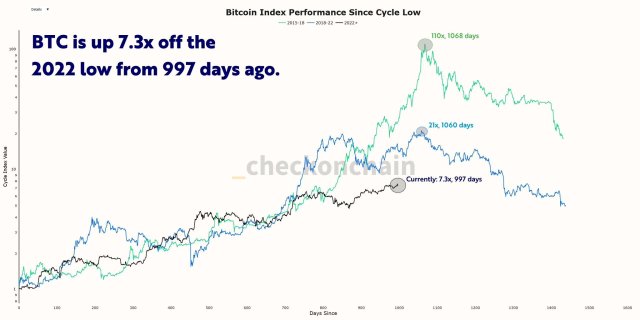
Frank Fetter, a quant at Vibe Capital Management, has expressed what could be next if the Bitcoin 4-year cycle is intact. As he points out, traditionally, there has been an average of 1,060 between Bitcoin making a bottom and then making a top in the bull market.
Bitcoin
Source: X

Currently, BTC is only approximately 1,000 days from its 2022 bottom, meaning there are still a couple of months to go. This could mean that there is some runway left for Bitcoin to hit new all-time highs before the next bear market rolls around. “If the traditional four-year cycle continues, the next 100 days could be interesting,” Fetter stated.

Bitcoin price charr from TradingView.com
BTC bounces after break below $113,000 | Source: BTCUSD on TradingView.com
Featured image from Dall.E, chart from TradingView.com
Editorial Process for bitcoinist is centered on delivering thoroughly researched, accurate, and unbiased content. We uphold strict sourcing standards, and each page undergoes diligent review by our team of top technology experts and seasoned editors. This process ensures the integrity, relevance, and value of our content for our readers.

Scott Matherson is a leading crypto writer at Bitcoinist, who possesses a sharp analytical mind and a deep understanding of the digital currency landscape. Scott has earned a reputation for delivering thought-provoking and well-researched articles that resonate with both newcomers and seasoned crypto enthusiasts. Outside of his writing, Scott is passionate about promoting crypto literacy and often works to educate the public on the potential of blockchain.

Trending Cryptos

Related Reads

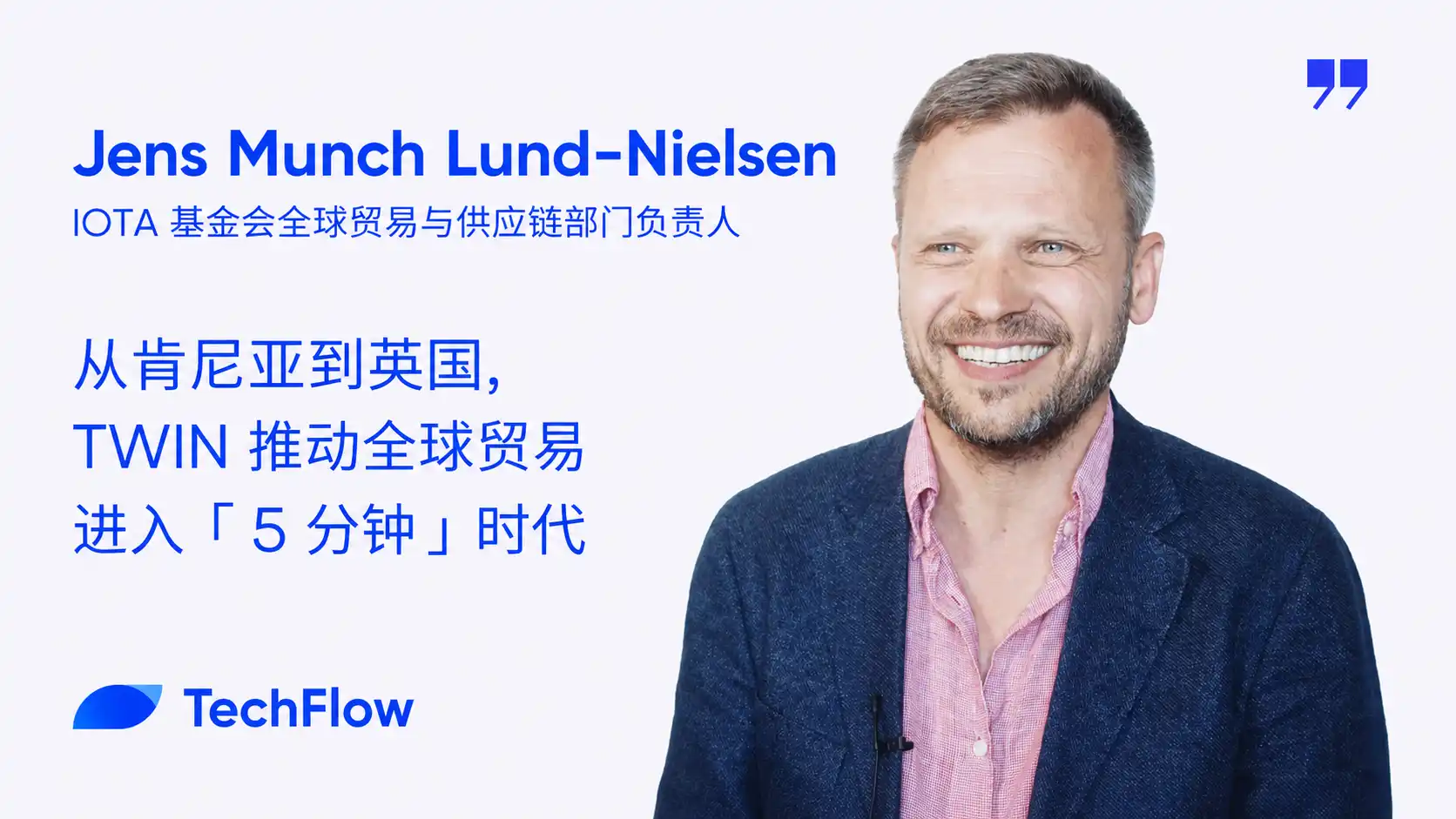
Dialogue with IOTA Foundation's Jens: From Kenya to the UK, TWIN Propels Global Trade into the '5-Minute' Era

**Summary: IOTA's TWIN Project is Speeding Up Global Trade** Jens Munch Lund-Nielsen, Head of Global Trade & Supply Chain at the IOTA Foundation, discusses how the TWIN (Trade and Logistics Information Network) project is addressing long-standing inefficiencies in global trade. Traditionally, cross-border trade involves numerous parties, extensive paperwork, and delays spanning weeks. TWIN, built on IOTA's decentralized, scalable, and low-cost infrastructure, aims to replace this fragmented, paper-based system with a real-time, trusted, and interconnected digital collaboration layer. As a neutral digital public infrastructure, TWIN allows governments, businesses, and ports to exchange verifiable data and documents without ceding control to a single entity. This solves a core coordination problem that previous, proprietary platforms failed to address due to a lack of trust and neutrality. Key real-world implementations include: * **TLIP in East Africa:** Reduced document retrieval times for flower, coffee, and tea exports from 6-7 hours to ~30 minutes, cutting administrative work by 50-60%. * **UK Ecosystem of Trust Trials:** Provided border agencies with much earlier visibility (up to 20+ hours) of incoming chilled poultry shipments from Poland, enabling better resource planning. * Other pilots focus on supply chain traceability for fruits/vegetables, port efficiency, and critical mineral sourcing. TWIN ensures interoperability across jurisdictions by adopting global standards (e.g., UN/CEFACT data models), leveraging decentralized identity systems (DIDs), and supporting legal frameworks like MLETR. Looking ahead, Jens is optimistic that a trusted "connective layer" like TWIN will scale in the coming years. Its success could fundamentally transform global trade, most notably by helping to close the current $2.5 trillion trade finance gap. By providing lenders with access to verifiable, real-time supply chain data, TWIN could unlock capital and reshape how businesses discover partners and secure financing.

marsbit22m ago

Dialogue with IOTA Foundation's Jens: From Kenya to the UK, TWIN Propels Global Trade into the '5-Minute' Era

marsbit22m ago

Trading

Spot

Hot Articles

What is $BITCOIN

DIGITAL GOLD ($BITCOIN): A Comprehensive Analysis Introduction to DIGITAL GOLD ($BITCOIN) DIGITAL GOLD ($BITCOIN) is a blockchain-based project operating on the Solana network, which aims to combine the characteristics of traditional precious metals with the innovation of decentralized technologies. While it shares a name with Bitcoin, often referred to as “digital gold” due to its perception as a store of value, DIGITAL GOLD is a separate token designed to create a unique ecosystem within the Web3 landscape. Its goal is to position itself as a viable alternative digital asset, although specifics regarding its applications and functionalities are still developing. What is DIGITAL GOLD ($BITCOIN)? DIGITAL GOLD ($BITCOIN) is a cryptocurrency token explicitly designed for use on the Solana blockchain. In contrast to Bitcoin, which provides a widely recognized value storage role, this token appears to focus on broader applications and characteristics. Notable aspects include: Blockchain Infrastructure: The token is built on the Solana blockchain, known for its capacity to handle high-speed and low-cost transactions. Supply Dynamics: DIGITAL GOLD has a maximum supply capped at 100 quadrillion tokens (100P $BITCOIN), although details regarding its circulating supply are currently undisclosed. Utility: While precise functionalities are not explicitly outlined, there are indications that the token could be utilized for various applications, potentially involving decentralized applications (dApps) or asset tokenization strategies. Who is the Creator of DIGITAL GOLD ($BITCOIN)? At present, the identity of the creators and development team behind DIGITAL GOLD ($BITCOIN) remains unknown. This situation is typical among many innovative projects within the blockchain space, particularly those aligning with decentralized finance and meme coin phenomena. While such anonymity may foster a community-driven culture, it intensifies concerns about governance and accountability. Who are the Investors of DIGITAL GOLD ($BITCOIN)? The available information indicates that DIGITAL GOLD ($BITCOIN) does not have any known institutional backers or prominent venture capital investments. The project seems to operate on a peer-to-peer model focused on community support and adoption rather than traditional funding routes. Its activity and liquidity are primarily situated on decentralized exchanges (DEXs), such as PumpSwap, rather than established centralized trading platforms, further highlighting its grassroots approach. How DIGITAL GOLD ($BITCOIN) Works The operational mechanics of DIGITAL GOLD ($BITCOIN) can be elaborated on based on its blockchain design and network attributes: Consensus Mechanism: By leveraging Solana’s unique proof-of-history (PoH) combined with a proof-of-stake (PoS) model, the project ensures efficient transaction validation contributing to the network's high performance. Tokenomics: While specific deflationary mechanisms have not been extensively detailed, the vast maximum token supply implies that it may cater to microtransactions or niche use cases that are still to be defined. Interoperability: There exists the potential for integration with Solana’s broader ecosystem, including various decentralized finance (DeFi) platforms. However, the details regarding specific integrations remain unspecified. Timeline of Key Events Here is a timeline that highlights significant milestones concerning DIGITAL GOLD ($BITCOIN): 2023: The initial deployment of the token occurs on the Solana blockchain, marked by its contract address. 2024: DIGITAL GOLD gains visibility as it becomes available for trading on decentralized exchanges like PumpSwap, allowing users to trade it against SOL. 2025: The project witnesses sporadic trading activity and potential interest in community-led engagements, although no noteworthy partnerships or technical advancements have been documented as of yet. Critical Analysis Strengths Scalability: The underlying Solana infrastructure supports high transaction volumes, which could enhance the utility of $BITCOIN in various transaction scenarios. Accessibility: The potential low trading price per token could attract retail investors, facilitating wider participation due to fractional ownership opportunities. Risks Lack of Transparency: The absence of publicly known backers, developers, or an audit process may yield skepticism regarding the project's sustainability and trustworthiness. Market Volatility: The trading activity is heavily reliant on speculative behavior, which can result in significant price volatility and uncertainty for investors. Conclusion DIGITAL GOLD ($BITCOIN) emerges as an intriguing yet ambiguous project within the rapidly evolving Solana ecosystem. While it attempts to leverage the “digital gold” narrative, its departure from Bitcoin's established role as a store of value underscores the need for a clearer differentiation of its intended utility and governance structure. Future acceptance and adoption will likely depend on addressing the current opacity and defining its operational and economic strategies more explicitly. Note: This report encompasses synthesised information available as of October 2023, and developments may have transpired beyond the research period.

519 Total ViewsPublished 2025.05.13Updated 2025.05.13

What is $BITCOIN

Discussions

Welcome to the HTX Community. Here, you can stay informed about the latest platform developments and gain access to professional market insights. Users' opinions on the price of BTC (BTC) are presented below.

活动图片