BTC关键指标下跌,看涨应该注意什么?

ambcryptoPublished on 2025-08-18Last updated on 2025-08-18

Abstract

比特币的涨势随着强劲的群体轮换而扩大,但疲弱的链上增长对其可持续性构成质疑。

关键要点

比特币 [BTC] 接近 124,000 美元,参与度广泛,但网络增长放缓和多空失衡令人怀疑,如果没有新的资金流入,这种势头是否能够保持。

自 4 月以来,比特币 [BTC]年龄组集中度指数 (HHI) 稳步下降,表明持有者群体的参与度更加广泛。

与此同时,BTC 交易价格接近 11.8 万美元,接近历史最高点。与此同时,BTC 对数价格与 HHI 之间的 90 天相关性开始从极低水平回升。

从历史上看,由广泛群体参与所支持的价格上涨往往比集中在一个群体中的上涨更具可持续性。

因此,创纪录的交易量加上不断下降的集中度,凸显出更强劲的结构性基础。这种分布格局的变化是否标志着更持久的牛市趋势的基础?

比特币能否突破其上升通道内的阻力?

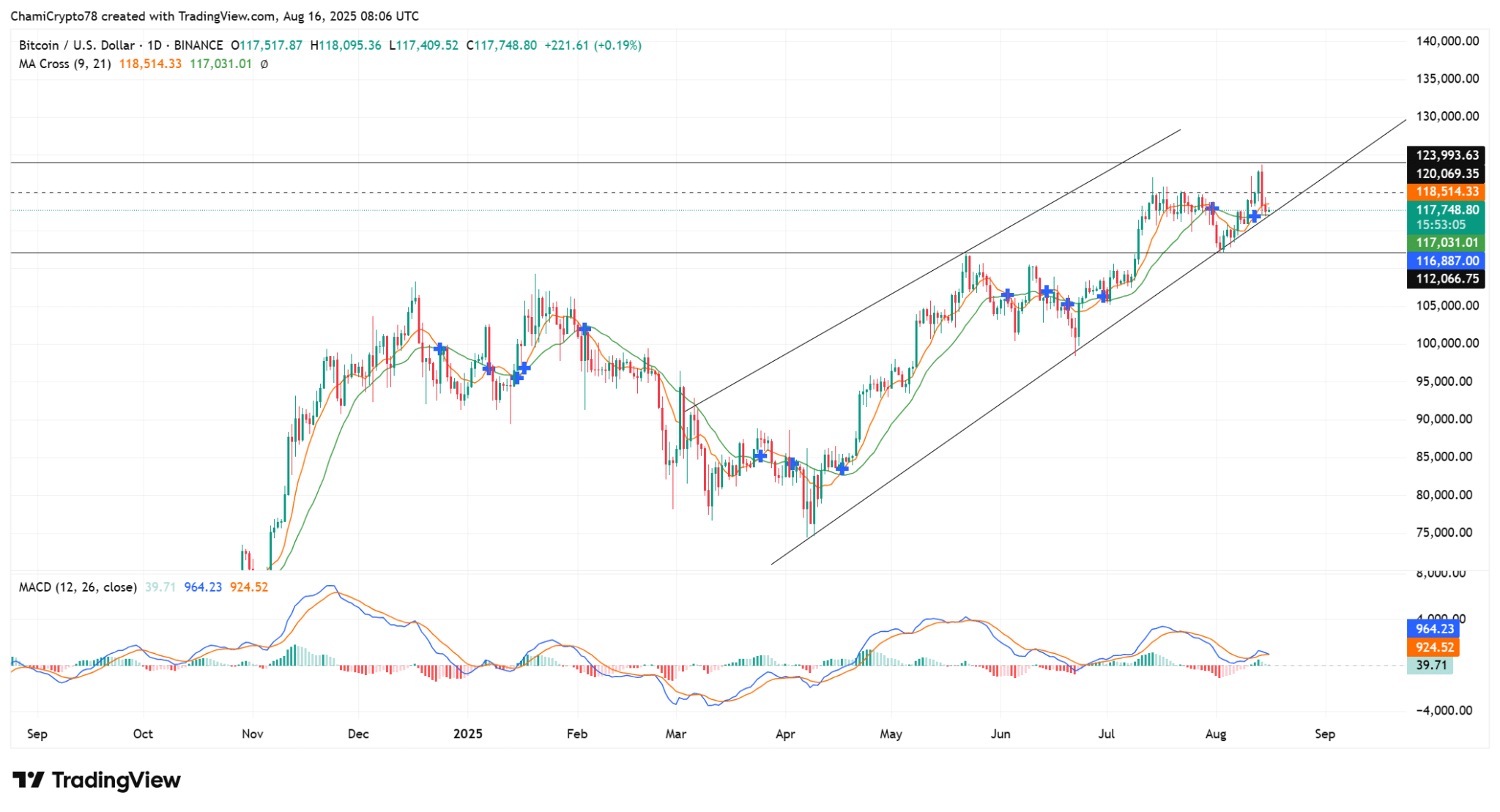
自四月份以来,比特币的价格一直处于上升通道内。

最近,BTC 反弹至 117,000 美元附近,并测试了接近 124,000 美元的阻力位,这是交易员密切关注的区域。

9 天和 21 天移动平均线保持看涨趋势,而 MACD 则反映出积极的势头。

然而,上限附近的反复拒绝表明卖家仍然活跃。

话虽如此,在出现决定性突破之前,交易者应该预计该阻力位附近会出现波动。
多头交易者是否对市场拥有过多的控制权?

币安多空仓比例显示,多头仓位为 57.34%,空头仓位为 42.66%。这种失衡反映出散户和衍生品交易者日益增长的乐观情绪。

当然,如果大多数人变得过于自信,那么扭曲的定位可能预示着大幅调整。

除此之外,尽管买家占据主导地位,但空头仍然占据重要地位。这种组合抑制了过度看涨的情绪。

此外,如果多头敞口持续上升,融资成本可能会上升,并迫使过度杠杆的交易者退出。

网络活动下降是否会威胁比特币的发展势头?

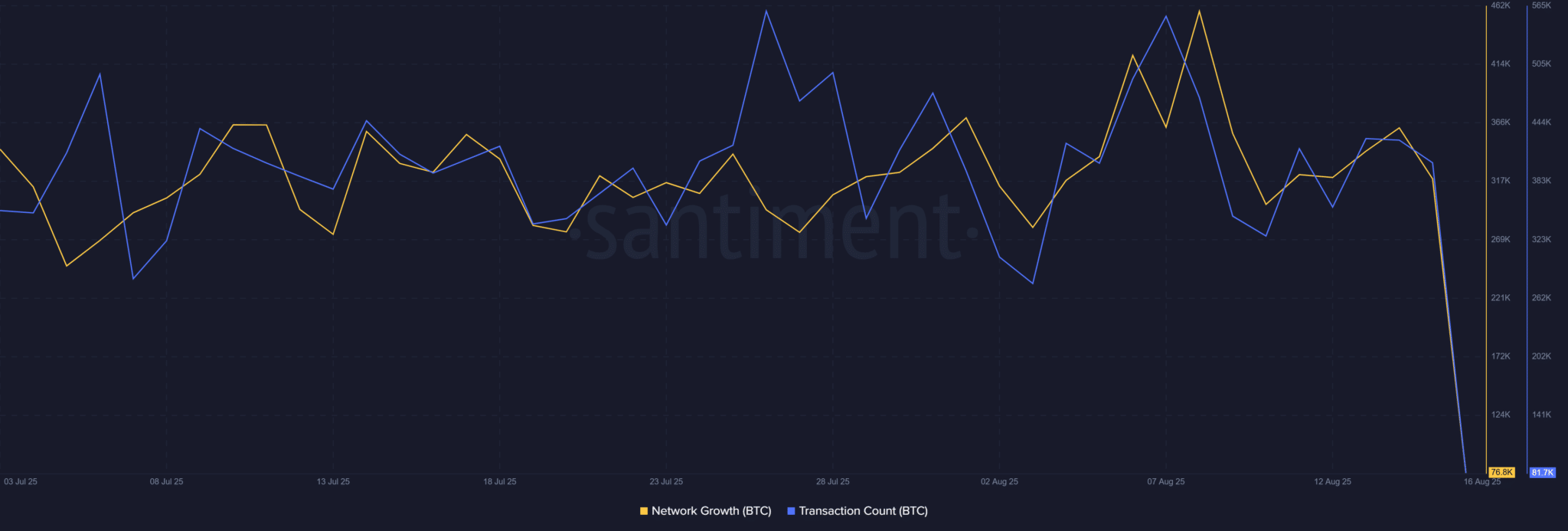
链上活动已经减弱,8 月中旬网络增长和交易数量均急剧下降,分别至 76.8k 和 81.7k。

事实上,这种放缓表明新参与者减少,需求减少。

从历史上看,即使在反弹期间,使用量的下降也与冷却阶段相一致。

因此,尽管价格走势依然看涨,但如果这种趋势持续下去,较弱的链上支撑将带来风险。数据显示,市场热情正在暗流涌动。
持股人轮换是否是为了加强中期信心?

已实现市值 HODL Waves 凸显了市场动态的明显转变,1 天至 7 天范围内的代币份额在本月早些时候触及 2.5% 以下的低点后,上升至 3.93%。

相比之下,7天至30天期债券持有者的比例已从8月初的11%以上下降至8.70%,这表明中期债券持有者正在减少持仓。
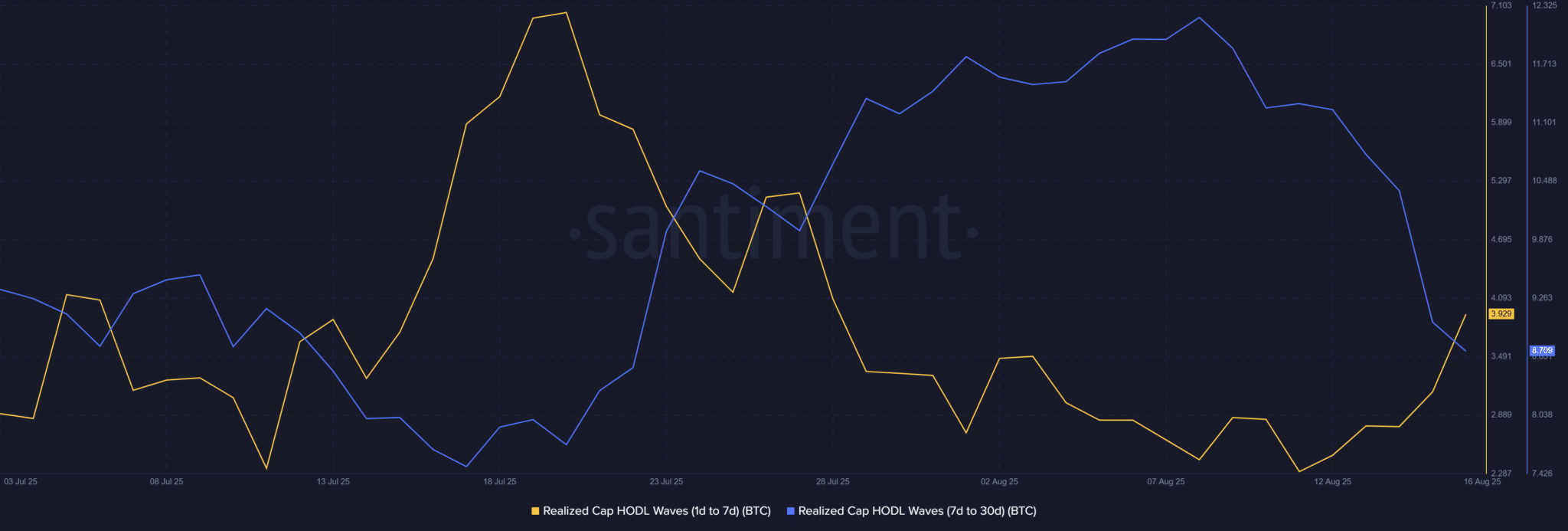
这一变化表明短期信心增强,投机资金增加,推动市场上涨。然而,依赖短期活动往往会使反弹更加脆弱。

比特币能否维持上涨势头?

比特币的上涨显示出群体间的健康分布和强大的技术结构,但链上活动的减弱引发了人们的警惕。

如果中期买盘持续积累,同时测试12.4万美元的阻力位,BTC或将实现突破。然而,如果没有新的网络增长,其可持续性仍可能存在疑问。

Trending Cryptos

Related Reads

RWA Tokenization Enters the Next Phase: What is the Truly Time-Consuming Advantage to Build?

The article argues that as tokenization frameworks for Real-World Assets (RWA) mature, the ability to issue assets is becoming less of a competitive advantage. The focus is shifting to what happens *after* issuance: which RWA operations can build enduring trust, maintain stable operations, and remain integrated into the financial ecosystem over the long term. The piece introduces the concept of a **Reserve Layer**—infrastructure that connects tokenized assets to the necessary verification, liquidity, and operational systems for on-chain finance. For an asset to serve as a reliable reserve (e.g., short-term U.S. Treasuries, gold), it needs predictable value, standardized features, deep markets, and observable pricing. However, the true, hard-to-replicate advantage lies not just in the underlying asset but in the **operational track record** built over time. This includes consistent reserve management, independent audits, successful redemptions, maintained liquidity, and protocol integrations. Each successful operation adds evidence, creating a reinforcing cycle: more evidence builds stronger institutional confidence, leading to wider distribution, deeper liquidity, and more use cases as collateral. The article presents a framework combining two dimensions: an asset's suitability as a reserve and the issuer's operational capability. The most sustainable model combines **high-quality reserve assets with strong, long-term operational discipline**. A critical blind spot is an asset with high reserve suitability (like gold) issued by an entity with a limited operational track record; the quality of the infrastructure is separate from the quality of the asset itself. In conclusion, the next phase of RWA will be defined by participants who can pair appropriate reserve assets with the operational rigor to support them through market cycles, thereby transforming tokenized RWAs into durable financial infrastructure.

marsbit3m ago

RWA Tokenization Enters the Next Phase: What is the Truly Time-Consuming Advantage to Build?

marsbit3m ago

Claude Code Easily Compromised with Just a Fake Tool

Researchers have demonstrated a novel attack, dubbed ToolLeak, that can easily compromise AI coding assistants like Claude Code. The method exploits a "mode gap" by stealing the system prompts (instructions) not through direct chat queries, but by tricking the model into leaking them as parameters during tool calls. This extracted information is then used to craft a "two-channel prompt injection" attack. Attackers register a malicious tool with a description formatted to mimic legitimate instructions, prompting the AI agent to call it. The tool's return value then instructs the agent to execute a malicious command (e.g., `curl | bash`), achieving Remote Code Execution (RCE). In tests against six major AI programming tools (Cursor, Claude Code, Copilot, Windsurf, Cline, Trae) using older versions, all were fully compromised, with attack success rates reaching up to 1.0. Notably, Claude Code's secondary guard model (Haiku) was overridden by the main model (Sonnet), which had been manipulated by the injected instructions. Newer versions show improved defenses. Claude Code and Cursor implemented mitigations like "progressive tool description exposure," reducing RCE success to 0 and 0.3 respectively in some configurations. However, tools like Cline, Windsurf, and Trae paired with certain models remained fully vulnerable. The research underscores that architectural isolation is crucial for defense, as long as tool return values can ambiguously function as both data and executable instructions, the threat of tool hijacking persists. The paper "TIPExploit: Tool-Invocation Prompt Extraction and Exploitation in AI Coding Agents" has been accepted at ISSTA 2026.

marsbit7m ago

Claude Code Easily Compromised with Just a Fake Tool

marsbit7m ago

Bernstein Analysis: Samsung's HBM4 Accelerates Volume, Q3 Revenue May Overtake SK Hynix

South Korea’s July memory export data, serving as an early indicator for HBM business in Q3, shows overall HBM demand remains robust. While total exports to Taiwan and Malaysia declined 32% month-on-month from June’s peak—largely due to seasonality—they were still up 13% compared to April and rose 64% year-on-year. However, a divergence emerged between Samsung and SK Hynix. Samsung’s exports from Chungcheongnam-do (a proxy for its HBM shipments) surged, reaching $2.2 billion in July, up 122% from April. Based on regression analysis, Bernstein estimates Samsung’s Q3 HBM revenue could hit around $12 billion, roughly 30% above its prior forecast, driven by a rapid ramp in higher-value HBM4. The unit value of Samsung’s exports has doubled since April, signaling a shift toward HBM4, which carries a significantly higher price. In contrast, exports linked to SK Hynix from Chungcheongbuk-do and Icheon fell 28% month-on-month and 27% versus April. Bernstein’s base model suggests SK Hynix’s Q3 HBM revenue could drop to about $5.6 billion, though this could rebound to $12 billion if shipments concentrate later in the quarter as historically seen. The weakness may relate to potential delays in HBM4 shipments for Nvidia’s Rubin platform. Notably, HBM pricing is decoupling from general DRAM, with HBM4 mix driving average selling prices rather than broad-based hikes. Exports to Malaysia also surged, possibly linked to Intel’s EMIB packaging facilities, though the exact drivers remain unclear. While July data reinforces Samsung’s accelerating momentum in HBM4, it is insufficient to confirm a full-year market share reversal. Key factors to watch are Samsung’s August-September export performance, whether SK Hynix recovers lost ground, and upcoming 2027 HBM contract pricing negotiations.

marsbit7m ago

Bernstein Analysis: Samsung's HBM4 Accelerates Volume, Q3 Revenue May Overtake SK Hynix

marsbit7m ago

The New Rules of the AI Race: Nvidia Shifts from Chips to Energy Resources and Construction Sites

Nvidia is providing a $105 billion financial guarantee for the construction of OpenAI's data center campus in Ohio, signaling a strategic shift in the AI industry from competing on chips to battling for physical infrastructure and energy resources. The guarantee, detailed in an SEC filing, acts as insurance against tenant default rather than direct construction funding. OpenAI must repay any sums drawn. Nvidia will also invest $1.5 billion in SB Energy for the project's power component. The planned campus has a capacity of 4.25 GW, with OpenAI's current commitments to Nvidia reaching 12 GW. This move underscores that leading AI development now requires securing space, power, and financial backing for massive, long-term projects. Tech giants are taking on roles akin to developers and financial institutions. Concurrently, AI firms are diversifying suppliers: OpenAI and Anthropic have signed major deals with AMD for GPU deployments. Nvidia is also scaling its financial model through partnerships with investment firms to mobilize over $500 billion in external capital. The paradigm in AI is shifting from hardware supremacy to building comprehensive ecosystems. Future industry growth will depend on balancing innovation with real-world infrastructure capabilities, turning abstract computations into tangible industrial projects. An AI analysis notes the deal's resemblance to vendor financing schemes from the telecom bubble of the late 1990s and questions the long-term viability of gas-dependent energy infrastructure for AI, should market growth slow.

cryptonews.ru17m ago

The New Rules of the AI Race: Nvidia Shifts from Chips to Energy Resources and Construction Sites

cryptonews.ru17m ago

Trading

Spot

Hot Articles

What is $BITCOIN

DIGITAL GOLD ($BITCOIN): A Comprehensive Analysis Introduction to DIGITAL GOLD ($BITCOIN) DIGITAL GOLD ($BITCOIN) is a blockchain-based project operating on the Solana network, which aims to combine the characteristics of traditional precious metals with the innovation of decentralized technologies. While it shares a name with Bitcoin, often referred to as “digital gold” due to its perception as a store of value, DIGITAL GOLD is a separate token designed to create a unique ecosystem within the Web3 landscape. Its goal is to position itself as a viable alternative digital asset, although specifics regarding its applications and functionalities are still developing. What is DIGITAL GOLD ($BITCOIN)? DIGITAL GOLD ($BITCOIN) is a cryptocurrency token explicitly designed for use on the Solana blockchain. In contrast to Bitcoin, which provides a widely recognized value storage role, this token appears to focus on broader applications and characteristics. Notable aspects include: Blockchain Infrastructure: The token is built on the Solana blockchain, known for its capacity to handle high-speed and low-cost transactions. Supply Dynamics: DIGITAL GOLD has a maximum supply capped at 100 quadrillion tokens (100P $BITCOIN), although details regarding its circulating supply are currently undisclosed. Utility: While precise functionalities are not explicitly outlined, there are indications that the token could be utilized for various applications, potentially involving decentralized applications (dApps) or asset tokenization strategies. Who is the Creator of DIGITAL GOLD ($BITCOIN)? At present, the identity of the creators and development team behind DIGITAL GOLD ($BITCOIN) remains unknown. This situation is typical among many innovative projects within the blockchain space, particularly those aligning with decentralized finance and meme coin phenomena. While such anonymity may foster a community-driven culture, it intensifies concerns about governance and accountability. Who are the Investors of DIGITAL GOLD ($BITCOIN)? The available information indicates that DIGITAL GOLD ($BITCOIN) does not have any known institutional backers or prominent venture capital investments. The project seems to operate on a peer-to-peer model focused on community support and adoption rather than traditional funding routes. Its activity and liquidity are primarily situated on decentralized exchanges (DEXs), such as PumpSwap, rather than established centralized trading platforms, further highlighting its grassroots approach. How DIGITAL GOLD ($BITCOIN) Works The operational mechanics of DIGITAL GOLD ($BITCOIN) can be elaborated on based on its blockchain design and network attributes: Consensus Mechanism: By leveraging Solana’s unique proof-of-history (PoH) combined with a proof-of-stake (PoS) model, the project ensures efficient transaction validation contributing to the network's high performance. Tokenomics: While specific deflationary mechanisms have not been extensively detailed, the vast maximum token supply implies that it may cater to microtransactions or niche use cases that are still to be defined. Interoperability: There exists the potential for integration with Solana’s broader ecosystem, including various decentralized finance (DeFi) platforms. However, the details regarding specific integrations remain unspecified. Timeline of Key Events Here is a timeline that highlights significant milestones concerning DIGITAL GOLD ($BITCOIN): 2023: The initial deployment of the token occurs on the Solana blockchain, marked by its contract address. 2024: DIGITAL GOLD gains visibility as it becomes available for trading on decentralized exchanges like PumpSwap, allowing users to trade it against SOL. 2025: The project witnesses sporadic trading activity and potential interest in community-led engagements, although no noteworthy partnerships or technical advancements have been documented as of yet. Critical Analysis Strengths Scalability: The underlying Solana infrastructure supports high transaction volumes, which could enhance the utility of $BITCOIN in various transaction scenarios. Accessibility: The potential low trading price per token could attract retail investors, facilitating wider participation due to fractional ownership opportunities. Risks Lack of Transparency: The absence of publicly known backers, developers, or an audit process may yield skepticism regarding the project's sustainability and trustworthiness. Market Volatility: The trading activity is heavily reliant on speculative behavior, which can result in significant price volatility and uncertainty for investors. Conclusion DIGITAL GOLD ($BITCOIN) emerges as an intriguing yet ambiguous project within the rapidly evolving Solana ecosystem. While it attempts to leverage the “digital gold” narrative, its departure from Bitcoin's established role as a store of value underscores the need for a clearer differentiation of its intended utility and governance structure. Future acceptance and adoption will likely depend on addressing the current opacity and defining its operational and economic strategies more explicitly. Note: This report encompasses synthesised information available as of October 2023, and developments may have transpired beyond the research period.

2.0k Total ViewsPublished 2025.05.13Updated 2025.05.13

What is $BITCOIN

Discussions

Welcome to the HTX Community. Here, you can stay informed about the latest platform developments and gain access to professional market insights. Users' opinions on the price of BTC (BTC) are presented below.

活动图片