Прогноз цен на солану (SOL) на 6 августа

cryptonews.ruPublished on 2025-04-04Last updated on 2025-08-05

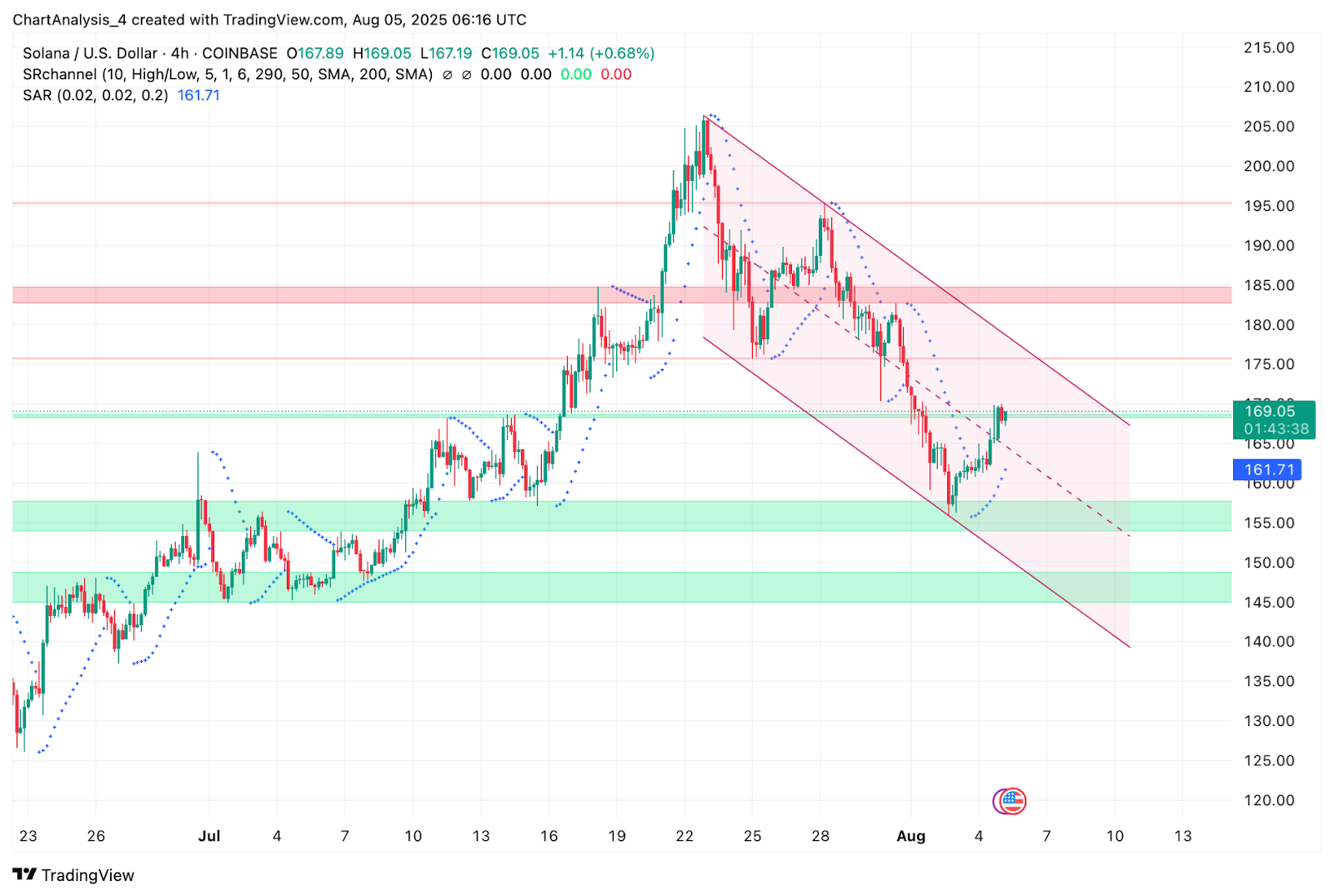
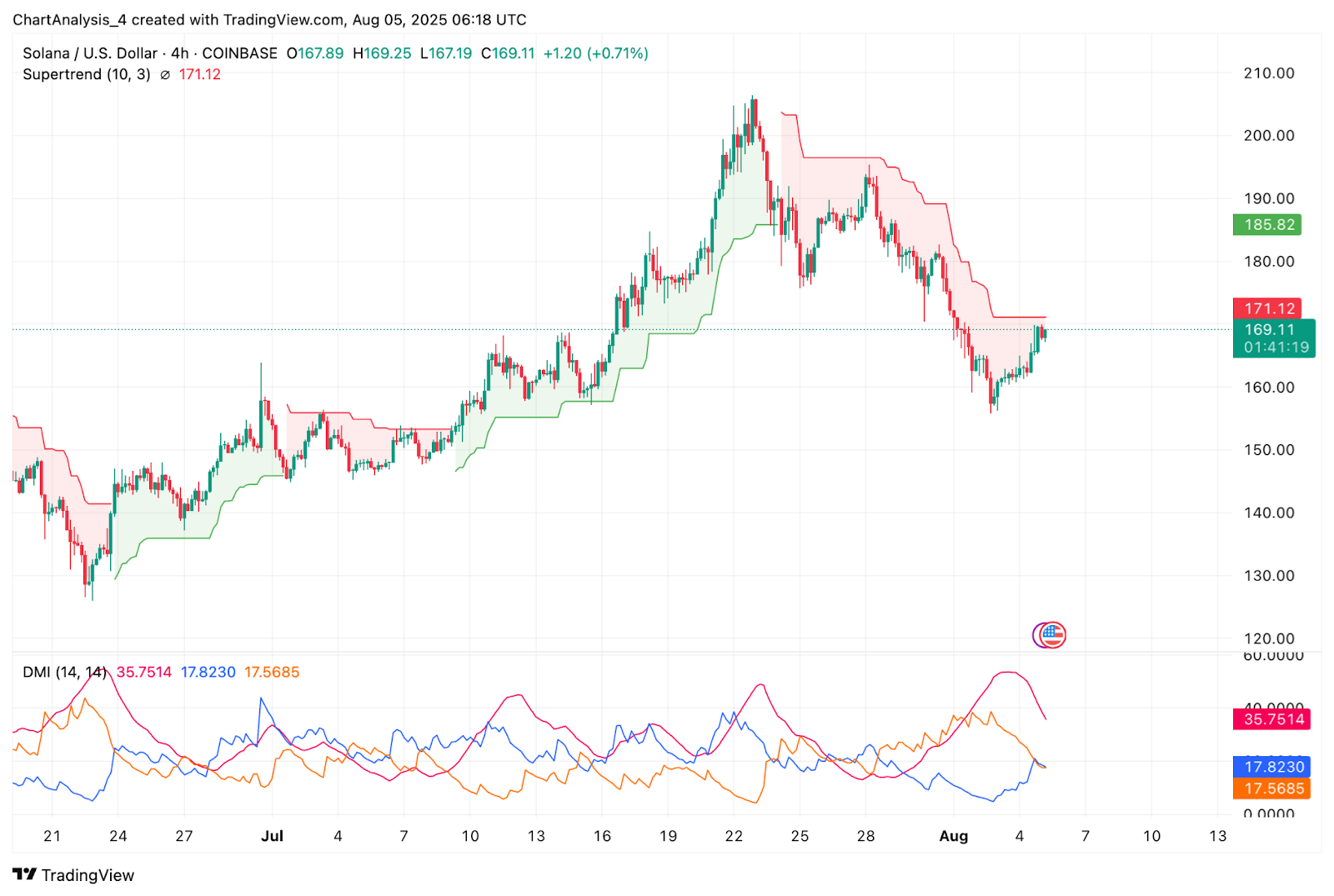
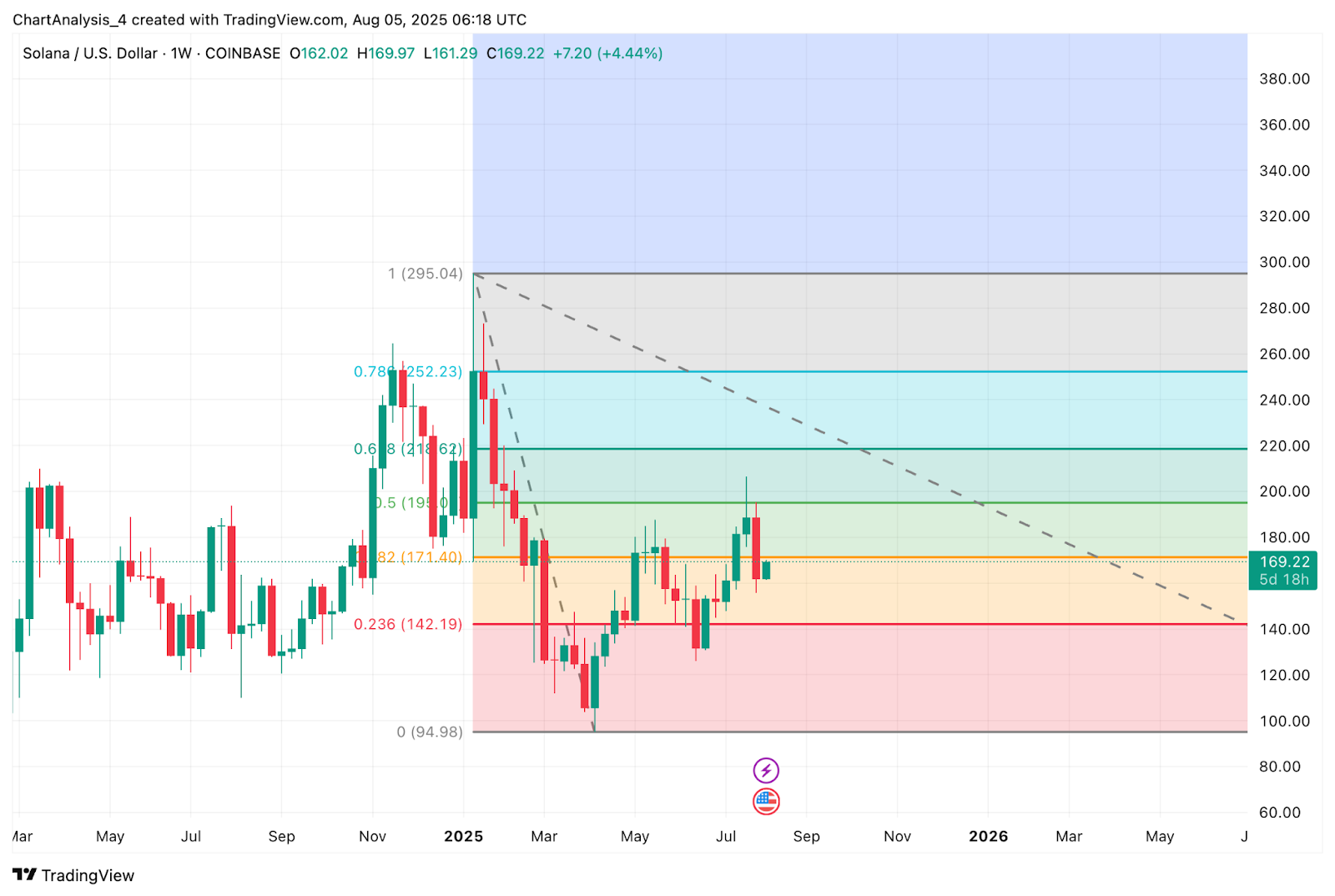
Сегодня цена акций Solana колеблется около $169,05 после краткосрочного отскока от ключевого уровня поддержки вблизи $155. Несмотря на рост более чем на 6% с начала августа, SOL теперь сталкивается с сопротивлением, обусловленным совокупностью технических барьеров. Цена остаётся ниже супертренда на 4-часовом графике и уровня коррекции Фибоначчи 0,382 от колебания с ноября по март, при этом $171,40 выступает следующим препятствием для быков.

Таблица прогноза цен на солану (SOL): 6 августа 2025 г.

Индикатор/Зона Уровень/Сигнал
Цена Соланы сегодня $169.05
Сопротивление 1 $171,12 (4H Supertrend)
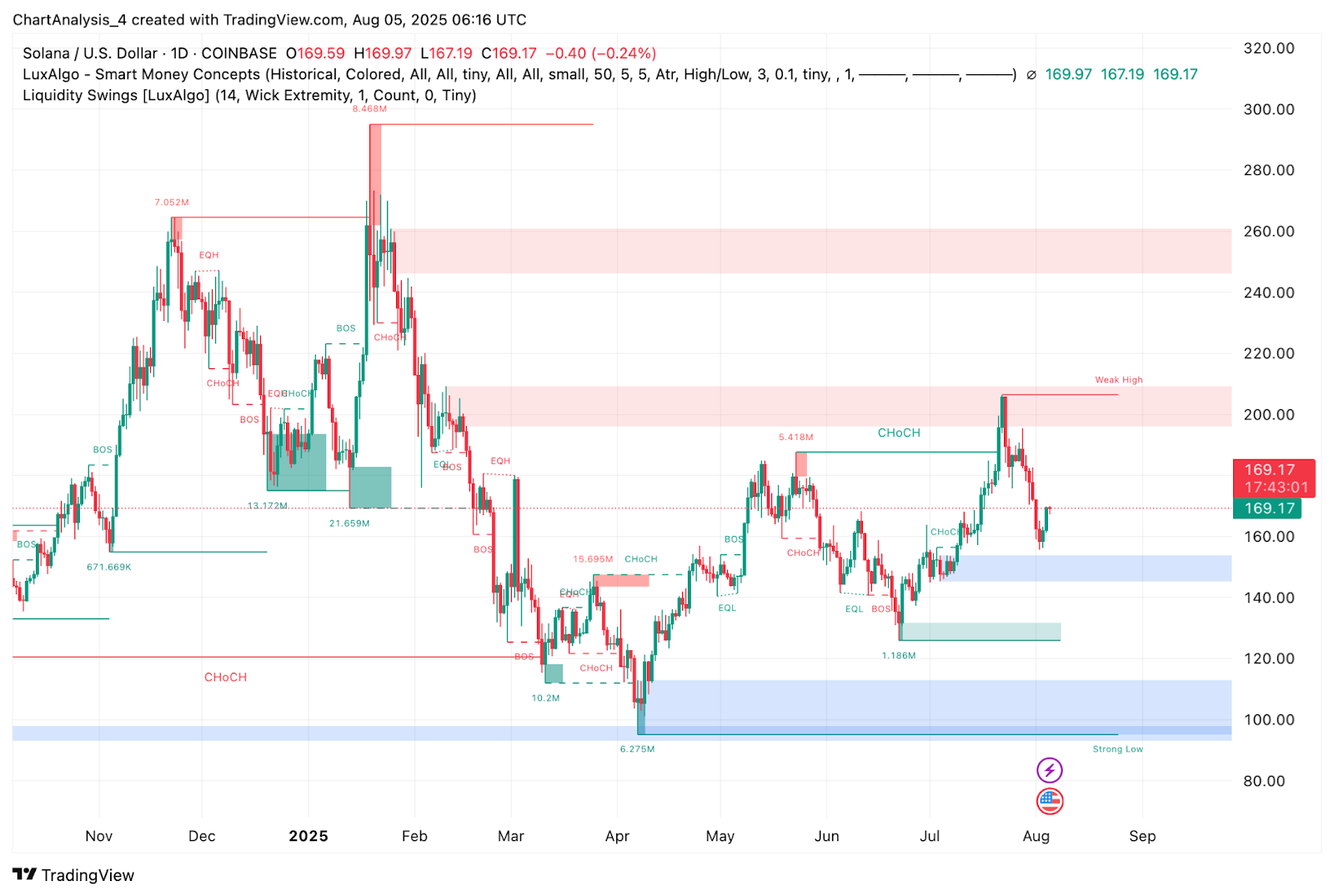
Сопротивление 2 175,80 долл. США (зона CHoCH)
Поддержка 1 $165.00
Поддержка 2 161,71 долл. США (параболический SAR)
Поддержка 3 155,00 долл. США (зона спроса)
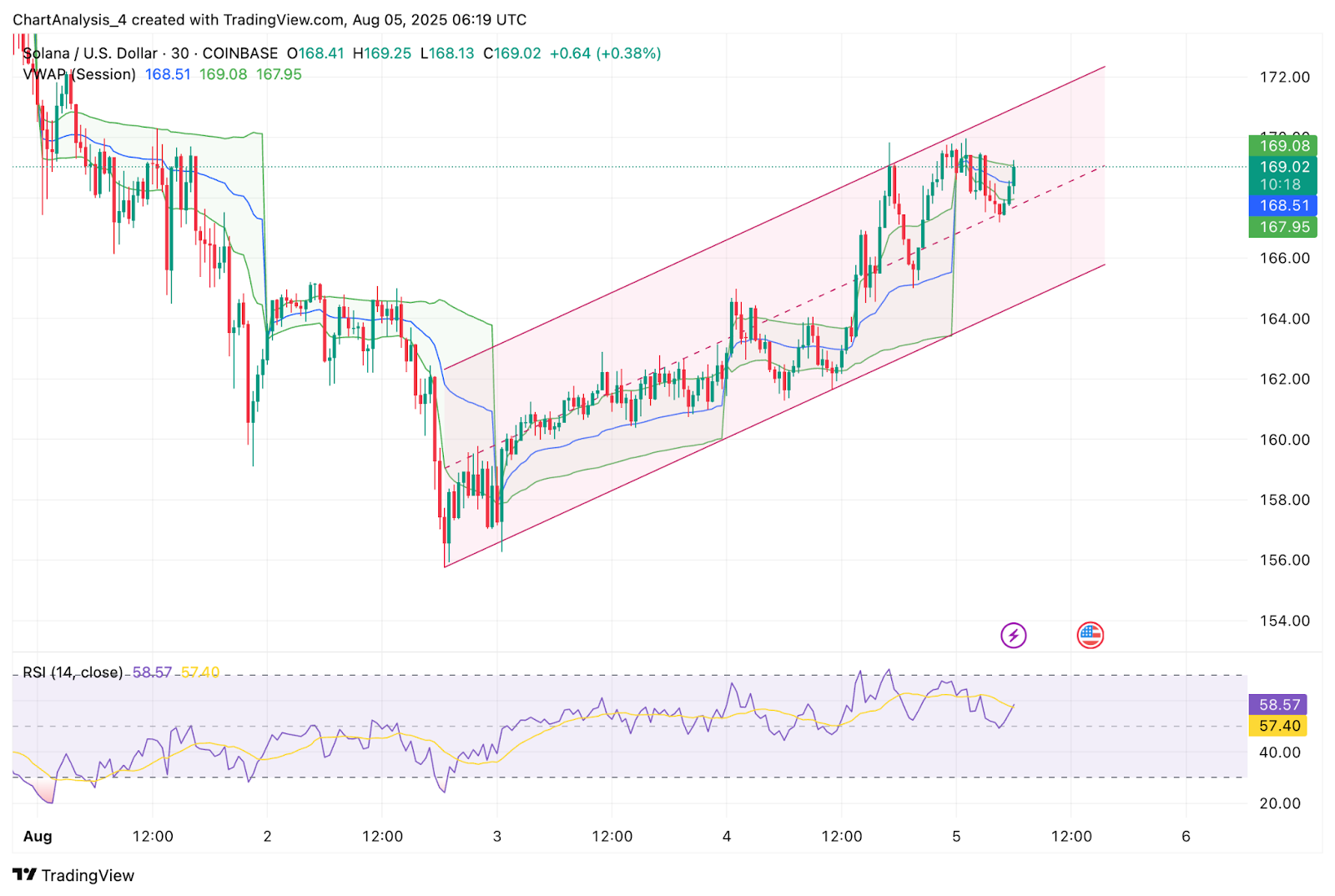
RSI (30 мин) 58,57 (нейтрально-бычий)
DMI (ADX) 35,75 (Формирование сильного тренда)
ВВАП 168,51 долл. США (цена выше, нейтральная предвзятость)
Супертренд Медвежий тренд ниже $171,12
Уровень Фибоначчи 0,382 (еженедельный) $171.40
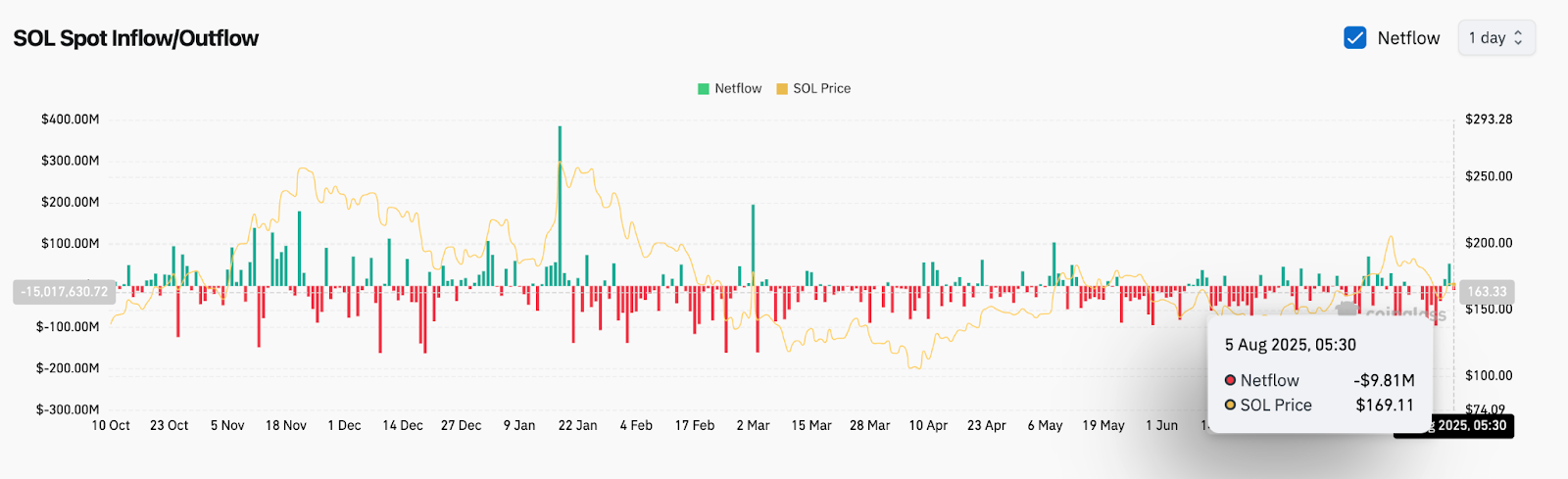
Netflow (5 августа, 05:30) -$9,81M (медвежье давление)

Что происходит с ценой Соланы?

Динамика цен SOL (Источник: TradingView)

SOL недавно отскочил от зоны слияния зон спроса между $150 и $155, где на 4-часовом графике видна сильная нижняя граница нисходящего параллельного канала. С тех пор цена двигалась внутри восходящего краткосрочного канала на 30-минутном графике, но сейчас приближается к верхней границе более крупной нисходящей структуры, которая сдерживала весь рост с 20 июля.

Parabolic SAR опустился ниже цены, указывая на начальную стадию возможного разворота тренда. Однако Supertrend остаётся медвежьим и в настоящее время находится на отметке $171,12, чуть выше текущей цены. Прорыв этого уровня подтвердит смену импульса. Между тем, VWAP на младших таймфреймах показывает, что SOL торгуется немного выше сессионной средней, что указывает на нейтральный или умеренно бычий настрой внутри дня.

Почему цена на Solana (SOL) сегодня растет?

Сегодняшний рост цены акций Solana можно объяснить отскоком структурных уровней поддержки и восстановлением краткосрочных рыночных настроений. После значительного падения ниже $180, цена акций Solana нашла ликвидность в районе $155, где несколько фитилей свидетельствовали об интересе покупателей. Отскок от этой зоны вернул акции Solana в середину нисходящего канала.
Данные SOL Netflow (Источник: Coinglass)

Несмотря на восстановление, чистый отток остаётся отрицательным. Данные Coinglass показывают, что чистый отток превысил 9,81 млн долларов по состоянию на 5 августа, что указывает на фиксацию прибыли или давление со стороны перераспределения. Это говорит о том, что отскок пока не подкреплен высоким спотовым спросом.
Динамика цен SOL (Источник: TradingView)

График 1D Smart Money подтверждает, что SOL сейчас приближается к предыдущей зоне смены характера (CHoCH) около $171–$175, ключевому структурному уровню, который может определить следующий прорыв или отскок.
Динамика цен SOL (Источник: TradingView)

На индикаторе DMI линия +DI (17,82) пытается преодолеть линию -DI (17,56), в то время как ADX остаётся на уровне 35,75. Это отражает укрепляющийся тренд, но пока без полного подтверждения направления.

Уровни Фибоначчи, линии тренда и индикаторы импульса
Динамика цен SOL (Источник: TradingView)

На недельном графике цена Solana торгуется чуть ниже уровня коррекции Фибоначчи 0,382 на отметке $171,40, который дважды отклонился от курса за последние три месяца. Этот уровень остаётся ключевым фактором для дальнейшего роста. Выше него следующая цель Фибоначчи находится вблизи $195,00 (уровень 0,5).
Динамика цен SOL (Источник: TradingView)

RSI на 30-минутном графике в настоящее время находится на уровне 58,57, что всё ещё ниже уровня перекупленности, в то время как MACD остаётся без изменений. Это означает, что импульс не перенапряжён, и потенциал для роста всё ещё существует, если покупатели вернут себе контроль над уровнем выше $171.

Цена также взаимодействует с верхней границей внутридневного восходящего канала. Если этот канал сохранится, SOL может консолидироваться в узком диапазоне между $167 и $171, прежде чем попытаться прорваться.

Прогноз цен SOL: краткосрочная перспектива (24 часа)

В ближайшей перспективе цена Solana стоит перед моментом принятия решения. Если быки преодолеют уровень супертренда $171,12 и объемы подтвердятся, следующие цели роста будут находиться вблизи $175,80, а затем $185,00. Эти уровни совпадают с предыдущим BOS и зонами отторжения ликвидности, видимыми на дневном графике.

С другой стороны, неспособность преодолеть отметку $171 может спровоцировать откат к $165, а затем к $161,71 (уровень Parabolic SAR), что также совпадает со средней линией нисходящего канала. Прорыв уровня $160 снова сменит настроения на медвежьи и может спровоцировать повторное тестирование зон спроса на $155 и $150.

Несмотря на усиление импульса, общий приток средств на рынок пока не способствует устойчивому росту. Трейдерам следует следить за объёмом, чистым потоком и VWAP для определения направления движения. Решительное дневное закрытие выше $175 сведёт на нет текущую нисходящую тенденцию.


Trending Cryptos

Related Reads

Deciphering the Ethereum Foundation's New Structure: Reaffirming Self-Sovereignty Amid Institutionalization Trends

Summary: The Ethereum Foundation (EF) has announced a major restructuring, laying off 20% of its staff and introducing a new five-layer operational framework. This move aims to clarify the EF's mission and reaffirm Ethereum's core principle of self-sovereignty amidst growing institutionalization in the crypto space. The five layers are: 1. **Protocol Layer**: Focuses on maintaining Ethereum's foundational "CROPS" values—Censorship-resistant, Robust, Open, Private, and Secure. This involves core technical work like secure hard forks and mitigating toxic MEV. 2. **Access Layer**: Ensures users can practically exercise self-sovereignty through actions like reading the chain and making transactions. A key principle is the "zero option," meaning a trusted, non-intermediated path must always exist as an alternative to any centralized service. 3. **User Layer**: Bridges the protocol and access layers by grounding EF's work in the real needs of users and organizations. This is seen as crucial for moving beyond a purely research-driven approach and ensuring development effectively serves the ecosystem. 4. **Community Layer**: Responsible for building and maintaining consensus around Ethereum's core values both internally and externally. This involves guarding against centralization, upholding technological neutrality, and preventing short-term commercial interests from undermining CROPS principles. 5. **Institutional Layer**: Manages EF's engagement with institutions, but with the precondition of self-sovereignty. The goal is not to make it easier for institutions to control users, but to demonstrate how Ethereum's technology can enable better integrations. The article argues that while institutional adoption brings legitimacy, it also risks diluting crypto's foundational ethos of decentralization. The new structure represents EF's effort to navigate this tension, upholding its core mission while actively engaging with a broader, more complex ecosystem.

marsbit11m ago

Deciphering the Ethereum Foundation's New Structure: Reaffirming Self-Sovereignty Amid Institutionalization Trends

marsbit11m ago

OpenRouter: How Did This 'AI Model Relay Station' Achieve a $10 Billion Valuation?

OpenRouter: The Model Router Building a $10B+ Company This article explores OpenRouter, a platform that aggregates access to over 400 AI models from 70+ providers (like OpenAI, Claude, Gemini) through a single API. It has grown into a unicorn with a $1.3B valuation by 2026, processing massive scale—reaching 100 trillion tokens monthly. Its core value isn't just being a "model supermarket." For developers building real-world AI applications, managing multiple models for different tasks (e.g., cheap models for titles, powerful ones for long articles) is complex. OpenRouter acts as a critical "model scheduling layer," handling routing, failover between providers, cost optimization, and enterprise features like zero-data-retention policies and budget controls. OpenRouter's business model is a "toll fee": it charges a small platform fee (5.5%) on purchased credits while passing model costs directly to users. Its revenue scales with the tokens flowing through its system, which saw explosive growth as AI apps evolved. Key growth drivers include: 1) The explosion of specialized models, increasing choice complexity; 2) AI apps shifting focus from performance to cost optimization; 3) The rise of AI agents that require more reliable, multi-step model calls. However, risks remain. Large enterprises or cloud providers (AWS, Google Cloud) could build similar internal gateways. Its position between model suppliers and developers could also create future tension over pricing and data control. To stay ahead, OpenRouter must deepen its enterprise features and prove it's more than just a request forwarder.

marsbit30m ago

OpenRouter: How Did This 'AI Model Relay Station' Achieve a $10 Billion Valuation?

marsbit30m ago

Bitcoin Falls Below $60,000 Again; After 20 Months, We've Reached a New Low

Bitcoin Drops Below $60,000, Hitting a 20-Month Low Bitcoin fell below the key $60,000 psychological level again, reaching a low of $59,023—its lowest point in approximately 20 months, dating back to October 2024. While it later recovered slightly to around $60,600, this marks its third significant breach of $60,000 this year. The downturn is attributed to two primary factors. First, U.S. spot Bitcoin ETFs are experiencing their longest streak of net outflows since launch, with nearly $5.94 billion withdrawn over 30 days. This creates sustained selling pressure as Authorized Participants sell Bitcoin to meet redemptions. Second, shifting macroeconomic expectations are adding pressure. Strong U.S. job data and hawkish remarks from Fed officials have increased market pricing for potential rate hikes, reversing the earlier liquidity-driven bullish sentiment and prompting a shift away from risk assets like Bitcoin. Analyst views are mixed. 21Shares maintains a bullish long-term outlook, expecting prices to recover towards $100,000, citing historical post-halving cycles and substantial ETF holdings as a base. In contrast, Arthur Hayes predicts a potential bottom around $40,000 within six months due to persistent Fed hawkishness. CryptoQuant suggests, based on on-chain data, that the market may not find a bottom until prices fall below the average investor cost basis around $53,000, potentially extending the bearish phase into late 2026 or early 2027. The immediate focus is on upcoming U.S. inflation data and Fed signals. Lower-than-expected CPI could offer relief, but confirmation of sticky inflation or continued ETF outflows may lead to further downside pressure. Bitcoin's ability to hold above $60,000 remains a critical test for the near-term market direction.

Odaily星球日报1h ago

Bitcoin Falls Below $60,000 Again; After 20 Months, We've Reached a New Low

Odaily星球日报1h ago

Trading

Spot
Futures

Hot Articles

Discussions

Welcome to the HTX Community. Here, you can stay informed about the latest platform developments and gain access to professional market insights. Users' opinions on the price of SOL (SOL) are presented below.

活动图片