Технический директор Ripple назвал причины низкой активности в XRP Ledger

cryptonews.ruPublished on 2025-07-17Last updated on 2025-07-30

Технический директор Ripple Дэвид Шварц (David Schwartz) объяснил причины низкой активности в блокчейне XRP Ledger. Он обвинил крупные компании в нерешительности, из-за которой сеть не обрабатывает транзакции на миллиарды долларов.

Шварц написал в соцсети Х, что одним из самых больших препятствий является необходимость соблюдать строгие нормативные требования при использовании децентрализованных бирж. Даже сама Ripple пока не может использовать XRPL DEX для платежей, поскольку опасается, что ликвидность для оплаты может быть предоставлена террористами и прочими преступниками. Невозможность проверить личность и добросовестность поставщиков ликвидности затрудняет работу регулируемых организаций в открытых сетях, пояснил Шварц.

Ripple разрабатывает инструменты, так называемые «контролируемые домены», с помощью которых участники операций смогут давать гарантию, что совершают транзакции только с проверенными и соответствующими всем требованиям организациями. Подобные инновации могут помочь повысить активность крупных компаний в XRP Ledger, написал Шварц.

Может ли криптовалюта XRP стать непригодной для корпоративных платежей из-за своей волатильности, особенно в сравнении со стейблкоинами, привязанными к фиатным валютам, задался вопросом топ-менеджер Ripple. Шварц уверен, что в случае с XRP волатильность будет скорее преимуществом, поскольку потенциал долгосрочного роста монеты перевешивает краткосрочные риски.

Шварц не согласен, что из-за появления стейблкоинов исчезнет необходимость в «мостовых активах», используемых для трансграничных платежей, — когда одна госвалюта конвертируется, например, в XRP, а затем в другую госвалюту. По мнению Шварца, стейблкоины могут быть стабильными только относительно одной конкретной фиатной монеты. К тому же, они регулируются разными правилами, в зависимости от юрисдикции. А криптовалюта XRP — нейтральный децентрализованный актив, способный объединять токенизированные ценные бумаги и кредитные портфели.

Шварц объяснил, почему крупные компании, такие как BlackRock, предпочитают развивать XRPL Ledger, а не собственные блокчейны, как это делает компания Robinhood. Дело в том, что экосистема блокчейна процветает не за счет эксклюзивности, а за счет взаимосвязи, считает представитель Ripple. Он упомянул компанию Circle, эмитента стейблкоинов USDC, — если бы она запускала токены только на своем блокчейне, это ограничило бы их распространение и ликвидность. То же самое применимо к токенизированным активам — институциональные инвесторы не захотят ограничиваться своими блокчейнами и вместо них перейдут на открытые и ликвидные сети, полагает технический директор Ripple.

Шварц попытался объяснить, почему иностранным властям или корпорациям может быть выгодно использовать сеть, управляемую американской компанией Ripple? Потому что XRPL Ledger не является американской платформой и никогда не дискриминировала ни одного участника, в противном случае люди бы перестали пользоваться этим блокчейном, сказал топ-менеджер. Даже если штаб-квартира Ripple находится в США, в ее управлении находятся лицензированные организации по всему миру, чтобы компания могла работать в разных юрисдикциях. Однако Шварц признал, что Северная Корея или Куба по причине международных санкций вряд ли станут использовать технологии Ripple.

Ранее Дэвид Шварц рассказал, каким образом токенизация может решить проблемы, связанные с владением активов и их передачей. В прошлом году технический директор Ripple раскрыл свою стратегию хранения и продажи криптоактивов.

Trending Cryptos

Related Reads

VanEck's Bitcoin Forecasts: They Predicted the Month When Growth Could Begin

VanEck's latest analysis indicates Bitcoin's market capitulation may be in its advanced stages, with 8 of its 12 tracked capitulation indicators currently active. The report notes Bitcoin traded within a very narrow range recently, with realized volatility falling to unusually low levels. While the price decline since the October 2025 peak has lasted about 10 months, historical cycles averaging 11-12.7 months suggest a potential bottom could form between September and November 2026. Key developments include a recent net inflow of approximately $663 million into U.S. spot Bitcoin ETFs, a sharp reversal from the prior month's significant outflows. However, spot trading volumes remain low, falling to levels seen during the 2023 bear market. On derivatives markets, there's a notable defensive shift, with put option premiums surging and funding rates remaining below long-term averages. Forced liquidations have also slowed significantly. A notable change is the movement of approximately 356,000 BTC that had been dormant for over a year, reducing the long-term holder supply share to below 60% for the first time in months. VanEck cautions that while intense capitulation signals historically haven't led to significant short-term outperformance (3-6 months), buying during such periods has yielded better returns over a one-year horizon. The firm emphasizes considering a potential bottoming range rather than predicting a single date.

cryptonews.ru18m ago

VanEck's Bitcoin Forecasts: They Predicted the Month When Growth Could Begin

cryptonews.ru18m ago

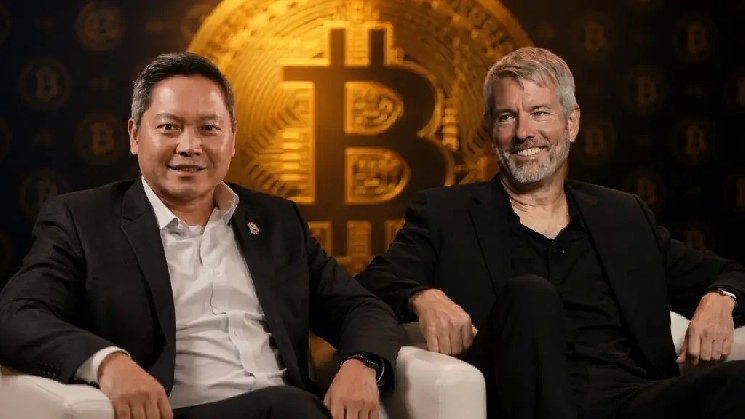
Michael Saylor, Founder of MicroStrategy, and CEO Phong Le Have Made Some Interesting Announcements! They Publicly Disclosed Their Bitcoin Price Forecast

During a Q&A session moderated by Natalie Brunell, Michael Saylor, founder of MicroStrategy, and CEO Phong Le discussed the company's strategy regarding its balance sheet, stock dynamics, and Bitcoin's role in the global financial ecosystem. Saylor described Bitcoin as the fundamental "capital asset" of the digital world, stating the company is building its future growth plans directly on this foundation. He argued that Bitcoin is not a traditional payment method or everyday currency, but digital capital, and that attracting capital from traditional finance is key to Bitcoin's growth. The company's digital credit instruments are designed to facilitate this capital inflow. CEO Phong Le addressed investor concerns about stock dilution and price volatility, asserting that capital raises and new instruments create shareholder value if they increase the amount of Bitcoin per share. He noted that a 50% drop in Bitcoin naturally leads to stock price fluctuations of up to 75%, emphasizing that MicroStrategy employs a long-term model of debt and equity financing, not short-term Bitcoin trading. The company also outlined its treasury management approach, stating it may dynamically buy BTC, repurchase credit instruments, or accumulate dollar reserves based on market conditions. Saylor reiterated his belief that Bitcoin could eventually reach $1 to $10 million as the company accumulates a larger share of its supply. He dismissed the idea of paying Bitcoin dividends as financially illogical, advocating instead for borrowing in low-cost, inflation-resistant fiat currencies (like dollars or yen) to invest in Bitcoin, which he views as the strongest appreciating asset. *This is not investment advice.

cryptonews.ru1h ago

Michael Saylor, Founder of MicroStrategy, and CEO Phong Le Have Made Some Interesting Announcements! They Publicly Disclosed Their Bitcoin Price Forecast

cryptonews.ru1h ago

Trading

Spot

Hot Articles

What is XRP 2.0

XRP 2.0: A New Frontier in the Cryptocurrency Landscape Introduction to XRP 2.0 In the ever-evolving realm of cryptocurrency, new projects continuously emerge, vying for attention and adoption. One such promising initiative is XRP 2.0, a novel cryptocurrency project designed to leverage advanced blockchain technology and robust encryption methodologies. While the name draws parallels with Ripple’s XRP, it’s crucial to note that XRP 2.0 operates independently, focusing on enhancing transaction security, privacy, and scalability. As the digital financial landscape increasingly embraces decentralized solutions, XRP 2.0 aims to contribute meaningfully to web3 and the overall expansion of crypto projects. What is XRP 2.0? At its core, XRP 2.0 is a cryptocurrency project that aims to create a secure and decentralized digital currency ecosystem. Its foundational technology integrates sophisticated blockchain principles with cutting-edge encryption techniques. The overarching goal of XRP 2.0 is to establish itself as a reliable and efficient platform enabling swift transaction execution while prioritizing enhanced privacy protections for its users. The project is promoted as a solution to many limitations faced by existing cryptocurrencies, proposing a system that can handle a higher volume of transactions with improved speed and privacy. This versatility positions XRP 2.0 as a significant contender in a marketplace riddled with various digital currencies. Who is the Creator of XRP 2.0? The identity of the creator behind XRP 2.0 has been flagged as ‘Wilbur.’ However, comprehensive details regarding Wilbur or their associated entity remain elusive. The anonymity of many cryptocurrency creators is not an uncommon phenomenon in the industry, often designed to maintain a degree of privacy and security. Who are the Investors of XRP 2.0? As of now, specific information related to the investment foundations or organizations supporting XRP 2.0 is not publicly available. In the cryptocurrency sector, the backing by reputed investors can significantly influence a project's credibility and success, yet the transparency regarding the financial supporters of XRP 2.0 has not been established. How Does XRP 2.0 Work? XRP 2.0 stands out by employing a combination of blockchain technology and advanced encryption algorithms that ensures secure and decentralized transactions. Its innovative structure includes unique features designed to foster user engagement and broaden functionalities beyond conventional cryptocurrency transactions. Among these features, XRP 2.0 incorporates AI-powered capabilities, such as text-to-image and text-to-speech functionalities. These additions are designed to enhance the interactive experience for users, promoting broader applicability across various sectors. By bridging technological advancements with user-centered design, XRP 2.0 aims to capture the attention of a diverse range of individuals and enterprises looking to integrate cryptocurrency solutions into their operational frameworks. Timeline of XRP 2.0 Understanding XRP 2.0 requires examining the milestones that have defined its journey thus far: July 23, 2023: XRP 2.0 is introduced as a novel cryptocurrency project, aiming to revolutionize secure and decentralized transaction capabilities in the blockchain domain. September 8, 2023: The launching of another project, XRP20, occurs, marking the emergence of an ERC-20 token on the Ethereum blockchain that remains unrelated to XRP 2.0. November 13, 2023: The XRP Ledger undergoes a significant update with the release of rippled server software version 2.0.0. It is essential to note that this development is disconnected from the XRP 2.0 cryptocurrency project. Key Points About XRP 2.0 To distill the essence of XRP 2.0, several critical factors emerge: Unique Features: The inclusion of features like AI-powered text-to-image and text-to-speech further diversifies the potential applications of XRP 2.0. Blockchain Technology: The framework utilizes advanced blockchain mechanisms and encryption protocols, ensuring a secure and decentralized environment for transactions. Scalability and Privacy: XRP 2.0 prioritizes enhanced privacy protections in transaction processes and the scalability necessary to accommodate a growing user base. No Affiliation with Ripple: Importantly, despite its name, XRP 2.0 does not have any allegiance or collaboration with Ripple’s XRP, distinguishing its operational framework and objectives within the cryptocurrency ecosystem. Conclusion XRP 2.0 represents an ambitious venture into the cryptocurrency sphere, aiming to offer a combination of security, privacy, and efficiency in digital transactions. By integrating sophisticated technologies and user-friendly features, the project sets out to broaden the horizons of what cryptocurrency can achieve in today's digital economy. While the anonymity of its creator and lack of disclosed investors might raise questions for some, XRP 2.0's focus on advanced functionalities and decentralisation enhances its appeal amidst an increasingly crowded crypto market. As the cryptocurrency landscape continues to evolve, XRP 2.0 may yet emerge as a pivotal player in the expansion of secure and scalable blockchain solutions.

1.5k Total ViewsPublished 2024.04.01Updated 2024.12.03

What is XRP 2.0

Discussions

Welcome to the HTX Community. Here, you can stay informed about the latest platform developments and gain access to professional market insights. Users' opinions on the price of XRP (XRP) are presented below.

活动图片