Solana’s $200 test – Traders, can SOL hold on, if so, what next?

ambcryptoPublished on 2025-07-21Last updated on 2025-07-22

Key Takeaways

Solana has officially broken above the key $200 level, underpinned by a sharp rise in staking liquidity. The question now is, are we witnessing a structural shift in how investors value SOL?


Solana [SOL] has been flexing strength. On the 21st of July, SOL printed a strong 7.88% daily candle and closed at $195, marking its highest daily close in nearly five months.

In fact, that push unlocked $538 million in realized gains, marking a two-month peak, likely from sidelined supply finally rotating out.

And yet, follow-through was measured. The next session opened with SOL posting a 4.61% intraday move.

According to AMBCrypto, SOL’s next leg depends on whether this resilience can sustain a bullish continuation.

Staking conviction hints at a strategic shift

Historically, SOL’s price action has closely tracked staking flows, tending to rally as more capital gets locked in for yield. This time’s no different.

Off the back of a 23% weekly move, Solana’s TVL saw a sharp uptick, pulling in nearly $800 million in inflows and reclaiming the $9.95 billion mark for the first time in around 23 weeks.

Solana TVLSolana TVL

Source: DeFilLama

Put simply, SOL’s breakout isn’t just a relative trade against Ethereum [ETH], even though the SOL/ETH pair ripped nearly 12% in under 48 hours as ETH faded into resistance.

The real driver? Capital rotating with intent into protocol-level yield, signaling conviction-backed flow rather than just speculative bid.

According to AMBCrypto, if buyers defend this bid, Solana sets up for continuation and potential higher timeframe expansion.

FOMO now leading the charge for Solana

As flagged by AMBCrypto, Solana cleared a key supply zone at $185, at press time, which marked a major cost basis cluster. 

With previously underwater holders now in the green, the $538 million in realized gains could be just the first leg of distribution.

That’s where FOMO kicks in. Solana’s new address count spiked 26%, with 1.5 million wallets initiated around the $195 level, signaling fresh demand entering at local highs.

Sol addressesSol addresses

Source: Glassnode

Why does it matter?

While staking squeezes the circulating float, FOMO continues to absorb liquidity exits on the bid, maintaining a bullish market structure despite ongoing profit-taking.

If this structure holds, Solana looks poised to clear the $200 resistance cleanly, with sustained demand from both rotational capital and conviction-based positioning driving continuation.


Share

Trending Cryptos

Related Reads

Li Fei-Fei's Latest Long-Form Article: When Video Generation, Robotics, and NVIDIA All Call Themselves World Models, We Need a Taxonomy

In a new article, Dr. Fei-Fei Li addresses the widespread and often inconsistent use of the term "world model" in AI. She proposes a clear, functional taxonomy rooted in the classic Partially Observable Markov Decision Process (POMDP) loop (agent → action → state → observation → agent). According to this framework, current systems called "world models" are different projections of this loop, categorized by their primary output: 1. **Renderers**: Output observations (pixels). Their goal is visual fidelity for human consumption (e.g., video generation models like Sora). They are the most commercially mature but are limited by a focus on appearance over physical accuracy. 2. **Simulators**: Output states (geometric, physical, dynamic representations). They provide a structurally accurate world for both human professionals (e.g., architects) and computational agents (e.g., robots for training). Li argues simulators are the crucial, underappreciated bridge, as they can underpin both rendering and planning. 3. **Planners**: Output actions. Given an observation and a goal, they decide what an agent should do next (e.g., robotic action models). This area is highly promising but remains the least mature for real-world deployment. Li highlights a key trend: the boundaries between these three categories are beginning to blur, as they all rely on a shared underlying understanding of geometry, physics, and dynamics. The logical endpoint is a unified world foundation model capable of switching between rendering, simulation, and planning based on downstream needs. This convergence, she concludes, is central to advancing spatial intelligence—enabling machines not just to talk about the world, but to truly understand, imagine, and interact with it.

marsbit4h ago

Li Fei-Fei's Latest Long-Form Article: When Video Generation, Robotics, and NVIDIA All Call Themselves World Models, We Need a Taxonomy

marsbit4h ago

Forbes Feature: Stablecoin Cross-Border Payments Are Faster, But Not Yet Cheaper

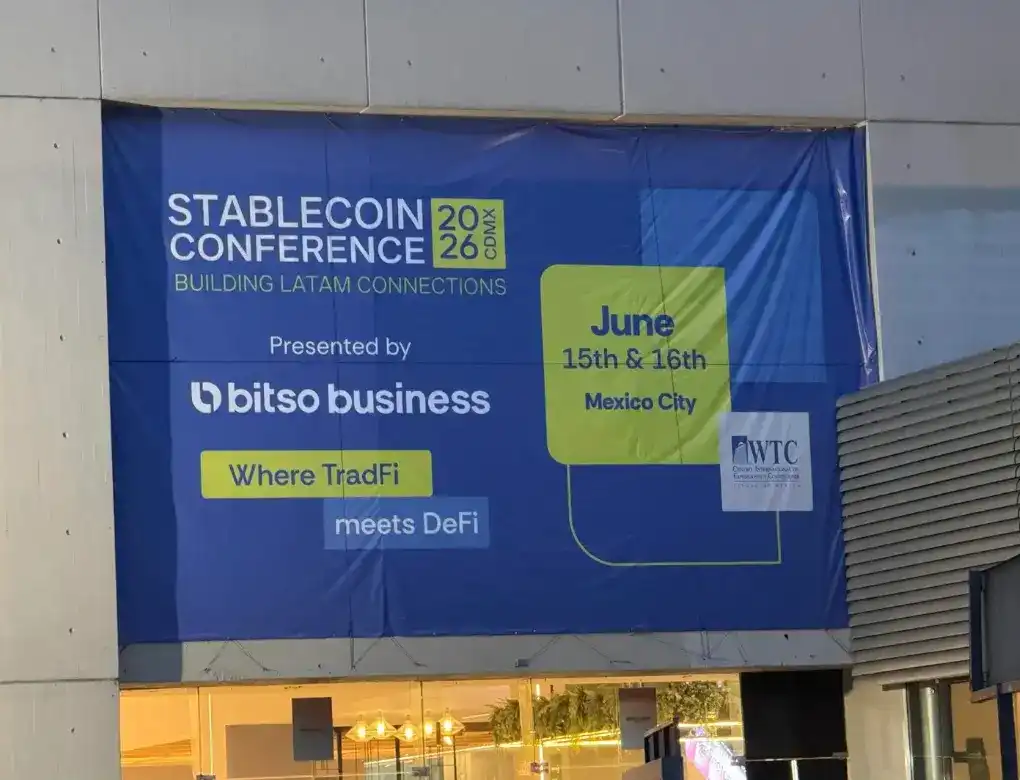
A Forbes feature delves into the state of stablecoin-based cross-border payments, noting rapid growth but a key shortfall: while faster and more accessible, they are not yet cheaper. At a recent industry conference in Mexico City, optimism about technology, regulation, and volume was tempered by discussions with practitioners. The core issue is liquidity. Traditional FX brokers charge 60-70 basis points, and stablecoins promise to slash this to 2-5 basis points. However, this theoretical cost advantage cannot be realized until deep liquidity pools are established at scale, requiring significant institutional capital inflow. A major adoption barrier is trust. Businesses often rely on long-standing relationships with traditional brokers, valuing reliability over marginal cost savings. This shift will be gradual. Furthermore, successful companies in the space are not positioning themselves as replacements for legacy systems like SWIFT, but as complements. They leverage stablecoins for speed while using traditional rails for their standardization and reliability in ensuring accurate payment details—a critical factor for supplier payments to avoid customs issues. Companies like Caliza, experiencing high monthly growth, exemplify this hybrid approach. The industry anticipates consolidation, as long-term viability will depend on securing the essential trifecta: proper licensing, robust fiat on/off-ramps, and deep liquidity. Without these, firms risk being mere intermediaries rather than building sustainable businesses.

marsbit4h ago

Forbes Feature: Stablecoin Cross-Border Payments Are Faster, But Not Yet Cheaper

marsbit4h ago

Trading

Spot

Hot Articles

Discussions

Welcome to the HTX Community. Here, you can stay informed about the latest platform developments and gain access to professional market insights. Users' opinions on the price of SOL (SOL) are presented below.

活动图片