山寨币逆袭进行时:比特币沉睡?ADA准备掀桌

金色财经Published on 2025-07-21Last updated on 2025-07-21

最近,不少小伙伴可能都盯着 $BTC(比特币) 的动向,想着是不是又要启动一波新行情了。但你知道吗?就在大家都盯着比特币的时候,有个“老朋友”正在悄悄蓄力——对,说的就是 $ADA(卡尔达诺 )?

641

这波看点有点意思,简单来说,ADA 像是一个在角落悄悄热身的选手,市场却开始悄悄议论:他是不是要来一波“逆袭”?

牛市黑马?ADA 准备偷偷超车 BTC?

当大家都把目光盯在 BTC 的下一次突破时,卡尔达诺正默默酝酿着自己的爆发。

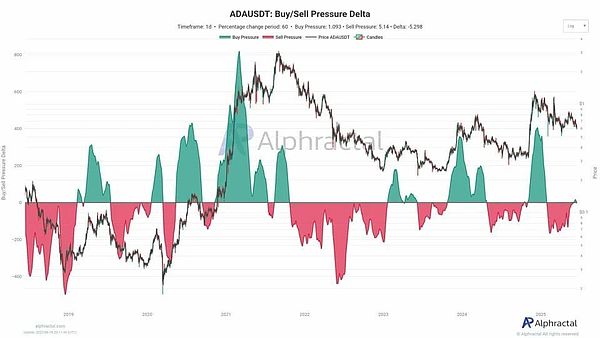
来自 Alpharactal 的首席执行官 Joao Wedson 就指出:ADA 的买卖压力正在出现罕见的“逆转”信号,这类信号过去经常出现在大涨之前。
641

? 从 ADA/USDT 和 ADA/BTC 的图表来看,这种压力增量已经从持续数月的“卖出区域”转回到“看涨区域”,类似的信号在 2020 和 2021 年后都伴随着不小的行情。

641

简单来说:卡尔达诺也许不是沉寂,而是在蓄力。

然而另一方面,BTC 的故事也还没完...

虽然 ADA 看起来动静很大,但 BTC 也不是说就“要凉”了。尽管比特币距离上个月的高点(111,814美元)已经回调了约 6%,但其实它依然稳在关键支撑位上,表现还算淡定。

不过,有些细节值得注意了:
641

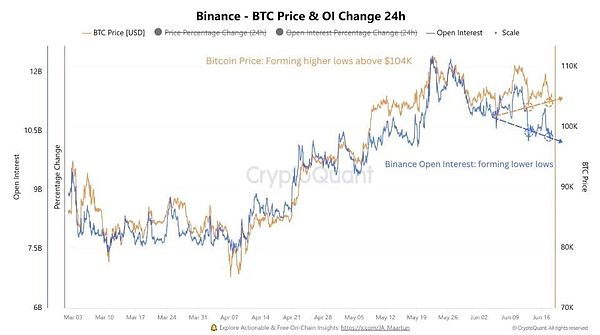
  • 币安上的未平仓合约数量下降,说明很多交易者正在降低杠杆,变得谨慎;

    641

  • 清算数据也显示多头频繁被扫,尤其在104,000美元区域形成一个清算集群;

    641

  • 鲸鱼活跃度却在暴涨,数据显示,大户们的“留仓”意愿更强,而且没有出现明显的资金外流。

这就很有意思了:散户观望、机构吸筹?

ADA 短期超卖 vs BTC 稳中偏空:到底谁更有机会?
641

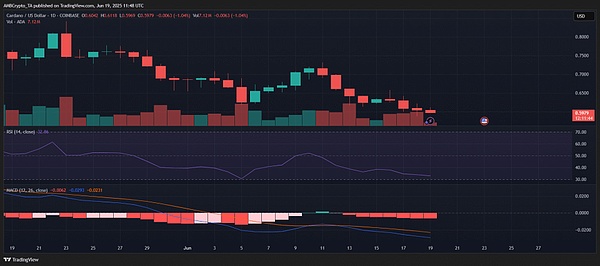
从技术面来看,ADA 最近跌得比较狠,已经跌破 0.60 美元,RSI 跌到 32.86,进入明显超卖区;

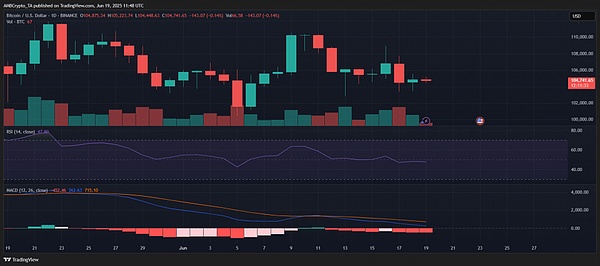
而比特币虽然也走弱,但 RSI 还有 47.80,看起来更像是“盘整”。
641

? 两者的 MACD 柱状图都还在红色区域,但 ADA 的位置更接近“触底反弹”的临界点。

小结下:

项目

RSI

趋势状态

潜在动能

ADA

32.86

明显超卖

⚠️ 可能反弹

BTC

47.80

盘整

? 观望为主

最后的冷静提醒:历史不会复制,但会押韵

虽然 ADA 看起来有不少积极信号,但也不是第一次这么“看着要飞”,结果又熄火了。

特别是 ADA/BTC 的走势显示,过去几次压力逆转都没能真正改变下行趋势。所以,不要被一时的数据冲昏头脑,毕竟 BTC 的主导地位还在,ADA 想超车,还得看市场脸色。

总结一下:机会?陷阱?还是新周期的起点??

  • ADA 正在发出看涨信号?,但别忘了它还有历史包袱在身;

  • BTC 看似平静,但背后资金结构正在慢慢变化;

  • 衍生品市场的降温 & 清算,可能在为下一波方向积蓄动能;

  • 短期波动或许更像“迷雾测试”?,方向仍未最终确认。

如果你是短线选手,要盯紧“假突破”的风险⚠️;如果你更关注中长线布局,或许现在就是考验信仰、磨炼耐心的时候了。

 结论:?

ADA 可以关注,但别All in,合理控制风险。比特币虽然“没什么热闹”,但往往它才是悄悄铺垫大行情的那一个。

行情就是这样,越是“看不懂”,越要保持清醒的头脑?别急,我们慢慢走在趋势前面 ?

如果你觉得这篇文章对你有帮助,欢迎点赞转发分享给其他币友们~?想看更多币圈深水解析?关注我不迷路 

Trending Cryptos

Related Reads

Mid-Year Review of U.S. Crypto Policy: CLARITY Gains Momentum for a Comeback, Who Will Lead the Second Half?

Mid-Point Review of U.S. Crypto Policy: CLARITY Act Gains Momentum, Who Will Lead the Second Half? The U.S. crypto industry is hopeful for a breakthrough as the Senate advances the CLARITY Act, but securing the necessary 60 votes requires bipartisan compromise. With only about 40 legislative days left, the path is tight. The policy agenda is crowded. Alongside CLARITY, multiple crypto tax proposals spun off from the new PARITY Act seek attachment to larger bills. The Blockchain Regulatory Certainty Act aims to codify developer protections, and key rules under GENUIS remain under negotiation. The CFTC operates with four vacant commissioner seats, creating uncertainty. A major unresolved battle is over which regulator—state authorities, the CFTC, or the SEC—will gain jurisdiction over prediction markets. The sector also faces the impending departure of two key advocates: SEC Commissioner Hester M. Peirce and Senator Cynthia Lummis. Industry leaders provided cautious perspectives. Sara K. Weed doubts CLARITY will pass this Congress, expecting agencies like the SEC to provide guidance instead. Sulolit "Raj" Mukherjee believes targeted crypto tax provisions have a real chance if attached to must-pass year-end legislation. Rashan Colbert highlights the CFTC's recent efforts to build a regulatory framework for the growing prediction markets sector, warning against an overly broad "gambling" classification that could stifle innovation. The second half of the policy year has begun. The window for action is narrow, but opportunities remain. Sustained bipartisan engagement is crucial for achieving substantive results.

Foresight News4m ago

Mid-Year Review of U.S. Crypto Policy: CLARITY Gains Momentum for a Comeback, Who Will Lead the Second Half?

Foresight News4m ago

Will the STRC Issue Price Determined by ChatGPT Lead to a Death Spiral?

A "death spiral" concerns surround the "STRC" preferred shares from MicroStrategy, a financial instrument designed by CEO Michael Saylor with significant AI consultation to trade near a $100 face value. Since its July 2025 launch alongside a ~40% Bitcoin (BTC) decline, STRC has traded at a discount, hitting a low of $82.53 and pushing its effective dividend yield above 12.9%. The debate centers on whether STRC's structure—which relies on MicroStrategy issuing more shares to fund Bitcoin purchases and dividends—is sustainable or a "centralized Ponzi scheme," as economist Peter Schiff claims. Skepticism grew after Saylor revealed the product's design involved extensive AI dialogue to create a legally viable, monthly-dividend, price-stable preferred share—a novel concept. MicroStrategy's recent sale of 32 BTC to cover dividends, coupled with a sharp slowdown in its weekly Bitcoin buys (from billions to ~$100 million in June), has intensified fears. The "at-the-market" equity issuance, a key funding mechanism, is paused while STRC trades below par. This raises the "death spiral" risk: a lower STRC price triggers automatic dividend rate hikes, increasing cash obligations and potentially forcing more share sales or Bitcoin divestments. Bullish analysts like Jesse Myers argue the sell-off stems from leveraged positions unwinding, not fundamental failure, noting the company can cover dividends for decades if BTC appreciates modestly. The shift to semi-monthly dividends and the high yield at discounted prices may attract new buyers. Major AI models (ChatGPT, Grok, Claude) suggest a return to $100 is possible but conditional on restored market confidence, sustainable dividend coverage without asset sales, and a Bitcoin price recovery. The critical test arrives as new dividend rules take effect June 30, likely raising rates again with STRC below $95. The central question remains: Can MicroStrategy fulfill its obligations without selling Bitcoin, or will the mechanism accelerate its own decline?

marsbit11m ago

Will the STRC Issue Price Determined by ChatGPT Lead to a Death Spiral?

marsbit11m ago

Why Did NVIDIA's Bond Issue Go Unnoticed While SpaceX's Caused a Plunge?

The article analyzes the contrasting market reactions to recent bond issuances by SpaceX and NVIDIA. While NVIDIA's $25 billion bond offering was met with strong demand and seen as securing long-term capital for its already profitable AI business, SpaceX's move to raise at least $20 billion in bonds (primarily to refinance bridge loans) triggered a sell-off in its stock (SPCX). The key difference lies in the stage of cash flow validation for their respective core narratives. For NVIDIA, the AI boom is generating substantial, visible revenue and profits, making debt a tool to amplify a proven growth curve. For SpaceX, despite a strong cash position post-IPO and a revenue-generating business in Starlink, its valuation is heavily tied to future, capital-intensive projects like Starship, global satellite networks, and potential AI infrastructure. The bond issuance acted as a trigger, shifting market focus from SpaceX's long-term vision to the pressing question of whether Starlink's profits can fund these ambitious, unproven ventures before they generate their own returns. Thus, the market penalizes not the act of borrowing itself, but the perceived gap between high capital expenditure and the speed of cash flow realization. SpaceX's valuation recovery hinges on demonstrating that Starlink's profitability can outpace the burn rate of its futuristic projects or that those projects (like Starship achieving reliable, low-cost reusability) can soon transition from costly visions to commercial realities.

marsbit16m ago

Why Did NVIDIA's Bond Issue Go Unnoticed While SpaceX's Caused a Plunge?

marsbit16m ago

Will the STRC Issue Price Determined by ChatGPT Really Fall into a Death Spiral?

"Strategy's" (STRC) preferred share, a financial instrument designed by CEO Michael Saylor in consultation with AI to trade steadily at $100, faces mounting pressure. Since its July 2025 launch alongside a ~40% Bitcoin price drop, STRC has traded at a steep discount, hitting a low of $82.53. This discount pushes its effective dividend yield above 12.9%. The core debate revolves around whether STRC's structure is sustainable or a "centralized Ponzi scheme," as economist Peter Schiff claims. The mechanism relies on issuing new shares ("at-the-market" offerings) to fund Bitcoin purchases and dividend payments. However, the deep discount has paused these ATM offerings, slowing Bitcoin accumulation and forcing a minor sale of 32 BTC to cover obligations. Proponents, like The Smarter Web Company's Jesse Myers, argue the sell-off is a leveraged unwinding, not a fundamental failure. They note Strategy has ample resources to cover dividends for years if Bitcoin appreciates modestly. The deep discount also makes STRC attractive for yield-seeking buyers, as dividends are calculated on the $100 face value. The key test is whether Strategy can maintain dividends without sustained Bitcoin sales. A critical watchpoint is June 30th, when STRC switches to semi-monthly dividends. An automatic rule will likely raise the dividend rate further because the price remains below $95$, potentially creating a "death spiral": lower prices trigger higher yields, increasing the cash burden and forcing more dilution or asset sales. The question of whether this AI-designed "flywheel" is a stable instrument or a flawed accelerator will be answered by its price action and Strategy's funding choices in the coming months.

链捕手16m ago

Will the STRC Issue Price Determined by ChatGPT Really Fall into a Death Spiral?

链捕手16m ago

Trading

Spot
Futures

Hot Articles

What is $BITCOIN

DIGITAL GOLD ($BITCOIN): A Comprehensive Analysis Introduction to DIGITAL GOLD ($BITCOIN) DIGITAL GOLD ($BITCOIN) is a blockchain-based project operating on the Solana network, which aims to combine the characteristics of traditional precious metals with the innovation of decentralized technologies. While it shares a name with Bitcoin, often referred to as “digital gold” due to its perception as a store of value, DIGITAL GOLD is a separate token designed to create a unique ecosystem within the Web3 landscape. Its goal is to position itself as a viable alternative digital asset, although specifics regarding its applications and functionalities are still developing. What is DIGITAL GOLD ($BITCOIN)? DIGITAL GOLD ($BITCOIN) is a cryptocurrency token explicitly designed for use on the Solana blockchain. In contrast to Bitcoin, which provides a widely recognized value storage role, this token appears to focus on broader applications and characteristics. Notable aspects include: Blockchain Infrastructure: The token is built on the Solana blockchain, known for its capacity to handle high-speed and low-cost transactions. Supply Dynamics: DIGITAL GOLD has a maximum supply capped at 100 quadrillion tokens (100P $BITCOIN), although details regarding its circulating supply are currently undisclosed. Utility: While precise functionalities are not explicitly outlined, there are indications that the token could be utilized for various applications, potentially involving decentralized applications (dApps) or asset tokenization strategies. Who is the Creator of DIGITAL GOLD ($BITCOIN)? At present, the identity of the creators and development team behind DIGITAL GOLD ($BITCOIN) remains unknown. This situation is typical among many innovative projects within the blockchain space, particularly those aligning with decentralized finance and meme coin phenomena. While such anonymity may foster a community-driven culture, it intensifies concerns about governance and accountability. Who are the Investors of DIGITAL GOLD ($BITCOIN)? The available information indicates that DIGITAL GOLD ($BITCOIN) does not have any known institutional backers or prominent venture capital investments. The project seems to operate on a peer-to-peer model focused on community support and adoption rather than traditional funding routes. Its activity and liquidity are primarily situated on decentralized exchanges (DEXs), such as PumpSwap, rather than established centralized trading platforms, further highlighting its grassroots approach. How DIGITAL GOLD ($BITCOIN) Works The operational mechanics of DIGITAL GOLD ($BITCOIN) can be elaborated on based on its blockchain design and network attributes: Consensus Mechanism: By leveraging Solana’s unique proof-of-history (PoH) combined with a proof-of-stake (PoS) model, the project ensures efficient transaction validation contributing to the network's high performance. Tokenomics: While specific deflationary mechanisms have not been extensively detailed, the vast maximum token supply implies that it may cater to microtransactions or niche use cases that are still to be defined. Interoperability: There exists the potential for integration with Solana’s broader ecosystem, including various decentralized finance (DeFi) platforms. However, the details regarding specific integrations remain unspecified. Timeline of Key Events Here is a timeline that highlights significant milestones concerning DIGITAL GOLD ($BITCOIN): 2023: The initial deployment of the token occurs on the Solana blockchain, marked by its contract address. 2024: DIGITAL GOLD gains visibility as it becomes available for trading on decentralized exchanges like PumpSwap, allowing users to trade it against SOL. 2025: The project witnesses sporadic trading activity and potential interest in community-led engagements, although no noteworthy partnerships or technical advancements have been documented as of yet. Critical Analysis Strengths Scalability: The underlying Solana infrastructure supports high transaction volumes, which could enhance the utility of $BITCOIN in various transaction scenarios. Accessibility: The potential low trading price per token could attract retail investors, facilitating wider participation due to fractional ownership opportunities. Risks Lack of Transparency: The absence of publicly known backers, developers, or an audit process may yield skepticism regarding the project's sustainability and trustworthiness. Market Volatility: The trading activity is heavily reliant on speculative behavior, which can result in significant price volatility and uncertainty for investors. Conclusion DIGITAL GOLD ($BITCOIN) emerges as an intriguing yet ambiguous project within the rapidly evolving Solana ecosystem. While it attempts to leverage the “digital gold” narrative, its departure from Bitcoin's established role as a store of value underscores the need for a clearer differentiation of its intended utility and governance structure. Future acceptance and adoption will likely depend on addressing the current opacity and defining its operational and economic strategies more explicitly. Note: This report encompasses synthesised information available as of October 2023, and developments may have transpired beyond the research period.

431 Total ViewsPublished 2025.05.13Updated 2025.05.13

What is $BITCOIN

Discussions

Welcome to the HTX Community. Here, you can stay informed about the latest platform developments and gain access to professional market insights. Users' opinions on the price of BTC (BTC) are presented below.

活动图片