战火硝烟中的数字黄金:十年数据解密比特币免疫基因

深潮TechFlowPublished on 2025-06-20Last updated on 2026-08-24

Abstract

过去十年数据显示,比特币在地缘政治冲突中展现出显著的价格弹性,但其避险属性尚未完全确认。

撰文:White55,火星财经


过去十年的金融市场数据揭示了一个引人瞩目的现象:比特币价格在战争与武装冲突环境中持续展现出显著的抗压能力。


随着近期中东地区以色列与伊朗冲突局势升级,比特币市场价格再次呈现稳定态势,延续了这一特殊属性。回溯历史冲突案例可以发现,多维度因素共同塑造了这一特征,其中加密货币的全球采纳进程与机构资本参与度的提升发挥着关键作用。


市场观察人士对于冲突爆发初期的价格反应存在共识性预判。ETC 集团(隶属于 Bitwise 旗下 ETP 平台)研究主管安德烈·德拉戈施(André Dragosch)指出,地缘政治危机爆发后的短期内,比特币价格往往承受冲击。尽管近年来 BTC 整体波动性呈现下行趋势,其资产属性仍被归类于高风险范畴,突发事件引发的恐慌性抛售概率居高不下。然而 Velar(比特币 L2 流动性协议)联合创始人兼首席执行官 Mithil Thakore 向 Cointelegraph 阐释了反向逻辑链:「长期视角下,地缘政治冲突通过三重传导机制推升比特币价值——财政扩张政策刺激、货币政策转向宽松、供应链断裂叠加大宗商品价格异动,这些要素共同驱动全球通胀预期上行,从而创造比特币的增值环境。」


历史数据印证了比特币在地缘危机中的非凡抗跌性,但需要厘清的是:价格稳定表现不等同于避险资产属性的确认。比特币的市场反应呈现复杂的多因素耦合特征,机构参与深度与区域普及程度都可能成为关键变量。下文将通过近十年典型冲突案例展开实证分析:
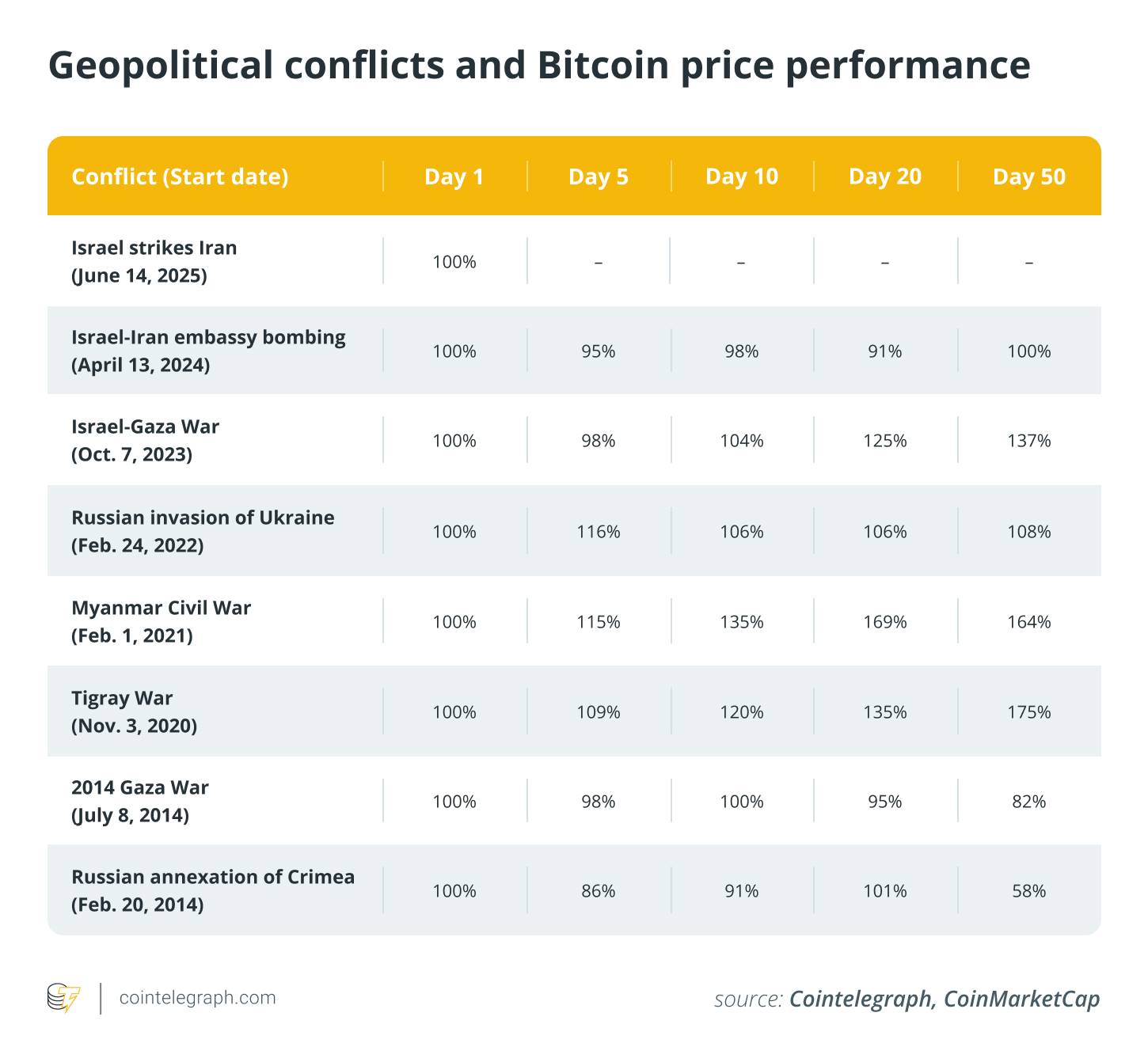
比特币的价格在冲突时期具有弹性,但也可能取决于采用或机构参与等因素。


2025 年以色列 - 伊朗全面冲突(6 月 13 日爆发)


6 月 13 日凌晨,以色列军方对伊朗境内三十余处战略目标实施精确打击,此次袭击规模创 1980 年代两伊战争以来之最。此后数日,中东地区这两大宿敌持续展开战略导弹互攻,紧张态势不断升温。尽管存在局势失控风险(尤其在美国可能介入的背景下),金融市场表现出超预期的镇定。比特币市场同步该趋势,在冲突爆发后呈现逆向上行曲线。
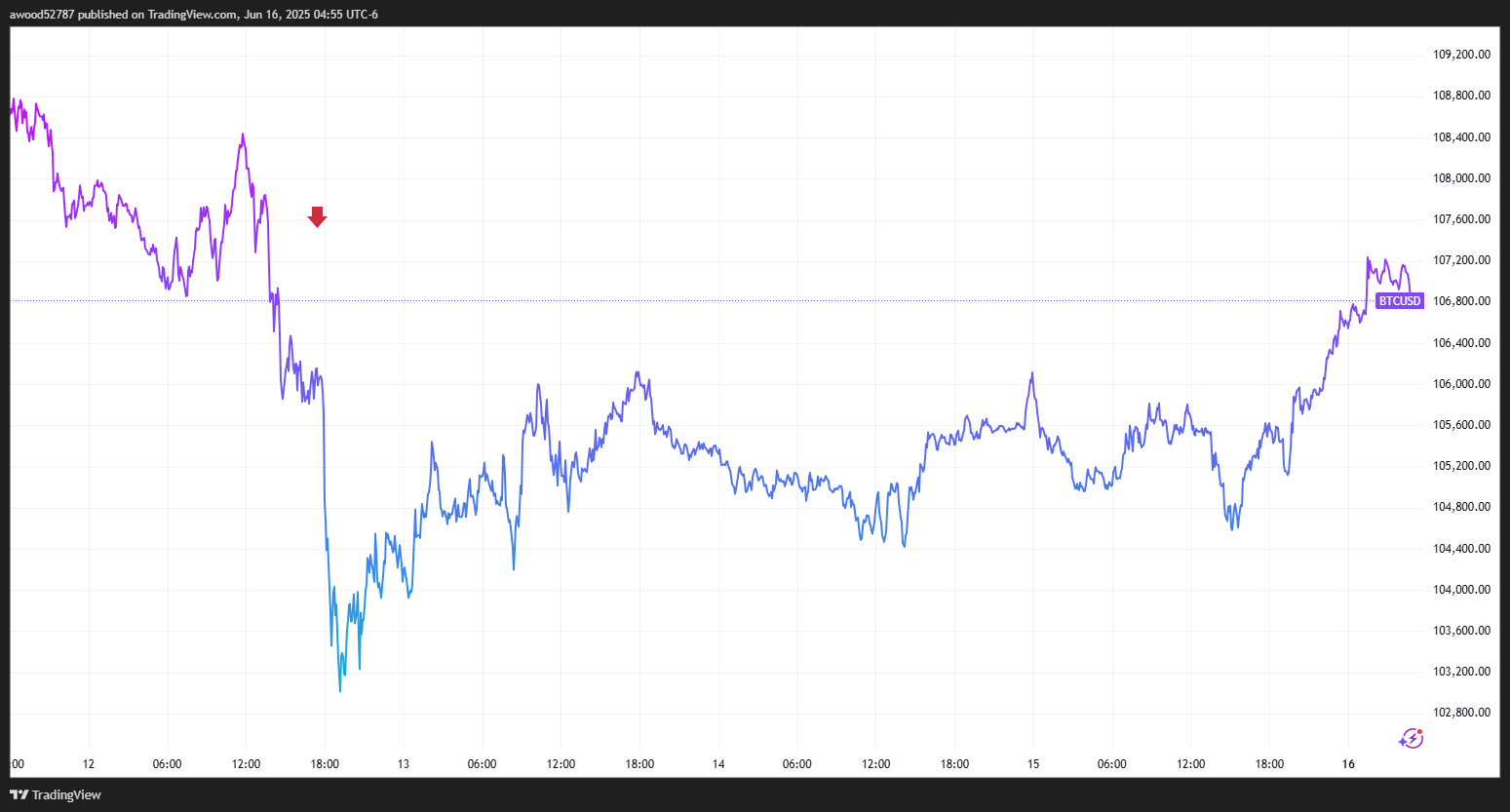

以色列对伊朗发动导弹袭击后,比特币价格立即上涨。(红色箭头标记冲突开始日期。)来源:TradingView


爆炸事件初期曾引发加密货币市场短暂下挫,但价格迅速修复至基准水平。知名分析师 Za 在社交媒体强调:「当前市场情绪显示,比特币投资者对伊以军事对抗的担忧程度明显低于传统资产持有者。」颇具象征意义的是,比特币最坚定的倡导者迈克尔·塞勒(Michael Saylor)在此期间展现了战略定力。其掌控的数字资产控股公司 Strategy 于 6 月 16 日豪掷 10 亿美元购入 10,001 枚比特币,此举恰逢该公司旗下第三只比特币抵押优先股 STRD 在纳斯达克成功上市(6 月 11 日挂牌交易),彰显机构资本对加密货币长期价值的笃定。


2024 年以色列 - 伊朗大使馆危机(4 月 1 日导火索)


回溯至 2024 年 4 月 1 日,以色列对叙利亚大马士革伊朗大使馆实施精准轰炸,导致包括高级军事指挥官在内的多人身亡。作为强硬回应,伊朗革命卫队于 4 月 13 日扣押以色列籍「MSC 系列」商船,并发动大规模导弹报复行动。
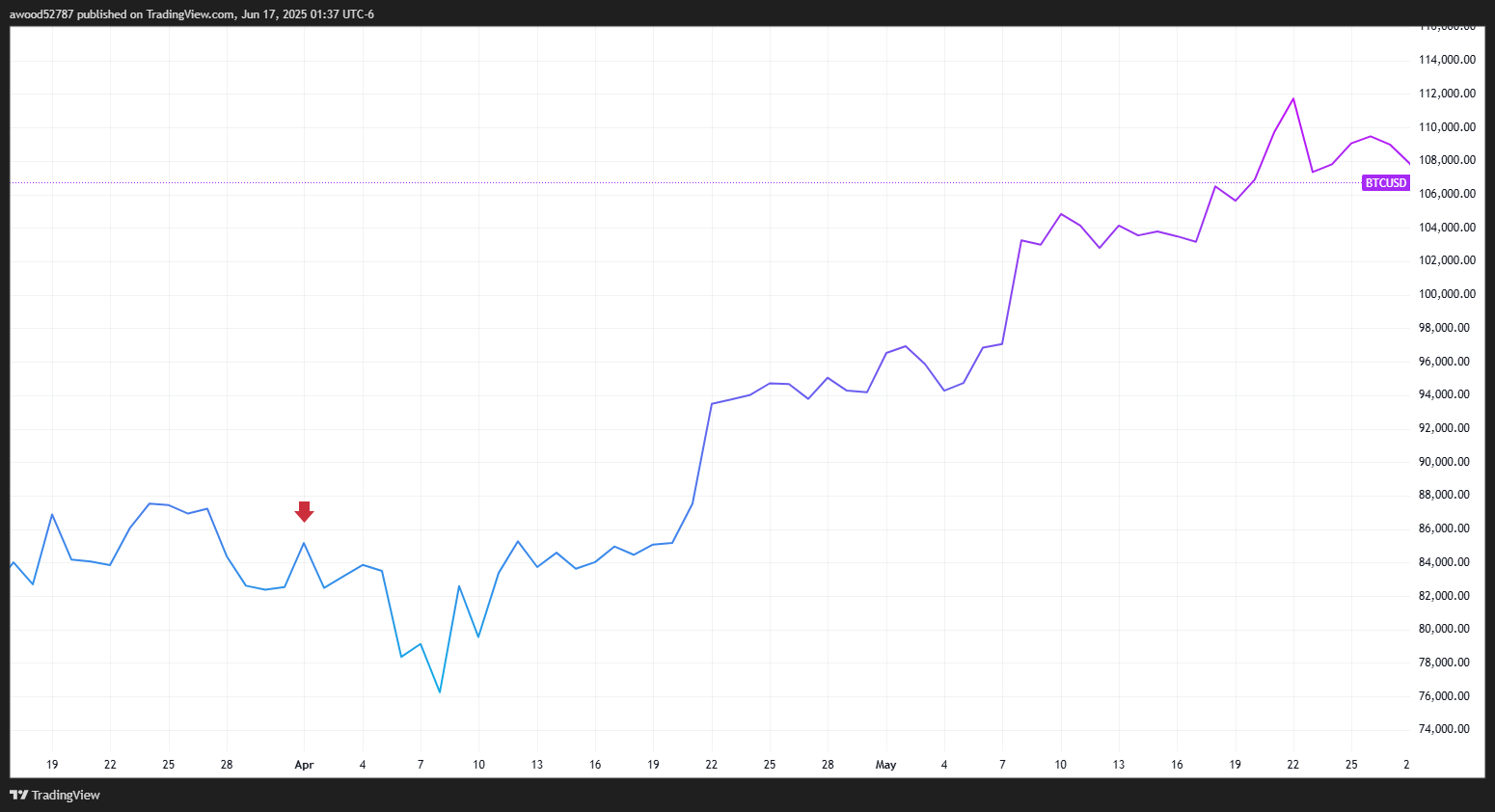
以色列轰炸伊朗大使馆后,比特币价格一度大幅波动,随后回升。(红色箭头标记冲突开始日期。)来源:TradingView


两次关键事件均触发比特币市场短期动荡,尤其在 4 月 13 日军事报复行动启动后,BTC 价格单日跌幅超过 8%。值得关注的是,市场自适应机制随后快速启动。随着冲突烈度进入稳定期,比特币价格不仅收复失地,更逐步开启新一轮上升通道,验证其应对突发危机的弹性修复能力。


2023 年巴以加沙战争(10 月 7 日爆发)


2023 年 10 月 7 日,加沙地带武装组织哈马斯对以色列境内目标发动突袭,造成逾千名平民伤亡,由此引爆持续至今的加沙人道主义危机。冲突爆发初期,特拉维夫股市遭遇断崖式下跌,相反军工业巨头洛克希德·马丁(Lockheed Martin)股价则应声暴涨,传统资产分化走势显著。
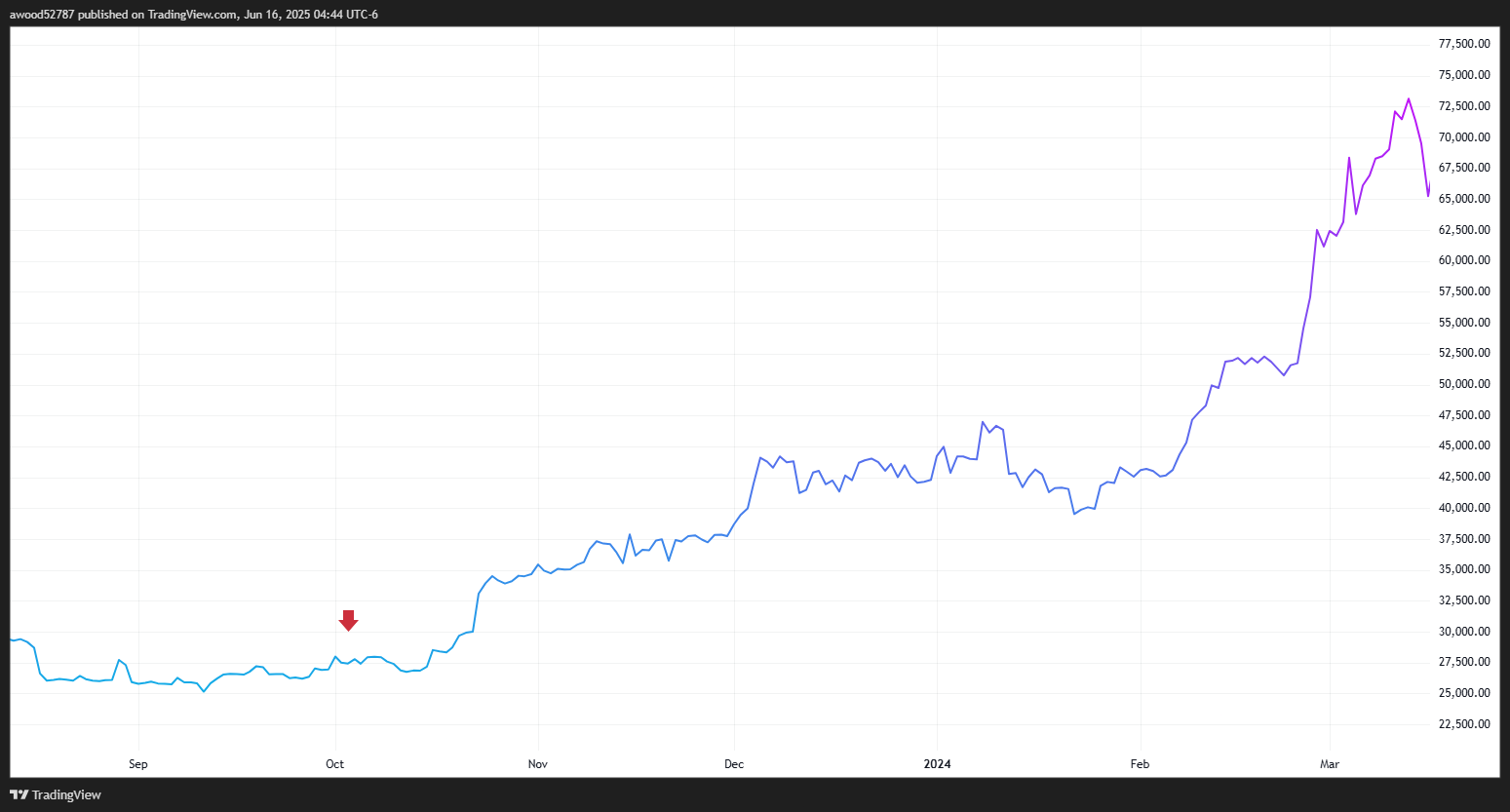
加沙战争爆发后,比特币价格一路飙升。(红色箭头标记冲突爆发日期。)来源:TradingView


比特币价格在此次危机中展现出超然独立性,冲突爆发 50 天后其价值增幅远超基准水平。值得注意的是,关于哈马斯通过加密货币募资的指控引发监管震荡。美国财政部随即对涉嫌关联的加沙地区加密支付机构实施制裁,推动全球监管机构强化合规要求。但区块链取证权威机构 Elliptic 发布专项报告澄清:「现有链上证据无法支持哈马斯系统性利用加密货币融资的论断」。

2022 年俄罗斯全面入侵乌克兰(2 月 24 日)

当顿巴斯地区经历八年低烈度冲突后,俄罗斯军队于 2022 年 2 月 24 日发起全面军事行动。战争阴云瞬间笼罩全球金融市场,东欧经济体遭受重创。反观比特币市场,价格在战火点燃五日内逆势飙升 16%,与传统资产形成鲜明对比。
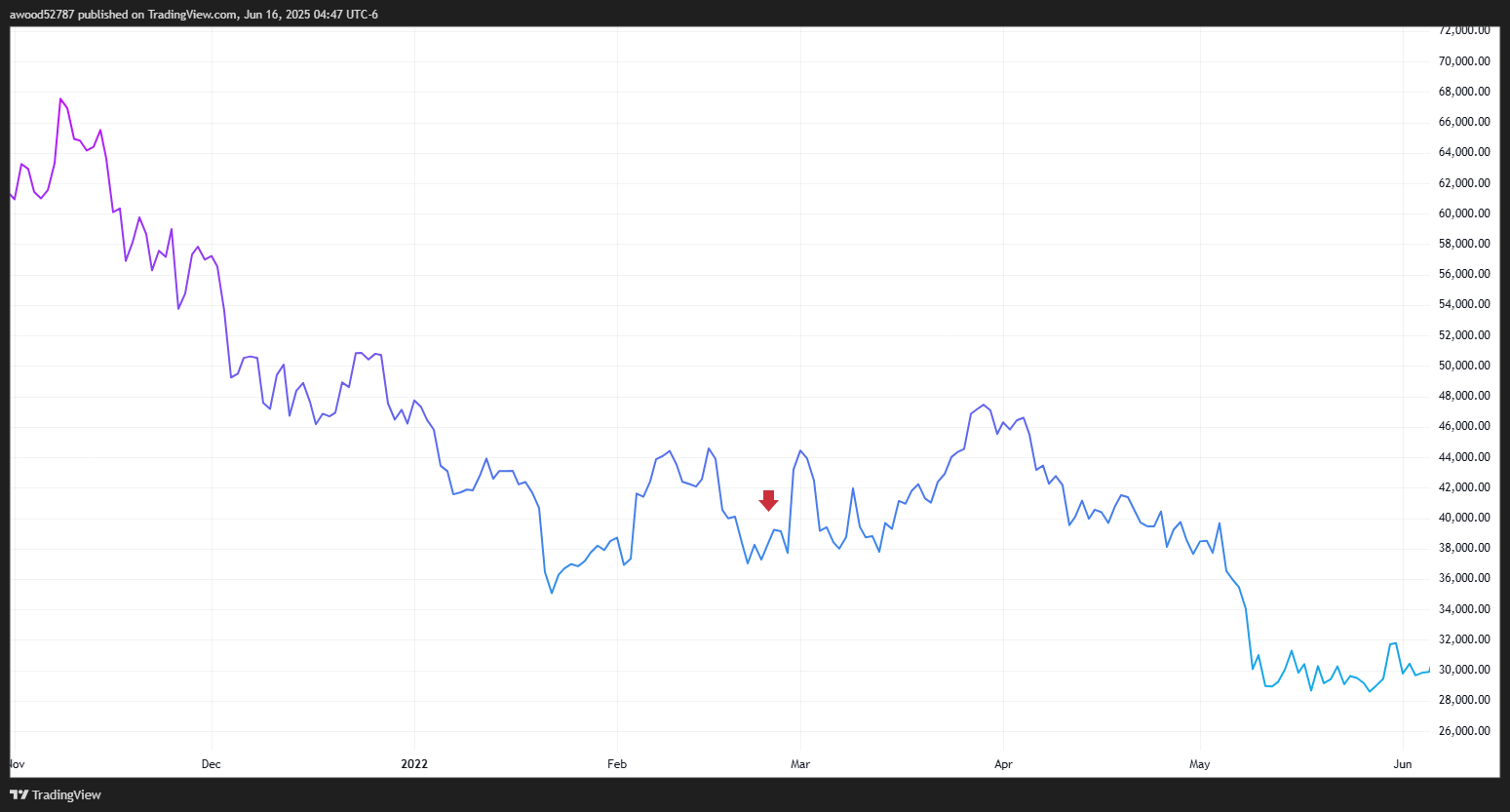
俄罗斯入侵乌克兰后,比特币价格飙升。(红色箭头标记冲突开始日期。)来源:TradingView


实地调研发现,冲突核心区呈现特殊现象:俄乌境内加密交易所出现大幅溢价交易,民众通过数字资产规避本币管制。更令人瞩目的是,战争爆发首周乌克兰政府收到价值超 7000 万美元的加密资产捐赠(以太坊占主导)。值得深究的是,比特币在当年末的暴跌主要归因于 Terra 稳定币系统崩盘等内生性市场事件,而非持续的乌克兰战事影响。


新兴市场内部冲突的差异化表现


虽然加密货币在部分区域冲突中显现避险特性,但其价格对亚非拉地区的内部武装动荡反应平淡。2020 年 11 月,埃塞俄比亚提格雷地区爆发联邦政府与「提格雷人民解放阵线」的全面内战,这场被近东福利协会称为「世界遗忘的战争」造成数十万人丧生,超百万难民流离失所。


彼时比特币价格走势与内战进程呈现显著脱钩。主导市场的是新冠疫情引发的全球通胀恐慌,以及 Block(原 Square)、Strategy(原 MicroStrategy)等上市公司的资产配置革命。类似情形再现于 2021 年 2 月 1 日的缅甸政变,军方推翻民选政府引发持续内战。而一个月后,比特币价格攀抵 69,000 美元历史峰值,显示其与边缘地缘政治风险的低关联性。
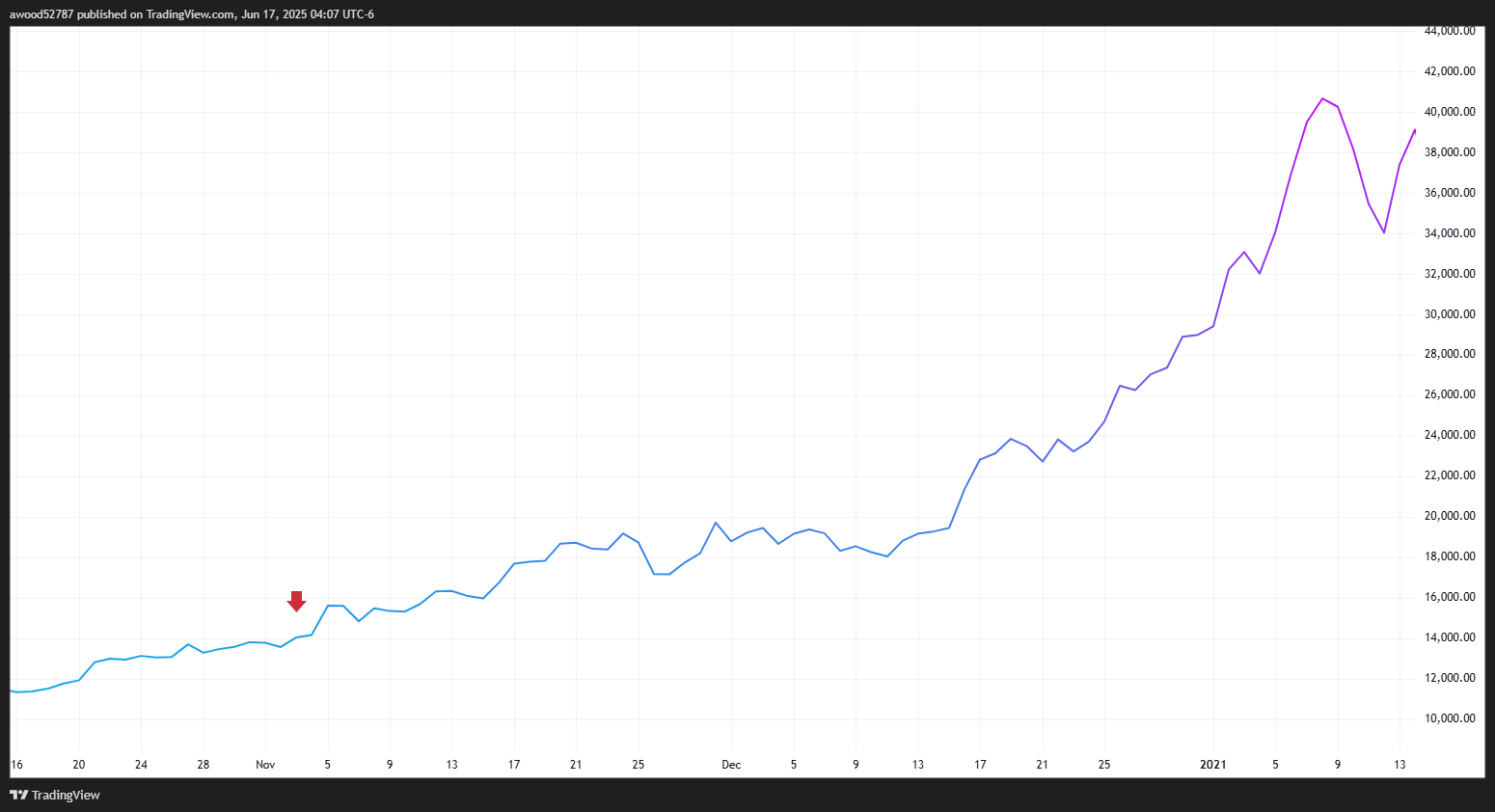
比特币 2020-2021 年的牛市恰逢提格雷内战。(红色箭头标记冲突开始日期。)来源:TradingView


冲突地理临近效应的结构性转变


解析比特币对武装冲突敏感度的核心变量在于「市场深度关联性」。经济学者观察到传统市场的临近效应:冲突所在地理位置越接近金融中心,引发的市场波动越剧烈。Chainalysis 2024 全球加密货币应用指数揭示矛盾现实:发展中经济体(印度、尼日利亚、印尼领衔)在零售端普及率方面占据优势,该指数综合中心化服务平台交易量、链上零售价值转移及 DeFi 协议活跃度进行评估。
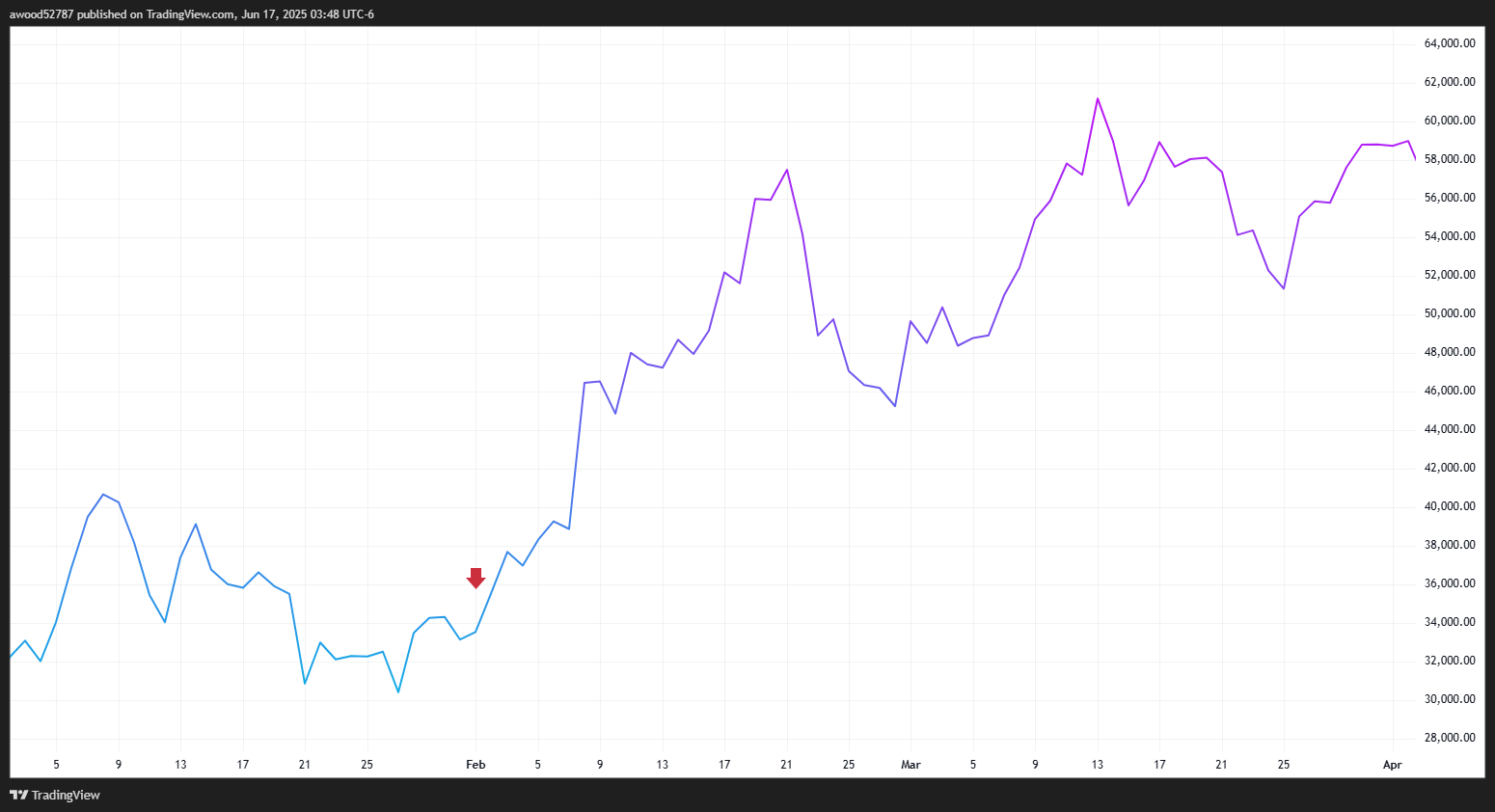
缅甸内战爆发之际,比特币价格正值 2021 年创下历史新高。资料来源:TradingView

与此形成强烈反差的是比特币持有结构的根本性变革。截至 2024 年末,机构资本通过 ETF 等金融产品持有超 1% 流通量(超越中本聪钱包规模),最大持仓方囊括贝莱德等 ETF 发行商、Coinbase 等合规交易所,甚至包含美国政府查封资产。这种持有结构的质变,使比特币与传统金融体系的耦合度达到前所未有的水平。
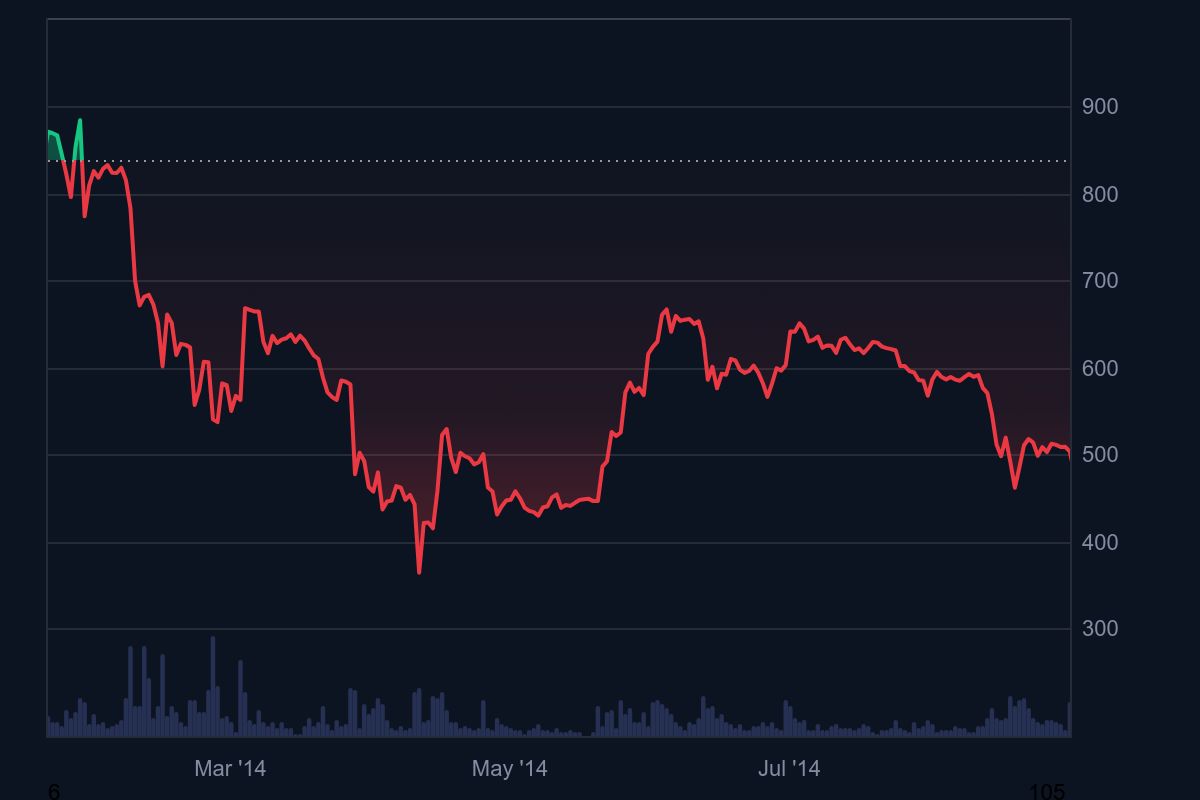
顿巴斯战争爆发后的比特币价格。资料来源:CoinMarketCap


回溯至加密货币的「蛮荒时期」:2013 年比特币迎来自诞生后首次史诗级牛市,价格从年初 13 美元暴涨至年末逾 1000 美元。同年爆发的顿巴斯战争(含克里米亚吞并)及 2014 年加沙冲突期间,尽管地区股市剧烈震荡,当时仍属小众产品的比特币几乎未受主流市场关注。彼时 Coinbase、Kraken 等交易所尚处初创阶段,矿工可利用家用电脑显卡挖矿,机构投资者几乎全面缺席,社会认知仍停留在「暗网交易工具」层面。
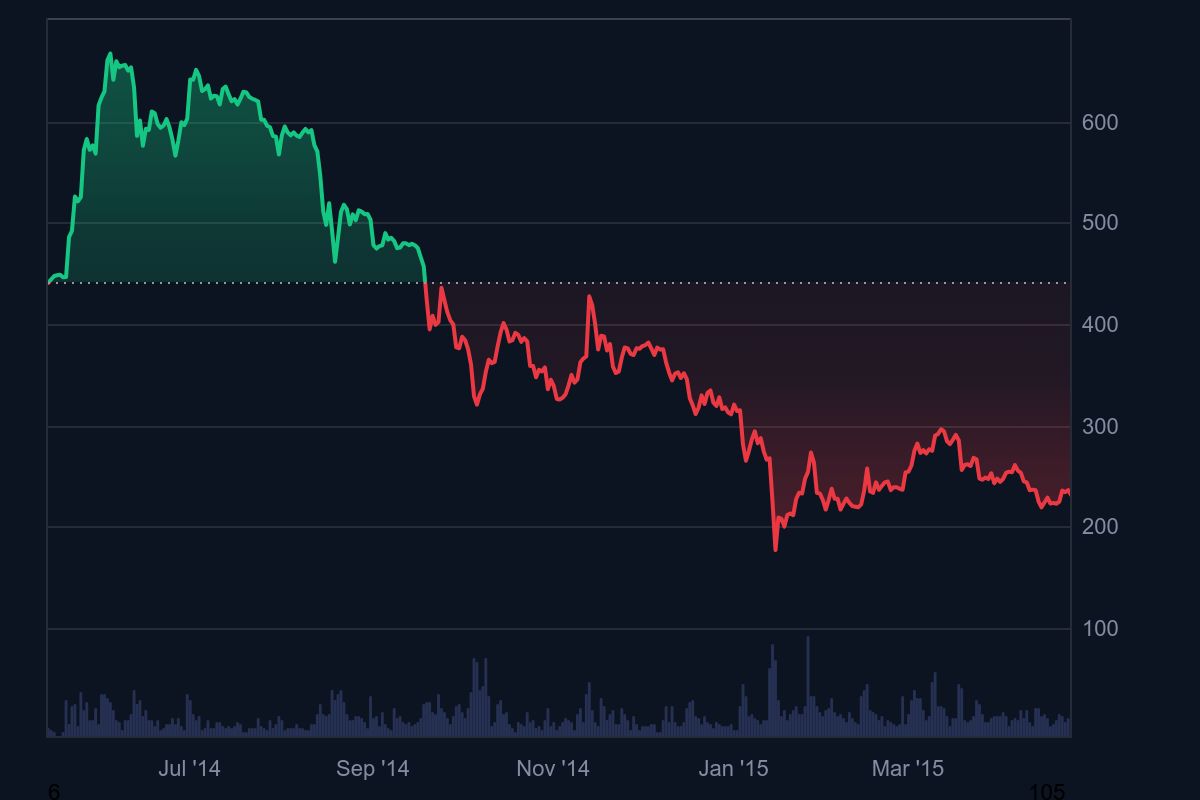
2014 年加沙战争爆发后的比特币价格。来源:CoinMarketCap


范式迁移:机构化时代的冲突应对机制


当前比特币市场已发生革命性蜕变。三大结构性变革正重塑其应对地缘冲突的反应模式:首先是贝莱德等传统资管巨头的深度参与;其次是美国监管框架逐步明晰化;最后是具备全球影响力的行业峰会常态化举办。这种背景下,武装冲突通过传统金融市场产生的负面传导效应可能加强对比特币的冲击力度。


值得深思的是,前文所述冲突案例大多发生于比特币开启机构化进程之前,且价格均在冲突后呈现快速修复。这种历史经验印证着早期「数字黄金」叙事的合理性。但当比特币与传统风险资产的相关性系数持续走高后,其资产属性已实质转向风险偏好型。当前市场分析师持谨慎乐观态度,QCP 资本在 6 月 16 日市场报告中警示:若伊朗封锁霍尔木兹海峡导致原油价格暴涨,或美军直接介入冲突,可能引发全球风险资产的连锁性恐慌抛售。


历史经验昭示着比特币在危机环境中的特殊韧性,而未来真正的考验在于:当传统金融市场因战火动荡时,这个已被纳入主流资产类别的数字货币,能否在机构投资者主导的新时代延续其传奇的抗压基因?

Trending Cryptos

Related Reads

AI Democratizes Hacking, Bitcoin Red Team White Hats Race in Speed-Based Attack-Defense Contest

AI is democratizing powerful hacking tools, putting them in the hands of those with little cybersecurity expertise. Cryptocurrency developers are now in a race to find system vulnerabilities before attackers do. The Bitcoin Red Team, a group of 20-25 volunteers including anonymous developers like Calle, has formed to urgently address these AI-augmented security threats within the Bitcoin ecosystem. Calle emphasizes that while the Bitcoin core protocol itself is secure, the real risk lies in the wallets, applications, services, and other third-party software built on top of it—the software most users interact with. Incidents like the Coldcard wallet hack and the emergence of powerful Chinese AI models have accelerated their proactive security auditing efforts. The team both accepts audit requests from Bitcoin projects and proactively scans major open-source projects. They report found vulnerabilities to developers and refine their classification standards. Notably, Calle states the team frequently uses Chinese AI models over US counterparts, as the latter's strict safety guardrails often block cybersecurity research tasks, hindering their utility for finding or fixing vulnerabilities. Calle warns that AI is erasing the information asymmetry that previously protected some vulnerabilities. It lowers the technical barrier, allowing non-experts to exploit simple flaws. He describes the current state of Bitcoin software as "on fire" and believes the direct financial incentive of cryptocurrency makes it a first target in this industry-wide shift, with other sectors to follow. The era of security through obscurity is over.

marsbit5m ago

AI Democratizes Hacking, Bitcoin Red Team White Hats Race in Speed-Based Attack-Defense Contest

marsbit5m ago

Foreign Capital Sells Off $29 Billion in Short-Term US Treasuries, Why is the US Betting on Stablecoins to "Take Over"?

In June, foreign investors netted $133.5 billion into U.S. financial markets but simultaneously sold $29 billion in short-term U.S. Treasury bills. This divergence highlights a strong preference for U.S. equities over government debt. While overseas buyers purchased $181.4 billion in stocks, demand for Treasuries weakened significantly. This trend explains why the U.S. is looking to stablecoins as a potential new source of demand for its debt. Stablecoin issuers like Tether and Circle back their tokens primarily with highly liquid assets, including short-term Treasuries. As users buy stablecoins, issuers convert that dollar demand into Treasury purchases. Recent U.S. legislative efforts, such as the proposed rules under the *GENIUS Act*, formalize this by mandating stablecoin reserves be held in assets like cash and short-term Treasuries. Currently, stablecoins represent a substantial existing buyer base. For instance, Tether alone held nearly $115 billion in direct T-bill exposure in Q2. However, recent stablecoin supply growth has been minimal and does not account for the $29 billion sell-off by foreign investors in June. For stablecoins to act as a meaningful counterbalance to waning foreign demand, their circulating supply would need to expand significantly. The next TIC report will be crucial to monitor whether foreign selling continues and if stablecoin growth begins to fill the demand gap. Ultimately, the U.S. is strategically positioning the regulated stablecoin sector as a potential new pillar of demand for its government debt.

marsbit5m ago

Foreign Capital Sells Off $29 Billion in Short-Term US Treasuries, Why is the US Betting on Stablecoins to "Take Over"?

marsbit5m ago

Unitree Investors Jointly Heavy Bet on an Embodied Team

Unibot's early investors, including Meituan, Sequoia Capital, and Matrix Partners, have jointly invested in MiaoDong Technology, another humanoid robotics startup. Founded by former DJI employees—CEO Gao Jianrong, a 9-year DJI veteran who led multiple core business units, and CTO Yang Shuo, who previously worked in Tesla's Optimus team—MiaoDong is known for its combined expertise in hardware productization and advanced robotics cognition. Their core strategy centers on in-house motor R&D and full-stack software-hardware capabilities. The company recently made headlines with its first product, Beni, a wheel-legged "camera robot" designed for low-angle, ground-level filming and personal companionship. Successfully launched on Kickstarter, Beni set a record for the highest fundraising amount in the platform's robotics category. It received a perfect 10/10 rating from influential tech reviewer Marques Brownlee (MKBHD). Beni features capabilities like autonomous obstacle avoidance, the ability to jump 25cm, and self-righting after a fall. MiaoDong plans to leverage the technological and user data feedback from Beni's consumer launch to inform the development of future home-use humanoid robots. The company emphasizes a product-first, user-centric approach, prioritizing real-world applications and reliability over rapid, demo-focused scaling. With Beni set for global release in October and an internal target to sell millions of units, MiaoDong aims to establish itself as a significant player in the embodied AI space through steady, product-driven growth.

marsbit19m ago

Unitree Investors Jointly Heavy Bet on an Embodied Team

marsbit19m ago

Trading

Spot

Hot Articles

What is $BITCOIN

DIGITAL GOLD ($BITCOIN): A Comprehensive Analysis Introduction to DIGITAL GOLD ($BITCOIN) DIGITAL GOLD ($BITCOIN) is a blockchain-based project operating on the Solana network, which aims to combine the characteristics of traditional precious metals with the innovation of decentralized technologies. While it shares a name with Bitcoin, often referred to as “digital gold” due to its perception as a store of value, DIGITAL GOLD is a separate token designed to create a unique ecosystem within the Web3 landscape. Its goal is to position itself as a viable alternative digital asset, although specifics regarding its applications and functionalities are still developing. What is DIGITAL GOLD ($BITCOIN)? DIGITAL GOLD ($BITCOIN) is a cryptocurrency token explicitly designed for use on the Solana blockchain. In contrast to Bitcoin, which provides a widely recognized value storage role, this token appears to focus on broader applications and characteristics. Notable aspects include: Blockchain Infrastructure: The token is built on the Solana blockchain, known for its capacity to handle high-speed and low-cost transactions. Supply Dynamics: DIGITAL GOLD has a maximum supply capped at 100 quadrillion tokens (100P $BITCOIN), although details regarding its circulating supply are currently undisclosed. Utility: While precise functionalities are not explicitly outlined, there are indications that the token could be utilized for various applications, potentially involving decentralized applications (dApps) or asset tokenization strategies. Who is the Creator of DIGITAL GOLD ($BITCOIN)? At present, the identity of the creators and development team behind DIGITAL GOLD ($BITCOIN) remains unknown. This situation is typical among many innovative projects within the blockchain space, particularly those aligning with decentralized finance and meme coin phenomena. While such anonymity may foster a community-driven culture, it intensifies concerns about governance and accountability. Who are the Investors of DIGITAL GOLD ($BITCOIN)? The available information indicates that DIGITAL GOLD ($BITCOIN) does not have any known institutional backers or prominent venture capital investments. The project seems to operate on a peer-to-peer model focused on community support and adoption rather than traditional funding routes. Its activity and liquidity are primarily situated on decentralized exchanges (DEXs), such as PumpSwap, rather than established centralized trading platforms, further highlighting its grassroots approach. How DIGITAL GOLD ($BITCOIN) Works The operational mechanics of DIGITAL GOLD ($BITCOIN) can be elaborated on based on its blockchain design and network attributes: Consensus Mechanism: By leveraging Solana’s unique proof-of-history (PoH) combined with a proof-of-stake (PoS) model, the project ensures efficient transaction validation contributing to the network's high performance. Tokenomics: While specific deflationary mechanisms have not been extensively detailed, the vast maximum token supply implies that it may cater to microtransactions or niche use cases that are still to be defined. Interoperability: There exists the potential for integration with Solana’s broader ecosystem, including various decentralized finance (DeFi) platforms. However, the details regarding specific integrations remain unspecified. Timeline of Key Events Here is a timeline that highlights significant milestones concerning DIGITAL GOLD ($BITCOIN): 2023: The initial deployment of the token occurs on the Solana blockchain, marked by its contract address. 2024: DIGITAL GOLD gains visibility as it becomes available for trading on decentralized exchanges like PumpSwap, allowing users to trade it against SOL. 2025: The project witnesses sporadic trading activity and potential interest in community-led engagements, although no noteworthy partnerships or technical advancements have been documented as of yet. Critical Analysis Strengths Scalability: The underlying Solana infrastructure supports high transaction volumes, which could enhance the utility of $BITCOIN in various transaction scenarios. Accessibility: The potential low trading price per token could attract retail investors, facilitating wider participation due to fractional ownership opportunities. Risks Lack of Transparency: The absence of publicly known backers, developers, or an audit process may yield skepticism regarding the project's sustainability and trustworthiness. Market Volatility: The trading activity is heavily reliant on speculative behavior, which can result in significant price volatility and uncertainty for investors. Conclusion DIGITAL GOLD ($BITCOIN) emerges as an intriguing yet ambiguous project within the rapidly evolving Solana ecosystem. While it attempts to leverage the “digital gold” narrative, its departure from Bitcoin's established role as a store of value underscores the need for a clearer differentiation of its intended utility and governance structure. Future acceptance and adoption will likely depend on addressing the current opacity and defining its operational and economic strategies more explicitly. Note: This report encompasses synthesised information available as of October 2023, and developments may have transpired beyond the research period.

2.1k Total ViewsPublished 2025.05.13Updated 2025.05.13

What is $BITCOIN

Discussions

Welcome to the HTX Community. Here, you can stay informed about the latest platform developments and gain access to professional market insights. Users' opinions on the price of BTC (BTC) are presented below.

活动图片