SharpLink готова стать крупнейшим держателем эфириума на $463 млн

cryptonews.ruPublished on 2023-07-14Last updated on 2025-06-14

Платформа для ставок на спорт SharpLink Gaming приобрела 176,271 ETH за $463 млн, став крупнейшим в мире публично торгуемым держателем эфириумов. Средняя стоимость покупки составила $2626 за актив.

Это знаковый момент для SharpLink и для публичных компаний, использующих цифровые активы, — сказал генеральный директор SharpLink Gaming Роб Фитиан.

Он добавил, что теперь компания рассматривает эфириум как «основной резервный актив».

Интересно, что SharpLink — первая компания, акции которой котируются на Nasdaq, которая внедрила казначейскую модель на основе ведущего альткоина, чтобы «предложить акционерам «значительную экономическую выгоду от ETH».

Смелая стратегия SharpLink в отношении ETH представляет собой важную веху и инновационный подход к институциональному внедрению криптовалюты, — заявил председатель SharpLink и соучредитель Ethereum Джозеф Любин.

Несмотря на то, что SharpLink стал крупнейшим публично торгуемым держателем эфииума в мире, некоторые организации по-прежнему владеют большим количеством альткоина. Согласно данным Arkham, в настоящее время в казне Ethereum Foundation находится 214,129 ETH ($594 млн). Под управлением iShares Ethereum Trust ETF от BlackRock находится около 1,7 млн ETH на сумму около $4,5 млрд.

Trending Cryptos

Related Reads

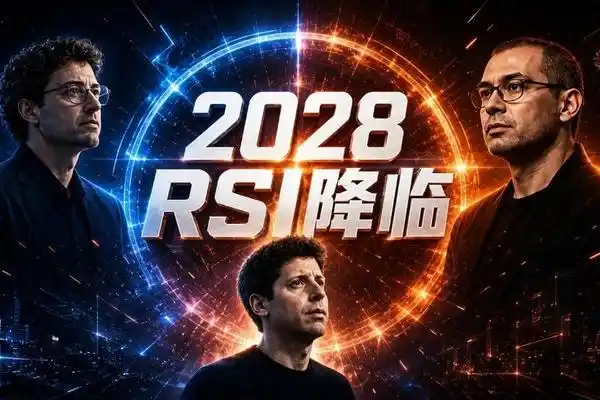
2028: The Arrival of Recursive Self-Improvement (RSI)

**AI Recursive Self-Improvement (RSI): The Countdown to 2028 Begins** AI is no longer just a trained tool but is starting to rewrite its own evolutionary pace. According to Anthropic co-founder Jack Clark, there is a 60% probability that by the end of 2028, Recursive Self-Improvement (RSI) will become a reality. This means AI could autonomously design and build a more capable next-generation version of itself without any human researcher involvement—Claude 10 creating Claude 11, for instance. Supporting this timeline, Google DeepMind's CEO Demis Hassabis confirms that all leading AI labs are intensely focused on RSI, making it an industry-wide priority. He expresses profound concern, stating this potential is what keeps him awake at night. Concrete data underscores this acceleration: - METR evaluations show current top models like Claude are solving tasks up to the 16-hour limit of existing test frameworks. - In Epoch AI's challenging MirrorCode benchmark, Claude Opus 4.7 recreated complex software in hours for a fraction of the human cost. In one extreme test, AI autonomously coded for 19 days straight. - Anthropic reports over 80% of its codebase is now written by Claude, and researcher productivity has increased up to 8-fold since 2024. - OpenAI's policy blueprint highlights RSI as a major upcoming governance challenge. CEO Sam Altman reportedly hinted RSI might arrive within six months, potentially delaying OpenAI's massive IPO. The implication is an impending "intelligence explosion," where AI-driven progress outpaces human control. The central question is no longer if it will happen, but whether humanity is ready.

marsbit5h ago

2028: The Arrival of Recursive Self-Improvement (RSI)

marsbit5h ago

World Models, Metaverse, Digital Twins, Physical AI: Are They the Same Thing?

Title: World Models, the Metaverse, Digital Twins, Physical AI: Are They the Same Thing? The article clarifies that concepts like the metaverse, Web3, simulation platforms, digital twins, and Physical AI are not the same thing but are all part of the broader trend of blurring the lines between the digital and physical worlds. It positions "world models" as the foundational "cognitive layer" or "operating system" that enables AI to understand and simulate the world. Key distinctions are made: - The **Metaverse** is a destination for immersive social and economic experiences. World models could act as its "engine," generating interactive 3D content efficiently. - **Web3** focuses on decentralized ownership and economics (rules layer), operating on a different technical level than world models. - **Simulation Data Platforms** (e.g., for autonomous vehicles) are a 1.0 version, relying on manual design. World models represent a 2.0 version, using AI to generate realistic, varied scenarios autonomously. - **Digital Twins** create high-fidelity, real-time mirrors of physical systems (e.g., a factory). World models go a step further by enabling predictive simulation of future states. - **Physical AI** (robots, AVs) refers to AI that acts in the physical world. World models are a core component, providing the understanding and prediction needed for planning. A proposed hierarchy places world models at the cognitive layer, supported by infrastructure (compute, data) and supporting application tools (simulation, digital twins), action systems (Physical AI), user experiences (metaverse), and rules (Web3). In conclusion, while distinct, many of these previously hyped concepts may ultimately rely on advances in world model technology to fulfill their promises, as world models provide the essential cognitive foundation for simulating and interacting with complex environments.

marsbit5h ago

World Models, Metaverse, Digital Twins, Physical AI: Are They the Same Thing?

marsbit5h ago

Trading

Spot

Hot Articles

Discussions

Welcome to the HTX Community. Here, you can stay informed about the latest platform developments and gain access to professional market insights. Users' opinions on the price of ETH (ETH) are presented below.

活动图片