James Wynn:「加密赌徒」的心路历程

marsbitPublished on 2025-06-02Last updated on 2025-06-03

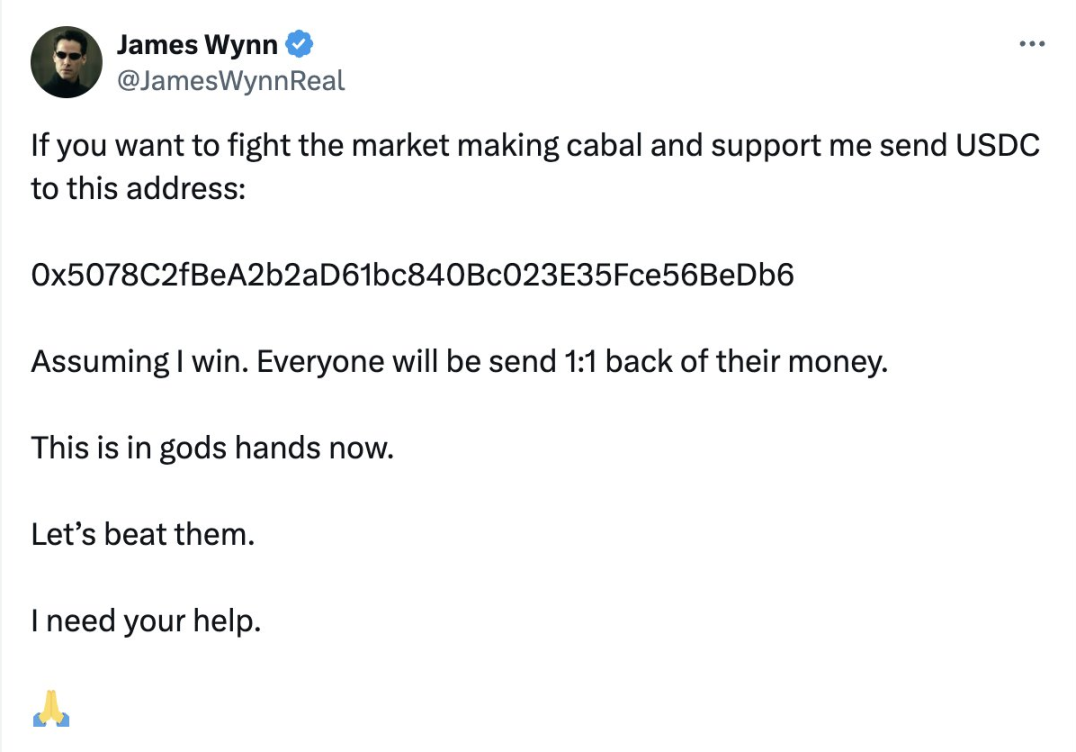
6 月 2 日,巨鲸 James Wynn 在社交媒体发文表示,「如果你想对抗做市集团、支持我,请将 USDC 转账至特定链上地址。假设我赢了,所有人都会按照 1:1 的比例收回他们的钱。让我们打败他们。我需要你的帮助。」随后,James Wynn 将累计捐赠所得到的 39345.11 枚 USDC 存入 Hyperliquid,降低了清算价。

交易


这一 0 成本募资推文瞬间引起热议,目前加密市场最有流量的男人也开始「乞讨」了吗?事实上,以往动辄高杠杆开仓超 10 亿美元的 James Wynn 已经跌落了「版本之子」的神坛,在近一周的时间内亏掉了约 1 亿美元,搭上盈利还倒赔约 1750 万美元。


对此,BitMEX 联合创始人 Arthur Hayes 发文表示,「我开始觉得这(指巨鲸 James Wynn 试图 0 成本募资)可能会成为加密圈史上最成功的交易平台营销活动之一。HYPE 必将获胜。另外,这家伙很可能就是在另一个匿名地址进行对冲交易,专门为了薅 Hyperliquid 下一轮空投。」


而 6 月 3 日,James Wynn 在其总价值约 1 亿美元的 BTC 多单扭亏转盈之后,已悄然将昨日 22 时公开的「乞讨」推文删除。目前,其多单盈利超 40 万美元。而昨夜最惊险时,比特币价格距离 James Wynn 多单仓位的清算价只差 20 美元的空间,浮亏超 135 万美元。


仓位与推文时间线梳理


James Wynn 对自己的每一单合约都会表态,所以在 HLP 上其地址公开的每一单开关、盈亏,都有 James Wynn 这位当下「市场第一赌狗」的心路历程。


5 月 30 日,James Wynn 在巨额亏损后陷入了「贤者模式」。


在一周内亏损超 9600 万美元,账户整体亏损 1403 万美元后,他在社交媒体上发文表示:「做一个合约赌徒非常有意思,一点也不后悔。把 400 万美元翻到 1 亿美元,再跌回 1300 万美元,真是刺激极了。大多数人不敢或不敢做这种交易。他们做不到,没钱这么做,也没胆量公开承担这种风险。也许下一次我会尝试赚 10 亿美元,我会回来的。」


对此,曾参与爆料 LIBRA 代币内幕的加密 KOL scooter 直接上嘴脸嘲讽道:「James Wynn 就是一个典型的例子,这解释了为什么大多数骗子和 ruggers 最终都会失去一切。他们从未体会过诚实赚钱的价值,也从未真正体会过赚钱需要付出的努力。来得容易去得也容易。」知名交易员 Eugene Ng Ah Sio 也在个人 TG 频道发表了类似的观点,「当你使用了过大的杠杆,easy come easy go」。


5 月 31 日,James Wynn 通过多个地址归集 325 万美元并开多 BTC 和 PEPE,在多轮清算和止损后,其真实仓位价值(非头寸名义价值)仅剩 80 万美元。对此,James Wynn 在社交平台上表示,「我会卷土重来,我喜欢这场游戏。金钱,本质上是一种心态。我依然比 99.9% 的加密推特用户更富有。我下了一个巨大且经过深思熟虑的赌注,目标是赚数十亿美元。我的被动收入每月都比你们大多数人一年赚的还多。」


当日,James Wynn 还发文表示,「1 亿美元并不是很多钱。对那些被枷锁禁锢思维的人来说,也许是。但对一个自由的灵魂而言一切皆有可能,这点钱微不足道。不过是 1 亿美元罢了,金钱世界里的沧海一粟。可笑的是,多少人终其一生都未曾见过甚至听说过这个数字。自由意志比穷鬼思维更重要。」


6 月 1 日,James Wynn 再次发文表示自己将卷土重来,他慷慨激昂道:「你们有些人表现得像神一样,觉得你们会在 1 亿时套现。你们有没有想过,我压根没打算在 1 亿时落袋为安?为什么要落袋?对我来说,要么全赢,要么一无所有。」目前 James Wynn 未持有任何仓位,总亏损达 1772 万美元。


随后,James Wynn 直接发文表示多个 CEX 无故封禁账户,称事件源于其反对腐败、支持去中心化立场。他强调自己从未参与抛压、资金干净,长期专注于链上 meme 币和 HyperLiquid 交易,未接受过代币推广费用或参与拉盘。James Wynn 表示若账户持续被封,将考虑与 Moonpig 团队合作推出新平台反击中心化操控:「我为战争而生,律师准备好,我将公开这场对抗。」


6 月 2 日,高挥加密自由、透明大旗的 James Wynn 在社交媒体上发文宣布决定暂停进行合约交易。


但宣布暂停还没热乎,赌徒又压上了筹码。没超 4 小时,James Wynn 就发布其比特币多单持仓图,并矛头直指 Wintermute。他@Wintermute 官方账号称,「我回来了 」。


不过,正如本文开头所示,James Wynn 该多单仓位曾浮亏超 135 万美元。


对此,James Wynn 显得有些「上头」,他振臂高呼,「如果你想支持这个事业 / 对抗腐败,现在就买 BTC。我刚一做多,就被瞬间狙击。这里肯定有某种阴谋,我不知道是什么。不可能只是因为我的多单,可能是因为我只是个小鱼在玩大鲸鱼的游戏,或者是因为我引起了大家对 HyperLiquid 的关注。不管怎样,试着通过买 BTC 来支持吧!」


交易


最终,幸运女神这次眷顾了他,其多单最终扭亏为盈。James Wynn 的赌徒生涯得以延续。


然而,James Wynn 一路走来,腰包鼓了又空,谁成为了最大的赢家?不断冲击历史新高的 HYPE 币价,或许已经说明了一切。此前被 James Wynn 指名道姓的 Wintermute,其创始人 wishful_cynic 发文称,「总的来说,我认为「wynn」只是一个执行得很出色的 HL(Hyperliquid)营销活动,干得漂亮。他很优秀。他的推文也很棒」事实上,James Wynn 平均三条推特帖子就会提及一次 Hyperliquid,并不断强调去中心化、反腐败、反操纵,并模糊提及其他中心化交易所的未证实「封禁账户」丑闻。从传播角度而言,James Wynn 获取了今年以来加密市场的最大成功。


而高举公开透明旗帜的 James Wynn 是否以匿名地址对冲自己的明牌巨额仓位,Hyperliquid 是否与 James Wynn 有着直接利益关系。这一切的黑箱,我们仍不得而知。

Trending Cryptos

Related Reads

2028: The Arrival of Recursive Self-Improvement (RSI)

**AI Recursive Self-Improvement (RSI): The Countdown to 2028 Begins** AI is no longer just a trained tool but is starting to rewrite its own evolutionary pace. According to Anthropic co-founder Jack Clark, there is a 60% probability that by the end of 2028, Recursive Self-Improvement (RSI) will become a reality. This means AI could autonomously design and build a more capable next-generation version of itself without any human researcher involvement—Claude 10 creating Claude 11, for instance. Supporting this timeline, Google DeepMind's CEO Demis Hassabis confirms that all leading AI labs are intensely focused on RSI, making it an industry-wide priority. He expresses profound concern, stating this potential is what keeps him awake at night. Concrete data underscores this acceleration: - METR evaluations show current top models like Claude are solving tasks up to the 16-hour limit of existing test frameworks. - In Epoch AI's challenging MirrorCode benchmark, Claude Opus 4.7 recreated complex software in hours for a fraction of the human cost. In one extreme test, AI autonomously coded for 19 days straight. - Anthropic reports over 80% of its codebase is now written by Claude, and researcher productivity has increased up to 8-fold since 2024. - OpenAI's policy blueprint highlights RSI as a major upcoming governance challenge. CEO Sam Altman reportedly hinted RSI might arrive within six months, potentially delaying OpenAI's massive IPO. The implication is an impending "intelligence explosion," where AI-driven progress outpaces human control. The central question is no longer if it will happen, but whether humanity is ready.

marsbit42m ago

2028: The Arrival of Recursive Self-Improvement (RSI)

marsbit42m ago

World Models, Metaverse, Digital Twins, Physical AI: Are They the Same Thing?

Title: World Models, the Metaverse, Digital Twins, Physical AI: Are They the Same Thing? The article clarifies that concepts like the metaverse, Web3, simulation platforms, digital twins, and Physical AI are not the same thing but are all part of the broader trend of blurring the lines between the digital and physical worlds. It positions "world models" as the foundational "cognitive layer" or "operating system" that enables AI to understand and simulate the world. Key distinctions are made: - The **Metaverse** is a destination for immersive social and economic experiences. World models could act as its "engine," generating interactive 3D content efficiently. - **Web3** focuses on decentralized ownership and economics (rules layer), operating on a different technical level than world models. - **Simulation Data Platforms** (e.g., for autonomous vehicles) are a 1.0 version, relying on manual design. World models represent a 2.0 version, using AI to generate realistic, varied scenarios autonomously. - **Digital Twins** create high-fidelity, real-time mirrors of physical systems (e.g., a factory). World models go a step further by enabling predictive simulation of future states. - **Physical AI** (robots, AVs) refers to AI that acts in the physical world. World models are a core component, providing the understanding and prediction needed for planning. A proposed hierarchy places world models at the cognitive layer, supported by infrastructure (compute, data) and supporting application tools (simulation, digital twins), action systems (Physical AI), user experiences (metaverse), and rules (Web3). In conclusion, while distinct, many of these previously hyped concepts may ultimately rely on advances in world model technology to fulfill their promises, as world models provide the essential cognitive foundation for simulating and interacting with complex environments.

marsbit46m ago

World Models, Metaverse, Digital Twins, Physical AI: Are They the Same Thing?

marsbit46m ago

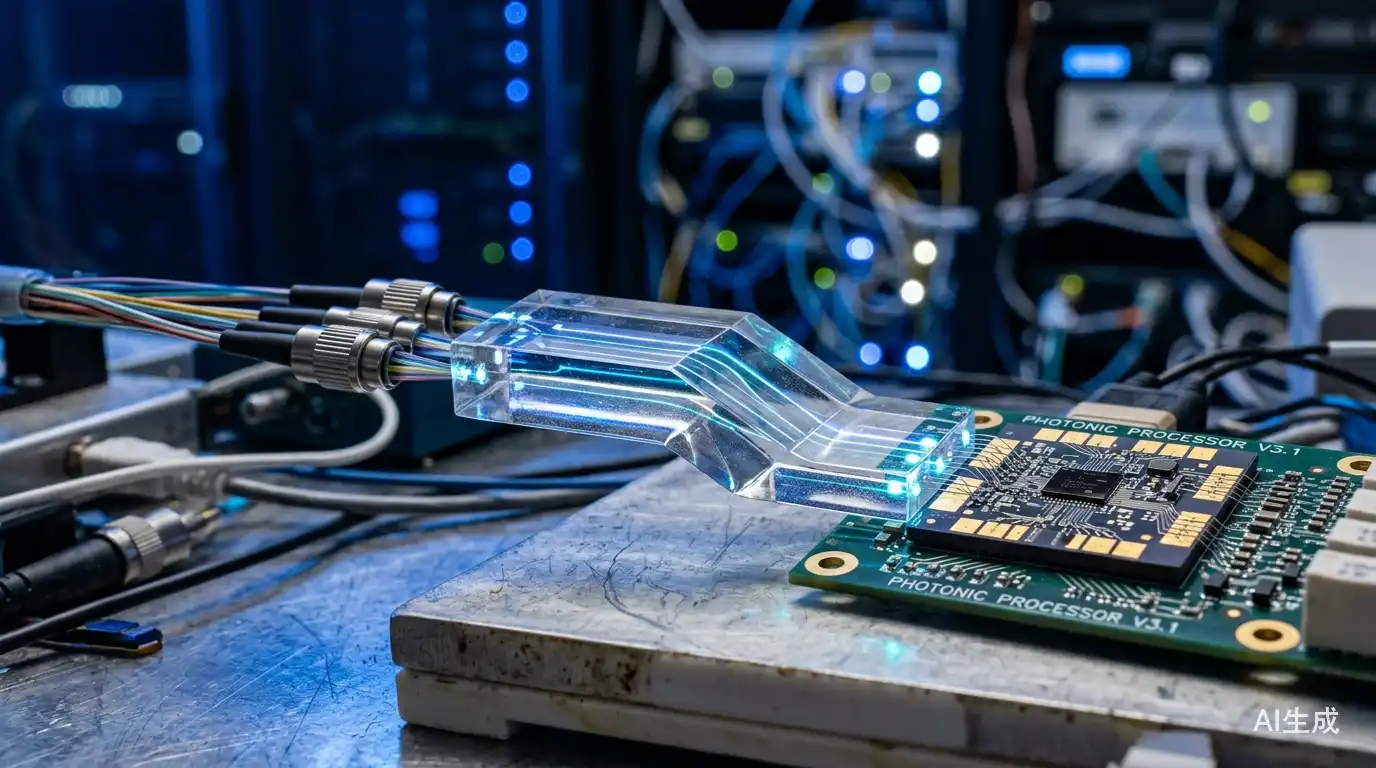
"Shocking" CPO: How Does the Glass Bridge Actually Work? Detailed Explanation from Corning

Chinese CPO stocks plunged over 6% following Corning's announcement of its Glass Bridge platform at a Seoul tech conference. The new technology utilizes wafer-level glass ion-exchange waveguides for passive alignment between fibers and photonic chips, potentially simplifying traditional CPO architectures that rely on complex Fiber Array Units and active alignment equipment. This raised market concerns about reduced long-term demand for mid-stream CPO components. Corning's official documentation details Glass Bridge as a platform for fiber-to-PIC connectivity in NPO, CPO, and high-density modules. Its key features include wafer-level manufacturing for consistent, cost-effective production; a standardized, removable MT ferrule interface for ecosystem integration; and a separable high-density connector design supporting over 24 channels for assembly flexibility. Corning positions the technology as complementary to FAUs, addressing limitations in ultra-high-fiber-count scenarios. The market reaction reflects a broader reassessment of the AI optical interconnect value chain. Funds shifted from CPO and PCB manufacturing stocks towards glass substrate concept stocks like Kaisheng Technology and Dyer Laser. Analysts note glass substrates are seen as a next-gen advanced packaging material, offering a potential path for domestic industry differentiation amid AI-driven demand for high-performance, large-scale packaging, marking a structural migration in value towards upstream specialty materials.

marsbit47m ago

"Shocking" CPO: How Does the Glass Bridge Actually Work? Detailed Explanation from Corning

marsbit47m ago

Trading

Spot

Hot Articles

What is USDC(WORMHOLE)

USD Coin (Wormhole): A Comprehensive Overview Introduction In the rapidly evolving world of cryptocurrencies, USD Coin (Wormhole), referred to as $USDC(Wormhole), stands out as a pioneering solution within the DeFi (Decentralized Finance) landscape. Operating on several blockchain platforms, including Solana, USD Coin (Wormhole) is more than just a digital representation of the United States dollar. It embodies the innovative spirit of modern finance, enabling seamless cross-chain transactions and enhanced interoperability among diverse blockchain ecosystems through the advanced Wormhole protocol. What is USD Coin (Wormhole)? USD Coin (Wormhole) is a tokenized version of the US dollar designed to facilitate frictionless transactions across different blockchain networks. Its primary aim is to bolster liquidity and enhance the functionality of the DeFi ecosystem. By leveraging the Wormhole protocol, which establishes a robust cross-chain communication network, users can effortlessly transfer USDC tokens across various platforms. This cross-chain capability marks a significant advancement in cryptocurrency use, promoting a more interconnected and efficient ecosystem where assets can flow freely between different blockchains. The value proposition of USD Coin (Wormhole) lies not only in its stability, being pegged to the US dollar, but also in its ability to bridge gaps between disparate blockchain environments. This innovative approach fosters a greater level of participation among users and developers, paving the way for new and exciting applications within decentralized finance. Who is the creator of USD Coin (Wormhole)? The origins of USD Coin (Wormhole) are intricately tied to the Wormhole network, which was developed by Jump Crypto. While specific individual creators are not prominently documented, Jump Crypto is notable for its involvement in advancing blockchain technology and supporting its applications in finance. By creating the Wormhole network, Jump Crypto has played a vital role in promoting cross-chain asset transfers, enhancing the efficiency and diversity of cryptocurrency usage. Who are the investors of USD Coin (Wormhole)? The success of USD Coin (Wormhole) is supported by investments from several notable funds and organizations within the cryptocurrency realm. Key investors include: Coinbase Ventures: A prominent venture capital arm backed by one of the leading cryptocurrency exchanges in the industry, Coinbase Ventures provides essential capital and strategic support to promising blockchain projects. Arrington XRP Capital: Specializing in digital assets, Arrington XRP Capital recognizes the potential of innovative projects like USD Coin (Wormhole) and has invested accordingly to back its development. Jump Trading: As the parent organization of Jump Crypto, Jump Trading brings not only investment but a wealth of expertise in trading technology and market dynamics to bolster the Wormhole project. How Does USD Coin (Wormhole) Work? The operational framework of USD Coin (Wormhole) is intricately designed to facilitate effective cross-chain transactions, maximizing security and efficiency. Here’s a simplified overview of how it functions: Asset Locking: When a user wishes to transfer USDC from one blockchain to another, they first lock their tokens on the source blockchain. This process ensures that the assets are secure and are set to be either burned or moved later. Token Minting: After the tokens are locked, an equivalent amount of USDC is minted on the destination blockchain. This provides the user with access to their funds on a new platform, reflecting the flexibility that the Wormhole protocol enables. Cross-Chain Transfer: The Wormhole protocol efficiently facilitates the entire transfer process. It ensures that once the USDC is minted on the destination chain, the equivalent tokens are burned on the source chain. The result is a seamless transfer of value between two distinct blockchain environments. This cross-chain methodology ensures that transactions remain secure and transparent, significantly enhancing liquidity within the different DeFi ecosystems. Timeline of USD Coin (Wormhole) Understanding the evolution of USD Coin (Wormhole) provides vital context for its significance in the cryptocurrency arena. Here’s a timeline highlighting important milestones in the project’s history: 2021: The Wormhole project is launched, establishing a framework for cross-chain asset transfers and setting the stage for the development of USD Coin (Wormhole). 2022: The Wormhole network experiences a significant challenge with a security breach that results in a $325 million theft. However, the incident is later addressed and refunded by Jump Crypto, showcasing the project’s commitment to security and transparency. 2023: USD Coin (Wormhole) integrates with Circle’s Cross-Chain Transfer Protocol (CCTP), enhancing its capabilities for cross-chain transfers and further solidifying its place within the DeFi ecosystem. 2024: Ongoing development and expansion of the Wormhole network continue, aimed at increasing the utility and reach of USD Coin (Wormhole) as well as enhancing its operational framework. Key Features The success of USD Coin (Wormhole) can be attributed to several key features that differentiate it from other cryptocurrency offerings: Cross-Chain Interoperability At the core of USD Coin (Wormhole) is its ability to facilitate seamless transfers across multiple blockchain networks. This interoperability serves as a cornerstone for decentralized finance, allowing various platforms to interact with each other, thereby accelerating the evolution of financial services. Security Wormhole employs a well-designed Guardian Network comprised of node validators that ensure secure cross-chain transactions. This collective oversight minimizes the risk of fraud and provides users with confidence that their assets are protected during cross-chain transfers. Liquidity Enhancement By enabling USDC to circulate freely across different blockchains, USD Coin (Wormhole) enhances liquidity in the DeFi ecosystem. This increased liquidity can foster more efficient trading, contribute to better pricing strategies, and improve the overall market dynamics encompassing various digital assets. Conclusion USD Coin (Wormhole) is a pivotal innovation in the blockchain space, reinforcing the capabilities of decentralized finance (DeFi) and establishing a more connected financial ecosystem. With its robust framework for cross-chain transactions, security features, and strong backing from reputable investors, USD Coin (Wormhole) is positioned to play a key role in the future of cryptocurrency. As the digital finance landscape continues to evolve, USD Coin (Wormhole) not only embraces the future of interconnectivity among blockchain networks but also reaffirms the power of tokenization and blockchain technology in transforming how we perceive and utilize value in a digital world. By navigating the complexities of cross-chain functionality, it demonstrates a sophisticated approach to enabling financial inclusivity and innovation in the world of cryptocurrencies.

1.2k Total ViewsPublished 2024.04.01Updated 2024.12.03

What is USDC(WORMHOLE)

What is $USDC

Classic USDC: A Comprehensive Overview Introduction to Classic USDC In the rapidly evolving landscape of the cryptocurrency market, stablecoins have emerged as critical components, particularly in providing stability amid the volatility that characterizes digital assets. One such project is Classic USDC, a digital currency initiative that aims to deliver a stable and reliable medium of exchange. By maintaining a 1:1 peg with the US dollar, Classic USDC strives to offer users a dependable digital asset, equipped for various applications within the web3 and cryptocurrency ecosystems. What is Classic USDC? Classic USDC is fundamentally a stablecoin, which is a type of cryptocurrency designed to minimize the price volatility typically seen in the digital asset market. Specifically, Classic USDC aspires to represent the value of the US dollar closely, ensuring that users can leverage this digital currency for transactions, savings, and other financial activities without the fear of sudden price fluctuations that can otherwise plague many cryptocurrencies. The primary aim of Classic USDC is to provide a reliable and trustworthy digital equivalent of the US dollar, designed for seamless integration into a wide range of web3 applications, decentralized finance (DeFi) platforms, and other crypto-related financial systems. By delivering a stable digital currency, Classic USDC seeks to facilitate everyday commerce, make blockchain technology more user-friendly, and encourage the adoption of cryptocurrencies for mainstream usage. Creator of Classic USDC The identity of the creator or the development team behind Classic USDC remains largely unknown, and the lack of transparency has led to a degree of uncertainty regarding the project’s origins. While many cryptocurrency initiatives prominently showcase their founders and development teams, Classic USDC does not provide clear information about its creators, which poses challenges for potential users or investors weighing the project's credibility and reliability. Investors of Classic USDC Alongside the ambiguity surrounding its creators, Classic USDC also lacks specificity with regards to its investors. The financial backing of a project can often lend it credibility and stabilize its operations; however, the absence of documented investment foundations or organizations supporting Classic USDC raises questions about its funding structure. This lack of clarity could potentially hinder stakeholder confidence in the project. How Does Classic USDC Work? The operational mechanics of Classic USDC rely heavily on its reserve system, which is fundamental to the underpinnings of any stablecoin. Classic USDC undertakes to maintain a reserve of assets that directly correspond to the value of the digital currency in circulation. Specifically, for every Classic USDC token issued, an equivalent amount of backing assets is retained in reserve, whether in cash or near-cash equivalents. This strategy is designed to uphold the value of Classic USDC, offering reassurance to users that redeeming their tokens for US dollars is feasible at any time. This reserve structure aims to enhance the stability and reliability of Classic USDC, positioning it as a secure alternative in the cryptocurrency market. By ensuring that the value of Classic USDC is consistently correlated with the US dollar, the project aspires to engender trust among users who may be wary of the broader market dynamics. Timeline of Classic USDC The history of Classic USDC is marked by several key milestones that reflect its journey and evolution within the cryptocurrency ecosystem: 2021: The inception of Classic USDC is noted, introducing a new digital currency option designed for stability. During this year, the first records of the token’s activity surfaced and its initial price levels were established. 2024: Classic USDC begins to experience notable price fluctuations, as the crypto market overall grapples with various trends and user sentiment. Predictions regarding its future potential emerge, indicating a strong interest from market observers and analysts who foresee growth opportunities. Future Projections Experts speculate that Classic USDC may reach higher levels of adoption and stability in the years to come, with potential further developments anticipated around 2025 and 2026. However, these projections should be approached with cautious optimism, as the cryptocurrency market is inherently unpredictable, and various external factors may influence the trajectory of Classic USDC. Key Points About Classic USDC Stability: Classic USDC’s core proposition revolves around providing a digital currency that parallels the value of the US dollar, thereby ensuring stability in an often volatile marketplace. Reserve System: The project’s commitment to maintaining a reserve of assets to back its value underscores its reliability and operational soundness. Web3 and Crypto Integration: Classic USDC is engineered to facilitate easy integration within various applications, aiming to enhance the user experience and broaden the acceptance of cryptocurrency in everyday transactions. Future Growth Potential: While still emerging, Classic USDC holds prospective avenues for growth as awareness and utilization of stablecoins increases in the web3 and crypto contexts. Conclusion Classic USDC presents itself as a notable stablecoin initiative within the cryptocurrency sphere, striving to provide users with a reliable digital currency that embodies the stability of the US dollar. Despite uncertainties regarding its creators and financial backing, the underpinning principles of Classic USDC—centered on reserve-backed assurances—endeavour to position it as a trustworthy option for individuals and businesses navigating the digital economy. With an eye towards the future, market analysts are keen to observe how Classic USDC evolves in response to the shifting dynamics of the cryptocurrency landscape, potentially establishing itself as a significant player in the realm of stablecoins.

656 Total ViewsPublished 2024.05.01Updated 2024.12.03
What is $USDC

Discussions

Welcome to the HTX Community. Here, you can stay informed about the latest platform developments and gain access to professional market insights. Users' opinions on the price of USDC (USDC) are presented below.

活动图片