以太坊守住 2,370 美元,但鲸鱼动向释放警告信号!

ambcryptoPublished on 2025-05-24Last updated on 2025-05-24

Abstract

目前,ETH 正处于潜在突破或崩溃的边缘,而鲸鱼行为是决定性因素。

  • 鲸鱼流入量在七天内跃升 50.89%,暗示抛售压力上升。
  • 以太坊维持在 2,370 美元的支撑位上方,但需要决定性地收于 2,800 美元上方才能确认看涨势头的延续。
  • 两位长期沉寂的以太坊 [ETH]巨鲸向 Kraken 存入了 3,500 ETH(价值超过 930 万美元),引发了市场轰动。

其中一个钱包已经四年没有动过,而另一个钱包十个月都没有动过。

这些交易标志着老资本显著回流交易所,这种模式通常与分配或获利了结有关。

尽管这两个钱包仍然控制着超过 13,600 个 ETH,但它们的突然重新激活正值以太坊在主要阻力位下方盘整的敏感时刻。

什么会引发市场压力?

鲸鱼的行为发生了重大变化。

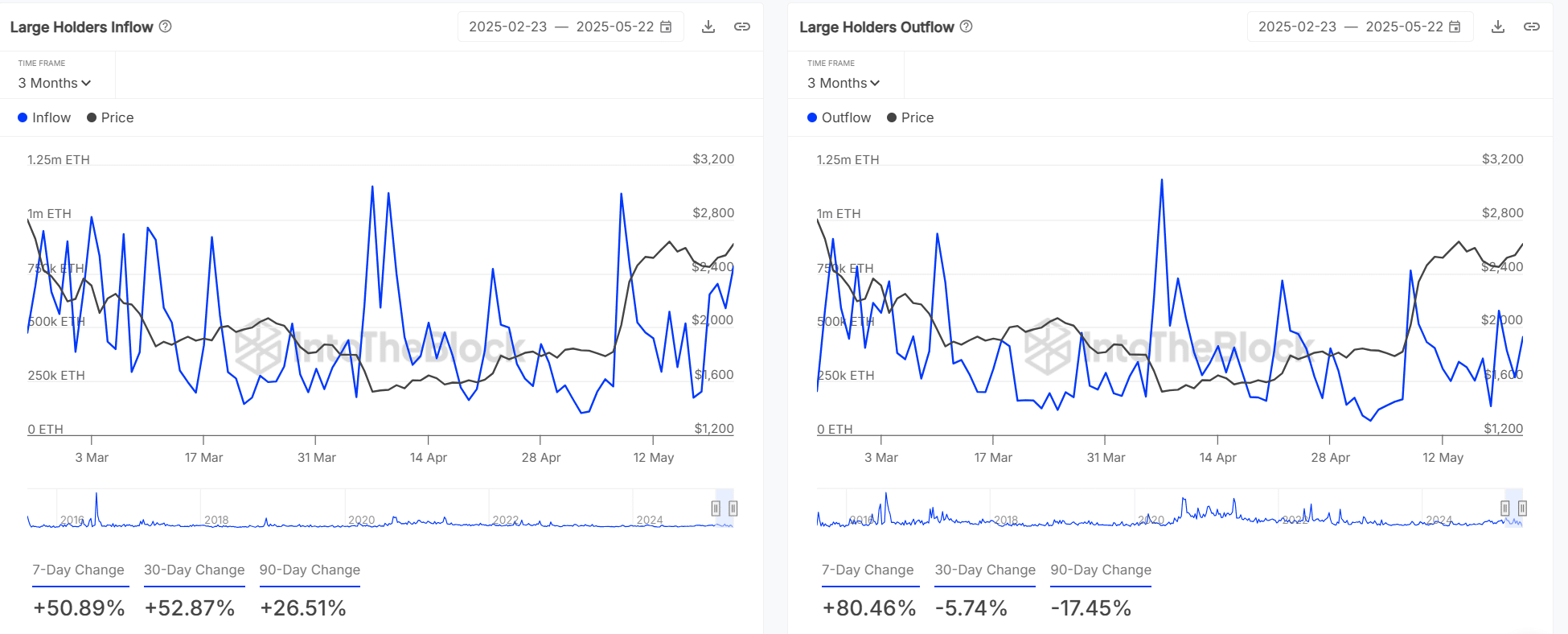
过去七天,大额持有者流入量跃升了 50.89%,表明交易所的存款不断增加。

相比之下,大户流出量在过去一周飙升了 80.46%,但月度环比仍下降了 5.74%。90 天内,流出量下降了 17.45%,这表明 ETH 长期持有者不愿将其从平台上转移出去。

资金流入与资金流出滞后的不平衡表明获利回吐的可能性增加。
平衡的现货流量是否意味着不确定性?

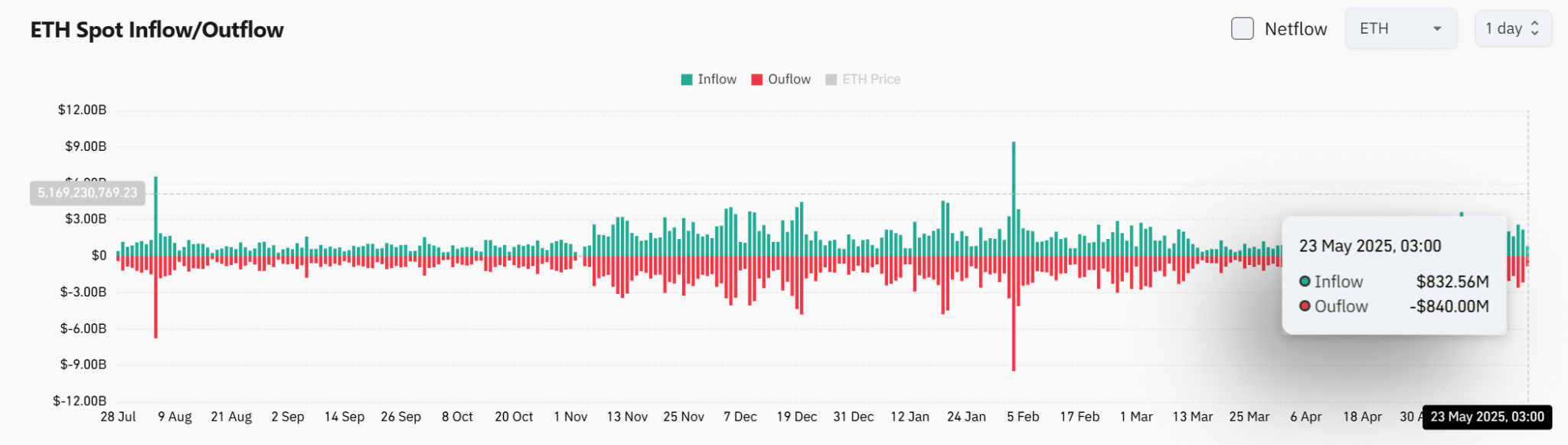
以太坊的现货交易流量反映出市场处于不确定状态。

5月23日,流入资金总额为8.3256亿美元,流出资金略高于流入资金总额,为8.4亿美元——两者之间的差距太小,不足以界定趋势方向。这种近乎持平的走势表明投资者有些犹豫。

尽管巨鲸正在将资产转移到交易所,但大盘尚未做出果断反应。

相反,买家和卖家似乎势均力敌,都在等待催化剂。
CoinGlass 的衍生品数据显示了明显的看涨倾向,其中 64.32% 的 ETH/USDT 交易者在币安上做多。

多空比率为 1.80,反映出投机乐观情绪日益增强。

虽然这表明看涨情绪,但如果势头未能持续,也会增加清算的风险。

以太坊能否突破 2,800 美元?

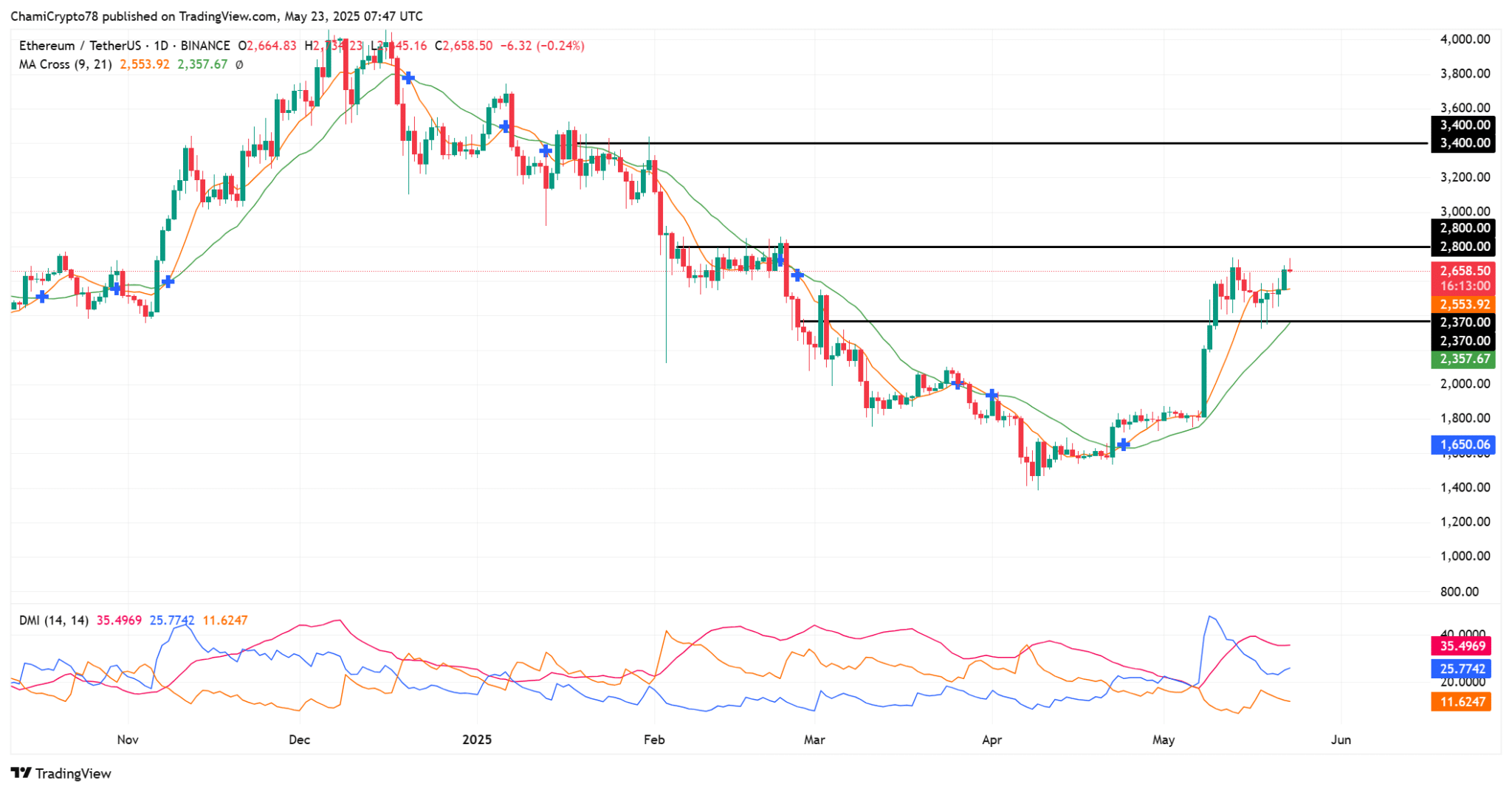
截至发稿时,ETH 交易价格接近 2,658 美元,维持在 9 天 EMA 2,553 美元和 21 天 EMA 2,357 美元上方,反映出坚定的短期看涨结构。

价格继续在 2,800 美元阻力位下方盘整,2,370 美元为最近的支撑位。若能突破 2,800 美元,则有望开启 3,400 美元的上涨之路。

同时,方向运动指数 (DMI) 显示出强劲的趋势设置,ADX 为 35.49,表明趋势强度稳固。

+DI (25.77) 高于 -DI (11.62),确认看涨主导地位。因此,只要 ETH 维持在其 EMA 上方,动能和结构就有利于买家。
以太坊的价格处于关键水平,受到技术实力的支撑,但受到鲸鱼交易活动重新活跃的影响。

尽管资金流入激增,但整体市场反应依然平淡。如果多头消化当前的抛售压力,并重新收复 2,800 美元,以太坊可能会打开通往 3,400 美元的道路。

然而,进一步的鲸鱼沉积可能会削弱信心并增加波动性。

目前,ETH 正处于潜在突破或崩溃的边缘,而鲸鱼行为是决定性因素。

Trending Cryptos

Related Reads

Quantum Computing Approaches "Q-Day": How Encryption Policy, Investment Logic, and Risk Management Are Reshaping the Landscape

Quantum Computing Nears 'Q-Day': Shaping Encryption Policy, Investment Logic, and Risk Management Quantum technology is increasingly intersecting with cryptocurrency policy and cybersecurity discussions as the potential 'Q-Day'—when quantum computers could break current encryption—approaches. While summer brings fast-paced crypto market dynamics, new U.S. legislation, and AI debates, the emerging dimension is how quantum advancements will reshape the digital asset landscape. The next phase of crypto investment is being shaped by two converging forces: clearer regulatory frameworks and cryptographic evolution driven by quantum computing. Investors stand to benefit from reduced uncertainty, but must also recognize that quantum readiness is becoming a core risk factor. Public blockchains rely on cryptography for security, and sufficiently advanced quantum machines could undermine these foundations. This does not mean imminent network collapse, but investors can no longer dismiss the timeline as irrelevant. Key questions now include whether projects have identified their cryptographic dependencies, formulated migration plans to post-quantum cryptography, and established governance for upgrades. For policymakers, the link is clear. Effective crypto policy must look beyond token classification and disclosure to address the underlying infrastructure. As stablecoins, tokenized assets, and blockchain payments integrate deeper into finance, cryptographic resilience becomes a systemic issue. Failure to prepare could lead to investor losses, operational failures, and legal disputes. Policy should encourage risk disclosure, require major intermediaries to maintain upgrade and response plans, and foster coordination across the ecosystem—rather than impose a single technical fix. The sustainability of cryptocurrencies will increasingly depend on their security infrastructure's ability to adapt to these accelerating technological pressures.

Foresight News26m ago

Quantum Computing Approaches "Q-Day": How Encryption Policy, Investment Logic, and Risk Management Are Reshaping the Landscape

Foresight News26m ago

Bitcoin's Five-Wave Adjustment Nears End, Opportunities Emerge in HYPE Support Zone | Invited Analysis

**Bitcoin's Five-Wave Adjustment Nears End, HYPE Support Zone Presents Opportunity | Guest Analysis** This week, Bitcoin (BTC) is in the final stage of a five-wave corrective structure. The formation of 'Endpoint 44' is key: a level above $58,110 suggests a high probability of a technical rebound, leading likely to wide-range consolidation. A break below $58,110 without bullish divergence warrants caution for further downside. Mid-term bearish positions are maintained at 20%, with 30% of capital reserved for short-term scalping opportunities based on predefined support/resistance levels and three scenario-based plans (A/B/C). Simultaneously, HYPE has entered the 55-56 segment of its own five-wave correction from its $76.94 high. If 'Endpoint 56' forms above the prior low (Endpoint 54), creating a double-bottom pattern, a rebound is significantly likely. A light long position (under 30% allocation) can be considered upon stabilization in the support zone. Last week's BTC short-term strategy, guided by proprietary quantitative models, successfully executed two short trades (1x leverage), yielding a total return of approximately 6.21%. The market move validated the prior weekly forecast of a retest towards the $59,100 support. **Core Trading Views Summary:** * **BTC:** Focus on the formation of 'Endpoint 44'. A scenario above $58,110 allows for tentative longs. Key resistances: $60,900-$62,300, ~$65,500, $67,300-$69,500. Key supports: ~$58,100, ~$55,000. * **HYPE:** Monitor the final position of 'Endpoint 56'. Key resistances: ~$65.5, ~$71.5. Key supports: ~$58.5, $52-$54 zone. Strategy favors buying on dips upon stabilization in support areas with confirmed model signals, with strict position control. **Risk Disclaimer:** Financial markets are volatile. All analysis, models, and strategies herein are based on personal technical analysis for journaling purposes only, not investment advice. Trade at your own risk.

Odaily星球日报40m ago

Bitcoin's Five-Wave Adjustment Nears End, Opportunities Emerge in HYPE Support Zone | Invited Analysis

Odaily星球日报40m ago

AI Sweeps the Globe, So Why Is Crypto + AI Facing Gloom?

The article "AI Sweeps the Globe, But Why Is Crypto + AI So Bleak?" analyzes the disconnect between the booming AI industry and the struggling crypto+AI sector. It argues the issue is not flawed logic but severe demand-supply mismatch across four key sub-sectors. Decentralized compute and storage projects offer theoretical benefits like cost savings and data sovereignty but lack a decisive technical edge over entrenched cloud providers (AWS, GCP). Enterprises are unwilling to risk migration for unproven infrastructure that can't guarantee the performance and reliability needed for critical AI workloads. ZKML and privacy solutions address important issues like model verification but solve non-urgent, long-term concerns for most businesses currently focused on core performance and ROI. Demand here is likely to be regulation-driven (e.g., EU AI Act) rather than organic. AI agent infrastructure is developing foundational tech for a future multi-agent economy. However, the current market phase is dominated by internal process automation within single companies, making this technology premature. AI agent payments is highlighted as the only sub-sector where blockchain competes on a level playing field with traditional finance, as neither has adequately solved the challenges of machine-to-machine micropayments and real-time settlement. Overall, crypto+AI projects are building for future needs (data ownership, decentralization, transparency) that don't align with the industry's immediate priorities (performance, cost, stability). The absence of a flagship, large-scale use case further hinders mainstream adoption and capital inflow. The path forward requires either adapting to current market demands or patiently building the foundational infrastructure for the next phase of AI.

marsbit53m ago

AI Sweeps the Globe, So Why Is Crypto + AI Facing Gloom?

marsbit53m ago

"King of Pump Calls" Arthur Hayes Strikes Again, This Time Targeting Deribit

On June 29, BitMEX co-founder Arthur Hayes purchased approximately 6.16 million SYN tokens via OTC platform Flowdesk for around $2.2 million. Hayes subsequently declared on X that SYN represents one of the most asymmetric investments he has seen since HYPE, stating it's time for an options DEX to challenge the dominant platform Deribit, and identifying Hypercall as that challenger. SYN's price surged over 40% following his comments, with a tenfold increase in June 2026 alone, bringing its FDV to roughly $110 million. The article details Synapse Protocol's evolution from a cross-chain messaging and liquidity network into the chain-based options trading protocol Hypercall. Hypercall, built on the Hyperliquid ecosystem's HyperEVM, aims to be a universal options exchange supporting any asset size with capped loss (limited to premium paid) and no forced liquidations. Deribit, established in 2016, remains the centralized leader in crypto options with an estimated 85% market share in BTC and ETH options and $3.588 billion in assets. Its strengths include deep liquidity and professional tools, but it faces criticisms over custody risk, KYC requirements, and regulatory uncertainty. The analysis positions Hypercall not as an immediate replacement for Deribit's entrenched network effects, but as a potential complementary and differentiated competitor, particularly for DeFi-native assets and new asset classes like RWA. The article concludes by noting Hayes's recent mixed "call" record, including fully exiting and later re-buying HYPE, and the controversial price target for CARDS from his family office Maelstrom, which was followed by a significant price drop.

marsbit1h ago

"King of Pump Calls" Arthur Hayes Strikes Again, This Time Targeting Deribit

marsbit1h ago

Trading

Spot

Hot Articles

Discussions

Welcome to the HTX Community. Here, you can stay informed about the latest platform developments and gain access to professional market insights. Users' opinions on the price of ETH (ETH) are presented below.

活动图片