以太坊上演空头大逃杀:CME基差坍塌、降息与Pectra升级能推动ETH突破3000美金吗?

marsbitPublished on 2025-04-22Last updated on 2025-04-23

一、市场现象与数据回溯:从1385到1750美元的价格跃迁​​

市场

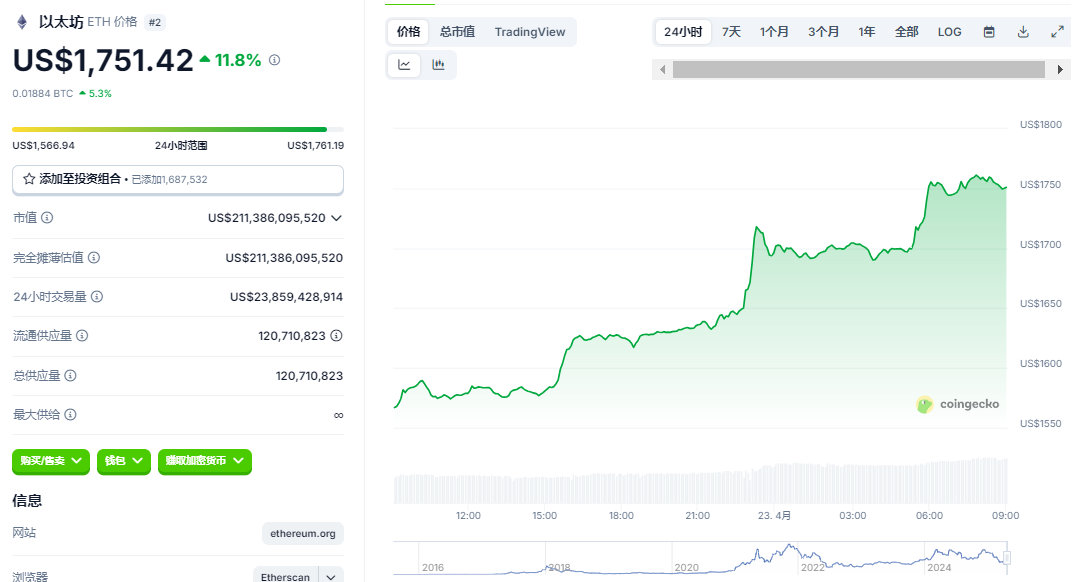
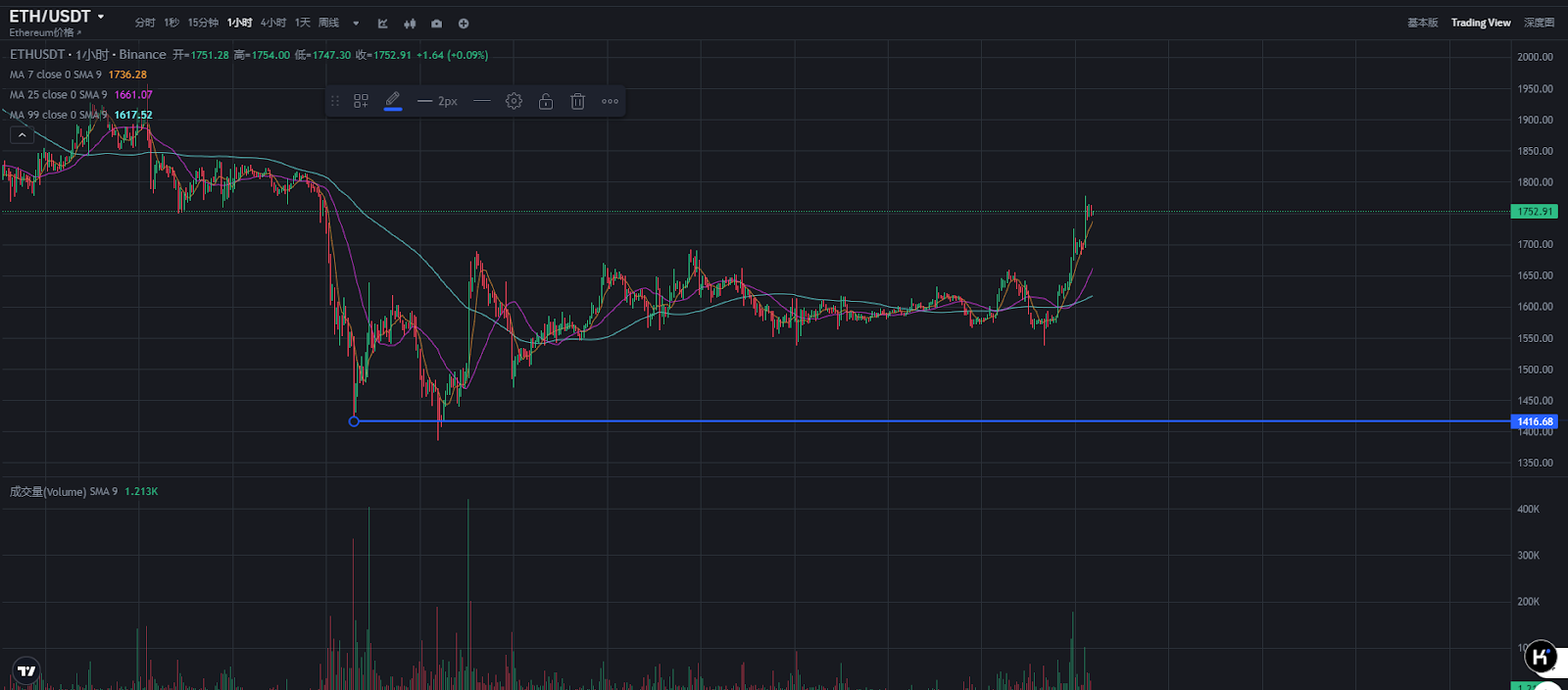
2025年4月223日,以太坊(ETH)上演了一场惊心动魄的价值回归大戏。其价格从4月6日的年度低点1385美元一路攀升,至4月23日突破1750美元关口,两周内累计涨幅达26.3%,单日最高涨幅超过10%。Coinglass数据显示过去24小时,以太坊爆仓金额超1.2亿美金。

这一轮上涨背后,既包含短期市场套利头寸平仓的流动性释放,也隐含宏观经济政策转向预期下的风险偏好重塑,更需从区块链生态演化的内生性动力中寻找长期价值支撑。
市场

从技术面看,ETH在4月9日突破1600美元后,连续击穿1688美元、1700美元两道关键阻力位,日线MACD指标在零轴上方形成金叉,红三兵形态确认短期多头趋势。

周线级别更值得关注:布林带中轨(约1720美元)被强势突破。
市场

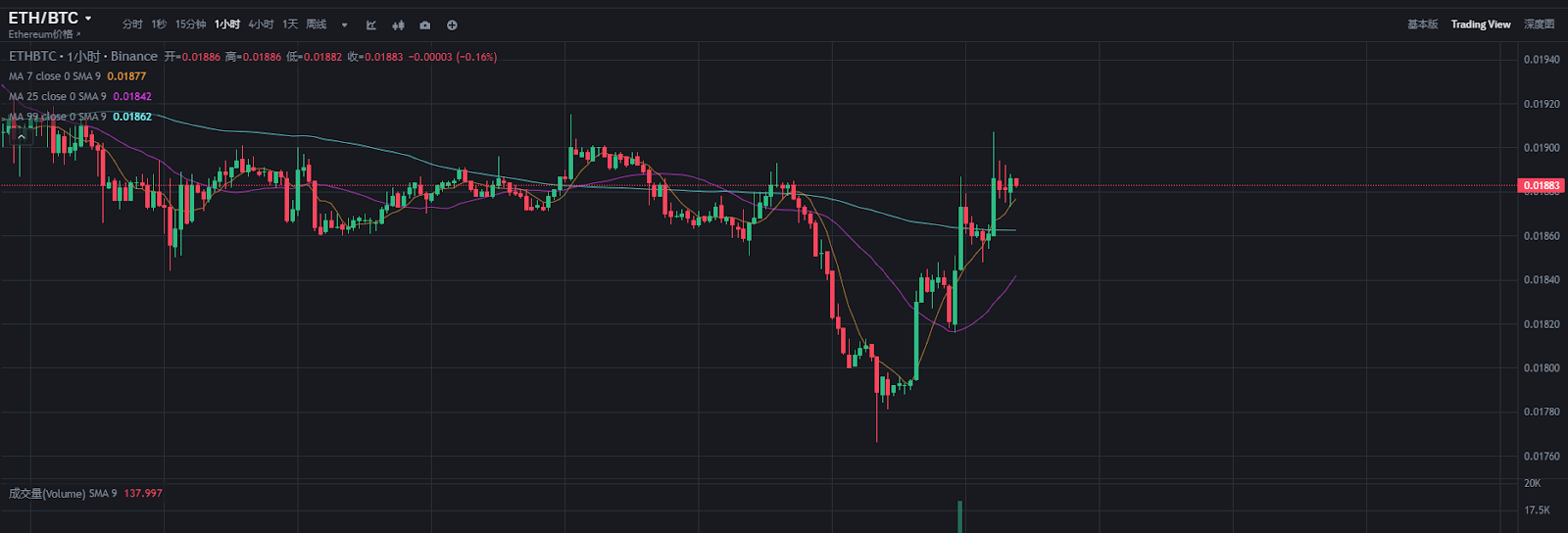
ETH/BTC汇率从历史低点0.01765反弹至0.0191,显示出市场对以太坊生态的信心修复。

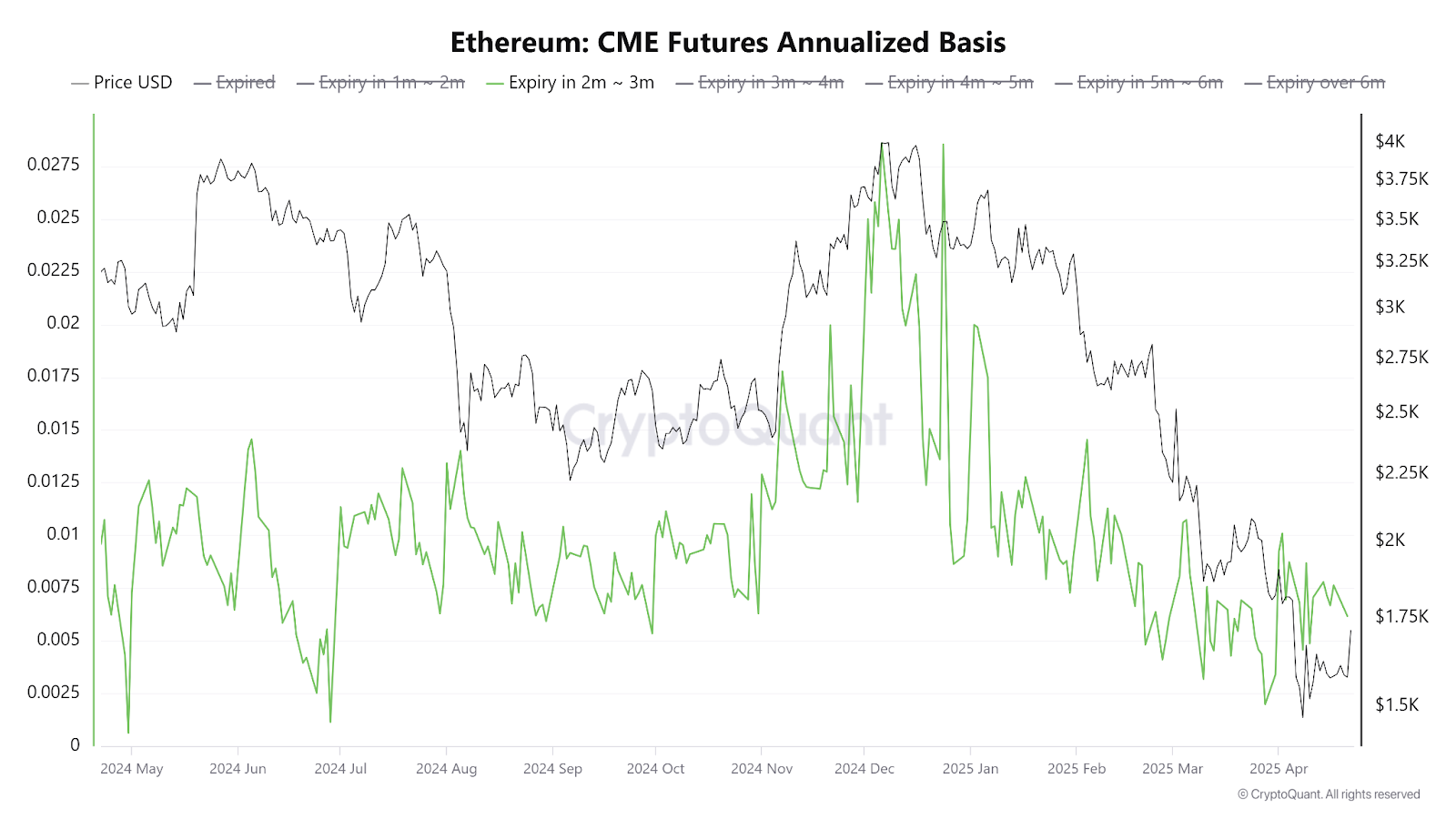
这一过程中,芝加哥商品交易所(CME)的ETH基差从2024年11月的20%骤降至2025年4月的5%,标志着套利资本主导的做空动能衰竭,为价格反弹扫清障碍。


​​二、暴涨动因解构:套利平仓、宏观转向与生态复苏的三重驱动​​

​​1. 期货基差收敛引发的套利资本出清​​

市场

ETH CME 期货年化基差

CME基差(期货价格与现货价格差额)的本质是市场对未来流动性的定价。

2024年四季度,20%的基差水平远超同期美国国债收益率,吸引对冲基金构建“买入现货ETF+做空期货”的套利组合。这一策略的可持续性依赖于两个前提:一是基差维持高位以覆盖资金成本,二是市场流动性足以支撑头寸滚动。然而,特朗普关税政策引发的风险资产抛售(4月6日ETH跌至1385美元)导致基差快速收窄至5%,套利收益空间消失后,机构被迫抛售现货ETF平仓,进一步加剧价格下跌。

当套利资本撤离后,ETH定价权重新回归现货市场供需关系。根据Glassnode链上数据,1,546美元附近积累的82.4万枚ETH成为关键支撑位,巨鲸地址在此区域的增持行为(如Bitfinex单笔提现6528枚ETH)表明价值投资者开始入场。


​​2. 宏观政策转向与风险偏好修复​​

美联储货币政策预期的戏剧性变化构成另一核心变量。特朗普在4月17日施压鲍威尔“立即降息”后,市场对6月降息概率的预测从32.8%跃升至61.8%。

这一转变导致美元指数跌至98.2790的年内新低,黄金与加密货币作为非美元资产的避险属性同步增强。值得注意的是,ETH此轮上涨与美股三大股指(道琼斯+2.66%、纳斯达克+2.7%)形成共振,反映出全球资本从“现金为王”策略向风险资产再平衡的趋势。

地缘政治风险的缓和进一步催化涨势。美国财长贝森特关于“中美关税战可能降温”的表态,降低了市场对供应链冲击的担忧。从行为金融学视角看,这种预期修正使得ETH的beta系数(相对于大盘波动率)从1.2回落至0.9,风险溢价要求下降推动估值中枢上移。


​​3. 以太坊生态的内生性价值重构​​

技术升级与生态扩张构成长期价值支撑。4月25日将启动的Pectra升级引入EIP-7732(账户抽象优化)和Layer2扩展方案,将单笔交易成本降低至0.001美元以下,TPS(每秒交易量)提升至2万笔。
市场

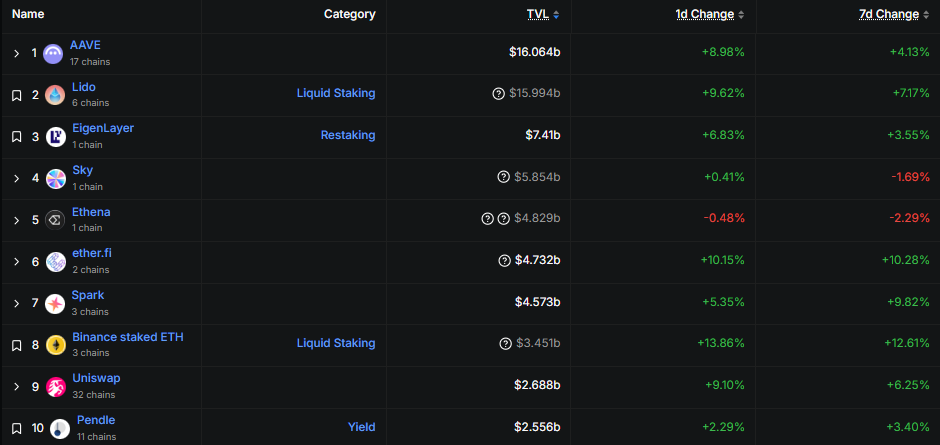
这直接刺激了DeFi锁仓量(TVL)的复苏:截至4月23日,以太坊DeFi协议TVL达到467亿美元,较3月低点增长18%,其中MakerDAO、Aave等头部协议贡献了60%的增量。

机构资金的结构性流入同样关键。贝莱德发行的5亿美元RWA(现实世界资产)代币化基金中,47%的底层资产通过以太坊网络清算,显示出传统金融对以太坊结算层的认可。

此外,美国SEC对以太坊现货ETF通过质押的批准预期可能引发类似2024年比特币ETF的资金虹吸效应,据10x Research模型测算,若通过将带来至少50亿美元净流入。


未来走势推演:从阻力突破到趋势反转的路径选择​​

短期(1-3个月)价格走势取决于1688美元支撑位的有效性。

市场

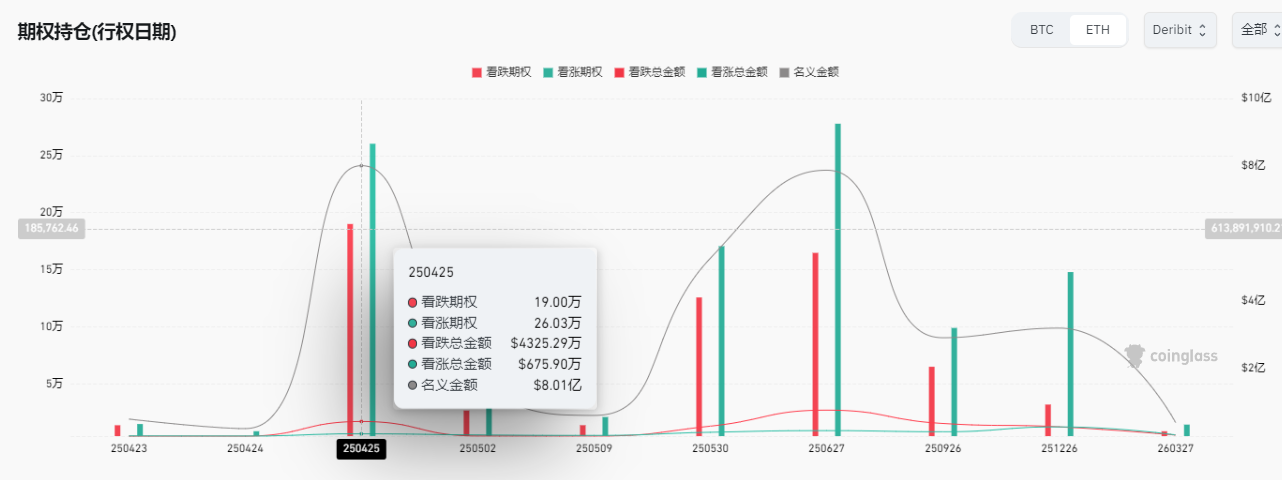
根据期权市场数据,4月25日到期的ETH合约中,行权价1700美元的看跌期权未平仓合约(OI)为1.2万枚,需警惕空头在CPI数据公布前(4月25日)的集中狙击。若成功守住支撑,上行目标可看至1830美元(周线布林带上轨)及1930美元(斐波那契61.8%回撤位)。


中期(6-12个月)需关注两大催化剂:

美联储降息周期启动​​:若6月降息25个基点落地,根据资本资产定价模型(CAPM),ETH的预期收益率将从当前12%提升至18%,吸引约20亿美元配置型资金入场。

ETF质押审批与RWA扩张​​:以太坊现货ETF若通过质押,参照比特币ETF历史,首周资金流入规模可能达8-12亿美元

长期(2-3年)价值中枢则取决于以太坊升级的完全落地。分片技术全面实施后,网络吞吐量有望达到10万TPS,Gas费下降至近乎为零,这将使以太坊在Web3.0基础设施竞争中占据绝对优势。


结语:在不确定性中寻找确定性​​

以太坊此轮暴涨绝非单纯的技术性反弹,而是多重周期共振的结果:套利资本出清释放短期流动性,货币政策转向重塑风险溢价,技术升级夯实长期价值根基。在1688-1800美元的关键区间,投资者需警惕波动加剧风险,但更应关注ETH/BTC汇率能否突破0.03的强弱分界线——这将是确认以太坊生态价值重估的核心信号。

正如奥地利学派经济学家哈耶克所言:“货币的非国家化进程必然伴随价值尺度的多元化。”以太坊作为去中心化金融的基础设施,其价格波动本质上是人类对新型价值存储载体的共识演化过程。在这一历史性进程中,理性投资者需在噪声中识别信号,在波动中捕获趋势,方能在数字经济的浪潮中立于不败之地。


Trending Cryptos

Related Reads

Bitwise CIO: STRC Plunge is a Bottom Signal, Bull Market to Begin in Autumn

Matt Hougan, Chief Investment Officer at Bitwise, explains the recent Bitcoin price drop below $60,000 and its connection to the steep decline in MicroStrategy's STRC (Strategy's Perpetual Preferred Stock). STRC, designed as a high-yield, stable-price instrument, fell from its $100 target to $75 due to market fears over MicroStrategy's ability to sustain its dividend amid Bitcoin's price weakness. Hougan clarifies that while MicroStrategy's overall financial position remains strong, with significant Bitcoin holdings and cash, the core market anxiety centered on the optional nature of the dividend payments. In response, MicroStrategy announced a new operational framework: it will sell some Bitcoin as needed to fund dividends, will no longer actively defend the $100 share price through dividend hikes, and may repurchase STRC on the open market. This shift marks a change in MicroStrategy's role from a consistent, one-way buyer of Bitcoin to a more dynamic participant that may both buy and sell. According to Hougan, the STRC volatility is a classic late-cycle event, signaling the painful but necessary process of flushing out excessive leverage from the market. He draws parallels to the unwinding of the GBTC premium in the previous cycle. He identifies key potential bottoming signals: MSTR trading at a discount to its net asset value (NAV), extreme readings on the Crypto Fear & Greed Index, and persistently negative Bitcoin funding rates. Hougan concludes that while the exact timing of the market bottom is unpredictable, the current deleveraging phase suggests it is near. He expresses confidence that a new bull market will begin in the fall of this year, with the next major wave of buying expected to come from institutional investors like banks, asset managers, and pension funds.

Foresight News21m ago

Bitwise CIO: STRC Plunge is a Bottom Signal, Bull Market to Begin in Autumn

Foresight News21m ago

ENS Founder Seeks to 'Seize Power' from DAO

On June 29th, the ENS community entered the on-chain voting phase for a proposal to renew the ENS DAO Security Council's veto power for two more years. Shortly after voting began, ENS founder Nick Johnson used his substantial ENS holdings to cast over 3.55 million votes against the proposal, swinging the outcome despite initial strong support. The Security Council was established in July 2024 with a 4/8 multisig veto power to protect the DAO's treasury (valued over $350 million) from malicious proposals during a period of low voter participation. Its powers were limited to vetoing only harmful proposals, not normal ones. Nick Johnson's opposition stems from broader concerns about ENS DAO's governance. In late 2025, he and others expressed frustration that the DAO had become mired in political gamesmanship, with capable contributors leaving and leadership falling to less experienced or misaligned parties. This context set the stage for a major restructuring proposal by ENS COO Katherine Wu on June 19th, titled "Next Era of ENS DAO: Empowering the ENS Foundation." The controversial proposal aims to transfer daily operations, treasury management, and long-term strategy to a restructured ENS Foundation with a professional board, while the DAO would retain core protocol governance powers. Critics, including original ENS constitution author Brantly Millegan, argue this effectively transfers treasury control from token holders to ENS Labs (the core development team), undermining the DAO's original decentralized design. Nick's massive "no" vote on the Security Council renewal is seen as the first move in this power struggle. He explained his vote was due to concerns about insufficient checks on the Council's power and the potential for its veto to be used politically. In response, Katherine Wu submitted a revised proposal with higher execution thresholds (5/8 instead of 4/8) and stricter limits. The push for change comes as ENS's annual revenue has declined significantly, from over $10 million in 2023 to under $2 million in 2025, increasing pressure to manage the treasury more effectively. Nick Johnson now faces the challenge of proving that a more structured foundation can steer ENS better than the current DAO model.

Foresight News51m ago

ENS Founder Seeks to 'Seize Power' from DAO

Foresight News51m ago

Trading

Spot

Hot Articles

Discussions

Welcome to the HTX Community. Here, you can stay informed about the latest platform developments and gain access to professional market insights. Users' opinions on the price of ETH (ETH) are presented below.

活动图片