Opinion: The AI Bubble in Stocks Has Arrived. Why I'm Turning to Bet on Bitcoin?

marsbitPublished on 2026-07-02Last updated on 2026-07-02

Abstract

This article argues that the AI-driven stock market surge shows clear signs of a bubble. The author, citing Howard Marks' cycle theory, presents a checklist of behaviors signaling a market top—excessive optimism, easy capital, and the belief "no price is too high"—and finds the current AI stock mania matches most criteria. Consequently, the author has sold AI-related ETFs and shifted focus to accumulating Bitcoin within a $50k-$60k range, viewing it as a scarcer asset with a wider margin of safety amid high equity valuations. The piece contrasts the narrow, frothy AI rally with what it sees as a more rational long-term opportunity in Bitcoin, especially given indicators like high CAPE ratios and selective risk appetite. The author's personal strategy involves holding significant cash, with capital allocated across trading, long-term accumulation (primarily BTC), and illiquid investments.

Author:Investing Beanstock

Translation:Deep Tide TechFlow

Deep Tide's Guide: AI stocks are soaring, but this trader is actually selling tech stocks and turning to bottom-fish Bitcoin. He used Howard Marks's cycle theory to examine the current market point by point and found that AI already meets almost all the characteristics of a "bubble top." For investors, this article provides a calm framework for cycle positioning, helping you judge whether it's time to be greedy or fearful now.

The stock market is experiencing an AI-driven, frenzied bull market, which should come as a surprise to no one.

Not being positioned feels downright stupid—because capital expenditure (CAPEX) will only continue to rise, and the forward valuations of all these stocks will only become crazier.

I won't comment on specific stocks or indices; banks and financial media worldwide are already providing blanket coverage. I'm more interested in figuring out—or at least trying to decipher—what stage of the market we're in. Not just in cryptocurrency, but across the entire financial markets.

To do this, I drew heavy inspiration from one of my favorite books: Howard Marks's *Mastering the Market Cycle*.

Most people understand cycles as a series of events. Most also understand that these events typically follow each other in a regular sequence: an upswing is followed by a downswing, and then eventually a new upswing. But to fully understand cycles, this isn't enough. Events in a cycle shouldn't just be seen as one following another; more importantly, each event *causes* the next to happen.
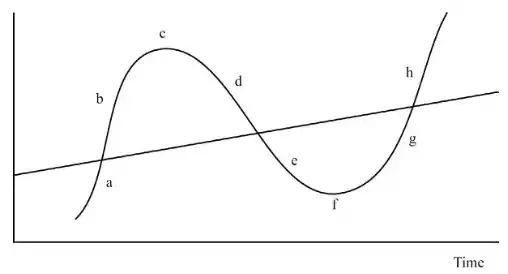
The straight line = the midpoint. The market's pendulum is the wavy line oscillating around the midpoint. Together they form the market cycle, driven by various market forces that cause it to deviate from the midpoint from time to time.

The movement of cyclical phenomena can be easily recognized in several stages:

a: Recovery from an overly depressed low extreme or "trough" towards the midpoint.

b: Continuing past the midpoint to swing towards the high extreme or "peak."

c: Reaching the peak.

d: Correcting downward from the peak back to the midpoint or mean.

e: Continuing the downward movement past the midpoint towards a new low.

f: Reaching the trough.

g: Recovering from the trough back to the midpoint.

h: The cycle repeats.

So Where Are We Now?
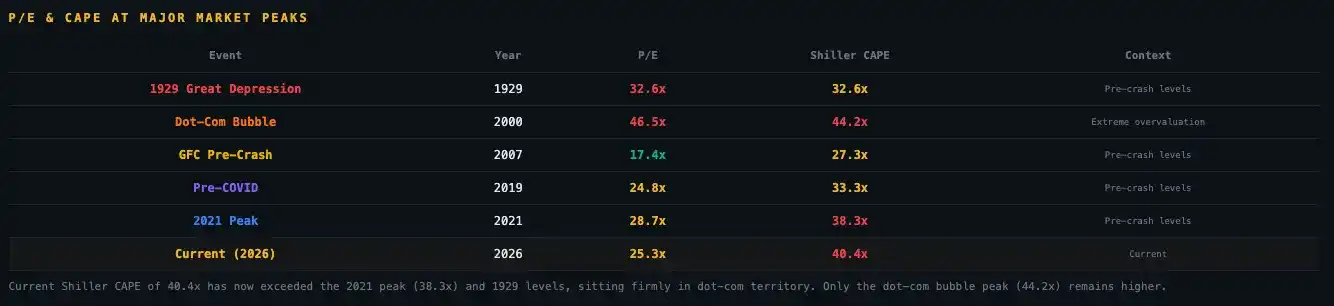
Is this a bubble? I think it's quite evident at this point that AI indeed *is* a bubble. According to Marks, a bubble is signaled when the sentiment that "price doesn't matter" is strong.

In a bubble, investors often conclude that you can make money by borrowing (using leverage) to buy the frenzied asset. No matter what your borrowing rate or funding fee is, the asset will surely appreciate faster than that.

"No price is too high" is the ultimate ingredient of a bubble, a fairly obvious signal that the market has gone too far.

There are actually conflicting schools of thought, believing the market can stay far above its intrinsic value and still reward multiples due to the frenzy.

What to Do?

Since we can't be sure when the bubble will burst, in my view, we have two clear approaches to portfolio allocation.

Dollar-Cost Averaging (I mean real DCA, no timing, you just buy in boring, mechanical dribs and drabs. The more batches you split into, the smoother your final cost basis, that's the whole point.)

Heavy cash allocation, but still allowing yourself to participate in the market through tactical/satellite positions, like active trading.

I personally prefer the second method. But that's because I actively monitor the markets day in and day out; I rely on my own market experience and intuition to navigate all this.

DCA isn't a bad method either. But it does require one to truly extend their time horizon. Not 1 or 3 years, but at least 5 years to really see results. Most people DCA for a few weeks, or try to DCA while also timing, and it backfires. If you plan to DCA into a particular investment, make sure you fully understand that business/industry, and then just stick to it in a super boring, repetitive way and go on with your life.

In my 2025 review and reflection post, I mentioned allocating 25% of my portfolio to passive ETFs, including QQQ, SOXQ, XAR, URA, and UFO. I think a large part of the gains came from QQQ and SOXQ, but I sold all of it in May because I believe the market had swung far past the midpoint.

I also said I was overall bearish on crypto until early 2026 (which turned out right), I managed to keep a lot of cash, and am now patiently deploying a portion into BTC. The target accumulation range is $50k–$60k, so I've already started allocating as of writing this.

"Crypto Is Dead, Pivot to AI"

Honestly, my only regret is not allocating more to speculative private market exposure in Anthropic and xAI. I think frontier models still offer the purest AI exposure, compared to public market "picks and shovels" types, like the GPU/semiconductor/storage narrative. Since those are already consensus, I don't think chasing them now offers asymmetric upside. That ship sailed a long time ago. Stocks like MU are up almost 10x in a year, and stocks like SNDK basically move like memecoins. Upside might still be there, but downside risk looks worse.

But the CAPEX! Yes, this might translate into real incremental value in the future, but it's still speculative. Overly speculative, excess money all funneling into the same thing, I've seen this movie before.

Is it disappointing to miss a big chunk of the AI bull run? Sure, it stings a bit. But I still have exposure, and it's doubled. I really don't think it's responsible to tell someone AI stocks are truly worth buying at today's valuations, unless they *really* know what they're doing and are in it for the long term (most aren't, they're here for quick money).

Market Sanity Checklist

Now, let's go back to how Marks judges if we are near/approaching a market top:

The economy is growing; economic reports are positive.

Corporate profits are rising and beating expectations.

The media only reports good news.

The securities markets are strong.

Investors are becoming increasingly confident and optimistic.

Risk is perceived as scarce and mild.

Investors believe taking risks is the necessary path to profits.

Greed drives behavior.

Demand for investment opportunities exceeds supply.

Asset prices exceed intrinsic value.

Capital markets are wide open; raising money or rolling over debt is easy.

Defaults are rare.

Skepticism is low, confidence is high, meaning risky trades can be made.

No one can imagine things going wrong. No favorable development seems impossible.

Everyone assumes things will get better forever.

Investors ignore the possibility of loss, only worry about missing out.

No one can think of a reason to sell, and no one is forced to sell.

There are more buyers than sellers.

If the market dips, investors are happy to buy.

Prices reach new highs.

The media celebrates this exciting event.

Investors become euphoric and carefree.

Equity holders marvel at their own cleverness; perhaps they'll buy more.

Those who stayed on the sidelines feel regret; therefore, they capitulate and buy.

^ This means:

Future returns are low (or negative).

Risk is high.

Investors should forget about missed opportunities, only worry about losing money.

This is a time for caution!

So, how many of these do you think the current stock market is exhibiting?

On the flip side of the "market top" checklist, the opposite scenario can also manifest:

The economy slows; reports are negative.

Corporate profits are flat or falling, missing expectations.

The media only reports bad news.

The market is weak.

Investors become worried and despondent.

Risk is perceived as everywhere.

Investors believe taking risks is just a way to lose money.

Fear dominates investor psychology.

Demand for securities is less than supply.

Asset prices are below intrinsic value.

Capital markets are closed; it's hard to issue securities or refinance debt.

Defaults surge.

Skepticism is high, confidence is low, meaning only safe trades can be made, or none at all.

No one thinks improvement is possible. No outcome seems too negative to happen.

Everyone assumes things will get worse forever.

Investors ignore the possibility of missing opportunities, only worry about losing money.

No one can think of a reason to buy.

There are more sellers than buyers.

"Don't try to catch a falling knife" replaces "buy the dip."

Prices reach new lows.

The media focuses on this depressing trend.

Investors become despondent and panicked.

Equity holders feel stupid and disillusioned. They realize they don't really understand the reasons behind their investments.

Those who didn't buy (or who sold) feel vindicated and are praised for their cleverness.

Those who held capitulate and sell at depressed prices, furthering the downward spiral.

^ This means:

Implied future returns are sky-high.

Risk is low.

Investors should forget about the risk of losing money, only worry about missing opportunities.

This is a time to be aggressive!

Based on the checklist above, I do think BTC is exhibiting many of these (especially in the Saylor/MSTR situation). So I do feel BTC presents a more attractive investment prospect compared to today's high-flying AI stocks.

However, note that the above progressions are simplified, they may not even appear in the same order, nor necessarily appear in every market cycle, but these behaviors are real, they are indeed elements that rhyme in markets over decades.
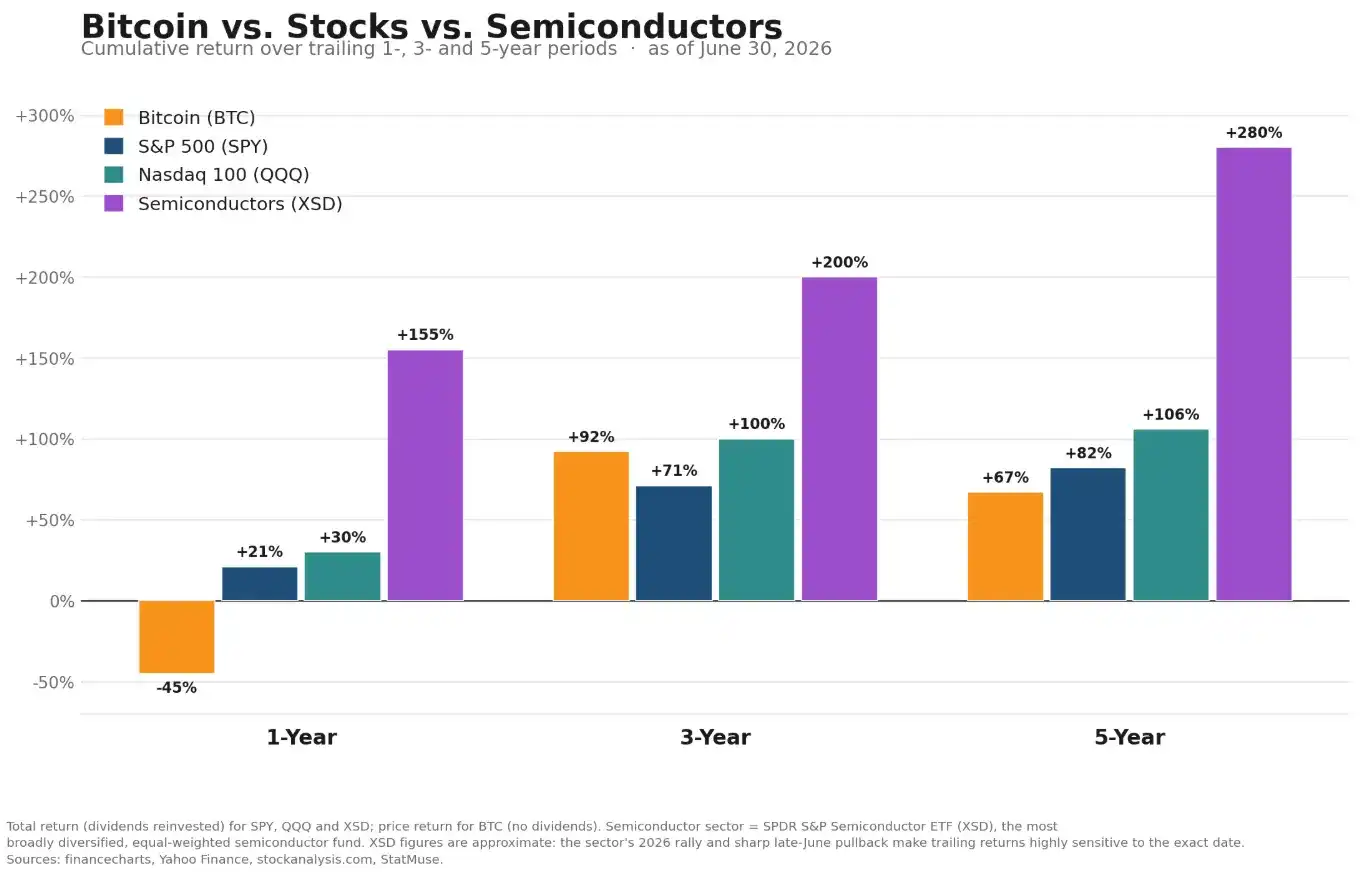
The AI revolution has clearly benefited tech stocks, especially semiconductors over 1/3/5 year periods.

But investing is never done by looking in the rearview mirror (unfortunately, most people do and take reference from the past), advantage emerges where people ignore/dismiss it. We need to look at "what happens 1 to 10 years from now," not what today's environment is.

Looking at the chart above, saying you're a crypto investor and you should have invested in stocks would look silly.

Based on the above chart, if you chose stocks, statistically speaking, the likelihood of future underperformance is high.

Also, reading this in 2026 might sound like a joke now, but based on past lessons from cycles and an understanding of forward return/valuation fundamentals, I do think BTC will outperform stocks over the next few years.

The Most Dislocated Macro Environment Ever

We are also in one of the most dislocated, irrational market environments ever.

Under new Fed Chair Wash, interest rates are currently at 3.5–3.75%, and he's also publicly struck a hawkish tone. But rates aren't compressing; stocks instead keep rising, all because AI will cure cancer and everyone will make infinite money forever, right?

The Shiller CAPE ratio for stocks has broken above 40 for the first time, the first time since the peak of the dot-com bubble era. US stock market capitalization is now near 2x its GDP, valuations are higher than during the 2000 bubble.

Multiple expansions during a tightening cycle, this is textbook definition of dislocation.

This dislocation is primarily driven by a three-engine narrative/liquidity machine.

AI CAPEX supercycle: Large hyperscale cloud providers spending up to $725 billion in 2026, nearing $1 trillion, now accounting for over 30% of the entire S&P 500.

Late-cycle fiscal stimulus: Lower corporate and personal taxes/tariff rebates boosting nominal earnings, even as the Fed tightens.

Passive index fund flows: Index funds mechanically funnel every 401(k) dollar into the largest market cap companies, regardless of price. Boomers are now forced to buy these hyperscale cloud provider stocks at all-time highs, and they continue.

Risk Appetite Is Selective

Today capital is rushing into AI/semiconductors, while everything else including Bitcoin (last cycle's darling) is barely growing or bleeding. This is not a universally greedy market, but one funneling all capital into a single narrative (AI and its related verticals).

In 2025, AI-related stocks accounted for roughly 80% of the entire US stock market gains. Behind these all-time highs, market breadth is extremely narrow, most stocks aren't even contributing to the rally (unless you're AI-related).

Cracks Are Forming

The entire edifice assumes AI CAPEX can be met with real demand, and that energy-driven inflationary shocks will subside/not matter. Core PCE rose from 3% to 3.3%, oil prices surged from $57 to $113 during the Iran war then fell to $76, this is exactly why rate cuts were ruled out.

Cracks have already shown.

In the last full week of June, South Korea's KOSPI halted trading twice, Samsung and SK Hynix fell 12% in a single day, a warning of seller count versus remaining buyers.

Dalio also said his bubble gauge is near 1929 and 2000 levels, Buffett... still holds a record $381 billion in cash. Prices have become dependent on narrative, positioning, and leverage, there really isn't much margin of safety left.

My Personal Plan

Considering all of the above, here's how I, as a capital allocator, think about the whole picture.

Please note this is highly tailored to my own life situation, investment goals, and personality. Please do your own research, none of this constitutes financial advice.

I currently split my capital into 3 distinct buckets and manage accordingly based on a specific bucket.

Trading capital (highest risk, highest volatility, highest variance)

Long-term accumulation capital (buy-and-hold type I don't intend to sell)

Illiquid capital (private equity – SPVs, alternative investments)

How to allocate capital to which bucket is highly dependent on market environment and liquidity.

Right now, I keep most cash for Bucket 2. I've drastically reduced allocation to Bucket 1 due to deteriorating market edge. In crypto, I currently only deem BTC, HYPE, and LIT worth holding. Looking at stocks is playing musical chairs. Given current valuations, long-term allocation to stocks also doesn't make sense.

For Bucket 3, the amount is mostly fixed, about 20% of my net worth. Given its illiquidity and years needed to realize full returns, this bucket remains largely unchanged for the foreseeable future.

As of writing, I'm mostly cash (>80%), with allocation weights across the 3 buckets at 10%, 70%, 20% respectively.

Under Bucket 2, I've made 4 buys of spot BTC so far, average price around $59k. I'm also interested in certain ETFs, which I'll disclose when I decide on a long-term allocation.

In summary, nothing too fancy. More like fishing, waiting for that big fish. I don't mind catching a few small ones before the big one comes, but the point is to keep fishing, stay focused, and not give up.

Perpetual DEX Airdrop Farming Still an Edge

Although my trading decreased in June, I think one massively undervalued edge in crypto is perpetual DEX farming, especially Variational.
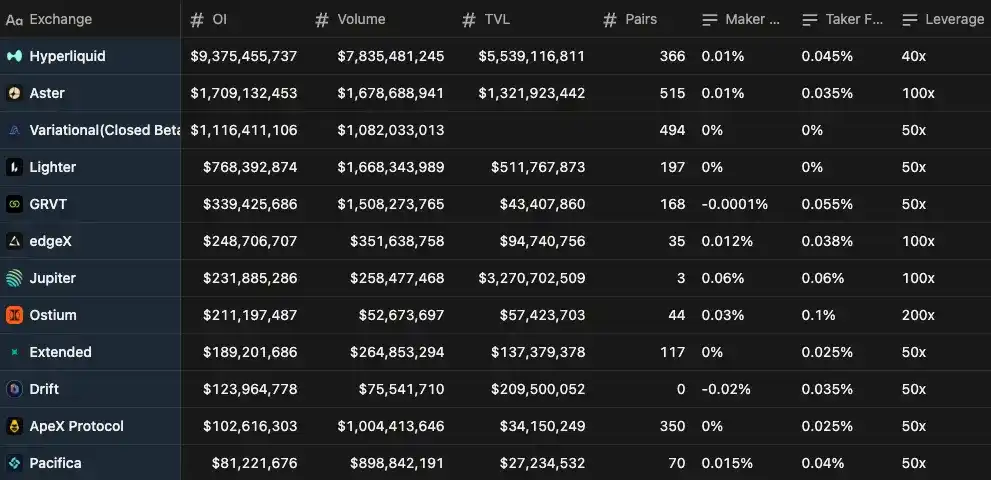
Though primarily driven by airdrop incentives, it's still ranked top 3 among perpetual DEXs, excluding the clear market leader Hyperliquid.

Variational is still in private beta, meaning you need an invite to use. What's special? It's an RFQ-based perpetual DEX, theoretically meaning they can list all sorts of pairs (even the most obscure) and still have deep liquidity, unlike order books that need crazy bootstrapping.

I mainly use it to trade commodities like crude oil, gold, silver, copper, and some other pairs. Focusing on open interest and holding long-term gets the most efficient points.
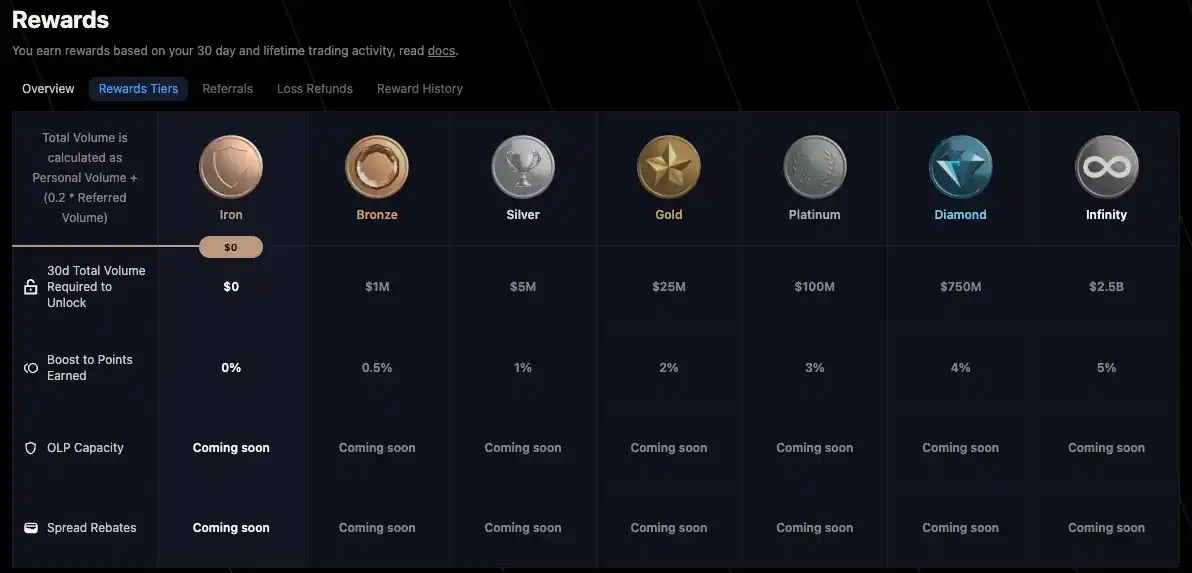
Referrals get a 15% points boost, my code automatically grants you SILVER tier for 90 days upon sign-up.

Other platforms I'm still farming with significant point allocation are:

The TGE target for all mentioned perpetual DEXs is Q3 2026.

I think the fear around STRC is overdone. But this financial engineering does alter investor behavior around it. Unwillingness to allocate until Saylor finishes selling $1B of BTC is now a key "bottom signal."

At $58k BTC price, I think valuations are reasonable. It's even below the 200-day moving average now.

This means H2 2026 could be a significant period for long-term accumulators. I do think there will be one last capitulation and heavy forced selling (including Saylor), likely coinciding with stocks starting to weaken.

While this isn't a pure BTC bullish post, I think among all assets that exist today, BTC offers one of the widest margins of safety, even if the ultimate low is about 15–20% down from here.

Think about it, in a long-term stagflation environment, scarce assets perform best. It was gold in the past, an asset outside the monetary system that existed for millennia.

I think ten years from now, accumulating BTC today will be seen as one of the most rewarding moments in a long time.

While stocks will indeed rise over time in the future, at this moment, I can't justify buying at such high valuations and am happy to watch from the sidelines until it comes back to earth.

What do you think? How are you thinking about capital allocation now?

Trending Cryptos

Related Questions

QAccording to the author, what are the two main portfolio allocation methods suggested for dealing with the current market, which one does he prefer, and why?

AThe author suggests two methods: 1) DCA (Dollar-Cost Averaging) in a true, non-timing, mechanical way. 2) Being heavy on cash while allowing participation through tactical/satellite positions like active trading. He personally prefers the second method. The reason is that he actively monitors the market daily and relies on his market experience and intuition to navigate it. He finds DCA requires a genuine long-term horizon (at least 5 years) and strict discipline, which most people lack as they often try to time the market within it.

QBased on Howard Marks' framework from 'The Cycle', what key characteristics does the author believe the current AI-driven stock market is exhibiting that signal a potential bubble top?

AThe author believes the AI-driven market exhibits many characteristics from Howard Marks' 'market top' checklist. Key ones include: prices seeming irrelevant ('no price is too high'), the belief that leverage is a sure path to profit, widespread investor confidence and optimism, greed driving behavior, asset prices exceeding intrinsic value, easy capital raising, low skepticism, high confidence enabling risky trades, and investors worrying more about missing out (FOMO) than losing money. He argues the market shows 'price doesn't matter' sentiment, a hallmark of a bubble.

QWhy does the author view Bitcoin as a more attractive investment prospect compared to high-flying AI stocks at this moment?

AThe author views Bitcoin as more attractive because he believes it is exhibiting many characteristics from the *opposite* side of Howard Marks' checklist—the one indicating a market bottom or undervalued state. He implies BTC shows signs like fear dominating investor psychology, prices potentially below intrinsic value, high skepticism, low confidence, and investors worrying about losing money rather than missing gains. He also cites BTC trading below its 200-day moving average around $58,000, offering a wider 'margin of safety' and reasonable valuation, especially in a potential long-term stagflation environment where scarce assets historically perform well.

QWhat are the three main drivers the author identifies as creating the current 'dislocated' and 'irrational' macro market environment?

AThe author identifies three main drivers: 1) The AI Capital Expenditure Supercycle, with hyperscalers spending massively (projected $725B in 2026), now representing over 30% of the S&P 500. 2) Late-cycle fiscal stimulus, including tax and tariff rebates boosting nominal profits even as the Fed tightens policy. 3) Passive index fund flows, where funds mechanically funnel retirement savings (like 401(k)s) into the largest market-cap companies regardless of price, forcing buying at historic highs.

QHow has the author personally allocated his capital across different 'buckets' based on the current market outlook, and what is he specifically accumulating in his 'long-term accumulation' bucket?

AThe author has allocated his capital into three buckets: 1) Trading capital (highest risk), 2) Long-term accumulation capital (buy-and-hold), and 3) Illiquid capital (private equity/SPVs). Given the current market, he has significantly reduced allocation to bucket 1 due to poor market edge. He holds most of his cash for bucket 2 (>80% cash overall). His current weightings are approximately 10% for bucket 1, 70% for bucket 2, and 20% for bucket 3. Within bucket 2 (long-term accumulation), he is specifically accumulating spot Bitcoin, having made four buys at an average price of around $59,000.

Related Reads

Trading

Spot

Hot Articles

What is DOGE M

Doge Matrix ($doge m): The New Breed of Community-Driven Cryptocurrency Introduction In the ever-evolving landscape of cryptocurrency, new projects constantly emerge, each aiming to capture the interest of investors and enthusiasts alike. One of the latest entrants to this domain is Doge Matrix, represented by the ticker symbol $doge m. This project has attracted attention thanks to its roots in the popular meme culture surrounding Dogecoin, establishing its place within the web3 space. This article aims to provide a comprehensive analysis of Doge Matrix, covering its overview, creator, investors, functionality, timeline, and notable aspects. What is Doge Matrix ($doge m)? Doge Matrix is a community-driven cryptocurrency project that seemingly builds upon the widespread appeal of Dogecoin, a digital currency known for its Shiba Inu mascot and its meme origins. While the overarching objectives of Doge Matrix are not extensively defined, it is characterised by a commitment to harnessing community involvement and support. Unlike traditional cryptocurrencies that often emphasise utility or intrinsic value through underlying technologies, Doge Matrix positions itself within a space that embraces the cultural phenomenon of cryptocurrencies, particularly appealing to those who resonate with the ethos of meme-based assets. Drawing on the strengths of the Dogecoin community, Doge Matrix operates as part of a broader ecosystem, inviting participation and engagement from users who share an interest in cryptocurrency and the digital landscape. Who is the Creator of Doge Matrix ($doge m)? The identity of the creator of Doge Matrix remains unknown. This lack of transparency is not an uncommon occurrence in the cryptocurrency space, where some projects are launched without revealing the identities of their founders. The absence of information regarding the founding team can raise questions among potential investors about the project’s accountability and direction. Who are the Investors of Doge Matrix ($doge m)? As it stands, there is no publicly available information detailing the investors or investment foundations that back Doge Matrix. The project appears to rely primarily on community support rather than institutional investment. This model aligns with the community-driven nature of the initiative, fostering an environment where the direction of the project is shaped by its participants rather than being dictated by a select few financial backers. How Does Doge Matrix ($doge m) Work? The specifics regarding the operational mechanisms of Doge Matrix are somewhat vague, reflecting a broader trend of projects in the meme coin space where innovative functionalities are not always clearly articulated. Nonetheless, Doge Matrix seems designed to tap into the existing cryptocurrency ecosystem by encouraging user participation while tapping into the familiar cultural references associated with Dogecoin. Its potentially unique characteristics derive from community interactions rather than technological advancements, emphasising shared experiences and collaboration among token holders. While the exact innovations have not been explicitly outlined, the project appears to create a space where community members can engage, share ideas, and propel the project's potential forward. Timeline of Doge Matrix ($doge m) Reflecting on the project’s timeline reveals notable events that have defined its journey thus far: November 25, 2024: Doge Matrix reached its all-time high value, marking a significant milestone in its early history. January 1, 2025: Conversely, Doge Matrix hit its all-time low value, illustrating the volatility often associated with cryptocurrencies, especially in the early stages of a project's lifecycle. Ongoing: The project continues to be actively traded and supported by its community, although specific future milestones or objectives have yet to be disclosed. Key Points About Doge Matrix ($doge m) Community Focus At the heart of Doge Matrix is a commitment to community engagement. The project thrives on the premise of collaboration and shared objectives among its members, emphasising the importance of collective effort. Unlike centralised projects that often have a defined leadership structure, Doge Matrix at present showcases a more fluid approach to governance, where every community member's voice matters. Volatility The cryptocurrency market is notorious for its volatility, and Doge Matrix is no exception. Its price history reflects significant fluctuations between high and low values, which is typical of many new cryptocurrencies but underscores the risks associated with investment in emerging tokens. Lack of Detailed Information One of the most striking features about Doge Matrix is the scarcity of detailed information regarding its technological underpinnings and operational mechanisms. This ambiguity necessitates that potential investors conduct thorough due diligence before engaging with the project. Conclusion In summary, Doge Matrix ($doge m) illustrates a new wave of cryptocurrency projects that lean heavily on community engagement and cultural relevance. While lacking in certain specifics—such as clear leadership, defined objectives, and detailed functionality—the project has managed to generate interest within the crypto community, leveraging the established appeal of meme culture. As with any investment in the cryptocurrency space, understanding the inherent risks and conducting comprehensive research is essential for potential participants. Doge Matrix stands as a reminder of the dynamic, sometimes unpredictable nature of the crypto industry, marked by constant evolution and enthusiasm for community-driven initiatives.

536 Total ViewsPublished 2025.02.03Updated 2025.02.03

What is DOGE M

What is $M

Understanding Mantis ($M): A New Era in Cross-Chain Interoperability In the continually evolving landscape of Web3 and cryptocurrency, new projects strive to offer innovative solutions aimed at enhancing the user experience and expanding functional possibilities within the decentralised financial ecosystem. One such project garnering attention is Mantis ($M), a pioneering protocol founded on the principles of cross-chain interoperability and intent-based settlements. This article delves into the essential aspects of Mantis, including its core functionality, creators, investment backing, innovative features, and critical milestones. What is Mantis ($M)? Mantis is described as a multi-domain intent settlement protocol that simplifies cross-chain interactions, enabling users to execute complex financial transactions across various blockchain platforms seamlessly. The protocol operates through three primary layers: Intent Expression: Users can articulate their transaction goals using natural language facilitated by the DISE LLM, an advanced AI language model. For instance, a user might express a desire to swap Ethereum (ETH) for Solana (SOL) with a specific slippage tolerance of 1%. Execution: This layer employs a network of solvers that compete to fulfil user intents. Transactions are executed using mechanisms such as Coincidence of Wants (CoWs) and Order Flow Auctions (OFAs), which ensure that user demands are met optimally. Settlement: Leveraging the Inter-Blockchain Communication (IBC) protocol, Mantis enables atomic cross-chain transactions, allowing users to operate across various supported chains, including Ethereum, Solana, and Cosmos. Mantis is engineered to introduce native yield generation for idle assets, employing cryptographic proofs to maintain the integrity of transactions throughout the entire process. Creators & Development Team Mantis was conceived by the Composable Foundation, a research-driven organisation notable for its emphasis on blockchain interoperability solutions. This foundation collaborates with esteemed academic institutions, including Harvard University and the University of Lisbon, contributing to extensive research and development efforts that inform Mantis's architecture and functionality. The Composable Foundation’s commitment to fostering innovation in the blockchain space positions Mantis as a robust solution for the growing demand for interoperability among multiple blockchain networks. Investors & Backing While specific details about individual investors have not been publicly disclosed, Mantis enjoys substantial backing from various entities, including: Ecosystem grants from IBC-enabled chains, which support the protocol's growth and integration within decentralised finance ecosystems. Strategic partnerships with infrastructure providers that enhance Mantis's network capabilities and deployment strategies. Funding through the Composable Foundation's treasury, ensuring sustained financial support for ongoing development and operational costs. These collaborative efforts reflect a consensus among stakeholders about the importance of enhancing cross-chain functionality and the potential utility of Mantis's infrastructural innovations. Key Innovations Mantis sets itself apart through several pioneering innovations that enhance its functionality and utility: Chain-Agnostic Intents: Users can initiate transactions from any supported chain while settling on another. This flexibility empowers users, driving increased interaction among different platforms. AI-Powered Interface: The integration of DISE LLM allows users to conduct complex DeFi operations using natural language, thereby simplifying interactions and making blockchain technology accessible to a broader audience. Cross-Domain MEV Capture: Mantis creates an internal market for maximal extractable value (MEV) through competitions among solvers. This innovative approach allows for greater efficiency and value extraction in complex transactions. Modular Settlement Layer: The protocol supports various verification methods, including zero-knowledge proofs and optimistic rollups, providing a versatile framework that can adapt to emerging blockchain technologies. Historical Timeline Mantis's development is marked by several critical milestones that chart its trajectory and growth: | Year | Milestone | |————|————————————————————————-| | 2022 | Initial concept development within the Composable Foundation's research division. | | Q3 2024 | Launch of the testnet with bridging capabilities between Solana and Ethereum. | | Q1 2025 | Anticipated Token Generation Event (TGE) alongside the mainnet launch. | | Q2 2025 | Expected integration of DISE LLM and expansion of cross-chain capabilities. | | 2025 H2 | Planned support for over 15 chains through further IBC upgrades. | This timeline outlines Mantis's evolution, from conceptual discussions to active implementation and future growth phases. Ecosystem Growth Strategy Mantis's strategy for ecosystem growth includes several initiatives designed to encourage user participation and developer engagement: Credits System: Users can earn protocol credits by providing liquidity and engaging in referral programmes. These credits are redeemable for incentives in the future, fostering a robust user community. Modular Software Development Kit (SDK): This toolkit empowers developers to create applications based on intent-driven models utilising Mantis's infrastructure, thus promoting innovation within its ecosystem. Governance Model: As the protocol matures, $M token holders will have a voice in protocol governance, allowing them to vote on proposed upgrades and changes, thereby enhancing community engagement and decentralisation. Mantis represents a significant advancement in the realm of cross-chain architecture. By seamlessly integrating advanced AI algorithms with a robust settlement framework, Mantis seeks to tackle the problems of fragmentation within multi-chain ecosystems. Its innovative approach prioritises improved user experiences while adhering to the foundational principles of decentralisation and security, setting a new standard for the future interoperability of blockchain technologies. As Mantis continues its journey of growth and implementation, it promises to be a project to watch closely in the competitive landscape of Web3 and decentralised finance. With its focus on crossing boundaries and elevating user engagement, Mantis is poised to be an integral part of the future developments in the cryptocurrency space.

65 Total ViewsPublished 2025.03.18Updated 2025.03.18

What is $M

Discussions

Welcome to the HTX Community. Here, you can stay informed about the latest platform developments and gain access to professional market insights. Users' opinions on the price of M (M) are presented below.

活动图片