市场冷成这样,谁还在默默买币?

深潮TechFlowPublished on 2025-04-22Last updated on 2025-04-22

Abstract

当下不是市场崩盘,而是结构性再平衡。


撰文:Primitive Ventures
编译:Felix, PANews


加密饱和与结构性转变


这一轮周期已经清楚地表明:市场不仅在资金方面,而且在关注度方面都已达到饱和。
全球谷歌趋势数据说明了这一点。只有 Solana 的搜索热度创下新高。尽管有 ETF 获批、比特币再创新高以及由 meme 引发的政治热议,但比特币、以太坊甚至是狗狗币的搜索热度都未能恢复到 2021 年的峰值水平。
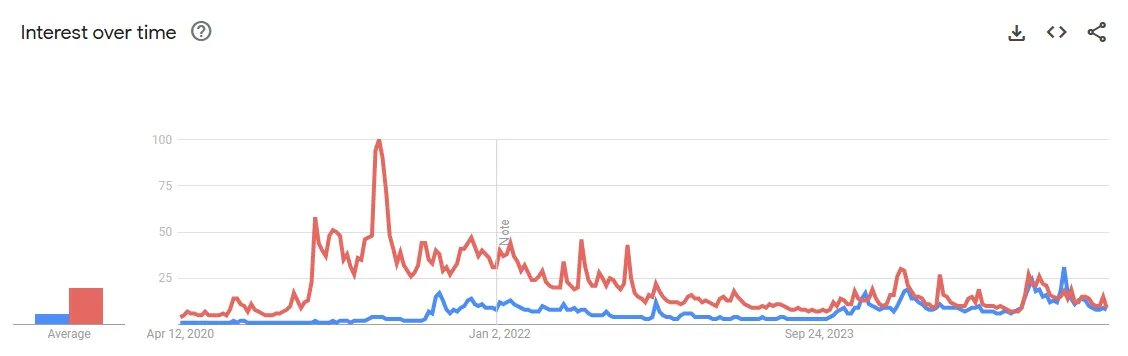

红色:以太坊谷歌搜索热度、蓝色:Solana 谷歌搜索热度
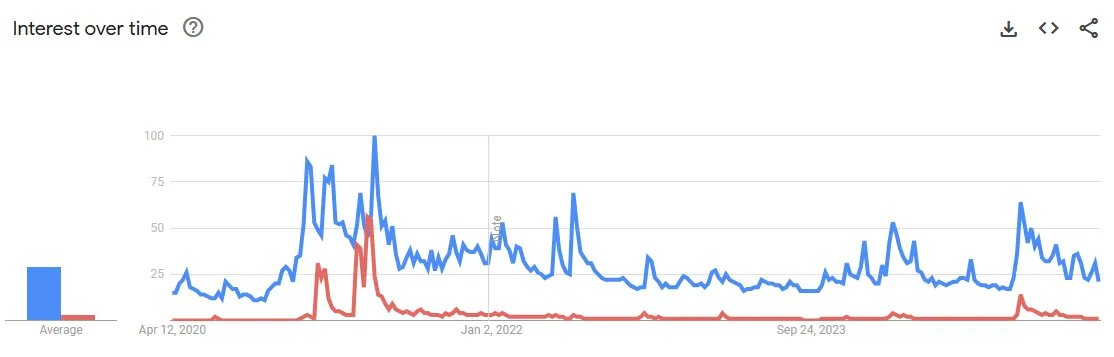

蓝色:比特币谷歌搜索热度、红色:狗狗币谷歌搜索热度


随着关注度下降,价格也随之下跌。大多数主要资产的交易价格仍低于上一周期的高点。这意味着:加密货币作为一种资产,在主流认知中已达到饱和,但作为一种货币,仍未被广泛采用。


这种二元性定义了当前的处境。投机行为已为人熟知,但其实际用途仍被误解。下一个边际买家可能不是为了炒币而来,而是为了基础设施。


玩家结构:游戏正在清空


要理解为何即便是自上而下的叙事也无法维持势头,需要了解谁仍在参与。
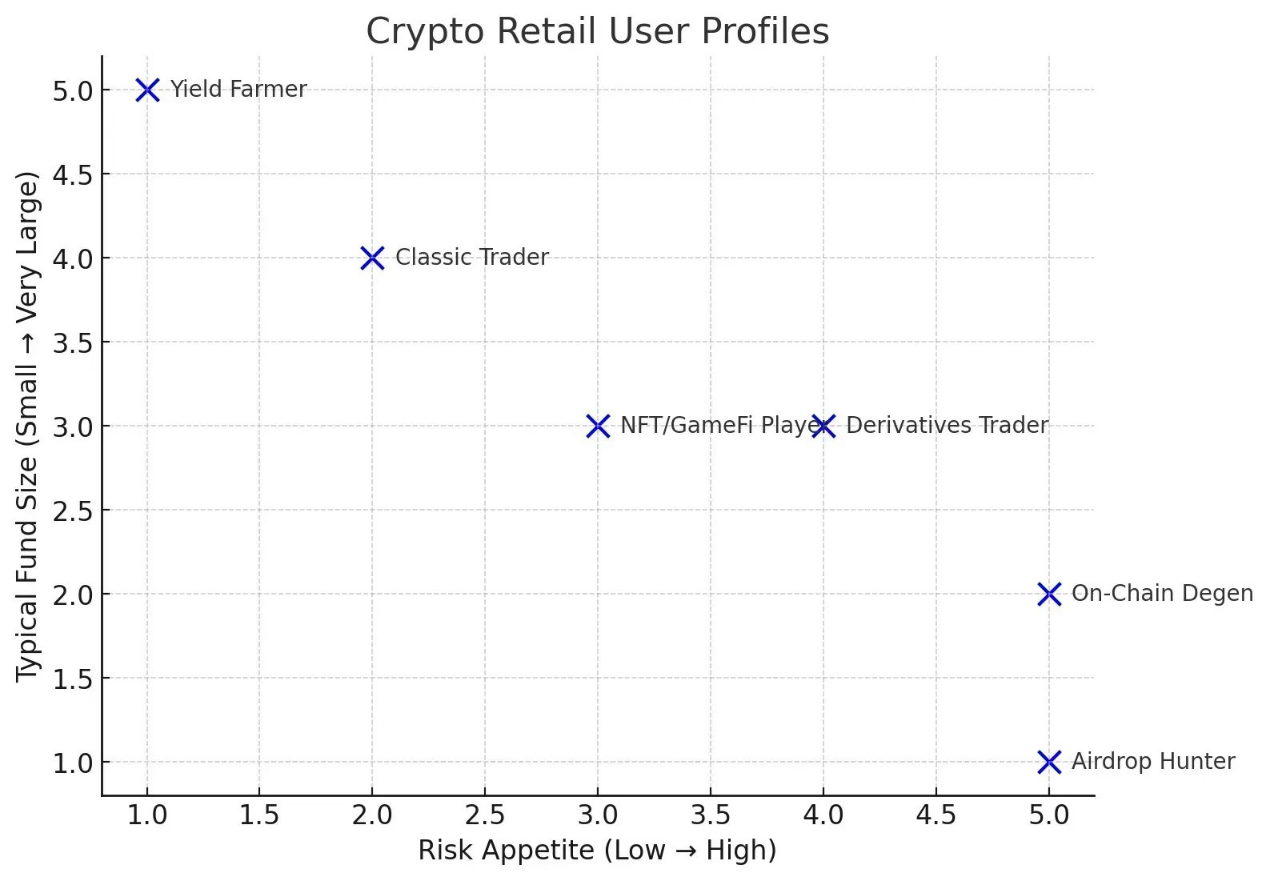

来源:PV internal research


曾经作为散户力量支柱的中心化交易所(CEX)现货交易者已逐渐淡出。随着 CEX 的暴富效应逐渐消退,新用户流入量停滞不前。更糟糕的是,许多现有用户要么已经离开,要么转向风险更高的永续合约交易。与此同时,现货 ETF 的兴起悄然抽走了另一批潜在买家。中心化交易所不再是默认的入口。


通常拥有较大资金配置规模的收益矿工,越来越多地将目光投向链下。随着链上收益机会减少,风险调整后的回报率下降,资本正转向更稳定的现实世界收入来源。


曾经是加密货币采用文化推动力的 NFT 和 GameFi 参与者,如今已基本被边缘化。一些人转向了 memecoin,但随着特朗普热潮的消退,这一波热潮似乎已达到顶峰,让大多数参与者感到失望。


空投猎手,通常被视为最执着的链上参与者群体,如今正公开与项目方就未兑现的承诺发生冲突。许多人甚至无法覆盖成本。


纵观每个用户群体,趋势都很明显:参与度正在下降,信念正在减弱,散户正在离开。


临界点:转化停滞不前


问题不仅在于现有用户群体的疲劳,转化本身也停滞不前。


顶级 CEX 服务着约 4 亿用户(去除重复用户),但只有约 10% 的用户转化为链上用户(钱包用户)。自 2023 年以来,渗透率几乎没有变化;行业难以将用户从托管层转化出来。
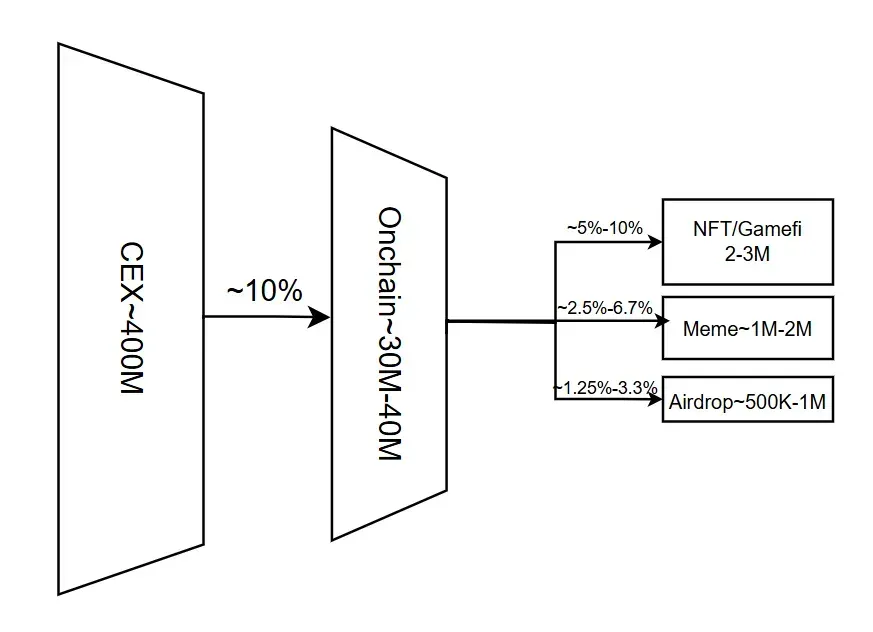

来源:PV internal research


与此同时,自 2021 年牛市峰值以来,主流交易所的流量持续下降,即使比特币创下新高,流量也仍未恢复。转化渠道没有扩大。
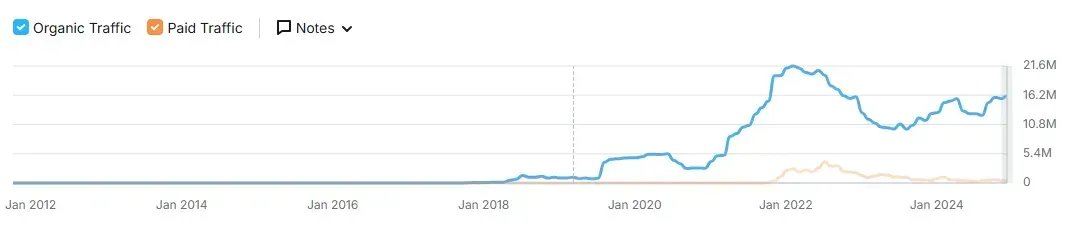

币安流量;数据来源:Semrush
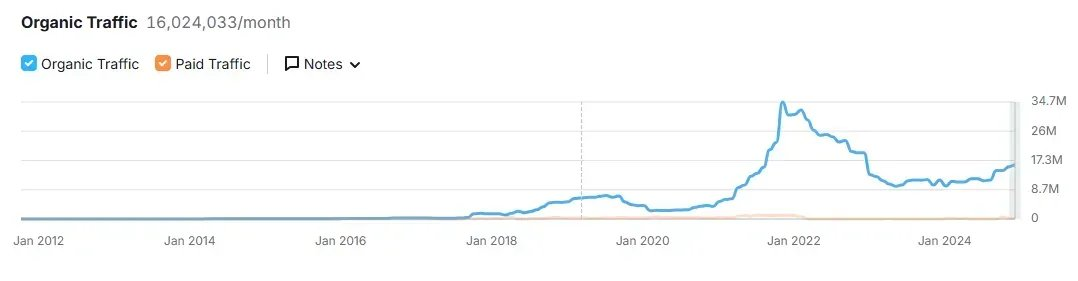

Coinbase 流量;数据来源:Semrush


更糟糕的是,目前可能已经触及加密货币认知的阈值。据 Consensys 调查,全球 92% 的受访者听说过加密货币,50% 的受访者声称了解它。认知不再是问题,兴趣才是。


而且散户的热情曲线正趋于平缓。在上一轮周期,NFT 和狗狗币吸引了大量用户。而这一轮周期,就连特朗普的 memecoin 也无法进入主流。曾经推动散户流入的好奇心正在消退。
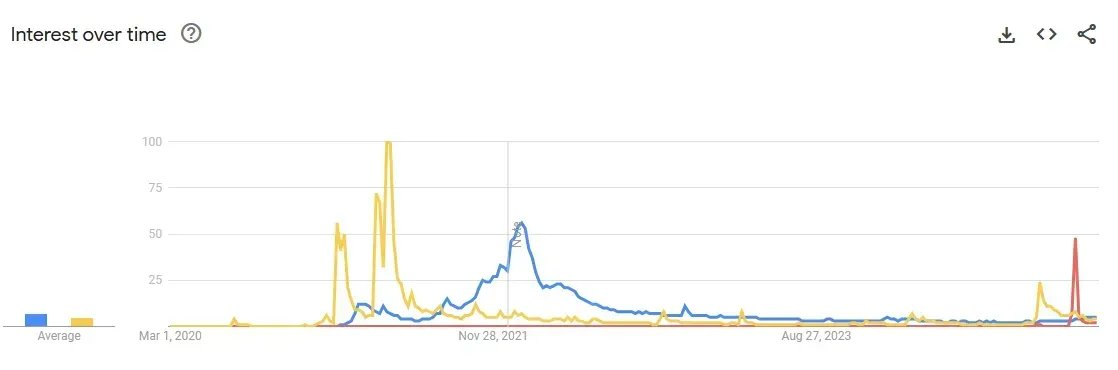

  • 黄色:狗狗币谷歌搜索热度
  • 蓝色:NFT 谷歌搜索热度
  • 红色:特朗普 meme 谷歌搜索热度

口号:海市蜃楼的动力


OM 拉升是一场精心策划的行动:转向最热门的 RWA、与阿联酋资本结盟、达成合作、借助 KOL 进行宣传,以及通过代币经济学重置来挤压流动性。
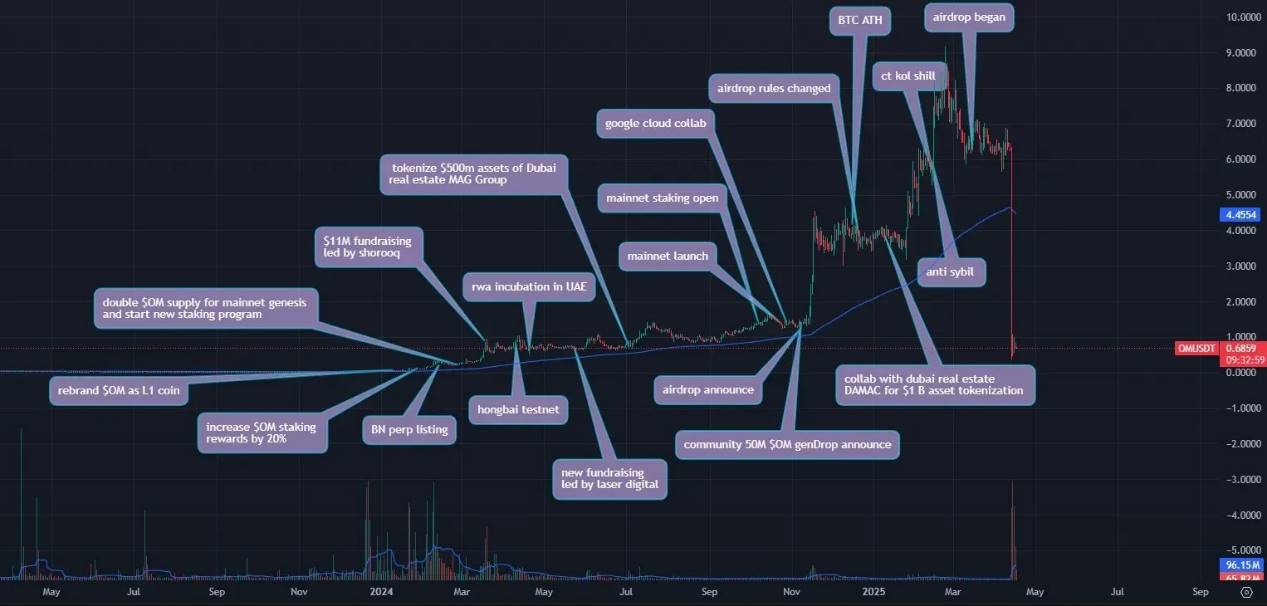

来源:PV internal research


但尽管价格飙升了 100 倍,但没有出现有意义的现货交易量。OM 缺乏即使是最完美的剧本也无法捏造的东西:真正的边际买家。
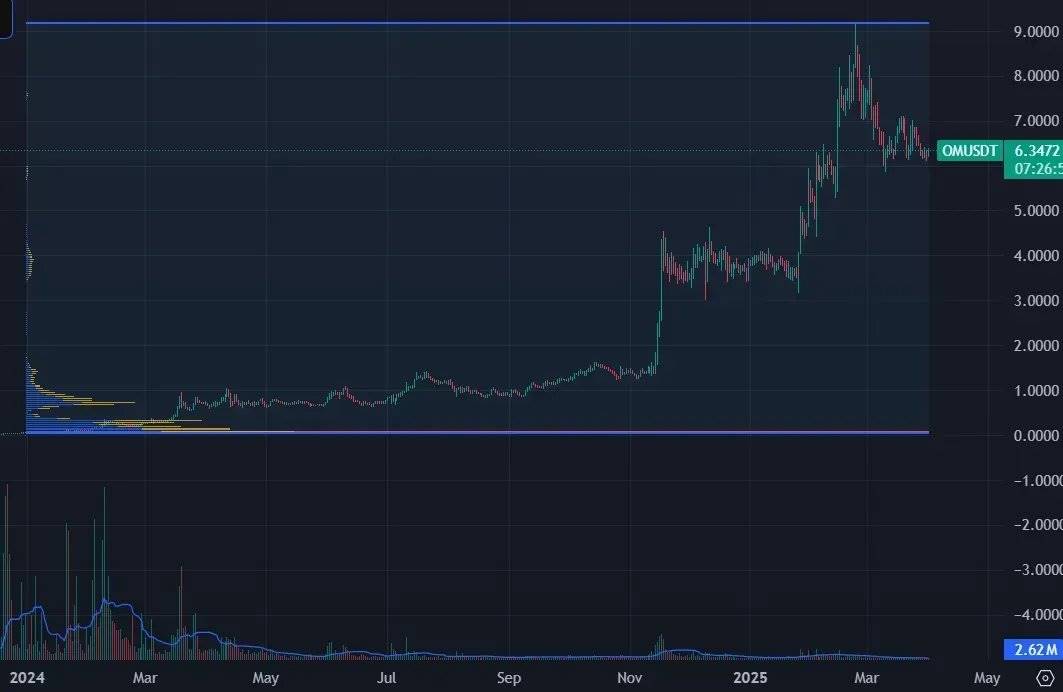

OM 交易量


当中心化交易所调整永续合约杠杆,做市商遭遇内部摩擦时,系统迅速崩溃。随后出现了 95% 的跌幅,这并非由于铸币螺旋或漏洞,而是因为根本没有买盘。


OM 并非执行上的失败。它反映了一个结构性问题:在如今的中心化交易所,即使价格飙升 100 倍也无法激发新的需求。


美联储量化紧缩与美元短缺


买方行为的结构性转变不能脱离宏观流动性来理解。自 2022 年以来,美联储开始大幅缩减资产负债表,开启了近年来最谨慎的量化紧缩周期之一。
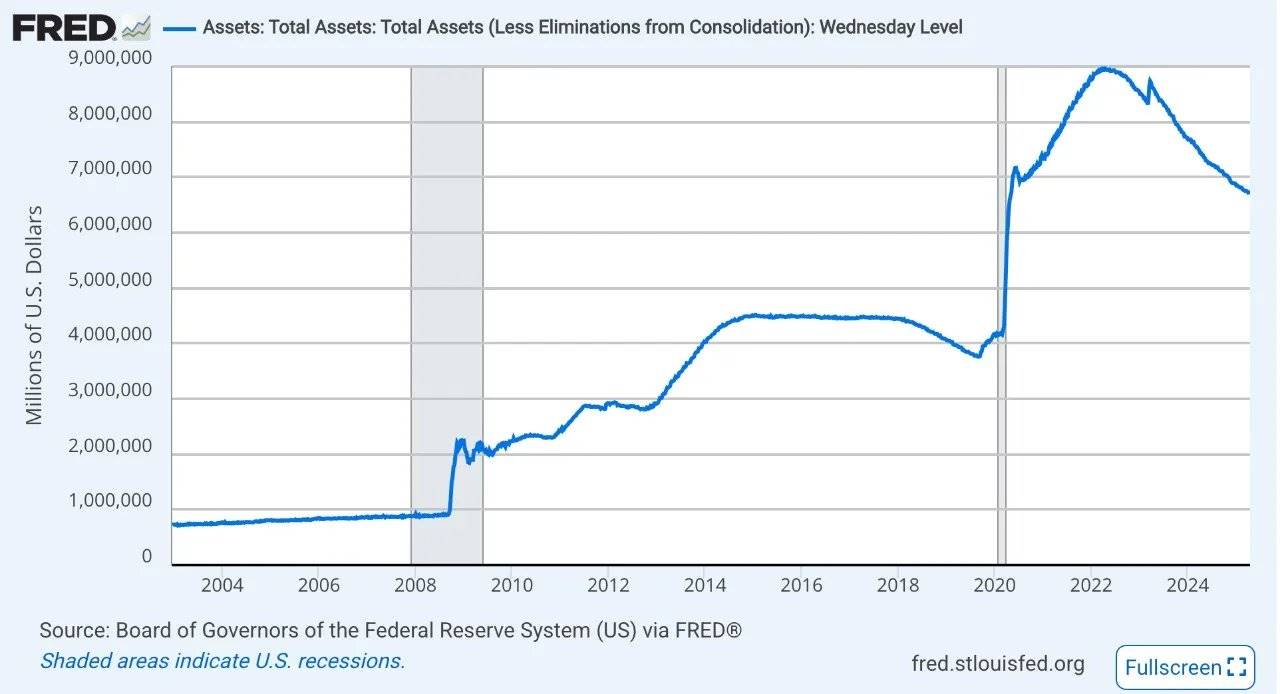

美联储的资产负债表在新冠疫情后的时期达到近 9 万亿美元的峰值,通过过剩的流动性极大地刺激了全球风险偏好。但随着通胀加剧,美联储改变了策略,通过抽走储备金、收紧金融环境以及遏制曾助长包括加密货币在内的各类风险资产投机活动的宽松杠杆,扭转了局面。


这种紧缩不仅减缓了资本流入,还从结构上限制了加密货币一直依赖的买家类型:行动迅速、敢于冒险的投机者。


结构转变:下一个需求可能出现在哪里


如果下一个边际买家并非来自加密原生投机者,那么他们可能会从由政策、必要性和现实需求驱动的结构性转变中出现。


稳定币监管的规范化可能会开启数字美元主导的新阶段。在关税上升、资本管制和地缘政治碎片化的时代,跨境资本需要更快、更隐蔽的渠道。稳定币,尤其是那些与美国利益相符的稳定币,有望成为经济影响力的实际工具。


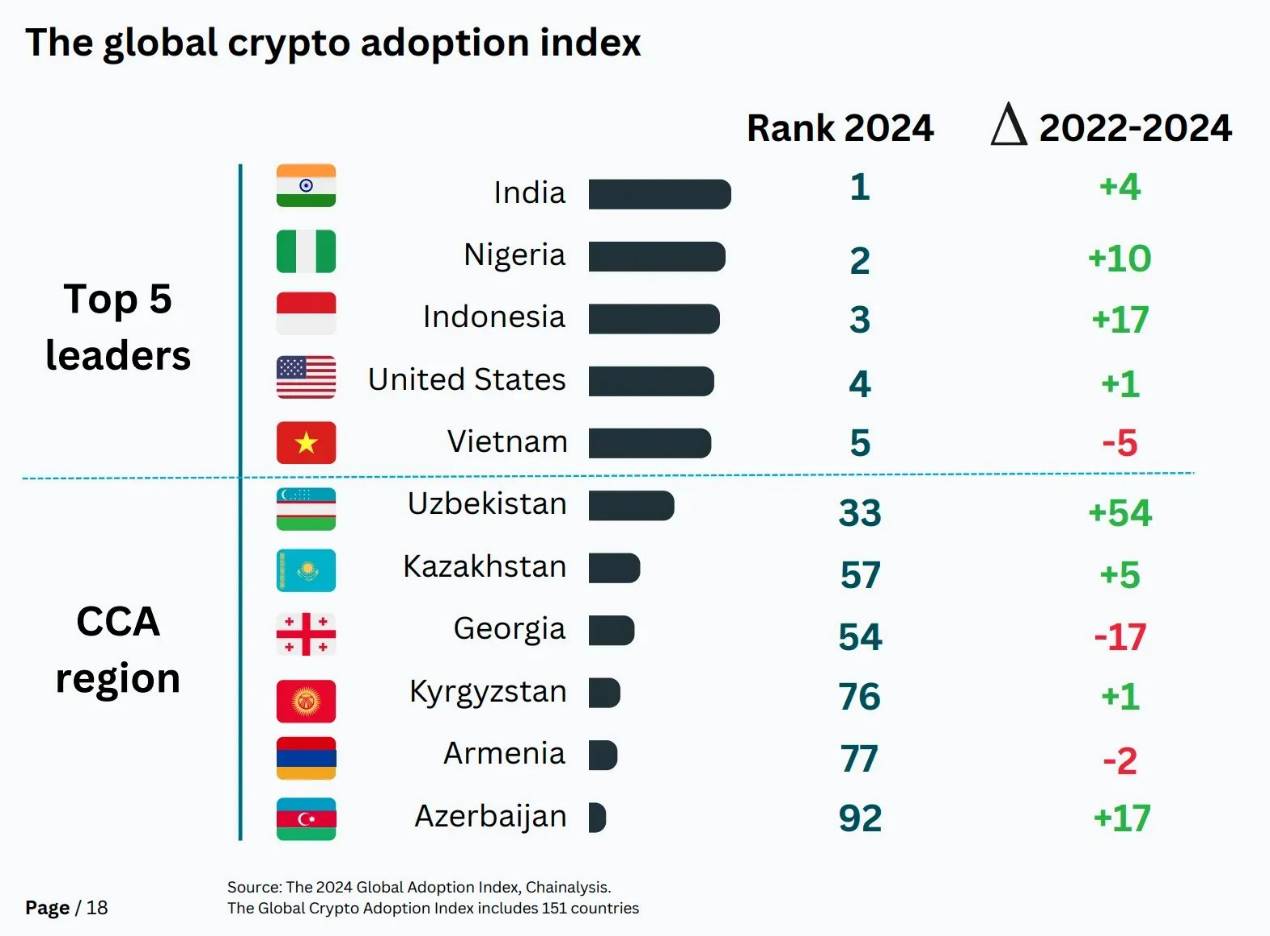
而且在长期被行业忽视的地区,其采用也在悄然兴起。在非洲、拉丁美洲和东南亚的部分地区,由于本国货币不稳定且大量人口未开设银行账户,稳定币在汇款、储蓄和跨境贸易方面具有实际用途。这些用户是全球美元化的新前沿。


随着 RWA 规模的扩大,更多用户参与其中的目的将不再是投机,而是获取链上的真实资产。

杠铃时代:这不是崩溃,而是再平衡


边际买家的匮乏不仅仅是周期性低点,而是一个结构性结果,是两股力量的下游效应:
加密货币作为一种资产已经占据了全球的大部分注意力。一夜暴富的梦想已经失去了光彩。


美元短缺是真实存在的。美联储的量化紧缩和宏观紧缩政策从结构上减少了买家基础。
在经历了所有的周期、叙事和重塑之后,加密货币正分裂成两条截然不同的道路,而且这种分歧只会越来越大。


一方面是曾经由 meme、杠杆和叙事反身性驱动的投机系统,如今却因流动性撤出而奄奄一息。这些市场依赖于持续的边际资金流入,而没有这些资金流入,即使是最精心设计的策略也无法维持买盘。


另一方面,政策导向、实用驱动的采用正在缓慢但不可否认地出现。稳定币、合规渠道、代币化资产都在增长。不是靠炒作,而是出于必要。不是泡沫,而是持久。
当下目睹的不是市场崩盘,而是结构性再平衡。

Trending Cryptos

Related Reads

Robinhood Chain Mainnet Goes Live: Can Stocks Finally Be Moved Into Wallets?

Robinhood has officially launched its public mainnet, Robinhood Chain, along with stock-like tokens, the USDG yield product, and a DeFi lending portal. This marks a significant shift where a major online broker is integrating its user interface, regulatory compliance, self-custody wallet, and on-chain protocols into a single, streamlined experience. The goal is to simplify access to stock exposure, stablecoin yields, collateralized lending, and AMM trading for mainstream users. Eligible non-U.S. users can hold these "Stock Tokens"—structured as tokenized debt securities—in the Robinhood Wallet for 24/7 exposure to assets like U.S. stocks or ETFs. U.S. users can access an estimated ~7% APY on dollar-backed USDG through the Robinhood Earn program via self-custody wallets, with lending infrastructure powered by Morpho protocol. Built as a Layer 2 on Arbitrum, Robinhood Chain leverages existing DeFi protocols like Uniswap. The core strategy is not to reinvent DeFi but to channel Robinhood's large traditional finance user base (27.4 million funded customers as of Q1 2026) into on-chain finance, lowering the technical barriers. However, key limitations exist. The stock tokens are not direct equity ownership and are unavailable in the U.S. and some jurisdictions due to regulatory constraints. The ~7% yield is variable and carries inherent DeFi risks, not guaranteed principal protection. Furthermore, while AMMs enable trading, price discovery for major stocks will likely remain anchored in traditional markets like NASDAQ for the foreseeable future. Ultimately, Robinhood Chain is an early experiment in "on-chain brokerage." Its success will depend on real-world metrics like trading volume, sustained user migration to self-custody, stable yield performance, and regulatory feedback, rather than its launch narrative.

marsbit1h ago

Robinhood Chain Mainnet Goes Live: Can Stocks Finally Be Moved Into Wallets?

marsbit1h ago

Circle CEO Responds to OUSD Challenge: Stablecoin Market Is 'Winner-Takes-All', Consortium Model Doomed to Fail

Circle CEO Jeremy Allaire addresses market concerns following the announcement of the Open USD (OUSD) stablecoin project backed by 140 global companies. Allaire argues the stablecoin market exhibits "winner-takes-all" dynamics due to powerful network effects. He cites USDC's near-decade lead in three key areas: 1) **Application Integration & Protocol Development**: Thousands of integrated services and protocols (like CCTP) create utility and lock-in for developers and users. 2) **Liquidity Network Effects**: A deeply embedded, globally distributed liquidity infrastructure across primary and secondary markets, built over years. 3) **Regulatory Integration**: Extensive licensing and compliance groundwork ensuring USDC's acceptance in major markets like Europe and Japan. Allaire challenges OUSD's proposed advantages. He contends that promises of free redemption, while appealing, face market realities where such models can become exit routes for other stablecoins. He also questions the feasibility of fully distributing all revenue to an alliance, stating it would "starve" the critical infrastructure investments needed for scale and utility. Furthermore, he expresses skepticism about large alliance governance models, noting they often lead to slow decision-making and misaligned incentives. While welcoming OUSD to the ecosystem, Allaire reaffirms confidence in USDC's dominant position, backed by its long-term infrastructure investments and strong partnerships, including its ongoing collaboration with Coinbase.

marsbit1h ago

Circle CEO Responds to OUSD Challenge: Stablecoin Market Is 'Winner-Takes-All', Consortium Model Doomed to Fail

marsbit1h ago

Circle CEO Responds to OUSD Challenge: Alliance Model Doomed to Fail, It's a 'Winner-Takes-All' Game

Circle CEO Jeremy Allaire addresses the challenge posed by the new Open USD (OUSD) stablecoin project, backed by 140 global companies. He argues that the stablecoin market exhibits "winner-take-all" characteristics, where USDC's near-decade-long lead in application integrations, global liquidity, and regulatory compliance secures its dominant position. Allaire outlines three key network effects underpinning USDC's strength: 1) Extensive integration as an internet protocol layer, 2) Deep, globally distributed liquidity networks, and 3) Deep integration with global policy and regulatory frameworks. He cites data showing USDC facilitated 80% of on-chain USD stablecoin transaction volume in Q1 2026. He directly counters OUSD's proposed advantages: 1) "Free minting and redemption" may not be sustainable against market realities, which USDC addresses via contractual mechanisms. 2) "Sharing all revenue" risks starving the infrastructure of necessary investment for growth and reliability. 3) A "consortium model" often leads to slow innovation and poor coordination compared to focused, independent operators like Circle. Allaire reaffirms Circle's strong partnership with Coinbase and notes that Circle continues to collaborate with many OUSD founding members. He concludes by welcoming OUSD to the ecosystem while expressing confidence in USDC's entrenched network advantages and continued expansion.

Odaily星球日报1h ago

Circle CEO Responds to OUSD Challenge: Alliance Model Doomed to Fail, It's a 'Winner-Takes-All' Game

Odaily星球日报1h ago

Trading

Spot

Hot Articles

What is $BITCOIN

DIGITAL GOLD ($BITCOIN): A Comprehensive Analysis Introduction to DIGITAL GOLD ($BITCOIN) DIGITAL GOLD ($BITCOIN) is a blockchain-based project operating on the Solana network, which aims to combine the characteristics of traditional precious metals with the innovation of decentralized technologies. While it shares a name with Bitcoin, often referred to as “digital gold” due to its perception as a store of value, DIGITAL GOLD is a separate token designed to create a unique ecosystem within the Web3 landscape. Its goal is to position itself as a viable alternative digital asset, although specifics regarding its applications and functionalities are still developing. What is DIGITAL GOLD ($BITCOIN)? DIGITAL GOLD ($BITCOIN) is a cryptocurrency token explicitly designed for use on the Solana blockchain. In contrast to Bitcoin, which provides a widely recognized value storage role, this token appears to focus on broader applications and characteristics. Notable aspects include: Blockchain Infrastructure: The token is built on the Solana blockchain, known for its capacity to handle high-speed and low-cost transactions. Supply Dynamics: DIGITAL GOLD has a maximum supply capped at 100 quadrillion tokens (100P $BITCOIN), although details regarding its circulating supply are currently undisclosed. Utility: While precise functionalities are not explicitly outlined, there are indications that the token could be utilized for various applications, potentially involving decentralized applications (dApps) or asset tokenization strategies. Who is the Creator of DIGITAL GOLD ($BITCOIN)? At present, the identity of the creators and development team behind DIGITAL GOLD ($BITCOIN) remains unknown. This situation is typical among many innovative projects within the blockchain space, particularly those aligning with decentralized finance and meme coin phenomena. While such anonymity may foster a community-driven culture, it intensifies concerns about governance and accountability. Who are the Investors of DIGITAL GOLD ($BITCOIN)? The available information indicates that DIGITAL GOLD ($BITCOIN) does not have any known institutional backers or prominent venture capital investments. The project seems to operate on a peer-to-peer model focused on community support and adoption rather than traditional funding routes. Its activity and liquidity are primarily situated on decentralized exchanges (DEXs), such as PumpSwap, rather than established centralized trading platforms, further highlighting its grassroots approach. How DIGITAL GOLD ($BITCOIN) Works The operational mechanics of DIGITAL GOLD ($BITCOIN) can be elaborated on based on its blockchain design and network attributes: Consensus Mechanism: By leveraging Solana’s unique proof-of-history (PoH) combined with a proof-of-stake (PoS) model, the project ensures efficient transaction validation contributing to the network's high performance. Tokenomics: While specific deflationary mechanisms have not been extensively detailed, the vast maximum token supply implies that it may cater to microtransactions or niche use cases that are still to be defined. Interoperability: There exists the potential for integration with Solana’s broader ecosystem, including various decentralized finance (DeFi) platforms. However, the details regarding specific integrations remain unspecified. Timeline of Key Events Here is a timeline that highlights significant milestones concerning DIGITAL GOLD ($BITCOIN): 2023: The initial deployment of the token occurs on the Solana blockchain, marked by its contract address. 2024: DIGITAL GOLD gains visibility as it becomes available for trading on decentralized exchanges like PumpSwap, allowing users to trade it against SOL. 2025: The project witnesses sporadic trading activity and potential interest in community-led engagements, although no noteworthy partnerships or technical advancements have been documented as of yet. Critical Analysis Strengths Scalability: The underlying Solana infrastructure supports high transaction volumes, which could enhance the utility of $BITCOIN in various transaction scenarios. Accessibility: The potential low trading price per token could attract retail investors, facilitating wider participation due to fractional ownership opportunities. Risks Lack of Transparency: The absence of publicly known backers, developers, or an audit process may yield skepticism regarding the project's sustainability and trustworthiness. Market Volatility: The trading activity is heavily reliant on speculative behavior, which can result in significant price volatility and uncertainty for investors. Conclusion DIGITAL GOLD ($BITCOIN) emerges as an intriguing yet ambiguous project within the rapidly evolving Solana ecosystem. While it attempts to leverage the “digital gold” narrative, its departure from Bitcoin's established role as a store of value underscores the need for a clearer differentiation of its intended utility and governance structure. Future acceptance and adoption will likely depend on addressing the current opacity and defining its operational and economic strategies more explicitly. Note: This report encompasses synthesised information available as of October 2023, and developments may have transpired beyond the research period.

554 Total ViewsPublished 2025.05.13Updated 2025.05.13

What is $BITCOIN

Discussions

Welcome to the HTX Community. Here, you can stay informed about the latest platform developments and gain access to professional market insights. Users' opinions on the price of BTC (BTC) are presented below.

活动图片