Bankless :比特币能否在链上蓬勃发展?

Odaily星球日报Published on 2025-04-14Last updated on 2025-04-14

Abstract

比特币向链上经济的过渡不会一蹴而就,而且也不应该如此。

原文作者:Jean-Paul Faraj

原文编译:比推 BitpushNews
Bankless :比特币能否在链上蓬勃发展?

尽管稳坐加密货币市值榜首,但比特币在去中心化金融(DeFi)领域的参与度相对较低,这一现象正引发一场关于其未来角色的深刻探讨。

十多年来,比特币一直是加密生态系统的基石——因其去中心化、抗审查性和可证明的稀缺性而备受赞誉。然而,尽管比特币市值占据主导地位且近期再次受到追捧,但它仍然在很大程度上与加密领域最具活力的领域之一–DeFi –格格不入。

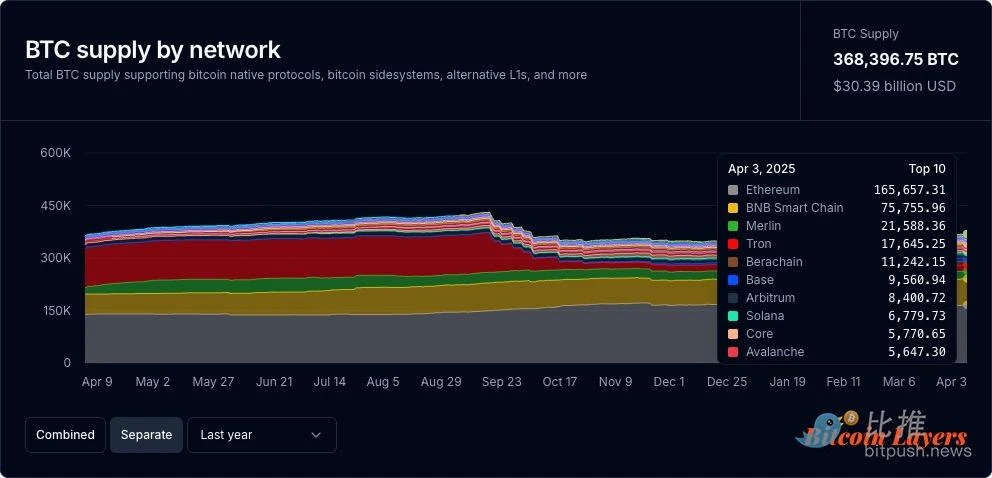
根据 Bitcoin Layers 的数据,仅约 300 亿美元的比特币(仅占其总供应量的 1.875% )被用于 DeFi。相比之下,以太坊在 DeFi 中锁定了约 500 亿美元的 ETH,约占其供应量的 23% 。

这种差距凸显了当今比特币叙事中的一个核心矛盾:虽然 BTC 持有巨大的价值,但相对较少的 BTC 被积极地在链上利用以提供收益机会。这种差距正在推动一波围绕包装、质押和其他将比特币引入 DeFi 经济的方法的创新,从而解锁使 BTC 成为富有成效的资本资产的方式。
Bankless :比特币能否在链上蓬勃发展?

Bitcoin Layers*:按网络划分的 BTC 供应量,显示所有包装 BTC

以太坊的 DeFi 生态系统已经涌现出用于借贷、质押和交易的工具。相比之下,原生比特币仍然难以有效地使用,特别是对于新用户而言。交易时间缓慢,费用可变且通常很高,而且比特币的架构缺乏为基于以太坊的应用程序提供支持的可编程性。

随着更广泛的加密货币领域走向成熟,这提出了一个重要的问题:比特币能否有意义地参与链上经济?如果是这样,我们如何在不强迫普通 BTC 持有者经历一系列桥梁、包装代币和不熟悉的应用程序的情况下,让他们加入进来?

问题:比特币的设计与 DeFi 的实用性

比特币的底层架构并未针对当今智能合约的高度可编程性进行优化。其通过工作量证明(PoW)机制优先保障安全性与去中心化,而非追求复杂的逻辑表达——这一设计选择使其成为可靠的价值存储工具,却也导致其在智能合约及复杂 DeFi 应用中的适应性受限。正因如此,原生比特币难以融入以太坊、Solana 等公链上蓬勃发展的可组合金融生态。

过去我们看到了一些变通方法:

  • 包装比特币: 用户将 BTC 转换为 ERC-20 代币以访问基于以太坊的 DeFi。这引入了托管风险,因为代币流动性可能不透明,并且不总是由第三方托管人以 1: 1 的比例进行 BTC 支持。

  • 桥接协议: 跨链平台允许 BTC 转移到其他生态系统中。但是,手动桥接增加了摩擦、复杂性和风险——特别是对于非技术用户而言。

  • 托管平台: 像 Coinbase 这样的中心化服务提供 BTC 收益,但要求用户放弃托管,并且通常以积分、稳定币或专有代币而不是 BTC 支付回报。

  • 每种选择都伴随着挑战比特币核心理念的权衡:安全性、简单性和用户主权。

入门壁垒:为什么用户体验仍然重要
Bankless :比特币能否在链上蓬勃发展?

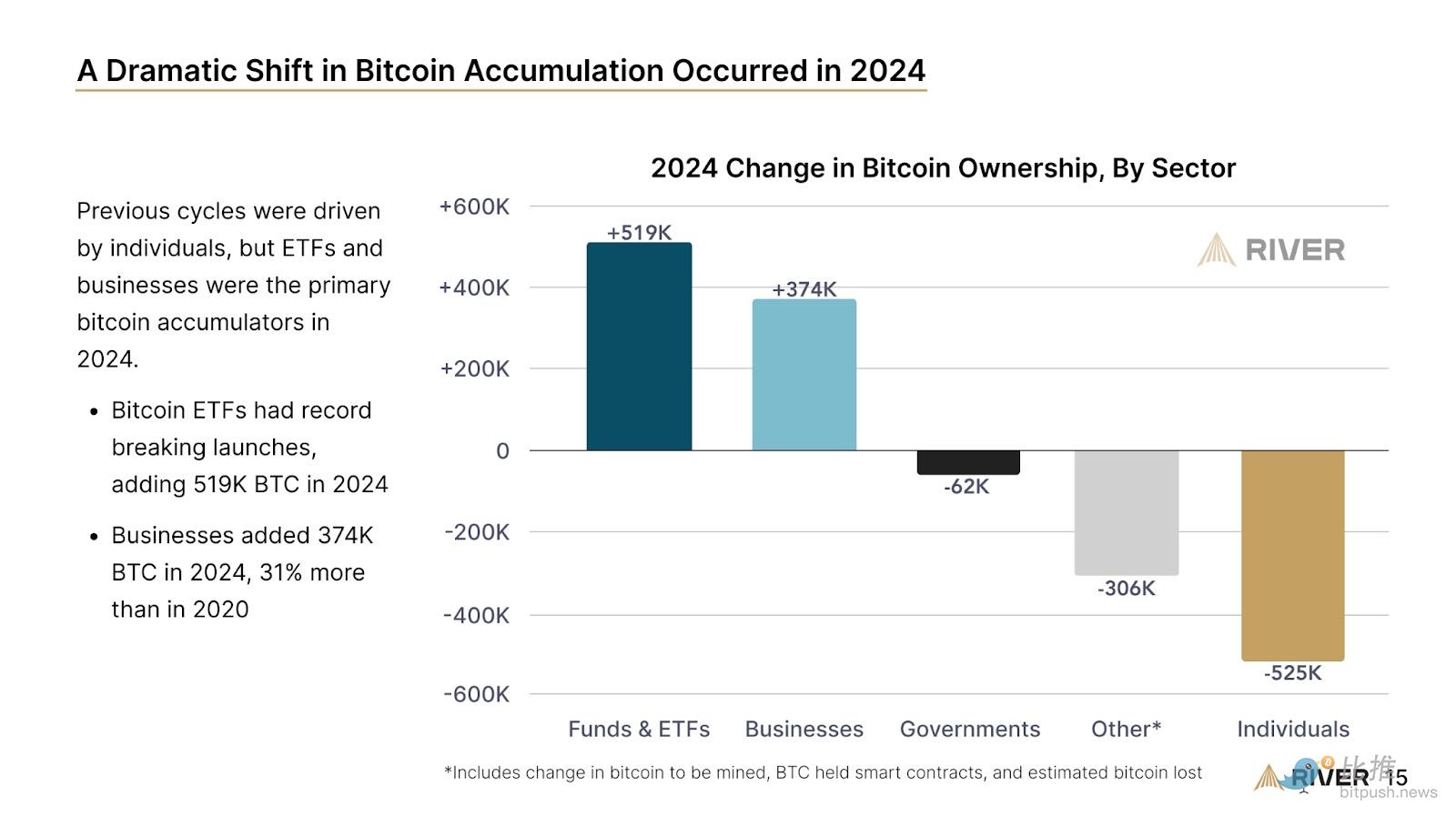
2024 年 BTC 的积累,river.com

对于那些对利用其资产做更多事情(赚取收益、参与链上治理或尝试 DeFi)感到好奇的比特币持有者而言,入门途径仍然分散、不直观且常常令人望而生畏。虽然基础设施已经成熟,但用户体验仍然滞后,而竞争对手不仅是其他区块链,还有 TradFi。

这种摩擦造成了一个主要的入门壁垒。大多数用户并不想成为 DeFi 的高级用户——他们想要简单、安全地增加净资产和 BTC 持有量,而无需像最近通过经纪商、ETF 和像 Michael Saylor 的 Strategy 这样的产品进行大量链下购买的比特币买家那样,在应用程序、桥梁和协议的迷宫中穿梭。

为了将下一波用户从简单的链下持有者转变为链上用户,工具需要消除这种复杂性,同时不牺牲控制权、自我托管或透明度。这就是新兴协议和现代钱包体验开始真正发挥作用的地方——提供用户友好的 DeFi 基础功能访问,同时保持比特币的核心理念不变。

更好的用户体验不仅仅是锦上添花,它是比特币采用下一阶段的关键基础设施。

链上 BTC 收益和生产力的新方法

许多新兴的解决方案旨在使比特币在 DeFi 中更易于使用——每种方案都有不同的权衡:

1. 质押、再质押和基于积分的收益计划

像 Babylon 和 Lombard 这样的平台现在通过积分或奖励代币提供与比特币相关的收益计划,通常通过质押 / 再质押来实现,这些代币通常可以兑换为福利或未来的空投。这些系统对早期采用者和追逐空投以及特定于平台的代币经济学的加密原生用户具有吸引力。这些产品通常包括将 BTC 转换为包装的 BTC 标准,然后将资产锁定在各种计划 / 产品中以赚取可变收益。对于精明的链上交易者来说,可以获得高收益,但这需要更深入地了解如何使用加密货币,以及手动桥接、包装和存入资金。

优点:

  • 广泛的收益机会

  • 通常是自我托管

缺点:

  • 奖励不是以 BTC 支付

  • 通常需要锁定期

  • 奖励的长期价值不确定

2. 比特币 Layer 2 和元协议

像闪电网络、Rootstock(RSK)、Alkanes 和像 Botanix 和 Starknet 这样新兴的 Layer 2 等发展正在为比特币带来新的功能、可编程性和速度。这些创新实现了像快速支付、NFT 和类似智能合约行为的用例。因此,用户现在可以使用他们的 BTC 访问广泛的 DeFi 机会——例如通过锁定资金来保护网络、参与做市、借贷或转换资产以支持各种协议上的包装 BTC 标准。随着越来越多的团队构建这些网络,基于比特币的收益机会的生态系统将继续扩大。

优点:

  • 扩展比特币的用例

  • 与比特币的架构保持一致

  • 链上赚取收益的广泛选择

缺点:

  • 仍然相对早期且分散

  • 需要中级到高级理解才能利用

  • 需要大量的开发者资源来构建大部分已经存在于其他智能合约链上的实用性

3. 智能钱包集成和原生 BTC 收益

像 Braavos 这样的钱包提供了一些功能,使用户无需手动包装他们的比特币或放弃托管即可赚取原生 BTC 收益。用户可以直接通过他们的钱包投资 BTC,而无需处理通常的桥接或使用外部应用程序的障碍。复杂的步骤——例如存款、包装和桥接——都在后台无缝处理,BTC 被部署到特定的 DeFi 策略中。这种用户友好的方法旨在使每个人都可以获得 BTC 收益,无论其技术背景或加密货币经验如何。

优点:

  • 收益以 BTC 支付(而不是积分或代理代币)

  • 无需手动桥接或第三方托管

  • 默认情况下是自我托管

  • 对初学者友好

缺点:

  • 依赖于转换为包装的 BTC

  • 需要对桥接机制和收益协议基础设施有一定的信任

更大的图景:比特币在链上不断演变的角色

比特币的叙事长期以来一直围绕着「价值储存」——它可靠地履行了这一角色。但是,随着链上经济的发展,比特币融入这种新兴金融堆栈并兑现其作为可靠支付基础设施的承诺的压力越来越大。

为了在不牺牲去中心化或用户信任的情况下做到这一点,新的基础设施必须使这些机会易于获得,而无需技术专长或放弃比特币的核心原则。

这意味着:

  • 收益应优先以 BTC 支付,而不是衍生资产

  • 托管必须保留给用户

  • 复杂性必须被抽象出来,而不是转移给用户

像 Braavos、Lombard、Babylon 和本文中提到的其他产品都是如何实现这些想法的例子。无论是通过质押让用户获得收益,还是通过直接将比特币支持嵌入自我托管选项中并自动化其背后的复杂性,它们都使比特币持有者更容易获得 DeFi,而无需他们完全离开比特币生态系统。

谨慎地弥合差距

比特币向链上经济的过渡不会一蹴而就——而且也不应该如此。谨慎、简单和自我主权是比特币核心理念的基础。但是,随着更多尊重这些价值观并提供新功能的工具出现,BTC 在更广泛的加密货币经济中的作用正在不断演变。

现在的挑战是构建开放、安全且最重要的是——可访问的系统。如果接下来的十亿用户将通过比特币加入,他们将需要满足他们现有需求并为更广泛的用户群体所接受的体验。

Trending Cryptos

Related Reads

How Far Are We from the End of the Crypto Bear Market?

How Much Longer Until the Crypto Bear Market Ends? A persistent negative Coinbase Bitcoin Premium Index, reaching a record 46 consecutive days of negative values, underscores the ongoing crypto bear market. The downturn accelerated in late May/early June when MicroStrategy (referred to as "Strategy" in the text), a major BTC holder, sold a small amount of Bitcoin (32 BTC), shattering market confidence and triggering sharp declines in BTC, ETH, and SOL. This was compounded by sustained net outflows from US spot Bitcoin ETFs. June saw Bitcoin briefly fall below $60,000, its worst weekly performance since 2022, breaking below the critical 200-week moving average—a signal some analysts consider confirmation of a bear market. While some institutional analyses in mid-June suggested the bottom might be near (e.g., around $53,600 based on realized price, or a potential end during the 2026 World Cup summer), further price drops quickly disproved these optimistic forecasts. Key bear market indicators include: the severe de-pegging of MicroStrategy's preferred shares (STRC) from their $100 NAV, which later recovered partly due to company stabilization plans; a record number of BTC (over 10.83 million) and a significant portion of long-term ETH holders now in unrealized loss; and Bitcoin's price trading below its 200-week moving average. Predictions for the bear market's end vary. Some, like investor Yilihua, suggest July-August 2026 could present a final buying opportunity. Others, like miner Jiang Zhu'o'er, predict a bottom between $42,000-$44,000 in October-December 2026, based on the historical lag between MicroStrategy's mNAV ratio bottom and Bitcoin's price bottom. Technical indicators like the BTC 4-year average price index dipped briefly below 1, and the Coinbase Premium Index remains negative, suggesting a need for a price rebound to around $77,000 for a return to positive territory. In the absence of major external catalysts, the consensus leans toward the bear market persisting for another 2-3 months, with late September to early October 2026 being a potential turning point window.

Odaily星球日报1h ago

How Far Are We from the End of the Crypto Bear Market?

Odaily星球日报1h ago

Solana Ecosystem Shows Signs of Recovery: On-Chain Governance Upgrade, Tokenized Stocks and Meme Coins Heat Up

Solana Ecosystem Shows Signs of Revival: Governance Upgrades, Tokenized Stocks, and Memecoins Heat Up While the broader crypto market faces a downturn, Solana has shown relative strength with its price rising nearly 15% recently. This resilience is attributed to warming ecosystem activity, particularly in tokenized stocks and memecoins, coupled with a major upgrade to its on-chain governance. In the Real World Assets (RWA) sector, Solana now leads all public chains in both the number of unique holder wallets and the quantity of RWA assets. Its tokenized stock weekly trading volume has surged to a record $1.42 billion, capturing about 96% of the market share, largely driven by the Backpack exchange. Simultaneously, the Solana memecoin sector has reignited, fueled by the rapid ascent of the ANSEM token following endorsements from a prominent crypto influencer. This has boosted activity across platforms like Pump.fun and increased fee revenue for several Solana-based exchanges. A key development is the launch of Solana Governance Proposals (SGP), a new on-chain mechanism. It allows validators with at least 100,000 SOL delegated to submit proposals for community vote, enhancing decentralized decision-making. SGP will operate alongside the existing technical proposal process (SIMD), focusing on broader ecosystem governance. Despite these positive signals in specific areas, overall on-chain activity and transaction volumes still lag behind previous bull market peaks, indicating the recovery remains partial rather than ecosystem-wide.

marsbit1h ago

Solana Ecosystem Shows Signs of Recovery: On-Chain Governance Upgrade, Tokenized Stocks and Meme Coins Heat Up

marsbit1h ago

While Semiconductor Stocks Plunge, Anthropic Plans to Develop a 2nm Chip

Anthropic, the AI company behind Claude, is exploring the development of its own custom AI chip, according to a report from The Information. The company is in early discussions with Samsung Electronics to manufacture the chip using Samsung's most advanced 2-nanometer process and packaging technology. While the project is still in preliminary stages, including defining chip specifications, and could be abandoned, it marks a strategic step for Anthropic. The move comes as the company seeks greater control over its computing costs and hardware optimization, particularly for inference tasks to run its models more efficiently and cheaply. Samsung's potential involvement follows its participation as a strategic investor in Anthropic's recent $65 billion funding round. For Samsung, partnering with a major AI lab represents a significant opportunity for its foundry business to compete with market leader TSMC in advanced semiconductor manufacturing. Anthropic's CEO, Dario Amodei, has previously highlighted the immense financial challenge of securing enough computing power for anticipated growth, making cost-effective inference a critical focus. The company would join other tech giants like Google, Amazon, Microsoft, Meta, and OpenAI in pursuing custom AI silicon. However, analysts note this trend creates deeper interdependencies rather than independence, as US AI labs become more tightly woven into Asian semiconductor supply chains. Despite this move, Anthropic remains heavily reliant on a multi-cloud, multi-vendor strategy for its immediate computing needs. It has secured massive, long-term commitments for capacity from Amazon Web Services (Trainium chips), Google (TPUs), and even leased a large GPU cluster from xAI. For now, Nvidia continues to dominate the AI chip market, with its share reportedly growing to 74%.

链捕手1h ago

While Semiconductor Stocks Plunge, Anthropic Plans to Develop a 2nm Chip

链捕手1h ago

Trading

Spot

Hot Articles

What is $BITCOIN

DIGITAL GOLD ($BITCOIN): A Comprehensive Analysis Introduction to DIGITAL GOLD ($BITCOIN) DIGITAL GOLD ($BITCOIN) is a blockchain-based project operating on the Solana network, which aims to combine the characteristics of traditional precious metals with the innovation of decentralized technologies. While it shares a name with Bitcoin, often referred to as “digital gold” due to its perception as a store of value, DIGITAL GOLD is a separate token designed to create a unique ecosystem within the Web3 landscape. Its goal is to position itself as a viable alternative digital asset, although specifics regarding its applications and functionalities are still developing. What is DIGITAL GOLD ($BITCOIN)? DIGITAL GOLD ($BITCOIN) is a cryptocurrency token explicitly designed for use on the Solana blockchain. In contrast to Bitcoin, which provides a widely recognized value storage role, this token appears to focus on broader applications and characteristics. Notable aspects include: Blockchain Infrastructure: The token is built on the Solana blockchain, known for its capacity to handle high-speed and low-cost transactions. Supply Dynamics: DIGITAL GOLD has a maximum supply capped at 100 quadrillion tokens (100P $BITCOIN), although details regarding its circulating supply are currently undisclosed. Utility: While precise functionalities are not explicitly outlined, there are indications that the token could be utilized for various applications, potentially involving decentralized applications (dApps) or asset tokenization strategies. Who is the Creator of DIGITAL GOLD ($BITCOIN)? At present, the identity of the creators and development team behind DIGITAL GOLD ($BITCOIN) remains unknown. This situation is typical among many innovative projects within the blockchain space, particularly those aligning with decentralized finance and meme coin phenomena. While such anonymity may foster a community-driven culture, it intensifies concerns about governance and accountability. Who are the Investors of DIGITAL GOLD ($BITCOIN)? The available information indicates that DIGITAL GOLD ($BITCOIN) does not have any known institutional backers or prominent venture capital investments. The project seems to operate on a peer-to-peer model focused on community support and adoption rather than traditional funding routes. Its activity and liquidity are primarily situated on decentralized exchanges (DEXs), such as PumpSwap, rather than established centralized trading platforms, further highlighting its grassroots approach. How DIGITAL GOLD ($BITCOIN) Works The operational mechanics of DIGITAL GOLD ($BITCOIN) can be elaborated on based on its blockchain design and network attributes: Consensus Mechanism: By leveraging Solana’s unique proof-of-history (PoH) combined with a proof-of-stake (PoS) model, the project ensures efficient transaction validation contributing to the network's high performance. Tokenomics: While specific deflationary mechanisms have not been extensively detailed, the vast maximum token supply implies that it may cater to microtransactions or niche use cases that are still to be defined. Interoperability: There exists the potential for integration with Solana’s broader ecosystem, including various decentralized finance (DeFi) platforms. However, the details regarding specific integrations remain unspecified. Timeline of Key Events Here is a timeline that highlights significant milestones concerning DIGITAL GOLD ($BITCOIN): 2023: The initial deployment of the token occurs on the Solana blockchain, marked by its contract address. 2024: DIGITAL GOLD gains visibility as it becomes available for trading on decentralized exchanges like PumpSwap, allowing users to trade it against SOL. 2025: The project witnesses sporadic trading activity and potential interest in community-led engagements, although no noteworthy partnerships or technical advancements have been documented as of yet. Critical Analysis Strengths Scalability: The underlying Solana infrastructure supports high transaction volumes, which could enhance the utility of $BITCOIN in various transaction scenarios. Accessibility: The potential low trading price per token could attract retail investors, facilitating wider participation due to fractional ownership opportunities. Risks Lack of Transparency: The absence of publicly known backers, developers, or an audit process may yield skepticism regarding the project's sustainability and trustworthiness. Market Volatility: The trading activity is heavily reliant on speculative behavior, which can result in significant price volatility and uncertainty for investors. Conclusion DIGITAL GOLD ($BITCOIN) emerges as an intriguing yet ambiguous project within the rapidly evolving Solana ecosystem. While it attempts to leverage the “digital gold” narrative, its departure from Bitcoin's established role as a store of value underscores the need for a clearer differentiation of its intended utility and governance structure. Future acceptance and adoption will likely depend on addressing the current opacity and defining its operational and economic strategies more explicitly. Note: This report encompasses synthesised information available as of October 2023, and developments may have transpired beyond the research period.

569 Total ViewsPublished 2025.05.13Updated 2025.05.13

What is $BITCOIN

Discussions

Welcome to the HTX Community. Here, you can stay informed about the latest platform developments and gain access to professional market insights. Users' opinions on the price of BTC (BTC) are presented below.

活动图片