Bitcoin miner Riot’s 500 BTC transfer sparks sell-off fears – Correction possible IF…

ambcryptoPublished on 2026-07-03Last updated on 2026-07-03

Abstract

Riot Platforms transferred 500 BTC (approx. $30.7M) to NYDIG Custody, sparking sell-off speculation. However, this movement alone does not confirm a sale, as it could be routine treasury management. The company's Bitcoin reserves have decreased from 19,368 BTC at the end of 2025 to 15,680 BTC, following sales earlier in 2026. This trend is mirrored by other major miners like Hut 8, Mara Holdings, and Core Scientific, who have also reduced their BTC holdings. The article links these reserve adjustments to changing mining dynamics in 2026. After a profitable late-2025 period, Bitcoin's price drop from over $120,000 to around $65,000, combined with high network hashrate and mining difficulty, created a financial squeeze. This has led to less efficient miners shutting down equipment and financially stable firms actively managing their Bitcoin reserves rather than simply holding them. The overall network hashrate has declined from its peak, putting constant pressure on mining profitability.

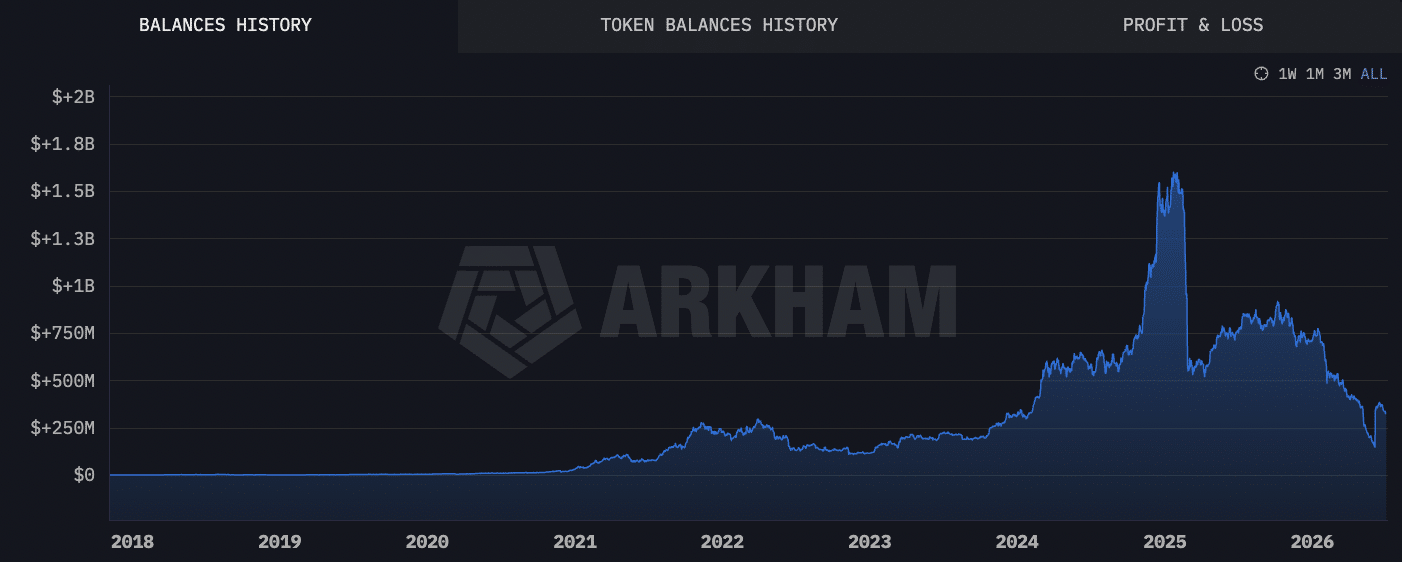
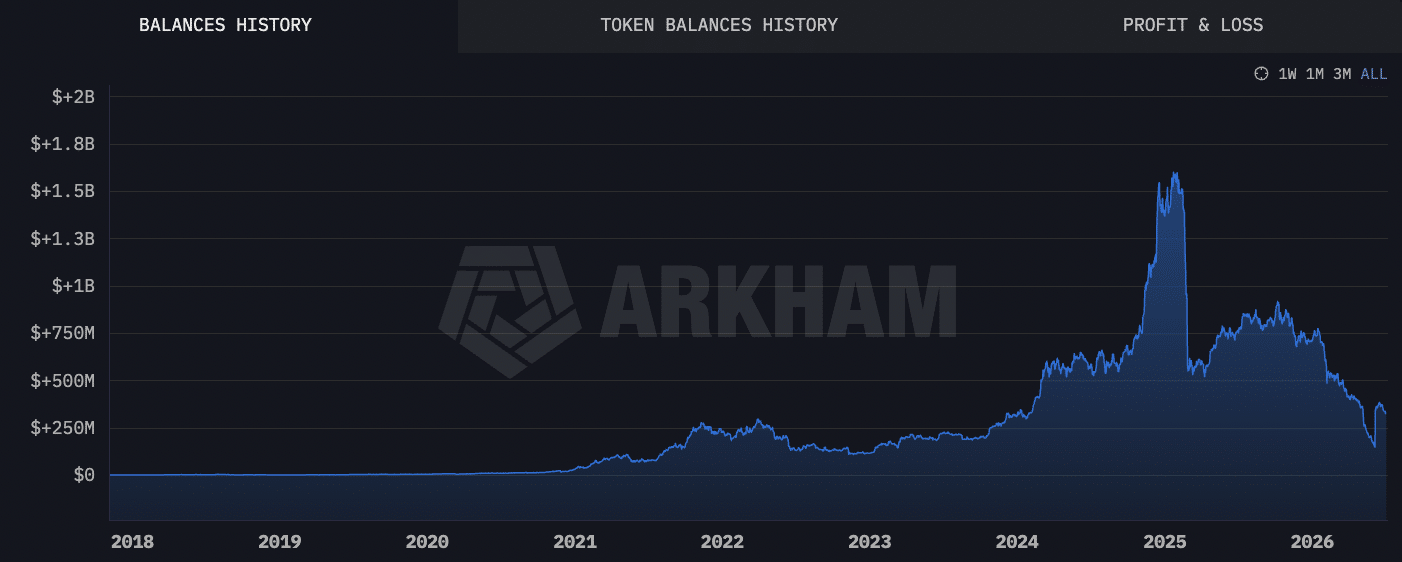
Riot Platforms moved 500 BTC, or roughly $30.7 million, to NYDIG Custody, according to Arkham’s on-chain data. Naturally, this action has stoked rumors of a possible sell-off.

Interestingly, even though these transfers frequently come before sales, the current movement does not prove that Riot has sold any Bitcoin [BTC].


Source: Arkham

However, it will be more convincing that a sale is occurring if the Bitcoin later moves from NYDIG to an exchange or an OTC desk.

But if the coins are still in custody, it might just be a part of regular treasury management, like setting up assets for future liquidity requirements, rebalancing custody agreements, or preparing collateral for financing.

Bitcoin Reserves reshuffle by mining firms

According to BitcoinTreasuries.NET’s most recent data, RiotPlatform had 19,368 BTC at the end of 2025. However, following sales in January and April of 2026, Riot currently has 15,680 BTC.

This further coincided with the company recently reporting record revenue of $647.4 million. That is a 72% increase compared to $376.7 million recorded in 2024.
Source: Arkham

Meanwhile, other Bitcoin [BTC] mining firms, such as Hut 8 Mining Corp., which held 10,667 BTC in November 2025, saw its holdings drop to 10,278 BTC at press time.

Additionally, Mara Holdings, Inc. began the year with 53,822 Bitcoin in February 2026, but it has since fallen to 36,303 Bitcoin. Finally, by the end of 2025, Core Scientific had 2,537 BTC, but it is currently down to 547 BTC.

Naturally, all of these sales by Bitcoin mining giants have raised concerns regarding the changing dynamics in the mining industry.

Bitcoin mining changing dynamics in 2026

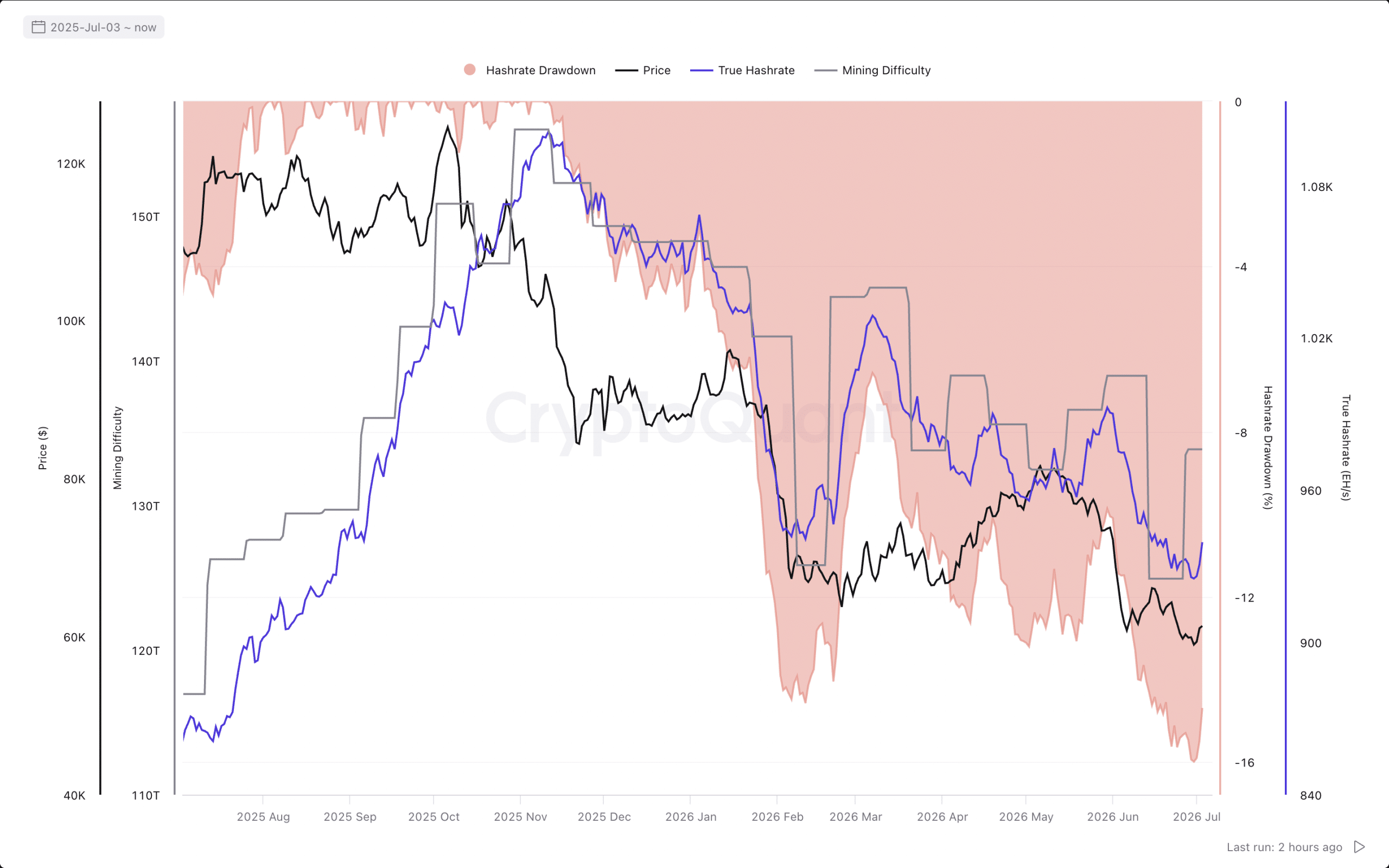
The graph below shows the correlation between the price of Bitcoin, hashrate drawdown, mining difficulty, and network hashrate between July 2025 and July 2026.

When combined, these indicators explain why the mining sector has been experiencing mounting financial strain and why some open miners are transferring or liquidating a portion of their Bitcoin holdings.
Source: CryptoQuant

It is evident from the graph that mining became extremely profitable in the second half of 2025, which caused the network hashrate to increase quickly from about 850 EH/s to more than 1.08 ZH/s. But in 2026, things started to change.

By February, the price of Bitcoin had dropped from over $120,000 to almost $65,000. However, high hashrate and increased mining difficulty led to a traditional mining squeeze. As a result, many inefficient miners start turning off their equipment since mining was no longer lucrative.

Current scenario

And now, as the hashrate has declined by about 15% from its peak and mining profitability has been under constant pressure. This has caused financially stable miners to manage their Bitcoin reserves more actively rather than just holding every coin they mine.

With miners shutting down machines or reducing operations, the overall network hashrate drops from more than 1.08 ZH/s to about 930–950 EH/s.

All in all, Riot’s recent 500 BTC transfer to NYDIG Custody makes sense given the larger industry context.


Final Summary

  • Though the current transfer does not hint at a potential sell-off, Riot Platforms Bitcoin holdings have dropped from 19,368 BTC to 15,680 BTC.
  • The price of Bitcoin, hashrate drawdown, mining difficulty, and network hashrate in 2026 acted in a compounding effect, pushing firms to adjust their BTC reserves.


Trending Cryptos

Related Questions

QWhat recent action by Riot Platforms sparked rumors of a potential Bitcoin sell-off, and to which custodian were the funds transferred?

ARiot Platforms transferred 500 BTC (worth roughly $30.7 million) to NYDIG Custody, which sparked rumors of a potential sell-off.

QAccording to the article, what event would be needed to provide more convincing evidence that Riot is actually selling its Bitcoin?

AMore convincing evidence of a sale would occur if the Bitcoin later moves from NYDIG Custody to an exchange or an OTC (over-the-counter) desk.

QHow much did Riot Platforms' Bitcoin holdings decrease from the end of 2025 to the time of reporting?

ARiot Platforms' Bitcoin holdings decreased from 19,368 BTC at the end of 2025 to 15,680 BTC at the time of reporting.

QWhat were the key factors identified in the article that created financial strain for Bitcoin miners in 2026, leading them to adjust reserves?

AThe key factors were a drop in Bitcoin's price (from over $120,000 to around $65,000), persistently high network hashrate, and increased mining difficulty, which together created a mining squeeze that reduced profitability.

QWhat is the suggested non-sell-off reason for a mining company like Riot to transfer Bitcoin to a custody service?

AThe transfer could be part of regular treasury management, such as setting up assets for future liquidity needs, rebalancing custody agreements, or preparing collateral for financing.

Related Reads

Hot Takes|Why Did the Famous "Tech Lead" Dump All His Bitcoin? The "Investment Whiz Kid" is Here!

**Weekly Spicy Review: Tech Lead's Bitcoin Bust, Reddit Meme, and Trump's Crypto Cash** This week's "Spicy Review" covers three notable incidents from the crypto world. **1. A Tech Lead Learns the Hard Way:** A former Google and Meta technical lead, Patrick Shyu, went viral after revealing he was forced to liquidate all his Bitcoin holdings. He suffered massive losses due to excessive leverage during Bitcoin's sharp decline from $120k to $60k. He shared critical observations: crypto trading often hinges on attention, not fundamentals; Bitcoin lacks a stable source of public focus; the AI boom is diverting capital; and Bitcoin faces structural risks like centralization of code maintenance and quantum computing threats. Despite his short-term exit, he remains a long-term believer. **2. Reddit Roasts the "Investment Whiz":** A popular meme on Reddit's CryptoCurrency subreddit depicted MicroStrategy's Michael Saylor looking down from a balcony. The caption joked about his relentless focus on buying Bitcoin with corporate funds, contrasting with average investors' mundane concerns. The post sparked humorous commentary on his high-risk, high-conviction strategy. **3. Trump's $1.4 Billion Crypto Haul:** The White House's financial disclosure revealed former President Donald Trump earned at least $1.4 billion from cryptocurrency activities in a year, contributing to a total income of over $2.2 billion. This windfall stands in stark contrast to the performance of "TrumpCoin" (officially DJT), which plummeted over 97% from its peak, reportedly causing investor losses exceeding $2 billion. Critics, like California Governor Gavin Newsom, accused Trump of profiting while his supporters suffered losses. The week highlighted a mix of painful lessons learned from leverage, community humor at industry figures, and the stark realities of political figures capitalizing on the crypto market.

Foresight News8m ago

Hot Takes|Why Did the Famous "Tech Lead" Dump All His Bitcoin? The "Investment Whiz Kid" is Here!

Foresight News8m ago

How Far Are We from the End of the Crypto Bear Market?

How Much Longer Until the Crypto Bear Market Ends? A persistent negative Coinbase Bitcoin Premium Index, reaching a record 46 consecutive days of negative values, underscores the ongoing crypto bear market. The downturn accelerated in late May/early June when MicroStrategy (referred to as "Strategy" in the text), a major BTC holder, sold a small amount of Bitcoin (32 BTC), shattering market confidence and triggering sharp declines in BTC, ETH, and SOL. This was compounded by sustained net outflows from US spot Bitcoin ETFs. June saw Bitcoin briefly fall below $60,000, its worst weekly performance since 2022, breaking below the critical 200-week moving average—a signal some analysts consider confirmation of a bear market. While some institutional analyses in mid-June suggested the bottom might be near (e.g., around $53,600 based on realized price, or a potential end during the 2026 World Cup summer), further price drops quickly disproved these optimistic forecasts. Key bear market indicators include: the severe de-pegging of MicroStrategy's preferred shares (STRC) from their $100 NAV, which later recovered partly due to company stabilization plans; a record number of BTC (over 10.83 million) and a significant portion of long-term ETH holders now in unrealized loss; and Bitcoin's price trading below its 200-week moving average. Predictions for the bear market's end vary. Some, like investor Yilihua, suggest July-August 2026 could present a final buying opportunity. Others, like miner Jiang Zhu'o'er, predict a bottom between $42,000-$44,000 in October-December 2026, based on the historical lag between MicroStrategy's mNAV ratio bottom and Bitcoin's price bottom. Technical indicators like the BTC 4-year average price index dipped briefly below 1, and the Coinbase Premium Index remains negative, suggesting a need for a price rebound to around $77,000 for a return to positive territory. In the absence of major external catalysts, the consensus leans toward the bear market persisting for another 2-3 months, with late September to early October 2026 being a potential turning point window.

Odaily星球日报1h ago

How Far Are We from the End of the Crypto Bear Market?

Odaily星球日报1h ago

Solana Ecosystem Shows Signs of Recovery: On-Chain Governance Upgrade, Tokenized Stocks and Meme Coins Heat Up

Solana Ecosystem Shows Signs of Revival: Governance Upgrades, Tokenized Stocks, and Memecoins Heat Up While the broader crypto market faces a downturn, Solana has shown relative strength with its price rising nearly 15% recently. This resilience is attributed to warming ecosystem activity, particularly in tokenized stocks and memecoins, coupled with a major upgrade to its on-chain governance. In the Real World Assets (RWA) sector, Solana now leads all public chains in both the number of unique holder wallets and the quantity of RWA assets. Its tokenized stock weekly trading volume has surged to a record $1.42 billion, capturing about 96% of the market share, largely driven by the Backpack exchange. Simultaneously, the Solana memecoin sector has reignited, fueled by the rapid ascent of the ANSEM token following endorsements from a prominent crypto influencer. This has boosted activity across platforms like Pump.fun and increased fee revenue for several Solana-based exchanges. A key development is the launch of Solana Governance Proposals (SGP), a new on-chain mechanism. It allows validators with at least 100,000 SOL delegated to submit proposals for community vote, enhancing decentralized decision-making. SGP will operate alongside the existing technical proposal process (SIMD), focusing on broader ecosystem governance. Despite these positive signals in specific areas, overall on-chain activity and transaction volumes still lag behind previous bull market peaks, indicating the recovery remains partial rather than ecosystem-wide.

marsbit2h ago

Solana Ecosystem Shows Signs of Recovery: On-Chain Governance Upgrade, Tokenized Stocks and Meme Coins Heat Up

marsbit2h ago

Trading

Spot

Hot Articles

What is $BITCOIN

DIGITAL GOLD ($BITCOIN): A Comprehensive Analysis Introduction to DIGITAL GOLD ($BITCOIN) DIGITAL GOLD ($BITCOIN) is a blockchain-based project operating on the Solana network, which aims to combine the characteristics of traditional precious metals with the innovation of decentralized technologies. While it shares a name with Bitcoin, often referred to as “digital gold” due to its perception as a store of value, DIGITAL GOLD is a separate token designed to create a unique ecosystem within the Web3 landscape. Its goal is to position itself as a viable alternative digital asset, although specifics regarding its applications and functionalities are still developing. What is DIGITAL GOLD ($BITCOIN)? DIGITAL GOLD ($BITCOIN) is a cryptocurrency token explicitly designed for use on the Solana blockchain. In contrast to Bitcoin, which provides a widely recognized value storage role, this token appears to focus on broader applications and characteristics. Notable aspects include: Blockchain Infrastructure: The token is built on the Solana blockchain, known for its capacity to handle high-speed and low-cost transactions. Supply Dynamics: DIGITAL GOLD has a maximum supply capped at 100 quadrillion tokens (100P $BITCOIN), although details regarding its circulating supply are currently undisclosed. Utility: While precise functionalities are not explicitly outlined, there are indications that the token could be utilized for various applications, potentially involving decentralized applications (dApps) or asset tokenization strategies. Who is the Creator of DIGITAL GOLD ($BITCOIN)? At present, the identity of the creators and development team behind DIGITAL GOLD ($BITCOIN) remains unknown. This situation is typical among many innovative projects within the blockchain space, particularly those aligning with decentralized finance and meme coin phenomena. While such anonymity may foster a community-driven culture, it intensifies concerns about governance and accountability. Who are the Investors of DIGITAL GOLD ($BITCOIN)? The available information indicates that DIGITAL GOLD ($BITCOIN) does not have any known institutional backers or prominent venture capital investments. The project seems to operate on a peer-to-peer model focused on community support and adoption rather than traditional funding routes. Its activity and liquidity are primarily situated on decentralized exchanges (DEXs), such as PumpSwap, rather than established centralized trading platforms, further highlighting its grassroots approach. How DIGITAL GOLD ($BITCOIN) Works The operational mechanics of DIGITAL GOLD ($BITCOIN) can be elaborated on based on its blockchain design and network attributes: Consensus Mechanism: By leveraging Solana’s unique proof-of-history (PoH) combined with a proof-of-stake (PoS) model, the project ensures efficient transaction validation contributing to the network's high performance. Tokenomics: While specific deflationary mechanisms have not been extensively detailed, the vast maximum token supply implies that it may cater to microtransactions or niche use cases that are still to be defined. Interoperability: There exists the potential for integration with Solana’s broader ecosystem, including various decentralized finance (DeFi) platforms. However, the details regarding specific integrations remain unspecified. Timeline of Key Events Here is a timeline that highlights significant milestones concerning DIGITAL GOLD ($BITCOIN): 2023: The initial deployment of the token occurs on the Solana blockchain, marked by its contract address. 2024: DIGITAL GOLD gains visibility as it becomes available for trading on decentralized exchanges like PumpSwap, allowing users to trade it against SOL. 2025: The project witnesses sporadic trading activity and potential interest in community-led engagements, although no noteworthy partnerships or technical advancements have been documented as of yet. Critical Analysis Strengths Scalability: The underlying Solana infrastructure supports high transaction volumes, which could enhance the utility of $BITCOIN in various transaction scenarios. Accessibility: The potential low trading price per token could attract retail investors, facilitating wider participation due to fractional ownership opportunities. Risks Lack of Transparency: The absence of publicly known backers, developers, or an audit process may yield skepticism regarding the project's sustainability and trustworthiness. Market Volatility: The trading activity is heavily reliant on speculative behavior, which can result in significant price volatility and uncertainty for investors. Conclusion DIGITAL GOLD ($BITCOIN) emerges as an intriguing yet ambiguous project within the rapidly evolving Solana ecosystem. While it attempts to leverage the “digital gold” narrative, its departure from Bitcoin's established role as a store of value underscores the need for a clearer differentiation of its intended utility and governance structure. Future acceptance and adoption will likely depend on addressing the current opacity and defining its operational and economic strategies more explicitly. Note: This report encompasses synthesised information available as of October 2023, and developments may have transpired beyond the research period.

571 Total ViewsPublished 2025.05.13Updated 2025.05.13

What is $BITCOIN

Discussions

Welcome to the HTX Community. Here, you can stay informed about the latest platform developments and gain access to professional market insights. Users' opinions on the price of BTC (BTC) are presented below.

活动图片