美国战略比特币储备行政命令:对比特币和山寨币的不同影响

TokenInsightPublished on 2025-03-13Last updated on 2025-03-14

Abstract

美国政府在数字资产领域迈出了重要一步,特朗普总统发布了行政命令:《建立战略比特币储备与美国数字资产存量》。

  • 根据比特币储备的行政命令,美国政府可以在保持预算中立的前提下购买比特币。
  • 潜在的预算中立策略包括交换黄金储备、以比特币收取关税和税款、以及国家支持的挖矿。
  • 数字资产存量储备(Digital Asset Stockpile)仅包含政府查获的山寨币,不允许额外购买山寨币。
  • 由于政府可能决定清算被查获的资产,山寨币可能面临抛售压力。

简介


美国政府在数字资产领域迈出了重要一步,特朗普总统发布了行政命令:《建立战略比特币储备与美国数字资产存量》。过去,政府对加密货币的介入主要局限于监管、税收和执法行动。然而,这一政策标志着政府正式将数字资产纳入国家经济战略,体现了政策层面的重大转向。


本次政策的核心是战略比特币储备(Strategic Bitcoin Reserve)和美国数字资产存量(United States Digital Asset Stockpile)的设立。行政命令明确规定,政府查获的加密货币,尤其是比特币,将被归类为美国政府的战略持有资产。除了比特币,其他被没收的数字资产(例如 ETH、 XRP、SOL 和 ADA)也将被整合至更广泛的存量体系中。


值得注意的是,政府不仅限于管理查获资产,还被允许额外获取比特币。然而,新的比特币必须遵循预算中立(Budget-Neutral)原则购买,即政府不得动用新的财政预算进行购买。这引发了一个关键问题:美国政府能否在不直接增加财政支出的情况下扩展比特币持仓?


接下来,我们将深入探讨这一新政策的实施细节,并分析比特币储备与数字资产存量对市场的真正影响。


战略比特币储备与数字资产存量概述
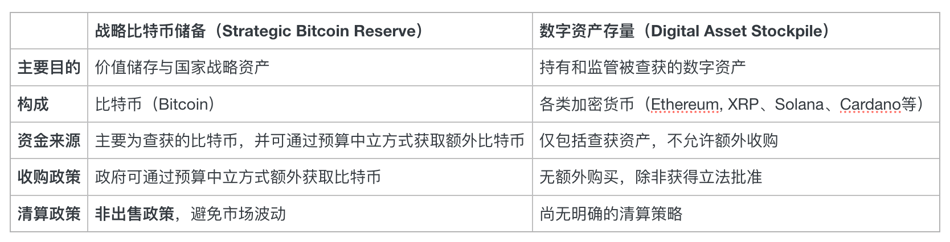
战略比特币储备(Strategic Bitcoin Reserve)
战略比特币储备的目标是为美国政府提供价值存储手段,确保被查获的比特币不会立即清算,而是作为国家金融战略的一部分长期持有。这一政策体现了政府将比特币视为长期战略资产的态度,类似于黄金储备的管理方式。


该储备的初始资产来自政府已经持有的比特币,这些比特币主要通过执法行动、犯罪资产没收和监管查扣获得。


来源:https://treasuries.bitbo.io/usa/


除了持有现有比特币外,行政命令还允许政府在预算中立的前提下进一步获取比特币,即不能动用新增财政预算进行购买。这可能涉及资产互换、内部资源重分配或其他创新金融工具。


重要条款:非出售政策(Non-Sale Policy)—该储备将严格限制比特币的大规模抛售,以避免对市场造成冲击,确保市场稳定性。


数字资产存量(Digital Asset Stockpile)


与战略比特币储备同时,美国政府还设立了数字资产存量,其中包含通过执法和监管行动查获的其他加密货币。该存量包括 XRP、Solana、Cardano等 资产,但不被归类为战略储备。
与比特币不同,数字资产存量没有明确的增持策略,其构成完全取决于政府查获的资产。此外,该存量不允许额外收购,除非获得额外的行政或立法批准。


这一政策反映了政府对比特币与其他加密资产的区别对待—比特币被视为国家战略资产,而山寨币仅作为被监管查获的资产存储,不具备长期储备属性。


预算中立的比特币购买策略


预算中立的比特币购买指的是政府在不增加财政支出或扩大赤字的前提下,获取比特币的策略。这一方法确保财政责任,同时允许政府战略性地积累比特币作为储备资产。以下是几种潜在的预算中立比特币收购方式。


以黄金储备换取比特币


美国政府的黄金储备是其最重要的资产之一。据最新数据显示,美国持有约8,133.46公吨(约2.61亿金衡盎司)的黄金储备。以当前金价2,200美元/盎司计算,其市场价值约为5,740亿美元。


出售部分黄金储备购买比特币,可以实现直接的资产互换,确保预算中立,因为政府并未动用财政预算的新资金。参议员辛西娅·鲁米斯(Cynthia Lummis)是该策略的支持者,她曾提出建立战略比特币储备,资金可以通过出售黄金筹集。


以比特币收取关税和税款


另一种预算中立的方式是直接接受比特币支付联邦税款或关税,这样政府可以无需财政预算支出即可持有比特币。


目前,美国联邦政府尚未接受比特币支付税款或关税,但部分州已经开展了相关试点。例如,科罗拉多州于2022年9月开始接受加密货币支付税款,并通过PayPal加密货币中心(Cryptocurrencies Hub)进行比特币兑美元转换,以降低波动风险。俄亥俄州在2018年采取了类似举措,与BitPay合作处理加密货币支付的税收结算。


来源: https://news.bgov.com/states-of-play/more-states-explore-accepting-crypto-for-tax-payments


国家支持的比特币挖矿


国家支持的比特币挖矿指的是政府直接运营挖矿设施,可利用现有资源,如多余能源,来进行比特币挖矿。一个值得借鉴的案例是不丹,该国政府自2019年以来一直在开采比特币,利用水力发电,据估算每周可挖矿获得55–75 BTC。


对于美国而言,政府掌控着多个电力设施。如果政府利用剩余能源进行比特币挖矿,将能够增加比特币储备。然而,初期投入包括矿机设备和基础设施建设,可能会影响预算中立性。


为了降低成本,政府可以利用现有数据中心,或与私营企业合作,共同承担挖矿设备和电力成本,并共享挖矿收益。不丹的成功案例表明,这一策略在小规模运行下是可行的。然而,美国的规模和能源成本可能需要更创新的融资模式,例如出租电力给矿工,并以比特币作为回报,从而在长期内实现预算中立。


数字资产存量(Digital Asset Stockpile):对山寨币而言可能不是好消息?


与战略比特币储备不同,数字资产存量(Digital Asset Stockpile)涵盖了更广泛的数字资产类别,包括以太坊 Ethereum、XRP、Solana、Cardano等通过执法行动查获的山寨币。传统上,这些资产通常被快速清算,往往通过拍卖出售。然而,近年来,关于政府是否应将这些资产作为长期储备而非直接抛售的讨论逐渐增多。


然而,管理一个由多种加密货币组成的资产池对政府而言充满挑战。与比特币不同,许多山寨币价格波动剧烈,并且可能随时间推移而失去市场关注。若要有效管理这些资产,政府需要具备类似机构投资者或对冲基金的专业知识,这将大幅增加运营复杂性。


因此核心问题在于政府将如何管理其持有的山寨币。如果政策制定者认为山寨币过于不稳定或风险过高,他们可能会系统性地将其转换为比特币或其他更成熟的资产。这种做法可能对市场上的弱势山寨币造成抛售压力,导致价格下跌。此外,政府若囤积了大量某些特定加密资产,在未来决定出售时,可能会对市场产生剧烈冲击。


结论


美国战略比特币储备与数字资产存量的建立,标志着政府对加密货币的态度发生了重大转变。 比特币如今被视为战略资产,并可能通过预算中立的方式进一步积累,而被查获的山寨币则仍面临不确定性。
这一政策强化了比特币作为主导加密货币的地位,但也让山寨币的未来充满变数。投资者和市场参与者需要密切关注政府如何管理比特币储备和数字资产存量,因为其决策可能对整个加密货币生态系统产生长期影响。


Trending Cryptos

Related Reads

Li Fei-Fei's Latest Long-Form Article: When Video Generation, Robotics, and NVIDIA All Call Themselves World Models, We Need a Taxonomy

In a new article, Dr. Fei-Fei Li addresses the widespread and often inconsistent use of the term "world model" in AI. She proposes a clear, functional taxonomy rooted in the classic Partially Observable Markov Decision Process (POMDP) loop (agent → action → state → observation → agent). According to this framework, current systems called "world models" are different projections of this loop, categorized by their primary output: 1. **Renderers**: Output observations (pixels). Their goal is visual fidelity for human consumption (e.g., video generation models like Sora). They are the most commercially mature but are limited by a focus on appearance over physical accuracy. 2. **Simulators**: Output states (geometric, physical, dynamic representations). They provide a structurally accurate world for both human professionals (e.g., architects) and computational agents (e.g., robots for training). Li argues simulators are the crucial, underappreciated bridge, as they can underpin both rendering and planning. 3. **Planners**: Output actions. Given an observation and a goal, they decide what an agent should do next (e.g., robotic action models). This area is highly promising but remains the least mature for real-world deployment. Li highlights a key trend: the boundaries between these three categories are beginning to blur, as they all rely on a shared underlying understanding of geometry, physics, and dynamics. The logical endpoint is a unified world foundation model capable of switching between rendering, simulation, and planning based on downstream needs. This convergence, she concludes, is central to advancing spatial intelligence—enabling machines not just to talk about the world, but to truly understand, imagine, and interact with it.

marsbit51m ago

Li Fei-Fei's Latest Long-Form Article: When Video Generation, Robotics, and NVIDIA All Call Themselves World Models, We Need a Taxonomy

marsbit51m ago

Forbes Feature: Stablecoin Cross-Border Payments Are Faster, But Not Yet Cheaper

A Forbes feature delves into the state of stablecoin-based cross-border payments, noting rapid growth but a key shortfall: while faster and more accessible, they are not yet cheaper. At a recent industry conference in Mexico City, optimism about technology, regulation, and volume was tempered by discussions with practitioners. The core issue is liquidity. Traditional FX brokers charge 60-70 basis points, and stablecoins promise to slash this to 2-5 basis points. However, this theoretical cost advantage cannot be realized until deep liquidity pools are established at scale, requiring significant institutional capital inflow. A major adoption barrier is trust. Businesses often rely on long-standing relationships with traditional brokers, valuing reliability over marginal cost savings. This shift will be gradual. Furthermore, successful companies in the space are not positioning themselves as replacements for legacy systems like SWIFT, but as complements. They leverage stablecoins for speed while using traditional rails for their standardization and reliability in ensuring accurate payment details—a critical factor for supplier payments to avoid customs issues. Companies like Caliza, experiencing high monthly growth, exemplify this hybrid approach. The industry anticipates consolidation, as long-term viability will depend on securing the essential trifecta: proper licensing, robust fiat on/off-ramps, and deep liquidity. Without these, firms risk being mere intermediaries rather than building sustainable businesses.

marsbit52m ago

Forbes Feature: Stablecoin Cross-Border Payments Are Faster, But Not Yet Cheaper

marsbit52m ago

Li Feifei's Latest Article: When Video Generation, Robotics, and NVIDIA All Claim to Have 'World Models,' We Need a Taxonomy

"World Model" has become a widely used yet ambiguous term in AI. Drawing from the classic POMDP framework (agent → action → state → observation), this article proposes a functional taxonomy to clarify the concept. It identifies three distinct types, categorized by their output in the perception-action loop: 1. **Renderers**: Output visual observations (pixels). These models, like advanced video generators, prioritize visual fidelity but often lack underlying physical accuracy. 2. **Simulators**: Output the state of the world (geometry, physics, dynamics). They provide a structurally accurate representation for professionals (e.g., architects) and serve as training environments for robots and AI agents. 3. **Planners**: Output actions. Given an observation and a goal, they determine what an agent should do next, closing the perception-action loop (e.g., vision-language-action models). While renderers are currently the most commercially mature and planners are the most aspirational, the article argues that **simulators are the crucial, underappreciated hub**. By working at the level of geometry and physics, a simulator can project upwards to create visuals for humans and downwards to predict action consequences for agents. The future lies in the convergence of these three functions. Emerging research and products, like World Labs' Marble model which outputs both visual splats and physical collision meshes, are beginning to blur these boundaries. The logical endpoint is a unified world foundation model capable of rendering, simulating, and planning based on a shared understanding of spatial and temporal structures—ultimately enabling machines to understand, imagine, and interact with the physical world.

链捕手1h ago

Li Feifei's Latest Article: When Video Generation, Robotics, and NVIDIA All Claim to Have 'World Models,' We Need a Taxonomy

链捕手1h ago

Trading

Spot

Hot Articles

What is $BITCOIN

DIGITAL GOLD ($BITCOIN): A Comprehensive Analysis Introduction to DIGITAL GOLD ($BITCOIN) DIGITAL GOLD ($BITCOIN) is a blockchain-based project operating on the Solana network, which aims to combine the characteristics of traditional precious metals with the innovation of decentralized technologies. While it shares a name with Bitcoin, often referred to as “digital gold” due to its perception as a store of value, DIGITAL GOLD is a separate token designed to create a unique ecosystem within the Web3 landscape. Its goal is to position itself as a viable alternative digital asset, although specifics regarding its applications and functionalities are still developing. What is DIGITAL GOLD ($BITCOIN)? DIGITAL GOLD ($BITCOIN) is a cryptocurrency token explicitly designed for use on the Solana blockchain. In contrast to Bitcoin, which provides a widely recognized value storage role, this token appears to focus on broader applications and characteristics. Notable aspects include: Blockchain Infrastructure: The token is built on the Solana blockchain, known for its capacity to handle high-speed and low-cost transactions. Supply Dynamics: DIGITAL GOLD has a maximum supply capped at 100 quadrillion tokens (100P $BITCOIN), although details regarding its circulating supply are currently undisclosed. Utility: While precise functionalities are not explicitly outlined, there are indications that the token could be utilized for various applications, potentially involving decentralized applications (dApps) or asset tokenization strategies. Who is the Creator of DIGITAL GOLD ($BITCOIN)? At present, the identity of the creators and development team behind DIGITAL GOLD ($BITCOIN) remains unknown. This situation is typical among many innovative projects within the blockchain space, particularly those aligning with decentralized finance and meme coin phenomena. While such anonymity may foster a community-driven culture, it intensifies concerns about governance and accountability. Who are the Investors of DIGITAL GOLD ($BITCOIN)? The available information indicates that DIGITAL GOLD ($BITCOIN) does not have any known institutional backers or prominent venture capital investments. The project seems to operate on a peer-to-peer model focused on community support and adoption rather than traditional funding routes. Its activity and liquidity are primarily situated on decentralized exchanges (DEXs), such as PumpSwap, rather than established centralized trading platforms, further highlighting its grassroots approach. How DIGITAL GOLD ($BITCOIN) Works The operational mechanics of DIGITAL GOLD ($BITCOIN) can be elaborated on based on its blockchain design and network attributes: Consensus Mechanism: By leveraging Solana’s unique proof-of-history (PoH) combined with a proof-of-stake (PoS) model, the project ensures efficient transaction validation contributing to the network's high performance. Tokenomics: While specific deflationary mechanisms have not been extensively detailed, the vast maximum token supply implies that it may cater to microtransactions or niche use cases that are still to be defined. Interoperability: There exists the potential for integration with Solana’s broader ecosystem, including various decentralized finance (DeFi) platforms. However, the details regarding specific integrations remain unspecified. Timeline of Key Events Here is a timeline that highlights significant milestones concerning DIGITAL GOLD ($BITCOIN): 2023: The initial deployment of the token occurs on the Solana blockchain, marked by its contract address. 2024: DIGITAL GOLD gains visibility as it becomes available for trading on decentralized exchanges like PumpSwap, allowing users to trade it against SOL. 2025: The project witnesses sporadic trading activity and potential interest in community-led engagements, although no noteworthy partnerships or technical advancements have been documented as of yet. Critical Analysis Strengths Scalability: The underlying Solana infrastructure supports high transaction volumes, which could enhance the utility of $BITCOIN in various transaction scenarios. Accessibility: The potential low trading price per token could attract retail investors, facilitating wider participation due to fractional ownership opportunities. Risks Lack of Transparency: The absence of publicly known backers, developers, or an audit process may yield skepticism regarding the project's sustainability and trustworthiness. Market Volatility: The trading activity is heavily reliant on speculative behavior, which can result in significant price volatility and uncertainty for investors. Conclusion DIGITAL GOLD ($BITCOIN) emerges as an intriguing yet ambiguous project within the rapidly evolving Solana ecosystem. While it attempts to leverage the “digital gold” narrative, its departure from Bitcoin's established role as a store of value underscores the need for a clearer differentiation of its intended utility and governance structure. Future acceptance and adoption will likely depend on addressing the current opacity and defining its operational and economic strategies more explicitly. Note: This report encompasses synthesised information available as of October 2023, and developments may have transpired beyond the research period.

612 Total ViewsPublished 2025.05.13Updated 2025.05.13

What is $BITCOIN

Discussions

Welcome to the HTX Community. Here, you can stay informed about the latest platform developments and gain access to professional market insights. Users' opinions on the price of BTC (BTC) are presented below.

活动图片