Litecoin: Hash rate hits record high, LTC price tests key support: What next?

AmbcryptoPublished on 2025-03-06Last updated on 2025-03-06

Abstract

LTC is testing a key demand zone with its on chain metrics sparking green lights for a potential price reversal.

Litecoin [LTC], like other altcoins, experienced significant price swings due to recent crypto market tremors and volatility.

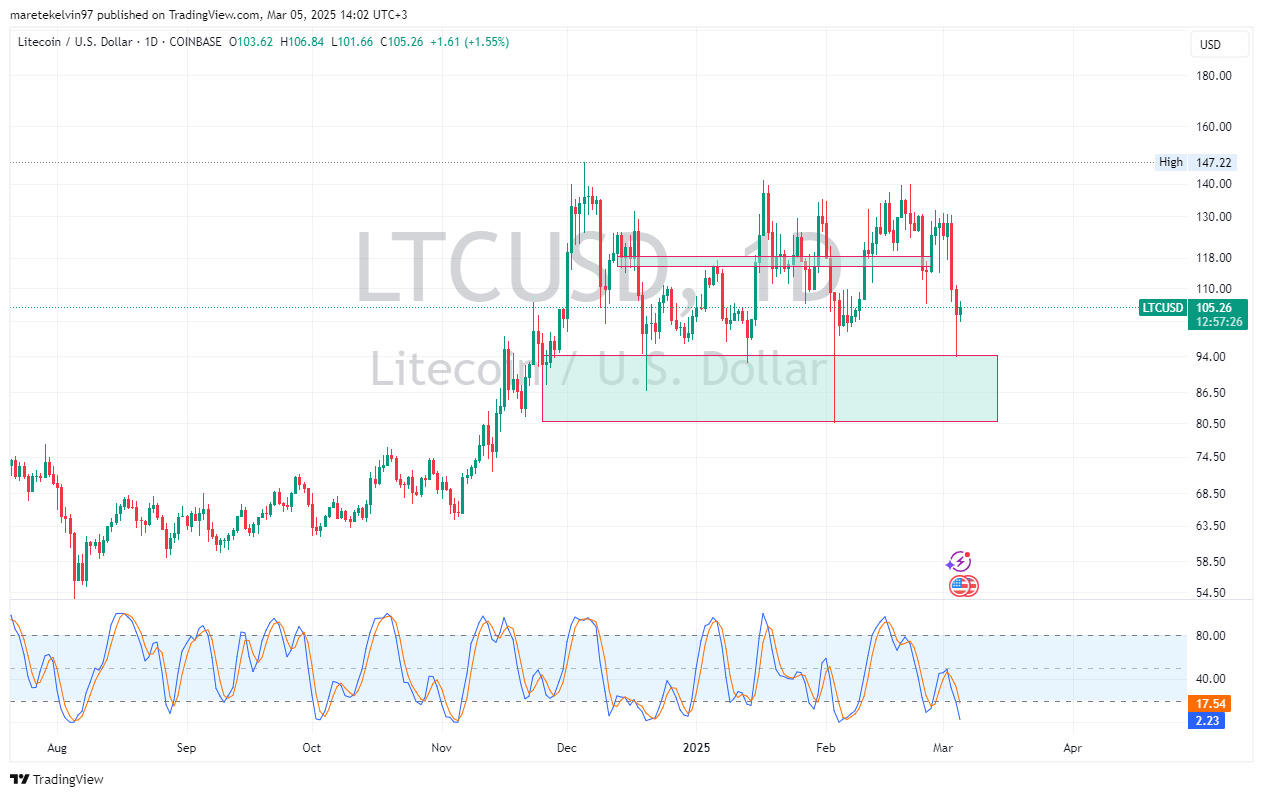
Triggered by Trump’s reserves statement, LTC surged but later dropped 30%, testing a crucial demand zone at $94.

Despite the sharp decline, LTC shows recovery signs, with key metrics signaling a bullish future if the demand zone holds strong.

The profit-taking phase weighs on LTC but…

Analysts link the recent LTC price drop to profit-taking after prolonged inactivity, a common behavior after rapid surges. Investors capitalized on past gains, causing LTC to tumble to the $94 support level.

However, LTC showed green signals, in the last 24 hours, hinting at a potential reversal.

At the time of writing, the Stochastic RSI, a key momentum indicator, was in the oversold zone, suggesting LTC might be undervalued. Oversold conditions often precede upward price movements, making this a critical zone for market participants to monitor.
On chain metrics support the bullish technical indicators

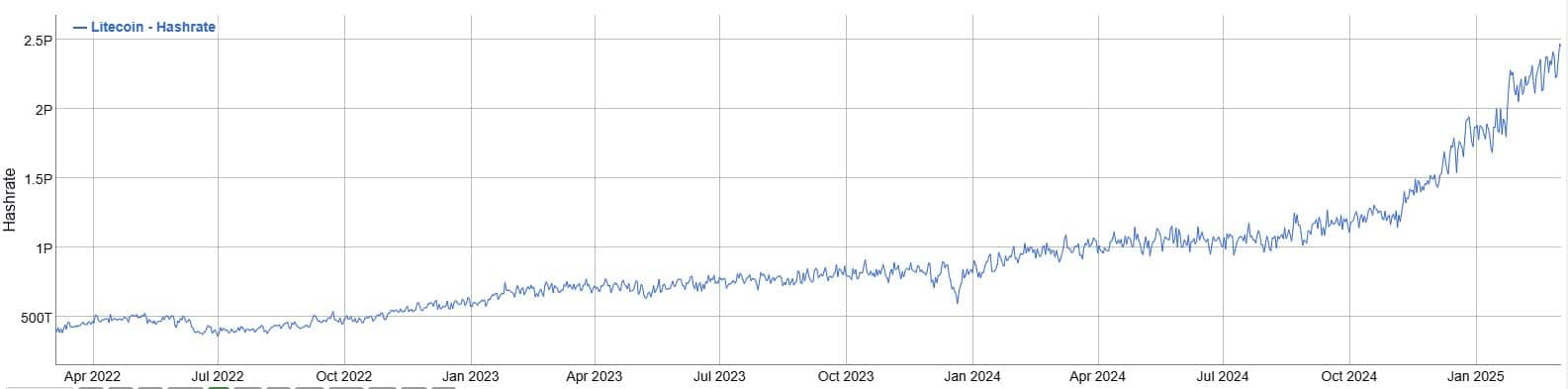
LTC’s on-chain data is also adding to the aforementioned market’s positive sentiment. The altcoin network hash rate recently hit an all-time high, indicating healthy miner activity and network security.

A rising hash rate is a positive sign and typically indicates confidence in the asset’s long-term prospects.
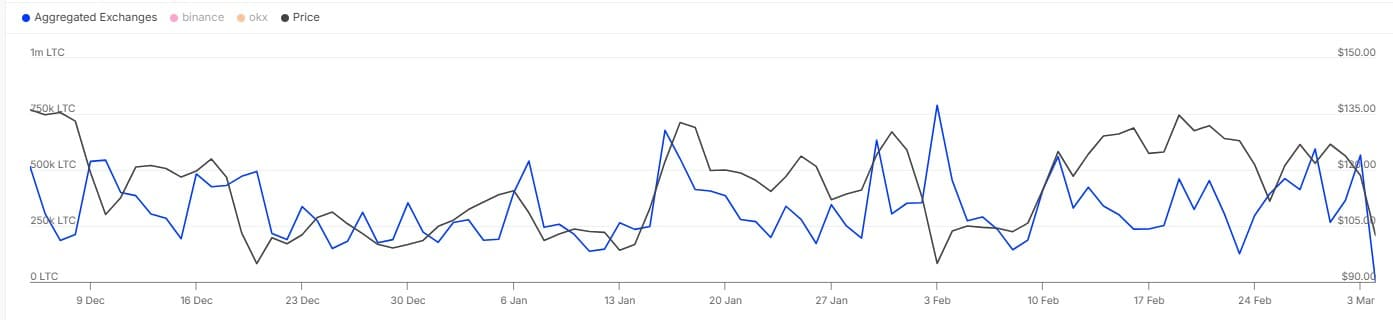
LTC exchange reserves have significantly declined, reducing the number of coins available for sale on exchanges.

This decrease in reserves lowers selling pressure, positively impacting LTC’s price stability.

For newcomers, declining exchange reserves usually suggest investors are transferring holdings to long-term storage, anticipating future price appreciation.
With the Stochastic RSI signaling oversold conditions, the hash rate at record highs and exchange reserves dwindling, the sentiment around LTC is turning bullish.

If LTC maintains support above the $94 demand zone, it may rally and test higher resistance levels in the near term.


Trending Cryptos

Related Reads

Li Fei-Fei's Latest Long-Form Article: When Video Generation, Robotics, and NVIDIA All Call Themselves World Models, We Need a Taxonomy

In a new article, Dr. Fei-Fei Li addresses the widespread and often inconsistent use of the term "world model" in AI. She proposes a clear, functional taxonomy rooted in the classic Partially Observable Markov Decision Process (POMDP) loop (agent → action → state → observation → agent). According to this framework, current systems called "world models" are different projections of this loop, categorized by their primary output: 1. **Renderers**: Output observations (pixels). Their goal is visual fidelity for human consumption (e.g., video generation models like Sora). They are the most commercially mature but are limited by a focus on appearance over physical accuracy. 2. **Simulators**: Output states (geometric, physical, dynamic representations). They provide a structurally accurate world for both human professionals (e.g., architects) and computational agents (e.g., robots for training). Li argues simulators are the crucial, underappreciated bridge, as they can underpin both rendering and planning. 3. **Planners**: Output actions. Given an observation and a goal, they decide what an agent should do next (e.g., robotic action models). This area is highly promising but remains the least mature for real-world deployment. Li highlights a key trend: the boundaries between these three categories are beginning to blur, as they all rely on a shared underlying understanding of geometry, physics, and dynamics. The logical endpoint is a unified world foundation model capable of switching between rendering, simulation, and planning based on downstream needs. This convergence, she concludes, is central to advancing spatial intelligence—enabling machines not just to talk about the world, but to truly understand, imagine, and interact with it.

marsbit3h ago

Li Fei-Fei's Latest Long-Form Article: When Video Generation, Robotics, and NVIDIA All Call Themselves World Models, We Need a Taxonomy

marsbit3h ago

Forbes Feature: Stablecoin Cross-Border Payments Are Faster, But Not Yet Cheaper

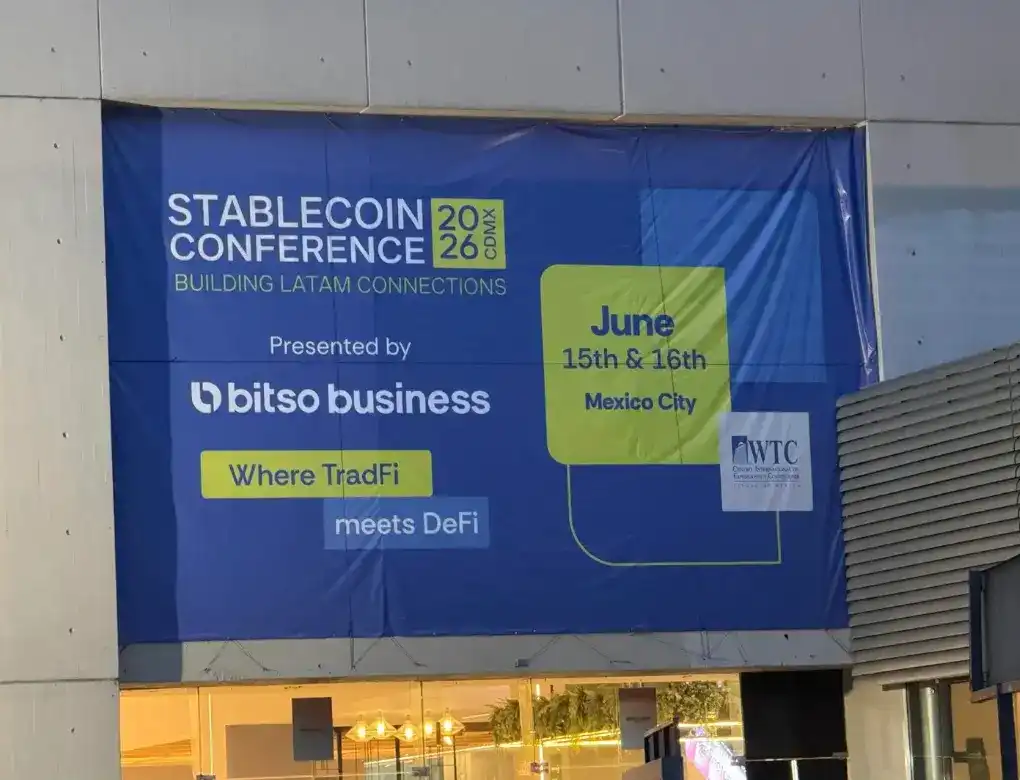
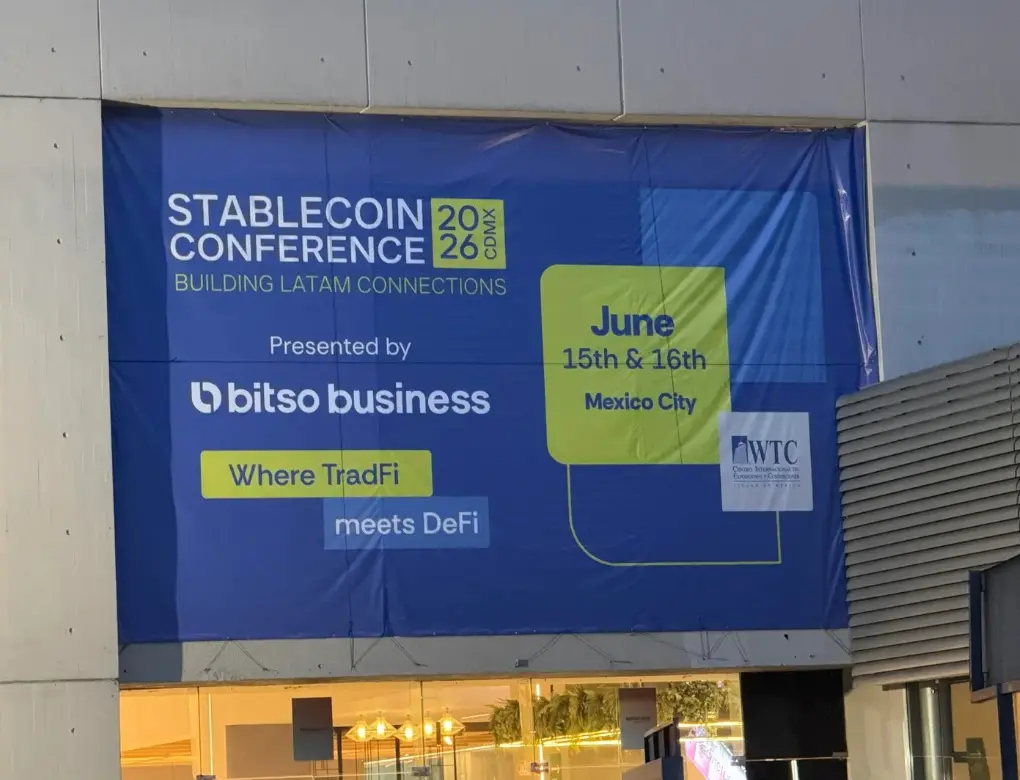
A Forbes feature delves into the state of stablecoin-based cross-border payments, noting rapid growth but a key shortfall: while faster and more accessible, they are not yet cheaper. At a recent industry conference in Mexico City, optimism about technology, regulation, and volume was tempered by discussions with practitioners. The core issue is liquidity. Traditional FX brokers charge 60-70 basis points, and stablecoins promise to slash this to 2-5 basis points. However, this theoretical cost advantage cannot be realized until deep liquidity pools are established at scale, requiring significant institutional capital inflow. A major adoption barrier is trust. Businesses often rely on long-standing relationships with traditional brokers, valuing reliability over marginal cost savings. This shift will be gradual. Furthermore, successful companies in the space are not positioning themselves as replacements for legacy systems like SWIFT, but as complements. They leverage stablecoins for speed while using traditional rails for their standardization and reliability in ensuring accurate payment details—a critical factor for supplier payments to avoid customs issues. Companies like Caliza, experiencing high monthly growth, exemplify this hybrid approach. The industry anticipates consolidation, as long-term viability will depend on securing the essential trifecta: proper licensing, robust fiat on/off-ramps, and deep liquidity. Without these, firms risk being mere intermediaries rather than building sustainable businesses.

marsbit3h ago

Forbes Feature: Stablecoin Cross-Border Payments Are Faster, But Not Yet Cheaper

marsbit3h ago

Trading

Spot

Hot Articles

How to Buy LTC

Welcome to HTX.com! We've made purchasing Litecoin (LTC) simple and convenient. Follow our step-by-step guide to embark on your crypto journey.Step 1: Create Your HTX AccountUse your email or phone number to sign up for a free account on HTX. Experience a hassle-free registration journey and unlock all features.Get My AccountStep 2: Go to Buy Crypto and Choose Your Payment MethodCredit/Debit Card: Use your Visa or Mastercard to buy Litecoin (LTC) instantly.Balance: Use funds from your HTX account balance to trade seamlessly.Third Parties: We've added popular payment methods such as Google Pay and Apple Pay to enhance convenience.P2P: Trade directly with other users on HTX.Over-the-Counter (OTC): We offer tailor-made services and competitive exchange rates for traders.Step 3: Store Your Litecoin (LTC)After purchasing your Litecoin (LTC), store it in your HTX account. Alternatively, you can send it elsewhere via blockchain transfer or use it to trade other cryptocurrencies.Step 4: Trade Litecoin (LTC)Easily trade Litecoin (LTC) on HTX's spot market. Simply access your account, select your trading pair, execute your trades, and monitor in real-time. We offer a user-friendly experience for both beginners and seasoned traders.

9.5k Total ViewsPublished 2024.03.29Updated 2026.06.02

How to Buy LTC

Discussions

Welcome to the HTX Community. Here, you can stay informed about the latest platform developments and gain access to professional market insights. Users' opinions on the price of LTC (LTC) are presented below.

活动图片