Why Pepeto Could Be the Next Big Meme Coin of 2025, Presale Ongoing

bitcoinistPublished on 2025-03-05Last updated on 2025-03-05

Abstract

The crypto world is packed with new coins popping up every day. But something interesting is happening with Pepeto, the...

The crypto world is packed with new coins popping up every day. But something interesting is happening with Pepeto, the latest frog-themed meme coin making waves. 

Unlike countless copycat tokens, Pepeto brings something different with zero-fee trading, a cross-chain bridge that actually works, and staking rewards that’ll make your eyes pop – we’re talking 315% APY. No wonder it’s already pulled in over $4.8 million during its presale phase.

Merging Memes with Utility

Most meme coins are all hype and no substance. They ride the social media wave for a few weeks, then crash when the next shiny thing comes along. Pepeto seems determined not to follow that tired path.

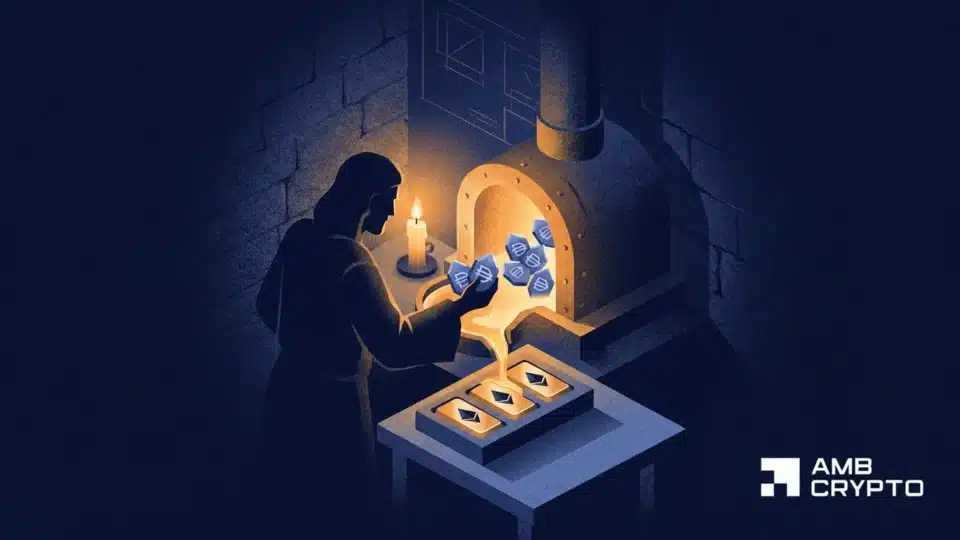
They’ve created an intriguing narrative featuring a frog deity on a quest to gather six “sacred documents” representing Power, Energy, Precision, Efficiency, Technology, and Optimization. This creative storytelling gives Pepeto a distinctive identity that sets it apart from the countless generic meme coins flooding the market.

The frog imagery is charming and playful, but Pepeto offers much more than just visual appeal. Look beyond the surface and you’ll discover robust technology powering the platform. The developers didn’t cut corners on security either – they’ve enlisted respected firms SolidProof and Coinsult to conduct thorough audits, providing potential investors with an extra layer of confidence before they decide to participate.

Why Traders Are Taking Notice

Now let’s talk about something that actually matters to your wallet – zero-fee trading. Anyone who’s spent time shuffling crypto around knows how annoying those fees can be. They nibble away at your profits like hungry piranhas.

Traditional exchanges typically charge between 0.1% and 0.5% per trade. That might not sound like much, but for someone making multiple trades daily, it can easily add up to hundreds or even thousands of dollars monthly.

By eliminating these costs entirely, Pepeto isn’t just saving traders money – it’s potentially changing how frequently people might be willing to trade. When every transaction doesn’t come with that nagging feeling of watching your gains get sliced away, the entire trading experience becomes more appealing.

Pepeto keeps the lights on through other revenue streams – ads, premium features, that sort of thing. For day traders especially, saving on fees could be the difference between a profitable month and a break-even one.

Bridging Blockchain Networks with Advanced Technology

Moving crypto between different blockchains is a massive headache. Pepeto’s cross-chain bridge aims to make this process less painful. Their system locks tokens on one chain while creating matching tokens on whatever blockchain you’re moving to.

The real value isn’t the tech itself – it’s solving a real problem. Being able to move assets between Ethereum, BSC, and Polygon without needing a PhD in blockchain technology opens doors for people who’ve previously stayed in their comfort zone.

Staking Rewards and Tokenomics

Those 315% staking rewards sound too good to be true, but here’s what’s happening: Every Ethereum block releases exactly 32,015,981.73 $PEPETO tokens as rewards, flowing steadily over two years rather than dumping all at once.

Of the total 420 trillion supply, 30% goes to presale buyers, another 30% funds staking rewards, 20% covers marketing, 7.5% keeps development moving, and 12.5% ensures smooth trading liquidity.

They’re also burning tokens regularly using fees from the bridge. This slow reduction in supply might help prop up the token’s value over time – addressing one concern with high-supply meme coins.

What’s impressive isn’t any single element, but how these pieces fit together. The staking keeps people holding, the burns reduce supply, and the liquidity allocation keeps trading working smoothly.

Community Building and Engagement

Community Building and Engagement

Beyond all the technical stuff, Pepeto seems to understand something crucial – crypto is as much about community as technology. They’ve built active social channels where team members actually show up and answer questions during AMAs.

The team has mapped out plans well into 2025, which is practically ancient history in crypto time. This long-term vision helps ease doubts about whether they’re just here for a quick cash grab.

How to Participate in the Pepeto Presale

At the time of writing, tokens are going for $0.000000113 each. Getting your hands on some $PEPETO is pretty easy. 

First, you’ll need a crypto wallet. MetaMask takes just minutes to set up if you don’t already have one.

Next, load your wallet with either ETH, USDT, or BNB – those are your payment options. Head to Pepeto’s website, connect your wallet, and choose how many tokens you want. They’ve added a “Buy and Stake” option right on the checkout page, letting you start earning rewards immediately. 

After the presale wraps up, you can claim your tokens through their Web3Toolkit system by reconnecting your wallet and following the prompts. The whole process is designed to be easy enough that first-time crypto investors shouldn’t get lost along the way.

JOIN THE PEPETO COMMUNITY

Website | (X) Twitter | Telegram | Instagram | YouTube

Trending Cryptos

Related Reads

Li Fei-Fei's Latest Long-Form Article: When Video Generation, Robotics, and NVIDIA All Call Themselves World Models, We Need a Taxonomy

In a new article, Dr. Fei-Fei Li addresses the widespread and often inconsistent use of the term "world model" in AI. She proposes a clear, functional taxonomy rooted in the classic Partially Observable Markov Decision Process (POMDP) loop (agent → action → state → observation → agent). According to this framework, current systems called "world models" are different projections of this loop, categorized by their primary output: 1. **Renderers**: Output observations (pixels). Their goal is visual fidelity for human consumption (e.g., video generation models like Sora). They are the most commercially mature but are limited by a focus on appearance over physical accuracy. 2. **Simulators**: Output states (geometric, physical, dynamic representations). They provide a structurally accurate world for both human professionals (e.g., architects) and computational agents (e.g., robots for training). Li argues simulators are the crucial, underappreciated bridge, as they can underpin both rendering and planning. 3. **Planners**: Output actions. Given an observation and a goal, they decide what an agent should do next (e.g., robotic action models). This area is highly promising but remains the least mature for real-world deployment. Li highlights a key trend: the boundaries between these three categories are beginning to blur, as they all rely on a shared underlying understanding of geometry, physics, and dynamics. The logical endpoint is a unified world foundation model capable of switching between rendering, simulation, and planning based on downstream needs. This convergence, she concludes, is central to advancing spatial intelligence—enabling machines not just to talk about the world, but to truly understand, imagine, and interact with it.

marsbit2h ago

Li Fei-Fei's Latest Long-Form Article: When Video Generation, Robotics, and NVIDIA All Call Themselves World Models, We Need a Taxonomy

marsbit2h ago

Forbes Feature: Stablecoin Cross-Border Payments Are Faster, But Not Yet Cheaper

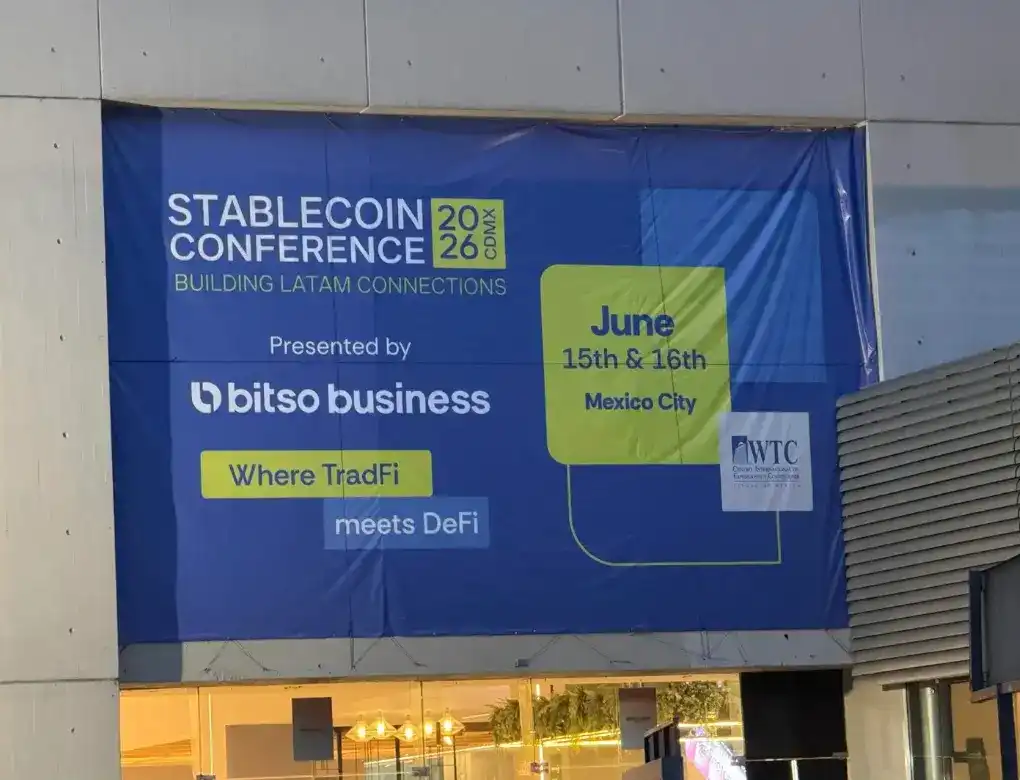
A Forbes feature delves into the state of stablecoin-based cross-border payments, noting rapid growth but a key shortfall: while faster and more accessible, they are not yet cheaper. At a recent industry conference in Mexico City, optimism about technology, regulation, and volume was tempered by discussions with practitioners. The core issue is liquidity. Traditional FX brokers charge 60-70 basis points, and stablecoins promise to slash this to 2-5 basis points. However, this theoretical cost advantage cannot be realized until deep liquidity pools are established at scale, requiring significant institutional capital inflow. A major adoption barrier is trust. Businesses often rely on long-standing relationships with traditional brokers, valuing reliability over marginal cost savings. This shift will be gradual. Furthermore, successful companies in the space are not positioning themselves as replacements for legacy systems like SWIFT, but as complements. They leverage stablecoins for speed while using traditional rails for their standardization and reliability in ensuring accurate payment details—a critical factor for supplier payments to avoid customs issues. Companies like Caliza, experiencing high monthly growth, exemplify this hybrid approach. The industry anticipates consolidation, as long-term viability will depend on securing the essential trifecta: proper licensing, robust fiat on/off-ramps, and deep liquidity. Without these, firms risk being mere intermediaries rather than building sustainable businesses.

marsbit2h ago

Forbes Feature: Stablecoin Cross-Border Payments Are Faster, But Not Yet Cheaper

marsbit2h ago

Li Feifei's Latest Article: When Video Generation, Robotics, and NVIDIA All Claim to Have 'World Models,' We Need a Taxonomy

"World Model" has become a widely used yet ambiguous term in AI. Drawing from the classic POMDP framework (agent → action → state → observation), this article proposes a functional taxonomy to clarify the concept. It identifies three distinct types, categorized by their output in the perception-action loop: 1. **Renderers**: Output visual observations (pixels). These models, like advanced video generators, prioritize visual fidelity but often lack underlying physical accuracy. 2. **Simulators**: Output the state of the world (geometry, physics, dynamics). They provide a structurally accurate representation for professionals (e.g., architects) and serve as training environments for robots and AI agents. 3. **Planners**: Output actions. Given an observation and a goal, they determine what an agent should do next, closing the perception-action loop (e.g., vision-language-action models). While renderers are currently the most commercially mature and planners are the most aspirational, the article argues that **simulators are the crucial, underappreciated hub**. By working at the level of geometry and physics, a simulator can project upwards to create visuals for humans and downwards to predict action consequences for agents. The future lies in the convergence of these three functions. Emerging research and products, like World Labs' Marble model which outputs both visual splats and physical collision meshes, are beginning to blur these boundaries. The logical endpoint is a unified world foundation model capable of rendering, simulating, and planning based on a shared understanding of spatial and temporal structures—ultimately enabling machines to understand, imagine, and interact with the physical world.

链捕手2h ago

Li Feifei's Latest Article: When Video Generation, Robotics, and NVIDIA All Claim to Have 'World Models,' We Need a Taxonomy

链捕手2h ago

Trading

Spot

Hot Articles

Discussions

Welcome to the HTX Community. Here, you can stay informed about the latest platform developments and gain access to professional market insights. Users' opinions on the price of MEME (MEME) are presented below.

活动图片