Криптовалюта XRP подросла на 10% в бычьей торговле в ралли

investing.ruPublished on 2025-01-11Last updated on 2025-01-11

Investing.com - Криптовалюта XRP торговалась на уровне $2,5735 в 00:49 (21:49 GMT) на бирже Investing.com Index в в субботу, изменения составили 10,06% в течение дня. Это был самый резкий дневной рост криптовалюты с с 1 января.

Такой рост подтолкнул рыночную капитализацию XRP до $147,2250B, на 4,42% от рыночной капитализации всех криптовалют. Ранее на пике капитализация XRP составляла $155,2807B.

В течение последних 24 часов валюта XRP торговалась в диапазоне от $2,3261 до $2,5936.

За последние 7 дней XRP показал рост объема в пределах выросли с целевой цены 5,3%. Объем XRP в течение последних 24 часов составил $7,2483B или 10,05% от всего объема криптовалют. Она торговалась в промежутке от $2,2049 до $2,5936 в течение последних семи дней.

В настоящее время цена XRP упал с максимума в , установленного.

Тем временем прочие криптовалюты

Криптовалюта Биткоин стоила  $94.922,1 на бирже Investing.com Index, поднявшись 0,29% в день.

Эфириум торговался на уровне $3.312,81 на бирже Investing.com Index, показавших рост на 1,38%.

Рыночная капитализация Биткоин ранее составляла $1.874,3223B или 56,32% от объема рыночной капитализации всех криптовалют, в то время как капитализация Эфириум составила $398,1129B или 11,96% всего объема криптовалютного рынка.

Trending Cryptos

Related Reads

The Largest Upgrade Since The Merge? How Glamsterdam Will Affect Ethereum?

Ethereum's next major upgrade, Glamsterdam (combining consensus layer "Gloas" and execution layer "Amsterdam"), is scheduled for late 2026 and considered the most significant overhaul since The Merge. It aims to fundamentally enhance L1 performance and architecture to prepare for substantial capacity increases. The upgrade centers on three core changes: 1. **Enshrined PBS (ePBS - EIP-7732):** Integrates the Proposer-Builder Separation directly into the protocol, eliminating reliance on external relays. This extends the window for processing execution payloads, allowing nodes more time to handle larger blocks and more data, paving the way for a higher Gas Limit. 2. **Block-Level Access Lists (BALs - EIP-7928):** Provides a pre-declared "map" in the block header of all state data (accounts, storage) that transactions will access and modify. This enables potential parallel transaction processing and faster state synchronization for nodes. 3. **Gas Repricing (EIP-8037):** Overhauls the gas model to more accurately reflect the real resource costs for nodes. It separates computation costs from state storage costs, making operations that create permanent state data (like new accounts) more expensive, while computation-heavy operations become relatively cheaper. These changes work together to solve the trilemma of scaling: giving nodes more time to process larger blocks (ePBS), reducing execution bottlenecks (BALs), and controlling unsustainable state growth (Gas Repricing). The goal is a credible path to a higher Gas Limit (e.g., 200M gas) without compromising decentralization by overburdening node hardware. For users: * Transaction fees for simple transfers may decrease and become more stable due to increased block space, but state-intensive operations (contract deployment) may cost more. * Gas estimation by wallets will improve in accuracy. * L2 data posting costs could become more stable long-term due to increased Blob capacity. * EIP-7708 will standardize logs for ETH transfers, improving tracking for wallets and exchanges. Node operators must upgrade clients, but ETH holders need take no action. In essence, Glamsterdam doesn't just raise the block size limit; it re-engineers Ethereum's core block production, execution, and economic models to enable sustainable, decentralized scaling.

marsbit19m ago

The Largest Upgrade Since The Merge? How Glamsterdam Will Affect Ethereum?

marsbit19m ago

Robinhood Chain Mainnet Goes Live: Can Stocks Finally Be Moved Into Wallets?

Robinhood has officially launched its public mainnet, Robinhood Chain, along with stock-like tokens, the USDG yield product, and a DeFi lending portal. This marks a significant shift where a major online broker is integrating its user interface, regulatory compliance, self-custody wallet, and on-chain protocols into a single, streamlined experience. The goal is to simplify access to stock exposure, stablecoin yields, collateralized lending, and AMM trading for mainstream users. Eligible non-U.S. users can hold these "Stock Tokens"—structured as tokenized debt securities—in the Robinhood Wallet for 24/7 exposure to assets like U.S. stocks or ETFs. U.S. users can access an estimated ~7% APY on dollar-backed USDG through the Robinhood Earn program via self-custody wallets, with lending infrastructure powered by Morpho protocol. Built as a Layer 2 on Arbitrum, Robinhood Chain leverages existing DeFi protocols like Uniswap. The core strategy is not to reinvent DeFi but to channel Robinhood's large traditional finance user base (27.4 million funded customers as of Q1 2026) into on-chain finance, lowering the technical barriers. However, key limitations exist. The stock tokens are not direct equity ownership and are unavailable in the U.S. and some jurisdictions due to regulatory constraints. The ~7% yield is variable and carries inherent DeFi risks, not guaranteed principal protection. Furthermore, while AMMs enable trading, price discovery for major stocks will likely remain anchored in traditional markets like NASDAQ for the foreseeable future. Ultimately, Robinhood Chain is an early experiment in "on-chain brokerage." Its success will depend on real-world metrics like trading volume, sustained user migration to self-custody, stable yield performance, and regulatory feedback, rather than its launch narrative.

marsbit1h ago

Robinhood Chain Mainnet Goes Live: Can Stocks Finally Be Moved Into Wallets?

marsbit1h ago

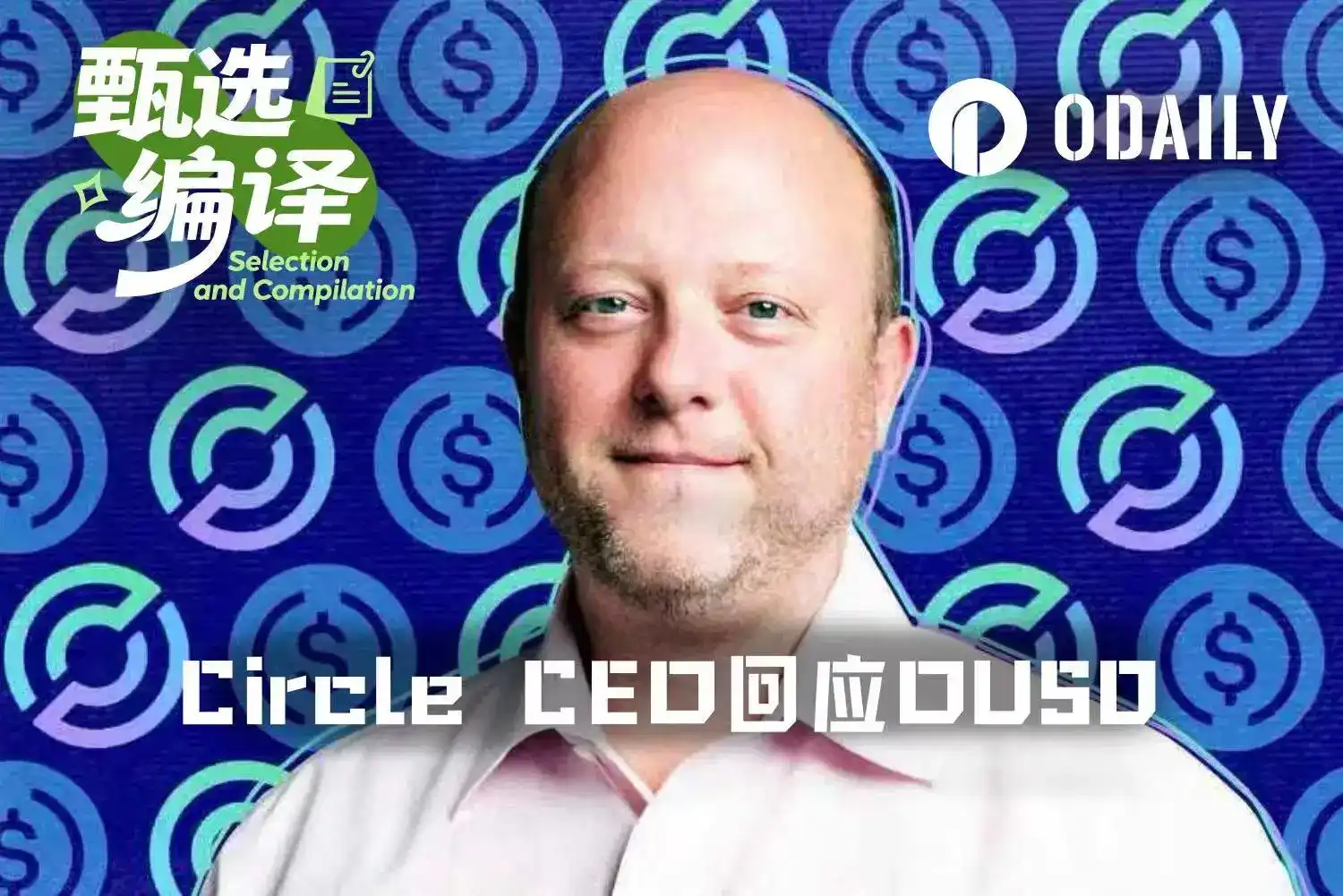
Circle CEO Responds to OUSD Challenge: Stablecoin Market Is 'Winner-Takes-All', Consortium Model Doomed to Fail

Circle CEO Jeremy Allaire addresses market concerns following the announcement of the Open USD (OUSD) stablecoin project backed by 140 global companies. Allaire argues the stablecoin market exhibits "winner-takes-all" dynamics due to powerful network effects. He cites USDC's near-decade lead in three key areas: 1) **Application Integration & Protocol Development**: Thousands of integrated services and protocols (like CCTP) create utility and lock-in for developers and users. 2) **Liquidity Network Effects**: A deeply embedded, globally distributed liquidity infrastructure across primary and secondary markets, built over years. 3) **Regulatory Integration**: Extensive licensing and compliance groundwork ensuring USDC's acceptance in major markets like Europe and Japan. Allaire challenges OUSD's proposed advantages. He contends that promises of free redemption, while appealing, face market realities where such models can become exit routes for other stablecoins. He also questions the feasibility of fully distributing all revenue to an alliance, stating it would "starve" the critical infrastructure investments needed for scale and utility. Furthermore, he expresses skepticism about large alliance governance models, noting they often lead to slow decision-making and misaligned incentives. While welcoming OUSD to the ecosystem, Allaire reaffirms confidence in USDC's dominant position, backed by its long-term infrastructure investments and strong partnerships, including its ongoing collaboration with Coinbase.

marsbit1h ago

Circle CEO Responds to OUSD Challenge: Stablecoin Market Is 'Winner-Takes-All', Consortium Model Doomed to Fail

marsbit1h ago

Trading

Spot

Hot Articles

What is XRP 2.0

XRP 2.0: A New Frontier in the Cryptocurrency Landscape Introduction to XRP 2.0 In the ever-evolving realm of cryptocurrency, new projects continuously emerge, vying for attention and adoption. One such promising initiative is XRP 2.0, a novel cryptocurrency project designed to leverage advanced blockchain technology and robust encryption methodologies. While the name draws parallels with Ripple’s XRP, it’s crucial to note that XRP 2.0 operates independently, focusing on enhancing transaction security, privacy, and scalability. As the digital financial landscape increasingly embraces decentralized solutions, XRP 2.0 aims to contribute meaningfully to web3 and the overall expansion of crypto projects. What is XRP 2.0? At its core, XRP 2.0 is a cryptocurrency project that aims to create a secure and decentralized digital currency ecosystem. Its foundational technology integrates sophisticated blockchain principles with cutting-edge encryption techniques. The overarching goal of XRP 2.0 is to establish itself as a reliable and efficient platform enabling swift transaction execution while prioritizing enhanced privacy protections for its users. The project is promoted as a solution to many limitations faced by existing cryptocurrencies, proposing a system that can handle a higher volume of transactions with improved speed and privacy. This versatility positions XRP 2.0 as a significant contender in a marketplace riddled with various digital currencies. Who is the Creator of XRP 2.0? The identity of the creator behind XRP 2.0 has been flagged as ‘Wilbur.’ However, comprehensive details regarding Wilbur or their associated entity remain elusive. The anonymity of many cryptocurrency creators is not an uncommon phenomenon in the industry, often designed to maintain a degree of privacy and security. Who are the Investors of XRP 2.0? As of now, specific information related to the investment foundations or organizations supporting XRP 2.0 is not publicly available. In the cryptocurrency sector, the backing by reputed investors can significantly influence a project's credibility and success, yet the transparency regarding the financial supporters of XRP 2.0 has not been established. How Does XRP 2.0 Work? XRP 2.0 stands out by employing a combination of blockchain technology and advanced encryption algorithms that ensures secure and decentralized transactions. Its innovative structure includes unique features designed to foster user engagement and broaden functionalities beyond conventional cryptocurrency transactions. Among these features, XRP 2.0 incorporates AI-powered capabilities, such as text-to-image and text-to-speech functionalities. These additions are designed to enhance the interactive experience for users, promoting broader applicability across various sectors. By bridging technological advancements with user-centered design, XRP 2.0 aims to capture the attention of a diverse range of individuals and enterprises looking to integrate cryptocurrency solutions into their operational frameworks. Timeline of XRP 2.0 Understanding XRP 2.0 requires examining the milestones that have defined its journey thus far: July 23, 2023: XRP 2.0 is introduced as a novel cryptocurrency project, aiming to revolutionize secure and decentralized transaction capabilities in the blockchain domain. September 8, 2023: The launching of another project, XRP20, occurs, marking the emergence of an ERC-20 token on the Ethereum blockchain that remains unrelated to XRP 2.0. November 13, 2023: The XRP Ledger undergoes a significant update with the release of rippled server software version 2.0.0. It is essential to note that this development is disconnected from the XRP 2.0 cryptocurrency project. Key Points About XRP 2.0 To distill the essence of XRP 2.0, several critical factors emerge: Unique Features: The inclusion of features like AI-powered text-to-image and text-to-speech further diversifies the potential applications of XRP 2.0. Blockchain Technology: The framework utilizes advanced blockchain mechanisms and encryption protocols, ensuring a secure and decentralized environment for transactions. Scalability and Privacy: XRP 2.0 prioritizes enhanced privacy protections in transaction processes and the scalability necessary to accommodate a growing user base. No Affiliation with Ripple: Importantly, despite its name, XRP 2.0 does not have any allegiance or collaboration with Ripple’s XRP, distinguishing its operational framework and objectives within the cryptocurrency ecosystem. Conclusion XRP 2.0 represents an ambitious venture into the cryptocurrency sphere, aiming to offer a combination of security, privacy, and efficiency in digital transactions. By integrating sophisticated technologies and user-friendly features, the project sets out to broaden the horizons of what cryptocurrency can achieve in today's digital economy. While the anonymity of its creator and lack of disclosed investors might raise questions for some, XRP 2.0's focus on advanced functionalities and decentralisation enhances its appeal amidst an increasingly crowded crypto market. As the cryptocurrency landscape continues to evolve, XRP 2.0 may yet emerge as a pivotal player in the expansion of secure and scalable blockchain solutions.

1.0k Total ViewsPublished 2024.04.01Updated 2024.12.03

What is XRP 2.0

Discussions

Welcome to the HTX Community. Here, you can stay informed about the latest platform developments and gain access to professional market insights. Users' opinions on the price of XRP (XRP) are presented below.

活动图片