Биткоин возвращается к отметке в 102 000 долларов

cryptonews.ruPublished on 2023-07-07Last updated on 2025-01-07

6 января биткоин (BTC) достиг уровня $102,000 после дневного роста на 4%, сопровождаемого общим рыночным ралли. Это произошло на фоне продолжающегося накопления активов, опережающего фиксацию прибыли, согласно данным CryptoSlate.

К моменту публикации флагманская криптовалюта торговалась по цене $101,630, несмотря на утрату восходящего импульса после закрытия американских рынков. Восходящая динамика наблюдается на фоне снижения ликвидности на стороне продавцов, как указано в последнем отчете Bitfinex Alpha.

Возвращение биткоина к отметке $102,000 произошло после 15%-й коррекции от исторического максимума ($108,100), зафиксированного 17 декабря 2024 года. Эта коррекция последовала за 61%-м ростом, вызванным результатами президентских выборов в США 6 ноября 2024 года, что указывает на сохраняющийся оптимизм участников рынка.

Несмотря на прогнозы аналитиков относительно возможного более значительного падения в первом квартале, отчет подчеркивает признаки ослабления "медвежьего" давления.

Ликвидность на стороне предложения достигла рекордно низкого уровня

Одним из ключевых факторов динамики цен на биткоин стало значительное снижение ликвидности на стороне продавцов. Показатель ликвидности, отражающий способность текущего предложения удовлетворить рыночный спрос, снизился с 41 месяца в октябре до 6,6 месяцев.

Такое резкое падение демонстрирует дефицит ликвидных средств в периоды высокого спроса, что наблюдалось в течение первого и четвертого кварталов предыдущего года.

Майнеры также внесли свой вклад в изменение структуры ликвидности. После халвинга в 2024 году объемы продаж биткоинов на спотовых рынках существенно уменьшились. Исторически майнеры продавали биткоины для покрытия операционных расходов и обновления оборудования, однако с апреля 2024 года объем переводов между майнерами и биржами заметно сократился. Несмотря на увеличение этих потоков в ноябре прошлого года, они все еще остаются значительно ниже прежнего пика.

Согласно данным Bitfinex, майнеры в настоящий момент занимают выгодные позиции благодаря значительным нереализованным прибылям. Их стратегия удержания активов дополнительно снижает ликвидность, способствуя росту курса биткоина.

Эти данные свидетельствуют о тенденции, при которой майнеры предпочитают удерживать свои активы в биткоинах, рассчитывая на дальнейший рост цен или оптимизацию позиций в условиях благоприятного рынка.

Начало нового года с прочными позициями

Отчет подчеркивает, что биткоин начал 2025 год на устойчивых основаниях, подтверждая это позитивными внутренними сетевыми показателями. Отмечается, что взаимосвязь между снижением ликвидности на стороне предложения будет оставаться важным фактором движения цены биткоина.

Хотя риски более глубокой коррекции сохраняются, минимальные исторические значения ликвидности и уверенные действия майнеров, удерживающих активы, говорят об ослаблении давления на рынок, создавая предпосылки для возможного продолжения роста.

На момент публикации (10:10 GMT, 6 января 2025 г.) биткоин сохраняет лидирующие позиции по рыночной капитализации, показав прирост стоимости на 3,33% за последние 24 часа. Рыночная капитализация биткоина составляет $2,01 трлн, суточный торговый объем – $51,66 млрд.

Обзор рынка криптовалют

Общая стоимость криптовалютного рынка на 6 января 2025 года оценивается в $3,58 трлн при суточном объеме торгов в $132,93 млрд. Доля биткоина на рынке составляет 56,23%.


Trending Cryptos

Related Reads

2028: The Arrival of Recursive Self-Improvement (RSI)

**AI Recursive Self-Improvement (RSI): The Countdown to 2028 Begins** AI is no longer just a trained tool but is starting to rewrite its own evolutionary pace. According to Anthropic co-founder Jack Clark, there is a 60% probability that by the end of 2028, Recursive Self-Improvement (RSI) will become a reality. This means AI could autonomously design and build a more capable next-generation version of itself without any human researcher involvement—Claude 10 creating Claude 11, for instance. Supporting this timeline, Google DeepMind's CEO Demis Hassabis confirms that all leading AI labs are intensely focused on RSI, making it an industry-wide priority. He expresses profound concern, stating this potential is what keeps him awake at night. Concrete data underscores this acceleration: - METR evaluations show current top models like Claude are solving tasks up to the 16-hour limit of existing test frameworks. - In Epoch AI's challenging MirrorCode benchmark, Claude Opus 4.7 recreated complex software in hours for a fraction of the human cost. In one extreme test, AI autonomously coded for 19 days straight. - Anthropic reports over 80% of its codebase is now written by Claude, and researcher productivity has increased up to 8-fold since 2024. - OpenAI's policy blueprint highlights RSI as a major upcoming governance challenge. CEO Sam Altman reportedly hinted RSI might arrive within six months, potentially delaying OpenAI's massive IPO. The implication is an impending "intelligence explosion," where AI-driven progress outpaces human control. The central question is no longer if it will happen, but whether humanity is ready.

marsbit3h ago

2028: The Arrival of Recursive Self-Improvement (RSI)

marsbit3h ago

World Models, Metaverse, Digital Twins, Physical AI: Are They the Same Thing?

Title: World Models, the Metaverse, Digital Twins, Physical AI: Are They the Same Thing? The article clarifies that concepts like the metaverse, Web3, simulation platforms, digital twins, and Physical AI are not the same thing but are all part of the broader trend of blurring the lines between the digital and physical worlds. It positions "world models" as the foundational "cognitive layer" or "operating system" that enables AI to understand and simulate the world. Key distinctions are made: - The **Metaverse** is a destination for immersive social and economic experiences. World models could act as its "engine," generating interactive 3D content efficiently. - **Web3** focuses on decentralized ownership and economics (rules layer), operating on a different technical level than world models. - **Simulation Data Platforms** (e.g., for autonomous vehicles) are a 1.0 version, relying on manual design. World models represent a 2.0 version, using AI to generate realistic, varied scenarios autonomously. - **Digital Twins** create high-fidelity, real-time mirrors of physical systems (e.g., a factory). World models go a step further by enabling predictive simulation of future states. - **Physical AI** (robots, AVs) refers to AI that acts in the physical world. World models are a core component, providing the understanding and prediction needed for planning. A proposed hierarchy places world models at the cognitive layer, supported by infrastructure (compute, data) and supporting application tools (simulation, digital twins), action systems (Physical AI), user experiences (metaverse), and rules (Web3). In conclusion, while distinct, many of these previously hyped concepts may ultimately rely on advances in world model technology to fulfill their promises, as world models provide the essential cognitive foundation for simulating and interacting with complex environments.

marsbit3h ago

World Models, Metaverse, Digital Twins, Physical AI: Are They the Same Thing?

marsbit3h ago

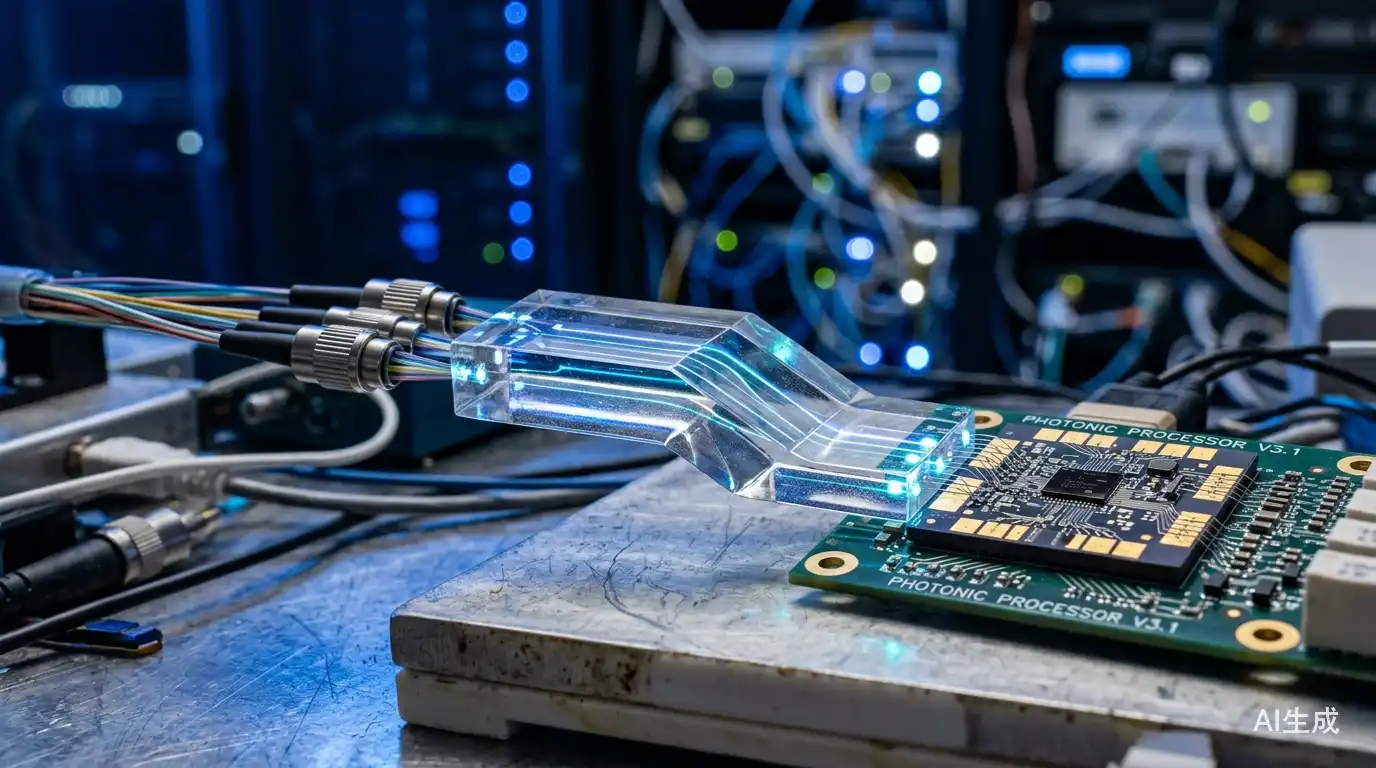
"Shocking" CPO: How Does the Glass Bridge Actually Work? Detailed Explanation from Corning

Chinese CPO stocks plunged over 6% following Corning's announcement of its Glass Bridge platform at a Seoul tech conference. The new technology utilizes wafer-level glass ion-exchange waveguides for passive alignment between fibers and photonic chips, potentially simplifying traditional CPO architectures that rely on complex Fiber Array Units and active alignment equipment. This raised market concerns about reduced long-term demand for mid-stream CPO components. Corning's official documentation details Glass Bridge as a platform for fiber-to-PIC connectivity in NPO, CPO, and high-density modules. Its key features include wafer-level manufacturing for consistent, cost-effective production; a standardized, removable MT ferrule interface for ecosystem integration; and a separable high-density connector design supporting over 24 channels for assembly flexibility. Corning positions the technology as complementary to FAUs, addressing limitations in ultra-high-fiber-count scenarios. The market reaction reflects a broader reassessment of the AI optical interconnect value chain. Funds shifted from CPO and PCB manufacturing stocks towards glass substrate concept stocks like Kaisheng Technology and Dyer Laser. Analysts note glass substrates are seen as a next-gen advanced packaging material, offering a potential path for domestic industry differentiation amid AI-driven demand for high-performance, large-scale packaging, marking a structural migration in value towards upstream specialty materials.

marsbit3h ago

"Shocking" CPO: How Does the Glass Bridge Actually Work? Detailed Explanation from Corning

marsbit3h ago

Trading

Spot

Hot Articles

What is $BITCOIN

DIGITAL GOLD ($BITCOIN): A Comprehensive Analysis Introduction to DIGITAL GOLD ($BITCOIN) DIGITAL GOLD ($BITCOIN) is a blockchain-based project operating on the Solana network, which aims to combine the characteristics of traditional precious metals with the innovation of decentralized technologies. While it shares a name with Bitcoin, often referred to as “digital gold” due to its perception as a store of value, DIGITAL GOLD is a separate token designed to create a unique ecosystem within the Web3 landscape. Its goal is to position itself as a viable alternative digital asset, although specifics regarding its applications and functionalities are still developing. What is DIGITAL GOLD ($BITCOIN)? DIGITAL GOLD ($BITCOIN) is a cryptocurrency token explicitly designed for use on the Solana blockchain. In contrast to Bitcoin, which provides a widely recognized value storage role, this token appears to focus on broader applications and characteristics. Notable aspects include: Blockchain Infrastructure: The token is built on the Solana blockchain, known for its capacity to handle high-speed and low-cost transactions. Supply Dynamics: DIGITAL GOLD has a maximum supply capped at 100 quadrillion tokens (100P $BITCOIN), although details regarding its circulating supply are currently undisclosed. Utility: While precise functionalities are not explicitly outlined, there are indications that the token could be utilized for various applications, potentially involving decentralized applications (dApps) or asset tokenization strategies. Who is the Creator of DIGITAL GOLD ($BITCOIN)? At present, the identity of the creators and development team behind DIGITAL GOLD ($BITCOIN) remains unknown. This situation is typical among many innovative projects within the blockchain space, particularly those aligning with decentralized finance and meme coin phenomena. While such anonymity may foster a community-driven culture, it intensifies concerns about governance and accountability. Who are the Investors of DIGITAL GOLD ($BITCOIN)? The available information indicates that DIGITAL GOLD ($BITCOIN) does not have any known institutional backers or prominent venture capital investments. The project seems to operate on a peer-to-peer model focused on community support and adoption rather than traditional funding routes. Its activity and liquidity are primarily situated on decentralized exchanges (DEXs), such as PumpSwap, rather than established centralized trading platforms, further highlighting its grassroots approach. How DIGITAL GOLD ($BITCOIN) Works The operational mechanics of DIGITAL GOLD ($BITCOIN) can be elaborated on based on its blockchain design and network attributes: Consensus Mechanism: By leveraging Solana’s unique proof-of-history (PoH) combined with a proof-of-stake (PoS) model, the project ensures efficient transaction validation contributing to the network's high performance. Tokenomics: While specific deflationary mechanisms have not been extensively detailed, the vast maximum token supply implies that it may cater to microtransactions or niche use cases that are still to be defined. Interoperability: There exists the potential for integration with Solana’s broader ecosystem, including various decentralized finance (DeFi) platforms. However, the details regarding specific integrations remain unspecified. Timeline of Key Events Here is a timeline that highlights significant milestones concerning DIGITAL GOLD ($BITCOIN): 2023: The initial deployment of the token occurs on the Solana blockchain, marked by its contract address. 2024: DIGITAL GOLD gains visibility as it becomes available for trading on decentralized exchanges like PumpSwap, allowing users to trade it against SOL. 2025: The project witnesses sporadic trading activity and potential interest in community-led engagements, although no noteworthy partnerships or technical advancements have been documented as of yet. Critical Analysis Strengths Scalability: The underlying Solana infrastructure supports high transaction volumes, which could enhance the utility of $BITCOIN in various transaction scenarios. Accessibility: The potential low trading price per token could attract retail investors, facilitating wider participation due to fractional ownership opportunities. Risks Lack of Transparency: The absence of publicly known backers, developers, or an audit process may yield skepticism regarding the project's sustainability and trustworthiness. Market Volatility: The trading activity is heavily reliant on speculative behavior, which can result in significant price volatility and uncertainty for investors. Conclusion DIGITAL GOLD ($BITCOIN) emerges as an intriguing yet ambiguous project within the rapidly evolving Solana ecosystem. While it attempts to leverage the “digital gold” narrative, its departure from Bitcoin's established role as a store of value underscores the need for a clearer differentiation of its intended utility and governance structure. Future acceptance and adoption will likely depend on addressing the current opacity and defining its operational and economic strategies more explicitly. Note: This report encompasses synthesised information available as of October 2023, and developments may have transpired beyond the research period.

496 Total ViewsPublished 2025.05.13Updated 2025.05.13

What is $BITCOIN

Discussions

Welcome to the HTX Community. Here, you can stay informed about the latest platform developments and gain access to professional market insights. Users' opinions on the price of BTC (BTC) are presented below.

活动图片