DePIN 专题报告:超过 370 个代币上线,Helium 用户突破 11 万大关

深潮Published on 2024-09-19Last updated on 2024-09-19

在 370 多个 DePIN 代币中,75% 专注于虚拟服务(如 AI 和计算),其余 25% 提供物理服务(如无线、能源和传感器)。

作者:OurNetwork

编译:深潮TechFlow
DePIN

Helium | Glow | Livepeer | IoTeX | TADA

EV3 Sal | Dashboard

DePIN 加速发展,超过 370 个代币上线

  • DePIN 是去中心化物理基础设施网络,是加密领域增长最快的领域之一,旨在取代像云计算、电信和可再生能源等资本密集型行业。在 370 多个 DePIN 代币中,75% 专注于虚拟服务(如 AI 和计算),其余 25% 提供物理服务(如无线、能源和传感器);75% 的 DePIN 代币是在 EVM 链上发行的,其余大部分则是在 Solana、Cosmos 或其自己的原生 L1 上发行的。
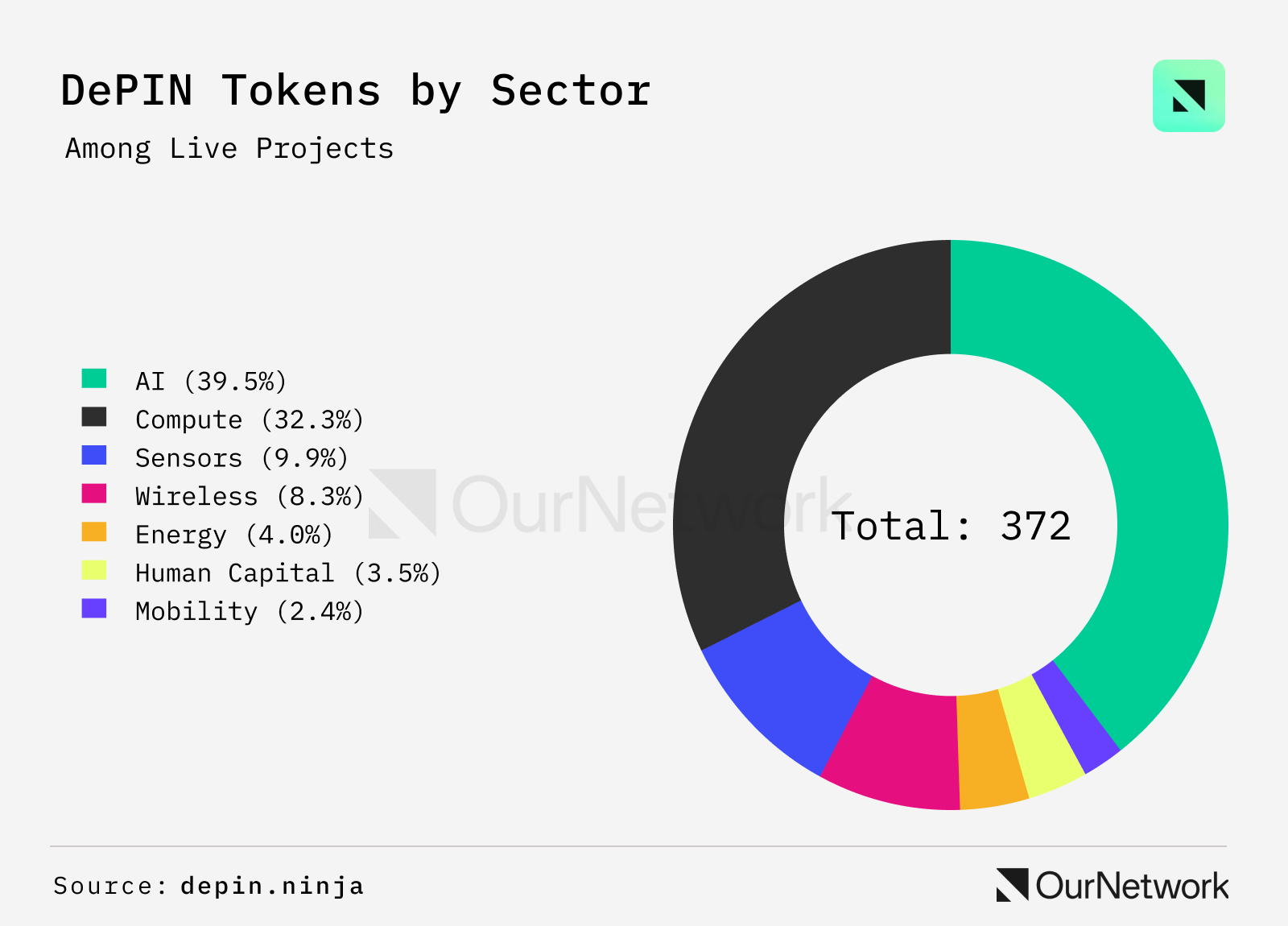
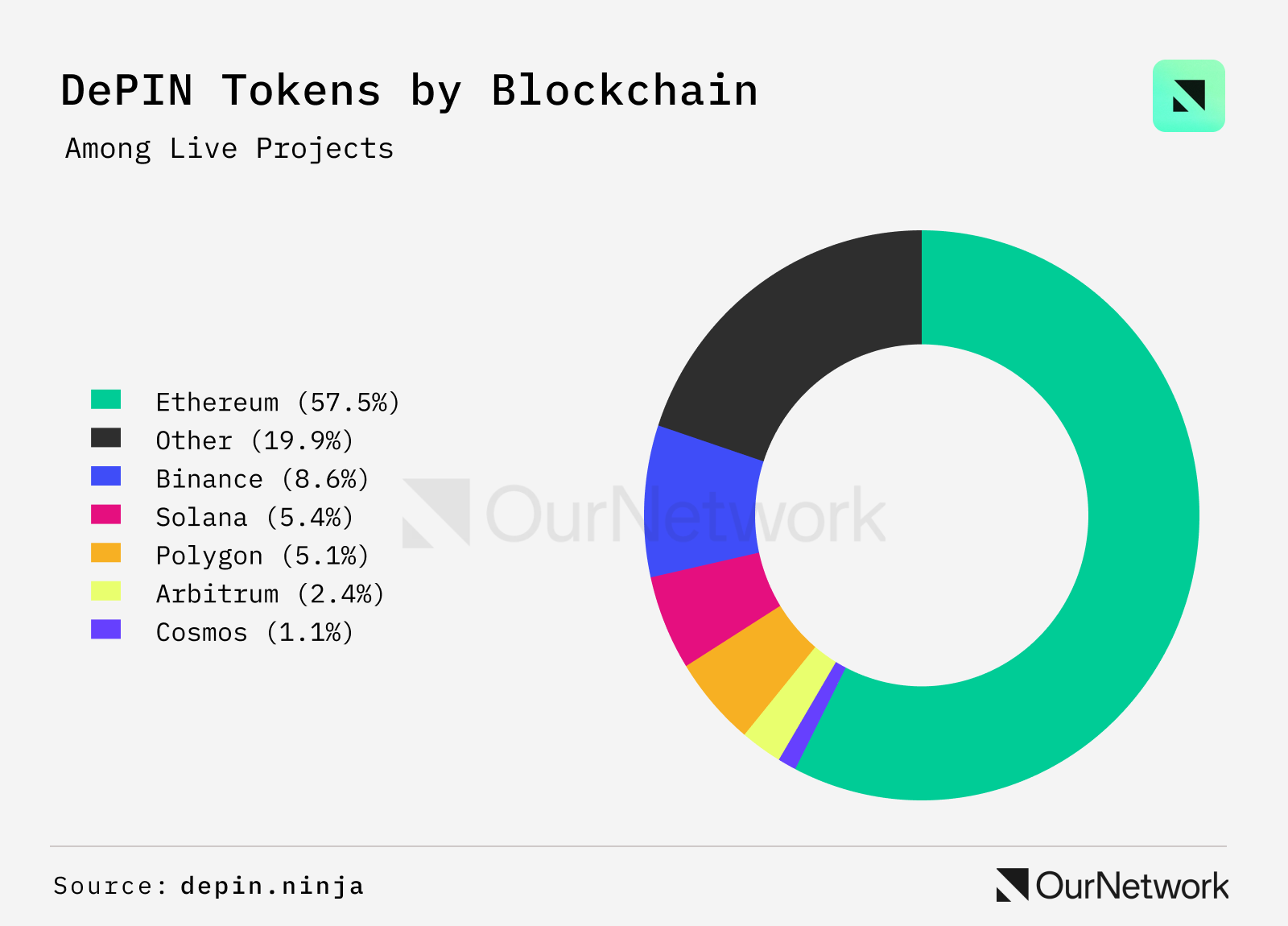
DePIN.ninja

  • 在八月份于纽约举行的年度 DePIN 峰会上,风险投资机构 EV3 对 117 位 DePIN 创始人和投资者进行了调查,询问他们对未来十二个月的预期——大多数人预计 DePIN 领域的链上收入将达到从 2000 万美元增长到 5000 万至 1 亿美元的年经常性收入(ARR)或更多,同时市场资本占比将在所有山寨币中从 8-10% 提高到 10-15%。
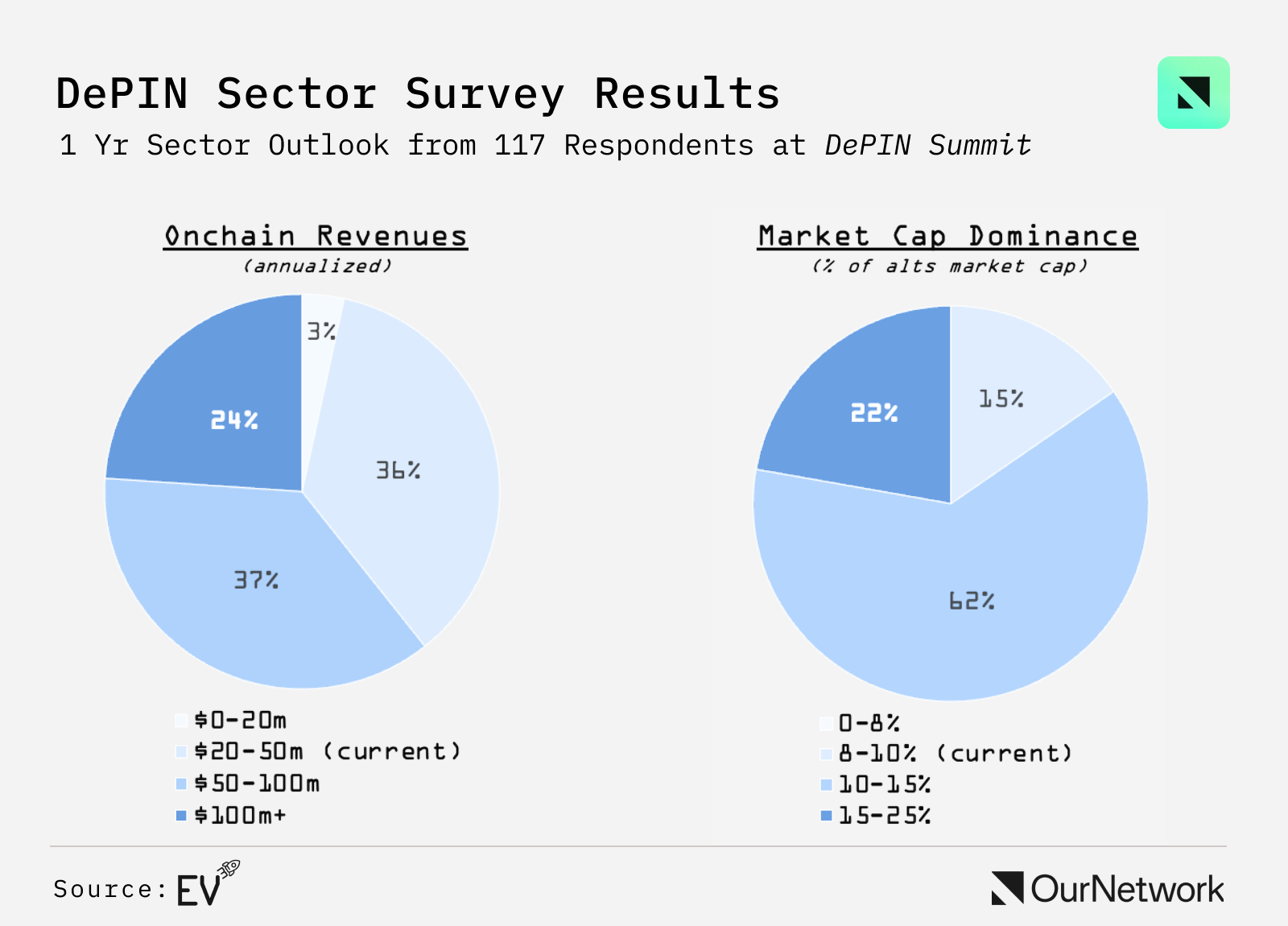
EV3 Ventures

  • DePINScan 跟踪全球超过 300 万个活跃的 DePIN 节点。具有显著规模的网络正向高吞吐量区块链发展:在十个活跃节点数量超过 10 万的 DePIN 中,有七个在 Solana 生态系统中构建(Helium、Natix、Hivemapper、Grass、Dawn、Uprock 和 Roam)。
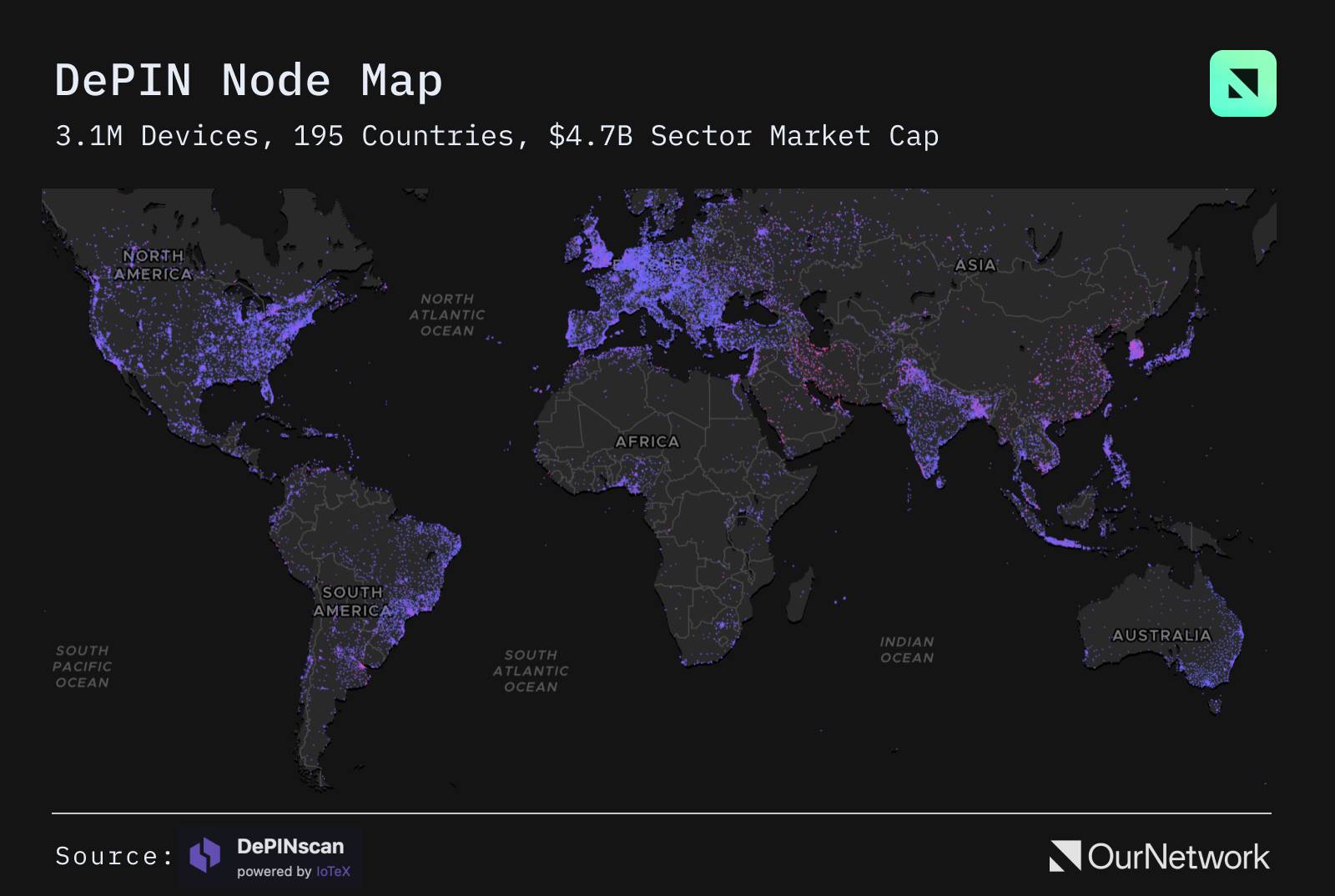
DePINscan

  • 交易亮点:用户在 9 月 3 日将 XNET(同名去中心化移动网络的代币)从 Polygon 桥接到 Solana,这是进行桥接的最后一天,可以以 1:1 的转换比例进行。从 9 月 4 日开始,桥接只能以 1:10 的比例进行,比之前降低了 90%。XNET 相应地将其最大供应上限从 240 亿减少到 24 亿,这意味着当前的完全稀释价值(FDV)为 4.5 亿美元,同时每天从电信合作伙伴转移超过 150GB 的流量卸载。

Helium

0xHonz | Website | Dashboard

Helium Mobile 获得 114,000 移动用户

  • Helium Mobile 是一种基于区块链的无线服务,允许用户创建和管理自己的移动网络,并赚取代币。该服务在 Helium 网络上运行,依赖社区拥有的热点提供覆盖,以生成代币,旨在为传统移动服务提供商提供一种经济实惠的替代。这项去中心化的移动服务在 9 月份获得了 114,000 名用户——这是自 Helium Mobile 于 2023 年 12 月推出以来的最高用户数。
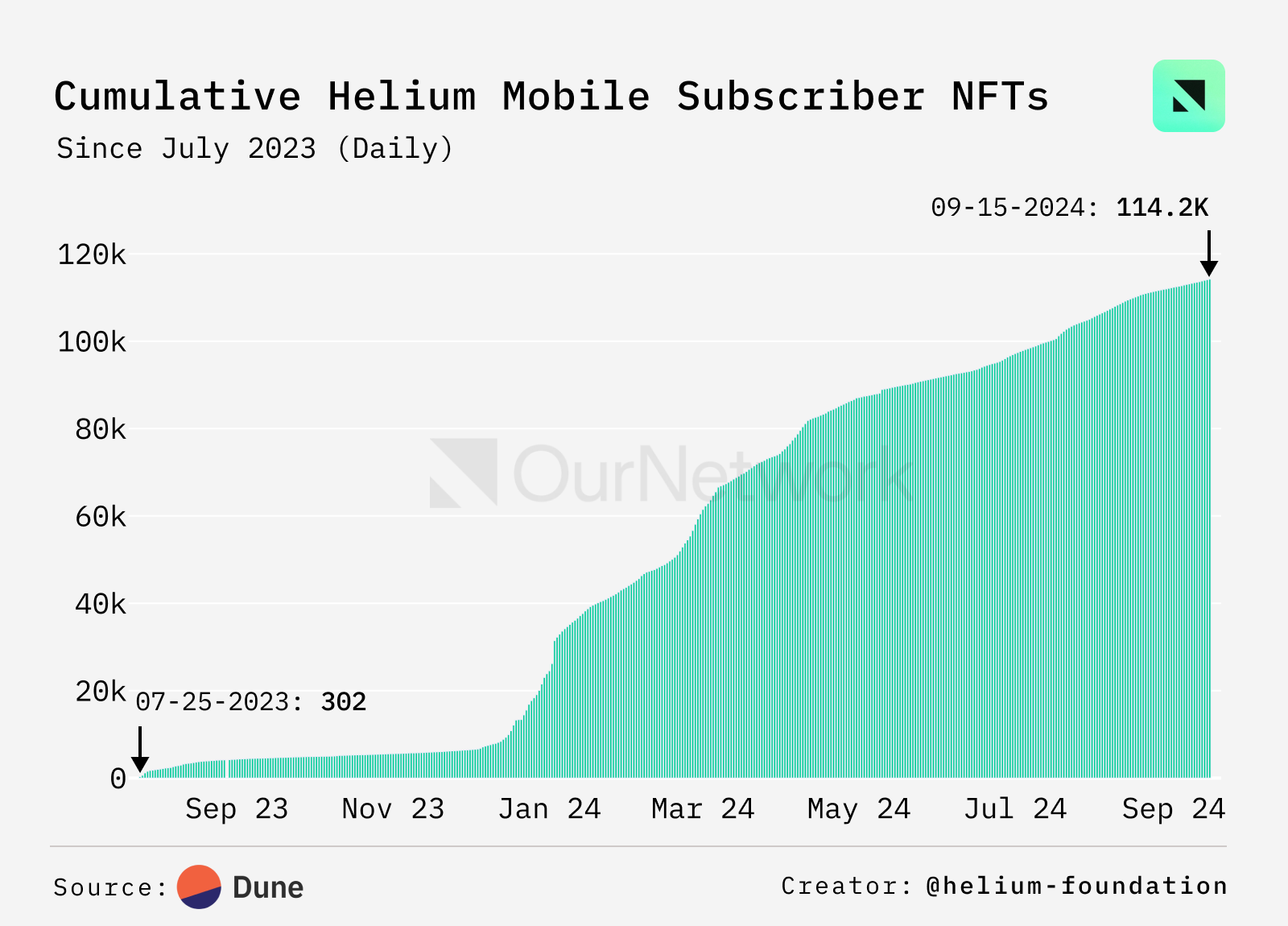
Dune Analytics - @helium-foundation

  • 这些图表显示了 Helium 的增长,每日卸载用户从 6 月的 1,179 达到 9 月的 73,954,平均每周增长 18,780。卸载数据从 0.06 TB 达到 32.29 TB,显示出用户在高峰期越来越依赖于 Helium 进行大量数据使用。
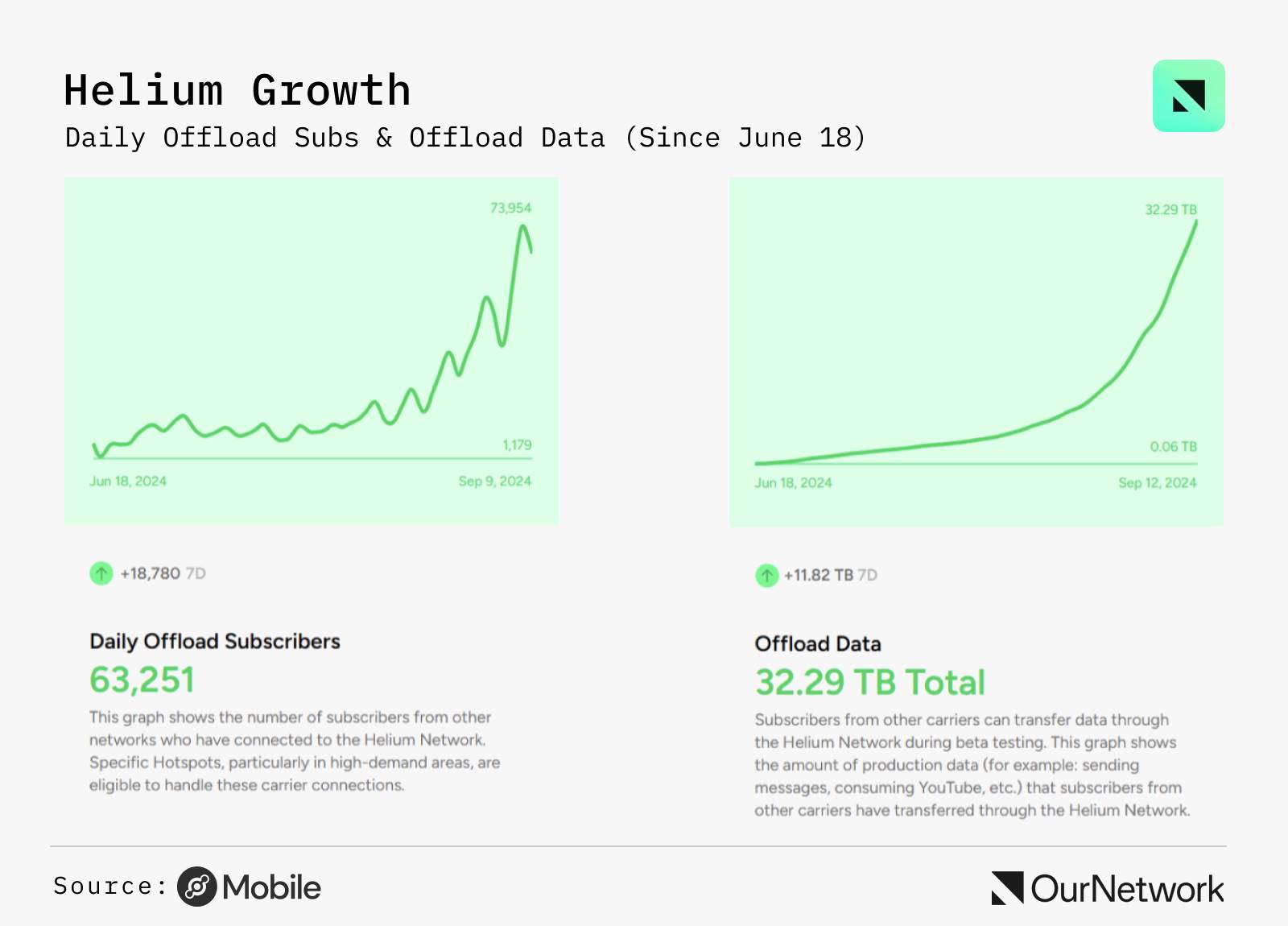
hellohelium.com

  • 数据信用 (DCs) 是使用网络服务(如数据传输)所必需的。组织通过燃烧 HNT(Helium 网络的原生代币)来获取 DCs,以提供用户连接。Helium Mobile 是排名第一的消耗者,在过去 24 小时内消耗了 2,939 美元,当前的燃烧速率下,余额可以支持 56.39 天。
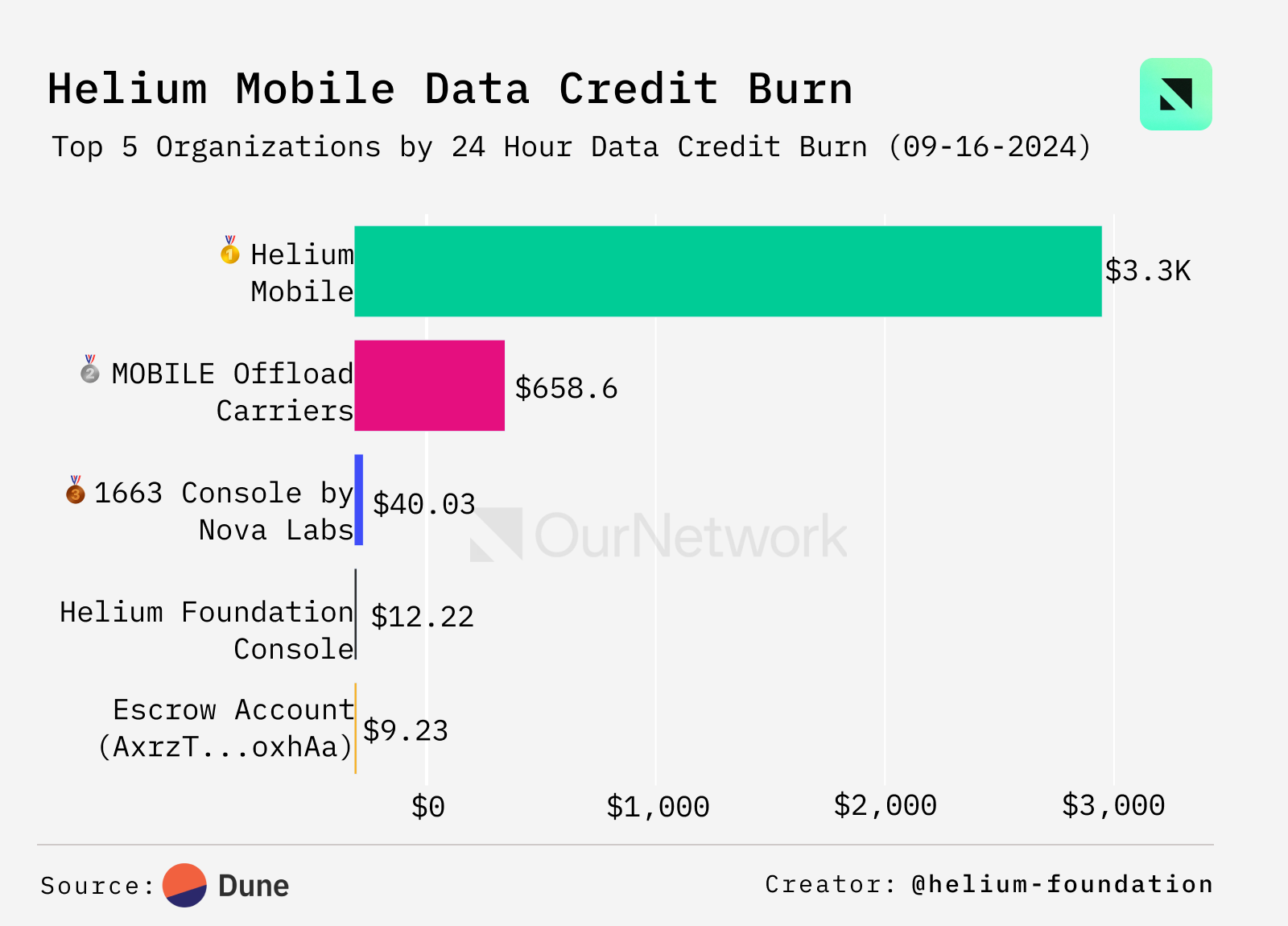
Dune - @helium-foundation

Glow

Dominic | Website | Dashboard

Glow 的收入现在超过了 Helium、Akash 和 Geodnet

  • Glow 是一个去中心化基础设施网络 (DePIN),旨在通过激励个人参与太阳能农场来促进太阳能。该项目的年度经常性收入为 160 万美元,排在老牌 DePIN 先锋 Filecoin 之后。
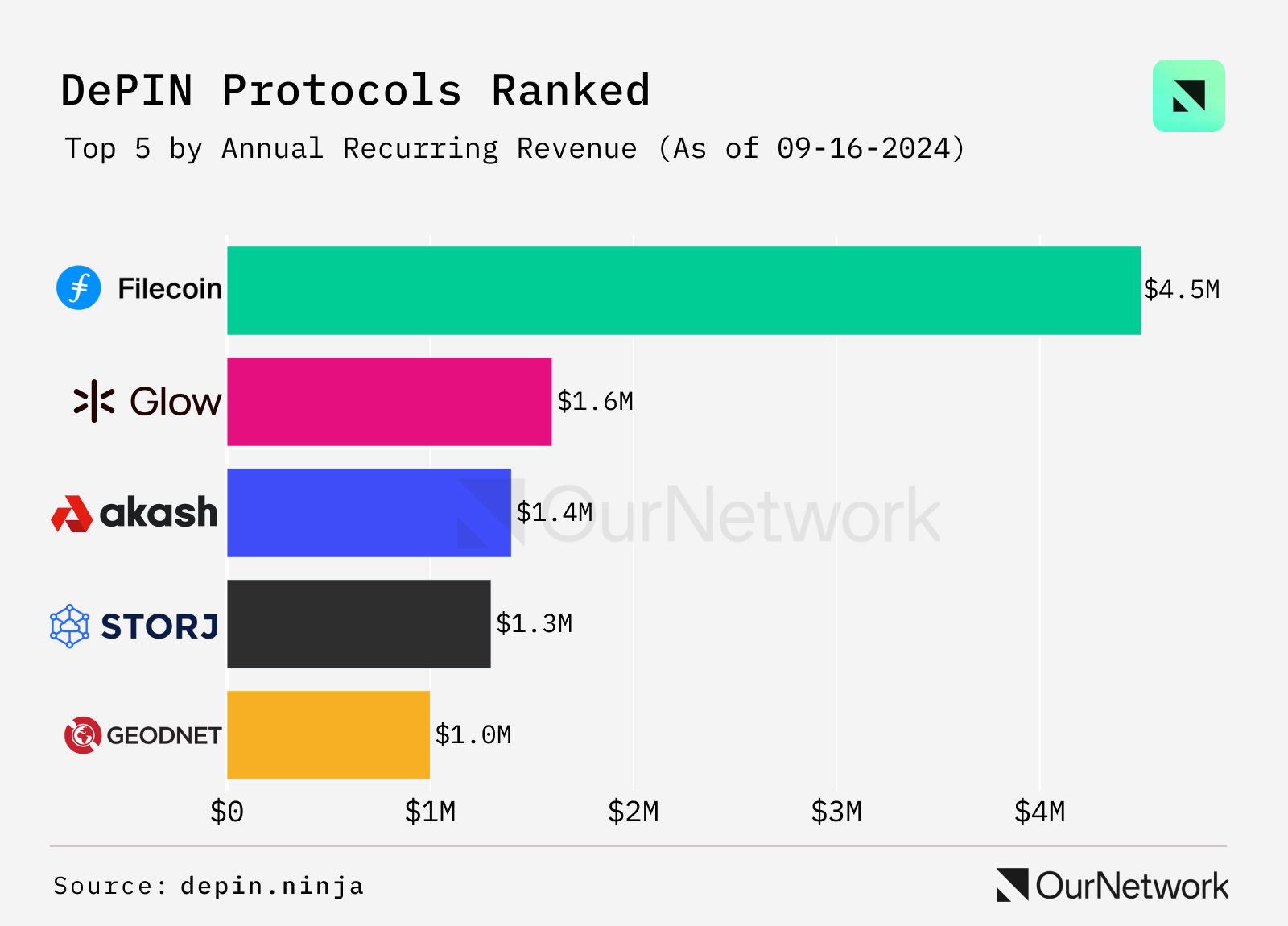
DePIN.ninja

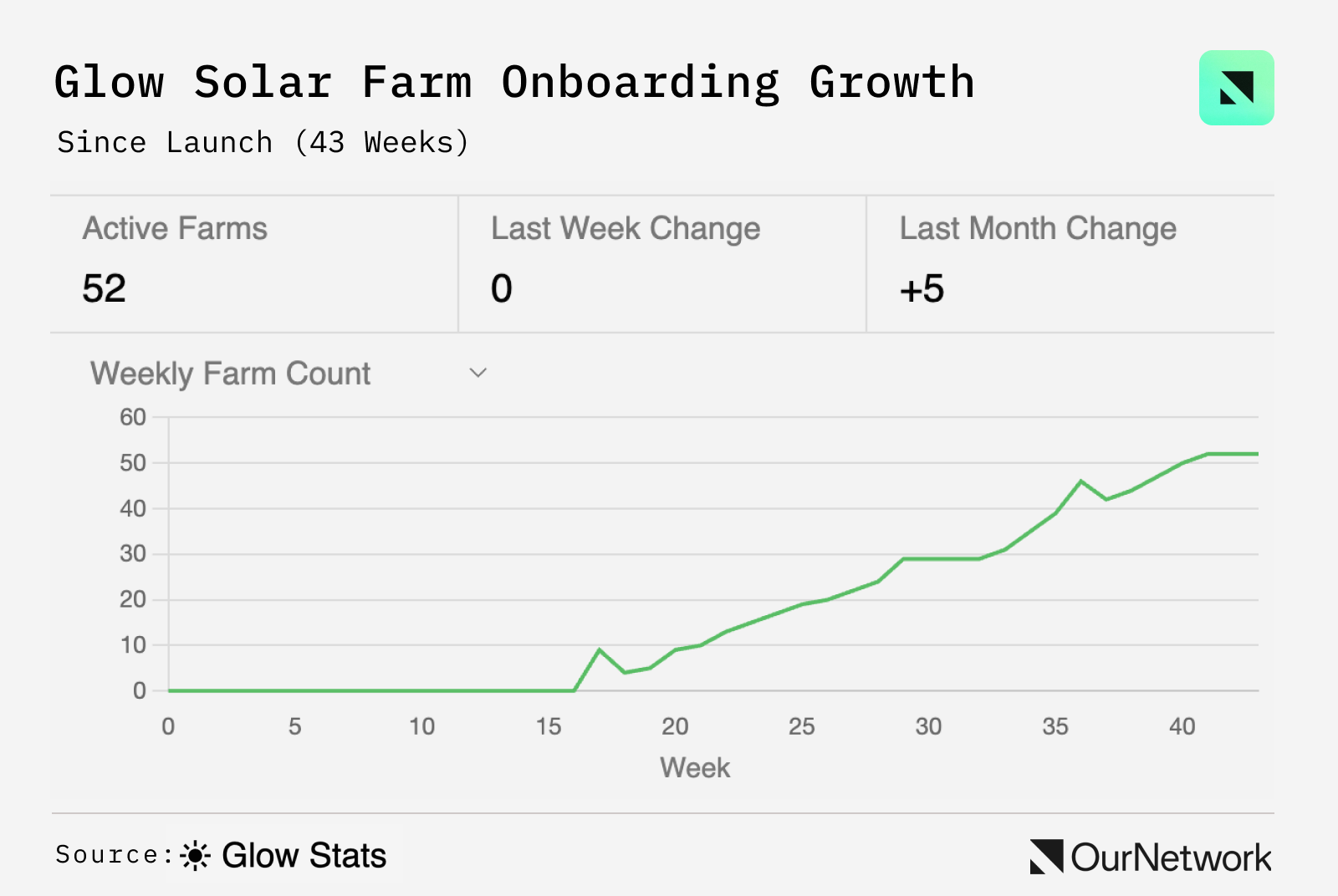
  • Glow 目前已在受控启动阶段加入了超过 50 个太阳能农场。

glowstats.xyz

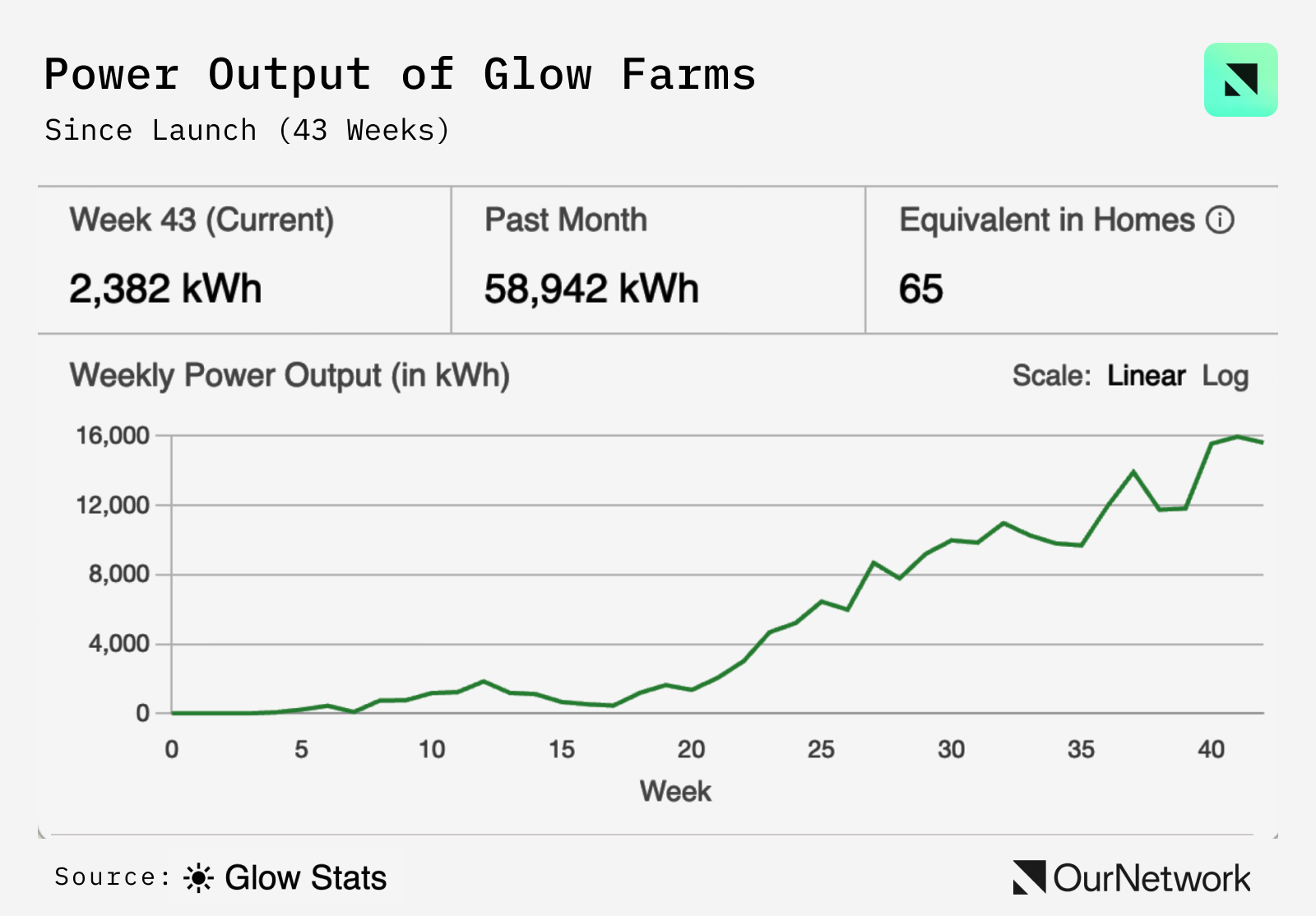
  • Glow 现在每月平均输出超过 15,000 千瓦时的电量。

glowstats.xyz

  • 交易亮点:Glow 一直在吸引机构投资,在 8 月份,第一个商业农场配备了 200 块太阳能板,并支付了 130,000 美元的协议费用。

Livepeer

Livepeer | Website | Dashboard

Livepeer AI 节点运营商在网络费用上经历了 1000% 以上的增长,由于 AI 计算能力的增加

  • Livepeer 是一个用于直播和点播流媒体的视频基础设施平台。它通过利用其庞大的 GPU 网络推出了 AI 视频计算能力,称为 Livepeer AI,并计划成为视频相关的 AI 计算领域的关键基础设施参与者。因此,过去几个月支付给 Livepeer AI 节点运营商的费用大幅增加。从 7 月 1 日到 9 月 16 日,以太坊 (ETH) 的费用增长了 1005%(10 倍),反映了网络 AI 计算能力使用的增加。
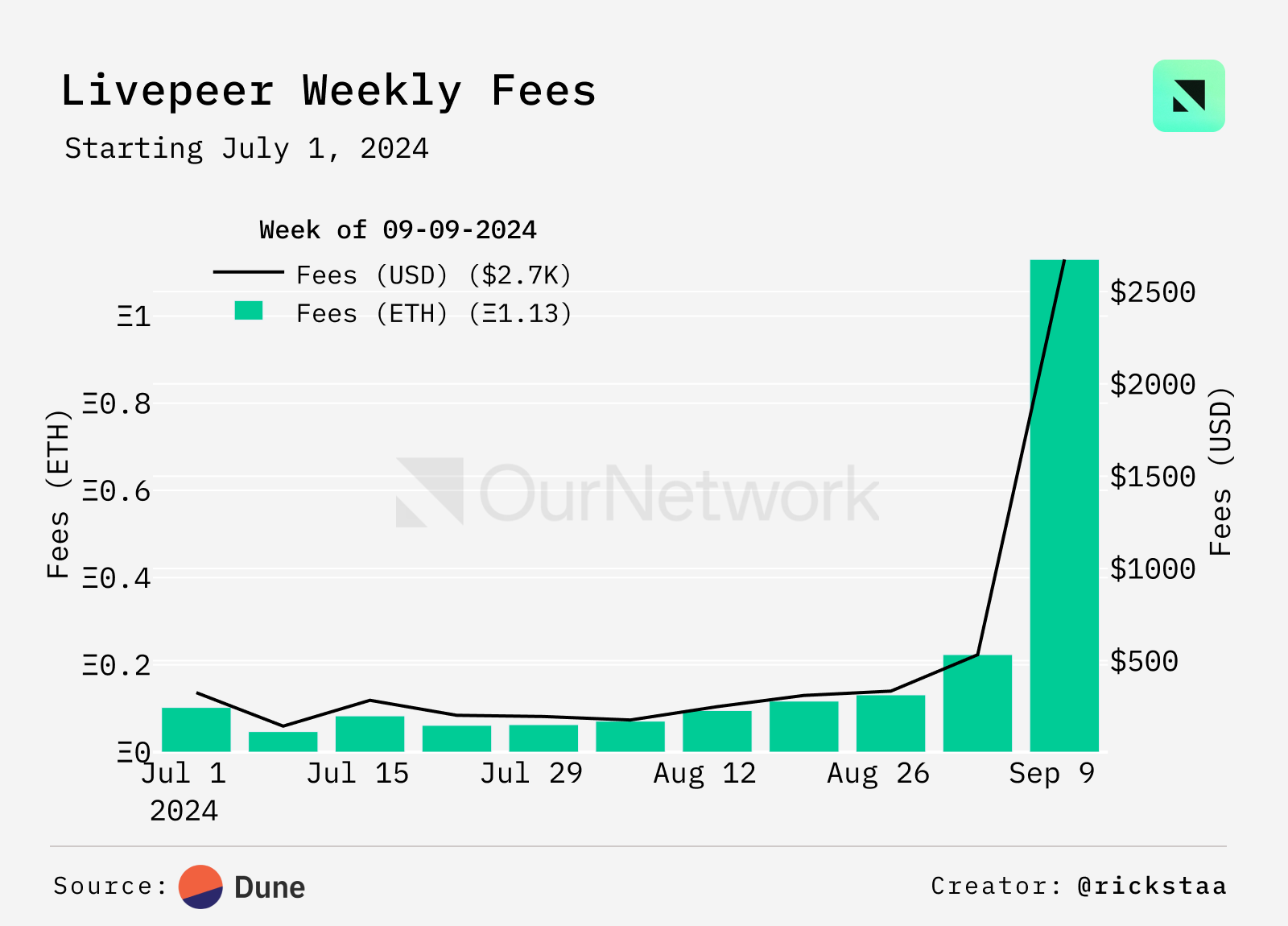
Dune - @rickstaa

  • 尽管在增长和基础设施项目(补助金、黑客马拉松、招聘)方面进行了多项投资活动,但财库 LPT 余额稳步增长,达到了 382,232 LPT 代币的历史新高,使社区能够将未来公共产品的资金用于 Livepeer 网络的扩展。
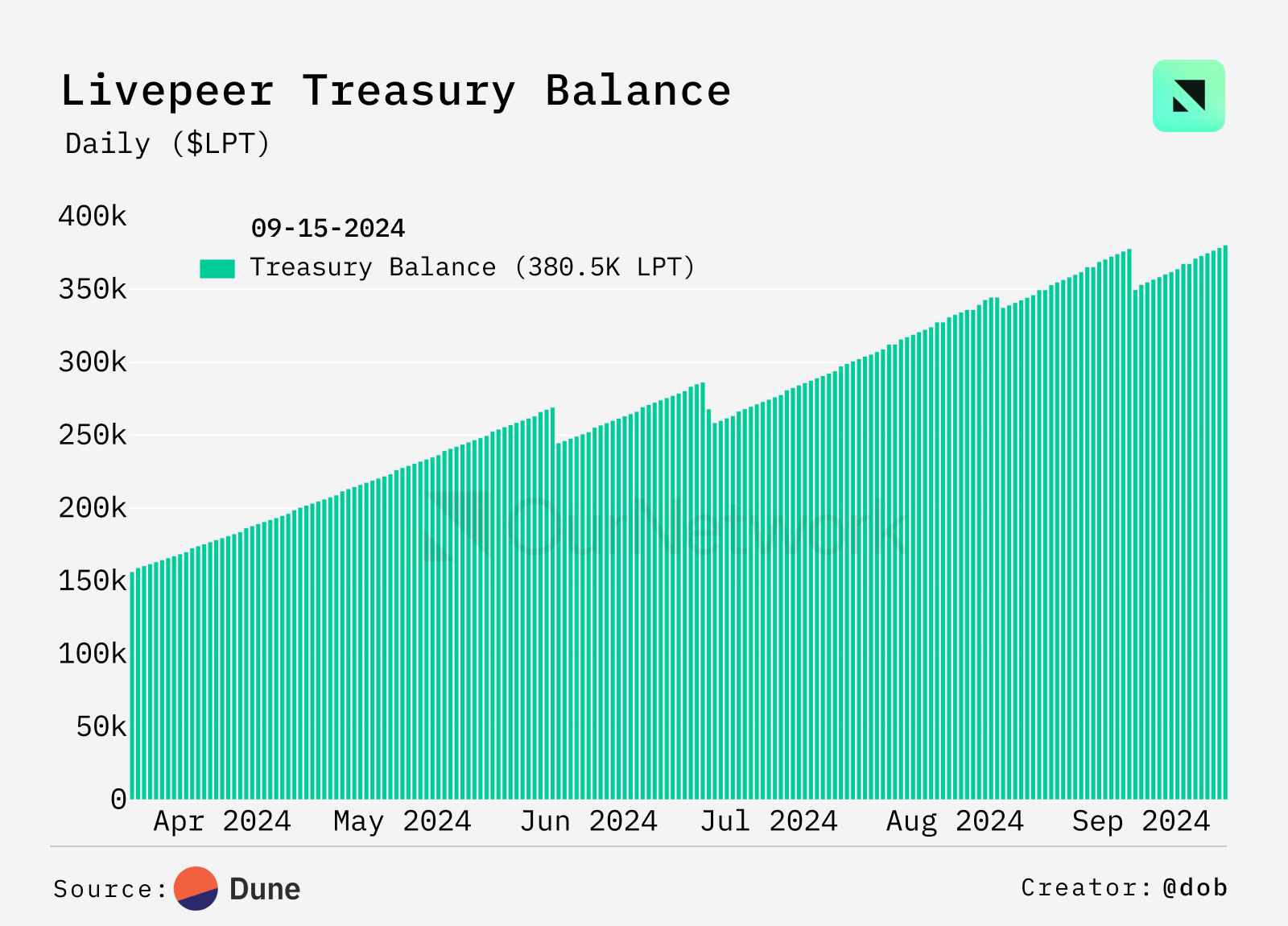
Dune - @dob

  • 网络的参与度稳步增加(从 3 月的 41.1% 增加到 9 月的 47.8%),这得益于相应的激励措施的增长,例如通货膨胀(指通过增加代币供应来激励参与),旨在鼓励更多用户参与。一旦参与度超过 50%,通货膨胀率将开始下降。
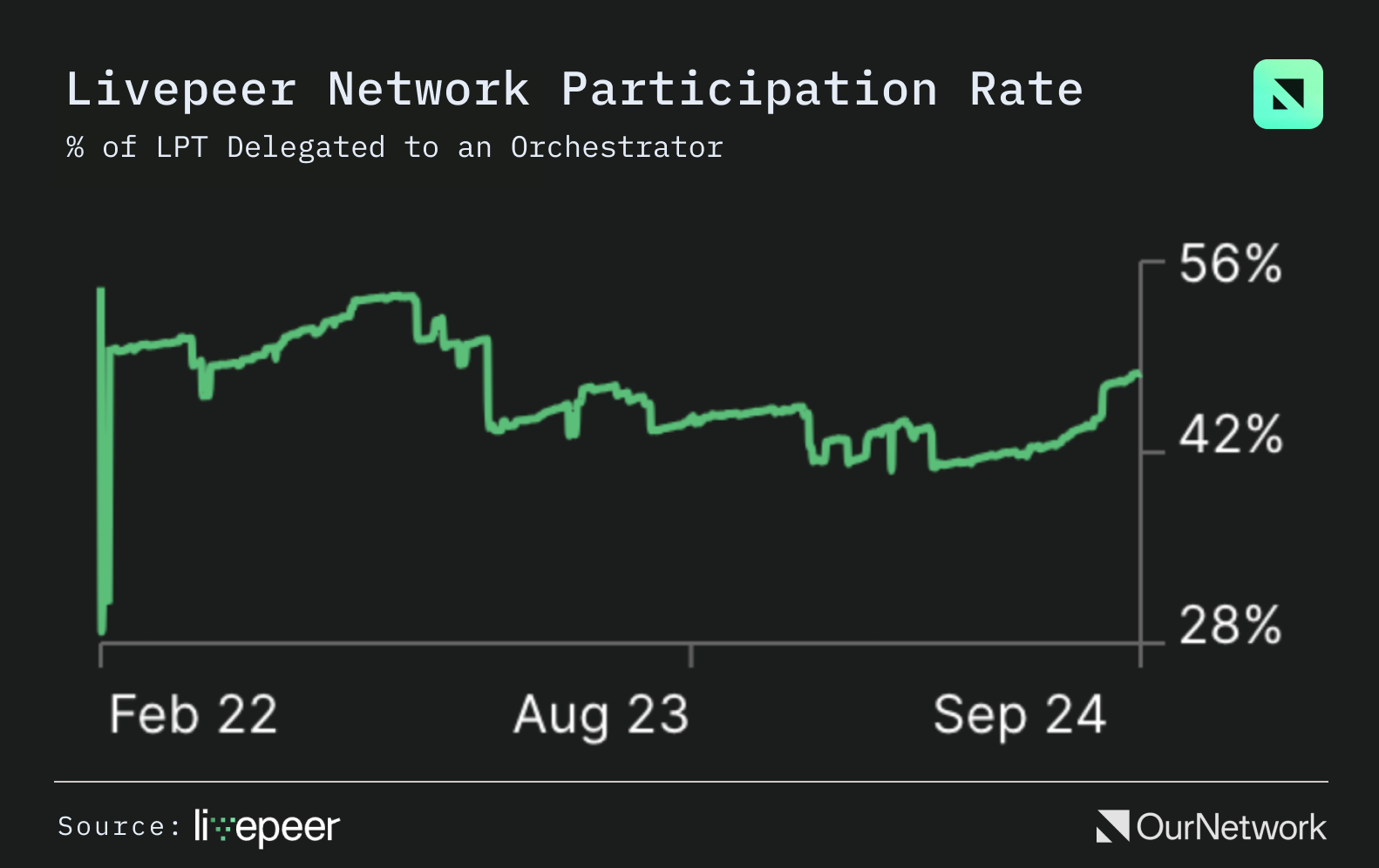
explorer.livepeer.org

  • 交易亮点:这笔交易展示了一张由 Flipguard Gateway 支付给其 AI 竞赛获奖者的奖金票。随着越来越多的网关像 Flipguard 一样利用 Livepeer 进行 AI 任务,而不是传统的转码,我们正在见证 AI 智能体无缝请求推理服务,并通过高效的微支付完成支付的崛起。这是一个有力的例子,展示了去中心化基础设施如何推动创新并解锁 AI 驱动应用的新可能性。

IoTeX

Aaron Basi | Website | Dashboard

IoTeX 达到 33 万全球用户

  • IoTeX 提供了一整套工具,用于创建完全去中心化、可组合和可互操作的 DePIN 项目。该项目提供了一系列灵活的内部 DePIN 基础设施模块(DIMs)和公共服务,以及由第三方提供商提供的模块,如 Filecoin、Risc0、NearDA 和 Espresso 等。IoTeX 在 120 个国家注册了超过 33 万全球用户。
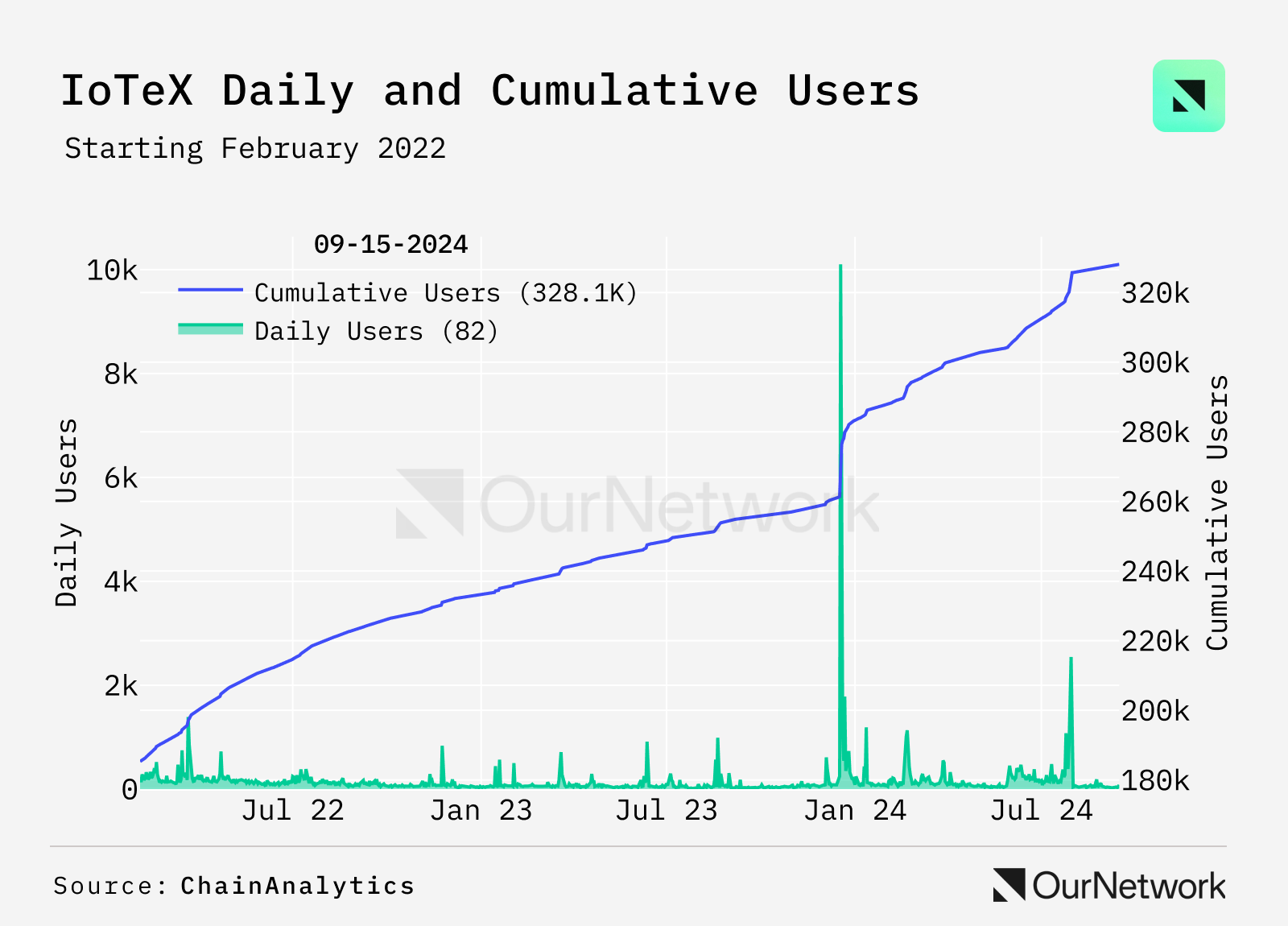
chainanalytics.org

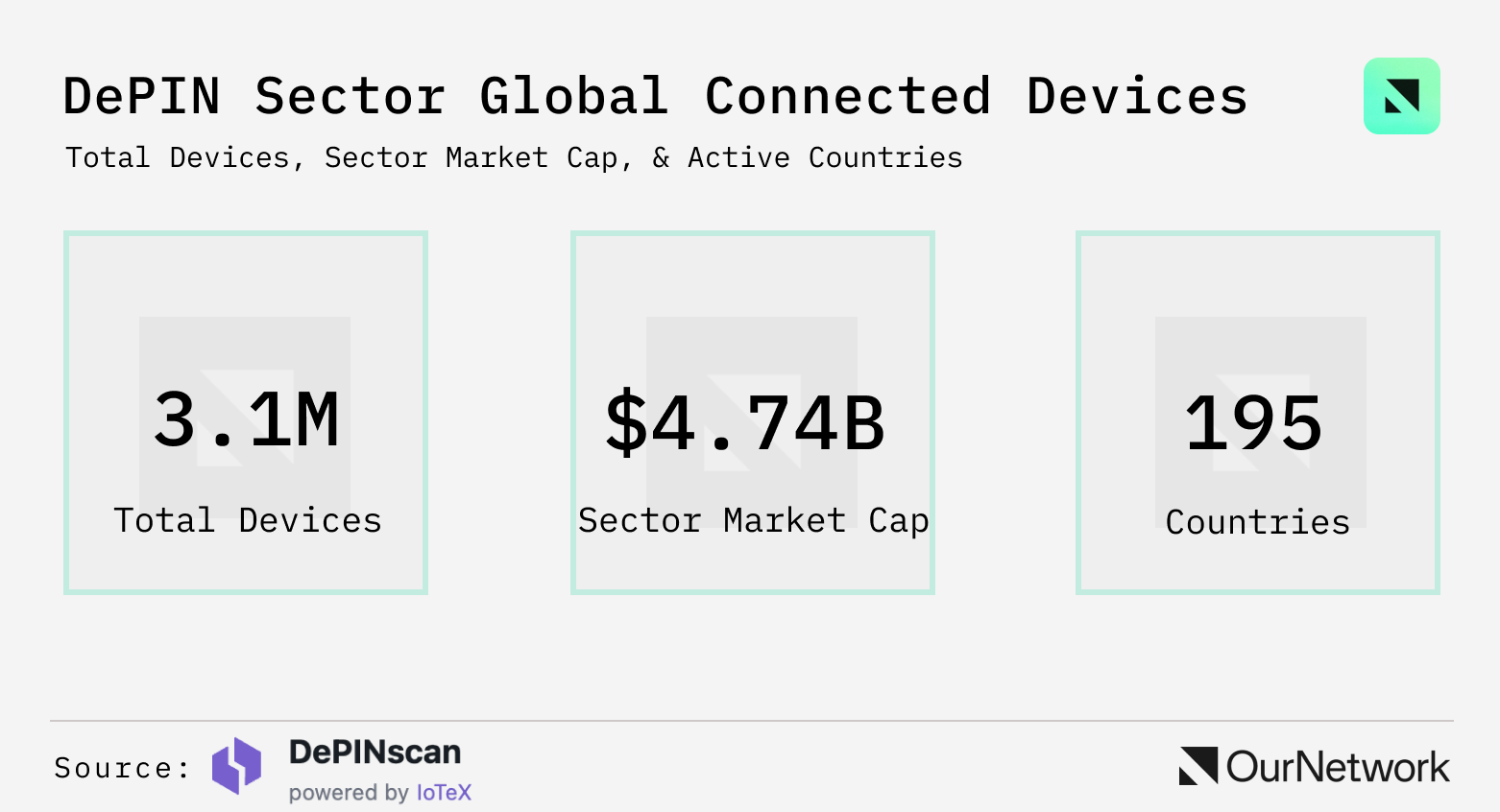
  • DePINscan 是由 IoTeX 构建的 DePIN 社区地图浏览器和仪表板,所有设备数据均由 IoTeX 提供的链外计算中间件处理。连接设备的数量从 6 月 8 日的 1,160,495 台增加到今天的 3,100,212 台,增加了超过两倍。
DePINscan.io/map-view

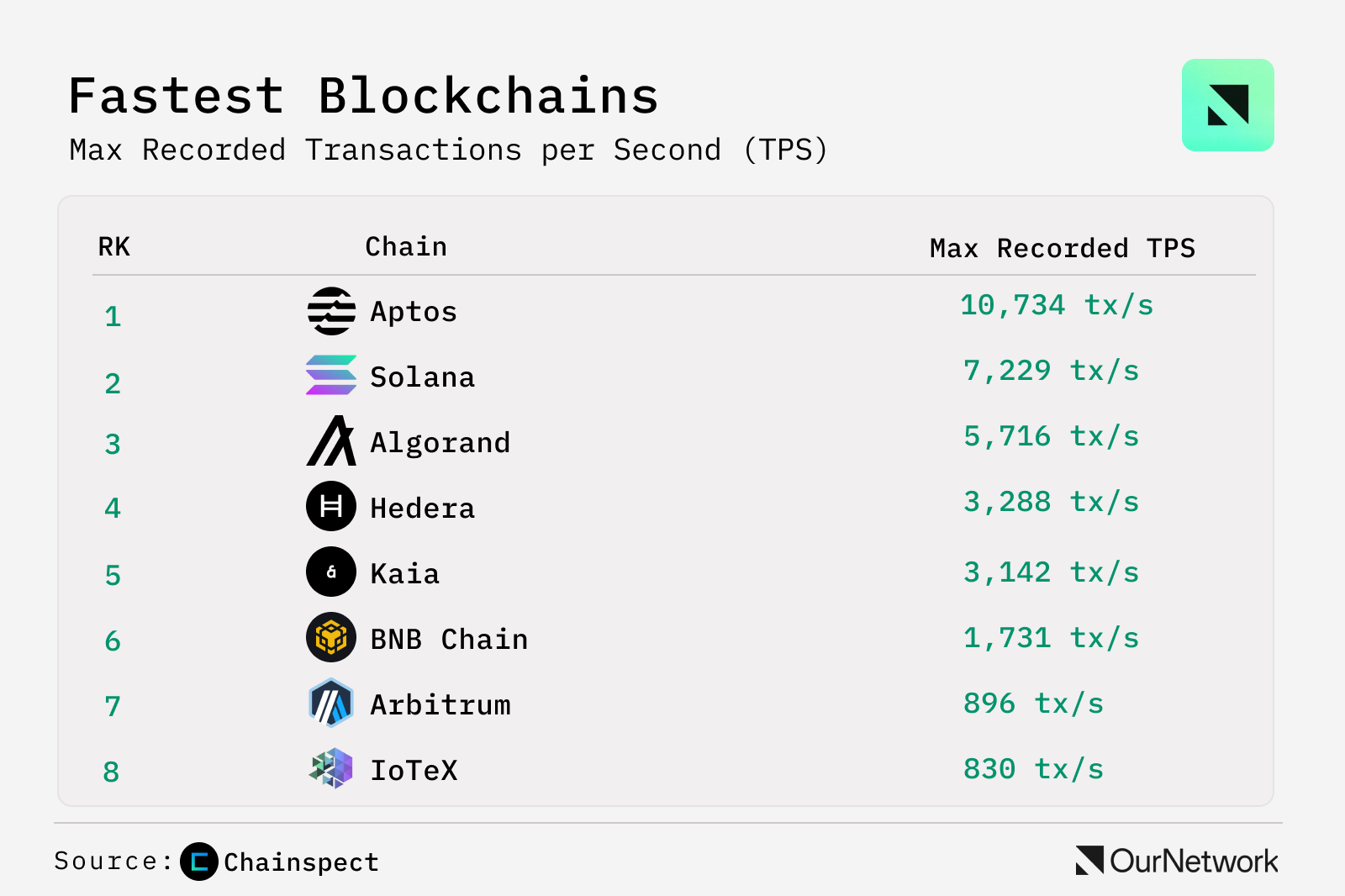
  • IoTeX 现在拥有世界上第八快的区块链网络,最高每秒交易数(TPS)为 830 笔交易。
chainspect.app

  • 交易亮点:这是一笔将 40,000 个 $WIFI(价值超过 7000 美元)添加到流动性挖矿合约的交易,这些资金会返还给为 mimo(IoTeX 的 DePIN 导向去中心化交易所)提供流动性的用户。这意味着 163% 的年化收益率(APR)。与 WiFi Map 等 DePIN 项目合作,IoTeX 刺激了 DePIN 代币的交易量,同时也提升了 IoTeX 网络的活动。其他 DePIN 项目如 Geodnet、ATOR 和 Drop Wireless 也提供类似的年化收益率。

TADA

Kay Woo | Website | Dashboard

MVL 的 TADA 吸引了超过 100,000 名司机

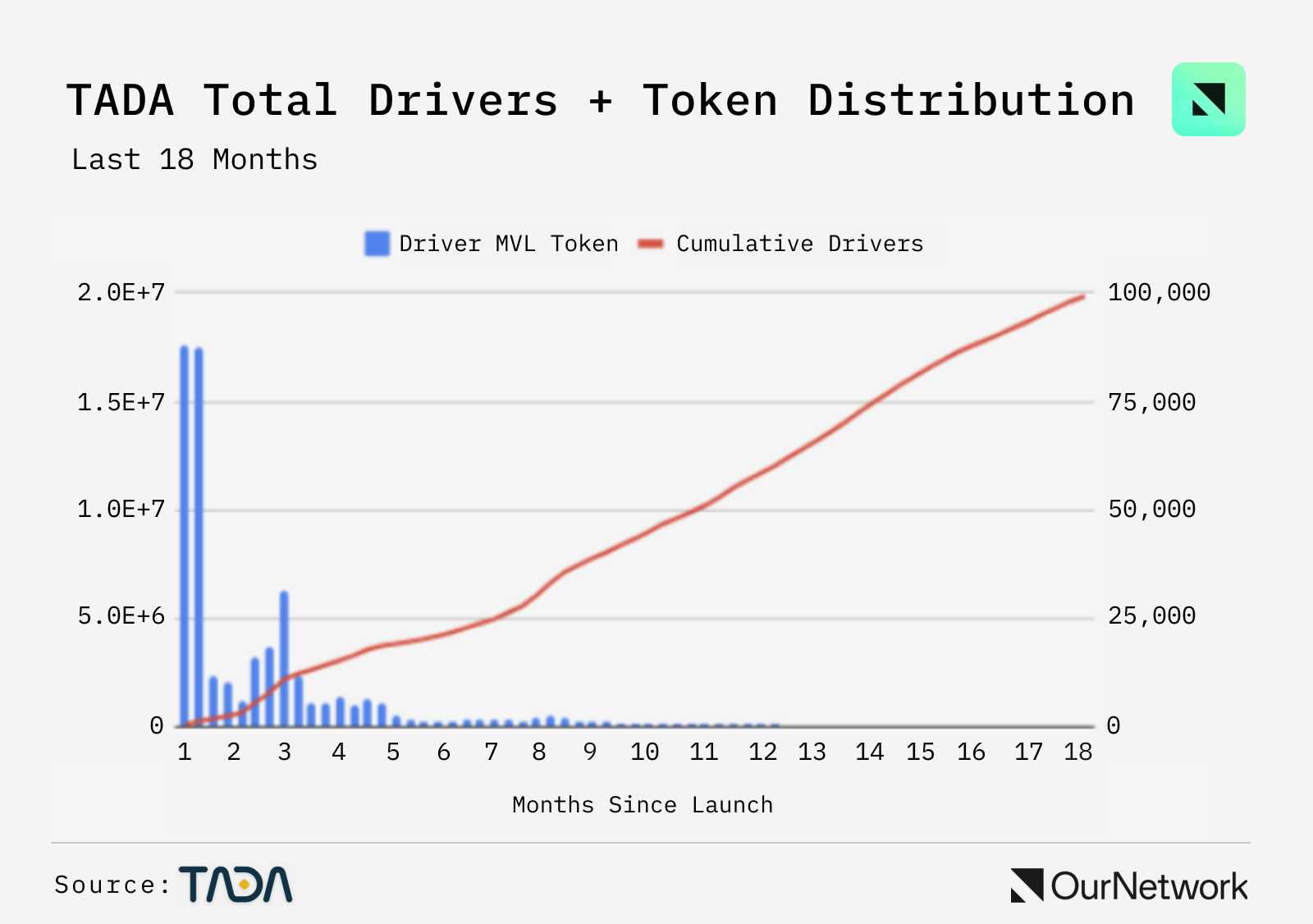
  • TADA 是一款主要在东南亚运营的打车应用程序。下图显示了 MVL(TADA 的母公司)给予早期 TADA 司机的代币激励如何利用代币激励解决冷启动问题并建立网络效应。在大约 18 个月的时间里,尽管乘客的行程不多,该项目成功建立并保持了稳定的司机网络。
Tada (internal)

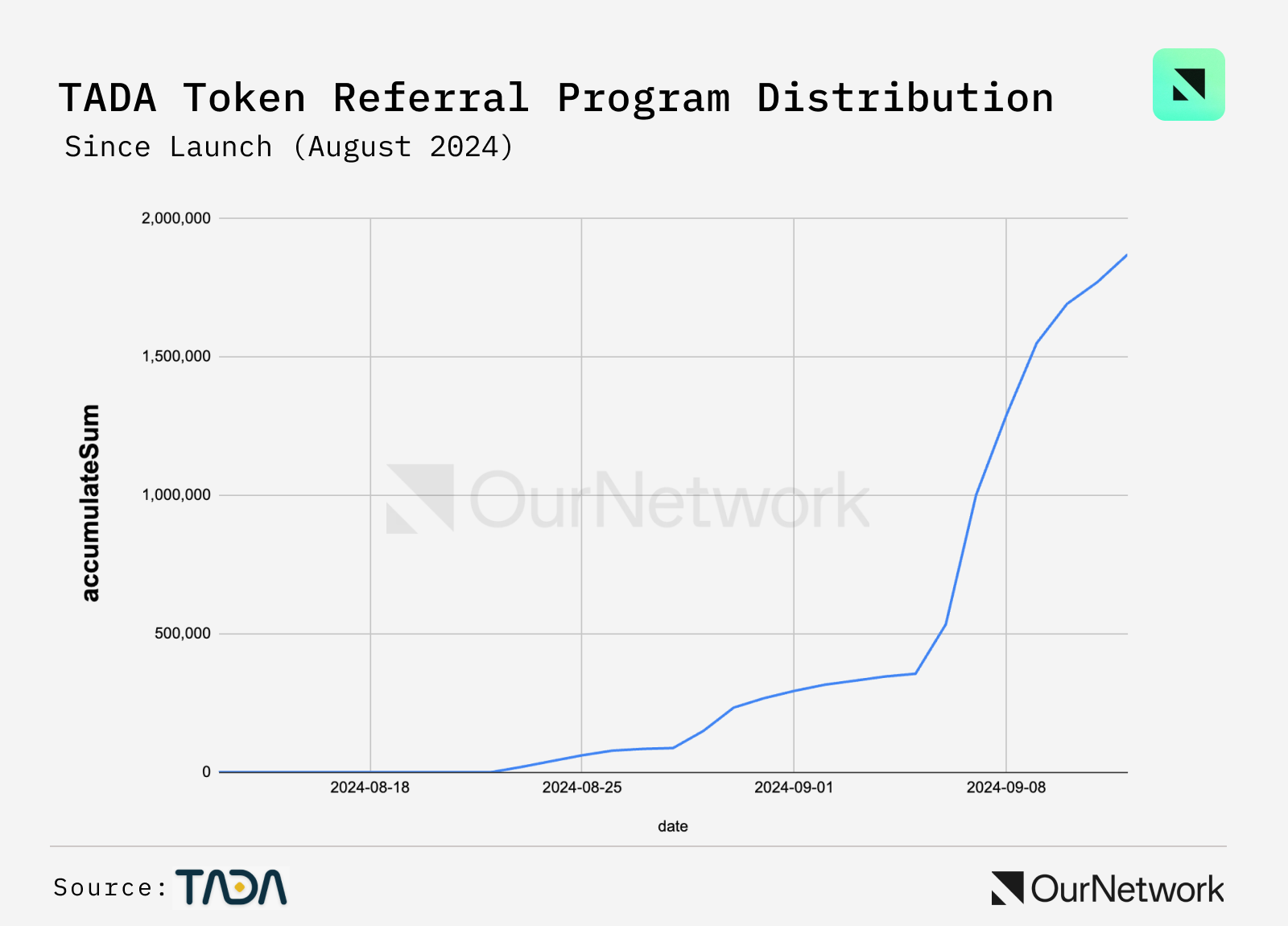
  • 与 TADA 网络连接的 TADA mini 是一款应用程序,允许用户通过 Telegram 直接无缝预订打车服务,无需额外的应用程序或复杂的身份验证流程。应用于 TADA Mini 的代币推荐计划再次证明了代币经济学在网络启动中的高效性。
Tada (internal)

Related Reads

Metrics Ventures Market Watch: The Brewing Storm

In the past month, the market has been actively trading contrasting expectations, balancing global supply chain disruptions fueling re-inflation against both actual and anticipated (Walsh) interest rate hikes. This volatility has impacted commodities and most equities, though tech has temporarily benefited from concentrated short-term liquidity. Fundamentally, as previously analyzed regarding the Strait of Hormuz situation, the US faces deep-seated balance sheet issues beyond what any single Fed chair can resolve. Hypotheses around a figure like Walsh could only materialize if AI fundamentally reshapes production relations. Until then, most non-AI-leading nations (effectively all except the US and China) risk fiscal and monetary policy collapse, rendering the identity of the Fed chair ultimately irrelevant. For crypto assets, there is currently no clear role in these dominant narratives. The market remains strongly capped by the 200-day moving average. While trends may shift from "anything but AI" to "anything but mines," this phase is dominated by the silicon vs. carbon (AI vs. traditional) dichotomy, leaving little room for crypto—though its time will come. **Market Overview & Commentary** The crypto market lacks significant catalysts beyond hype, plagued by low volume and scarce innovation, with clear technical resistance. Currently, crypto struggles for attention as global focus lies elsewhere. Assets like gold, oil, and grains are more direct hedges against supply-chain-driven inflation/stagflation. Bitcoin needs more time for capitulation and consolidation; this reset is expected to last until at least Q4 2026. Looking ahead, three factors will likely drive future market volatility: 1. Whether Walsh repeats the patterns of predecessors like Bassant or Musk, shifting stance into a new policy cycle. 2. The market underestimates the severity of global supply chain damage and the prolonged time needed for repair, which will eventually lead to recognition of acute resource shortages and price swings. 3. AI non-beneficiary, high-inflation nations (e.g., UK, Japan) will face severe fiscal and monetary crises. Rapid AI-driven displacement could trigger a collapse of existing credit and welfare systems. Ultimately, the market may realize that an AI bubble burst could spark contagious sovereign credit crises. The monetary and fiscal responses to such a scenario could serve as the ultimate catalyst for Bitcoin's next major bull run.

marsbit27m ago

Metrics Ventures Market Watch: The Brewing Storm

marsbit27m ago

Insiders Betting on Musk Are Reaping 'Historic Returns'

The largest IPO in history is imminent as SpaceX, led by Elon Musk, is set to price its offering on June 12. At a targeted valuation near $2 trillion, this event will mint new billionaires from Musk's inner circle of long-time allies, rewarding their loyalty with unprecedented returns. Key beneficiaries include Antonio Gracias, Musk's close friend and confidant, who holds a 7.3% stake potentially worth over $140 billion, making him the second-largest individual shareholder. Gwynne Shotwell, President and COO since 2002, holds shares valued at roughly $2 billion. Bret Johnsen, the CFO, holds stock worth approximately $1.4 billion. Luke Nosek, a PayPal co-founder and early investor, stands to gain about $5.3 billion. The IPO filing also reveals complex and controversial financial arrangements. SpaceX has guaranteed nearly $20 billion in payments from xAI's subsidiary to Gracias's Valor Equity Partners for AI hardware leases—deals auditors flagged as "failed sale-leaseback" transactions, forcing SpaceX to record them as debt. Despite rapid revenue growth, SpaceX is not profitable, posting a $49 billion loss in 2025 and a $4.3 billion loss in Q1 2026. Capital expenditures are soaring, with over 60% directed toward AI. Public investors will inherit these losses, significant debts, and a governance structure heavily controlled by insiders, including a provision granting Musk up to a billion additional shares if one million people live on Mars.

链捕手29m ago

Insiders Betting on Musk Are Reaping 'Historic Returns'

链捕手29m ago

Ethereum Reduced to a Chinese Concept Stock

The article titled "Ethereum Becomes a Chinese Concept Stock" presents a critical analysis of Ethereum's perceived decline in market confidence and its structural parallels to Chinese companies listed on US stock exchanges. It begins by noting significant sell-offs by early investors like Wanxiang and key figures like Bankless's Hoffman in 2026, despite Ethereum's strong fundamental activity. The piece questions the erosion of trust in Vitalik Buterin and the Ethereum Foundation (EF), arguing that while other ecosystems have faced founder controversies, Ethereum's issues stem from its internal governance model. The author draws a direct comparison to "China concept stocks," which are Chinese businesses operating globally but reliant on foreign capital and listings. Similarly, Ethereum, funded early by Chinese capital like Wanxiang, developed a strong institutional framework from its IXO to its PoS transition. The core problem, according to the article, is a leadership vacuum regarding price and direction. Vitalik's move to make the EF smaller and less active is framed as a mistake. While he advocates for ETH as a "commodity," the ecosystem lacks a clear entity to steward its price stability, creating tension within the PoS system, as seen with Lido's challenges. The narrative suggests that excessive abstraction and a hands-off approach from the EF have left the community adrift, contrasting with more proactive foundations like Solana's. The article then examines emerging technical narratives for Ethereum: privacy (ZK-proofs), AI integration, and a refocus on Layer-1. However, it observes a shift from Ethereum leading as a "world computer" to merely adapting to trends like AI, where crypto-native projects are finding success independently of Ethereum. The piece posits that Ethereum's unique value in an increasingly fragmented world may be as a permissionless, global financial testing ground—a neutral platform amid geopolitical tensions. In conclusion, it asserts that Ethereum's fate mirrors that of China concept stocks: an asset born from one region (conceptually "A"), funded by another ("B"), and dependent on "B" for exit liquidity. While Ethereum's "golden age" may be over, and selling pressure from early backers will continue, it remains positioned as a critical linkage point in a divided global landscape, standing at a new, albeit uncertain, starting point.

marsbit53m ago

Ethereum Reduced to a Chinese Concept Stock

marsbit53m ago

AI Agents Fundamentally Transform Web3 Gaming: From the Rugpull Bakery Bot Controversy to the New Agent Paradigm in 2026

AI Agents Are Redefining Web3 Gaming: From the Rugpull Bakery Bot Controversy to the 2026 Agentic Paradigm The recent controversy in Rugpull Bakery, a competitive baking game on Abstract chain, highlighted a pivotal shift. Player complaints about unfair bot automation in Season 2 led developers to not ban them, but instead formally integrate AI agents as core gameplay in Season 3, providing official guides (skill.md, agent.json). This move signals Web3 gaming's transition into the "Agentic Gaming" era, where AI agents are sovereign entities with independent strategy and economic rights, moving beyond simple automation. By 2026, AI agent integration has evolved into three core models reshaping the ecosystem: 1. **Autonomous Competitors & Economic Entities:** Agents act as independent players. Examples include TEN Protocol's poker-playing agents, AI Arena's trainable NFT fighters, Satoshi Strike Force's "Digital Athletes" trained on player data, and Somnia's "Agentic L1" blockchain providing native infrastructure for millions of autonomous agents. 2. **Modular Infrastructure & Programmable Environments:** Games like EVE Frontier enable "server-side modding," allowing AI agents to program game world logic directly into structures like smart storage, turrets, and stargates via Smart Assemblies. Coupled with standards like ERC-8183, which enables autonomous job creation and payment between agents, in-game infrastructure gains a "commercial soul." 3. **Hybrid Companions & Dynamic Adaptive Worlds:** This model focuses on human-AI collaboration. In Parallel Colony, players guide highly autonomous AI Avatars with unique personalities and goals. Illuvium plans to use AI to transform NPCs into dynamic, context-aware entities that create personalized, emergent narratives. The conclusion is clear: blocking automation is futile. The future lies in leveraging blockchain's transparency and programmability to empower AI agents as first-class citizens. Web3 gaming is shifting from inefficient human labor to efficient algorithmic interplay and emergent intelligence, creating a "post-human" digital frontier where players become commanders and symbiotic partners in a new socioeconomic experiment.

marsbit53m ago

AI Agents Fundamentally Transform Web3 Gaming: From the Rugpull Bakery Bot Controversy to the New Agent Paradigm in 2026

marsbit53m ago

Trading

Spot
Futures

Hot Articles

Discussions

Welcome to the HTX Community. Here, you can stay informed about the latest platform developments and gain access to professional market insights. Users' opinions on the price of AI (AI) are presented below.

活动图片