Разработчики кошельков Ledger и Exodus запустят агрегатор свопов XO Swap

investing.ruPublished on 2024-09-16Last updated on 2024-09-16

GetBlock Magazine - Что произошло? Производитель аппаратных криптокошельков Ledger начал сотрудничать с поставщиком программных криптокошельков Exodus для разработки агрегатора свопов под названием XO Swap.

Материал The Block

Что еще известно? XO Swap будет интегрирована в приложение Ledger Live и упростит подключение к сторонним поставщикам биржевых API-интерфейсов, что позволит осуществлять свопы по тысячам торговых криптовалютных пар напрямую с некастодиальных кошельков пользователей.

Своп — это ончейн-операция, которая проводится между двумя пользователями с целью конвертации активов в другие токены.

«Эта интеграция ставит во главу угла контроль пользователей и безопасность, что отличает ее от централизованных платформ обмена», — говорится в пресс-релизе.
Транзакции XO Swap будут агрегироваться с помощью нескольких сторонних торговых платформ, доставляя активы непосредственно в кошелек пользователей Ledger. Сначала XO Swap будет запущен как десктоп-версия, позже выйдут приложения для мобильных.

В июле Exodus запустила продукт Passkeys Wallet для новичков в криптопространстве. Он позволяет работать в различных децентрализованных приложениях (DApps) без необходимости создавать разные кошельки для каждого.

9 мая Exodus вышла на американские фондовые биржи NYSE и AMEX под тикером EXOD. Акции торгуются по $14,5, за сутки прибавив 1,97%. При этом за месяц стоимость ценных бумаг упала на 13%. Во II квартале убытки компании составили почти 10 млн долларов, тогда как в аналогичном периоде прошлого года прибыль приблизилась к отметке 2 млн.

В октябре прошлого года Ledger запустила подвергнутую критике функцию восстановления закрытых ключей и открыла ее исходный код. Ledger Recover позволяет передать части seed-фразы на хранение третьим сторонам и может быть активирована по желанию пользователя. Гендиректор Паскаль Готье заявлял, что Ledger будет передавать seed-фразы клиентов властям при наличии запроса суда, если дела будут «серьезными».

В декабре хакеры атаковали DApps с помощью уязвимости кода инструмента Ledger Connect. Позднее эта уязвимость была устранена. В том же месяце в Ledger Live была обнаружена функция отслеживания данных. Разработчик под ником REKTBuildr заявил, что ПО активирует проверку подлинности при взаимодействии с установленными приложениями, что не позволяет анонимно использовать устройство.

В феврале текущего года Ledger интегрировался с ведущей американской централизованной криптобиржей (CEX) Coinbase (NASDAQ:COIN), что позволило пользователям кошелька покупать криптовалюты через сервис Coinbase Pay без дополнительных комиссий.

Читайте оригинальную статью на сайте GetBlock Magazine

Trending Cryptos

Related Reads

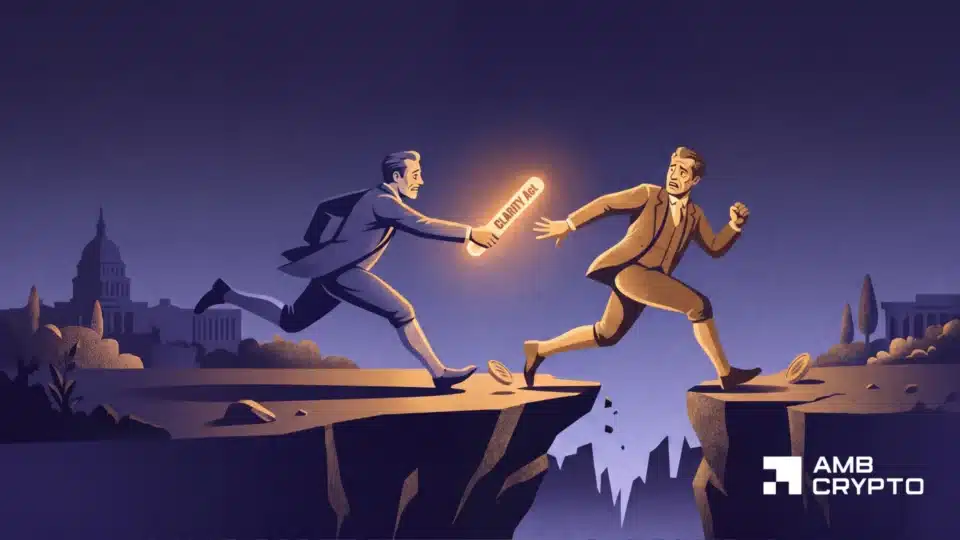
Tiger Research: Zuckerberg Begins Betting on Prediction Markets, While Asian Nations Still View Them as Gambling

This article examines the rise of prediction markets, contrasting their growing institutional acceptance in the West with their restrictive regulation in Asia. It details how prediction markets, which originated from informal political betting and academic experiments like the Iowa Electronic Market, aggregate crowd wisdom into probabilistic prices through binary contracts. Their growth accelerated around 2020, reaching over $14 billion in monthly volume. A key driver is the "skin in the game" principle, where users risk their own capital, leading to high accuracy in predicting events like Fed rate decisions and elections, as demonstrated by platforms like Polymarket. Meta's entry, with Mark Zuckerberg reportedly leading the development of the Arena app, signals the market's maturation. In the U.S., court rulings have distinguished prediction markets from gambling, facilitating entry by traditional financial institutions. However, most Asian jurisdictions still classify them as gambling, focusing on social control rather than financial innovation. The article argues this stance creates three problems for Asia: 1) regulatory arbitrage pushes users to riskier offshore platforms, 2) loss of sovereign information infrastructure as valuable social sentiment data accumulates abroad, and 3) abandonment of user protection. It concludes that Asia needs a policy shift from prohibition to constructive regulation, integrating these markets into the formal system to harness their data as a national asset, as initiatives like Limitless Research are beginning to do.

marsbit40m ago

Tiger Research: Zuckerberg Begins Betting on Prediction Markets, While Asian Nations Still View Them as Gambling

marsbit40m ago

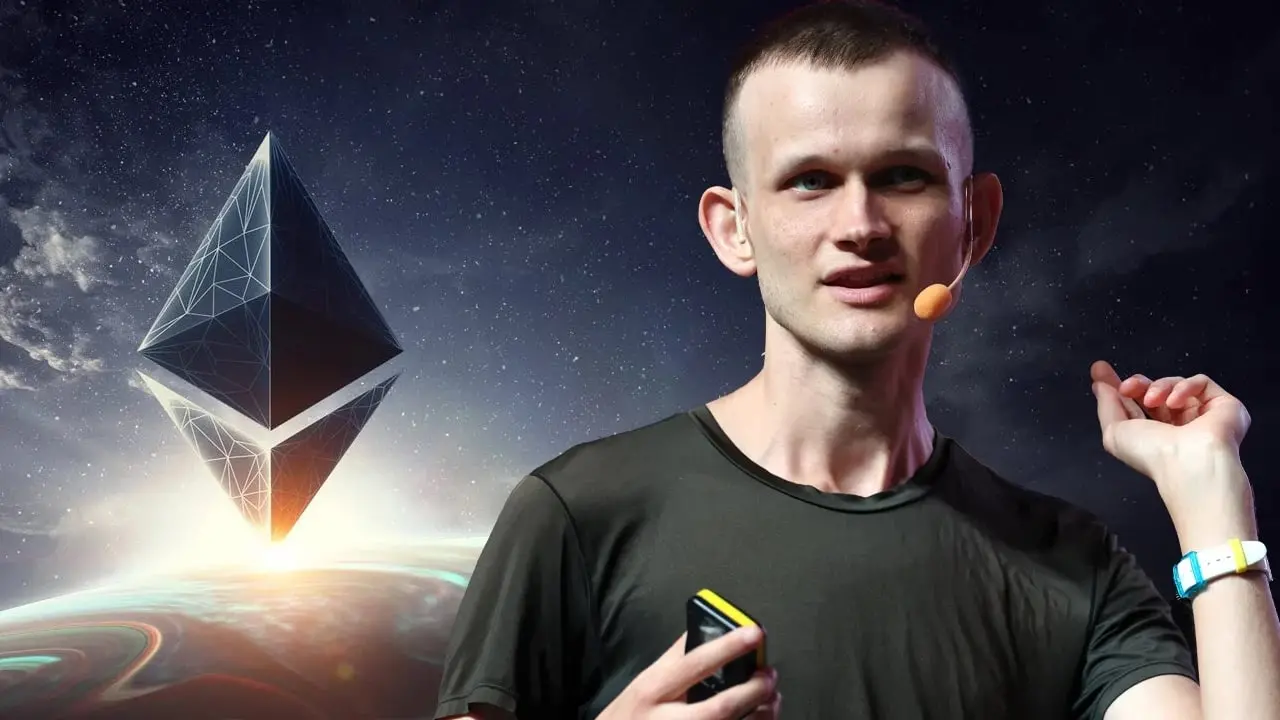
Ethereum's Next Decade in the Eyes of Vitalik

"Lean Ethereum" Long-Term Roadmap Unveiled by Vitalik Buterin On July 5, 2026, Vitalik Buterin published the "Lean Ethereum" roadmap, positioning it as Ethereum's third major evolution following the Merge. This multi-year, multi-phase upgrade aims to fundamentally transform Ethereum's core protocol through staged network upgrades extending to 2029. Key goals include achieving 1 gigagas per second L1 throughput (a massive increase from the current ~32 TPS), near-instant finality, and quantum-resistant cryptography. The plan involves transitioning Ethereum's security model from full transaction re-execution by all nodes to native verification via recursive STARK proofs. A major proposed change is replacing the EVM with a proof-friendly architecture like RISC-V or leanISA, though this remains a point of contention, especially with L2s like Arbitrum favoring alternatives like WASM. Other planned upgrades include a restructured state model with a large, cheap "warehouse" storage layer to drastically reduce fees for migrated applications, multi-dimensional gas pricing, and a new focus on making privacy a first-class, native protocol feature. While the roadmap significantly raises Ethereum's long-term technical ceiling, analysts note it does not directly address ETH's mid-term token economics or value capture. The plan's multi-year timeline means near-term price impact will likely depend on observable progress milestones, such as the successful deployment of the upcoming Glamsterdam gas limit increase, growth in L2 activity and blob usage, and trends in L1 fee revenue and ETH burn.

链捕手2h ago

Ethereum's Next Decade in the Eyes of Vitalik

链捕手2h ago

In Just 11 Days, Claude Rewrote Millions of Lines of Code, an Epic AI Engineering Feat Sparks Fury

In just 11 days, Bun's founder Jarred Sumner used Anthropic's Claude AI models to rewrite its million lines of code from Zig to Rust. This move sparked significant controversy, particularly from Zig's creator, Andrew Kelley, who publicly criticized Sumner's engineering practices and the decision to use AI for such a massive rewrite. Bun, a high-performance JavaScript/TypeScript runtime and rival to Node.js, was originally written in Zig. After Anthropic acquired Bun, the team encountered persistent stability and memory safety bugs in the Zig codebase. These issues, combined with Zig's strict policy against LLM-generated code, led to the decision to rewrite in Rust. The rewrite was executed using Claude AI tools at an estimated API cost of $165,000, dramatically reducing the expected time and financial cost. Andrew Kelley's response was scathing. He blamed the original bugs on poor engineering habits, calling Bun's Zig code a collection of "hacks on top of hacks." He expressed relief that Bun was no longer associated with Zig, fearing it would misrepresent the language and attract low-quality, AI-generated contributions. The tech community is divided; some view Kelley's critique as unprofessional, while others see it as a defense of engineering integrity. A major concern about the AI-driven rewrite is the resulting code quality. The translation from Zig left approximately 27,000 lines of unsafe Rust code, raising fears about long-term maintainability and technical debt. The debate centers on whether this project is a milestone in AI-assisted development or a future maintenance nightmare.

marsbit3h ago

In Just 11 Days, Claude Rewrote Millions of Lines of Code, an Epic AI Engineering Feat Sparks Fury

marsbit3h ago

From Auto Finance to Bitcoin to AI Engines: An Analysis of Cango's 'What Not to Do' Strategy

From Auto Finance to Bitcoin and Now AI: Cango's "What Not to Do" Strategy Cango, a Chinese auto finance platform that went public on the NYSE in 2018, is undergoing its third major transformation. After selling its entire auto business in 2024, it pivoted to become a large-scale Bitcoin miner, acquiring 50 exahash of mining rigs from Bitmain. However, its true goal was never Bitcoin, but owning and controlling energy infrastructure. Now, Cango is pivoting again. While most listed Bitcoin miners are leasing power to giant hyperscalers for AI training clusters, Cango is taking the opposite path. It has launched an AI inference subsidiary called EcoHash, focusing not on training but on distributed inference. The company's strategy hinges on the insight that over 70% of mining industry power is controlled by small, independent sites (10-50 MW), which are too small for hyperscalers but ideal for low-latency AI inference. Cango aims to partner with these small operators, providing the AI technology, customers, and financing through its EcoLink software layer, which can distribute workloads across sites for reliability. Cango maintains a hybrid model, running roughly 31.7 EH/s of Bitcoin mining for cash flow while aggressively cleaning its balance sheet—slashing long-term debt by 94.5% to $30.6 million and raising $75 million for its AI venture. Its first AI deployment will be at a 50 MW site in Georgia. The strategy faces skepticism, given the high costs of converting mining sites and the potential for an AI bubble. However, Cango's leadership believes discipline around "what not to do"—avoiding direct competition with hyperscalers in training—positions it to capture the long-tail demand for distributed AI inference power.

Foresight News3h ago

From Auto Finance to Bitcoin to AI Engines: An Analysis of Cango's 'What Not to Do' Strategy

Foresight News3h ago

Trading

Spot

Hot Articles

How to Buy SWAP

Welcome to HTX.com! We've made purchasing TrustSwap (SWAP) simple and convenient. Follow our step-by-step guide to embark on your crypto journey.Step 1: Create Your HTX AccountUse your email or phone number to sign up for a free account on HTX. Experience a hassle-free registration journey and unlock all features.Get My AccountStep 2: Go to Buy Crypto and Choose Your Payment MethodCredit/Debit Card: Use your Visa or Mastercard to buy TrustSwap (SWAP) instantly.Balance: Use funds from your HTX account balance to trade seamlessly.Third Parties: We've added popular payment methods such as Google Pay and Apple Pay to enhance convenience.P2P: Trade directly with other users on HTX.Over-the-Counter (OTC): We offer tailor-made services and competitive exchange rates for traders.Step 3: Store Your TrustSwap (SWAP)After purchasing your TrustSwap (SWAP), store it in your HTX account. Alternatively, you can send it elsewhere via blockchain transfer or use it to trade other cryptocurrencies.Step 4: Trade TrustSwap (SWAP)Easily trade TrustSwap (SWAP) on HTX's spot market. Simply access your account, select your trading pair, execute your trades, and monitor in real-time. We offer a user-friendly experience for both beginners and seasoned traders.

2.4k Total ViewsPublished 2024.03.29Updated 2026.06.02

How to Buy SWAP

Discussions

Welcome to the HTX Community. Here, you can stay informed about the latest platform developments and gain access to professional market insights. Users' opinions on the price of SWAP (SWAP) are presented below.

活动图片