Short-Term Holder Stress

insights.glassnodePublished on 2024-09-03Last updated on 2024-09-04

Executive Summary

  • On average, BTC investors are holding relatively small unrealized losses compared to prior cycles, suggesting a relatively favourable position overall.
  • However, Short-Term Holder unrealized losses remain quite elevated, indicating they are the primary cohort at risk.
  • Profit and Loss taking activities remain remarkably light, with critical metrics such as the Sell-Side Risk Ratio alluding to a potential for heightened volatility in the near future.
💡
View all charts in this edition in The Week On-chain Dashboard.

A Downwards Tilt

Bull Market Correction

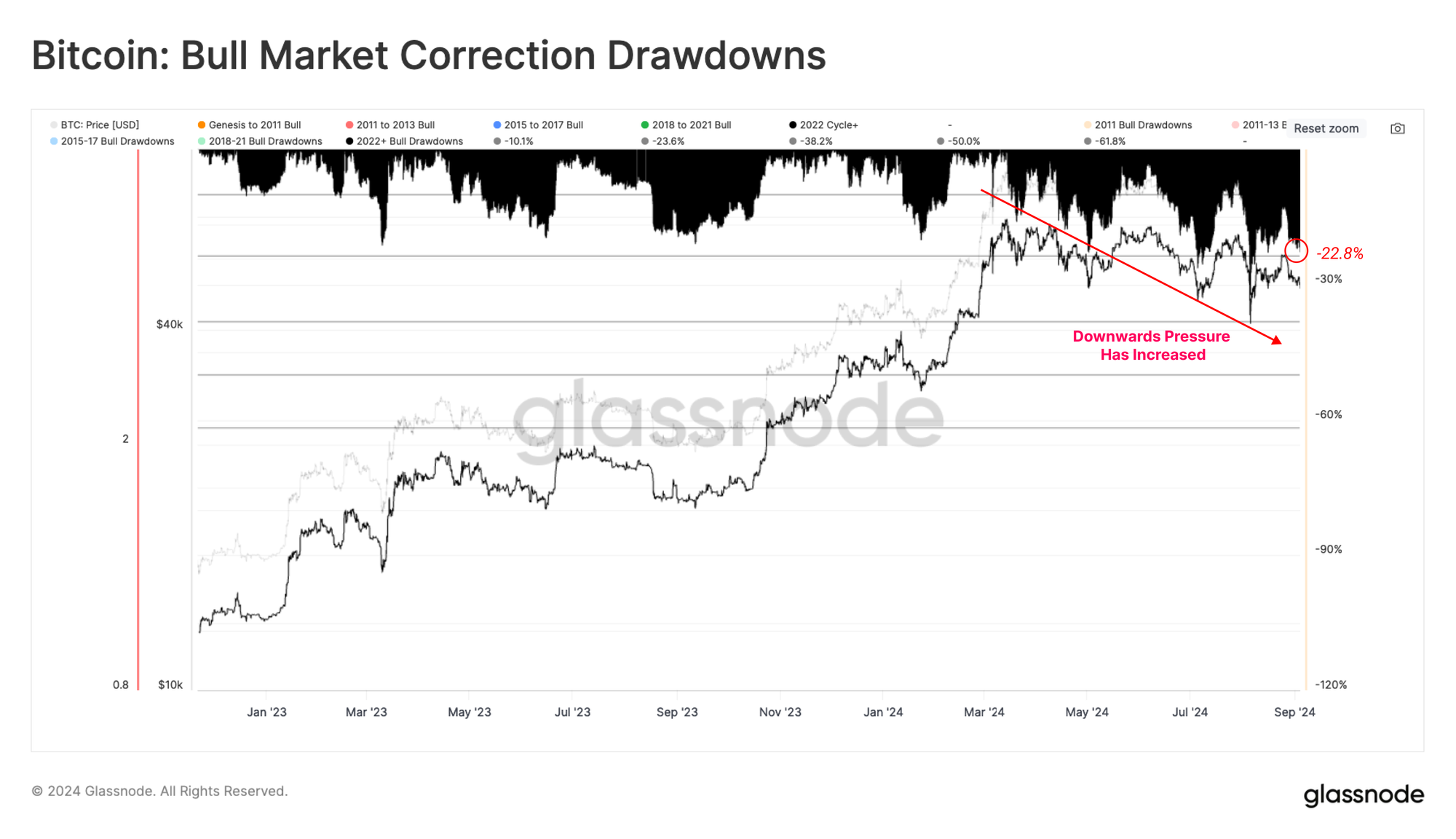
Price action has been stagnant, and investor sentiment apathetic over the last six months. However, a notable change has occurred over the last three months, with downward pressure increasing, and causing the market to experience its largest drawdown of the cycle.

Nevertheless, from a macro perspective, the spot price is trading around -22% below the ATH, which remains a relatively shallow drawdown compared to historical bull market regimes.
Live Workbench

Current Market Pressures

With downwards price pressure increasing, it becomes prudent to assess the unrealized loss held by investors as a tool for evaluating the financial stress they are experiencing.

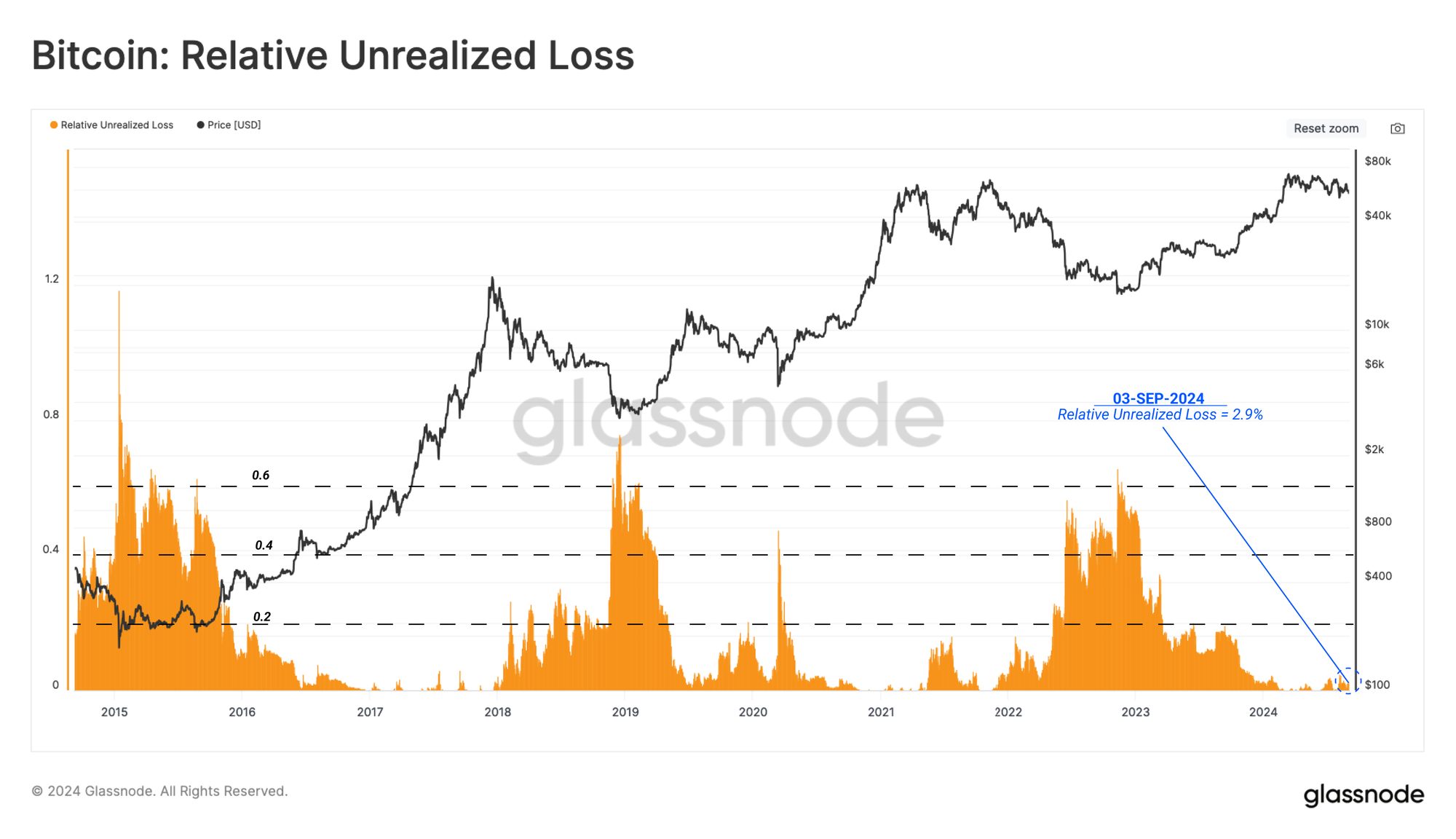
From the perspective of the wider market, unrealized losses still remain historically low. Total unrealized losses amount to just 2.9% of the Bitcoin market cap, which is historically low.

This suggests that the aggregate investor remains relatively profitable, even in the face of continued price declines.
Live Chart

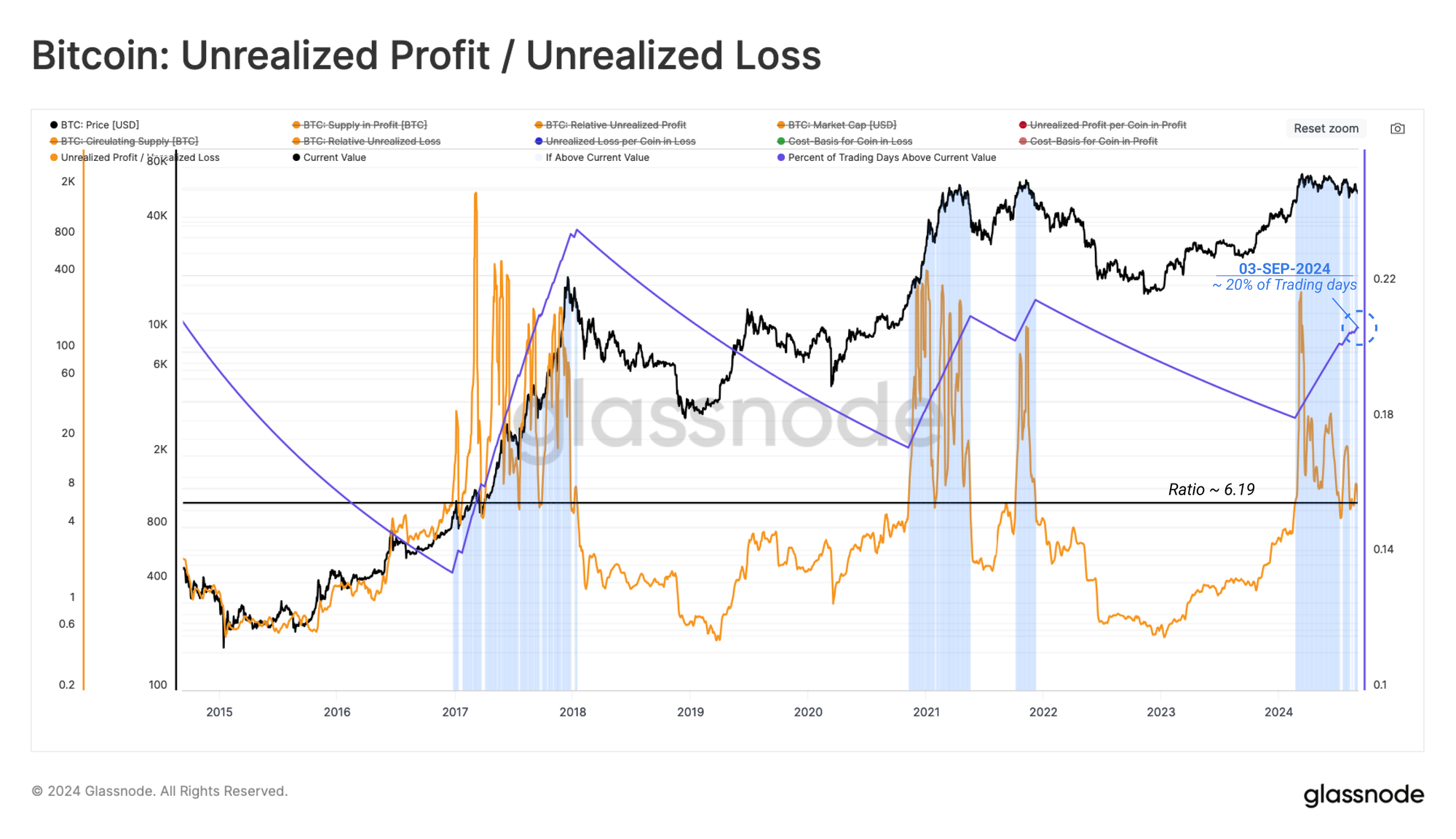
If we take the ratio between total Unrealized Profit and Unrealized Loss, wwe can see that profits remain 6x larger than losses, supporting the above observation. Around 20% of trading days have seen this ratio above the current value, underscoring the surprisingly robust financial position of the average investor.
Live Workbench

Short-Term Concerns

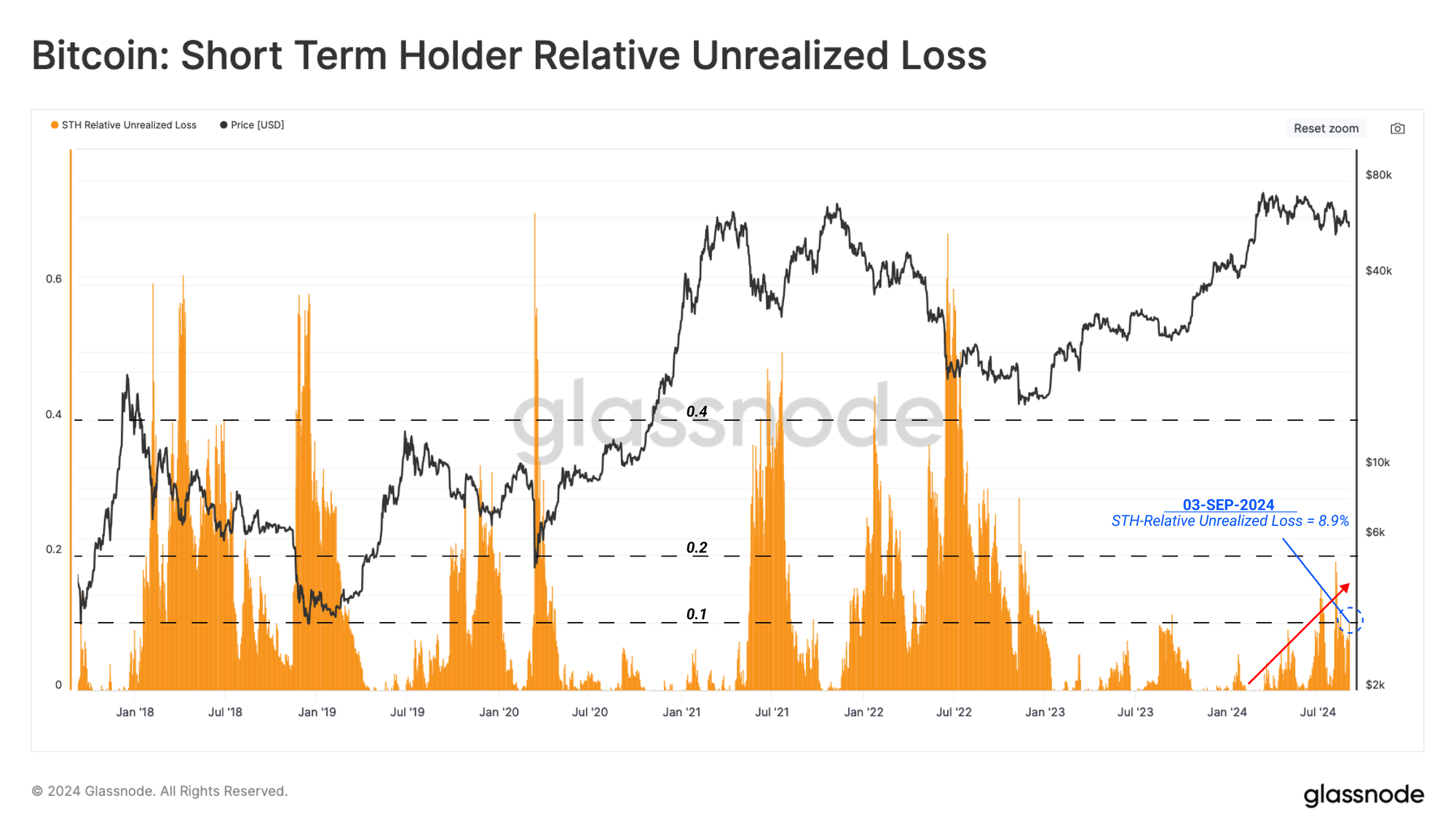
The Short-Term Holder cohort, representing new demand in the market, appear to be shouldering the majority of the market pressure. Their unrealised losses dominate overall, and with the magnitude consistently increased over the last few months.

However, even for this cohort, the magnitude of their Unrealized Losses relative to the market cap is not yet in full scale bear market territory, and more closely resembles the choppy 2019 period.
Live Chart

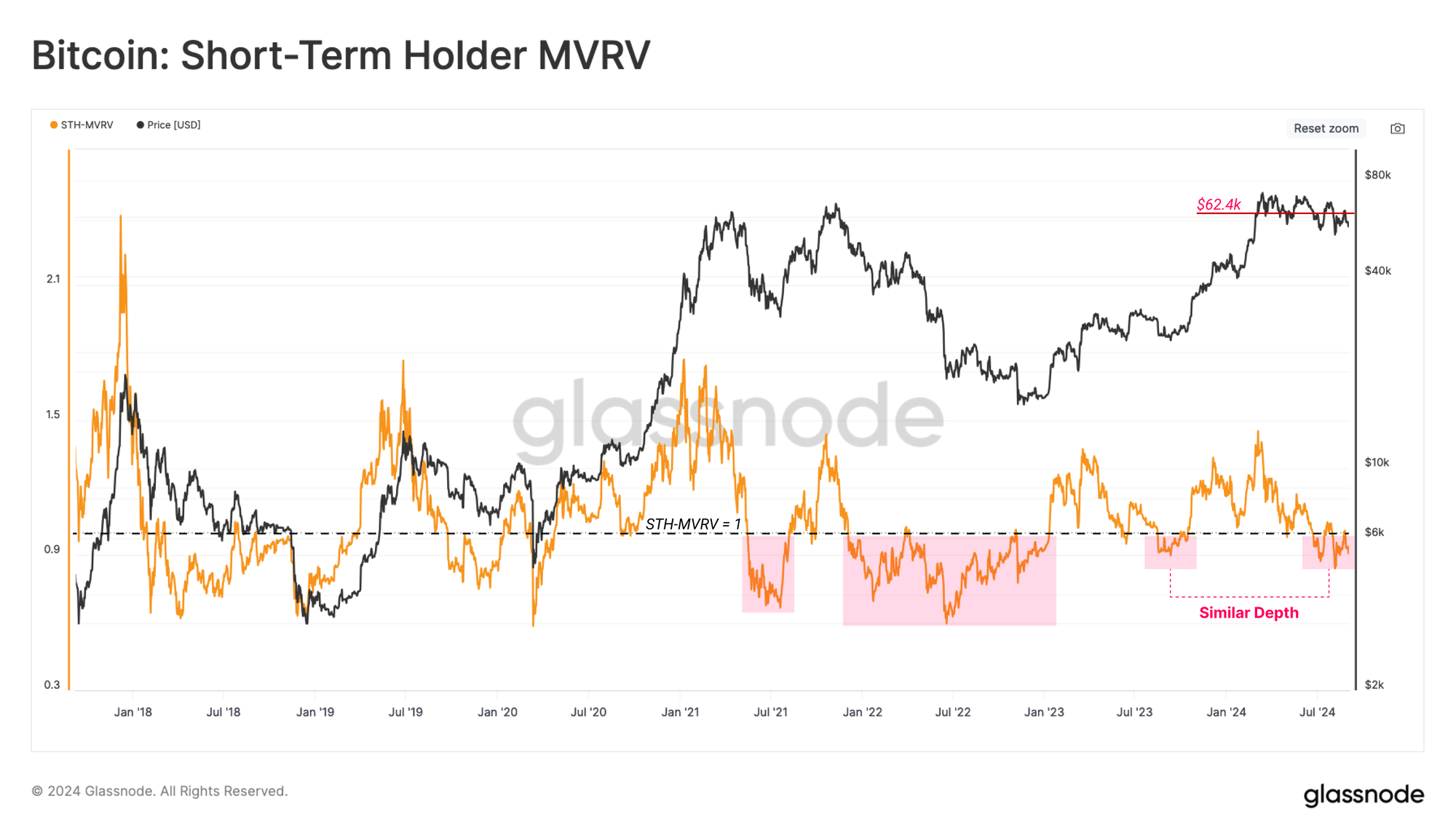
We can bolster the above observation by assessing the STH MVRV Ratio, which has collapsed below the breakeven value of 1.0. This metric is trading at levels similar to Aug 2023 during the recovery rally after the FTX failure.

This tells us that the average new investor is holding an unrealized loss. Generally speaking, until the spot price reclaims the STH cost basis of $62.4k, there is an expectation for further market weakness.
Live Chart

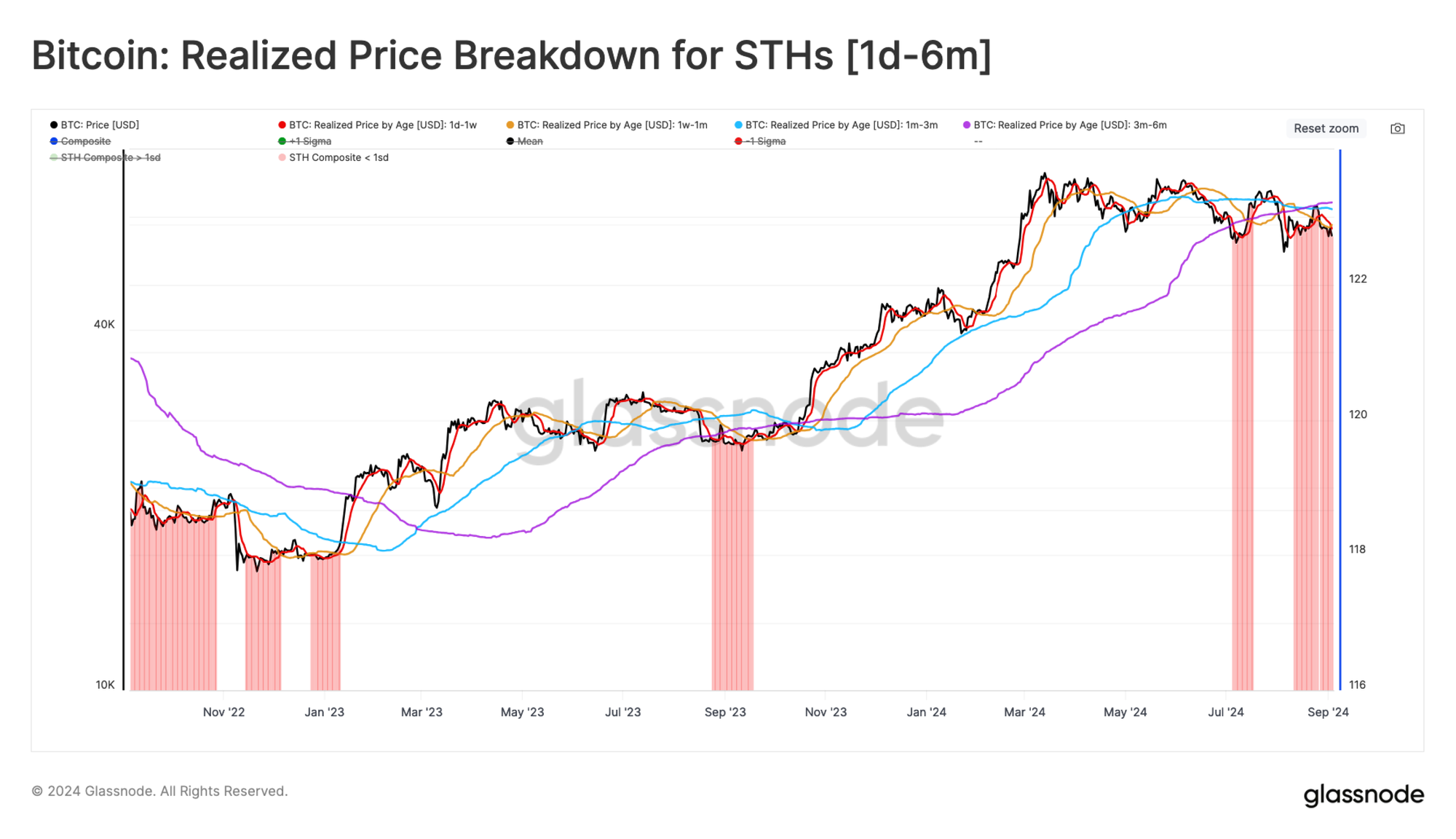
We can increase our confidence in this assessment by inspecting the subsets within the STH investor cohort. Presently, all age bands within the STH cohort are holding an unrealized loss, with their average cost basis as follows:

  • 🔴 1d-1w: $59.0k
  • 🟠 1w-1m: $59.9k
  • 🔵 1m-3m: $63.6k
  • 🟣 3m-6m: $65.2k
Live Workbench

Investor Reactions

Assessing unrealized losses provides crucial insight into the pressure that market investors are experiencing. We can then supplement this with analysis of the volumes of profit and loss realized (locked-in) to better understand how these investors are responding to this pressure.

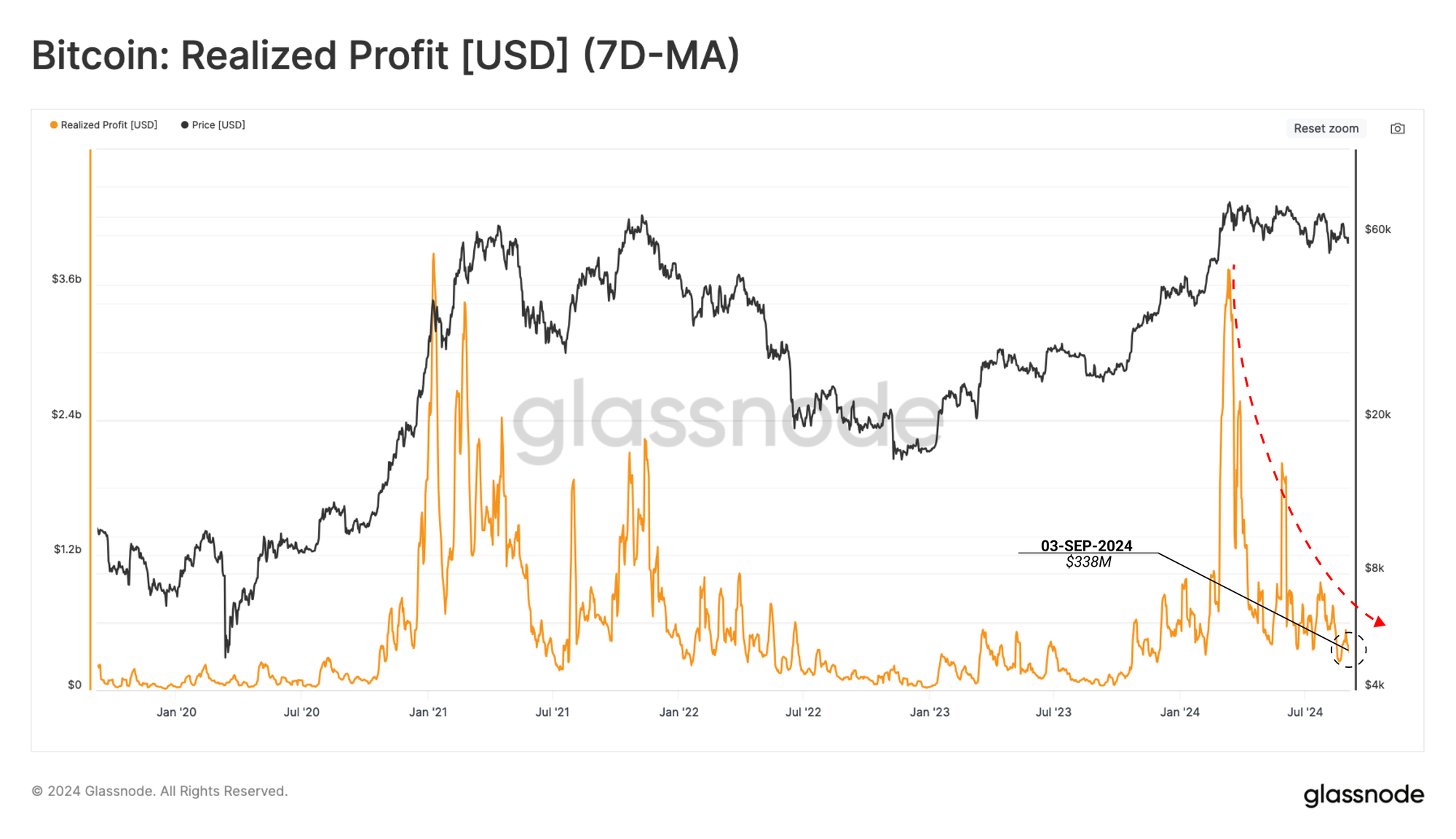
Beginning with realized profit, we can see a drastic decline following the $73k ATH, indicating that a majority of coins spent since then have locked in increasingly small profit volumes over time.
Live Chart

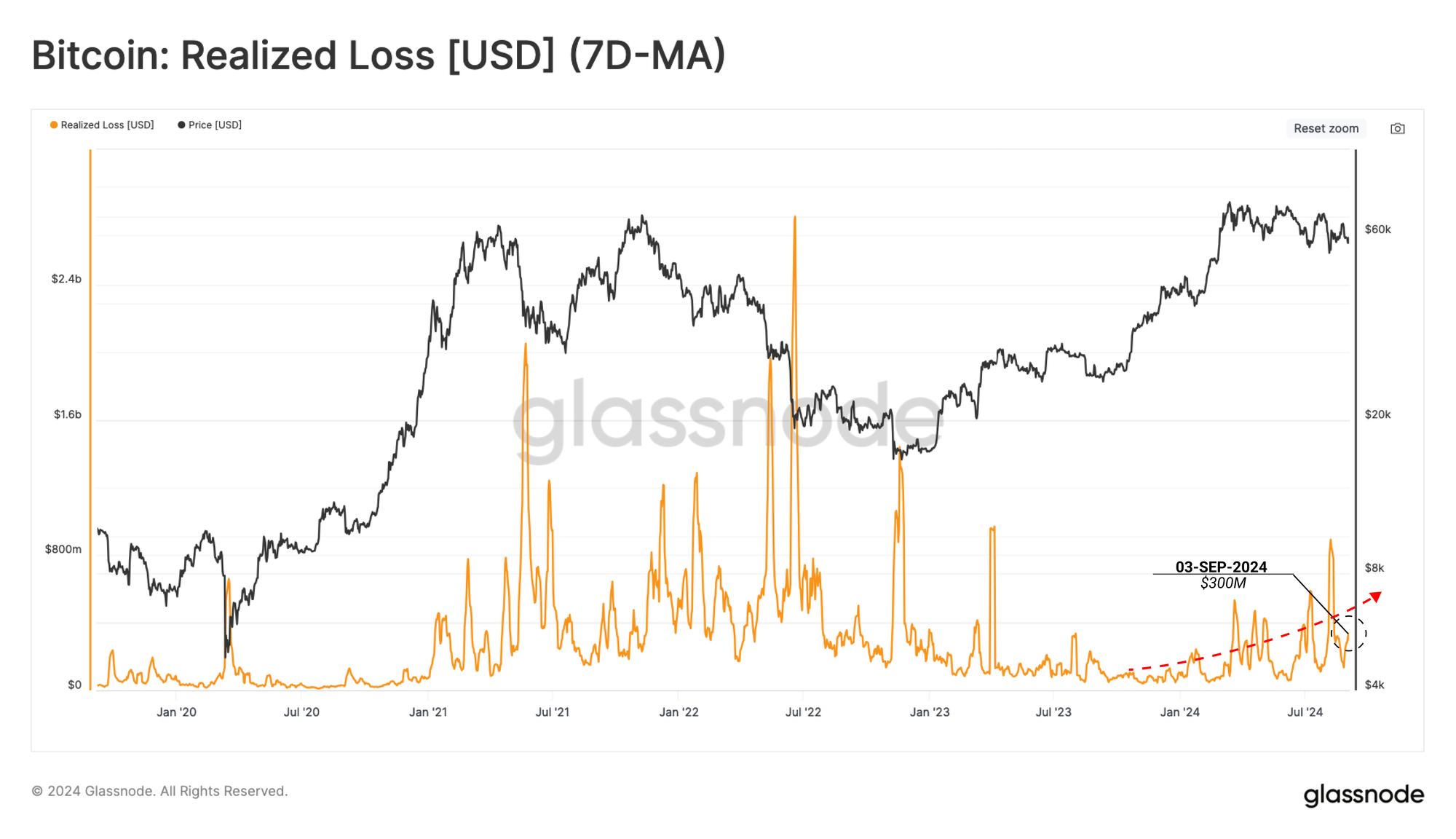
Moving towards realized losses, we note that loss taking events are elevated, and starting to trade towards higher levels as the market downtrend progresses.

The loss taking events are not yet at the extreme levels seen during the mid-2021 sell-off, nor the 2022 bear market. However, the gradual drift higher does indicate some fear is creeping into investor behavior patterns.
Live Chart

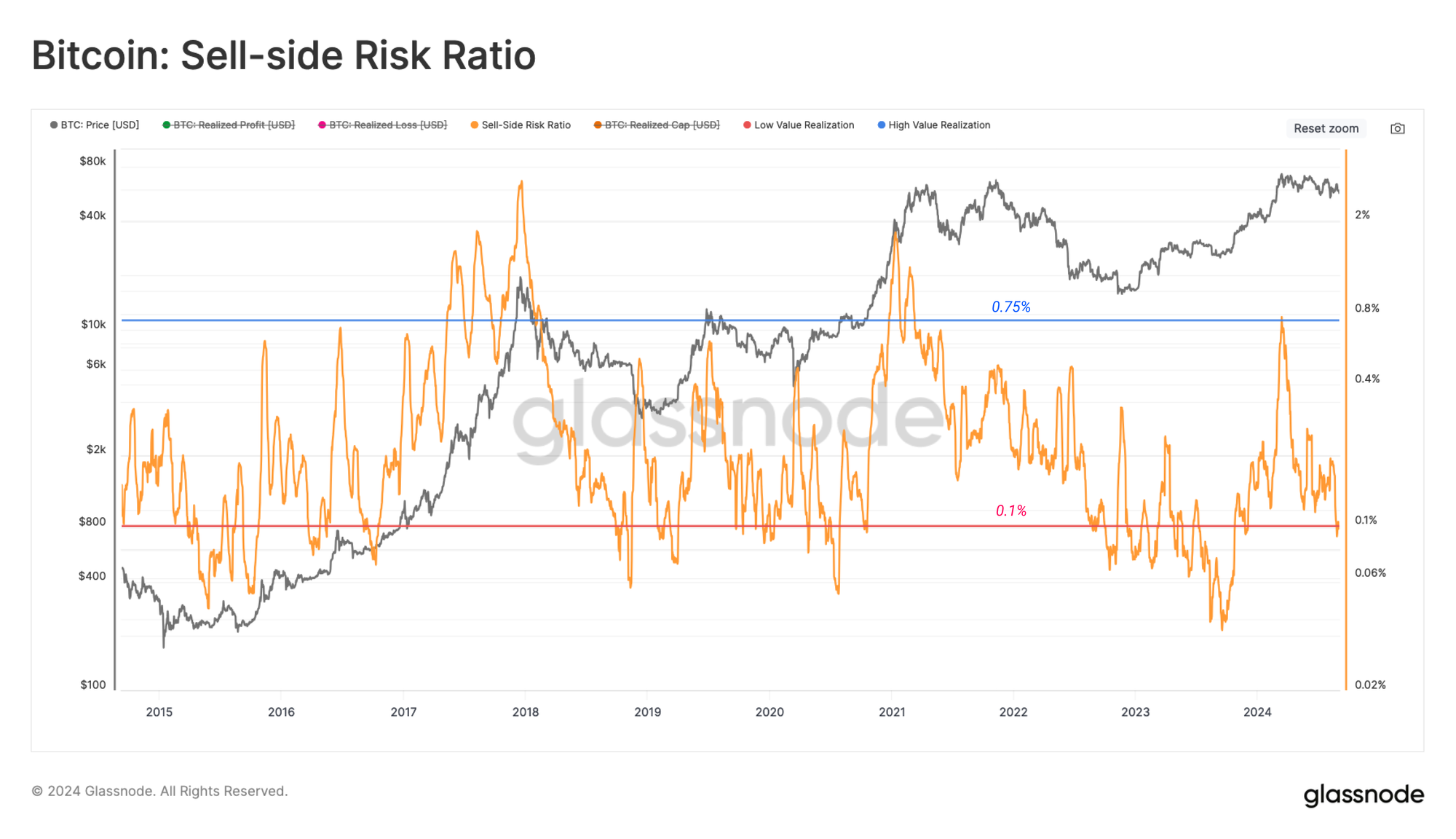
From the lens of the Sell-Side Risk Ratio, we can see that total realised profit and loss is relatively small compared to the total market size. We can interpret this metric under the following framework:

  • High values indicate that investors spend coins at a large profit or loss relative to their cost basis. This condition indicates that the market likely needs to re-find equilibrium and usually follows a high volatility price move.
  • Low values indicate that most coins are being spent relatively close to their break-even cost basis, suggesting a degree of equilibrium has been reached. This condition often signifies an exhaustion of ‘profit and loss’ within the current price range and usually describes a low volatility environment.

Currently, the Sell-Side Risk Ratio has declined into the lower band, suggesting that the majority of coins transacted on-chain are doing so close to their original acquisition price. This suggests there is a progressive saturation of profit and loss-taking activities within the current price range.

Historically, this alludes to an expectation for heightened volatility in the near future, and has some similarities to the 2019 period.
Live Workbench

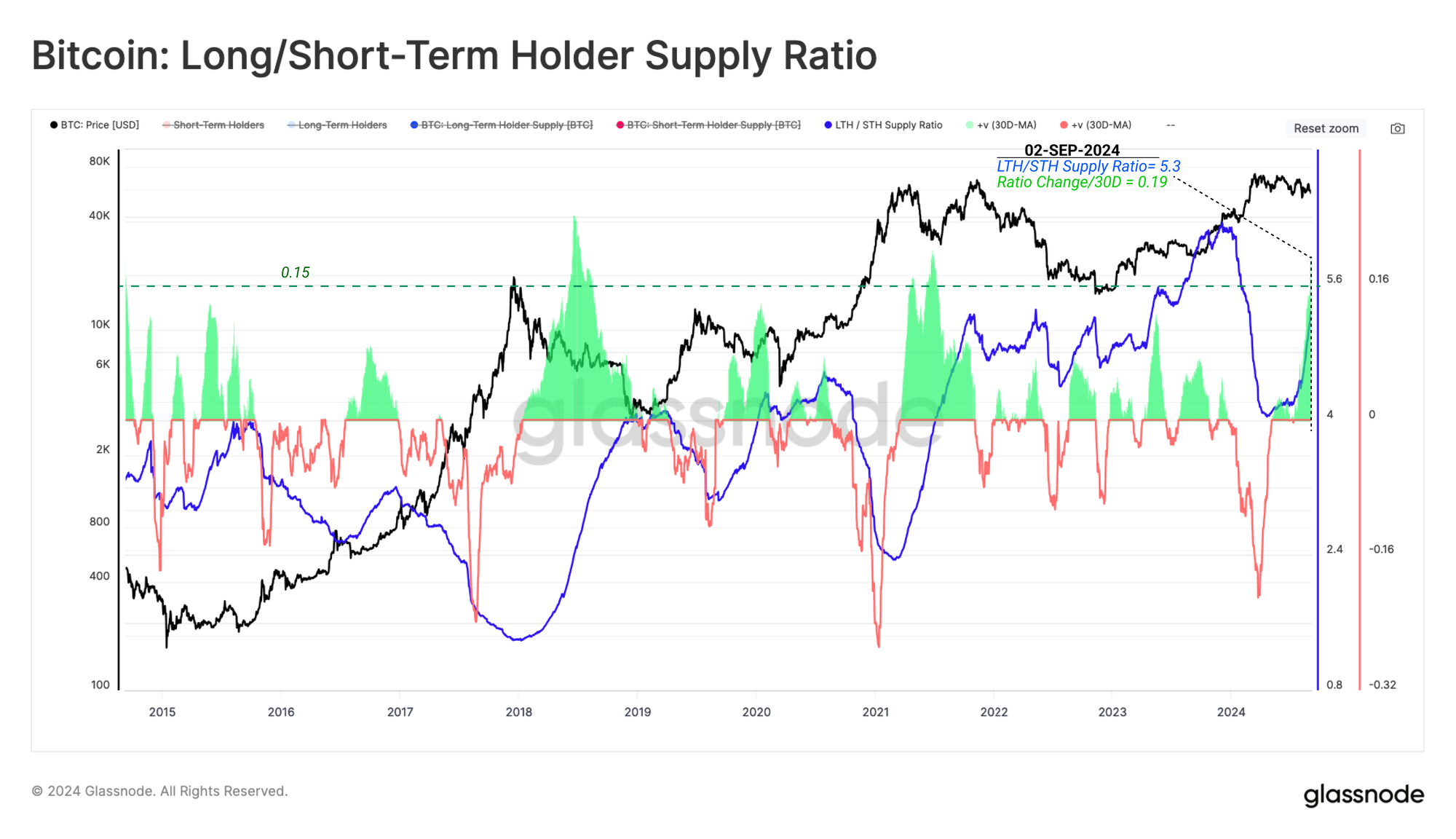
During downtrends, patience, and HODLing naturally becomes a dominant market dynamic. A substantial amount of Long-Term Holder coins were spent for profit into the March ATH, which creates a net overhang of supply.

More recently, LTHs have slowed down their profit taking, and supply accumulated during the ATH run-up is gradually maturing into Long-Term Holder status. However, historical examples of LTH supply increasing like this show that this usually occurs during the transition towards a bear market.
Live Workbench

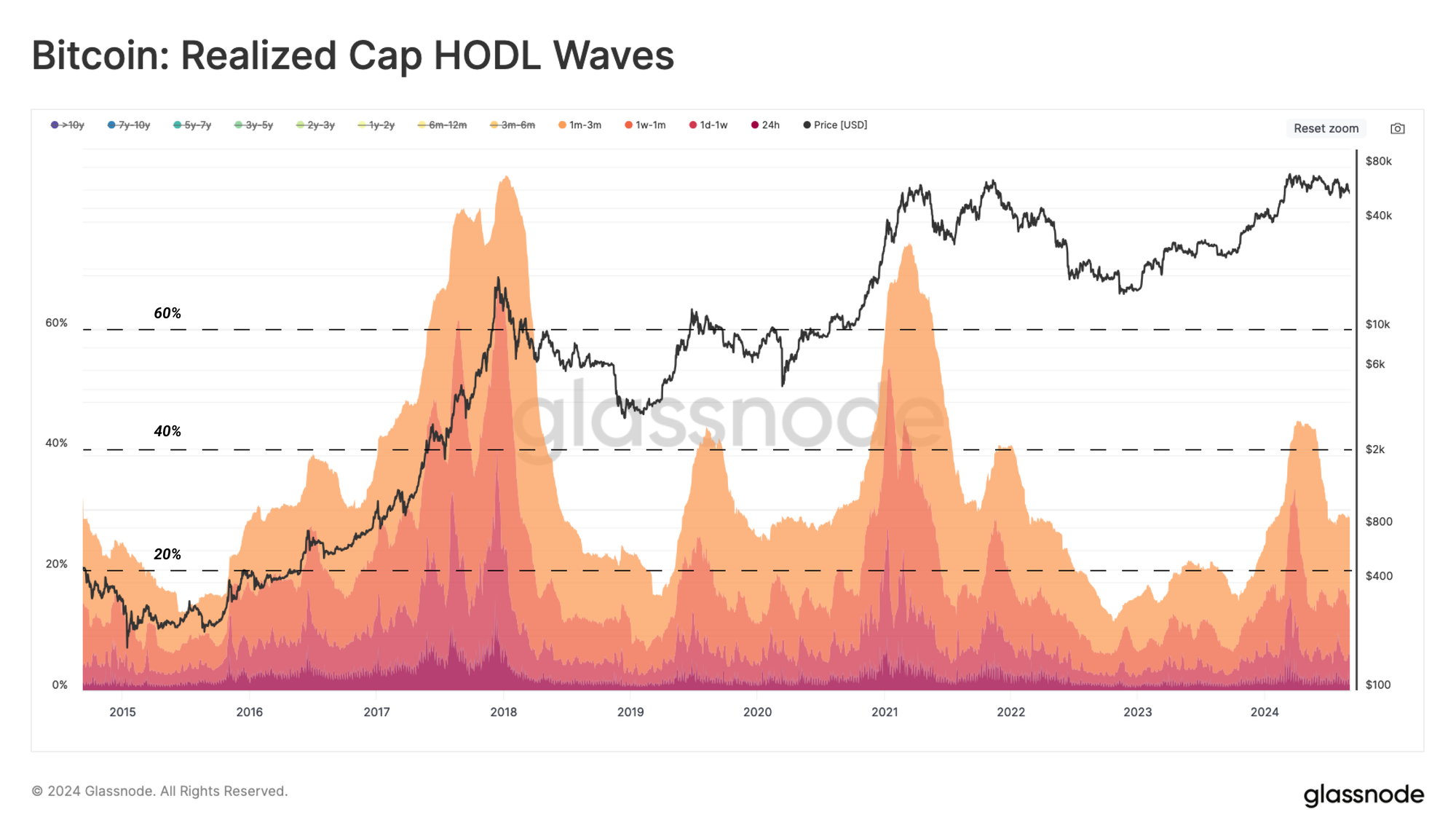
Compounding the above observation, we note that the wealth held by new-demand investors has continued to decline over recent months, as coins mature and transition into Long-Term Holder status.

The percentage of wealth held by new investors did not reach the elevated limits experienced during previous ATH distribution events. This may indicate that the 2024 peak is more aligned with the 2019 mid-cycle high, rather than the macro highs seen in 2017 and 2021.
Live Chart

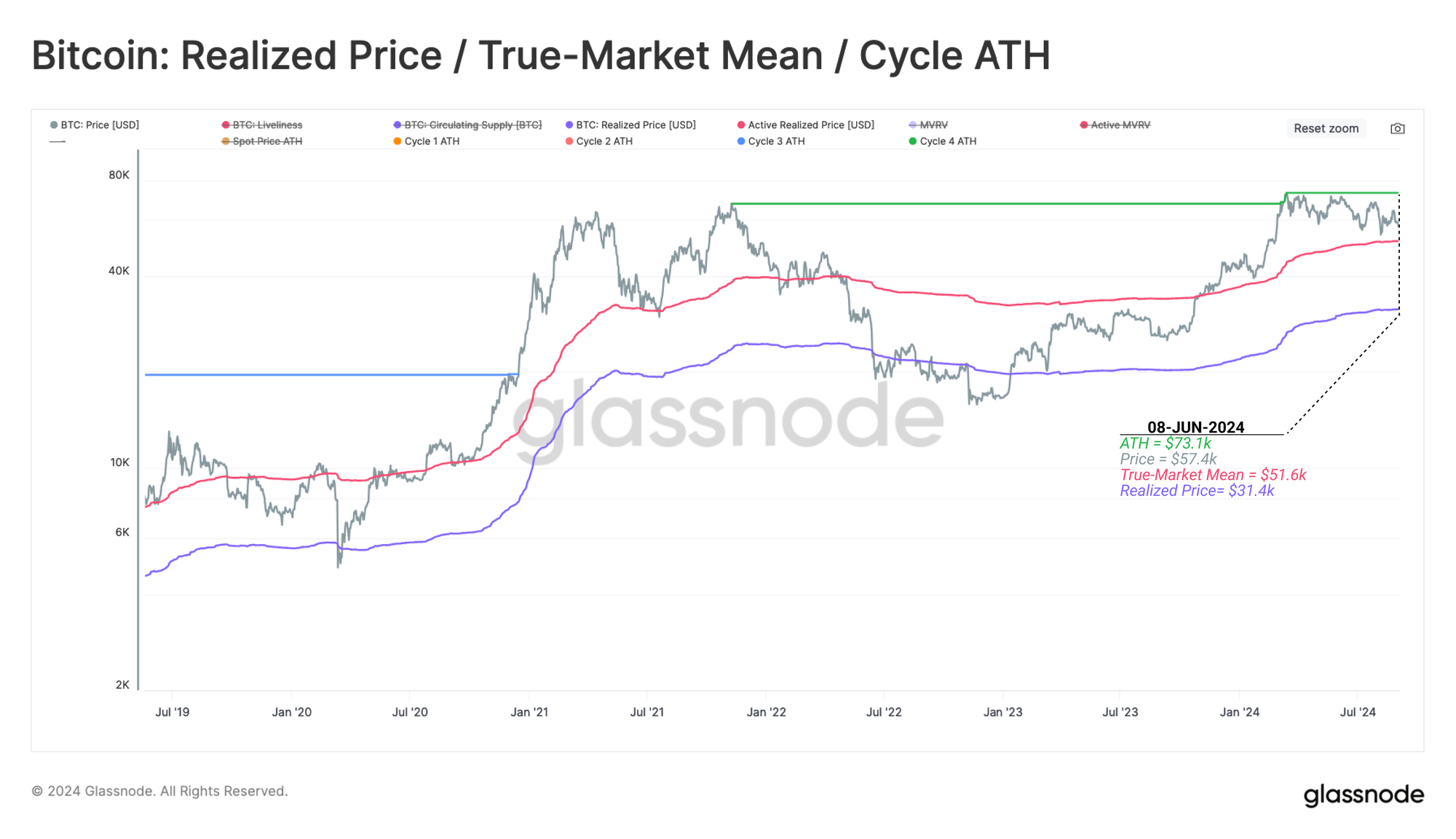
To conclude our analysis, we shall consult a simplified framework for thinking about historical Bitcoin market cycles using key onchain pricing levels:

  • 🔴 Deep Bear Market: Prices trade below the Realized Price.
  • 🔵 Early Bull Market: Prices trade between Realized Price and True Market Mean.
  • 🟠 Enthusiastic Bull Market: Prices trade between the ATH and True Market Mean.
  • 🟢 Euphoric Bull Market: Prices trade above the previous cycles ATH.

Under this framework, price action remains within the Enthusiastic Bull Market structure, which a constructive observation. However, in the event of a local downturn, the pricing level of $51k remains a critical area of interest that must be maintained for further price appreciation.
Live Workbench

Summary and Conclusions

With Bitcoin residing only mere 22% drawdown from its ATH, a considerably shallower drawdown than prior cycles, the average BTC investor remains largely profitable, highlighting the robustness of their positioning.

Nevertheless, the Short-Term Holder cohort continues to carry elevated unrealized losses, indicating they are the primary cohort at risk and the expected source of sell-side pressure in the event of a downturn.

Alongside this, Profit and Loss taking activities remain remarkably light, suggesting a saturation of our current range with critical metrics such as the Sell-Side Risk Ratio alluding to a potential for heightened volatility in the near future.


Trending Cryptos

Related Reads

The Domestic Answer to Space Computing Power: Photonics Are More Efficient, Musk and Huang's Approaches Are Too Roundabout

The Space Computing Race: A Photonic Advantage The competition for space-based computing has intensified, with figures like Elon Musk and NVIDIA's Jensen Huang highlighting its potential. Musk predicts solar-powered AI satellites could offer the most cost-effective computing by 2032. However, space presents extreme challenges for traditional electronic chips: radiation from cosmic particles can cause errors, the vacuum environment hinders heat dissipation, and limited solar power constrains energy-hungry systems. Photonic computing, using light instead of electrons, offers a promising solution. Its core advantages for space are threefold: 1) **Radiation Resistance**: Photons are charge-neutral, making them inherently immune to particle interference. 2) **Low Heat Generation**: Light propagation in waveguides generates minimal heat, bypassing critical thermal management issues. 3) **Low Power Consumption**: Photonic chips have near-zero static power draw, aligning perfectly with the energy constraints of satellites. Furthermore, for a given payload weight and volume, photonic systems can potentially deliver higher total compute density. Since they require less bulky cooling and power infrastructure, more space can be allocated to the compute units themselves. While photonic computing holds great promise, current industry approaches face hurdles like the memory-compute bottleneck (separate storage and processing) and challenges in large-scale integration. Engineering for space—withstanding launch vibrations and validating full system operation in orbit—remains a critical step. The path forward resembles the evolution from single GPUs to computing clusters, but via a photonic route. As electronic chips approach physical limits in miniaturization, photonic computing and optical interconnects (光算光联) may provide a key alternative to bypass these constraints and define the next generation of space-based computing capabilities.

marsbit40m ago

The Domestic Answer to Space Computing Power: Photonics Are More Efficient, Musk and Huang's Approaches Are Too Roundabout

marsbit40m ago

Trading

Spot

Hot Articles

What is $BITCOIN

DIGITAL GOLD ($BITCOIN): A Comprehensive Analysis Introduction to DIGITAL GOLD ($BITCOIN) DIGITAL GOLD ($BITCOIN) is a blockchain-based project operating on the Solana network, which aims to combine the characteristics of traditional precious metals with the innovation of decentralized technologies. While it shares a name with Bitcoin, often referred to as “digital gold” due to its perception as a store of value, DIGITAL GOLD is a separate token designed to create a unique ecosystem within the Web3 landscape. Its goal is to position itself as a viable alternative digital asset, although specifics regarding its applications and functionalities are still developing. What is DIGITAL GOLD ($BITCOIN)? DIGITAL GOLD ($BITCOIN) is a cryptocurrency token explicitly designed for use on the Solana blockchain. In contrast to Bitcoin, which provides a widely recognized value storage role, this token appears to focus on broader applications and characteristics. Notable aspects include: Blockchain Infrastructure: The token is built on the Solana blockchain, known for its capacity to handle high-speed and low-cost transactions. Supply Dynamics: DIGITAL GOLD has a maximum supply capped at 100 quadrillion tokens (100P $BITCOIN), although details regarding its circulating supply are currently undisclosed. Utility: While precise functionalities are not explicitly outlined, there are indications that the token could be utilized for various applications, potentially involving decentralized applications (dApps) or asset tokenization strategies. Who is the Creator of DIGITAL GOLD ($BITCOIN)? At present, the identity of the creators and development team behind DIGITAL GOLD ($BITCOIN) remains unknown. This situation is typical among many innovative projects within the blockchain space, particularly those aligning with decentralized finance and meme coin phenomena. While such anonymity may foster a community-driven culture, it intensifies concerns about governance and accountability. Who are the Investors of DIGITAL GOLD ($BITCOIN)? The available information indicates that DIGITAL GOLD ($BITCOIN) does not have any known institutional backers or prominent venture capital investments. The project seems to operate on a peer-to-peer model focused on community support and adoption rather than traditional funding routes. Its activity and liquidity are primarily situated on decentralized exchanges (DEXs), such as PumpSwap, rather than established centralized trading platforms, further highlighting its grassroots approach. How DIGITAL GOLD ($BITCOIN) Works The operational mechanics of DIGITAL GOLD ($BITCOIN) can be elaborated on based on its blockchain design and network attributes: Consensus Mechanism: By leveraging Solana’s unique proof-of-history (PoH) combined with a proof-of-stake (PoS) model, the project ensures efficient transaction validation contributing to the network's high performance. Tokenomics: While specific deflationary mechanisms have not been extensively detailed, the vast maximum token supply implies that it may cater to microtransactions or niche use cases that are still to be defined. Interoperability: There exists the potential for integration with Solana’s broader ecosystem, including various decentralized finance (DeFi) platforms. However, the details regarding specific integrations remain unspecified. Timeline of Key Events Here is a timeline that highlights significant milestones concerning DIGITAL GOLD ($BITCOIN): 2023: The initial deployment of the token occurs on the Solana blockchain, marked by its contract address. 2024: DIGITAL GOLD gains visibility as it becomes available for trading on decentralized exchanges like PumpSwap, allowing users to trade it against SOL. 2025: The project witnesses sporadic trading activity and potential interest in community-led engagements, although no noteworthy partnerships or technical advancements have been documented as of yet. Critical Analysis Strengths Scalability: The underlying Solana infrastructure supports high transaction volumes, which could enhance the utility of $BITCOIN in various transaction scenarios. Accessibility: The potential low trading price per token could attract retail investors, facilitating wider participation due to fractional ownership opportunities. Risks Lack of Transparency: The absence of publicly known backers, developers, or an audit process may yield skepticism regarding the project's sustainability and trustworthiness. Market Volatility: The trading activity is heavily reliant on speculative behavior, which can result in significant price volatility and uncertainty for investors. Conclusion DIGITAL GOLD ($BITCOIN) emerges as an intriguing yet ambiguous project within the rapidly evolving Solana ecosystem. While it attempts to leverage the “digital gold” narrative, its departure from Bitcoin's established role as a store of value underscores the need for a clearer differentiation of its intended utility and governance structure. Future acceptance and adoption will likely depend on addressing the current opacity and defining its operational and economic strategies more explicitly. Note: This report encompasses synthesised information available as of October 2023, and developments may have transpired beyond the research period.

493 Total ViewsPublished 2025.05.13Updated 2025.05.13

What is $BITCOIN

Discussions

Welcome to the HTX Community. Here, you can stay informed about the latest platform developments and gain access to professional market insights. Users' opinions on the price of BTC (BTC) are presented below.

活动图片