曾光环笼罩的比特币二层网络BOB,还值得跟进吗?

marsbitPublished on 2024-08-31Last updated on 2024-09-01

1、团队:失败的案例与丰富的经验之间的博弈

失败的案例:
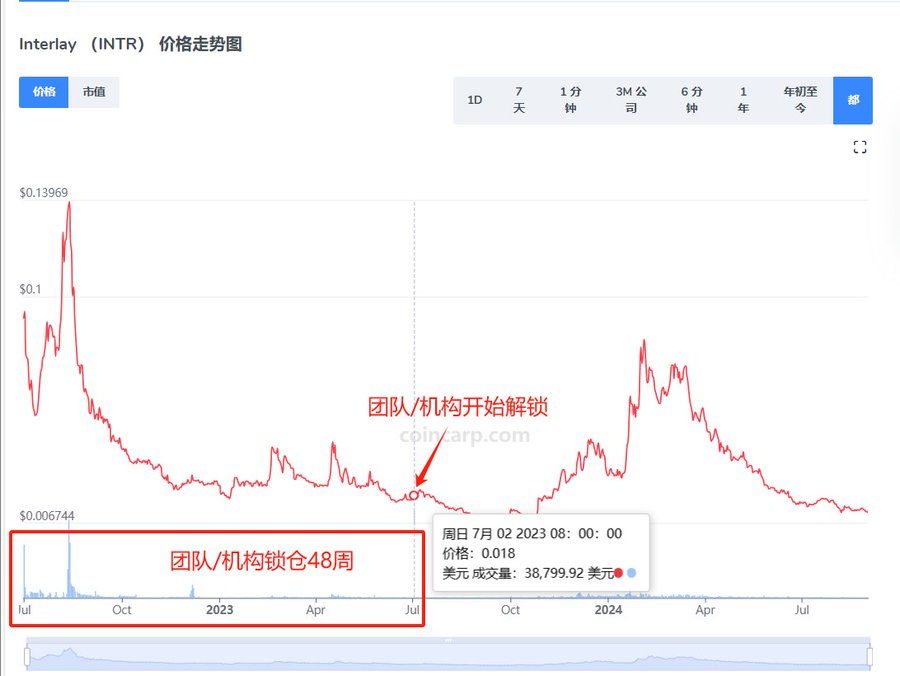
  • BOB项目的核心团队曾是Interlay项目的创始成员,Interlay融资了950万美元,但在两年内,Interlay的市值跌了90%以上。
  • 自今年3月以来,Interlay的生态系统已停止更新,社区活动停滞,开发工作陷入僵局,基本可视为项目已失败。
  • 按照经济白皮书的代币分配和释放,以及代币价格表现,Interlay融资近1000w美金,粗略估算机构大概率只能回本1/3,即300w美金。
Interlay

经验的博弈:
  • BOB生态沿用了 Interlay 的老模式,以DeFi为核心框架,属于二次包装,虽然整容了一下,似乎其本质还是跟原来一样,项目创新似乎仍然不多。
  • 然而,争议的另一面在于,团队成员同时也拥有丰富的创业经验,尤其是在比特币生态的开发和运营中积累了大量实践经验,他们在比特币Layer 2技术上的深厚积累,意味着他们可能已经从过去的失败中吸取了教训,具备更强的应对市场挑战的能力。
  • 所以一部分人对团队的历史表示怀疑,认为他们可能会重蹈覆辙;而另一部分人则认为团队的经验是项目成功的基石,认为过去的教训将转化为未来的成功。

2、运营:混乱的管理与生态的繁荣

混乱的管理:
  • BOB项目的运营有些混乱,尤其是在积分活动的安排上,本来计划只持续一个月的积分任务,最终却拖延了三个月。
  • 第一季积分任务期间,质押TVL达到了3亿美元,释放了约100亿积分;而在第二季任务中,TVL下降至1亿美元,积分总量却增加到了1200至1400亿积分,积分的释放速度明显加快,而质押资金却不断减少,前期参与的玩家积分被稀释得非常严重。
  • 项目的TVL从最初的3亿美元下降到当前的1亿美元,反映出市场对项目管理能力的不信任,也显示了社区对项目可持续性和管理效率的不信任。
生态的繁荣:
  • 然而,争议的另一面是,尽管运营上存在诸多问题,BOB项目的生态系统依然表现出了一定的繁荣迹象,项目在推特等社交媒体上的热度居高不下,各种生态合作接连不断,Rootdata的数据也显示,BOB项目在比特币生态的热度榜上名列前茅,表明其依然具有较强的市场影响力和号召力。

3、机构:投机阴谋与FOMO加仓的矛盾

  • 在BOB项目的融资与质押过程中,BOB项目的早期投资者中,存在多个疑似老鼠仓的地址,这些地址通过积分排名获取了巨额积分。
  • 例如,UTXO管理团队作为BOB的投资者之一,其持有的积分数量高达36.7亿,几乎占据了积分排行榜的第一位。与此同时,web3.com团队也在排行榜中排名第三,持有约15亿积分。如果按每积分0.0002美元的预估价值计算,UTXO管理团队的积分价值可达73.4万美元,web3.com团队的积分价值约为30万美元,机构账户累计超过百万美金的积分收益。
  • 有一个疑虑,为什么机构会明牌质押参与bob?
  • 且结合前文机构在Interlay项目亏本的情况下,为什么原机构还愿意继续支持同一个团队的另一个项目?并且又投钱又投入大量资金参与质押活动?
  • 除此之外,还有几个关联度极高的地址疑似项目方的老鼠仓
  • KryantBobe98701”共邀请了6个人,分别在排行榜第10、12、18、59、81、82,高度关联,共获得约17亿积分左右,积分价值约34w美金。
  • jamestwo008” 共邀请了7个人,分别在排行榜第25、29、39、41、43、53、61,高度关联,共获得13亿积分左右,积分价值约26w美金。
  • 还有其他关联较少的账号就不一一列举,从以上高度关联的账号中可以看出,猜测项目方至少有30亿积分的老鼠仓,与前面机构占比差不多,老鼠仓较严重,详细数据可参考积分排行榜
  • 与此同时,另一种观点认为,这些机构的积极参与实际上是对项目潜力的认可,机构的加码可能并非出于阴谋,而是源于对比特币生态未来发展的信心。且首次投资Interlay项目的机构,有大部分也投资了BOB,在Interlayy已经失败的情况下,机构还愿意投资新项目,说明了即使上一个项目失败,团队依然是被机构认可。

4、赔率:低收益与高回报的两极分化

估值分析:
  • 市场情绪:鉴于当前ETH Layer 2表现较差,大部分人将目光看向了比特币 Layer 2,多数人认为比特币生态会是新的牛市启动器,可能会提振市场情绪,吸引更多投资者进入比特币生态系统,故估值会有增幅。
  • 同类对比:SatoshiVM 与 BOB 同为比特币 ZK Rollup Layer 2 解决方案 ,前者刚上市时,达到了上亿美金的市值,且是在没有融资的情况下,BOB有融资,市场对该赛道较为看好,且在推特等媒体的影响力上面, BOB的影响力、关注度较前者更高,估值应在3~5亿美金左右。
  • 空投比例:对标项目中仅 Merlin 一个项目分发了空投, 与BOB类似,前期都是质押为主,质押TVL3~5亿高于BOB三倍, 空投量为20%,反观BOB,TVL质押从开始的1.5亿,持续走低,到现在不到1亿美金,空投预计10%,蛋糕约为3000~5000万美金,可以合理的分配给社区。
  • 估值结论:两轮融资1160w美金,预计3--5亿美金市值,10%空投比例。
总积分预测:
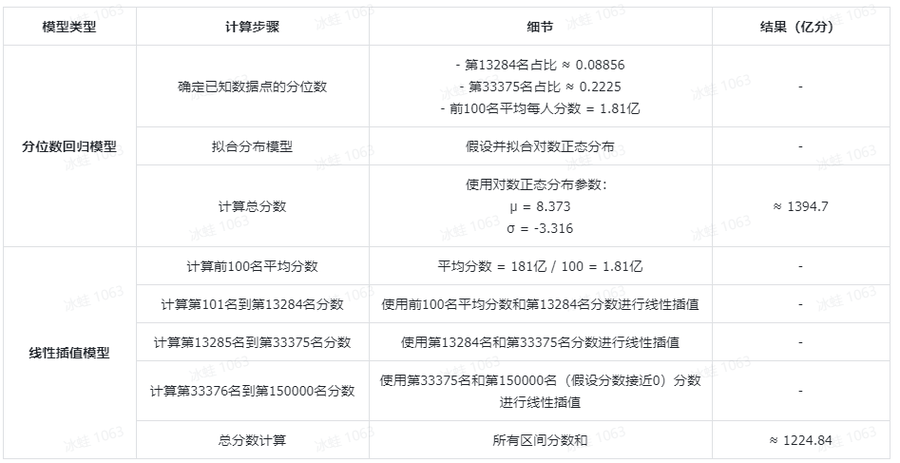
  • BOB项目积分系统分为两季任务,积分总量的预测至关重要。在估算总积分时,考虑了多种因素,如前100名积分的总数、排名分布的分位数回归模型、线性插值模型以及对数正态分布的拟合。
Interlay

  • 第一季600亿积分,第二季约1200~1400亿积分,两季任务共释放2000亿积分,当前为第二期任务,还未结束,可能还有第三期,按照第二季增长速度,预估每个月增长400亿积分左右,综合最终积分约为3000亿。
不同分配方案的不同赔率:
  • 1. 等比例空投模型
  • 成本实测:未燃烧gas时积分:37.6W,交互两笔后的积分变化:46W,交互金额约8.1U,积分增加⾄46W,增加8.4万积分,换算1U约等于1万积分,即1积分=0.0001U
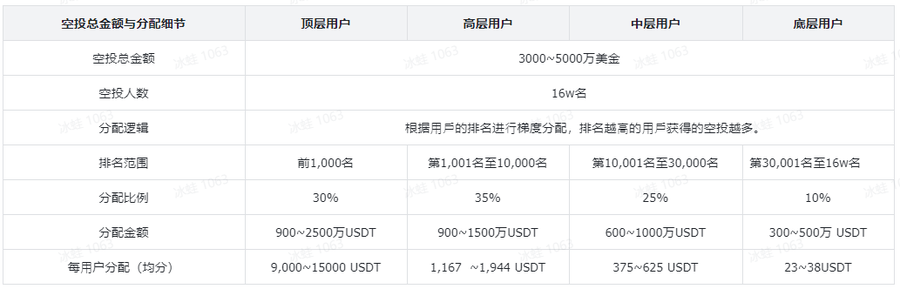
  • 积分总量预估为3000亿,按照空投比例3000~5000万美金计算,3000-5000w/3000e= 0.0001~0.000168,即单个积分的价值约为0.0001~0.000168u。
  • 赔率分析:
  • 单个积分的价值约0.00012u~0.0002每积分,交互1U大约10000积分。0.00012~0.0002u/0.0001=1.2~2,即赔率:1.2~2倍
  • 2. 阶梯空投模型

Interlay

  • 当前参与人数约15万,预估最终用户将达到20万左右,阶梯分配规则20万的80%获得空投,人数约16万人。
  • 赔率分析:
  • 按照该空投模型,最低获取门槛,满足前16W排名只需要做两平台任务intract任务和银河任务即可,需要用到DC、推特账号、GAS费(费用可调最低)等成本,考虑到后期需要卷排名,预算可能要5~10U。
  • 5~10/23~38=2.3~7.6倍赔率
交互策略总结:

从市场数据和分析中可以看出,两个空投分配方式收益差距较大,等比例空投赔率一般;如果按照阶梯空投方案,低保号赔率高,但鉴于其规则不透明,空投方案不确定性较大。

5、结论:争议中的机会与风险

根据公开信息爬取的数据总结:
  • 老鼠仓现象:机构与项目方,都存在不同程度的老鼠仓,老鼠仓较重。
  • 创始团队历史失败案例:项目创始团队过去有过失败案例,反映出团队在项目管理、风险控制或市场判断等方面存在不足,加大了参与风险,
  • 机构阴谋:为什么原机构在前项目亏钱的情况下还愿意继续支持bob?为什么机构会明牌参与质押?
  • 运营能力存疑:本来计划只持续一个月的积分任务,最终却不再拖延
  • 估值与积分释放风险:项目正常估值为3亿美金空投10%,即3000万美金蛋糕,可能最终总积分也在3000亿左右,如果积分持续大量释放,会导致积分价值稀释,未来有亏损的风险。
  • 空投方案不确定性较高:从市场数据和分析中可以看出,两种空投分配方式收益差距较大,等比例空投赔率一般,如果按照阶梯空投方案,低保号赔率还行,但鉴于其规则不透明,空投方案不确定性较大。
  • 成功概率高:虽然该项目有过失败的案例,但是换一个角度来说是有过BTC生态经验,相较于其他同类型BTC生态来说,其创业经验更丰富,成功概率更高。
  • 市场能力强:总体来讲其市场能力要强于其他项目,半年时间超过50个dapp进入生态,生态发展及热度等都优于其他项目,从 Rootdata 的BTC生态热度榜也可以看出来。
  • 入场时机不错:TVL持续下降,对于未进场的玩家来说是好事,会释放出更多蛋糕份额,或许会是一个机会。
  • 团队可能仍然被认可:还有一个值得关注的点是,首次投资Interlay项目的机构,有大部分均投资了BOB,在Interlayy已经失败的情况下,机构还愿意投资新项目,说明了团队可能仍然是被认可的。

综合来看,该项目争议较大, 其团队的历史背景、运营管理的混乱、机构参与的复杂性以及投资赔率的巨大不确定性,共同构成了一个极具戏剧性和不确定性的项目全景,看好的人非常看好,不看好的人嗤之以鼻。所以搞还是不搞我也挺纠结?目前也就btc生态还有一点叙事了,但btc生态能拿的出手的项目确实也不多,所以如果想要稳妥一些,可以等下后续的融资情况,因为前段时间,单独给Ledger Cathay Capital开的160w美金融资轮次,总感觉有些蹊跷,不知道是不是在憋新的一轮大融资。


Trending Cryptos

Related Reads

Countdown to the CLARITY Act: 25 Days Left—What Will Happen to the Crypto Market if It Fails to Pass Before the August Recess?

"The CLARITY Act, a key US crypto market structure bill, faces a tight deadline with only 25 working days left before the Senate's August 10 recess. The bill aims to clarify SEC/CFTC jurisdiction and establish a non-security path for decentralized tokens. Despite passing the House in 2025 and a Senate committee in May 2026, final negotiations have stalled over ethics and law enforcement provisions, jeopardizing the 60 Senate votes needed. If the bill fails to pass before the recess, its chances in 2026 drop significantly, with prediction markets giving only a 40% probability. Analyst Galaxy Digital has lowered its 2026 passage odds to 50%. Failure would likely lead to continued 'slow bleeding' in crypto markets, as seen in June's record $4.5 billion net outflow from US Bitcoin ETFs. XRP, which stands to gain permanent commodity status from the bill, could lose its 'regulatory premium.' Bitcoin and Ethereum, already classified as commodities via a joint agency interpretation, would face less direct impact but broader regulatory uncertainty would persist, delaying institutional capital and DeFi innovation. The path forward includes: 1) Passage before August (a major catalyst), 2) Delay to 2027 (extending market uncertainty), or 3) Failure, requiring the bill to be reintroduced in the next Congress. While delay is a setback, the bill's progress indicates the US is closer than ever to resolving crypto regulatory ambiguity."

marsbit21m ago

Countdown to the CLARITY Act: 25 Days Left—What Will Happen to the Crypto Market if It Fails to Pass Before the August Recess?

marsbit21m ago

In the First Half of the Year, Half of VC Money Flowed to AI, with These 30 Companies Alone Raising Over 170 Billion Yuan

First Half of 2026: VC Investment in AI Explodes, with 30 Top Companies Raising Over 170 Billion RMB In the first half of 2026, China's AI sector saw a massive surge in venture capital, with total equity financing exceeding 300 billion RMB—already surpassing the entire 2025 total. Key trends include: * **Massive Funding Scale:** The AI track recorded 1,203 financing events totaling over 300 billion RMB. Investment peaked in June, partly driven by DeepSeek's landmark 51-billion-RMB Series A round. * **Geographic Concentration:** Beijing, Hangzhou, Shanghai, and Shenzhen dominated, accounting for 74% of deals and 86% of total funding. Beijing led with 95.5 billion RMB, while Hangzhou surged to second place due to DeepSeek's round. * **Sector Focus:** * **Large Models** were the top draw, securing over half of all funds (nearly 1.6 trillion RMB). * **AI Infrastructure** (compute, chips) and **Embodied AI** (e.g., robotics) were other major investment areas, with the latter being the most active in number of deals. * **AIGC Applications** attracted significant capital (59.6 billion RMB), indicating strong belief in near-term commercialization. * **Investment Stage Logic:** Capital followed a clear strategy: heavy bets on growth-stage companies (A/B rounds), major funding for mature leaders, and widespread, smaller-scale seeding of early-stage innovators. * **Notable Early-Stage Trends:** World models (seen as the "OS" for embodied AI) attracted the most early capital. Angel/seed rounds reached unprecedented sizes ("inflation"), and investment shifted from foundational large models to downstream applications like robotics and physical AGI. * **Top Companies:** The 20 largest mid/late-stage deals raised 1.565 trillion RMB. Leaders include the "Big Three" large model firms (DeepSeek, StepFun, Kimi), seven leading humanoid robot companies ("Seven Samurai"), and top AIGC application players. * **Outlook:** Full-year 2026 funding is projected to exceed 6 trillion RMB. However, consolidation is expected in the large model sector, with the window for pure-play general AI startups closing. Survival will depend on finding niche verticals or securing strategic backing.

marsbit26m ago

In the First Half of the Year, Half of VC Money Flowed to AI, with These 30 Companies Alone Raising Over 170 Billion Yuan

marsbit26m ago

Trading

Spot

Hot Articles

What is $BITCOIN

DIGITAL GOLD ($BITCOIN): A Comprehensive Analysis Introduction to DIGITAL GOLD ($BITCOIN) DIGITAL GOLD ($BITCOIN) is a blockchain-based project operating on the Solana network, which aims to combine the characteristics of traditional precious metals with the innovation of decentralized technologies. While it shares a name with Bitcoin, often referred to as “digital gold” due to its perception as a store of value, DIGITAL GOLD is a separate token designed to create a unique ecosystem within the Web3 landscape. Its goal is to position itself as a viable alternative digital asset, although specifics regarding its applications and functionalities are still developing. What is DIGITAL GOLD ($BITCOIN)? DIGITAL GOLD ($BITCOIN) is a cryptocurrency token explicitly designed for use on the Solana blockchain. In contrast to Bitcoin, which provides a widely recognized value storage role, this token appears to focus on broader applications and characteristics. Notable aspects include: Blockchain Infrastructure: The token is built on the Solana blockchain, known for its capacity to handle high-speed and low-cost transactions. Supply Dynamics: DIGITAL GOLD has a maximum supply capped at 100 quadrillion tokens (100P $BITCOIN), although details regarding its circulating supply are currently undisclosed. Utility: While precise functionalities are not explicitly outlined, there are indications that the token could be utilized for various applications, potentially involving decentralized applications (dApps) or asset tokenization strategies. Who is the Creator of DIGITAL GOLD ($BITCOIN)? At present, the identity of the creators and development team behind DIGITAL GOLD ($BITCOIN) remains unknown. This situation is typical among many innovative projects within the blockchain space, particularly those aligning with decentralized finance and meme coin phenomena. While such anonymity may foster a community-driven culture, it intensifies concerns about governance and accountability. Who are the Investors of DIGITAL GOLD ($BITCOIN)? The available information indicates that DIGITAL GOLD ($BITCOIN) does not have any known institutional backers or prominent venture capital investments. The project seems to operate on a peer-to-peer model focused on community support and adoption rather than traditional funding routes. Its activity and liquidity are primarily situated on decentralized exchanges (DEXs), such as PumpSwap, rather than established centralized trading platforms, further highlighting its grassroots approach. How DIGITAL GOLD ($BITCOIN) Works The operational mechanics of DIGITAL GOLD ($BITCOIN) can be elaborated on based on its blockchain design and network attributes: Consensus Mechanism: By leveraging Solana’s unique proof-of-history (PoH) combined with a proof-of-stake (PoS) model, the project ensures efficient transaction validation contributing to the network's high performance. Tokenomics: While specific deflationary mechanisms have not been extensively detailed, the vast maximum token supply implies that it may cater to microtransactions or niche use cases that are still to be defined. Interoperability: There exists the potential for integration with Solana’s broader ecosystem, including various decentralized finance (DeFi) platforms. However, the details regarding specific integrations remain unspecified. Timeline of Key Events Here is a timeline that highlights significant milestones concerning DIGITAL GOLD ($BITCOIN): 2023: The initial deployment of the token occurs on the Solana blockchain, marked by its contract address. 2024: DIGITAL GOLD gains visibility as it becomes available for trading on decentralized exchanges like PumpSwap, allowing users to trade it against SOL. 2025: The project witnesses sporadic trading activity and potential interest in community-led engagements, although no noteworthy partnerships or technical advancements have been documented as of yet. Critical Analysis Strengths Scalability: The underlying Solana infrastructure supports high transaction volumes, which could enhance the utility of $BITCOIN in various transaction scenarios. Accessibility: The potential low trading price per token could attract retail investors, facilitating wider participation due to fractional ownership opportunities. Risks Lack of Transparency: The absence of publicly known backers, developers, or an audit process may yield skepticism regarding the project's sustainability and trustworthiness. Market Volatility: The trading activity is heavily reliant on speculative behavior, which can result in significant price volatility and uncertainty for investors. Conclusion DIGITAL GOLD ($BITCOIN) emerges as an intriguing yet ambiguous project within the rapidly evolving Solana ecosystem. While it attempts to leverage the “digital gold” narrative, its departure from Bitcoin's established role as a store of value underscores the need for a clearer differentiation of its intended utility and governance structure. Future acceptance and adoption will likely depend on addressing the current opacity and defining its operational and economic strategies more explicitly. Note: This report encompasses synthesised information available as of October 2023, and developments may have transpired beyond the research period.

569 Total ViewsPublished 2025.05.13Updated 2025.05.13

What is $BITCOIN

Discussions

Welcome to the HTX Community. Here, you can stay informed about the latest platform developments and gain access to professional market insights. Users' opinions on the price of BTC (BTC) are presented below.

活动图片