Виталик Бутерин не согласен, что Ethereum «не заботится» о DeFi

cryptonews.ruPublished on 2023-10-27Last updated on 2024-08-27

В минувшие выходные соучредитель Ethereum Виталик Бутерин потратил некоторое время на то, чтобы ответить на обвинения против сети в том, что она «не заботятся» о децентрализованных финансах (DeFi).

Эти точки зрения начали особенно активно распространяться в криптовалютных социальных сетях в прошедшие выходные, когда Кейн Уорвик, изобретатель концепции доходного фарминга, появился на популярном криптовалютном ток-шоу 23 августа.

Защита DeFi

Ведущие шоу начали разговор, основанный на более старом посте на X от Уорвика, в котором он жаловался на признание роли DeFi в экосистеме Ethereum Фондом Ethereum (EF).
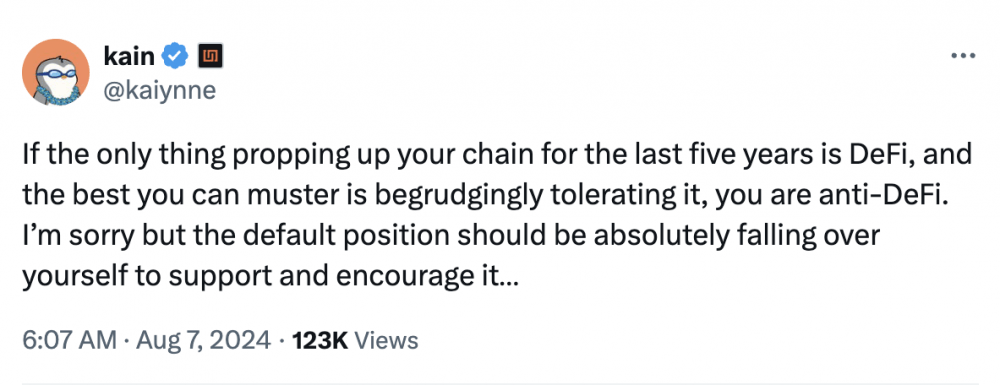

Источник: Кейн Уорвик.

Уорвик сказал, что эти посты появились из-за «многолетнего разочарования». Хотя он любит Бутерина и называет его «невероятным человеком, который сделал невероятные вещи», он сказал, что тот не макси и не считает его непогрешимым — особенно в его позиции по DeFi.

«Одна из самых важных вещей, в которых он ошибался за последние пять лет, — это важность DeFi», — посетовал Уорвик.

Он сказал, что язык Бутерина вокруг DeFi был эквивалентен «прекратите делать DeFi», что вызвало чувство разочарования в сообществе DeFi.

«Прекратите препятствовать основному варианту использования блокчейна», — подчеркнул Уорвик.

«Если вы нейтральны, вы, по сути, противник DeFi на данном этапе».

На следующий день после публикации эпизода Уорвик опубликовал мем в своем аккаунте X, который в очередной раз подколол EF и его признание сообщества DeFi.
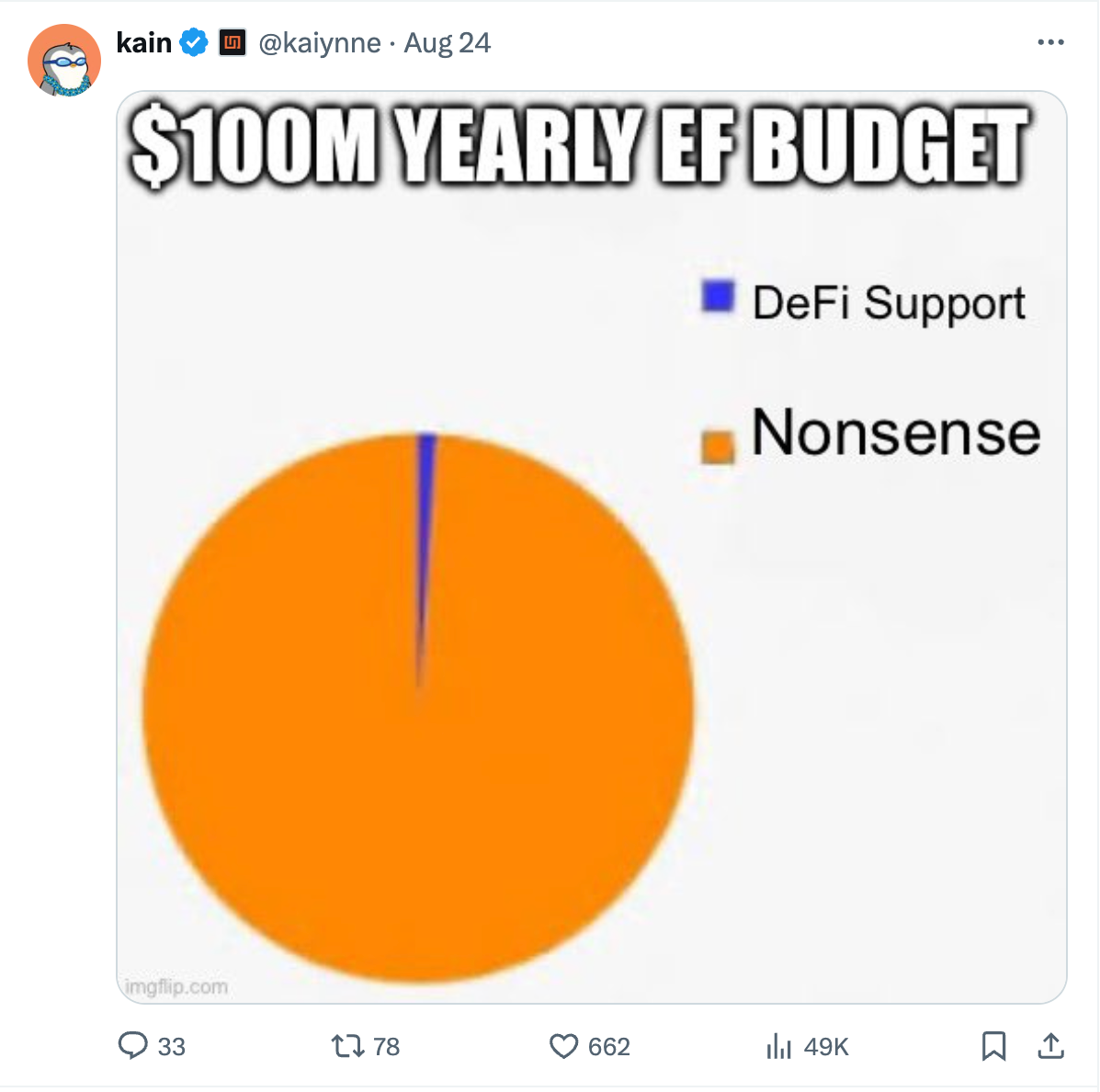

Источник: Кейн Уорвик.

Среди тех, кто согласился с Уорвиком, есть один пользователь, который сказал, что ценности сети Ethereum и DeFi выглядят взаимоисключающими.
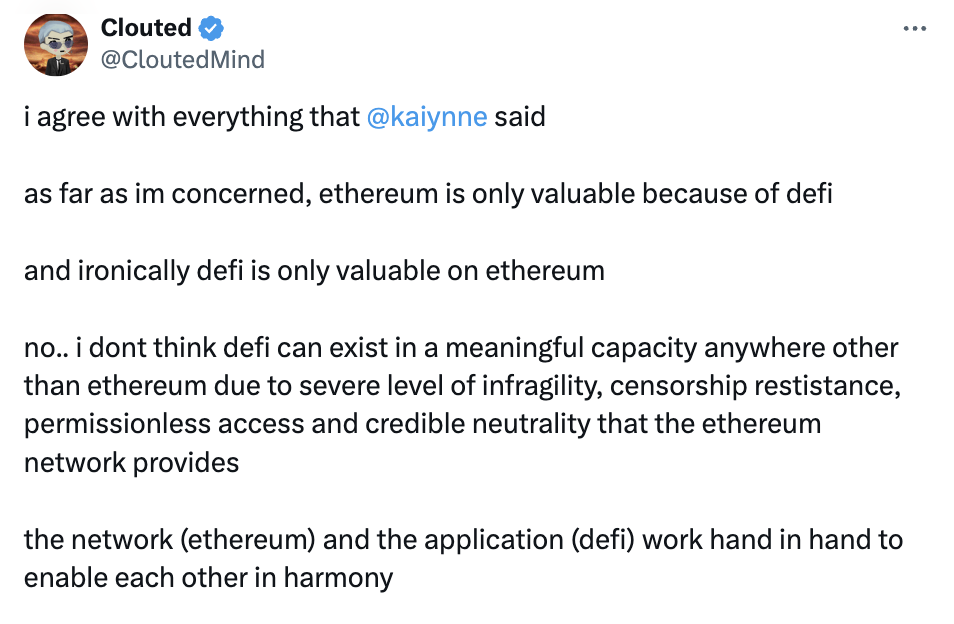

Источник: Clouted.

Тишина нарушена

Всего одного поста на X в недавнем обсуждении темы оказалось достаточно, чтобы привлечь внимание соучредителя Ethereum и побудить его ответить.

Пользователь MilliΞ сказал, что в такую ​​позицию по DeFi «почти трудно поверить». Он заявил, что это выглядит почти как «ирония — рекламировать что-то вроде USDC (что буквально подрывает ETH как SoV и нейтральность блокчейна) и просить меньше DeFi (того, что придает ETH наибольшую ценность) на одном дыхании».
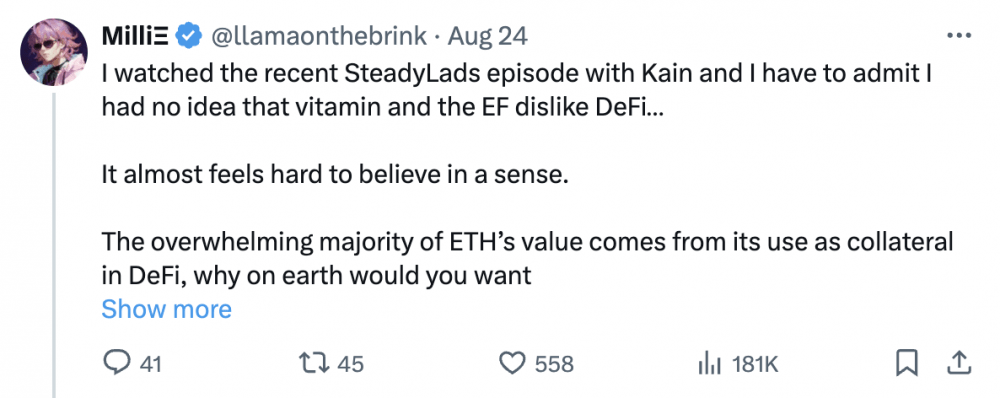

Источник: MilliΞ.

Бутерин воспользовался возможностью, чтобы написать четкий ответ на обвинения, подтвердив свои давние взгляды на DeFi. Он подчеркнул свое желание видеть приложения, которые одновременно полезны и устойчивы, а также поддерживают основные принципы сети — отсутствие ограничений и децентрализацию.

«Я думаю, что DEX — это здорово, и я использую их каждую неделю. Я думаю, что децентрализованные стейблкоины (например, RAI) — это здорово. Я думаю, что Polymarket — это здорово. Я думаю, что USDC не так хорош, как RAI, но с практической точки зрения мы просто должны уважать, что он невероятно удобен и что им пользуется множество людей», — перечисляет Бутерин.

С другой стороны, он сказал, что не уважает «вещи, привлекательность которых исходит из какого-то временного источника, который не имеет устойчивости».

Он привел пример того, что не испытывает «волнения» по поводу помешательства на фарминге ликвидности в 2021 году, потому что, по его словам, «было очевидно, что оно исходит от эмиссии токенов, которая по сути является временной».

Бутерин подчеркнул, что пересечения между DeFi и другими децентрализованными технологиями будут «очень важны» в будущем, потому что одного DeFi недостаточно.

Разногласия по поводу отношения Бутерина к DeFi возникли после того, как Ethereum Foundation отправил около 35 000 ETH на сумму около 96 миллионов долларов на кошелек, идентифицированный как адрес депозита биржи Kraken, 23 августа в 17:26 UTC.

Первоначально вызвав онлайн-дебаты об активности кошелька, исполнительный директор Ethereum Foundation пояснила, что это было частью «деятельности по управлению казначейством».


Trending Cryptos

Related Reads

Real-life 'Black Mirror' Pumpfun Go: 40 Yuan to Lick Toilets, 14,000 USD for a Logo Tattoo on the Forehead

The article discusses the controversial new platform "Pumpfun Go," a bounty task platform launched by the meme coin platform Pump.fun. Its slogan is "Pay anyone to do anything." The platform allows users to anonymously post tasks with cryptocurrency rewards, which are held in escrow until completion and verification. The piece highlights extreme and disturbing tasks that have gained notoriety, such as licking a gas station toilet floor for roughly $5.63, eating live insects, getting a company logo tattooed on one's forehead for $14,000, and even a now-removed $700,000 bounty for suicide. These tasks are often linked to promoting specific meme coins by generating shocking, attention-grabbing content. While some tasks involve community-building or charity, critics, including New York Governor Kathy Hochul, condemn the platform for exploiting economic desperation and encouraging humiliating or dangerous behavior. They argue it mirrors dystopian narratives from shows like "Black Mirror" and movies like "Nerve," where online dares escalate for viewers' entertainment. Supporters and some participants counter that the platform provides much-needed income opportunities for the financially struggling. One user claimed the bounty money far exceeded his monthly salary. The article concludes by questioning the morality of a system where the wealthy pay for spectacle and the poor trade dignity for survival, reflecting a long history of public consumption of others' suffering. It suggests hope may lie in future technological abundance freeing people from such desperate choices.

marsbit26m ago

Real-life 'Black Mirror' Pumpfun Go: 40 Yuan to Lick Toilets, 14,000 USD for a Logo Tattoo on the Forehead

marsbit26m ago

Faked Trades, Clone Websites, 1105 Videos: Polymarket Under CFTC Scrutiny

The U.S. Commodity Futures Trading Commission (CFTC) has launched a wide-ranging investigation into prediction market platform Polymarket. The probe, triggered by a Wall Street Journal report, focuses on allegations of systematic marketing fraud. The report revealed Polymarket allegedly hired dozens of student content creators to post over 1,100 videos showing fake, profitable trades on cloned websites, without disclosing the paid relationships. These videos, with over 140 million views, were pivotal to user growth. Simultaneously, the National Association of Consumer Advocates (NACA) filed a lawsuit in Washington D.C., accusing Polymarket and its executives of deceptive advertising targeting college students. The suit details off-campus promotions and payments made through the CMO's personal PayPal account to influencers who failed to disclose sponsorships. The investigation places CFTC Chairman Michael Selig in a difficult position, as he has been a vocal advocate for prediction markets and is currently suing multiple states to assert federal jurisdiction over them. This case tests the CFTC's dual role as both promoter and enforcer. This marks Polymarket's second major clash with the CFTC. After a 2022 settlement and U.S. ban, it regained approval to operate in September 2025, secured a $20 billion investment, and saw its valuation soar. The current crisis, compounded by a recent $3.1 million front-end supply chain attack, represents the platform's most severe multi-front challenge since its founding.

Foresight News28m ago

Faked Trades, Clone Websites, 1105 Videos: Polymarket Under CFTC Scrutiny

Foresight News28m ago

Real-Life 'Black Mirror' Pumpfun Go: 40 Yuan to Lick a Toilet, $14,000 to Tattoo a Logo on Your Forehead

Pumpfun Go, a bounty task platform launched by the meme coin platform Pump.fun, is facing intense controversy. The platform's slogan "Pay anyone to do anything" has manifested in real-world tasks where participants perform increasingly extreme or demeaning acts for cryptocurrency rewards. These tasks range from licking a gas station toilet floor for roughly $5.63 to getting a permanent "bounty.fun" logo tattooed on one's forehead for $14,000. Other completed challenges include eating live insects and quitting a job on camera. The highest-value active bounty offers approximately $560,000 for climbing Mount Everest and placing a bet on a specified platform. While some tasks involve promoting meme coins or community events, the platform has drawn widespread criticism for incentivizing the exploitation of economic desperation. Participants, often citing "we need money" as their motivation, complete these tasks for sums that can far exceed their regular income. Critics, including New York Governor Kathy Hochul, have condemned Pumpfun Go as a dystopian system that commodifies human dignity and preys on the vulnerable. Supporters argue it provides a novel income opportunity for those in need. The debate highlights deeper societal issues around power, inequality, and the historical human fascination with spectacles of humiliation. The platform's existence raises questions about the ethical limits of anonymous online markets and the persistent reality where financial need forces individuals to trade their dignity for survival.

Odaily星球日报34m ago

Real-Life 'Black Mirror' Pumpfun Go: 40 Yuan to Lick a Toilet, $14,000 to Tattoo a Logo on Your Forehead

Odaily星球日报34m ago

Trading

Spot

Hot Articles

Discussions

Welcome to the HTX Community. Here, you can stay informed about the latest platform developments and gain access to professional market insights. Users' opinions on the price of ETH (ETH) are presented below.

活动图片