Author|Golem(@web 3_golem)
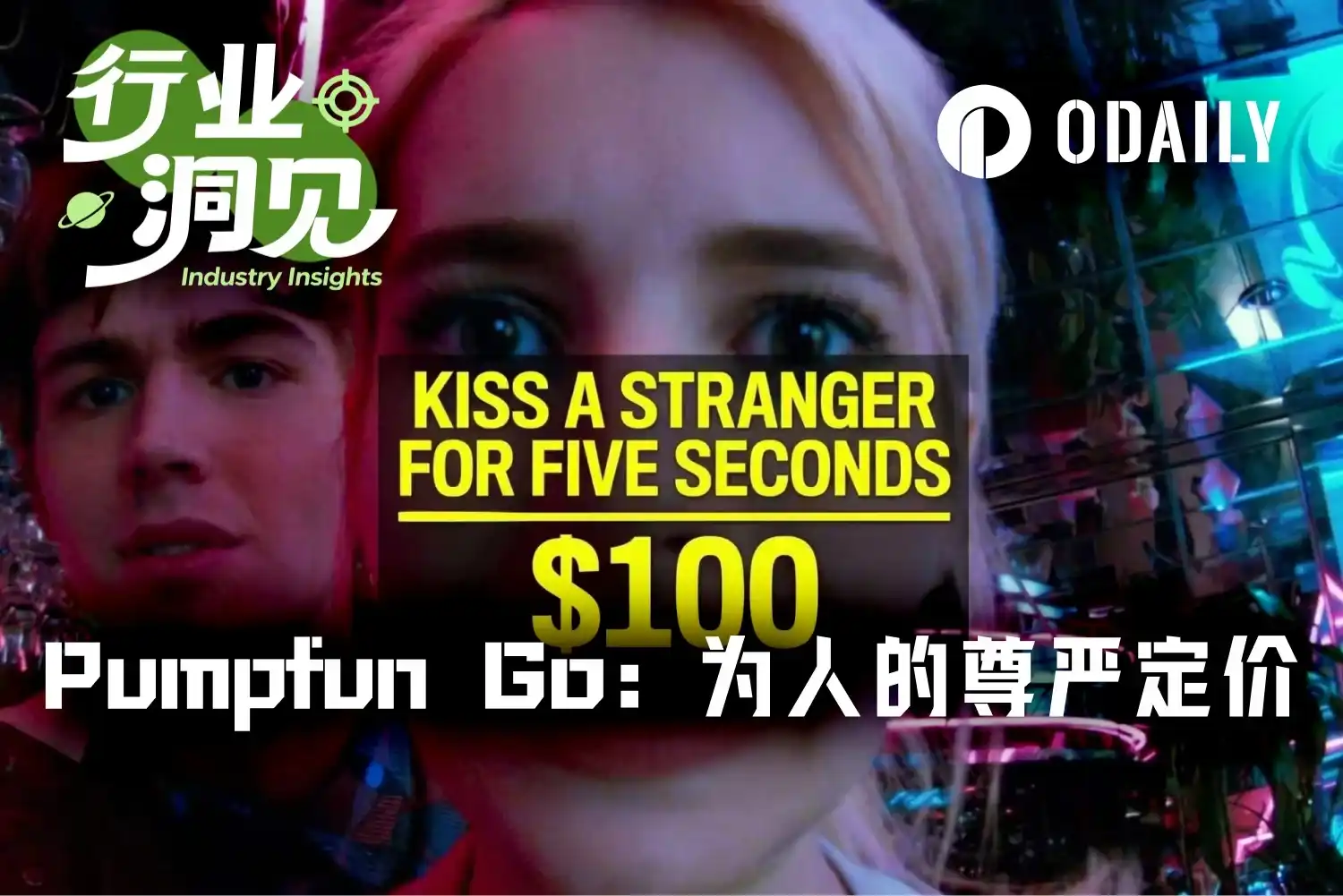
If offered 4,000 yuan, would you be willing to lick a toilet floor?
At first glance, most people would feel offended, as if their dignity was being trampled upon. But upon calming down, one's heart inevitably wavers—"Just this once, compromising a bit of dignity seems worth it."
This is not a plot from some human experiment film, nor a fictional moral dilemma, but a real bounty posted on the task platform Pumpfun Go. If you genuinely hesitated over the 3,000 yuan just now, then I must tell you, someone has already crawled down faster than you could, and the real reward was not 4,000 yuan, but about 40 RMB (5.63 USD).
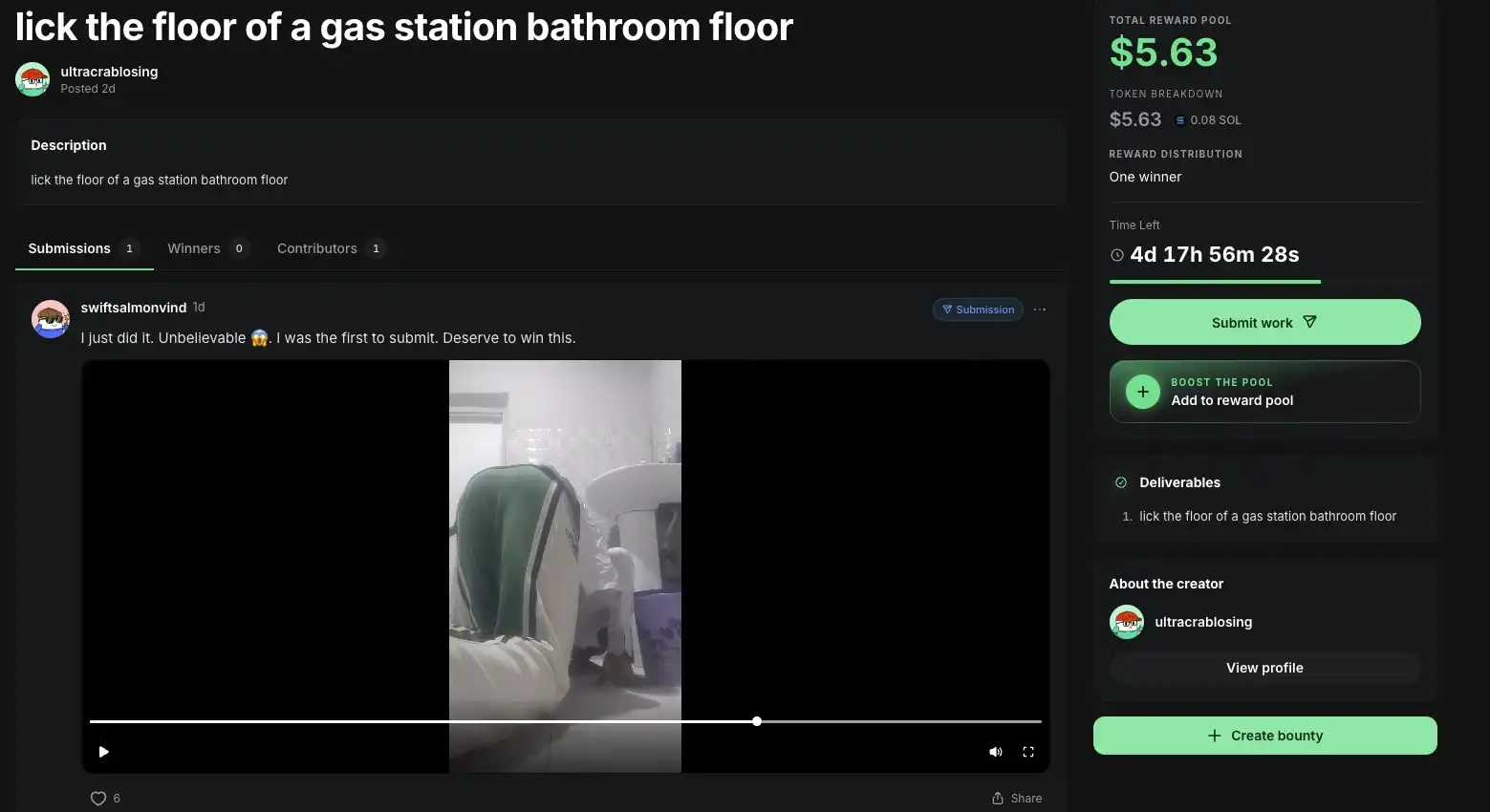
A young Black man submitted a video of himself licking a gas station bathroom floor.
Licking toilets is just one ordinary bounty task on Pumpfun Go. Even more extreme ones include: eating live insects, resigning in front of one's boss, getting a forehead tattoo... and the ultimate task: suicide (1000 SOL, worth about 700,000 USD).
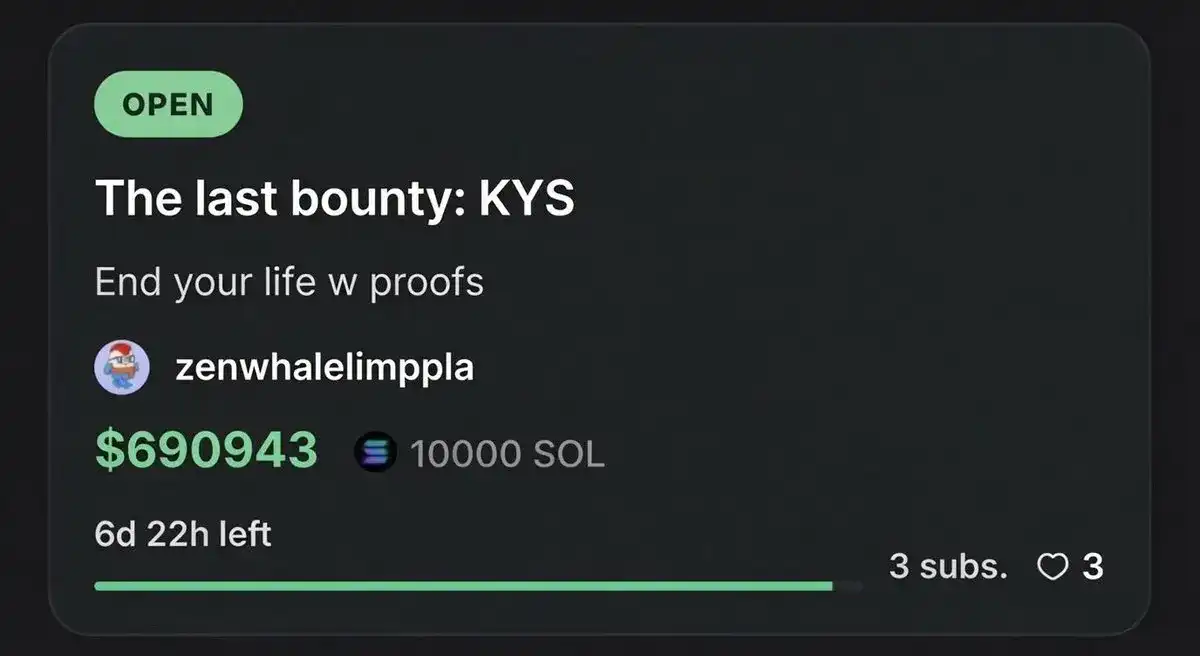
(The suicide bounty)
Here, the rich use money to buy spectacle and humiliation, the poor use their bodies and dignity to survive, while onlookers gleefully consume it all from behind their screens. When "we need money" becomes the ultimate passport, how much further can the bottom line of human morality recede?
Pumpfun Go: Pay for Anyone to Do Anything
Pumpfun Go is a new product launched in early June by the overseas Meme coin launch platform Pump.fun. Its slogan is simple and blunt: Pay for anyone to do anything.
On Pumpfun Go, anyone can anonymously create bounty tasks and anonymously complete tasks and submit evidence (often videos) to compete for the bounty, which is paid in cryptocurrency. To prevent creators from backing out later, the platform mandates that rewards must be fully escrowed in a third-party account at the time of task creation. Ultimately, the official platform will review all submitted evidence based on the creator's predefined criteria and decide who receives the bounty.
According to official data, within less than a month of launch, 238 bounty tasks have been posted on Pumpfun Go, with a total of 605,000 USD in bounties already claimed by task completers, and 225,000 USD in bounties awaiting completion. The average bounty per task is 3,487 USD.
Currently, the task with the highest bounty available for completion (about 56,000 USD) is posted by an online gambling platform, requiring the challenger to reach the summit of Mount Everest and place a bet on their platform. The second-highest bounty task (about 28,000 USD) is posted by a Meme project, requiring the challenger to run a full marathon dressed in the mascot costume of "memecoin" and break the world record of 3 minutes 14 seconds 46 for a mascot running a marathon. The third-highest bounty task (about 26,000 USD) requires the challenger to attend the World Cup matches of every participating team, record a video, and shout "'$WORLDCUP2026 COIN TO THE MOON".

The task with the highest bounty on Pumpfun Go
In fact, most bounty tasks posted on Pumpfun Go are related to promoting Meme coins. The initial purpose of Pump.fun launching this product was to incentivize players to build Meme coins and unlock more gameplay through paid rewards.
For example, the NEET community, themed around "decadent culture," offered a 14,000 USD bounty requiring challengers to organize a NEET parade in New York, and a 3,000 USD bounty requiring challengers to resign in front of their boss. The FITNESS community, themed around health, offered a 150 USD bounty for doing 100 push-ups in 60 seconds. The CHANCE community, themed around charity, offered a 1,500 USD bounty for organizing a trash cleanup event.
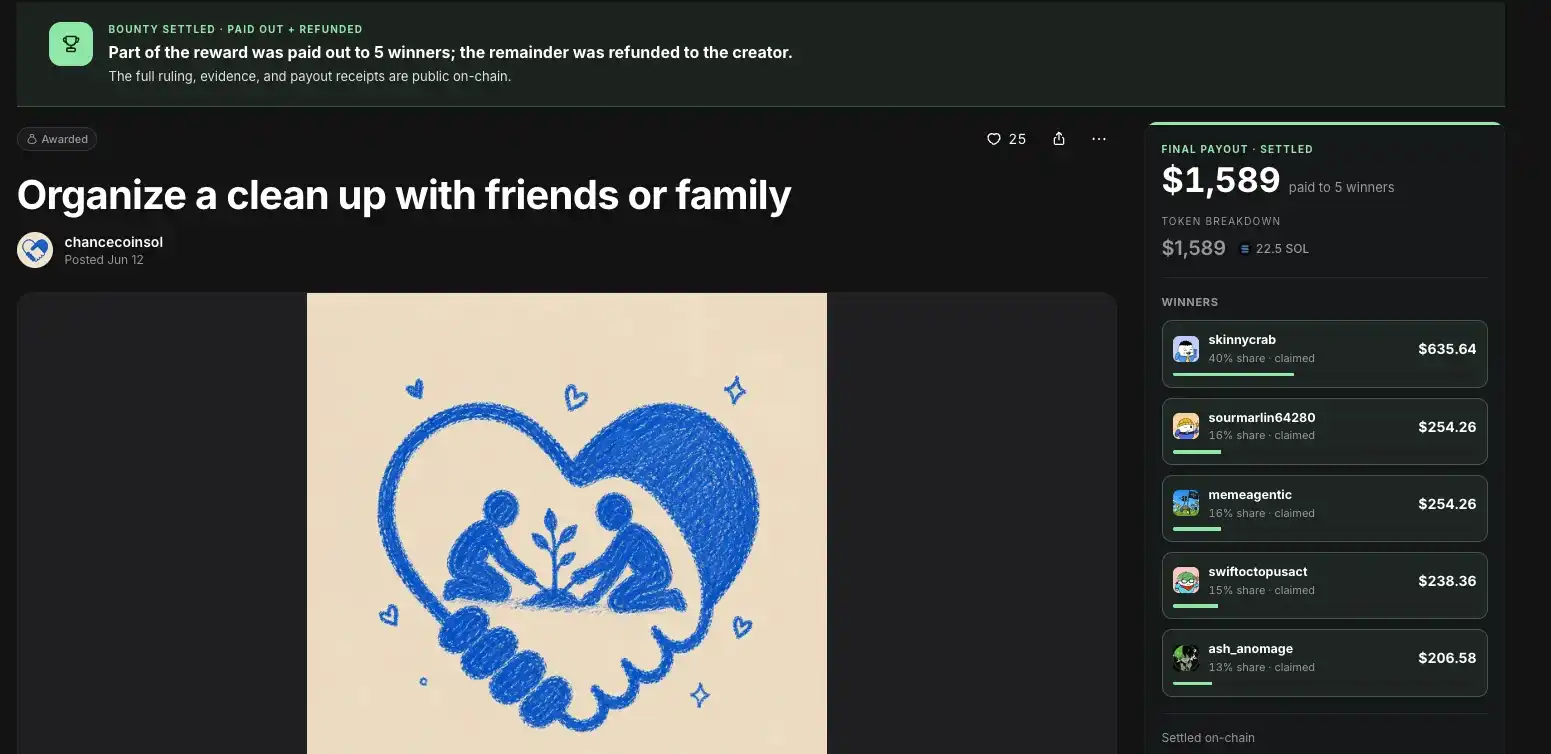
Five challengers shared the 1,500 USD bounty posted by the CHANCE community.
But these might be the only remaining "warm" aspects of Pumpfun Go. Most of the remaining tasks are filled with humiliation, bad taste, and harm.
Therefore, as soon as Pumpfun Go launched, many saw it as the real-life counterpart to the first episode of *Black Mirror* Season 7, "Common People." However, another movie released over 10 years ago, *Nerve*, had already predicted the traffic traps, cyberbullying, and collective frenzy of anonymous groups that would inevitably accompany Pumpfun Go's popularity.
In the film, the protagonist Vee is an introverted high school student who, by chance, downloads a wildly popular live-streaming game called Nerve. In this game, viewers can pay to design challenges for the players. Initially, the challenges are harmless, like kissing a stranger or going out in a bizarre outfit. But as viewership skyrockets, the rewards get higher, and the challenges become more dangerous and sensational, such as stripping, or riding a motorcycle at high speed blindfolded.

The film's protagonists are asked to strip in an elevator.
The core of Meme coin hype is attracting attention, and from a human nature perspective, sensational, humiliating, exaggerated, and thrilling content always attracts more eyeballs than warm, positive content. To generate buzz for their Meme coins, players are destined to post controversial bounty tasks, leading Pumpfun Go down a path of absurdity and chaos.
Descending into Absurdity and Chaos: Earning 14,000 USD for a Forehead Tattoo
In Pumpfun Go's platform rules, the posting of bounty tasks related to violence, defamation, threats, discrimination, and pornography is explicitly prohibited. Content with substantial harm is easy to identify, but tasks with sensational, humiliating elements cannot be banned. There is no universal bottom line for human tolerance of morality and dignity. The relationship between task posters and challengers here is one of "willing party, consenting party," because the pay is simply too good.
Currently, the user with the highest bounty earnings on Pumpfun Go is someone named "riri_z1", who earned about 14,000 USD (approx. 95,000 RMB) for completing just one task—getting "bounty.fun" tattooed on their forehead.
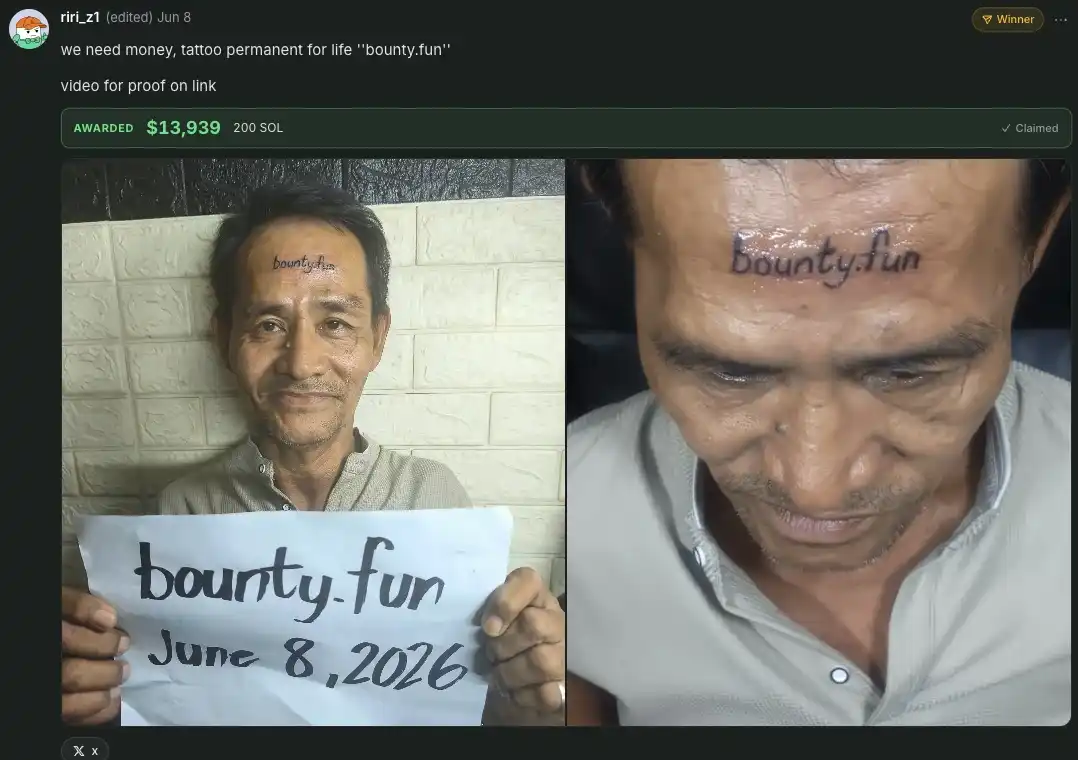
The task poster required the challenger to tattoo "bounty.fun" on their forehead because they had launched a meme token of the same name, and this would garner massive attention in a short time. The task was completed by an elderly Filipino man, who simply stated in his submission: "we need money".
But how would a man in his sixties know about this obscure bounty platform? The truth of this story is likely that a challenger who saw the task wanted to earn the bounty but didn't want the tattoo on their own forehead, so they found a local elderly man to do it; how much of the bounty that old man eventually received, nobody cares.
"riri_z1" is not the first person to complete a forehead tattoo task on Pumpfun Go. Challenger "arivu" was the first in this niche, and his experience is even more dramatic. On June 6th, he tattooed the meme token "$boutywork" onto his forehead for a bounty of about 3,000 USD. However, the task poster, ayushquant, had made a typo when posting the task, writing "$boutywork" instead of "$bountywork", and subsequently reposted a new forehead tattoo task, not recognizing "arivu"'s tattoo.
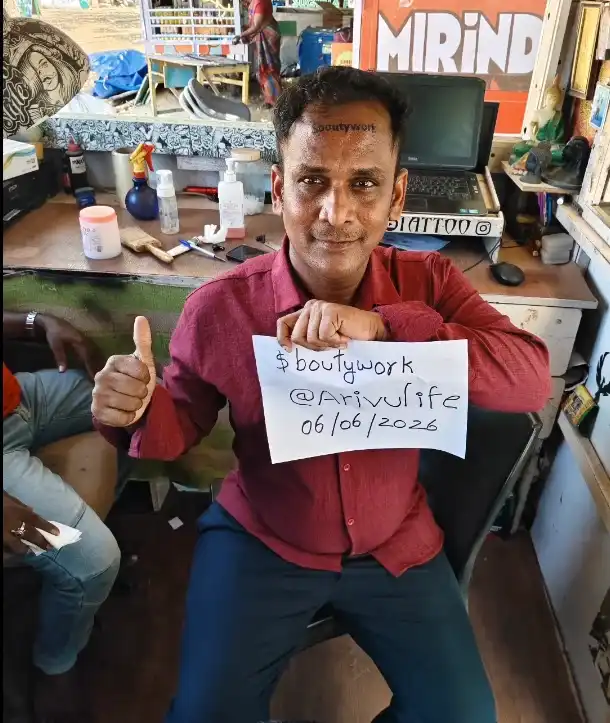
arivu with "$boutywork" tattooed.
Six days later, "arivu" completed the new task, tattooing the missing "n" above and between the "u" and "t". Perhaps moved by "arivu"'s sincerity, the platform ultimately ruled that he was eligible for the bounties from both forehead tattoo tasks, totaling about 6,000 USD (approx. 40,000 RMB).
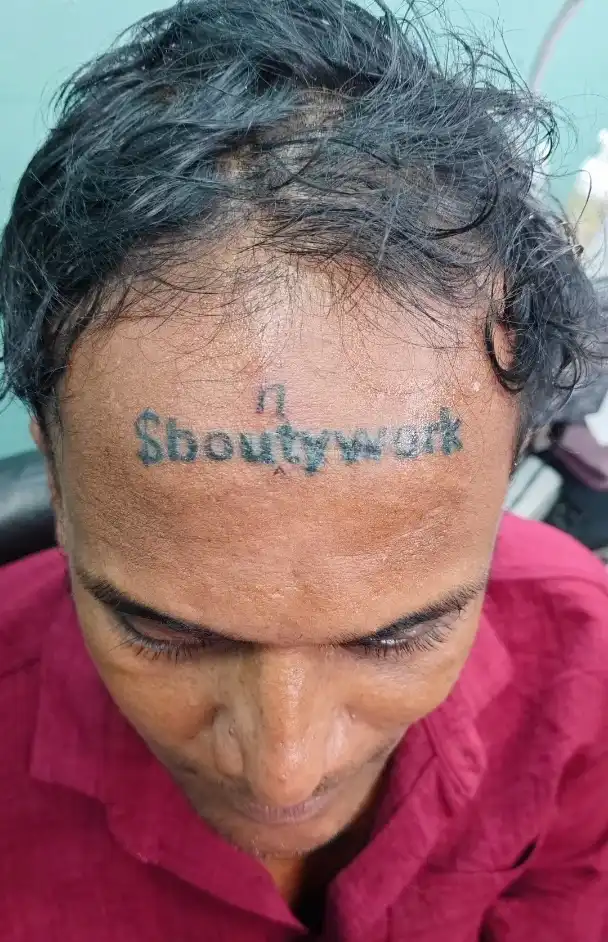
In his task submission, arivu not only held no grudge against the task poster ayushquant for the typo but also expressed gratitude in his note: "Thank you @ayushquant for bringing this opportunity again, and also thank you pump.fun for creating opportunities that can truly change people's lives."
The completed high-bounty tasks on Pumpfun Go are mostly similar in nature to the forehead tattoos, filled with sensationalism, absurdity, and pranks. ayushquant is the task poster who has paid out the most on Pumpfun Go, distributing about 10,000 USD in bounties to challengers. His tasks include drinking a bottle of hot sauce, eating three live insects on camera, doing a backflip from a roof into a pool, etc.—ayushquant had also posted some bounties like helping the homeless, but they garnered far less attention than the "extreme" challenge tasks.
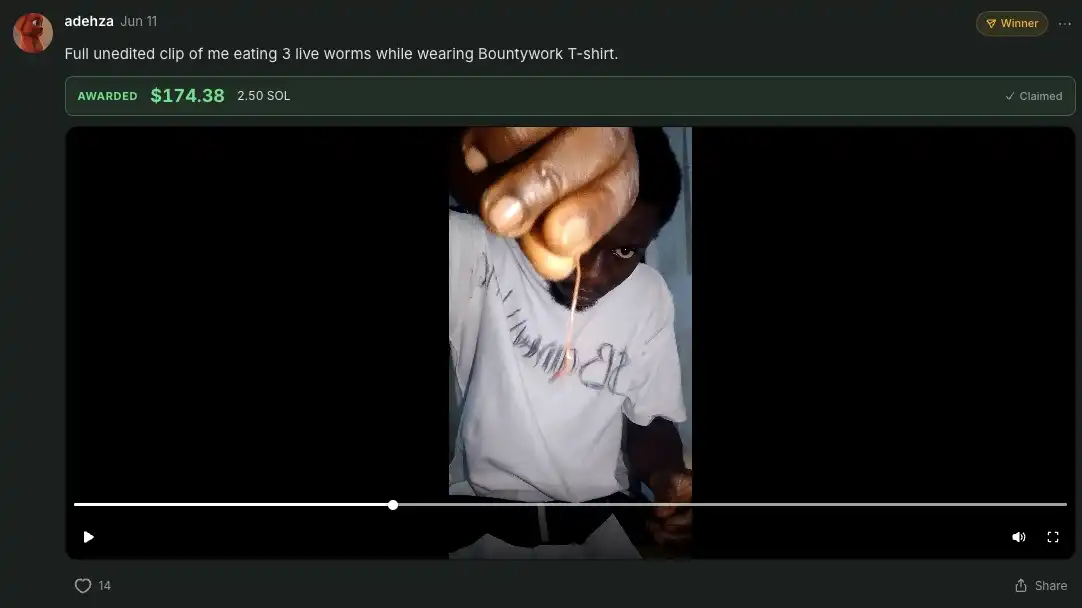
A young Black man eats three live insects on camera for a bounty of 174 USD (approx. 1,200 RMB).
What Are We Sighing About?
Even though all challenges are completed voluntarily by participants, who even thank the posters after receiving payment, various sectors of society have criticized Pumpfun Go for essentially inducing vulnerable individuals to perform humiliating acts in public, amplifying humanity's darker side.
Under posts discussing arivu's forehead tattoo on the overseas social platform X, an X product manager commented: "It's sad. After all the rich people left the crypto industry, all that's left now are US teenagers forcing poor people to do embarrassing things."
Current New York Governor Kathy Hochul directly quoted Pump.fun's post announcing Pumpfun Go, stating, "The first bounty should be for legislation aimed at banning this dystopian nightmare." (Odaily note: Pump.fun's parent company, Baton Corporation, is based in New York.)
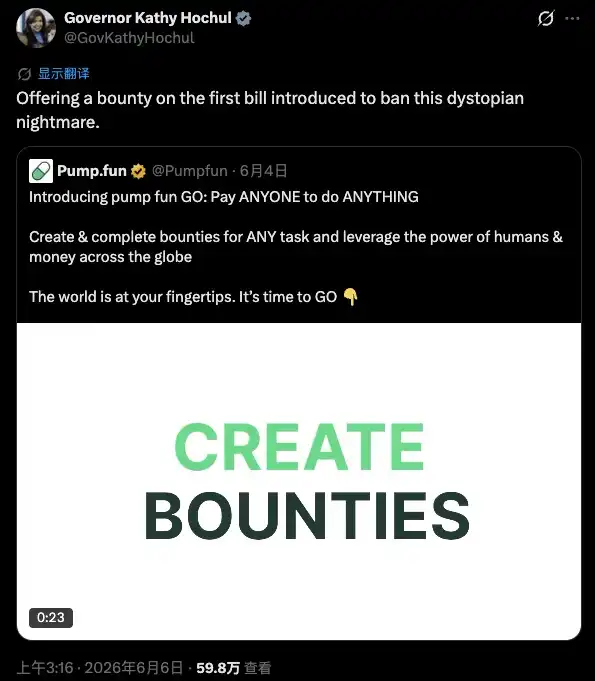
New York Governor criticizes Pumpfun Go
However, Kathy Hochul's remarks were quickly countered by Pump.fun supporters. The account for the Meme token Chill House sarcastically accused: "Madam Governor, hello! This new product (Pumpfun Go) is as serious as the growing homelessness problem in New York State since the pandemic. How will you address the insufficient housing construction issue so people don't have to sleep on the streets?"
In the eyes of supporters, Pumpfun Go has not amplified wealth disparity and inequality; on the contrary, it offers those struggling a chance to improve their lives, even creating a new form of "wealth distribution." A challenger named xavz, who completed the "resign in front of a mirror" task for a 3,000 USD bounty, even spoke from experience.
Challenger xavz wrote in his submission: "I did this because the opportunity neetcoin (the task poster) gave me is much better than my company. I can earn 3,000 USD in a day (by completing this task), whereas I only earn 200 USD a month at my company. Plus, I can work from home and stay with my family."
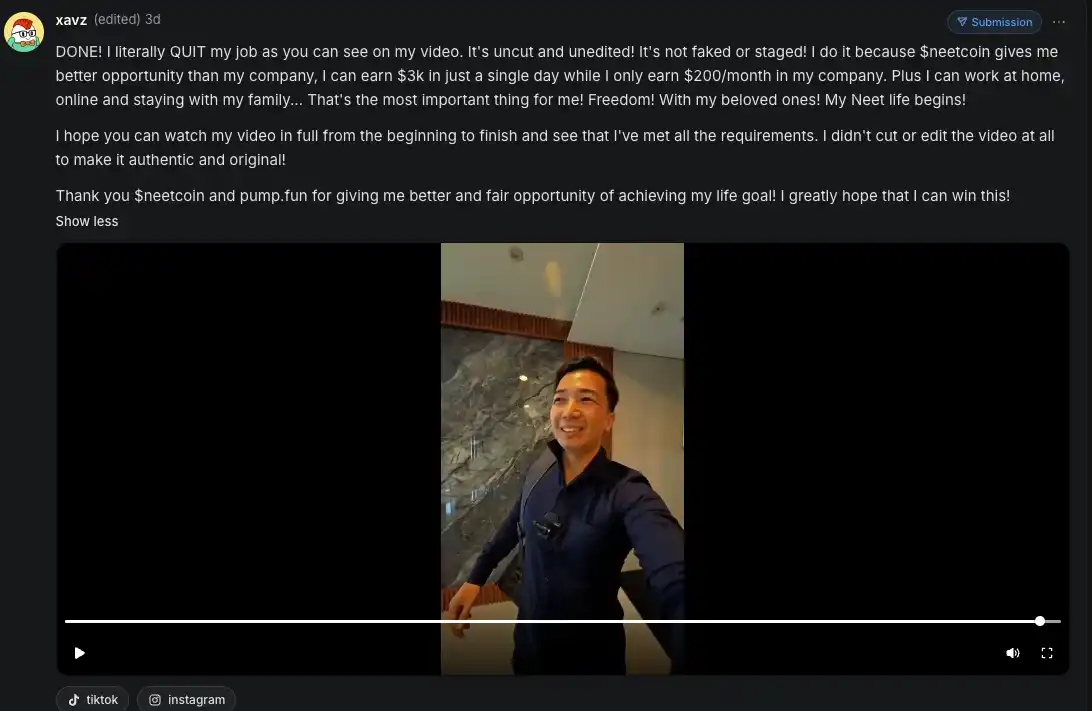
xavz resigns for a 3,000 USD bounty.
Facing the overwhelming criticism on social media, Pump.fun itself has not made any response. Its only action was announcing on June 25th that the company is hiring a Chief Legal Officer (CLO) with an annual salary of 1 to 5 million USD.
This controversy over moral and dignity boundaries likely won't have a resolution. Within Pumpfun Go's entire mechanism, the rich get amusement, the poor get money, which seems like a perfectly fair "win-win" situation where everyone gets what they need. So why do we, witnessing it all, still feel an unfathomable sense of bleakness and sorrow?
Pumpfun Go actually reflects the power structure of this society. The greatest asset of the wealthy isn't money, but the poor. When a person is desperate enough for money, dignity, body, and reputation all become commodities that can be priced. Just how much can the phrase "we need money" make people give up? And exploiting economic inequality to make impoverished or desperate individuals perform permanent or high-risk acts for a bounty is a culpability that pumpfun can never wash away, no matter what.
We aren't sighing for those struggling in life, because we know that if we were in their position, we might not make different choices. What truly makes us feel bleak is this: in an era that proclaims technological leaps and civilizational progress, why is society still operating this way? Why is it still turning the pain, plight, and loss of dignity of the vulnerable into content for onlookers to casually consume and like?
Looking into the abyss of history, one might find that this phenomenon hasn't changed fundamentally for thousands of years. From the gladiators in ancient Rome's Colosseum in the 3rd century BC using their blood to entertain the nobility, to freak shows in circuses, to sensational short videos and live-streaming battles, the medium changes, but the perverse fascination with watching others' danger, pain, and embarrassment never disappears.
After endless melancholy, perhaps we can only place our faint hope in the future.
AI is increasing societal productivity at an unprecedented rate. When AI truly replaces humans in heavy survival-based work, if one day the wealth created by technology is sufficient to cover the basic needs of every ordinary person, so no one has to lick toilet floors for a few dozen yuan, tattoo letters on their forehead for a few thousand dollars, or accept any humiliating, mocking challenge just to survive—when everyone can live with dignity—perhaps humanity will have finally emerged from this millennia-long state of barbarism.