减半后必横盘已成历史规律,这次会不同吗?

Odaily星球日报Published on 2024-08-26Last updated on 2024-08-26

Abstract

耐心依然是游戏的核心。

原文作者:Flossy

原文编译:深潮 TechFlow
减半后必横盘已成历史规律,这次会不同吗?

引言

比特币市场在 2024 年 4 月完成了第四次减半后,正进入一个引人关注的阶段。这个周期对分析提出了独特的挑战,新因素如 ETF 批准正在影响传统的减半后模式。

在这篇文章中,我们将回顾以往减半的历史数据,评估当前市场状况,并探讨我的一个想法——一个可能定义这个周期的长期整合期。虽然我并不是说这个想法完全新颖,但有趣的是,最近我几乎没有看到关于这一观点的讨论。当我提到这个想法时,常见的反应是“这个周期是不同的”。

比特币减半:历史不会完全重演,但总会有相似之处

首先,我们来谈谈这个想法的主要角色:比特币减半。我们刚在 2024 年 4 月 19 日完成了第四次减半。以下是过去减半的回顾及其发生后的情况:

  • 2012 年 11 月 28 日:奖励降至 25 个比特币

  • 2016 年 7 月 9 日:降至 12.5 个比特币

  • 2020 年 5 月 11 日:削减至 6.25 个比特币

  • 2024 年 4 月 19 日:现在降至 3.125 个比特币

现在,情况变得更加引人入胜。让我们看看以前减半时的价格走势:
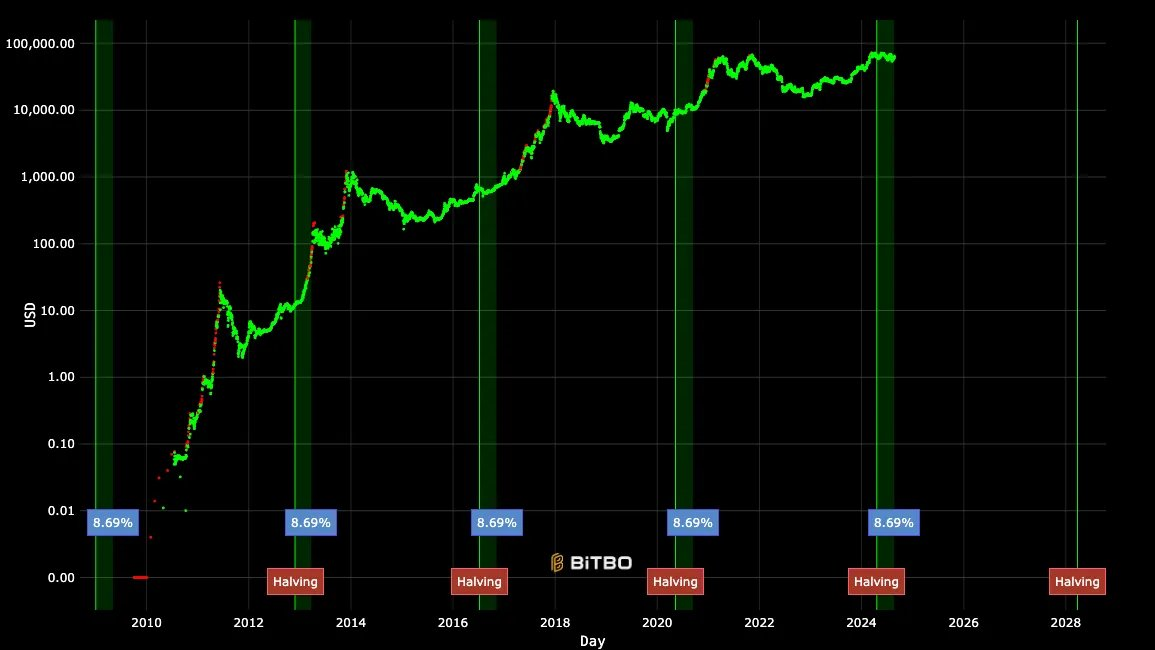
减半后必横盘已成历史规律,这次会不同吗?

第一次减半 - 2012 年 11 月 28 日

  • 减半时价格:约 $ 12 

  • 横盘期:大约 1 年

  • 横盘结束时价格:约 $ 100 

  • 随后的牛市高点:约 $ 1, 100 (2013 年 11 月)

  • 从减半到高峰的百分比增长:约 9, 000% 

第二次减半 - 2016 年 7 月 9 日

  • 减半时价格:约 $ 650 

  • 横盘期:大约 0.5 - 1.5 年(取决于你如何看待牛市)

  • 横盘结束时价格:约 $ 1, 000 

  • 随后的牛市高点:约 $ 19, 700 (2017 年 12 月)

  • 从减半到高峰的百分比增长:约 2, 930% 

第三次减半 - 2020 年 5 月 11 日

  • 减半时价格:约 $ 8, 600 

  • 横盘期:大约 6 个月

  • 横盘结束时价格:约 $ 10, 000 

  • 随后的牛市高点:约 $ 69, 000 (2021 年 11 月)

  • 从减半到高峰的百分比增长:约 702% 

当前减半 - 2024 年 4 月 19 日

  • 减半时价格:约 $ 64, 000 

  • 横盘期:截至目前为止 5 个月

伟大的横盘理论:我们正处于其中

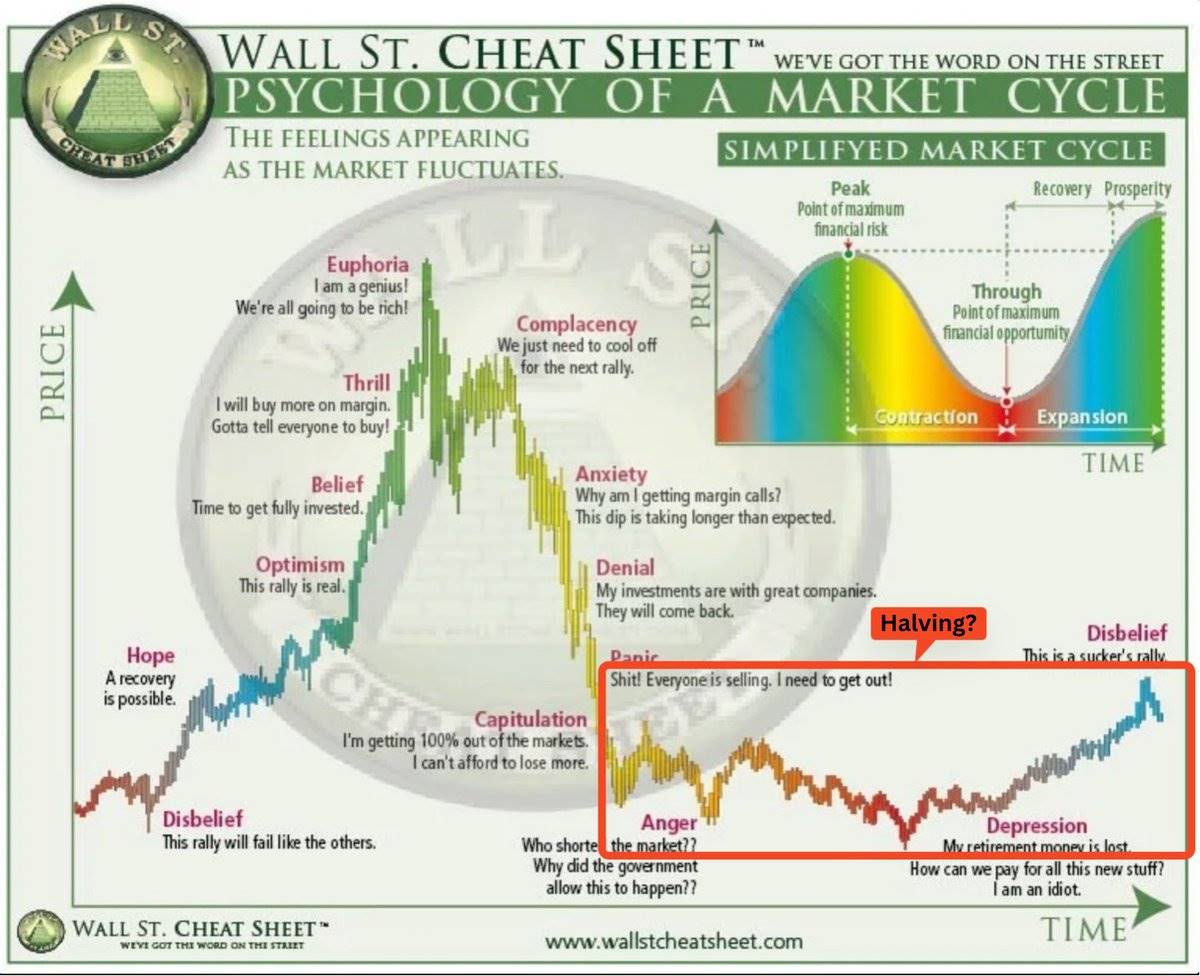
这就是我的理论出现的地方。因为这正是我们现在所看到的:一种横盘的价格走势,这对许多投资者来说在心理上都是一种挑战。

看看这些数字,模式似乎很清晰:

  1. 初始上涨:我们通常会看到减半前价格的上涨。

  2. 伟大的横盘:减半后,我们进入一个大约 6 个月的整合期。

  3. 突破:在横盘之后,真正的牛市开始,导致新的历史高点。

减半后必横盘已成历史规律,这次会不同吗?

图:这可能就是我们所处的状态吗?

这个减半周期:相似却又不同

现在,你可能会问,“等等,我们在这次减半之前达到了历史新高!”你说得对。2024 年 1 月的 ETF 批准改变了典型的减半后市场格局,导致价格提前上涨。

ETF 效应:新的市场动态

比特币和以太坊现货 ETF 的批准和推出为加密市场带来了新的动态。让我们分析一下:

1. 比特币 ETF 批准(2024 年 1 月):这导致价格和交易量显著增加。我们看到比特币在减半前达到了新的历史高点,这与以往周期有所不同。

2. 以太坊 ETF 批准(2024 年 5 月):紧随比特币之后,以太坊 ETF 也获得批准并推出。这带来了新的机构投资者兴趣,并且可以说更多的资金流入了加密领域。

虽然这些发展为市场带来了新的流动性和关注,但它们并不一定否定潜在的周期性模式。“横盘市场”可能仍在发挥作用,但它在新的规模和变量下运作。

数据支持的横盘:这不仅仅是一个理论
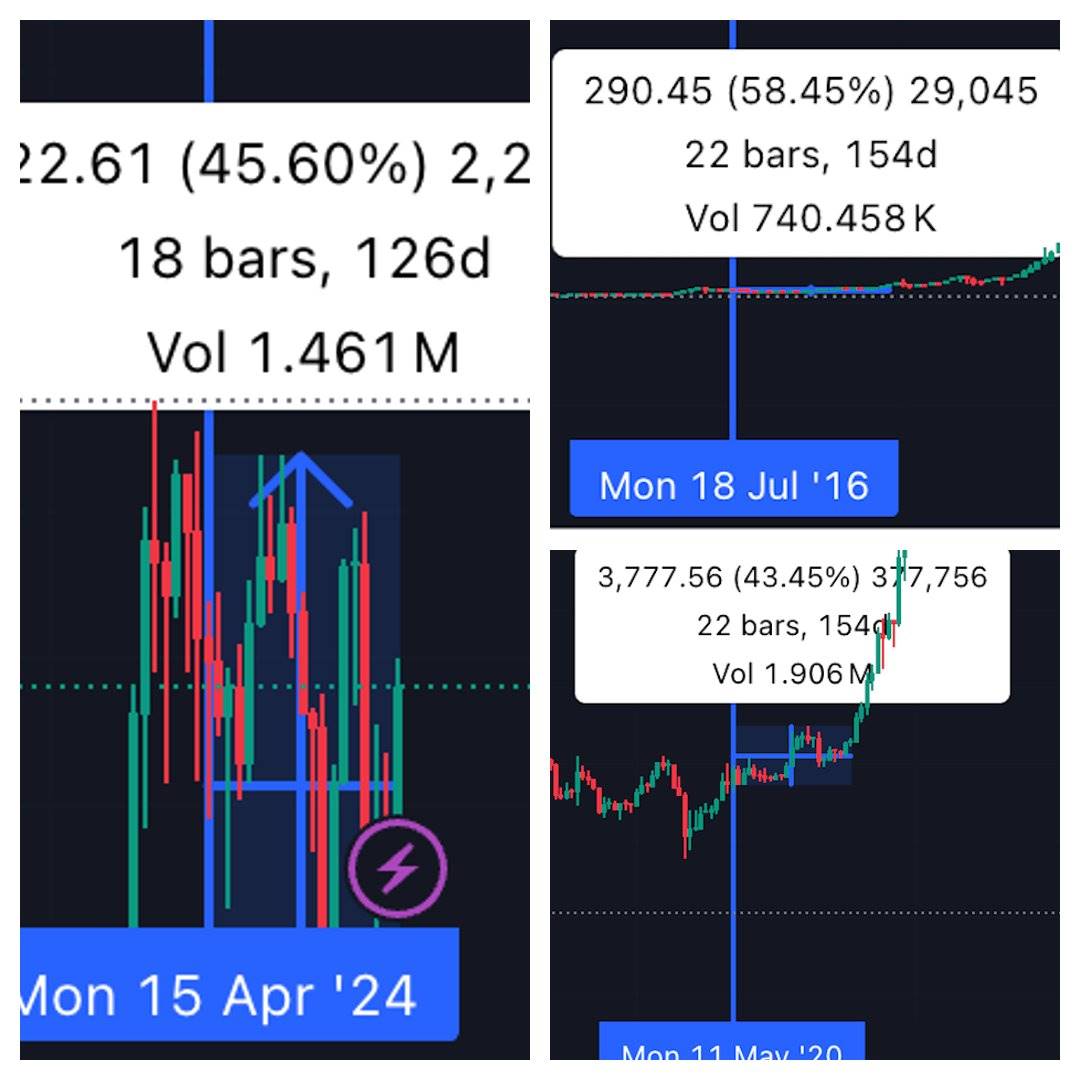
减半后必横盘已成历史规律,这次会不同吗?

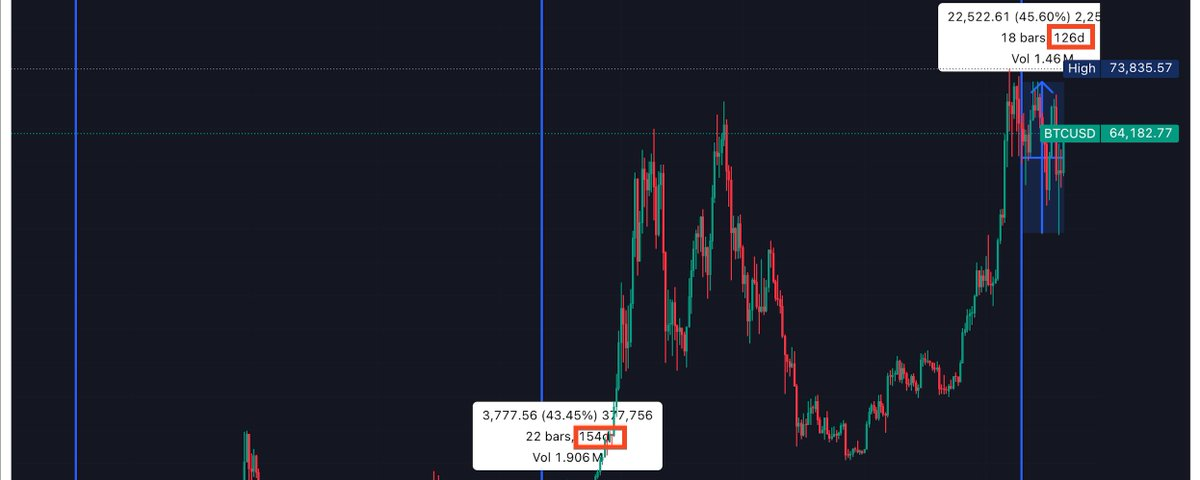
图:以前减半的时间框架和范围

即使在这次减半前的上涨中,我们仍然看到横盘市场的迹象:

1. 波动性下降:尽管价格较高,但比特币的波动性自减半以来一直在下降。

2. 交易区间:自减半以来,我们一直在相对狭窄的区间内交易,经典的横盘行为是双向约 25% 的波动。

3. 交易量减少:整体交易量一直在下降,这也是横盘市场的标志。

理论的起源

值得注意的是,这不是我随便想出来的理论。我在我的 Telegram 频道上分享这个观点的元素已经有一段时间了。早在 4 月 9 日,减半前不久,我就开始讨论。 这些早期的帖子触及了理论背后的核心思想——认识到减半后市场模式的重要性、过度思考短期波动的风险,以及在这些时期专注于积累的价值。

机构横盘:游戏中的新参与者

现在,这个周期变得更加有趣了。我们有一个新玩家:通过 ETF 进入市场的机构投资者。这些不是典型的“高买低卖”的散户投资者。他们的动作缓慢而稳定,在横盘期间进行积累。

ETF 的数据显示,即使在价格停滞期间,资金流入也保持稳定。这就是机构横盘在发挥作用,它正在改变游戏规则。

这对当前周期意味着什么
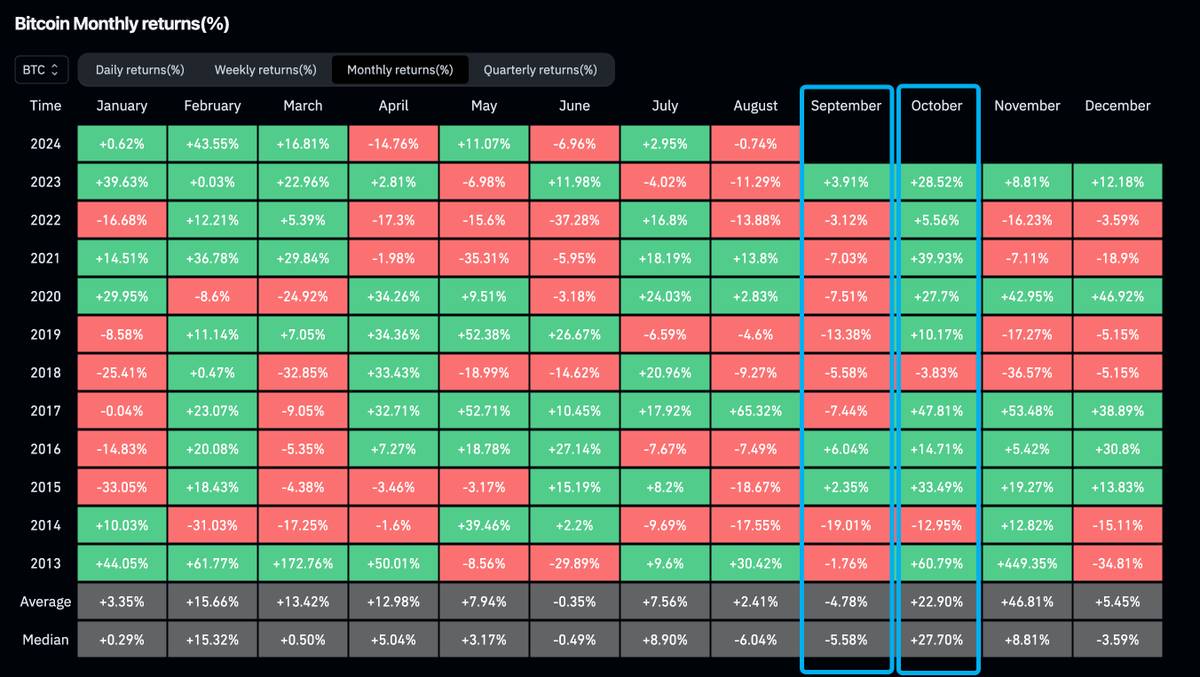
减半后必横盘已成历史规律,这次会不同吗?

图:历史月度价格走势(比特币)

根据历史数据和当前市场状况,我们可能会期待以下情况:

1. 积累阶段:聪明的资金(通过 ETF 的机构、大户和精明的散户投资者)很可能会在这个阶段继续积累。

2. 潜在突破时间框架:如果历史规律依然成立(在加密市场中通常如此),我们可能会在 2024 年第四季度或 2025 年第一季度看到真正的牛市启动。

3. 短期历史模式:历史数据强烈支持我们处于关键时刻的观点。看一看过去十年比特币的月度回报:

九月和十月的表现对比几乎与减半后“横盘/熊市”到“牛市”阶段的典型过渡完美契合。如果这个模式在今年成立,我们可能会看到当前的整合阶段在九月结束,随后在十月出现显著的上涨。

  • 九月的平均回报为 -4.78% ,中位数为 -5.58% ,使其历史上成为表现最差的月份之一。

  • 相比之下,十月的平均回报为 22.90% ,中位数为 27.70% ,始终是表现最好的月份之一。

模式的一致性:特别引人注目的是这种模式的一致性。在所示数据中,十月在 12 年中有 9 年表现为正,其中一些年份的涨幅非常惊人(如 2013 年的 60.79% 和 2021 年的 39.93% )。这种一致性为我们即将迎来潜在市场转变的观点增添了可信度。
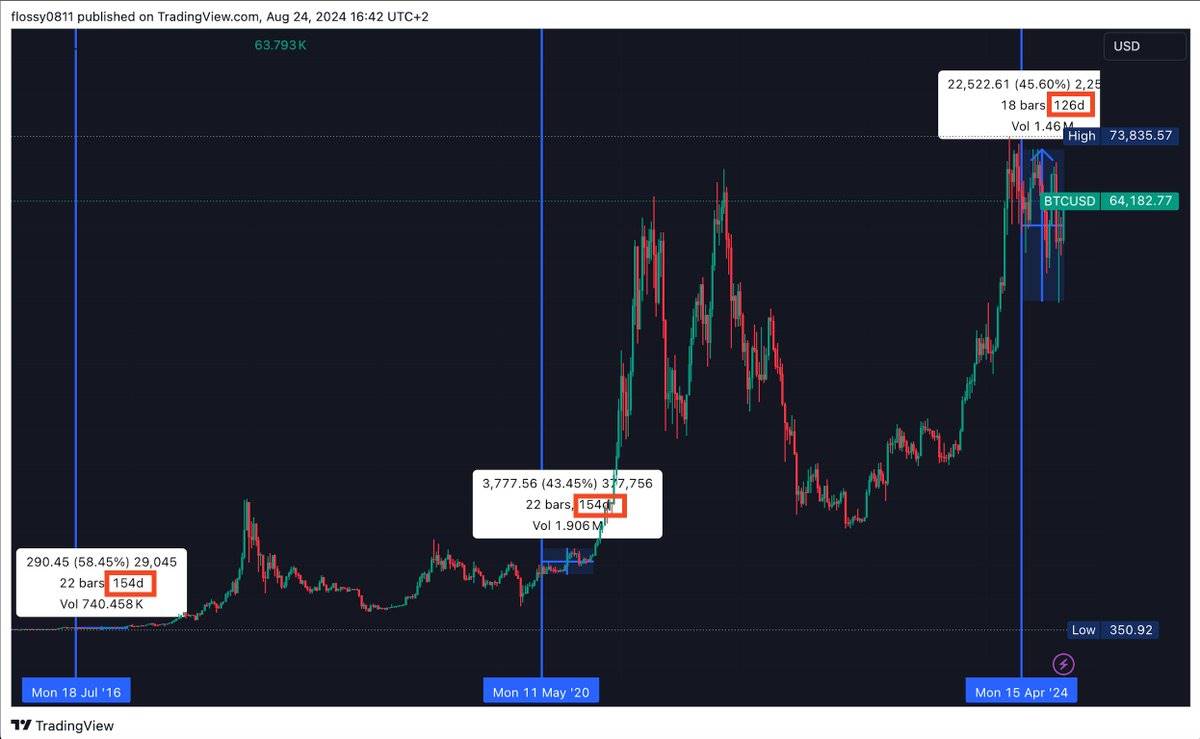
减半后必横盘已成历史规律,这次会不同吗?

结论:耐心依然是游戏的核心

以前的减半

数据是不会骗人的。每个减半周期都有其横盘阶段,没有理由认为这次会不同。是的,ETF 增加了新的因素,但基本的市场动态依然相同。

那么,像你这样的聪明加密参与者该怎么做呢?很简单:

  1. 积累:利用这个横盘市场来建立你的仓位(但永远不要投资超过你能承受的损失)。

  2. 保持耐心:记住,最大的收益来自于那些能够耐心等待的人。

耐心不仅仅是加密市场中的一种美德——它是强大的武器。当其他人对横盘价格动作感到沮丧时,你将会在积累,因为你知道真正的变动尚未到来。

不过,我只是个普通的网络用户。这不是财务建议。始终进行自己的研究并管理风险。

Trending Cryptos

Related Reads

Bitwise Chief Investment Officer: STRC Plunge is a Bottom Signal, Bull Market to Start in Autumn

Bitwise CIO: STRC's Plunge Signals Market Bottom, Bull Run Likely This Fall Bitwise CIO Matt Hougan analyzes the recent sharp decline of Strategy's perpetual preferred shares (STRC) and its implications for the bitcoin market. STRC, a product designed for stable, high-yield income, fell dramatically from its $100 target to $75 amid concerns about Strategy's ability to maintain dividends as bitcoin prices dropped. While Strategy's overall balance sheet remains strong, with ample assets to cover liabilities, market panic stemmed from its right to suspend STRC dividends. In response, Strategy introduced a new framework, committing to sell bitcoin as needed to fund dividends and allowing STRC to float freely, abandoning the $100 peg mechanism. This shift marks a change in Strategy's role from a consistent net buyer to a more dynamic participant in the bitcoin market. Hougan views the STRC volatility and related sell-off in MicroStrategy (MSTR) stock as classic late-cycle behavior, where mismatched leverage is being purged from the system. He draws parallels to the GBTC premium unwind after the 2021 bull market. This necessary deleveraging, he argues, is a precursor to finding a market bottom. Key bottoming signals to watch include MSTR trading at a discount to its net asset value (NAV), crypto fear & greed indices hitting extreme lows, and sustained negative bitcoin funding rates. Hougan concludes that as excess leverage is cleared, the market is nearing its bottom, setting the stage for a new bull cycle to begin in the autumn. The next major wave of buyers, he believes, will be institutional investors like banks, asset managers, and pension funds.

marsbit21m ago

Bitwise Chief Investment Officer: STRC Plunge is a Bottom Signal, Bull Market to Start in Autumn

marsbit21m ago

The Largest Upgrade Since The Merge? How Glamsterdam Will Affect Ethereum?

Ethereum's next major upgrade, Glamsterdam (combining consensus layer "Gloas" and execution layer "Amsterdam"), is scheduled for late 2026 and considered the most significant overhaul since The Merge. It aims to fundamentally enhance L1 performance and architecture to prepare for substantial capacity increases. The upgrade centers on three core changes: 1. **Enshrined PBS (ePBS - EIP-7732):** Integrates the Proposer-Builder Separation directly into the protocol, eliminating reliance on external relays. This extends the window for processing execution payloads, allowing nodes more time to handle larger blocks and more data, paving the way for a higher Gas Limit. 2. **Block-Level Access Lists (BALs - EIP-7928):** Provides a pre-declared "map" in the block header of all state data (accounts, storage) that transactions will access and modify. This enables potential parallel transaction processing and faster state synchronization for nodes. 3. **Gas Repricing (EIP-8037):** Overhauls the gas model to more accurately reflect the real resource costs for nodes. It separates computation costs from state storage costs, making operations that create permanent state data (like new accounts) more expensive, while computation-heavy operations become relatively cheaper. These changes work together to solve the trilemma of scaling: giving nodes more time to process larger blocks (ePBS), reducing execution bottlenecks (BALs), and controlling unsustainable state growth (Gas Repricing). The goal is a credible path to a higher Gas Limit (e.g., 200M gas) without compromising decentralization by overburdening node hardware. For users: * Transaction fees for simple transfers may decrease and become more stable due to increased block space, but state-intensive operations (contract deployment) may cost more. * Gas estimation by wallets will improve in accuracy. * L2 data posting costs could become more stable long-term due to increased Blob capacity. * EIP-7708 will standardize logs for ETH transfers, improving tracking for wallets and exchanges. Node operators must upgrade clients, but ETH holders need take no action. In essence, Glamsterdam doesn't just raise the block size limit; it re-engineers Ethereum's core block production, execution, and economic models to enable sustainable, decentralized scaling.

marsbit1h ago

The Largest Upgrade Since The Merge? How Glamsterdam Will Affect Ethereum?

marsbit1h ago

Trading

Spot

Hot Articles

What is $BITCOIN

DIGITAL GOLD ($BITCOIN): A Comprehensive Analysis Introduction to DIGITAL GOLD ($BITCOIN) DIGITAL GOLD ($BITCOIN) is a blockchain-based project operating on the Solana network, which aims to combine the characteristics of traditional precious metals with the innovation of decentralized technologies. While it shares a name with Bitcoin, often referred to as “digital gold” due to its perception as a store of value, DIGITAL GOLD is a separate token designed to create a unique ecosystem within the Web3 landscape. Its goal is to position itself as a viable alternative digital asset, although specifics regarding its applications and functionalities are still developing. What is DIGITAL GOLD ($BITCOIN)? DIGITAL GOLD ($BITCOIN) is a cryptocurrency token explicitly designed for use on the Solana blockchain. In contrast to Bitcoin, which provides a widely recognized value storage role, this token appears to focus on broader applications and characteristics. Notable aspects include: Blockchain Infrastructure: The token is built on the Solana blockchain, known for its capacity to handle high-speed and low-cost transactions. Supply Dynamics: DIGITAL GOLD has a maximum supply capped at 100 quadrillion tokens (100P $BITCOIN), although details regarding its circulating supply are currently undisclosed. Utility: While precise functionalities are not explicitly outlined, there are indications that the token could be utilized for various applications, potentially involving decentralized applications (dApps) or asset tokenization strategies. Who is the Creator of DIGITAL GOLD ($BITCOIN)? At present, the identity of the creators and development team behind DIGITAL GOLD ($BITCOIN) remains unknown. This situation is typical among many innovative projects within the blockchain space, particularly those aligning with decentralized finance and meme coin phenomena. While such anonymity may foster a community-driven culture, it intensifies concerns about governance and accountability. Who are the Investors of DIGITAL GOLD ($BITCOIN)? The available information indicates that DIGITAL GOLD ($BITCOIN) does not have any known institutional backers or prominent venture capital investments. The project seems to operate on a peer-to-peer model focused on community support and adoption rather than traditional funding routes. Its activity and liquidity are primarily situated on decentralized exchanges (DEXs), such as PumpSwap, rather than established centralized trading platforms, further highlighting its grassroots approach. How DIGITAL GOLD ($BITCOIN) Works The operational mechanics of DIGITAL GOLD ($BITCOIN) can be elaborated on based on its blockchain design and network attributes: Consensus Mechanism: By leveraging Solana’s unique proof-of-history (PoH) combined with a proof-of-stake (PoS) model, the project ensures efficient transaction validation contributing to the network's high performance. Tokenomics: While specific deflationary mechanisms have not been extensively detailed, the vast maximum token supply implies that it may cater to microtransactions or niche use cases that are still to be defined. Interoperability: There exists the potential for integration with Solana’s broader ecosystem, including various decentralized finance (DeFi) platforms. However, the details regarding specific integrations remain unspecified. Timeline of Key Events Here is a timeline that highlights significant milestones concerning DIGITAL GOLD ($BITCOIN): 2023: The initial deployment of the token occurs on the Solana blockchain, marked by its contract address. 2024: DIGITAL GOLD gains visibility as it becomes available for trading on decentralized exchanges like PumpSwap, allowing users to trade it against SOL. 2025: The project witnesses sporadic trading activity and potential interest in community-led engagements, although no noteworthy partnerships or technical advancements have been documented as of yet. Critical Analysis Strengths Scalability: The underlying Solana infrastructure supports high transaction volumes, which could enhance the utility of $BITCOIN in various transaction scenarios. Accessibility: The potential low trading price per token could attract retail investors, facilitating wider participation due to fractional ownership opportunities. Risks Lack of Transparency: The absence of publicly known backers, developers, or an audit process may yield skepticism regarding the project's sustainability and trustworthiness. Market Volatility: The trading activity is heavily reliant on speculative behavior, which can result in significant price volatility and uncertainty for investors. Conclusion DIGITAL GOLD ($BITCOIN) emerges as an intriguing yet ambiguous project within the rapidly evolving Solana ecosystem. While it attempts to leverage the “digital gold” narrative, its departure from Bitcoin's established role as a store of value underscores the need for a clearer differentiation of its intended utility and governance structure. Future acceptance and adoption will likely depend on addressing the current opacity and defining its operational and economic strategies more explicitly. Note: This report encompasses synthesised information available as of October 2023, and developments may have transpired beyond the research period.

555 Total ViewsPublished 2025.05.13Updated 2025.05.13

What is $BITCOIN

Discussions

Welcome to the HTX Community. Here, you can stay informed about the latest platform developments and gain access to professional market insights. Users' opinions on the price of BTC (BTC) are presented below.

活动图片