Аналитик прогнозирует взрывное ралли биткоина (BTC)

cryptonews.ruPublished on 2024-06-21Last updated on 2024-08-21

Известный в криптовалютном сообществе аналитик PlanB ожидает, что в скором времени цена биткоина (BTC) вырастет в четыре раза с текущих значений

На момент написания материала биткоин торгуется по $59 697. Исходя из прогноза создателя модели Stock-to-Flow (S2F) PlanB к концу бычьего цикла стоимость BTC взлетит до $240 000.

Повторить успех 2017 и 2021 годов

По словам PlanB, цена биткоина исторически увеличивалась в четыре раза, когда превышала 200-недельное скользящее среднее (MA, или Moving Average). Эта метрика — широко используемый инструмент технического анализа, помогающий определить долгосрочные тенденции для криптовалют.

200 MA также часто используют для того, чтобы определить, какой тренд преобладает на рынке — бычий или медвежий. Как правило, когда BTC поднимается выше индикатора, это сигнализирует о потенциальном росте цены и продолжающемся бычьем цикле. Когда биткоин опускается ниже 200 MA, это значит, что бычий тренд пока не подтвержден.

Читайте также: Как сейчас заработать на биткоине — стратегия от 10x Research
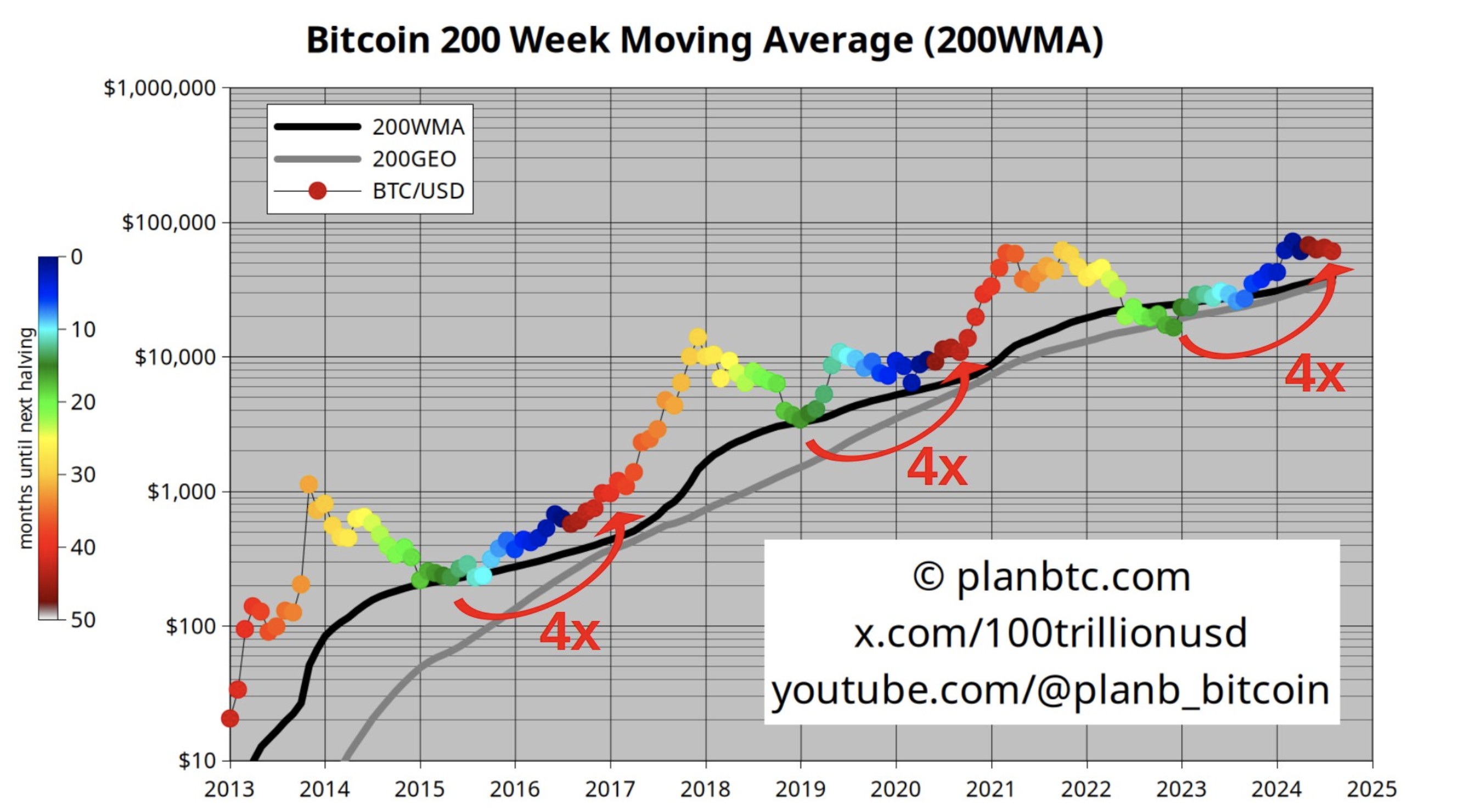
200-недельное скользящее среднее Bitcoin. Источник: PlanB на X.

Однако PlanB указал на то, что даже во время мощного бычьего ралли в 2017 году цена биткоина на время опускалась ниже $4 000. К вершине цикла стоимость BTC выросла до $17 760.

Аналогичная ситуация наблюдалась во время следующего бычьего рынка. В ноябре 2020 года первая по капитализации криптовалюта торговалась по $15 560, а через год — по $69 000.

Анализ PlanB демонстрирует то, что даже в рамках сильного тренда могут наблюдаться краткосрочные коррекции, которые приводят к тому, что цена временно опускается ниже 200 MA. Однако, если долгосрочные перспективы действительно сильные, курс криптовалюты в конечном итоге возвращается выше этой линии.

История редко повторяется, но часто рифмуется. Если анализ PlanB — верный, то недавний скачок биткоина до $73 750 необязательно означает вершину нынешнего цикла. Вероятно, бычье ралли все еще не исчерпало всех своих возможностей.

Здесь нет медвежьего рынка

Позиция PlanB противоречит признакам того, что цикл близится к концу и скоро наступит медвежий рынок. При этом аналитик не единственный, кто считает, что до криптозимы еще далеко.

Руководитель отдела исследований и опционов BloFin Гриффин Арден считает, что слабая динамика биткоина и других криптовалют не намекают на окончание бычьего цикла.

«Судя по показателям рынка опционов, трейдеры ожидают, что разворот кэрри-трейда и замещение ликвидности, вызванное снижением процентной ставки, повлияют на показатели крипторынка в краткосрочной перспективе. Тем не менее трейдеры в целом оптимистично настроены относительно средне- и долгосрочной результативности криптовалют, что полностью отличается от ожиданий во время медвежьего рынка», — сказал Арден в комментарии для BeInCrypto.

Эксперт также добавил, что годовая подразумеваемая форвардная ставка BTC выше безрисковой. Во время медвежьего рынке все обычно наоборот. Такой показатель често отражает бычьи и медвежьи настроения среди трейдеров опционов. График, приведенный ниже, говорит о бычьем тренде.
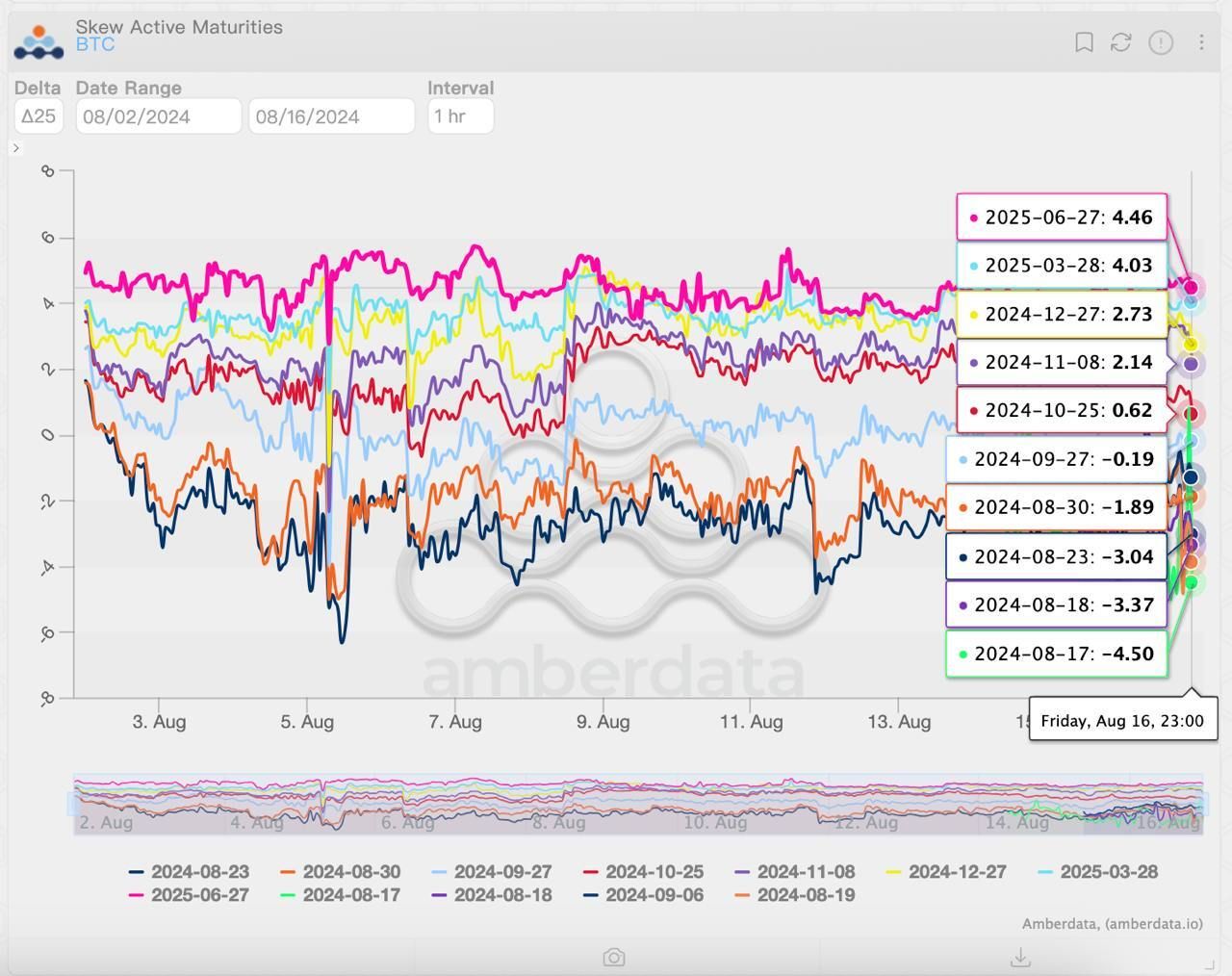
Годовая подразумеваемая прямая ставка опционов BTC. Источник: Amberdata

Прогноз BTC

Приведенный выше анализ также подтверждается коэффициентом риска продажи биткоина. Этот индикатор сравнивает общую стоимость потраченных монет с реализованной рыночной капитализацией.

Высокий коэффициент риска продажи часто сигнализирует о снижении уверенности инвесторов в будущем актива и повышенной волатильности на рынке. Низкий коэффициент предполагает, что риск продажи со значительным убытком относительно невелик.

Подобные условия, как правило, предшествуют началу нового бычьего цикла. По данным Glassnode, в марте соотношение риска продажи биткоина снизилось до 0,16% с 0,71%. Это укрепляет мнение о том, что текущий тренд может иметь огромный потенциал для роста.

Соотношение риска продажи BTC. Источник: Glassnode

В настоящий момент криптовалюта близка к тому, чтобы пробить дно. Даже в случае, если биткоин не достигнет $240 000 на вершине цикла, бычий рынок все еще находится на своей ранней стадии. Однако, если давление на продажу увеличится, монета может пережить еще одну коррекцию.


Trending Cryptos

Related Reads

MSTR Discloses Sale of 3,588 Bitcoins, Stock Price Drops Over 5% at One Point During Trading

MicroStrategy, the world's largest corporate holder of Bitcoin, has significantly shifted its business model. Between June 29 and July 5, the company sold 3,588 bitcoins for approximately $216 million to fund quarterly dividends for its preferred stock. This marks its largest-ever Bitcoin sale and signals a strategic pivot: Bitcoin is transitioning from a "buy-and-hold" reserve asset to a liquidity management tool for the company. This move follows a recent authorization allowing Bitcoin sales when equity fundraising is less attractive. The announcement contributed to a more than 5% intraday drop in MicroStrategy's stock price, while Bitcoin fell to around $61,800—below the company's average holding cost of roughly $75,700. The sale represents a major departure from MicroStrategy's long-standing "never sell" commitment, which saw its first minor breach in May with a $2.5 million sale. The latest, hundred-times-larger transaction underscores growing financial pressures. Analysts note the company faces about $1.5 billion in annual preferred dividend obligations, far exceeding cash flow from its software business. As of July 5, MicroStrategy holds 843,775 bitcoins. Its current operational logic involves buying Bitcoin during favorable financing conditions and selling portions to cover dividends when needed, creating a flexible capital management cycle amidst a challenging market environment.

华尔街日报7h ago

MSTR Discloses Sale of 3,588 Bitcoins, Stock Price Drops Over 5% at One Point During Trading

华尔街日报7h ago

Q-Day Countdown: Will Quantum Computing End Cryptocurrencies?

Quantum Computing's Threat to Cryptocurrency: A Countdown to Q-Day Quantum computing, specifically Shor's algorithm, poses a fundamental threat to the public-key cryptography (e.g., ECDSA, RSA) that secures blockchain networks like Bitcoin and Ethereum. This critical juncture, known as Q-Day, is estimated to occur potentially within the next 5-15 years. The core vulnerability stems from the public and immutable nature of blockchains. Assets in addresses where the public key is already exposed on-chain (e.g., spent outputs) are at direct risk, as a sufficiently powerful quantum computer could derive the private key. This threatens the very trust model of cryptocurrencies. The response lies in Post-Quantum Cryptography (PQC)—algorithms like lattice-based ML-DSA and hash-based SLH-DSA, which are resistant to quantum attacks. NIST has standardized key PQC algorithms (FIPS 203, 204, 205), providing a migration path. However, the primary challenge is not technical but socio-economic and involves complex governance: * **Bitcoin's** path is constrained by its conservative ethos. Migrating requires a soft-fork to new address types, facing hurdles like significantly larger signature sizes and, most critically, the divisive governance question of how to handle at-risk legacy UTXOs without violating core principles. * **Ethereum** is pursuing a "cryptographic agility" strategy, with a multi-layered roadmap. It leverages account abstraction for user accounts and is developing compressed hash-based signatures (e.g., leanXMSS) for its consensus layer, aiming for a full-stack upgrade over time. In conclusion, quantum computing does not spell an instant end for cryptocurrency but initiates a critical countdown. The industry has a limited "engineering comfort window" to orchestrate a coordinated, ecosystem-wide migration to PQC. The ultimate bottlenecks are the immense coordination efforts and governance decisions required for this foundational transition.

marsbit8h ago

Q-Day Countdown: Will Quantum Computing End Cryptocurrencies?

marsbit8h ago

Trading

Spot

Hot Articles

What is $BITCOIN

DIGITAL GOLD ($BITCOIN): A Comprehensive Analysis Introduction to DIGITAL GOLD ($BITCOIN) DIGITAL GOLD ($BITCOIN) is a blockchain-based project operating on the Solana network, which aims to combine the characteristics of traditional precious metals with the innovation of decentralized technologies. While it shares a name with Bitcoin, often referred to as “digital gold” due to its perception as a store of value, DIGITAL GOLD is a separate token designed to create a unique ecosystem within the Web3 landscape. Its goal is to position itself as a viable alternative digital asset, although specifics regarding its applications and functionalities are still developing. What is DIGITAL GOLD ($BITCOIN)? DIGITAL GOLD ($BITCOIN) is a cryptocurrency token explicitly designed for use on the Solana blockchain. In contrast to Bitcoin, which provides a widely recognized value storage role, this token appears to focus on broader applications and characteristics. Notable aspects include: Blockchain Infrastructure: The token is built on the Solana blockchain, known for its capacity to handle high-speed and low-cost transactions. Supply Dynamics: DIGITAL GOLD has a maximum supply capped at 100 quadrillion tokens (100P $BITCOIN), although details regarding its circulating supply are currently undisclosed. Utility: While precise functionalities are not explicitly outlined, there are indications that the token could be utilized for various applications, potentially involving decentralized applications (dApps) or asset tokenization strategies. Who is the Creator of DIGITAL GOLD ($BITCOIN)? At present, the identity of the creators and development team behind DIGITAL GOLD ($BITCOIN) remains unknown. This situation is typical among many innovative projects within the blockchain space, particularly those aligning with decentralized finance and meme coin phenomena. While such anonymity may foster a community-driven culture, it intensifies concerns about governance and accountability. Who are the Investors of DIGITAL GOLD ($BITCOIN)? The available information indicates that DIGITAL GOLD ($BITCOIN) does not have any known institutional backers or prominent venture capital investments. The project seems to operate on a peer-to-peer model focused on community support and adoption rather than traditional funding routes. Its activity and liquidity are primarily situated on decentralized exchanges (DEXs), such as PumpSwap, rather than established centralized trading platforms, further highlighting its grassroots approach. How DIGITAL GOLD ($BITCOIN) Works The operational mechanics of DIGITAL GOLD ($BITCOIN) can be elaborated on based on its blockchain design and network attributes: Consensus Mechanism: By leveraging Solana’s unique proof-of-history (PoH) combined with a proof-of-stake (PoS) model, the project ensures efficient transaction validation contributing to the network's high performance. Tokenomics: While specific deflationary mechanisms have not been extensively detailed, the vast maximum token supply implies that it may cater to microtransactions or niche use cases that are still to be defined. Interoperability: There exists the potential for integration with Solana’s broader ecosystem, including various decentralized finance (DeFi) platforms. However, the details regarding specific integrations remain unspecified. Timeline of Key Events Here is a timeline that highlights significant milestones concerning DIGITAL GOLD ($BITCOIN): 2023: The initial deployment of the token occurs on the Solana blockchain, marked by its contract address. 2024: DIGITAL GOLD gains visibility as it becomes available for trading on decentralized exchanges like PumpSwap, allowing users to trade it against SOL. 2025: The project witnesses sporadic trading activity and potential interest in community-led engagements, although no noteworthy partnerships or technical advancements have been documented as of yet. Critical Analysis Strengths Scalability: The underlying Solana infrastructure supports high transaction volumes, which could enhance the utility of $BITCOIN in various transaction scenarios. Accessibility: The potential low trading price per token could attract retail investors, facilitating wider participation due to fractional ownership opportunities. Risks Lack of Transparency: The absence of publicly known backers, developers, or an audit process may yield skepticism regarding the project's sustainability and trustworthiness. Market Volatility: The trading activity is heavily reliant on speculative behavior, which can result in significant price volatility and uncertainty for investors. Conclusion DIGITAL GOLD ($BITCOIN) emerges as an intriguing yet ambiguous project within the rapidly evolving Solana ecosystem. While it attempts to leverage the “digital gold” narrative, its departure from Bitcoin's established role as a store of value underscores the need for a clearer differentiation of its intended utility and governance structure. Future acceptance and adoption will likely depend on addressing the current opacity and defining its operational and economic strategies more explicitly. Note: This report encompasses synthesised information available as of October 2023, and developments may have transpired beyond the research period.

637 Total ViewsPublished 2025.05.13Updated 2025.05.13

What is $BITCOIN

Discussions

Welcome to the HTX Community. Here, you can stay informed about the latest platform developments and gain access to professional market insights. Users' opinions on the price of BTC (BTC) are presented below.

活动图片