不让 LP 亏钱,才是 DEX 存活发展的关键

深潮Published on 2024-08-16Last updated on 2024-08-16

DEX 必须确保 LP 具有足够的盈利能力。

作者:@G_Gyeomm

编译:深潮TechFlow
无论短期市场情绪如何不确定,去中心化交易所(DEX)的近期活动让我们对区块链或链上生态系统的长期未来保持乐观。目前,DEX 的交易量达到了自区块链诞生以来的最高水平。根据 The Block 的数据,截至 2024 年 8 月,DEX 的现货交易量约占中心化交易所(CEX)的 14%,而根据 DeFilama 的数据显示,过去 24 小时内通过 DEX 执行的交易额约为 70 亿美元。

在过去,FTX 事件增加了市场参与者的托管风险,导致 DEX 使用量上升,这种短期事件常常会临时提高 DEX 的使用率。然而,目前我们看到的 DEX 使用量的增加却呈现出持续的趋势。与 CEX 相比,DEX 使用量的这种稳定上升,可以视为 DEX 在可用性等方面不断改进并取得显著进展的结果。
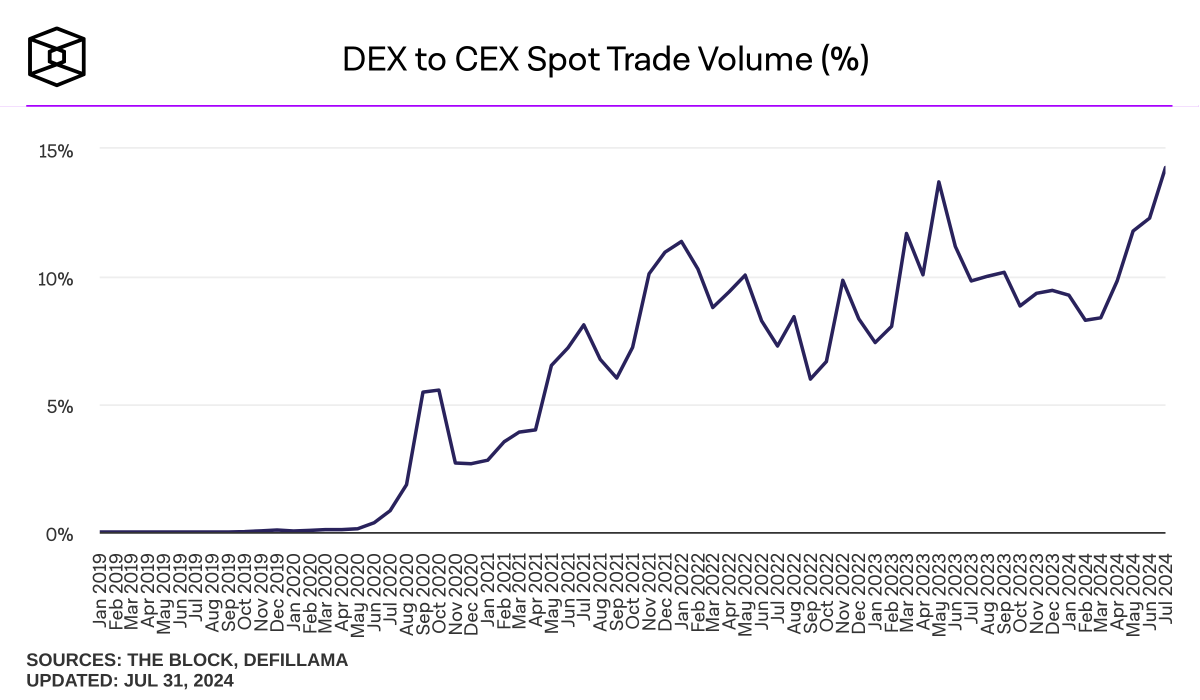
来源:DEX 与 CEX 的现货交易量(%)

在这些发展中,我今天想强调的 DEX 组件是自动做市商(AMM)的流动性提供(LPing)机制,特别是 CPMM(恒定乘积做市商),大多数 DEX 都采用了这种机制,交易是通过 xy=k 执行的。充足的流动性通过最小化滑点来提供顺畅的交易环境,因此 DEX 必须在协议与流动性提供者(LP)之间对齐激励,以维持流动性提供的持续状态,这被视为 DEX 的核心。换句话说,DEX 必须确保 LP 具有足够的盈利能力。

然而,最近在 AMM DEX 中出现的问题是“LP 的损失超出预期”。造成 LP 损失的实体正是外部方,例如套利者。随着协议中产生的价值不断被外部实体提取,参与协议运营的参与者所获得的价值减少。因此,流动性提供的风险,例如 LVR(损失与再平衡),已成为重要话题,而消除此类风险并迅速采用新开发技术的 DEX 再次受到重视。接下来,我们将探讨这些 DEX 的各种尝试,并阐明它们在近期 DeFi 协议趋势中的重要性。

1. 背景 - 减轻 LP 盈利能力风险的尝试

1.1 COW 协议 - MEV 捕获 AMM
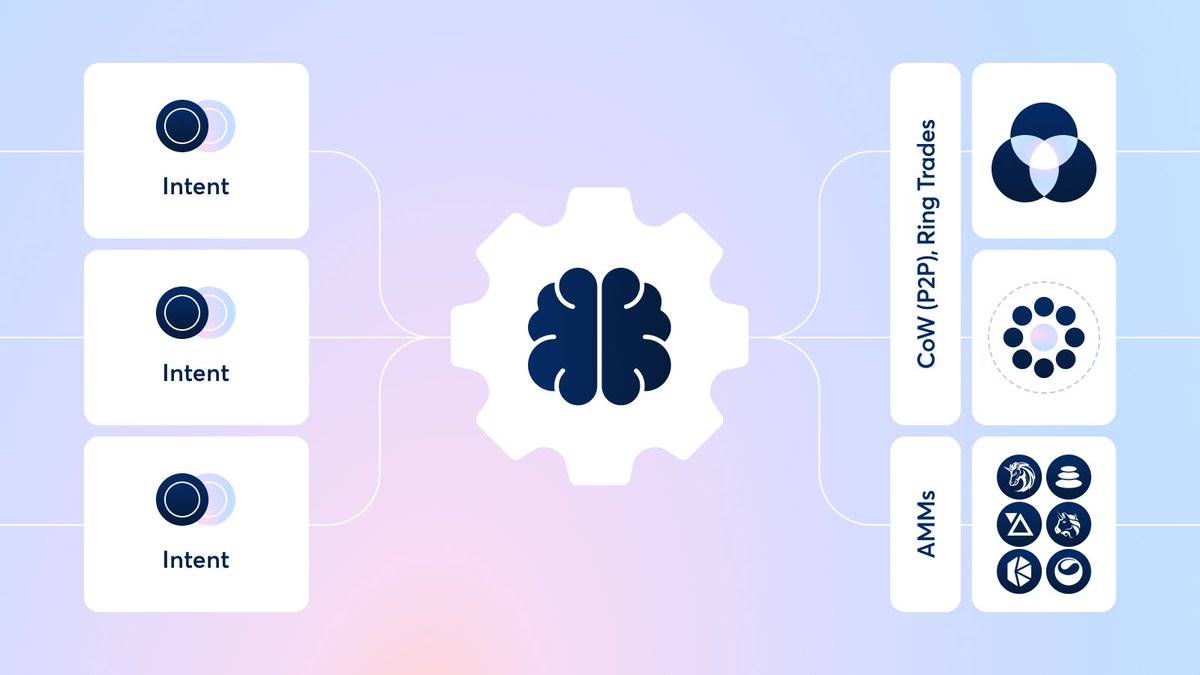
来源:CoW 协议文档

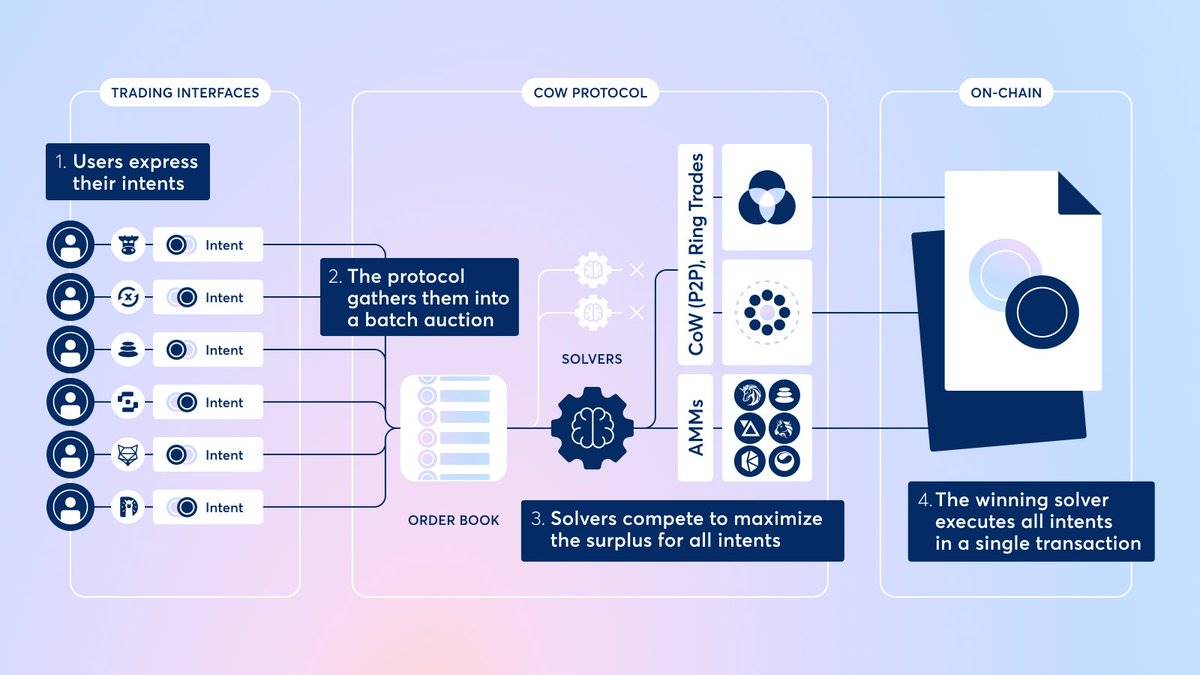
CoW Swap 提供了一种交换服务,通过离线批量拍卖系统保护交易者免受 MEV 攻击,例如前置交易、后置交易或夹击攻击。在 CoW Swap 中,交易者不是直接在链上结算交易,而是将交易代币的意图提交给协议。当这些交易者的交易被打包成一个离线批次时,第三方实体称为 Solver,会寻找来自 AMM(例如 Uniswap、Balancer)和 DEX 聚合器(例如 1inch)等的最佳交易路径。这使得交易者能够免受 MEV 的影响,并以最佳价格进行交易。
来源:CoW 协议文档

CoW Swap 专注于通过基于批量拍卖的交易和 Solver 干预来防止外部交易者的价值提取。基于这一机制,CoW Swap 引入了 CoW AMM,作为保护交易者交易免受 MEV 影响的下一步,同时也保护 LP。CoW AMM 被提议为一种 MEV 捕获 AMM,消除了套利者造成的 LVR。
来源:Delphi Digital

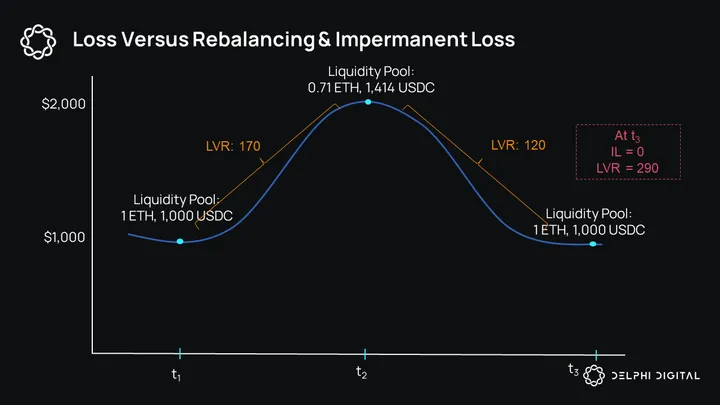
在这里,LVR(损失与再平衡)是一种风险管理指标,量化了 LP 因为资产价格波动而在 LP 状态下由于 AMM 内部资产价格与外部市场价格之间的差异而产生的损失。换句话说,尽管无常损失是流动性提供的另一种风险,仅考虑 LP 由于资产价格波动而可能经历的机会成本,LVR 则代表 LP 在整个 LP 期间承担套利者对手方角色的持续成本。对此需要更详细的解释,但这里需要强调的根本问题是,流动性提供者受到外部套利者的不利交易条件的影响。
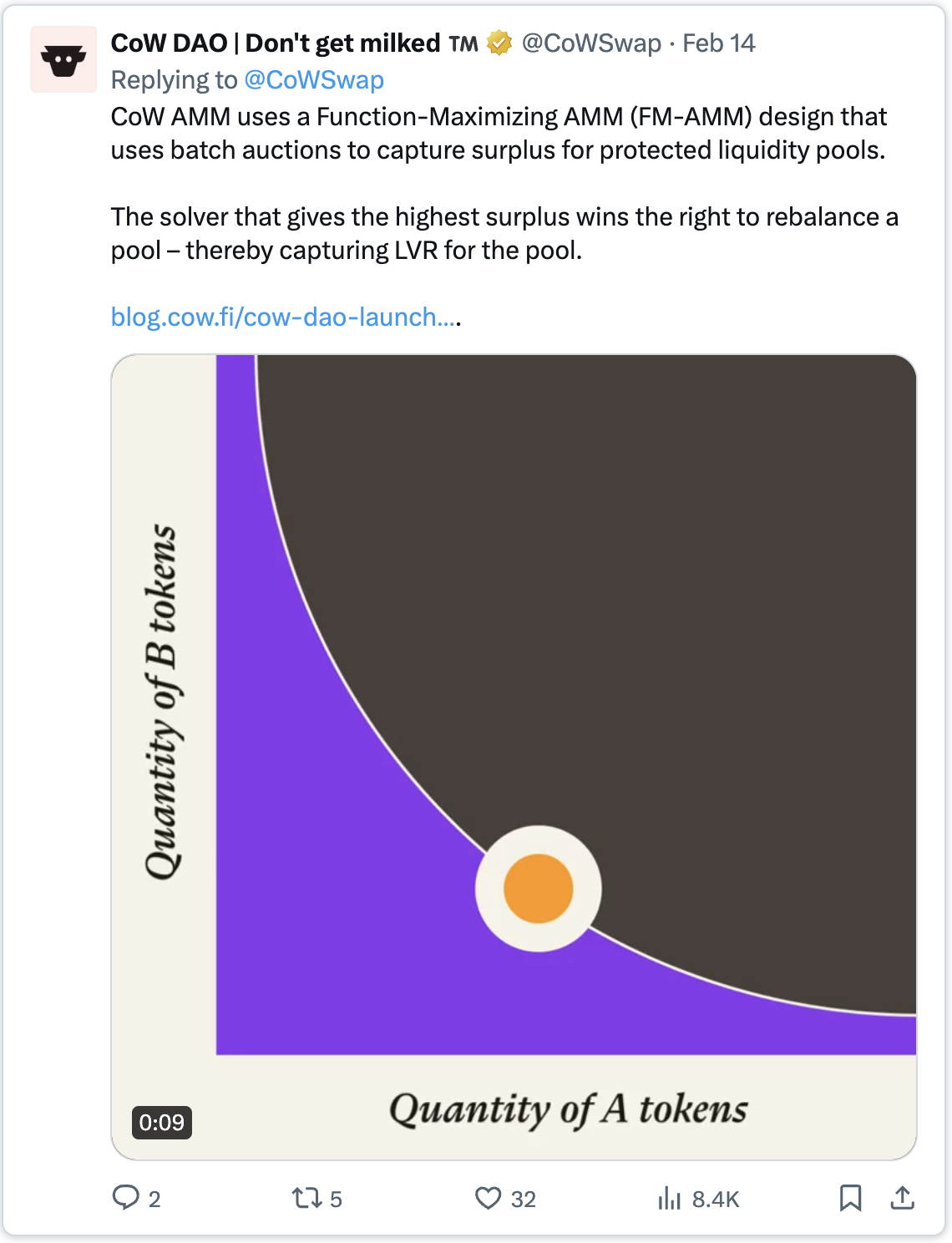
CoW DAO | Don't get milkedCoW AMM 使用功能最大化 AMM(FM-AMM)设计,利用批量拍卖为受保护的流动性池捕获盈余。提供最高盈余的求解者赢得重新平衡池的权利,从而为池捕获 LVR。

为了解决这一问题,CoW AMM 被设计用来保护流动性提供者(LP)免受外部套利者的干扰,并在内部捕获 MEV。在 CoW AMM 中,当出现套利机会时,Solvers 竞争出价以获得重新平衡 CoW AMM 池的权利。具体流程如下:

  1. LP 将流动性存入 CoW AMM 池。

  2. 当出现套利机会时,Solvers 出价以重新平衡 CoW AMM 池。

  3. 留下池中最多盈余的 Solver 获得重新平衡池的权利。在这里,盈余指的是 AMM 曲线向上移动的程度,简单来说,就是流动性池中剩余的资金,这些资金是通过为 LP 提供最有利的交易条件而留存的。有关盈余捕获 AMM 的详细解释,请参考本文。

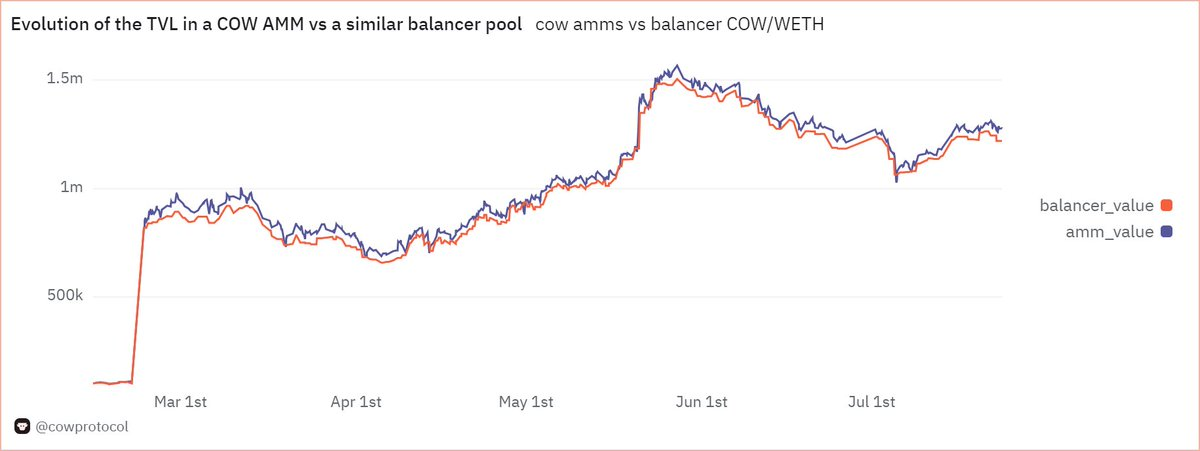
  4. 通过这一机制,CoW AMM 能够内部捕获现有 CPMM 中 MEV 机器人提取的套利收益,消除 LP 所面临的 LVR 风险,同时 LP 将获得盈余作为提供流动性的激励。换句话说,与现有的 CPMM 不同,CoW AMM 可以将 MEV 作为收入来源,而不仅仅依赖于交易费用。
来源:Dune(@cowprotocol

这个 CoW AMM 与 CoW Swap 类似,为特定批次内的代币买卖交易应用单一价格,并最终采用一种方法使一个批次形成一个区块。因此,它能够从根本上阻止基于价格差异的 MEV,例如套利,并通过不向外部套利者提供不反映价格波动的过时 AMM 价格来最小化 LP 的 LVR。

1.2 Bunni V2 - 超出范围的钩子(hook)

Bunni V2 利用 Uniswap v4 的超出范围钩子作为提高 LP 盈利能力的另一种方法。这里的钩子是即将推出的 Uniswap V4 的架构升级之一,允许根据不同的使用方式(动态费用、TWAMM、超出范围等)将 Uniswap 的流动性池合约自定义为模块。

Bunni V1 最初是一个流动性提供衍生品(LPD)协议,旨在改善 Uniswap V3 提出的集中流动性的局限性,与 GammaArrakis Finance 一同发展。然而,在 V2 发布后,它通过结合各种钩子使用功能(包括超出范围钩子)构建了自己的 DEX。在这里,集中流动性是一种流动性提供方法,允许 LP 直接确定任意价格范围进行流动性提供,以提高流动性提供位置的资本效率。虽然这种集中流动性提高了资本效率,但其局限性在于 LP 必须不断调整流动性提供的范围,以匹配变化的市场价格,因此 Bunni 提供了一种解决方案,可以在 LP 委托其资金时自动管理流动性提供的范围。
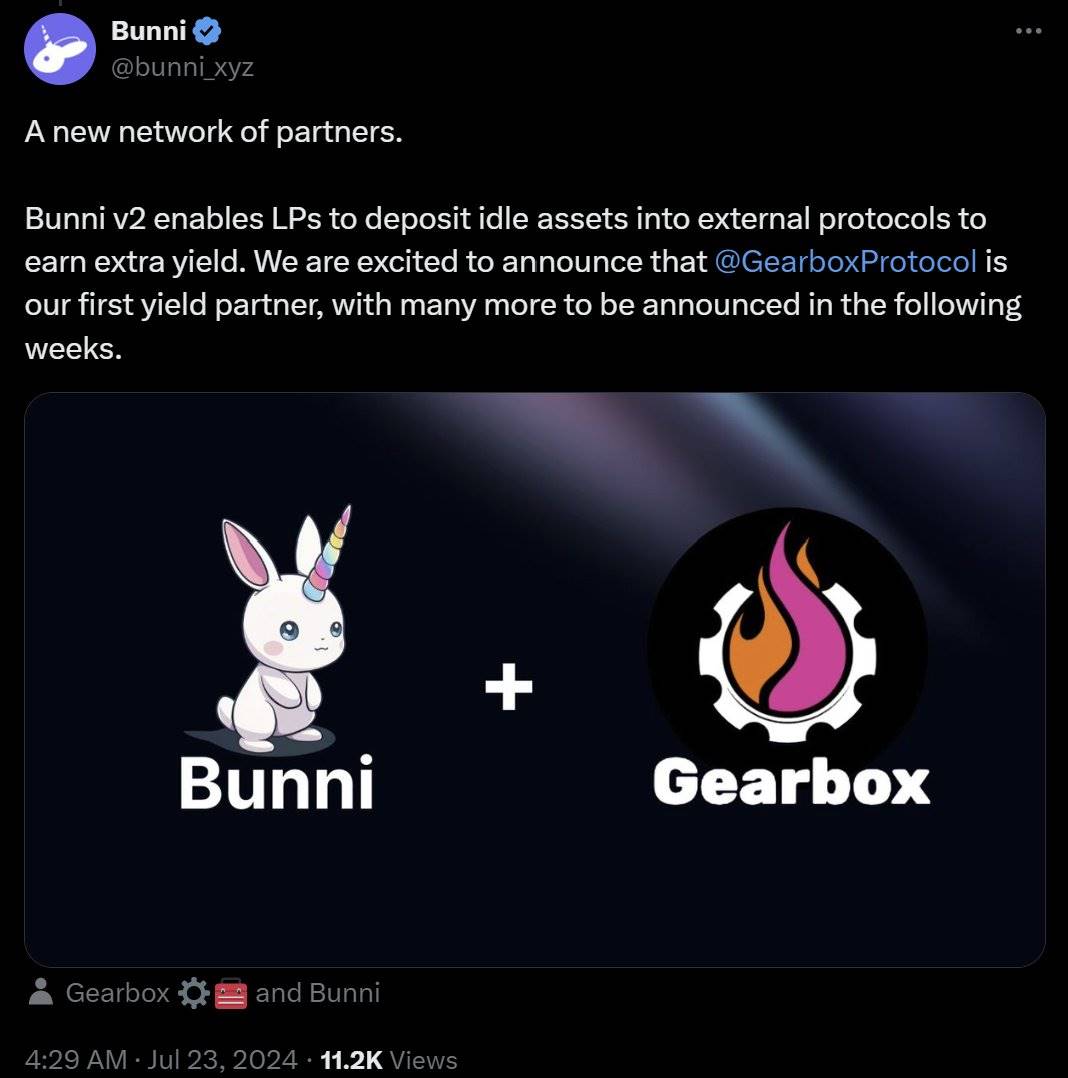
来源:X(@bunni_xyz

超出范围钩子是一个新尝试,通过与外部协议互操作闲置流动性来提高资本效率,而不是在闲置流动性超出当前市场价格范围时重新调整流动性提供的范围。通过将闲置流动性存入可以产生利息收入的借贷协议和金库,例如 Aave、Yearn、Gearbox、Morpho 等,它不仅为 LP 提供来自流动性提供的交易费用,还提供额外的回报。当然,由于 Bunni 的尝试仍处于测试阶段,因此需要密切观察未来可能出现的权衡,例如由于流动性互操作性导致的合约风险增加或 AMM 交换所需流动性的耗竭,这些都可能以资本效率为代价。

2. 关键要点

2.1 DEX 能提供而 CEX 无法提供的优势

在总结 DEX 市场份额与 CEX 当前状态时,一个重要问题浮现出来:为什么我们应该使用 DEX 而不是 CEX?从客观角度来看,仅考虑 CEX 的便利性和丰富流动性,似乎很难找到一个令人信服的理由说明必须使用 DEX。即使 DEX 的使用量保持上升趋势,14% 的市场份额坦率地说也并不算大。

FTX 破产事件提醒市场参与者托管交易所的风险,短期内刺激了 DEX 的使用,但这只是一个临时替代品。因此,作为逐步扩大 DEX 市场份额的一种方法,继续尝试创造 DEX 独特的价值主张,这在 CEX 中是无法体验的,显得尤为重要。
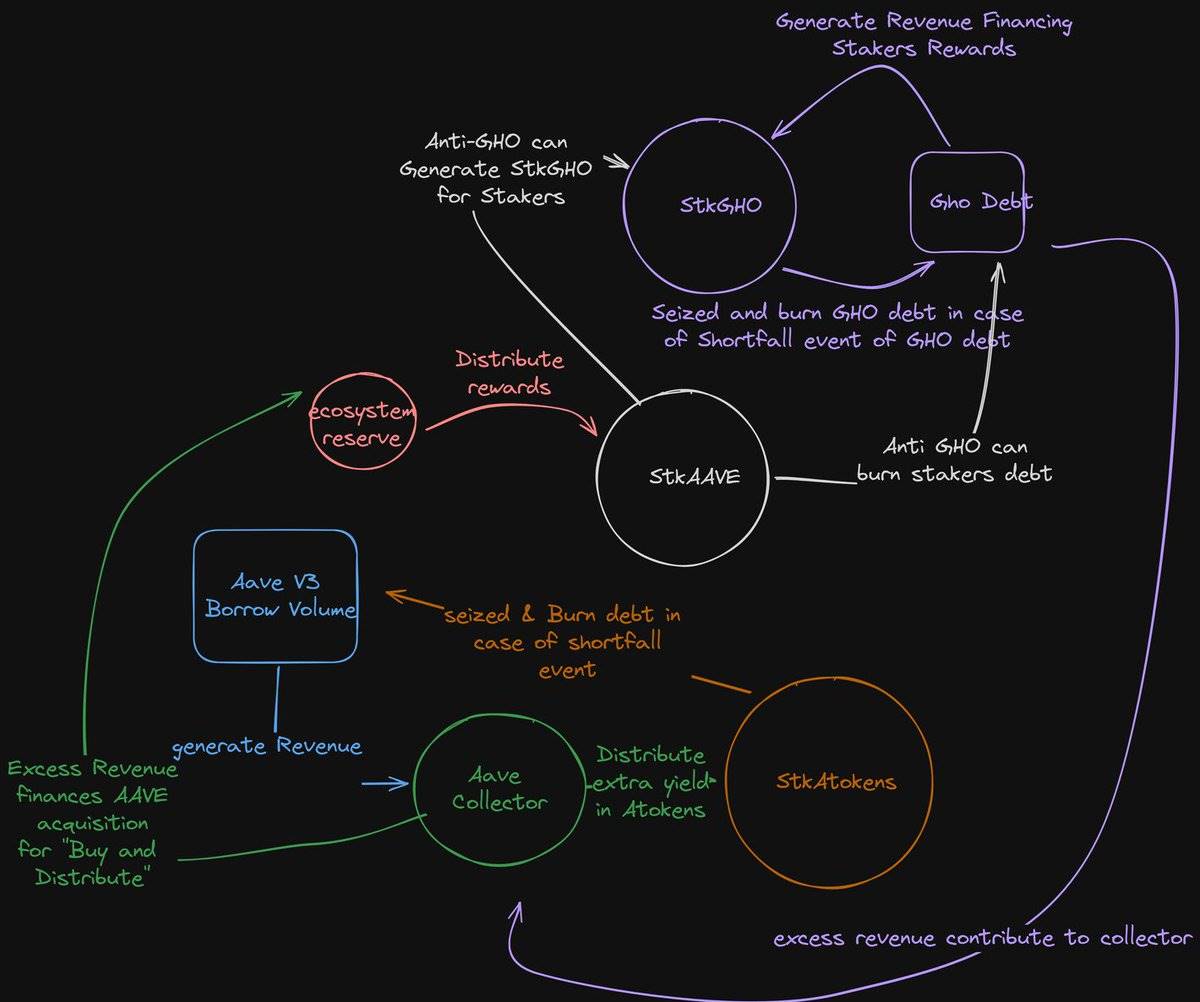
来源:AAVEnomics 更新

在这方面,流动性提供(LPing)和利润再分配机制作为 DEX 独有的价值显得非常重要。LPing 不仅是提供顺畅交易环境的必要条件,还通过 LPing 提供的被动收益生成路径,为市场参与者接触 DEX 提供了另一种动机。同时,利润再分配机制可能是一个自我维持的经济系统或代币经济的起点,参与者根据去中心化协议上的代币激励进行贡献并获得奖励,这可能是最大化区块链和加密货币效用的理想方法。

2.2 内部化协议价值变得越来越重要

当 DEX 的独特价值体现在流动性提供和利润再分配机制时,内部化之前从外部实体(如套利者或各种 MEV)提取的价值变得尤为重要。本文中讨论的 DEX 功能正是旨在解决这个问题。CoW AMM 内部捕获 MEV,以消除 LP 风险,而 Bunni V2 的超出范围功能则在 AMM 池内互操作流动性,以最大化 LP 盈利能力。尽管在本文中未提及,最近一些 DeFi 协议基于预言机接收价格信息,并探索内部化 OEV(预言机可提取价值)利润的尝试。

此外,随着最近重新强调将协议获得的价值再分配给协议参与者的机制,其重要性进一步凸显。实际上,Aave 协议提出了新的 AAVEnomics,通过协议收入回购 $AAVE 并将其分配给 $AAVE 持有人。同时,Uniswap 的费用开关最近也重新受到关注,甚至 Aevo 宣布将回购 $AEVO

随着 DeFi 协议试图引入再分配价值的机制,协议的可持续收入模型和内部积累的价值变得更加重要。例如,如果 Uniswap 通过提案将交易费用分配给 $UNI 持有者,则它需要与 $UNI 持有者分享之前完全由 LPs 获取的部分交易费用。在这种情况下,协议内部需要积累更多的价值,以便将价值重新分配给协议参与者,同时,内部化之前从外部实体提取的价值的重要性也得到了强调。

从这个角度来看,像我们今天讨论的 CoW AMM 和 Bunni V2 提出的差异化流动性提供方法,或开发将协议获得的价值返回给生态系统参与者的机制,都是值得密切关注的尝试。此外,各种协议还在开发改善 LPing 的尝试,例如 Osmosis 的 Protorev 防止回跑,或 Smilee Finance 提出的“无常收益”作为对冲无常损失风险的方法。DeFi 协议通过这些尝试创造独特价值的过程,将继续成为逐步增加 DEX 活动的重要关注点。

Trending Cryptos

Related Reads

A 380% Soar, Shenzhen’s 100-Billion-Yuan IPO Rings the Bell

HKC Holdings, a major Chinese display panel manufacturer, has successfully listed on the Shenzhen Stock Exchange's main board. The company's shares surged over 380% on its debut, pushing its market capitalization to around 350 billion yuan (formerly reaching 500 billion yuan). Founded by Wang Zhiyong in Shenzhen's Huaqiangbei electronics market nearly three decades ago, HKC evolved from assembling monitors to becoming a global top-tier supplier of semiconductor display panels for TVs, monitors, and smartphones. The IPO marks a significant milestone for HKC and its backers. The company's growth into the capital-intensive panel manufacturing sector was supported through partnerships with state-owned capital from regions like Chongqing, Mianyang, and Chuzhou. Its shareholder list also includes BOE Technology's investment arm. In recent years, HKC reported strong financials, with core panel business contributing over 70% of revenue and clients including Samsung, TCL, and Xiaomi. This listing is seen as part of a broader trend in Shenzhen's evolving tech landscape. Beyond established giants, the city is nurturing clusters of leading companies in specialized sectors like robotics—exemplified by the "Shenzhen Robot Valley"—and storage chips, where a group of firms dubbed the "Storage Five Tigers" has achieved a combined trillion-yuan market valuation. Shenzhen's strategic focus on emerging industries such as AI terminals, low-altitude economy, and humanoid robotics aims to build new industrial depth and foster the next generation of tech champions.

marsbit8m ago

A 380% Soar, Shenzhen’s 100-Billion-Yuan IPO Rings the Bell

marsbit8m ago

Domestic First Explosion-Proof Certification, World's First Fueling Brain Solution: How Did They Secure Two 'Firsts'?

China's embodied AI sector is booming, with over ¥37 billion in funding this year. The focus has shifted decisively to real-world application, particularly in hazardous, repetitive tasks humans should avoid. A key, often prohibitive, barrier to entry for robots in environments like gas stations and oil fields is obtaining explosion-proof certification, requiring meticulous hardware and circuit design from the ground up. The article explores three main application areas. At gas stations, the challenge lies in executing a long, precise sequence of actions (opening caps, handling the fuel nozzle) with millimeter accuracy across diverse car models. For facility inspections, robots need sustained autonomous patrols combined with real-time anomaly detection and response. Port scenarios introduce the complexity of multi-robot coordination. Addressing the core challenge of long-horizon tasks, the piece highlights a technical breakthrough: a "world model"-driven approach. This enables predictive planning, allowing the AI to visualize the desired end-state (e.g., nozzle returned, cap closed) and work backward to synthesize intermediate visual frames. This "imagination" of the task trajectory, as implemented in the H-GAR architecture, guides action generation, significantly reducing cumulative error in multi-step operations. The three-step H-GAR process involves generating a coarse action draft, synthesizing target-conditioned observation frames, and then refining actions based on visual context and a memory of past successful motions. The conclusion emphasizes that success in specialized, safety-critical fields requires long-term commitment and deep integration of the "embodied brain" (AI) with a purpose-built, certified physical "body." Mastering this brain-body-data闭环 (closed-loop) is positioned as a crucial competitive advantage for commercialization.

marsbit57m ago

Domestic First Explosion-Proof Certification, World's First Fueling Brain Solution: How Did They Secure Two 'Firsts'?

marsbit57m ago

Bitcoin Bear Market Triggers Crypto Layoffs, Yet Fuels Industry's Most Aggressive M&A Wave Ever

A prolonged Bitcoin downturn is forcing crypto companies to lay off employees and automate operations, but has simultaneously triggered the industry's most aggressive wave of mergers and acquisitions (M&A). In the first half of 2026, crypto M&A deal value reached $93.7 billion, 26 times higher than the same period last year. This activity is primarily driven by traditional financial institutions—banks, payment processors, and asset managers—who are acquiring compliant crypto infrastructure like custody solutions, payment rails, and regulatory licenses instead of building them internally. Examples include Mastercard's acquisition of stablecoin firm BVNK and Franklin Templeton's launch of a dedicated crypto division via acquisition. This consolidation contrasts sharply with a shrinking crypto labor market, where active job openings have plummeted. Companies like Coinbase are restructuring to become "AI-native," leading to a sharp increase in roles requiring AI skills, while engineering and compliance positions now dominate hiring. Financially pressured crypto firms, such as Messari which was acquired at a fraction of its prior valuation, are becoming prime targets. Capital remains available but is highly selective, flowing overwhelmingly into businesses that bridge digital assets with traditional finance, such as tokenization platforms and regulated trading venues. The trend indicates a market where capital is rewarding compliant, utility-focused infrastructure while weaker models consolidate or downsize.

marsbit58m ago

Bitcoin Bear Market Triggers Crypto Layoffs, Yet Fuels Industry's Most Aggressive M&A Wave Ever

marsbit58m ago

Trading

Spot
Futures

Hot Articles

What is G$

Understanding GoodDollar ($G$): A Blueprint for Decentralised Universal Basic Income Introduction In the ever-evolving landscape of cryptocurrency and blockchain technology, initiatives that seek to address pressing social issues have garnered increased attention. One such project is GoodDollar ($G$), a Web3-based universal basic income (UBI) solution. GoodDollar endeavours to tackle inequality and bridge the wealth gap by creating and distributing accessible economic resources to those most in need. Through its innovative use of decentralised finance (DeFi), GoodDollar presents a unique model that could potentially reshape the way financial assistance is perceived and delivered globally. What is GoodDollar ($G$)? GoodDollar is a cryptocurrency protocol that facilitates the issuance and distribution of digital tokens, referred to as $G$, to its registered users on a daily basis. These tokens function as a form of universal basic income, promoting financial empowerment for individuals from various backgrounds, especially those traditionally excluded from the financial system. Operating on the blockchain, GoodDollar utilises multiple chains, including Ethereum, Celo, and Fuse, ensuring broad access and usability. The fundamental goal of GoodDollar is to make cryptocurrency accessible and beneficial to everyone, irrespective of their economic starting point. The Creator of GoodDollar ($G$) Details concerning the creator of GoodDollar remain somewhat obscure. However, it is notably highlighted that the project has strong backing from eToro, a widely recognised investment platform that provided the initial funding and foundational support for GoodDollar's development. The vision behind the project is not solely profit-driven but leans heavily towards social entrepreneurship, aiming for a systemic change in economic accessibility. Investors of GoodDollar ($G$) GoodDollar enjoys the financial backing and operational support of eToro. This partnership has played a significant role in launching the protocol and its subsequent developments. While eToro was instrumental in establishing the foundation of the project, GoodDollar envisions transitioning towards a model funded by its community in the long run. This shift to community funding is in line with GoodDollar's commitment to decentralisation, allowing its users to have a direct stake in the project's future. How Does GoodDollar ($G$) Work? GoodDollar's operational framework relies heavily on DeFi principles to generate interest from staked cryptocurrencies. This mechanism allows the project to mint and distribute $G$ tokens as a digital basic income for users worldwide. Several key features contribute to GoodDollar's uniqueness and innovation: Universal Basic Income (UBI): Every day, registered users receive free tokens, establishing an automatic income stream intended to alleviate financial pressures. Sustainable Economic Model: The project’s tokenomics aim to balance supply and demand for $G$ tokens, ensuring that the value remains stable over time. Reserve-Backed Tokens: Each $G$ token is backed by a reserve of cryptocurrencies, providing it with inherent value and reliability, a crucial aspect for maintaining user trust. Decentralised Governance: GoodDollar incorporates a democratic approach to decision-making through token-powered decentralised governance. This allows community members to actively participate in the shaping of the project's trajectory, making it truly community-driven. Global Accessibility: GoodDollar has established a considerable community footprint, boasting over 640,000 members spanning 181 countries. Such widespread reach is instrumental in facilitating UBI on a global scale. Timeline of GoodDollar ($G$) The evolution of GoodDollar is marked by several significant milestones throughout its history: 2019: The launch of the GoodDollar wallet marked the first step in operationalising its vision of delivering UBI through cryptocurrency. 2020: Following the successful wallet rollout, the GoodDollar protocol officially debuted. This marked a crucial phase in its mission to provide daily distributed income. 2021: The project advanced further with the introduction of its Decentralised Autonomous Organization (DAO), fostering a greater level of community involvement and governance. 2022: GoodDollar unveiled its DeFi-friendly version 2 (V2), striving for enhanced user engagement and operational efficiency. The same year also saw the transition to a decentralised governance structure via GoodDAO. 2022: A new roadmap was conceptualised, focusing on initiatives like a grant program designed to promote $G$-related entrepreneurial ventures and an upgraded GoodDollar Marketplace. Key Features of GoodDollar ($G$) The GoodDollar project introduces numerous critical features aimed at redefining the landscape of basic income: Universal Basic Income: Delivering daily free tokens to its users fundamentally underscores its mission to eliminate economic precarity. Multi-Chain Operation: Leveraging multiple blockchain networks enhances accessibility and scalability, ensuring broader participation. Engagement with Decentralised Finance: The use of DeFi allows for sustainable funding of the UBI model, reinforcing its viability as an economic solution. Community Engagement and Governance: GoodDollar envisions a model where the community influences operations through democratic participation, fostering transparency and accountability. Global Community: Boasting a diverse global community enables the project to implement UBI solutions tailored to various cultural and economic contexts. Conclusion GoodDollar represents a transformative leap towards incorporating the principles of universal basic income through the innovative lens of blockchain technology. By harnessing decentralised finance, the project not only provides a solution to financial inequality but also actively engages users in its governance and operations. With a growing community and evolving roadmap, GoodDollar stands as a significant player in the intersection of cryptocurrency and social good, paving the way for a more equitable financial future. As it continues to evolve, GoodDollar’s journey may ultimately inspire other initiatives to consider similar models, furthering the cause of economic empowerment for all.

225 Total ViewsPublished 2024.04.05Updated 2024.12.03

What is G$

What is @G

Graphite Network, $@G: Bridging TradFi and Web3 Introduction to Graphite Network, $@G In the vibrant world of cryptocurrencies and web3 projects, Graphite Network emerges as a beacon of innovation. With its native token, $@G, this Layer-1, Proof-of-Authority (PoA) blockchain is tailored to bridge the gap between traditional finance (TradFi) and the rapidly evolving Web3 ecosystem. As digital currencies gain traction, Graphite Network strives to offer a blockchain platform that prioritises security, compliance, and speed, presenting itself as a facilitator of trust and accountability. What is Graphite Network, $@G? Graphite Network is not merely another blockchain project; it aims to redefine how decentralisation, security, and user accountability are perceived in the digital finance realm. The project boasts a series of distinctive features: Reputation-Based Blockchain: At its core, Graphite Network implements a one-user, one-account policy, fortified with integrated Know Your Customer (KYC) verification and scoring mechanisms. This design ensures a balance between user privacy and transparency—a critical aspect of financial operations in today’s digital world. Entry-Point Node Income: The network incentivises users to set up entry-point nodes, allowing operators to earn rewards from network transactions. This income generation model not only boosts user engagement but also reinforces network health and decentralisation. EVM Compatibility: With an Ethereum-compatible virtual machine (VM), Graphite Network enables seamless integration of existing Solidity decentralised applications (dApps) and smart contracts, thereby inviting developers to leverage its capabilities without extensive modifications. KYC Integration: In an era where compliance is paramount, the integrated KYC framework with multiple verification tiers enhances control over financial operations without mandatory participation, setting a precedent for user autonomy. Who is the Creator of Graphite Network, $@G? The Graphite Network is borne out of the endeavours of the Graphite Foundation, a non-profit organisation dedicated to the development, maintenance, and evolution of the Graphite Network. The foundation’s commitment underscores the project’s vision to create a secure and sustainable blockchain environment focused on genuine user engagement and compliance. Who are the Investors of Graphite Network, $@G? Currently, there is limited information available on the specific investors backing the Graphite Network initiative. The founding organisation, the Graphite Foundation, functions independently in fostering the project’s growth while seeking partnerships that resonate with its vision of a compliant and accessible blockchain platform. How Does Graphite Network, $@G Work? Graphite Network’s operation is grounded in its unique Proof-of-Authority consensus mechanism, which strikes an impressive balance between high throughput and decentralisation. Let's delve into the various components that define its operation: Transport Nodes: Serving as the entry-point nodes, these are critical to the ecosystem. Operators can earn revenue from transactions that traverse the network, which not only empowers individual users but also bolsters network decentralisation. Authorised Nodes: At the heart of the Graphite Network are core validators who undergo rigorous compliance tests, encompassing robust KYC verification along with technical assessments. This layer of trust is essential for ensuring that transactions within the network maintain a high level of integrity. Ticker System: Graphite Network employs a distinctive ticker system for its wrapped tokens, denoted as @G. This feature enhances clarity in asset integration, making user transactions comprehensible and straightforward. Graphite Network’s innovative approach reflects a significant step in addressing the crucial issues of digital finance, positioning itself favourably for the future as more users transition from traditional forms of finance into the world of decentralised applications. Timeline of Graphite Network, $@G To understand the progression and milestones of Graphite Network, it is beneficial to overview key events in its timeline: 2021: The inception of Graphite Network by the Graphite Foundation marks the commencement of a new chapter in blockchain development, focusing on compliance and user empowerment. Key Developments: Following its launch, the introduction of entry-point node income, the establishment of a reputation-based model, integrated KYC verification, and the provision of EVM compatibility represent significant advancements in the project. Recent Activities: The continuous development and nurturing efforts of the Graphite Foundation have focused on augmenting network features while fostering the ecosystem's growth, demonstrating a long-term commitment to sustainability and innovation. Additional Key Points Beyond its foundational components, Graphite Network encompasses several tools and features that bolster its usability: Graphite Wallet: A user-friendly Chrome extension that facilitates access to various network features and applications across Ethereum-compatible chains, enhancing user convenience. Graphite Bridge: This utility allows seamless transfers of Graphite assets across different networks, fostering an integrated and interoperable ecosystem. Graphite Explorer: Serving as an essential tool within the ecosystem, this feature enables users to view and verify smart contract source code, track transactions, and explore other vital information in real-time. Graphite Testnet: The project provides a robust testing environment for developers, allowing them to ensure stability and scalability prior to mainnet deployment. This initiative not only empowers developers but also enhances the reliability of the entire network. Conclusion Graphite Network, with its native token $@G, represents a significant stride toward bridging traditional finance and cutting-edge blockchain technology. By focusing on security, compliance, and decentralisation, this innovative platform is set to lead the transition into the Web3 era. As user engagement grows and more projects leverage its capabilities, Graphite Network is poised to make lasting contributions to the rapidly evolving digital landscape. In conclusion, Graphite Network stands as a testament to what can be achieved when innovative thinking meets the growing demands of modern finance and technology. As the world explores the potential of decentralised finance, Graphite Network will undoubtedly remain a noteworthy player in this arena.

16 Total ViewsPublished 2025.01.06Updated 2025.01.06

What is @G

Discussions

Welcome to the HTX Community. Here, you can stay informed about the latest platform developments and gain access to professional market insights. Users' opinions on the price of G (G) are presented below.

活动图片