马斯克突然打破沉默了 他发出美元“毁灭”警告 承认比特币

币界网Published on 2024-08-03Last updated on 2024-08-03

币界网报道:

亿万富翁马斯克(Elon Musk)打破了对比特币的长期沉默,表示他认为比特币“有一定价值”,并暗示其他加密货币同样表现亮眼。他指出,美元正在走向“毁灭”,不断上升的35万亿美元债务可能会让美国“破产”。

福布斯(Forbes)报道,在2022年比特币价格暴跌之后,作为特斯拉首席执行官的马斯克,大多避开对比特币和加密货币的评论。然而,随着华尔街的采用,以及共和党总统候选人特朗普(Donald Trump)立场的转变,比特币价格已反弹回升,再次挑战70000美元。

马斯克在YouTube播出的采访中表示:“我确实认为比特币有其优点,也许还有其他加密货币也不错。我对狗狗币情有独钟,因为我喜欢狗和表情包。”

图片

马斯克在2021年为特斯拉的资产负债表增加了价值15亿美元的比特币,推动比特币价格飙升,并带动狗狗币和更广泛的加密货币市场。

然而,他随后先是撤回了特斯拉接受比特币支付的计划,然后又出售了特斯拉大部分比特币,以在2022年勉强实现一个盈利的季度,这导致比特币价格暴跌。

特斯拉资产负债表上仍持有近10000枚比特币,价值近6.5亿美元。

与此同时,马斯克一直在暗示旗下推特(现更名为X)平台将会推出一系列升级,一些比特币和加密货币交易员认为,这些升级可能会改变市场。

马斯克今年3月在推特上发布一张图片,将推特与他之前的支付公司(现为PayPal)联系起来,称“这个循环将会完成”。

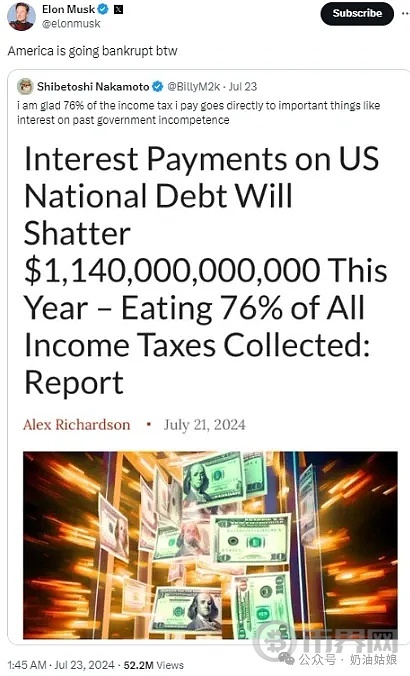
据7月早些时候美媒报道,马斯克警告说,美元正在走向“毁灭”,不断上升的35万亿美元债务可能会让美国“破产”,一些分析师认为这可能会推高比特币价格。

“你可能会问,美元贬值到什么程度了?”马斯克在推特上发布了一张暗示美国正处于恶性通胀边缘的图片。

图片

“顺便说一句,美国正在破产,”马斯克在回复狗狗币联合创始人时补充道,后者强调美国债务利息成本飙升。

Trending Cryptos

Related Reads

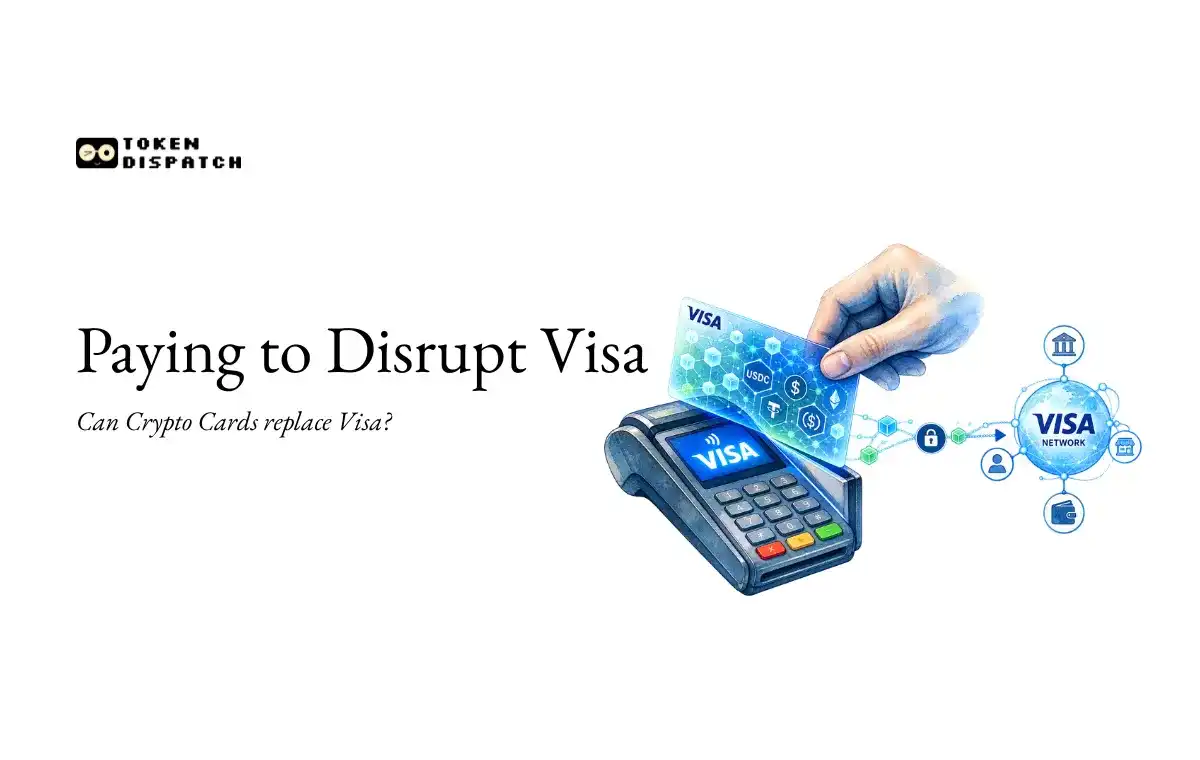
Why Are Crypto Cards Struggling to Replace Visa?

Encrypted bank cards struggle to replace Visa due to fundamental differences in payment economics. Analysis reveals Visa’s fee is only about 7-9% of the total merchant discount rate (MDR), with the largest share (70-80%) going to issuing banks as interchange fees. Most crypto debit cards, operating on prepaid stablecoins like USDC, lack the credit-based revenue model of traditional reward credit cards. This results in significantly lower interchange income. Even with higher exempt rates for small banks, the total fee pool for a $100 stablecoin debit transaction is only about $0.62, leaving minimal room for profit sharing after covering network, processor, and bank costs. Stablecoins primarily innovate in the back-end settlement layer, enabling near real-time T+0 settlements on networks like Visa and Mastercard instead of the traditional T+2 cycle. This optimizes working capital for issuers but doesn't lower costs for merchants or improve the consumer checkout experience. Card networks are actively integrating stablecoins for settlement, seeing them as a system enhancement, not a threat. While stablecoins can reduce costs in cross-border payments by eliminating intermediaries and forex layers, this logic doesn't translate to domestic card payments where the cost structure is dominated by interchange fees. The core promise of bypassing card networks to save merchants money is flawed, as removing Visa only cuts the smallest fee component.

marsbit14m ago

Why Are Crypto Cards Struggling to Replace Visa?

marsbit14m ago

In the Era of MiCA, Why is the EU CASP License Becoming Increasingly Important?

In the MiCA era, the EU's Crypto-Asset Service Provider (CASP) license is becoming increasingly crucial, especially after the transitional period ends on July 1, 2026. Post-deadline, crypto service providers operating under old national frameworks must either secure MiCA authorization or exit the EU market, rendering the previous model of using a single member state's VASP registration for pan-European operations obsolete. The CASP license fundamentally changes the regulatory landscape by shifting from a fragmented, nation-by-nation registration system to a unified "passporting" regime. Authorized in one member state, a CASP can provide its licensed services across the EU, offering greater legal clarity and operational efficiency compared to the past. MiCA defines CASP authorization based on specific service types, such as custody, trading platform operation, exchange, and transfer of crypto-assets. The scope of authorization is determined by actual business functions, not self-selection, with corresponding prudential requirements like capital adequacy. Banks and institutional clients increasingly value CASP status as it provides a verifiable, standardized framework for due diligence, accessible through ESMA's public registers. The regulation significantly limits the "reverse solicitation" exception for non-EU firms. Active marketing or outreach to EU clients generally necessitates a CASP license, moving away from reliance on offshore entities. It's important to note that a CASP license is not a universal permit; it covers crypto-asset services but does not automatically authorize traditional financial activities like payment services (governed by PSD2) or dealing in financial instruments (governed by MiFID II). A complete crypto-fiat payment solution often requires both a CASP and a licensed payment institution. Priority candidates for pursuing a CASP license include: 1) Platforms with the EU as a primary long-term market; 2) Projects seeking partnerships with EU banks or large institutions; and 3) Groups aiming to consolidate cross-border operations under one regulated entity. In contrast, early-stage projects without concrete EU plans may find the process premature. Ultimately, the growing importance of the CASP stems from the end of regulatory ambiguity in Europe. It has evolved from a consideration to a fundamental requirement for market access, client trust, and sustainable operations within the EU's now-harmonized crypto regulatory framework.

marsbit17m ago

In the Era of MiCA, Why is the EU CASP License Becoming Increasingly Important?

marsbit17m ago

Bernstein Research Report Analysis: Global Semiconductor Equipment WFE Grows 75% in Two Years, DRAM and Logic Chips Are the Biggest Drivers

Bernstein significantly raises its global Wafer Front-End (WFE) equipment spending forecast: $148B in 2026 (from $141B), $204B in 2027 (from $175B), and $259B in 2028 (from $198B). This represents a cumulative 75% growth over two years, confirming a strong equipment upcycle. Memory, especially DRAM, is the primary driver, with DRAM WFE expected to surge 53% in 2027 and 37% in 2028. Logic/Foundry follows, driven by advanced node investments. The forecast upgrades are broad-based, but the largest incremental contribution comes from memory spending outside China and logic/foundry expansion within China. Bernstein expects China's WFE demand to be resilient, jumping to $101B in 2028 from $573B in 2027 due to comprehensive expansion across memory, advanced logic, and mature nodes. A key factor is the DUV lithography shortage, which is expected to ease in H2 2026, allowing imports to recover. Top equipment picks include ASML (preferred in Europe) for its exposure to DRAM and advanced logic, and Applied Materials (top US pick) for its broad exposure and attractive valuation. In China, NAURA is favored due to its comprehensive product portfolio and significant advanced logic exposure. Bernstein views the recent sector pullback as an attractive entry point, arguing that market expectations for 2027/2028 demand strength remain too low and that supplier guidance is conservative.

marsbit17m ago

Bernstein Research Report Analysis: Global Semiconductor Equipment WFE Grows 75% in Two Years, DRAM and Logic Chips Are the Biggest Drivers

marsbit17m ago

The True Cost of Strategy Being Forced to 'Hoard' U.S. Dollars

The article analyzes MicroStrategy's (now Strategy) shift towards holding substantial US dollar reserves (currently $4.65 billion) while selling Bitcoin, contrasting this with its core identity as a Bitcoin-focused company. It argues this move is a strategic necessity specific to Strategy, driven by its unique business model of issuing "digital credit" (preferred securities) with fixed USD dividend obligations. To secure favorable credit ratings (e.g., S&P's B- rating, which penalizes Bitcoin-heavy balance sheets) and sustain this credit issuance, Strategy must demonstrate significant dollar liquidity. However, this cash hoarding imposes a heavy "invisible tax" or opportunity cost: capital allocated to low-yielding cash reserves cannot be deployed into Bitcoin, artificially raising the required return threshold on its actual Bitcoin investments to cover fixed dividend costs. The author concludes that Strategy is an extreme case, and most other Bitcoin-related companies should not blindly emulate this strategy. For them, dollar reserves should be dictated strictly by operational needs and prudent buffers, not arbitrary targets. Holding excess cash typically means forfeiting potential Bitcoin returns for uncertain benefits, making it economically unsound unless a company shares Strategy's specific credit-dependent capital structure. The decision ultimately hinges on a firm's unique business model and genuine cash flow requirements.

marsbit21m ago

The True Cost of Strategy Being Forced to 'Hoard' U.S. Dollars

marsbit21m ago

Trading

Spot

Hot Articles

What is $BITCOIN

DIGITAL GOLD ($BITCOIN): A Comprehensive Analysis Introduction to DIGITAL GOLD ($BITCOIN) DIGITAL GOLD ($BITCOIN) is a blockchain-based project operating on the Solana network, which aims to combine the characteristics of traditional precious metals with the innovation of decentralized technologies. While it shares a name with Bitcoin, often referred to as “digital gold” due to its perception as a store of value, DIGITAL GOLD is a separate token designed to create a unique ecosystem within the Web3 landscape. Its goal is to position itself as a viable alternative digital asset, although specifics regarding its applications and functionalities are still developing. What is DIGITAL GOLD ($BITCOIN)? DIGITAL GOLD ($BITCOIN) is a cryptocurrency token explicitly designed for use on the Solana blockchain. In contrast to Bitcoin, which provides a widely recognized value storage role, this token appears to focus on broader applications and characteristics. Notable aspects include: Blockchain Infrastructure: The token is built on the Solana blockchain, known for its capacity to handle high-speed and low-cost transactions. Supply Dynamics: DIGITAL GOLD has a maximum supply capped at 100 quadrillion tokens (100P $BITCOIN), although details regarding its circulating supply are currently undisclosed. Utility: While precise functionalities are not explicitly outlined, there are indications that the token could be utilized for various applications, potentially involving decentralized applications (dApps) or asset tokenization strategies. Who is the Creator of DIGITAL GOLD ($BITCOIN)? At present, the identity of the creators and development team behind DIGITAL GOLD ($BITCOIN) remains unknown. This situation is typical among many innovative projects within the blockchain space, particularly those aligning with decentralized finance and meme coin phenomena. While such anonymity may foster a community-driven culture, it intensifies concerns about governance and accountability. Who are the Investors of DIGITAL GOLD ($BITCOIN)? The available information indicates that DIGITAL GOLD ($BITCOIN) does not have any known institutional backers or prominent venture capital investments. The project seems to operate on a peer-to-peer model focused on community support and adoption rather than traditional funding routes. Its activity and liquidity are primarily situated on decentralized exchanges (DEXs), such as PumpSwap, rather than established centralized trading platforms, further highlighting its grassroots approach. How DIGITAL GOLD ($BITCOIN) Works The operational mechanics of DIGITAL GOLD ($BITCOIN) can be elaborated on based on its blockchain design and network attributes: Consensus Mechanism: By leveraging Solana’s unique proof-of-history (PoH) combined with a proof-of-stake (PoS) model, the project ensures efficient transaction validation contributing to the network's high performance. Tokenomics: While specific deflationary mechanisms have not been extensively detailed, the vast maximum token supply implies that it may cater to microtransactions or niche use cases that are still to be defined. Interoperability: There exists the potential for integration with Solana’s broader ecosystem, including various decentralized finance (DeFi) platforms. However, the details regarding specific integrations remain unspecified. Timeline of Key Events Here is a timeline that highlights significant milestones concerning DIGITAL GOLD ($BITCOIN): 2023: The initial deployment of the token occurs on the Solana blockchain, marked by its contract address. 2024: DIGITAL GOLD gains visibility as it becomes available for trading on decentralized exchanges like PumpSwap, allowing users to trade it against SOL. 2025: The project witnesses sporadic trading activity and potential interest in community-led engagements, although no noteworthy partnerships or technical advancements have been documented as of yet. Critical Analysis Strengths Scalability: The underlying Solana infrastructure supports high transaction volumes, which could enhance the utility of $BITCOIN in various transaction scenarios. Accessibility: The potential low trading price per token could attract retail investors, facilitating wider participation due to fractional ownership opportunities. Risks Lack of Transparency: The absence of publicly known backers, developers, or an audit process may yield skepticism regarding the project's sustainability and trustworthiness. Market Volatility: The trading activity is heavily reliant on speculative behavior, which can result in significant price volatility and uncertainty for investors. Conclusion DIGITAL GOLD ($BITCOIN) emerges as an intriguing yet ambiguous project within the rapidly evolving Solana ecosystem. While it attempts to leverage the “digital gold” narrative, its departure from Bitcoin's established role as a store of value underscores the need for a clearer differentiation of its intended utility and governance structure. Future acceptance and adoption will likely depend on addressing the current opacity and defining its operational and economic strategies more explicitly. Note: This report encompasses synthesised information available as of October 2023, and developments may have transpired beyond the research period.

1.8k Total ViewsPublished 2025.05.13Updated 2025.05.13

What is $BITCOIN

Discussions

Welcome to the HTX Community. Here, you can stay informed about the latest platform developments and gain access to professional market insights. Users' opinions on the price of BTC (BTC) are presented below.

活动图片