如果非要在SOL和ETH上面选一个 冲哥选以太坊

币界网Published on 2024-08-03Last updated on 2024-08-03

币界网报道:

最近很多人在问冲哥SOL和以太坊哪个公链更好!还有人说 Solana 将取代以太坊成为主要的 L1。问冲哥更看好哪个?包括以太坊的ETF通过了,下一个是不是SOL的ETF!!!不可否认的是SOL最近的热度确实很高,下面冲哥来给大家讲解一下SOL的最新情况!

SOL的情况冲哥之前也一直讲过,他就是一个巨大的泡沫,为啥这样说呢,我们来看一下数据:

  • FTX Estate 仍有 4100 万 SOL(76 亿美元)锁定。其中 750 万(14 亿美元)将于 2025 年 3 月解锁,另外每月将解锁 60.9 万枚SOL(1.13 亿美元),直至 2028 年。大多数代币的购买价格似乎约为每枚 64 美元

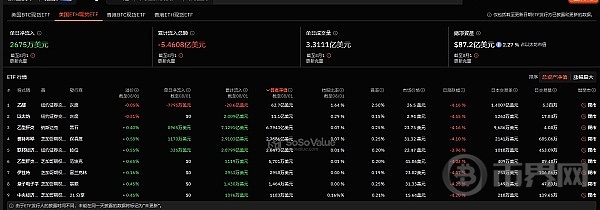
    这些冲哥之前的文章是多次提到的,到后面就全部都是抛压,行情好恐慌情绪会好一点,行情不好SOL跌下来就是下一个FIL!!一点都不夸张,你们可以看一下灰度的ETF几十亿美金对于以太坊造成的恐慌情绪有多重!再来看看SOL你就应该懂了!

    截至目前灰度ETF还有价值62.7亿的ETH没有转换,已经转换了20多亿美金!!把这个体量放到SOL上你在脑补一下!
bhYki8HjxCgRAJePjh9wlhxy4ugyEOgv8NdXE4jA.png

这个时候可能很多喷子就会说你看SOL链上的土狗或者百倍币有多少,他怎么怎么厉害,冲哥来给你看数据!

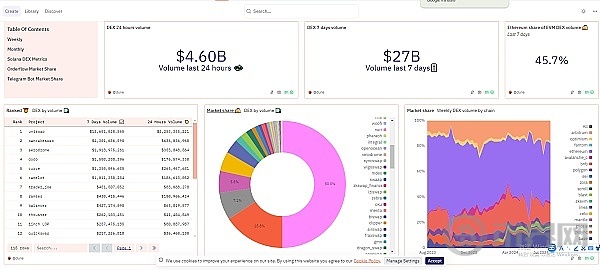
目前以太坊过去七天在 EVM DEX 交易量中所占的份额还是45.7%!
4UtkmfCoZyhJdAyItUqdnmzB4VYT3pjXlmUHRvOu.png

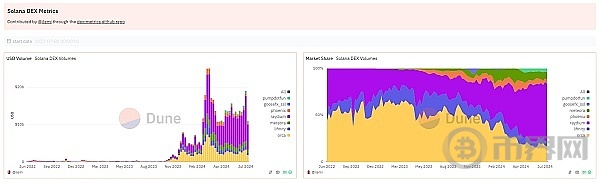
SOL的交易量我们也可以看一下

eAIlmBYPUNKmW6fv7EQbzCDdQsp22RNcq6IhrZVo.png

ETH 拥有 800 亿美元的稳定 TVL,而 SOL 仅为 32 亿美元。

我认为,稳定币(以及更广泛的)TVL 是一个比低费用平台上的交易量/费用更难操控的指标,它只显示了游戏中有多少真金白银。

SOL现在链上交易机器人和跑路的土狗比较多,SOL指标被严重夸大了,在过去 24 小时内,Raydium 标准 LP 上有超过 50 个交易量超过 250 万美元的跑路项目,总共产生了超过 2 亿美元的交易量和超过 50 万美元的费用。Orca 和 Meteora 的跑路似乎要少得多,而我在 Uniswap (ETH) 上很难找到任何具有任何有意义交易量的跑路项目。

显然,Solana 上的跑路项目存在严重问题,其影响有多种:

考虑到异常高的交易与用户比率以及链上虚假交易/欺诈交易的数量,似乎绝大多数交易都是非人类的。主要 ETH L2 上最高的每日交易与用户比率为 15.0 倍,在 Blast 上(费用同样低廉,而且用户正在耕种 Blast S2)。粗略比较一下,如果我们假设真实的 SOL 交易与用户比率与 Blast 相似,那就意味着 Solana 上超过 93% 的交易(以及费用)都是非人类的。

这些骗局之所以存在,唯一的原因是这样做有利可图。因此,用户损失的金额至少等于产生的费用+交易成本,每天高达数百万美元。

一旦部署这些骗局变得无利可图(即当实际用户厌倦了亏损),你会预计大部分交易量和费用收入都会下降。

SOL链上的用户、GAS费用和DEX量都被严重夸大了。

Solana 上的 MEV 处于一个独特的位置。与以太坊不同,它没有内置的内存池;相反,像Jito创建了(现已弃用的)协议外基础设施来模拟内存池功能,从而允许 MEV 机会,例如抢先交易、夹层攻击等。

Solana的问题在于,交易的绝大多数代币都是波动性极高、流动性低的memecoin,交易者通常会将交易滑点设置为 >10%,以确保交易成功执行。这为 MEV 提供了一个有利可图的攻击面来获取价值:

虽然从最严格的意义上来说,这是“真实”价值,但 MEV 只有在有利可图的情况下才会实施,即只要散户继续进来玩(并净亏损)MEME。一旦MEME开始冷却,MEV 费用收入也会崩溃。

我看到很多 SOL 论文都在讨论基础设施建设最终将如何轮换,比如JUP,JTO等等。这很有可能,但值得注意的是,它们的波动性更低,流动性更高,根本无法提供相同的 MEV 机会。

经验丰富的玩家会受到激励,构建最好的基础设施以利用这种情况。在我研究的过程中,一些消息来源提到这些玩家投资控制mempool空间,然后将访问权出售给第三方的传闻。但我无法证实这一信息。

然而,其中存在一些明显的不正当动机——通过将尽可能多的 memecoin 活动引导到 SOL,它允许精明的个人继续从MEV、memecoin的内幕交易以及SOL价格上升中获利。

SOL行情好的时候问题不大,行情不好的时候,或者等到FTX的SOL解锁的时候就是大量的抛压,长线冲哥不建议持有SOL,如果非要在SOL和ETH上面选一个,冲哥选以太坊!

Trending Cryptos

Related Reads

Why Are Crypto Cards Struggling to Replace Visa?

Encrypted bank cards struggle to replace Visa due to fundamental differences in payment economics. Analysis reveals Visa’s fee is only about 7-9% of the total merchant discount rate (MDR), with the largest share (70-80%) going to issuing banks as interchange fees. Most crypto debit cards, operating on prepaid stablecoins like USDC, lack the credit-based revenue model of traditional reward credit cards. This results in significantly lower interchange income. Even with higher exempt rates for small banks, the total fee pool for a $100 stablecoin debit transaction is only about $0.62, leaving minimal room for profit sharing after covering network, processor, and bank costs. Stablecoins primarily innovate in the back-end settlement layer, enabling near real-time T+0 settlements on networks like Visa and Mastercard instead of the traditional T+2 cycle. This optimizes working capital for issuers but doesn't lower costs for merchants or improve the consumer checkout experience. Card networks are actively integrating stablecoins for settlement, seeing them as a system enhancement, not a threat. While stablecoins can reduce costs in cross-border payments by eliminating intermediaries and forex layers, this logic doesn't translate to domestic card payments where the cost structure is dominated by interchange fees. The core promise of bypassing card networks to save merchants money is flawed, as removing Visa only cuts the smallest fee component.

marsbit14m ago

Why Are Crypto Cards Struggling to Replace Visa?

marsbit14m ago

In the Era of MiCA, Why is the EU CASP License Becoming Increasingly Important?

In the MiCA era, the EU's Crypto-Asset Service Provider (CASP) license is becoming increasingly crucial, especially after the transitional period ends on July 1, 2026. Post-deadline, crypto service providers operating under old national frameworks must either secure MiCA authorization or exit the EU market, rendering the previous model of using a single member state's VASP registration for pan-European operations obsolete. The CASP license fundamentally changes the regulatory landscape by shifting from a fragmented, nation-by-nation registration system to a unified "passporting" regime. Authorized in one member state, a CASP can provide its licensed services across the EU, offering greater legal clarity and operational efficiency compared to the past. MiCA defines CASP authorization based on specific service types, such as custody, trading platform operation, exchange, and transfer of crypto-assets. The scope of authorization is determined by actual business functions, not self-selection, with corresponding prudential requirements like capital adequacy. Banks and institutional clients increasingly value CASP status as it provides a verifiable, standardized framework for due diligence, accessible through ESMA's public registers. The regulation significantly limits the "reverse solicitation" exception for non-EU firms. Active marketing or outreach to EU clients generally necessitates a CASP license, moving away from reliance on offshore entities. It's important to note that a CASP license is not a universal permit; it covers crypto-asset services but does not automatically authorize traditional financial activities like payment services (governed by PSD2) or dealing in financial instruments (governed by MiFID II). A complete crypto-fiat payment solution often requires both a CASP and a licensed payment institution. Priority candidates for pursuing a CASP license include: 1) Platforms with the EU as a primary long-term market; 2) Projects seeking partnerships with EU banks or large institutions; and 3) Groups aiming to consolidate cross-border operations under one regulated entity. In contrast, early-stage projects without concrete EU plans may find the process premature. Ultimately, the growing importance of the CASP stems from the end of regulatory ambiguity in Europe. It has evolved from a consideration to a fundamental requirement for market access, client trust, and sustainable operations within the EU's now-harmonized crypto regulatory framework.

marsbit17m ago

In the Era of MiCA, Why is the EU CASP License Becoming Increasingly Important?

marsbit17m ago

Bernstein Research Report Analysis: Global Semiconductor Equipment WFE Grows 75% in Two Years, DRAM and Logic Chips Are the Biggest Drivers

Bernstein significantly raises its global Wafer Front-End (WFE) equipment spending forecast: $148B in 2026 (from $141B), $204B in 2027 (from $175B), and $259B in 2028 (from $198B). This represents a cumulative 75% growth over two years, confirming a strong equipment upcycle. Memory, especially DRAM, is the primary driver, with DRAM WFE expected to surge 53% in 2027 and 37% in 2028. Logic/Foundry follows, driven by advanced node investments. The forecast upgrades are broad-based, but the largest incremental contribution comes from memory spending outside China and logic/foundry expansion within China. Bernstein expects China's WFE demand to be resilient, jumping to $101B in 2028 from $573B in 2027 due to comprehensive expansion across memory, advanced logic, and mature nodes. A key factor is the DUV lithography shortage, which is expected to ease in H2 2026, allowing imports to recover. Top equipment picks include ASML (preferred in Europe) for its exposure to DRAM and advanced logic, and Applied Materials (top US pick) for its broad exposure and attractive valuation. In China, NAURA is favored due to its comprehensive product portfolio and significant advanced logic exposure. Bernstein views the recent sector pullback as an attractive entry point, arguing that market expectations for 2027/2028 demand strength remain too low and that supplier guidance is conservative.

marsbit18m ago

Bernstein Research Report Analysis: Global Semiconductor Equipment WFE Grows 75% in Two Years, DRAM and Logic Chips Are the Biggest Drivers

marsbit18m ago

The True Cost of Strategy Being Forced to 'Hoard' U.S. Dollars

The article analyzes MicroStrategy's (now Strategy) shift towards holding substantial US dollar reserves (currently $4.65 billion) while selling Bitcoin, contrasting this with its core identity as a Bitcoin-focused company. It argues this move is a strategic necessity specific to Strategy, driven by its unique business model of issuing "digital credit" (preferred securities) with fixed USD dividend obligations. To secure favorable credit ratings (e.g., S&P's B- rating, which penalizes Bitcoin-heavy balance sheets) and sustain this credit issuance, Strategy must demonstrate significant dollar liquidity. However, this cash hoarding imposes a heavy "invisible tax" or opportunity cost: capital allocated to low-yielding cash reserves cannot be deployed into Bitcoin, artificially raising the required return threshold on its actual Bitcoin investments to cover fixed dividend costs. The author concludes that Strategy is an extreme case, and most other Bitcoin-related companies should not blindly emulate this strategy. For them, dollar reserves should be dictated strictly by operational needs and prudent buffers, not arbitrary targets. Holding excess cash typically means forfeiting potential Bitcoin returns for uncertain benefits, making it economically unsound unless a company shares Strategy's specific credit-dependent capital structure. The decision ultimately hinges on a firm's unique business model and genuine cash flow requirements.

marsbit21m ago

The True Cost of Strategy Being Forced to 'Hoard' U.S. Dollars

marsbit21m ago

Trading

Spot

Hot Articles

Discussions

Welcome to the HTX Community. Here, you can stay informed about the latest platform developments and gain access to professional market insights. Users' opinions on the price of ETH (ETH) are presented below.

活动图片