如何使用支付宝购买加密货币?

币界网Published on 2024-07-23Last updated on 2024-07-23

币界网报道:

您的指南:如何使用支付宝购买加密货币?

在比特币的世界里找到自己的路既令人兴奋又困难。“如何用支付宝购买加密货币?”是一个经常出现的问题。

如果你想使用这种众所周知的支付方式购买比特币或其他加密货币,你来对地方了。本指南将以简单易懂的方式分解该过程。

继续阅读以了解更多!

另请阅读:唐纳德·特朗普的8.44亿美元比特币圆桌会议:值得吗?
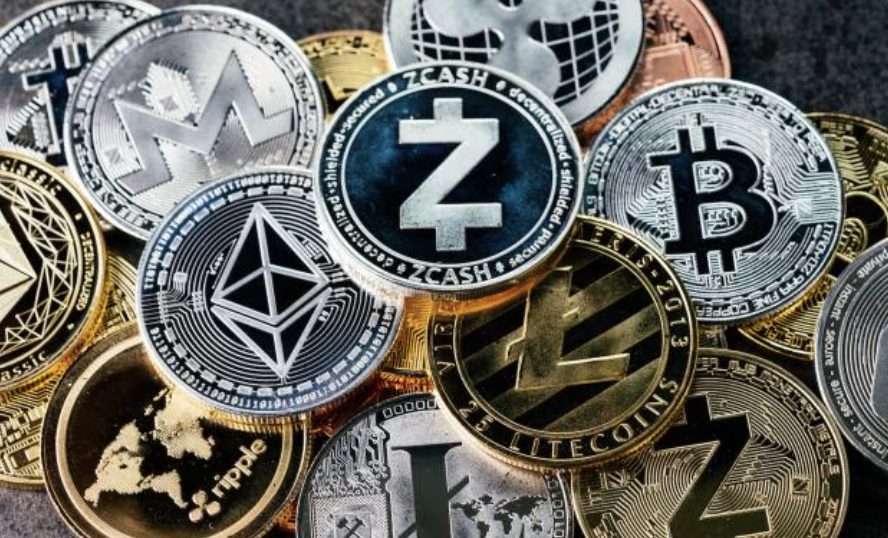
How to Buy Crypto with AliPay?

如何使用支付宝作为付款方式?

中国和世界各地的很多人都使用支付宝支付。这是一种快速安全的汇款方式,这使其成为获得加密货币的绝佳选择。在开始购物之前,请确保您已设置支付宝账户并链接到信用卡或银行账户。

如何选择最好的加密货币交易所?

要使用支付宝购买加密货币,你需要做的第一件事就是找到一个接受支付宝的硬币交易所。在去一个市场之前,一定要知道哪些市场接受支付宝。像币安和火币这样的平台是受欢迎的选择,因为它们为世界各地的人们服务,并提供多种支付方式。

创建帐户

在选择加密货币市场后,创建帐户是您需要做的下一件事。通常,这个过程包括提供一些个人信息并证明你是谁。确保你的文件准备好了。验证有助于确保您的购买是安全的,并且您遵守了规则。

使用支付宝充值

设置后,你需要把钱存入你的账户。您可以通过转到要使用的交易所的存款部分来选择支付宝作为您的付款方式。输入您要存入的金额,然后按照指示完成交易。请确保您的支付宝账户中有足够的钱来支付该商品。

使用支付宝购买比特币

既然你的账户里有钱,你就可以开始购买比特币和其他硬币了。在市场上找到你想买的加密货币,然后点击它。

例如,如果你想购买比特币,请选择与你投入的现金相匹配的比特币交易对。输入你想购买的金额,然后完成交易。这些步骤与你在网上购物时的步骤相同。

另请阅读:金砖国家表示去美元化进程正在进行中,无法停止
How to Buy Crypto with AliPay?

确保您的加密货币安全

获得比特币后,确保其安全至关重要。将您刚刚购买的比特币转移到安全的比特币钱包。硬件钱包、软件钱包和移动钱包是不同类型的钱包。

选择最适合您并保护您的数字物品安全的一个。请记住,将加密货币存储在交易所钱包中可能不如存储在钱包中安全。
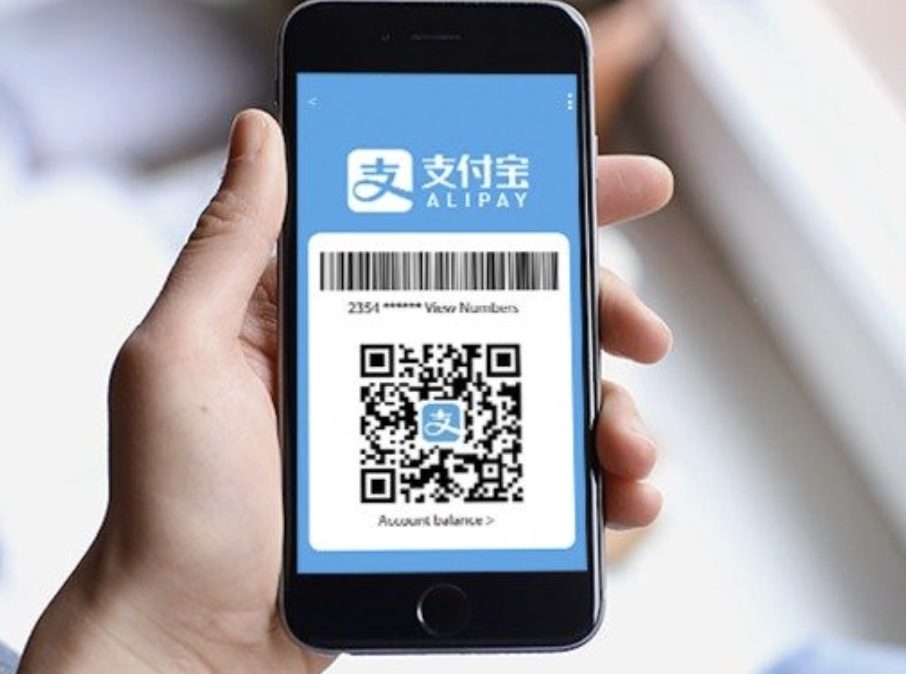
How to Buy Crypto with AliPay?

使用支付宝有什么好处?

使用支付宝购买加密货币有几个很好的理由。它可以让您快速安全地进行交易,这在使用数字货币时非常重要。支付宝有一个易于使用的界面,即使是新手也能找到自己的路。由于支付宝被广泛接受,您还可以在几个不同的网站上使用它。

结论

那么,我该如何使用支付宝购买加密货币呢?这很容易:只要找到一个适合你的交易所,开立一个账户,把钱放进去,然后开始购买。

通过使用支付宝作为您的付款方式,您可以使整个过程更容易、更安全。在进行任何投资之前,请确保您知道投资的风险。如果您以正确的方式做事,使用支付宝购买加密货币会很容易也很有趣。购物愉快!

Trending Cryptos

Related Reads

When 34% of ETH is Staked: In the Era of Native Compounding, How Should You Choose Staking?

As Ethereum staking reaches a record 34.7% of the total supply, it is evolving from a niche technical activity into a standardized asset management practice. This article analyzes four primary staking methods for ETH holders, highlighting their core trade-offs between control, convenience, and risk. The foundational method is solo staking, which requires 32 ETH and running one's own validator node. It offers full control and native rewards but demands significant technical expertise and constant maintenance. Non-custodial native staking, like services offered by imToken, provides a middle ground. Users control their withdrawal keys and assets while outsourcing node operation to professional providers. This maintains self-custody but transfers operational risk. For users without 32 ETH or those prioritizing liquidity, liquid staking protocols like Lido are key. Users deposit ETH to receive a liquid staking token (e.g., stETH), enabling continued participation in DeFi. This introduces additional smart contract and protocol risks but solves liquidity constraints. Exchange-based staking offers the lowest barrier to entry, handling all technical complexities and custody. However, it requires full trust in the platform's management of assets, node operations, and reward distribution. The choice depends on individual priorities: control (solo staking), balanced custody (non-custodial native), liquidity (liquid staking), or simplicity (exchange). With developments like Pectra enabling native compounding and traditional finance integrating staking into ETFs, the ecosystem is maturing. The key takeaway is that the decision should weigh factors like control, liquidity, and third-party risk, not just the Annual Percentage Rate (APR). The true cost of staking encompasses what rights and risks are delegated alongside the potential reward.

marsbit4m ago

When 34% of ETH is Staked: In the Era of Native Compounding, How Should You Choose Staking?

marsbit4m ago

EASY Residency Season 4 Roster Announced: These 9 Projects Already Have Onboarding Angles

EASY Residency Season 4 Announces 24 Selected Projects, Highlighting 9 with Early User Interaction Opportunities On August 25th, YZi Labs revealed the 24 early-stage companies selected for the fourth season of its EASY Residency flagship incubation program, with each project receiving $500,000 in funding. The selection reflects a focus on more programmable, localized, and compliant solutions in global payments, on-chain markets, and "agentic finance." Among the 24, nine projects currently offer clear avenues for early user participation. Here is a summary: * **Neutral Trade:** An on-chain quantitative strategy marketplace. Users can participate in its "Autopilot Deposit" campaign for 2x NT Points. * **Primus:** A cryptography infrastructure for institutional on-chain finance. It is currently running a "Warm Up" creator campaign on Kaito.ai with an $8,000 prize pool. * **Roostoo:** An AI trading agent training and screening platform. Users can join the early waitlist via its website. * **SmartX:** A terminal for on-chain transactions. Its new website is live, with the application launching next month (currently invite-only). * **Alloco:** An on-chain ETF issuance platform. Its core products are upcoming; users can join its Telegram channel for early access announcements. * **XHunt:** An influence data platform for creators and projects. A Chrome extension is available for use, but no points system is active yet. * **Nara:** A PayFi digital dollar protocol for stablecoin payments. The platform is live (TVL ~$10M), but users should await its PayFi product launch or potential points campaigns in September. * **ElfomoFi:** An on-chain market-making protocol for EVM. Users can deposit into curated vaults, though no points system is yet implemented. * **Liquorice:** A liquidity protocol for professional market makers. The app allows deposits, but also lacks a live points system. The report positions these interaction opportunities as potential avenues for users to engage with the projects early, possibly ahead of future token distributions.

Odaily星球日报54m ago

EASY Residency Season 4 Roster Announced: These 9 Projects Already Have Onboarding Angles

Odaily星球日报54m ago

Spending Without Selling: Galaxy Turns BTC, ETH, SOL Into Personal Lines of Credit

On August 25th, Galaxy Digital launched a Crypto Portfolio Line of Credit on its GalaxyOne retail platform. Users can borrow USD or USDC at a fixed 8.99% APR using a mix of BTC, ETH, and SOL (including staked SOL) as collateral. The initial loan-to-value ratio is 50%, and the service is currently available in 40 U.S. states. Galaxy emphasizes that client collateral will not be rehypothecated, and staked SOL will continue to earn rewards. This product targets high-net-worth individuals, family offices, and founders who hold significant crypto assets but seek liquidity without triggering capital gains taxes by selling. Key features include combined collateral across multiple assets, acceptance of staked SOL, and flexible fund usage for expenses, investments, or trading within GalaxyOne. The launch occurs amidst a contracting crypto-backed lending market, which declined to $56.16 billion in Q2 2026. Galaxy's entry, led by BlockFi's former founder Zac Prince, positions itself with a safety-first promise of no rehypothecation, directly addressing failures seen in 2022. However, risks remain for borrowers, including potential margin calls if collateral values drop significantly and the ongoing cost of the 8.99% interest rate. The product is most advantageous during bullish markets where asset appreciation outweighs interest costs, functioning best as a short-term liquidity tool rather than a long-term leverage strategy.

marsbit55m ago

Spending Without Selling: Galaxy Turns BTC, ETH, SOL Into Personal Lines of Credit

marsbit55m ago

Trading

Spot

Hot Articles

What is $BITCOIN

DIGITAL GOLD ($BITCOIN): A Comprehensive Analysis Introduction to DIGITAL GOLD ($BITCOIN) DIGITAL GOLD ($BITCOIN) is a blockchain-based project operating on the Solana network, which aims to combine the characteristics of traditional precious metals with the innovation of decentralized technologies. While it shares a name with Bitcoin, often referred to as “digital gold” due to its perception as a store of value, DIGITAL GOLD is a separate token designed to create a unique ecosystem within the Web3 landscape. Its goal is to position itself as a viable alternative digital asset, although specifics regarding its applications and functionalities are still developing. What is DIGITAL GOLD ($BITCOIN)? DIGITAL GOLD ($BITCOIN) is a cryptocurrency token explicitly designed for use on the Solana blockchain. In contrast to Bitcoin, which provides a widely recognized value storage role, this token appears to focus on broader applications and characteristics. Notable aspects include: Blockchain Infrastructure: The token is built on the Solana blockchain, known for its capacity to handle high-speed and low-cost transactions. Supply Dynamics: DIGITAL GOLD has a maximum supply capped at 100 quadrillion tokens (100P $BITCOIN), although details regarding its circulating supply are currently undisclosed. Utility: While precise functionalities are not explicitly outlined, there are indications that the token could be utilized for various applications, potentially involving decentralized applications (dApps) or asset tokenization strategies. Who is the Creator of DIGITAL GOLD ($BITCOIN)? At present, the identity of the creators and development team behind DIGITAL GOLD ($BITCOIN) remains unknown. This situation is typical among many innovative projects within the blockchain space, particularly those aligning with decentralized finance and meme coin phenomena. While such anonymity may foster a community-driven culture, it intensifies concerns about governance and accountability. Who are the Investors of DIGITAL GOLD ($BITCOIN)? The available information indicates that DIGITAL GOLD ($BITCOIN) does not have any known institutional backers or prominent venture capital investments. The project seems to operate on a peer-to-peer model focused on community support and adoption rather than traditional funding routes. Its activity and liquidity are primarily situated on decentralized exchanges (DEXs), such as PumpSwap, rather than established centralized trading platforms, further highlighting its grassroots approach. How DIGITAL GOLD ($BITCOIN) Works The operational mechanics of DIGITAL GOLD ($BITCOIN) can be elaborated on based on its blockchain design and network attributes: Consensus Mechanism: By leveraging Solana’s unique proof-of-history (PoH) combined with a proof-of-stake (PoS) model, the project ensures efficient transaction validation contributing to the network's high performance. Tokenomics: While specific deflationary mechanisms have not been extensively detailed, the vast maximum token supply implies that it may cater to microtransactions or niche use cases that are still to be defined. Interoperability: There exists the potential for integration with Solana’s broader ecosystem, including various decentralized finance (DeFi) platforms. However, the details regarding specific integrations remain unspecified. Timeline of Key Events Here is a timeline that highlights significant milestones concerning DIGITAL GOLD ($BITCOIN): 2023: The initial deployment of the token occurs on the Solana blockchain, marked by its contract address. 2024: DIGITAL GOLD gains visibility as it becomes available for trading on decentralized exchanges like PumpSwap, allowing users to trade it against SOL. 2025: The project witnesses sporadic trading activity and potential interest in community-led engagements, although no noteworthy partnerships or technical advancements have been documented as of yet. Critical Analysis Strengths Scalability: The underlying Solana infrastructure supports high transaction volumes, which could enhance the utility of $BITCOIN in various transaction scenarios. Accessibility: The potential low trading price per token could attract retail investors, facilitating wider participation due to fractional ownership opportunities. Risks Lack of Transparency: The absence of publicly known backers, developers, or an audit process may yield skepticism regarding the project's sustainability and trustworthiness. Market Volatility: The trading activity is heavily reliant on speculative behavior, which can result in significant price volatility and uncertainty for investors. Conclusion DIGITAL GOLD ($BITCOIN) emerges as an intriguing yet ambiguous project within the rapidly evolving Solana ecosystem. While it attempts to leverage the “digital gold” narrative, its departure from Bitcoin's established role as a store of value underscores the need for a clearer differentiation of its intended utility and governance structure. Future acceptance and adoption will likely depend on addressing the current opacity and defining its operational and economic strategies more explicitly. Note: This report encompasses synthesised information available as of October 2023, and developments may have transpired beyond the research period.

2.4k Total ViewsPublished 2025.05.13Updated 2025.05.13

What is $BITCOIN

Discussions

Welcome to the HTX Community. Here, you can stay informed about the latest platform developments and gain access to professional market insights. Users' opinions on the price of BTC (BTC) are presented below.

活动图片