SignalPlus波动率专栏(20240708):拥抱不确定

Odaily星球日报Published on 2024-07-08Last updated on 2024-07-08

Abstract

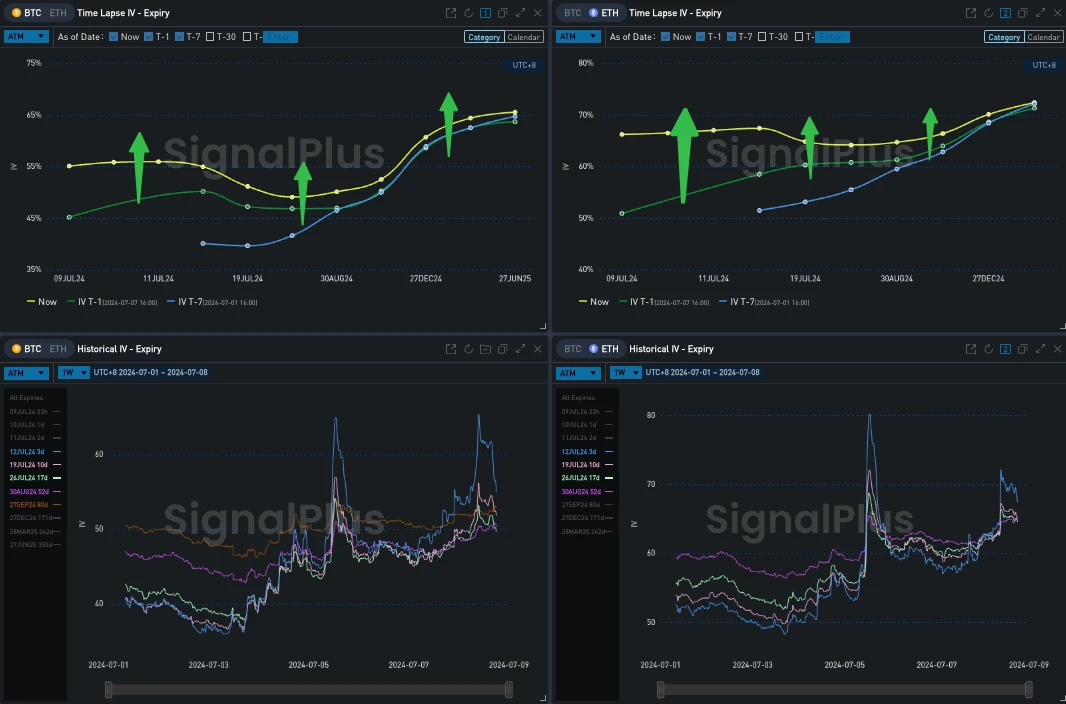
在过去的24小时里,市场见证了BTC在亚盘开市后的大幅跳水,期权隐含波动率随即被大幅上调,并形成倒挂的形态。

SignalPlus波动率专栏(20240708):拥抱不确定

SignalPlus波动率专栏(20240708):拥抱不确定

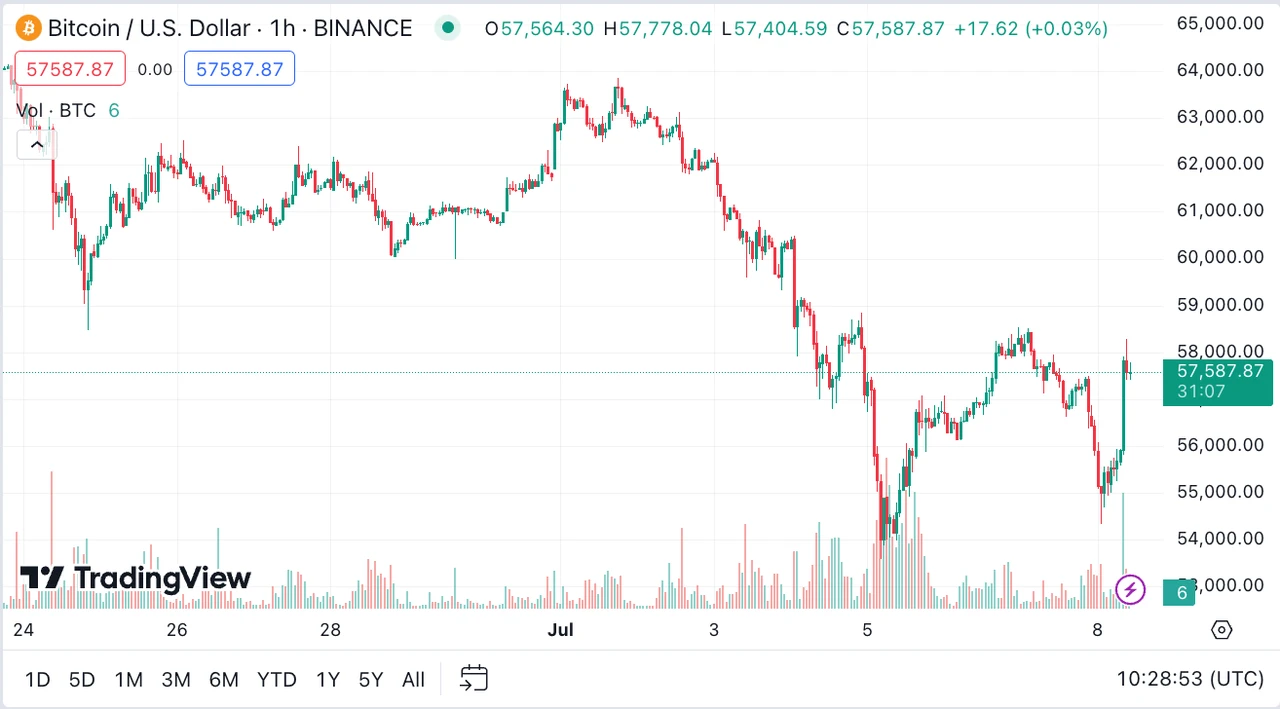
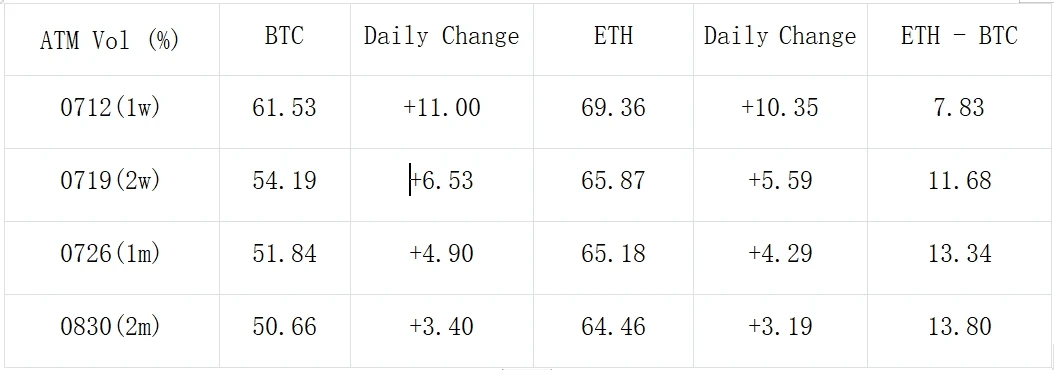
在过去的 24 小时里,市场见证了 BTC 在亚盘开市后的大幅跳水,眼看币价一度跌穿至 55000 美元以下,随后温和反弹,并在结算时点大步一跳成功回到 57500 附近。实际波动率的大涨让双边的 short gamma 头寸都陷入难堪的境地,期权隐含波动率随即被大幅上调,并形成倒挂的形态。

SignalPlus波动率专栏(20240708):拥抱不确定

Source: TradingVie;SignalPlus,ATM Vol

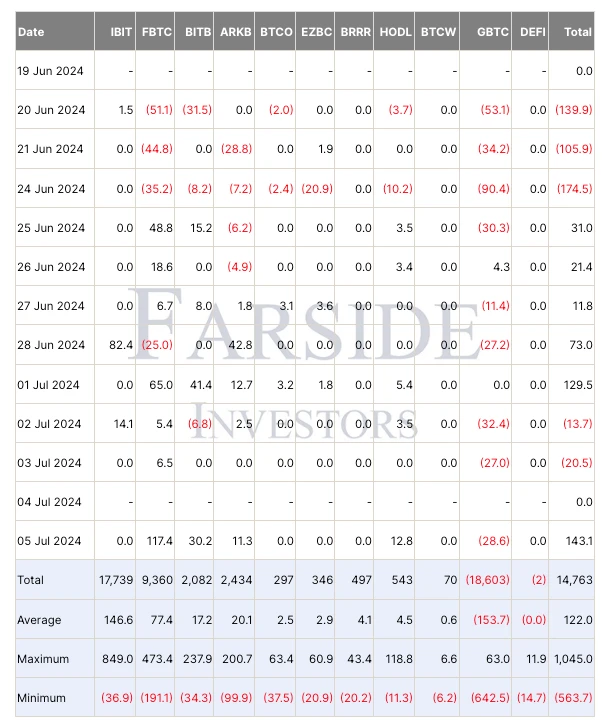
纵观眼下的局面,社区里明显地分化出两种不同的声音。消极的交易者指出,来自德国政府和美国政府还有门头沟三大势力的抛压仍未消退,币价还可能继续走跌。但今天社区中有更多乐观的交易者发声,他们首先否定了政府抛压的带来的过度影响,指出政府卖的 BTC 数量只有上一轮牛市的 4% ;另一方面,即使在 Spot 下行的行情,ETF 仍然在为市场带来正向的资金流入,大部分都去到了 FBTC;我们还能看到,有日本 MicroStrategy 之称的咨询公司 Metaplanet 在昨天抄底购买了 42, 466 枚 Bitcoin,价值$ 2.5 M,现在这个公司总记持有了 203, 734 枚比特币,均价在 62000 左右。

SignalPlus波动率专栏(20240708):拥抱不确定

Source:Farside Investors

接下来的路会怎么走,暂时没人可以给出充满信心的答案。一众交易员将目光锁定在了这周的宏观事件上,不仅有美联储主席鲍威尔的讲话,还有重磅 CPI/PPI 数据公布。再过几周就是新一轮的 FOMC 会议了,在当前形势还不明朗的时候,宏观指标或许能成为一道重要的指示牌。不仅如此,市场还预计本周的 11-12 会迎来以太 ETF 的批准,为市场注入了更多的不确定性,下半周精彩预定。

SignalPlus波动率专栏(20240708):拥抱不确定

Source: SignalPlus, Economic Calendar

SignalPlus波动率专栏(20240708):拥抱不确定

Source: Deribit (截至 8 JU L2 4 16: 00 UTC+ 8)

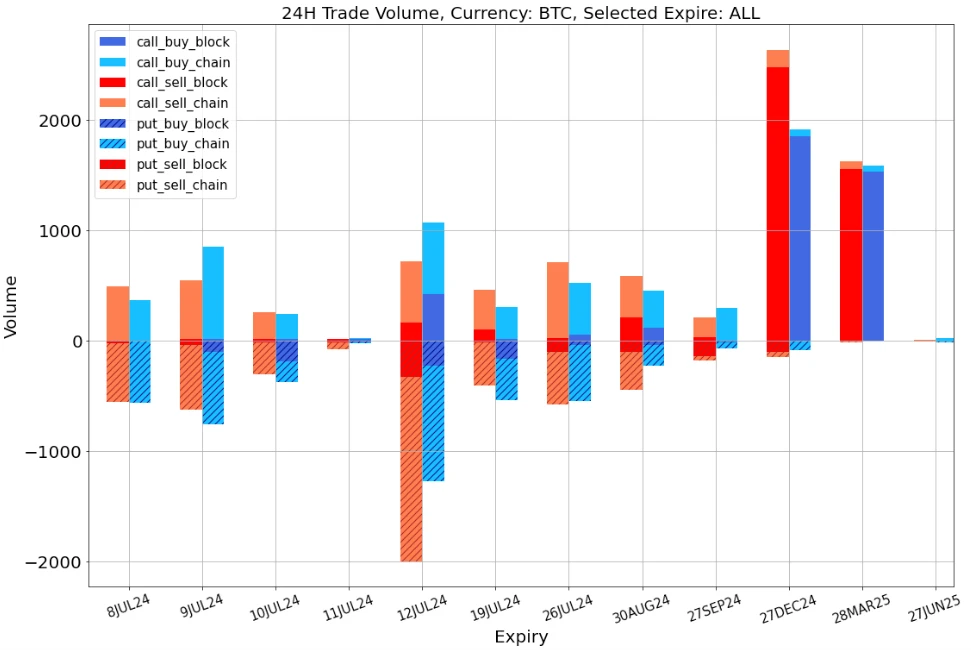
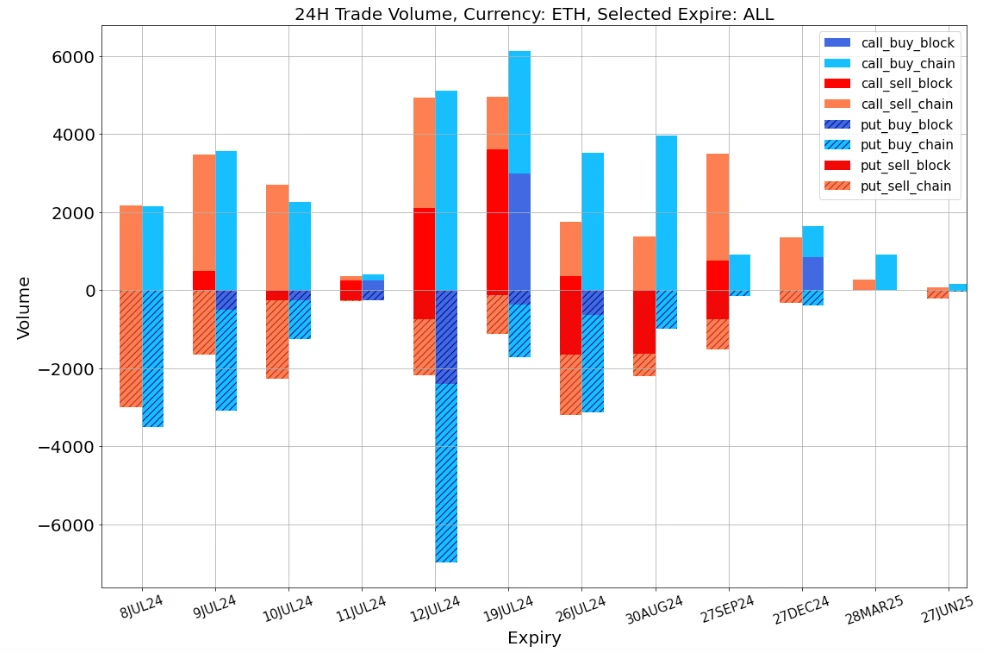
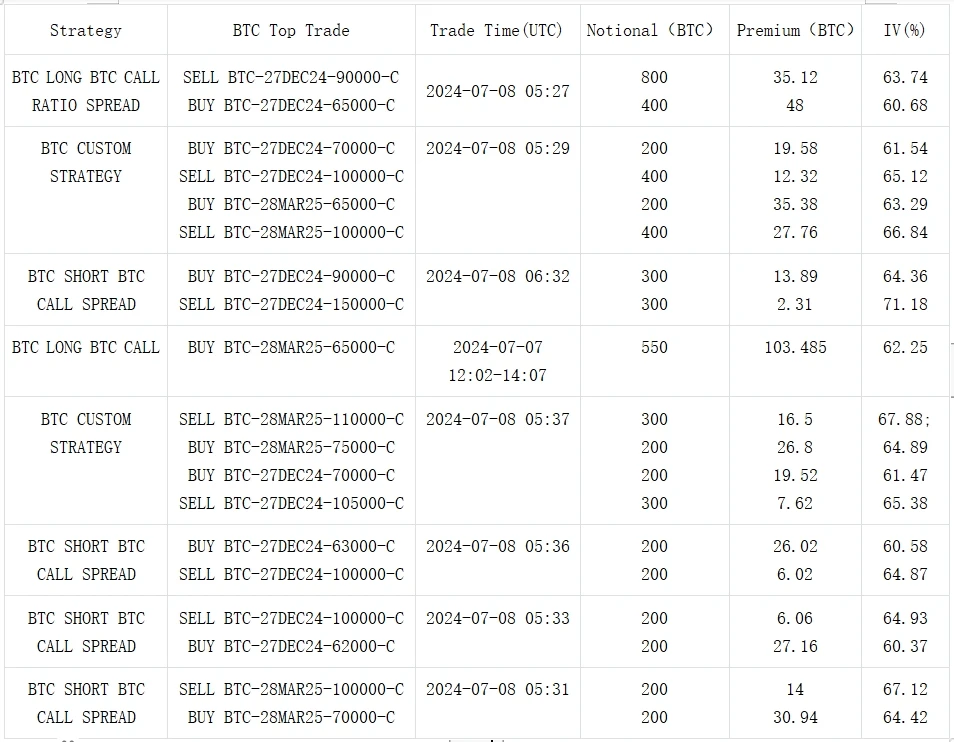
从交易上看,由于 11-12 号的重磅数据公布和 ETF 批准的可能性,交易员大量购买 ETH 12 JUL 的看跌期权,对多头持仓进行保护。BTC 则是相反,价格的反弹为交易员抛售 12 JUL 看跌期权提供了信心,同时远端看涨期权的成交量暴涨,分布上主要是 wing 上的买入,以及更远 tail 上的卖出,形成了 long call spread 的 flow。

SignalPlus波动率专栏(20240708):拥抱不确定

Data Source: Deribit,BTC 交易总体分布

SignalPlus波动率专栏(20240708):拥抱不确定

Data Source: Deribit, ETH 交易总体分布

SignalPlus波动率专栏(20240708):拥抱不确定

Source: Deribit Block Trade

SignalPlus波动率专栏(20240708):拥抱不确定

Source: Deribit Block Trade

SignalPlus波动率专栏(20240708):拥抱不确定

您可在 ChatGPT 4.0 的 Plugin Store 搜索 SignalPlus ,获取实时加密资讯。如果想即时收到我们的更新,欢迎关注我们的推特账号@SignalPlus_Web3 ,或者加入我们的微信群(添加小助手微信:SignalPlus 123)、Telegram 群以及 Discord 社群,和更多朋友一起交流互动。SignalPlus Official Website:https://www.signalplus.com

Trending Cryptos

Related Reads

Stablecoins Becoming the Next Policy Challenge for the Fed's Walsh Version

Fed Governor Christopher Waller's speech at the June 22 conference on the U.S. dollar's international role signifies a notable policy shift: stablecoins like USDT and USDC are now being formally considered as potential channels for transmitting U.S. dollar liquidity globally. With their combined market cap surpassing $250 billion and high transaction volumes, these digital assets are moving from the periphery of crypto policy to the core of monetary system research. The key concern for policymakers is how stablecoin flows interact with traditional dollar infrastructure. Their growth could affect bank deposits, demand for short-term Treasury securities (like T-bills), and global access to dollars, depending on whether demand originates overseas or substitutes for domestic bank balances. Issuers' reserve management—holding assets in banks, money market funds, or Treasuries—links stablecoin activity directly to these core markets. The Fed's research agenda now examines whether stablecoins, by combining payment and balance-holding functions on digital rails, could complicate monetary policy implementation or transmit liquidity stress to banks. While current Treasury holdings by issuers are under 1% of the total market, their concentrated demand could marginally impact yields, especially during periods of stress. Consequently, stablecoins are evolving from mere crypto trading tools into a private-layer dollar transmission system with public policy implications, prompting closer regulatory scrutiny of their reserve robustness, redemption mechanisms, and systemic integration.

marsbit56m ago

Stablecoins Becoming the Next Policy Challenge for the Fed's Walsh Version

marsbit56m ago

A 380% Soar, Shenzhen’s 100-Billion-Yuan IPO Rings the Bell

HKC Holdings, a major Chinese display panel manufacturer, has successfully listed on the Shenzhen Stock Exchange's main board. The company's shares surged over 380% on its debut, pushing its market capitalization to around 350 billion yuan (formerly reaching 500 billion yuan). Founded by Wang Zhiyong in Shenzhen's Huaqiangbei electronics market nearly three decades ago, HKC evolved from assembling monitors to becoming a global top-tier supplier of semiconductor display panels for TVs, monitors, and smartphones. The IPO marks a significant milestone for HKC and its backers. The company's growth into the capital-intensive panel manufacturing sector was supported through partnerships with state-owned capital from regions like Chongqing, Mianyang, and Chuzhou. Its shareholder list also includes BOE Technology's investment arm. In recent years, HKC reported strong financials, with core panel business contributing over 70% of revenue and clients including Samsung, TCL, and Xiaomi. This listing is seen as part of a broader trend in Shenzhen's evolving tech landscape. Beyond established giants, the city is nurturing clusters of leading companies in specialized sectors like robotics—exemplified by the "Shenzhen Robot Valley"—and storage chips, where a group of firms dubbed the "Storage Five Tigers" has achieved a combined trillion-yuan market valuation. Shenzhen's strategic focus on emerging industries such as AI terminals, low-altitude economy, and humanoid robotics aims to build new industrial depth and foster the next generation of tech champions.

marsbit1h ago

A 380% Soar, Shenzhen’s 100-Billion-Yuan IPO Rings the Bell

marsbit1h ago

Trading

Spot
Futures

Hot Articles

What is $BITCOIN

DIGITAL GOLD ($BITCOIN): A Comprehensive Analysis Introduction to DIGITAL GOLD ($BITCOIN) DIGITAL GOLD ($BITCOIN) is a blockchain-based project operating on the Solana network, which aims to combine the characteristics of traditional precious metals with the innovation of decentralized technologies. While it shares a name with Bitcoin, often referred to as “digital gold” due to its perception as a store of value, DIGITAL GOLD is a separate token designed to create a unique ecosystem within the Web3 landscape. Its goal is to position itself as a viable alternative digital asset, although specifics regarding its applications and functionalities are still developing. What is DIGITAL GOLD ($BITCOIN)? DIGITAL GOLD ($BITCOIN) is a cryptocurrency token explicitly designed for use on the Solana blockchain. In contrast to Bitcoin, which provides a widely recognized value storage role, this token appears to focus on broader applications and characteristics. Notable aspects include: Blockchain Infrastructure: The token is built on the Solana blockchain, known for its capacity to handle high-speed and low-cost transactions. Supply Dynamics: DIGITAL GOLD has a maximum supply capped at 100 quadrillion tokens (100P $BITCOIN), although details regarding its circulating supply are currently undisclosed. Utility: While precise functionalities are not explicitly outlined, there are indications that the token could be utilized for various applications, potentially involving decentralized applications (dApps) or asset tokenization strategies. Who is the Creator of DIGITAL GOLD ($BITCOIN)? At present, the identity of the creators and development team behind DIGITAL GOLD ($BITCOIN) remains unknown. This situation is typical among many innovative projects within the blockchain space, particularly those aligning with decentralized finance and meme coin phenomena. While such anonymity may foster a community-driven culture, it intensifies concerns about governance and accountability. Who are the Investors of DIGITAL GOLD ($BITCOIN)? The available information indicates that DIGITAL GOLD ($BITCOIN) does not have any known institutional backers or prominent venture capital investments. The project seems to operate on a peer-to-peer model focused on community support and adoption rather than traditional funding routes. Its activity and liquidity are primarily situated on decentralized exchanges (DEXs), such as PumpSwap, rather than established centralized trading platforms, further highlighting its grassroots approach. How DIGITAL GOLD ($BITCOIN) Works The operational mechanics of DIGITAL GOLD ($BITCOIN) can be elaborated on based on its blockchain design and network attributes: Consensus Mechanism: By leveraging Solana’s unique proof-of-history (PoH) combined with a proof-of-stake (PoS) model, the project ensures efficient transaction validation contributing to the network's high performance. Tokenomics: While specific deflationary mechanisms have not been extensively detailed, the vast maximum token supply implies that it may cater to microtransactions or niche use cases that are still to be defined. Interoperability: There exists the potential for integration with Solana’s broader ecosystem, including various decentralized finance (DeFi) platforms. However, the details regarding specific integrations remain unspecified. Timeline of Key Events Here is a timeline that highlights significant milestones concerning DIGITAL GOLD ($BITCOIN): 2023: The initial deployment of the token occurs on the Solana blockchain, marked by its contract address. 2024: DIGITAL GOLD gains visibility as it becomes available for trading on decentralized exchanges like PumpSwap, allowing users to trade it against SOL. 2025: The project witnesses sporadic trading activity and potential interest in community-led engagements, although no noteworthy partnerships or technical advancements have been documented as of yet. Critical Analysis Strengths Scalability: The underlying Solana infrastructure supports high transaction volumes, which could enhance the utility of $BITCOIN in various transaction scenarios. Accessibility: The potential low trading price per token could attract retail investors, facilitating wider participation due to fractional ownership opportunities. Risks Lack of Transparency: The absence of publicly known backers, developers, or an audit process may yield skepticism regarding the project's sustainability and trustworthiness. Market Volatility: The trading activity is heavily reliant on speculative behavior, which can result in significant price volatility and uncertainty for investors. Conclusion DIGITAL GOLD ($BITCOIN) emerges as an intriguing yet ambiguous project within the rapidly evolving Solana ecosystem. While it attempts to leverage the “digital gold” narrative, its departure from Bitcoin's established role as a store of value underscores the need for a clearer differentiation of its intended utility and governance structure. Future acceptance and adoption will likely depend on addressing the current opacity and defining its operational and economic strategies more explicitly. Note: This report encompasses synthesised information available as of October 2023, and developments may have transpired beyond the research period.

459 Total ViewsPublished 2025.05.13Updated 2025.05.13
What is $BITCOIN

Discussions

Welcome to the HTX Community. Here, you can stay informed about the latest platform developments and gain access to professional market insights. Users' opinions on the price of BTC (BTC) are presented below.

活动图片