Author: Claude, TechFlow
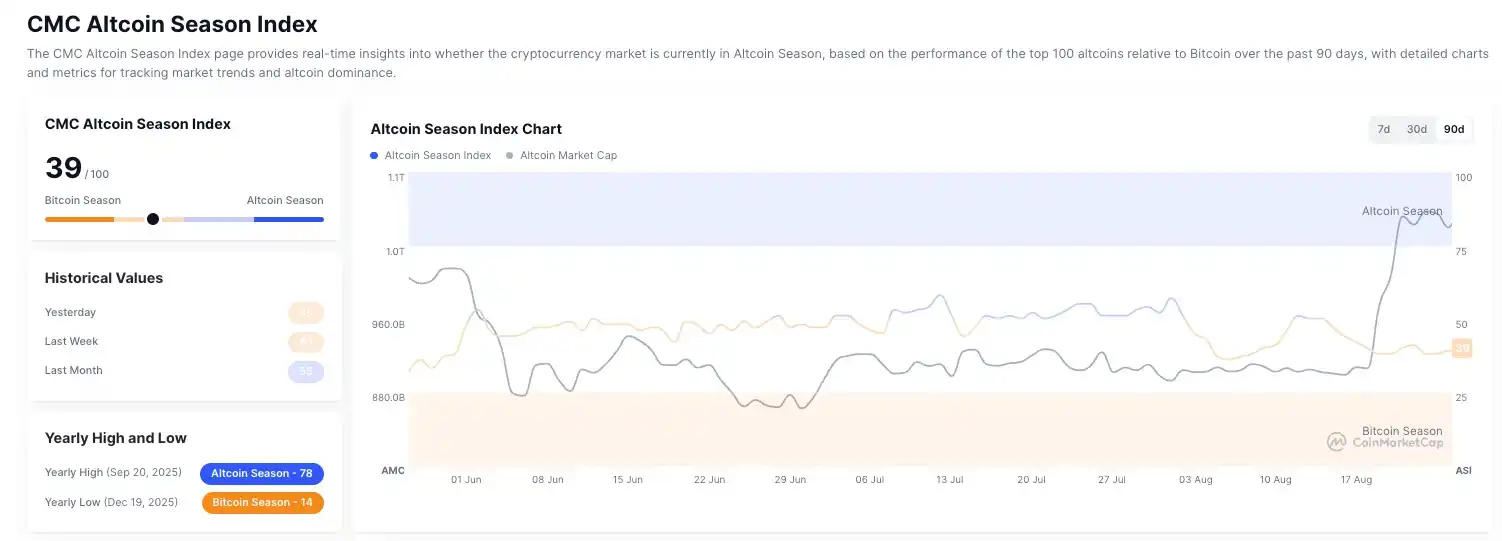
TechFlow Introduction: Bitcoin rebounded sharply from around $63,000 to near $80,000 over the past week, briefly touching approximately $81,000. U.S. spot ETFs recorded their strongest weekly net inflows in months (around $1.9-$2.0 billion). Market breadth has improved significantly, but Bitcoin's dominance remains in the 59%-60% range, and the Altcoin Season Index sits between 38-49, far from the threshold of 75 needed to confirm an altcoin season. The current rally more reflects a BTC-led recovery driven by institutional and spot buying, while the rapid recovery of leverage and sentiment warrants caution.
Bitcoin continued its strong performance this week, rapidly surging from around $63,000 in mid-August to briefly break above $81,000, before consolidating in the $78.5k-$79.5k range. This marks the first time it has reclaimed the $80,000 level since May, with a weekly gain of nearly 25%, one of the strongest single-week performances in recent years.
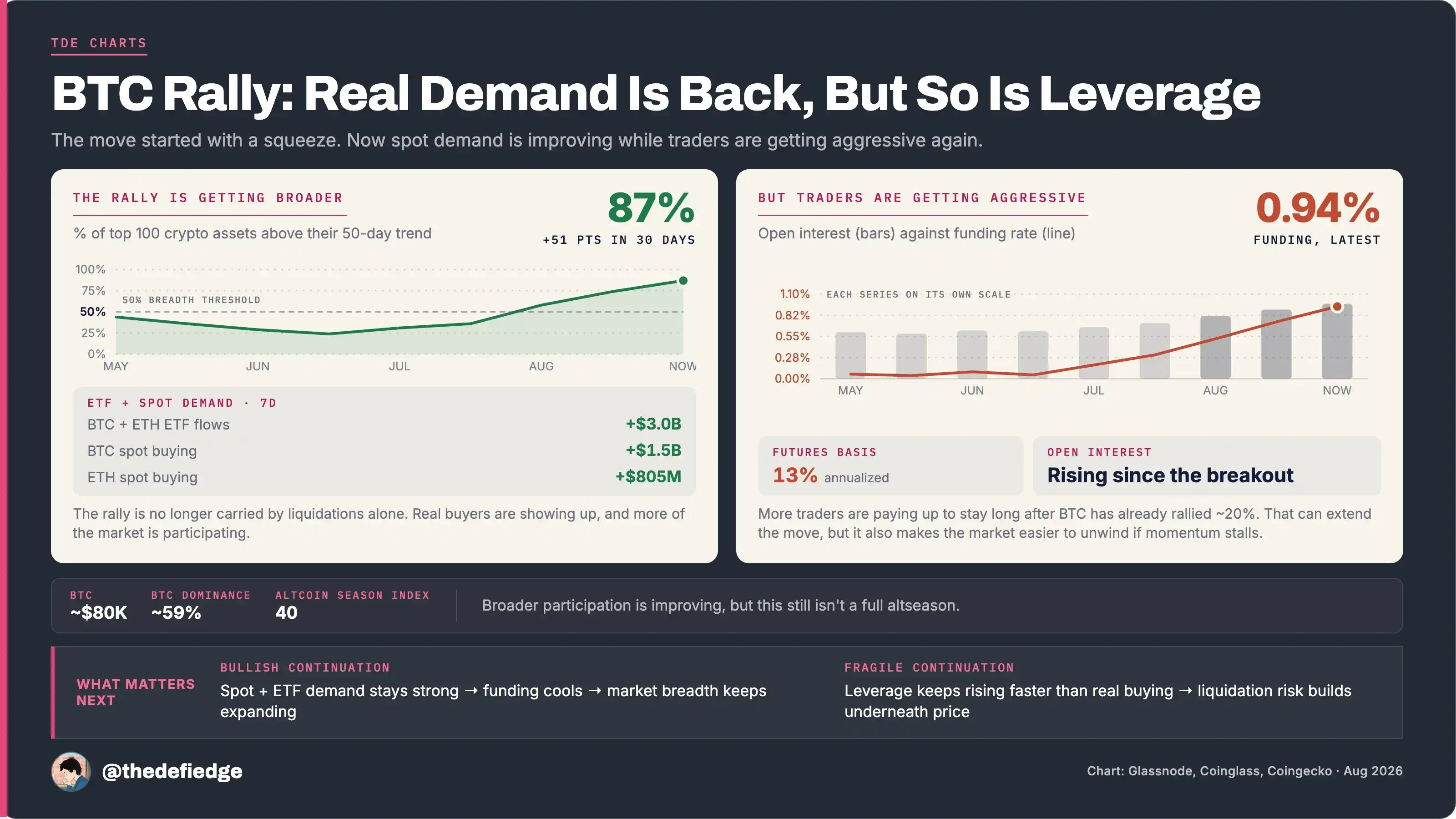
The core force driving this rebound is spot demand. U.S. spot Bitcoin ETFs recorded net inflows of approximately $1.9 to $2.0 billion over the past week, one of their strongest weekly performances since October 2025. BlackRock's IBIT continued to contribute the major share, with daily inflows repeatedly exceeding $200 million. Simultaneously, spot Ethereum ETFs also saw significant inflows. The sustained buying pressure from institutional funds via the ETF channel has provided substantial support for the price.
Market Breadth Improves, But Dominance Remains with Bitcoin
Technically, market structure has indeed shown positive changes in breadth. The percentage of top 100 tokens trading above their 50-day moving averages surged from around 36% a month ago to over 80%. The total altcoin market capitalization (Total2) increased by about $215 billion between August 19 and 22, reclaiming the $1 trillion mark, with some tokens also recovering their 200-day moving averages.
However, key rotation indicators have not confirmed this simultaneously. Bitcoin's market dominance remains around 59%-60%, with some data sources even briefly approaching 61%. The latest Altcoin Season Index reading falls between 38 and 49, well below the typical threshold of 75 considered to signal the start of an altcoin season. This means that over the past 90 days, the vast majority of altcoins have still underperformed Bitcoin.
In other words, the current environment is more of a "Bitcoin-led, altcoins follow" recovery rally, rather than the typical altcoin season structure where capital comprehensively rotates from Bitcoin into smaller-cap assets. Although the ETH/BTC ratio has recovered somewhat, capital remains noticeably concentrated in top-tier assets.
Leverage and Sentiment Recover Faster Than Fundamental Consolidation
In the derivatives market, sentiment has shifted from fear to greed in a short period. Funding rates have turned positive, with BTC perpetual contract rates on some exchanges equivalent to an annualized rate of around 10%, meaning longs are now paying to hold positions. Open interest fluctuated after a wave of short squeezes, and sentiment indicators quickly entered the "greed" zone.
This combination of "price rising first, leverage following quickly" warrants caution. Historical experience shows that when buying pressure is primarily contributed by ETFs and spot institutions, and leveraged traders rapidly increase positions, any negative macro or liquidity shock can easily trigger chain liquidations. The current market has yet to see clear evidence of large-scale retail fund inflows. Activity in group chats and social media has increased but is far from the levels seen during the peak of the previous bull market.
Altcoin Season Not Confirmed, Exercise Restraint in Operations
Synthesizing current data, the core drivers of this rebound remain institutional spot buying and short covering, rather than a broad-based return of retail risk appetite. The classic confirmation signals for an altcoin season—a sustained decline in Bitcoin dominance, the Altcoin Season Index stably above 75, and small-to-mid-cap assets consistently outperforming—have not yet appeared.
Against this backdrop, a more prudent approach would be:
1. Prioritize focus on top-tier assets with the best liquidity, such as Bitcoin and Ethereum, which directly benefit from ETF inflows.
2. Maintain selectivity towards altcoins, closely observing those with clear fundamentals that can hold key moving averages during pullbacks, and avoid blindly chasing the biggest short-term gainers.
3. Strictly control leverage. Current funding rates and positioning structures indicate rising long crowdedness; any sharp correction could easily liquidate highly leveraged positions first.
4. Use "performance during the first meaningful pullback" as a key observation window: true rotation is more likely when breadth indicators remain high during a pullback and dominance begins to decline.
The market has recovered from deeply oversold conditions, and institutional buying is real. However, concluding that "altcoin season is here" is premature. Prices can rise quickly, but the shift in capital structure often takes more time.
Until retail truly returns en masse, maintaining patient allocation to top-tier assets while reserving space for potential volatility remains a strategy better suited to the current phase.