链上凉凉,带比特币生态走出低谷期的解药会是什么?

Odaily星球日报Published on 2024-06-27Last updated on 2024-06-27

Abstract

铭文降至冰点,符文行情不佳,新叙事、新玩法正在路上。

原创|Odaily星球日报

作者|Golem

链上凉凉,带比特币生态走出低谷期的解药会是什么?

几个月前比特币生态因铭文和符文交易而火爆,链上拥堵时费率动辄上百聪/字节,大量新项目和各路用户积极涌入这个赛道。但属于比特币生态的周期似乎格外短,近期比特币链上陷入沉寂,费率回到了 10 聪/字节的平均水平,相比于目前火热的 TON 生态和 Solana 生态等,比特币生态凉凉(也再次接近低估区)。

那么,铭文、符文还能重回辉煌吗?打破比特币周期沉寂的解药是什么?本文,Odaily星球日报将从数据角度简单梳理铭文和符文的现状,进一步探讨生态解药会是什么。

今年以来,铭文逐渐降至冰点

铭文一度是比特币生态的主角,也是主网最受用户认可、基础设施建设最完善的资产发行协议。在过去一年,虽然比特币生态有无数新的资产发行协议诞生,如 Atomicals、Tap、Taproot Assets 等等,但都没有撼动铭文在比特币生态中的主导位置。

不过自铭文第二波行情在今年 2 月份逐渐结束,接着 4 月份被预热大半年的 Runes 协议进一步抢走市场热度时,铭文就已经降至了冰点。

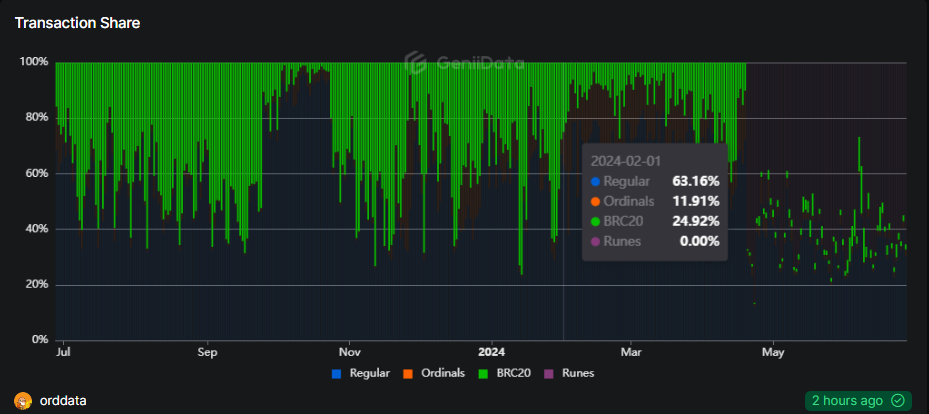
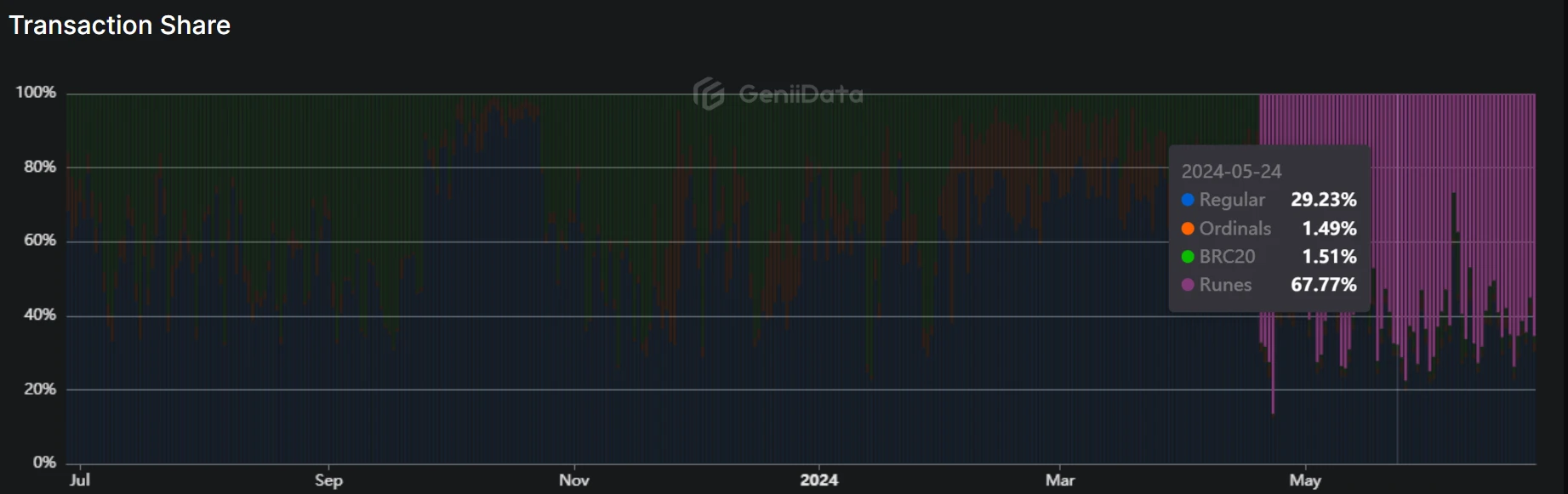
如下图 Geniidata 数据显示,铭文第二波行情从 2023 年 11 月份开始,BRC 20 与 Ordinals 每日在比特币链上的交易份额占比平均超 50% ,但到了今年 2 月份行情急转直下,铭文交易链上萎靡,常规的比特币交易在链上重新夺回超 60% 的交易份额,这也标志着疯狂了 3 个多月的铭文行情结束。

链上凉凉,带比特币生态走出低谷期的解药会是什么?

2 月份铭文第二波行情结束

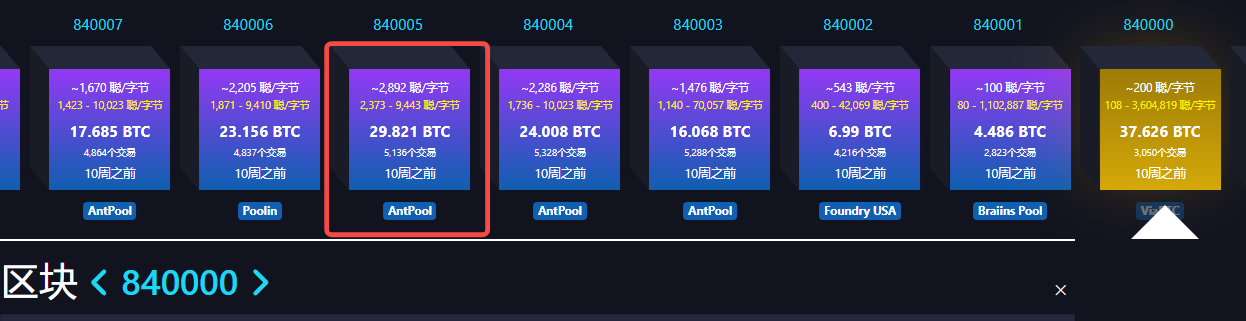
同时,伴随着 4 月 20 日比特币减半,Runes 协议正式上线,比特币生态又再次热闹起来。许多项目方为了抢夺靠前的符文编号,不惜将链上 Gas 抬升至超 2300 聪/字节的水平,激烈的竞争也使矿工当天的手续费收入创下历史最高,达到 1070 BTC/天。

链上凉凉,带比特币生态走出低谷期的解药会是什么?

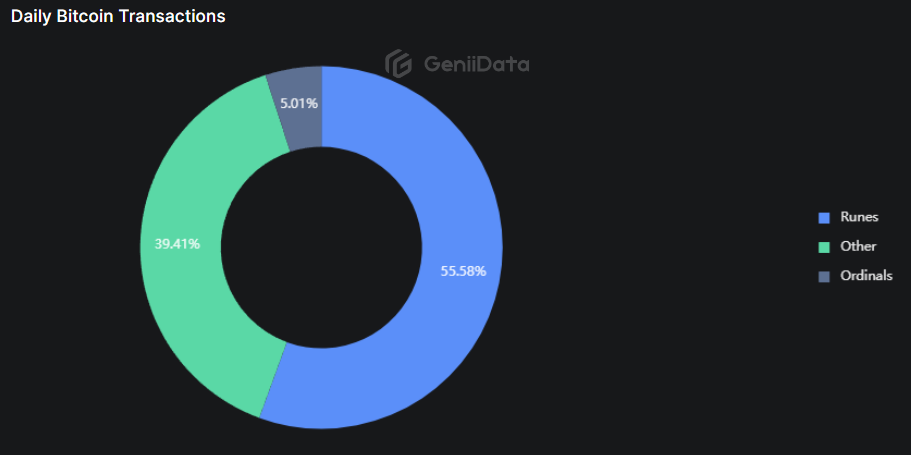
“本是同根生,相煎何太急”,铭文协议与符文协议的创始人虽然都是 Casey,但符文并未将热度传播到 Ordinals 上。如下图 Geniidata 数据显示,自 Runes 协议上线后,符文每日在比特币链上的交易份额占比超 50% ,而 Ordinals 的交易份额占比进一步降低,平均每日只有 5% 左右。

链上凉凉,带比特币生态走出低谷期的解药会是什么?

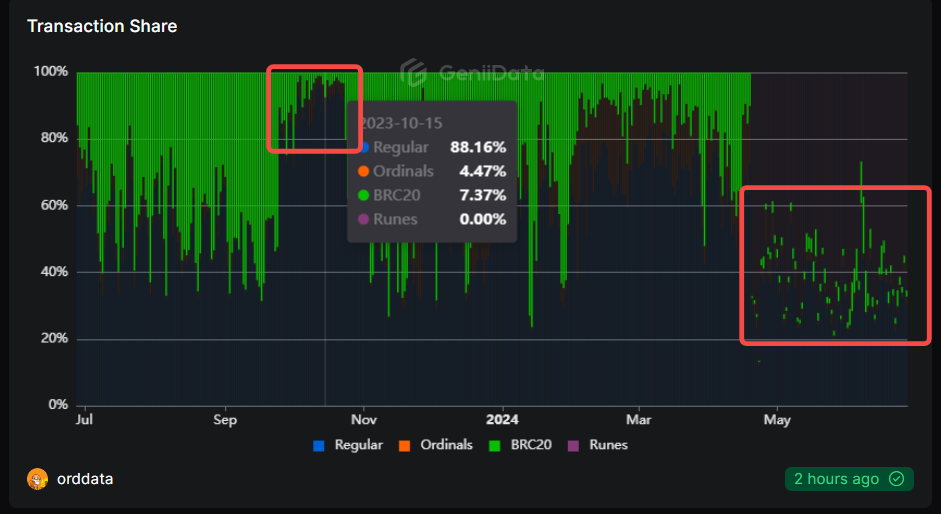
从数据上看,铭文今日达到的冰点已经与 2023 年 10 月份时类似,只是彼时铭文只沉寂了 1 个多月,而这个周期因为符文的加入,铭文想要重领风骚变得愈加困难。

链上凉凉,带比特币生态走出低谷期的解药会是什么?

符文链上活跃,但行情并不佳

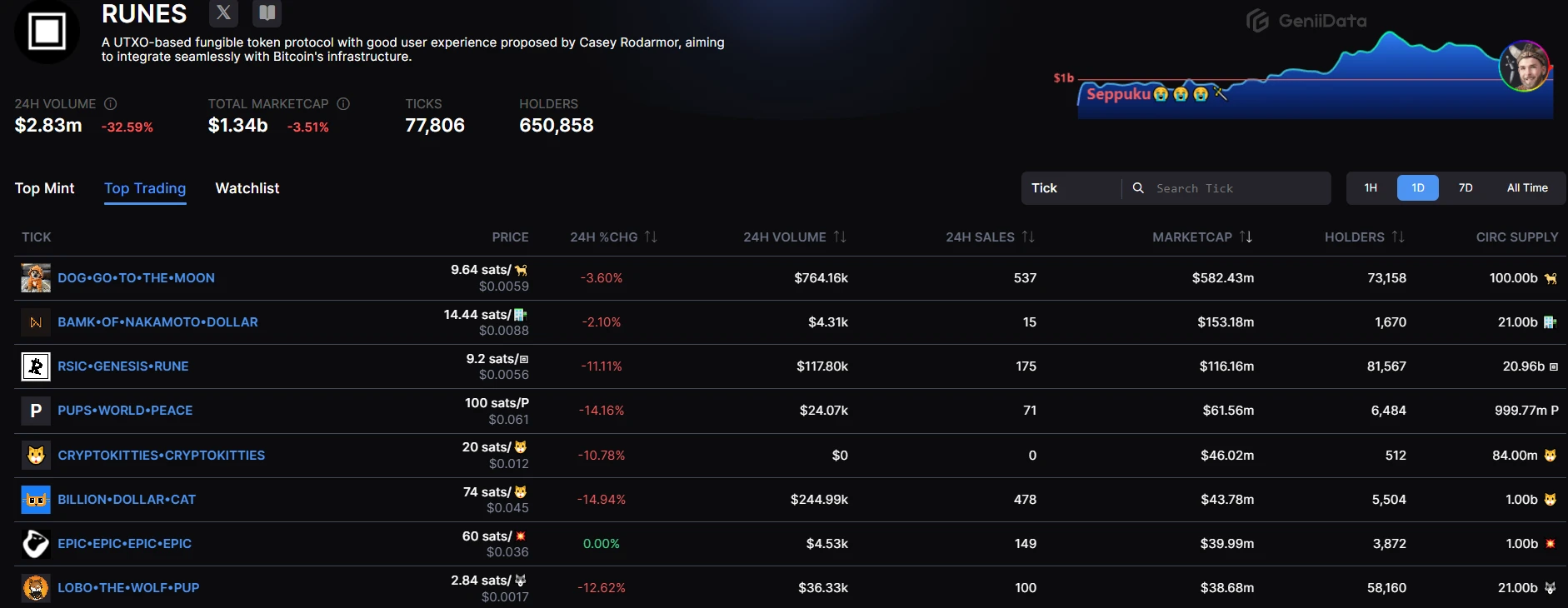
尽管符文从上线至今在链上依然保持活跃,每日交易份额占比都在 50% 以上,但实际上目前符文的行情并不佳。

链上凉凉,带比特币生态走出低谷期的解药会是什么?

在《符文市值新高,但为什么我和朋友们在亏钱?》中,我们分析得出结论:纵使符文市值新高导致一级打新市场短期繁荣的情况下,二级市场上仍少有人接盘这些打新资产, 80% 的新标的会在铸造完后归零,大部分资金都集中在头部几个符文项目。

但自 6 月份初符文市值冲击新高后,随即就开始了震荡下跌。不仅交易量萎缩,头部资产每日也在经历着阴跌。

链上凉凉,带比特币生态走出低谷期的解药会是什么?

这种链上活跃度与价格行情形反差的根本原因在于整个生态陷入熊市,无新资金进入,只剩老玩家场内 PVP。同时在社交媒体上,仍然坚持在符文赛道打金狗的玩家也总结出了一套方法论:

  • 打之前看总量和海外社区氛围,总量太多当前资金量无法消化,无海外社区参与可能会有巨大的抛压;

  • 打的过程中如果运气好能遇见卡块而链上手续费上涨,成本上升会使早铸造的人赚钱;

  • 打完后看是否有名人或项目方站台,能否有吸引注意力的希望。

本质上来看,这种策略也是赛道深熊、无新资金进入却硬上的无奈之举。

新叙事、新玩法才是解药

那么,在铭文降至冰点,符文行情不佳的情况下,究竟什么才是打破比特币生态周期沉寂的解药呢?从以往的经验来说,答案是新叙事、新玩法。

回顾比特币生态牛市, 2023 年 5 至 7 月份第一波大规模的比特币牛市是 BRC 20 引起的,这是比特币生态资产发行叙事的首次大规模传播,所以引来了大量的用户、项目与投资者;

2023 年 11 月至今年 2 月份的第二波大规模比特币牛市是由 BRC 20 上所和万链皆可铭文的叙事引起的,币安上线 ORDI 等头部 BRC 20 资产使铭文玩法不再拘泥于链上,万链发行铭文将铭文的财富效应转移到各个链,公链以此获得大量流量和关注;

2024 年 4 月份短暂的第三波大规模比特币牛市是由 Runes 协议上线和空投玩法引起的,Runes 协议最大的玩法创新在于创造了预挖矿和大规模社区空投玩法,但因为预热将近大半年,Runes 协议上线一个月就集中消化了所有利好和市场情绪,导致这波牛也迅速结束。

综上,可以看出比特币生态历次爆发都是由新叙事、新玩法或者新的创新带动的,在每一轮周期中总是会出现赔率超高甚至超过以往头部标的收益的资产。

我们目前也正需要这样的创新来打破比特币生态的沉寂,吸引新的用户与资金,有许多项目也正在尝试各种创新,例如 unisat 首次大规模空投的 5 字符 BRC 20 pizza 和近期讨论较多的可编程符文等。

再按照以往的经验,比特币生态的周期轮换很快,每沉寂 3-6 个月总有新东西出现。掐指一算,也快了。

Trending Cryptos

Related Reads

Veterans of the 'Little Smart' Era Return, This Time Leading a Robot Company in a Sprint to an IPO

UTStarcom Veteran Returns: Robot Maker Rushes for IPO On August 24, UDI Robot passed the listing hearing for the Hong Kong Stock Exchange main board. Known for its delivery robots in hotels and KTVs, the company was founded in 2013 by Lu Ying, former CEO of the once-dominant "PHS" phone maker UTStarcom, and other ex-colleagues. UDI has five main product series, including indoor delivery, outdoor delivery, and cleaning robots. Significantly, its business model is shifting from hardware sales to recurring service revenue. In 2025, AI vision model solutions contributed 37.5% of its total revenue of ~318 million RMB, while robot product sales accounted for 42.5%. However, its overall business remains unprofitable, with a cumulative net loss of 5.44 billion RMB from 2023 to Q1 2026. A key challenge is low hardware毛利率 (gross margin for robot products was 8.3% in 2025). Despite losses common in the robotics sector, UDI's deficit is narrowing. It has raised ~989 million RMB over 13 pre-IPO rounds from investors including Alibaba (Ele.me, Yunfeng Capital), Legend Capital, SenseTime, and hotel chains like Huazhu. The founding team, largely from UTStarcom, collectively controls 33.40% of the company. UDI ranks as China's third-largest commercial service robotics company with an 8.9% market share in 2025. Its IPO, sought via Hong Kong's special tech chapter 18C, aims to fund R&D, expansion, and working capital, marking a comeback attempt for the "PHS" veterans in a new technological era.

marsbit4m ago

Veterans of the 'Little Smart' Era Return, This Time Leading a Robot Company in a Sprint to an IPO

marsbit4m ago

Zuck refuses to give up, secretly develops one of his own called 'Hatch', but the model uses Claude...

Meta, led by Mark Zuckerberg, is developing a new AI agent platform called "Hatch" after its reported unsuccessful attempt to acquire Manus. Described as a "consumer version of OpenClaw," Hatch aims to automate tasks across various digital services. The platform is trained on simulated versions of services like DoorDash, Etsy, Reddit, Yelp, and Outlook, and is deeply integrated with Meta's own ecosystem, including Instagram, Facebook, and WhatsApp. Its goal is to enable end-to-end task completion, such as identifying a product in a social media post, comparing prices, and facilitating purchases. During development, Hatch is reportedly relying on Anthropic's Claude model. However, Meta plans to transition to its proprietary model, Muse Spark, for the official launch, with a newer model named Watermelon expected in October. This phased migration highlights potential technical challenges, as switching core models can affect performance and user experience. Priced at up to $199.99 per month, Hatch targets consumers willing to pay for significant time savings. Its key advantage is default distribution within Meta's vast suite of apps, potentially giving it access to rich user context. However, it faces major hurdles in real-world reliability, needing to handle complex, dynamic web environments, authentication changes, and anti-bot measures that differ from its controlled training simulations. The move represents Meta's strategic push to monetize AI directly beyond its core advertising business.

marsbit5m ago

Zuck refuses to give up, secretly develops one of his own called 'Hatch', but the model uses Claude...

marsbit5m ago

IOSG: U.S. Bonds, AI, and Inflation Can't All Be Had. Which Side Should BTC Bet On?

**Title: IOSG: Can't Have It All – Treasury Bonds, AI, and Inflation. Where Should BTC Bet?** **Core Thesis:** Washington is likely to prioritize stabilizing the Treasury market and sustaining the AI investment cycle, accepting higher inflation for longer as the trade-off. This creates sustained tailwinds for both gold and Bitcoin by injecting liquidity and shifting duration risk away from private balance sheets. **Key Issue:** The critical macro price is no longer the Fed funds rate, but the yield investors demand to hold long-term US Treasuries. Recent surges in 10-year and 30-year yields stem from a combination of persistent inflation risks, heavy fiscal supply, thinning demand for duration, and new competition for capital from massive AI infrastructure investments. **The Trilemma:** The US faces a difficult choice between controlling inflation, maintaining Treasury market stability, and fostering the AI growth cycle. Political pressure suggests inflation control is the most likely sacrifice. **Treasury's Response:** Measures by Treasury Secretary Besant focus on defending the bond market: supporting the Yen to prevent forced Japanese Treasury sales, increasing long-end liquidity via repos (effectively shortening government debt maturity), and a potential shift toward more short-term bill issuance. This could generate significant liquidity, reigniting "currency debasement" trades. **Gold's Role:** Gold's ~90% surge since mid-2024 is not just an inflation hedge but a bet on monetary debasement as a politically viable path out of the debt cycle, driven by declining dollar trust. **Bitcoin's Positioning:** Bitcoin has historically failed to correlate with gold during "debasement" rallies. However, its recent strong performance alongside Treasury's liquidity actions suggests the market may be treating it as a "stealth QE" trade—a scenario where crypto assets typically thrive amid expanding global liquidity. For BTC to firmly join the "debasement hedge" category, this correlation needs to persist. **Conclusion & Risks:** The framework suggests that preserving market stability and the AI cycle will likely mean shorter debt maturity,常态化 liquidity backstops, and tolerance for higher inflation—favorable for gold and BTC. This outlook would be undermined if inflation falls toward 2%, a credible fiscal path emerges, AI becomes self-funding, or private demand absorbs debt without higher term premiums. The key question is which corner of the trilemma breaks first; accelerated "duration transfer" by the Treasury would mean a longer tailwind for Bitcoin.

marsbit20m ago

IOSG: U.S. Bonds, AI, and Inflation Can't All Be Had. Which Side Should BTC Bet On?

marsbit20m ago

How 5G Will Be Launched in Russia: The Digital Ministry's Proposal and the Roadmap to 2035

Russia's Ministry of Digital Development has proposed a plan for launching 5G networks. It allows the "Big Four" mobile operators (Beeline, Megafon, MTS, T2) to deploy 5G on existing 4G/LTE base stations and frequencies, and will allocate them the new 4.63–4.99 GHz band. A key element is "technological neutrality," permitting the use of foreign equipment until September 2026. The new 4.63–4.99 GHz band is intended for more advanced services and industrial applications. However, a phased transition to Russian-made base stations will begin in 2027, with a target of at least 50% domestic equipment by 2030. The rollout timeline aims for 5G in cities with over 1 million people by the end of 2027, expanding to 84 cities by 2035. Initial "5G Ready" service, operating over existing infrastructure, will offer minimal speed improvements. Significant speed gains (4-10x over LTE) will require the new band and corresponding equipment. The plan addresses long-standing regulatory delays, including the military's hold on the global standard 3.4–3.8 GHz band. This forced Russia to adopt the 4.63–4.99 GHz range, overlapping with a Chinese band, making Chinese equipment a potential transitional solution. The success of the rollout will depend on equipment supply and the pace of production localization, while a challenge lies in smartphone compatibility with this non-standard frequency band.

cryptonews.ru2h ago

How 5G Will Be Launched in Russia: The Digital Ministry's Proposal and the Roadmap to 2035

cryptonews.ru2h ago

The Federal Reserve Bank of Dallas Announces a Colossal $700 Billion Allocation! How Will This Affect Bitcoin?

The Federal Reserve Bank of Dallas warns that the growing adoption of tokenized deposits in the banking sector could pose unforeseen risks to the financial system. Tokenized deposits, which transfer traditional bank deposits to blockchain infrastructure, offer features like instant settlement and programmable payments. While issued by regulated banks and maintaining deposit characteristics, they could enable customers to move funds between banks much faster in search of higher yields. This would significantly weaken banks' liquidity management and lending capacity. The Fed's analysis estimates that an increase in deposit interest rate sensitivity by 10% could reduce the interest rate risk banks can bear by approximately $700 billion over ten years. Similarly, a 10% shortening of the average deposit maturity could reduce the banking system's capacity to convert deposits into loans by about $580 billion. This acceleration of deposit movement could force banks to rely on more expensive wholesale funding, increasing borrowing costs for consumers and businesses and potentially making traditional banks resemble non-bank financial institutions. While the report does not directly address Bitcoin, the described shifts could have long-term implications. Firstly, the tokenization of deposits by banks could promote institutional adoption of blockchain-based financial infrastructure, indirectly legitimizing digital asset classes like Bitcoin. Secondly, faster-moving deposits and resulting higher funding costs could increase the price of liquidity in the financial system. This could create near-term headwinds for risk assets, including Bitcoin, due to tighter financial conditions and potential selling pressure. The report concludes that widespread adoption of this technology could impact many areas, from payment systems to monetary policy transmission mechanisms.

cryptonews.ru3h ago

The Federal Reserve Bank of Dallas Announces a Colossal $700 Billion Allocation! How Will This Affect Bitcoin?

cryptonews.ru3h ago

Trading

Spot

Hot Articles

What is $BITCOIN

DIGITAL GOLD ($BITCOIN): A Comprehensive Analysis Introduction to DIGITAL GOLD ($BITCOIN) DIGITAL GOLD ($BITCOIN) is a blockchain-based project operating on the Solana network, which aims to combine the characteristics of traditional precious metals with the innovation of decentralized technologies. While it shares a name with Bitcoin, often referred to as “digital gold” due to its perception as a store of value, DIGITAL GOLD is a separate token designed to create a unique ecosystem within the Web3 landscape. Its goal is to position itself as a viable alternative digital asset, although specifics regarding its applications and functionalities are still developing. What is DIGITAL GOLD ($BITCOIN)? DIGITAL GOLD ($BITCOIN) is a cryptocurrency token explicitly designed for use on the Solana blockchain. In contrast to Bitcoin, which provides a widely recognized value storage role, this token appears to focus on broader applications and characteristics. Notable aspects include: Blockchain Infrastructure: The token is built on the Solana blockchain, known for its capacity to handle high-speed and low-cost transactions. Supply Dynamics: DIGITAL GOLD has a maximum supply capped at 100 quadrillion tokens (100P $BITCOIN), although details regarding its circulating supply are currently undisclosed. Utility: While precise functionalities are not explicitly outlined, there are indications that the token could be utilized for various applications, potentially involving decentralized applications (dApps) or asset tokenization strategies. Who is the Creator of DIGITAL GOLD ($BITCOIN)? At present, the identity of the creators and development team behind DIGITAL GOLD ($BITCOIN) remains unknown. This situation is typical among many innovative projects within the blockchain space, particularly those aligning with decentralized finance and meme coin phenomena. While such anonymity may foster a community-driven culture, it intensifies concerns about governance and accountability. Who are the Investors of DIGITAL GOLD ($BITCOIN)? The available information indicates that DIGITAL GOLD ($BITCOIN) does not have any known institutional backers or prominent venture capital investments. The project seems to operate on a peer-to-peer model focused on community support and adoption rather than traditional funding routes. Its activity and liquidity are primarily situated on decentralized exchanges (DEXs), such as PumpSwap, rather than established centralized trading platforms, further highlighting its grassroots approach. How DIGITAL GOLD ($BITCOIN) Works The operational mechanics of DIGITAL GOLD ($BITCOIN) can be elaborated on based on its blockchain design and network attributes: Consensus Mechanism: By leveraging Solana’s unique proof-of-history (PoH) combined with a proof-of-stake (PoS) model, the project ensures efficient transaction validation contributing to the network's high performance. Tokenomics: While specific deflationary mechanisms have not been extensively detailed, the vast maximum token supply implies that it may cater to microtransactions or niche use cases that are still to be defined. Interoperability: There exists the potential for integration with Solana’s broader ecosystem, including various decentralized finance (DeFi) platforms. However, the details regarding specific integrations remain unspecified. Timeline of Key Events Here is a timeline that highlights significant milestones concerning DIGITAL GOLD ($BITCOIN): 2023: The initial deployment of the token occurs on the Solana blockchain, marked by its contract address. 2024: DIGITAL GOLD gains visibility as it becomes available for trading on decentralized exchanges like PumpSwap, allowing users to trade it against SOL. 2025: The project witnesses sporadic trading activity and potential interest in community-led engagements, although no noteworthy partnerships or technical advancements have been documented as of yet. Critical Analysis Strengths Scalability: The underlying Solana infrastructure supports high transaction volumes, which could enhance the utility of $BITCOIN in various transaction scenarios. Accessibility: The potential low trading price per token could attract retail investors, facilitating wider participation due to fractional ownership opportunities. Risks Lack of Transparency: The absence of publicly known backers, developers, or an audit process may yield skepticism regarding the project's sustainability and trustworthiness. Market Volatility: The trading activity is heavily reliant on speculative behavior, which can result in significant price volatility and uncertainty for investors. Conclusion DIGITAL GOLD ($BITCOIN) emerges as an intriguing yet ambiguous project within the rapidly evolving Solana ecosystem. While it attempts to leverage the “digital gold” narrative, its departure from Bitcoin's established role as a store of value underscores the need for a clearer differentiation of its intended utility and governance structure. Future acceptance and adoption will likely depend on addressing the current opacity and defining its operational and economic strategies more explicitly. Note: This report encompasses synthesised information available as of October 2023, and developments may have transpired beyond the research period.

2.3k Total ViewsPublished 2025.05.13Updated 2025.05.13
What is $BITCOIN

Discussions

Welcome to the HTX Community. Here, you can stay informed about the latest platform developments and gain access to professional market insights. Users' opinions on the price of BTC (BTC) are presented below.

活动图片