MOBOX新作Dragonverse Neo深度体验:不止于Web3原神的诚意之作

Odaily星球日报Published on 2024-06-05Last updated on 2024-06-05

Abstract

老牌团队的产研实力+落地的UGC叙事+浓厚的社交氛围+代币即矿机的模型

原文作者:加密狗

上周,Dragonverse Neo (龙宇宙) 内测第一赛季正式结束。作为 MOBOX 团队今年新出的开放世界游戏,龙宇宙主打 UGC 叙事以及原神梦幻画风。MOBOX 虽然是 2021 年就上了币安的老牌链游团队,但本款新作并没有残留上个周期的味道,反而从风格、机制与资产上,走出了独特的道路。

笔者深度体验了一星期。虽然最开始是冲着丰厚的奖池去的,但短短 7 天居然玩得津津有味,最后一天社区开房间合影时竟有些不舍得结束,意外地从一个链游中玩出了归属感。

tl;dr

  • 诚意之作,有竞技,有打金,有博弈,有社交,可以游泳、坐船、坐飞机,还有漂亮的龙娘陪着欣赏各种各样的沿途风景。

  • 续命能力强,炼油最怕的就是研发产能跟不上 + 经济模型单一,但龙宇宙不存在这个问题,内置的游戏编辑器使其能像 Roblox 一样不断推出多款游戏,且在内测版本就率先将 UGC 概念落地。

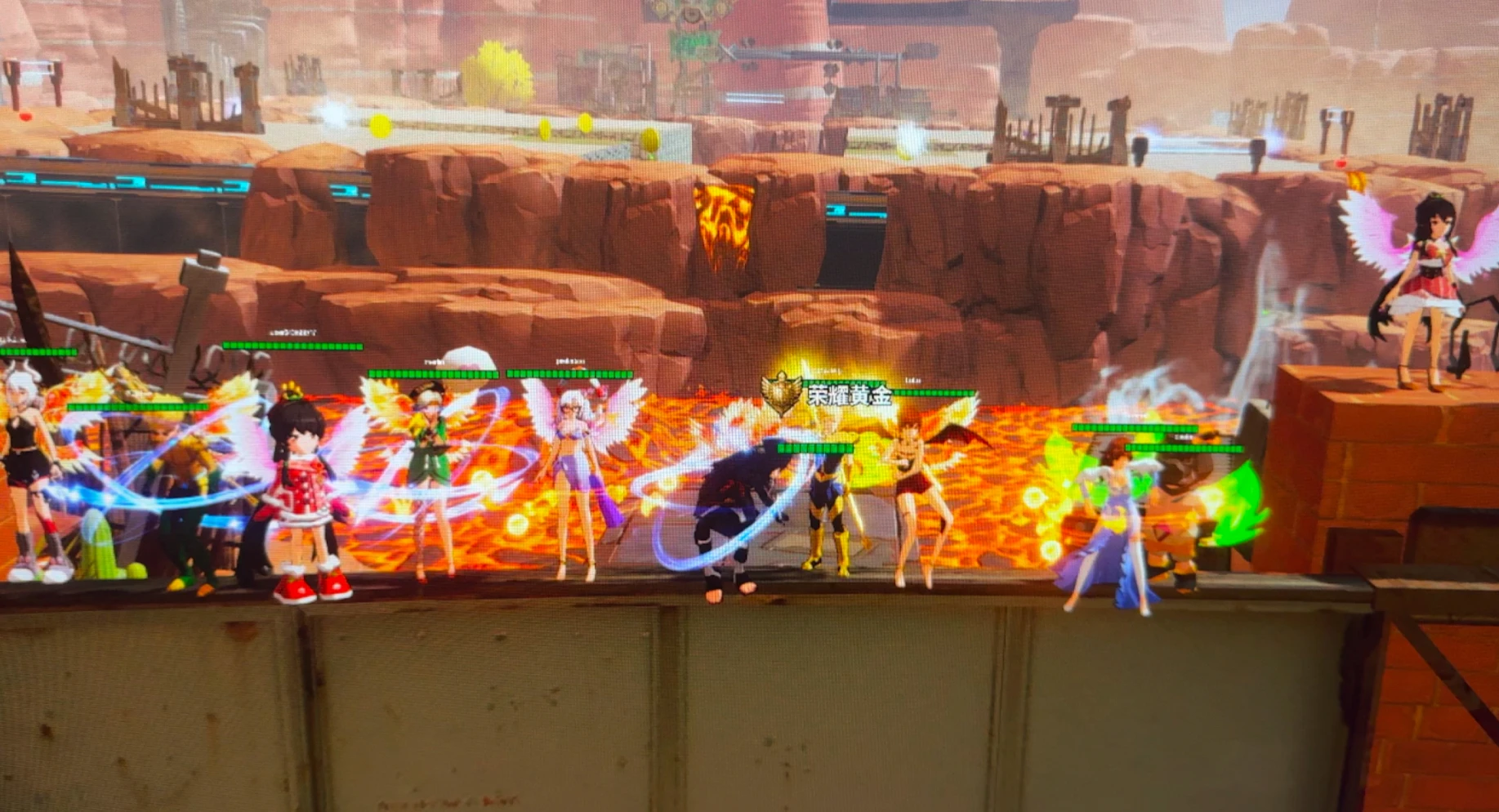
  • 大型游戏中最具有 MEME 文化属性的,社交游戏中细节最丰富的,高完成度游戏中迭代速度最快的。下图是赛季最后一天,社区自发集合在服务器房间里合影时一起跳科目三:
MOBOX新作Dragonverse Neo深度体验:不止于Web3原神的诚意之作

一、诚意之作:兼具趣味性和持久收益

在 Web 3.0 的世界,用户已对链游的常见套路见怪不怪:

预算只花在宣传片,视频悄悄混合 CG,等到实际体验游戏时仿佛网恋奔现。

但龙宇宙在品质方面,所见即所得。甚至很多人认为,游戏实况体验比官网上释出的片段更加具有沉浸感,的确有原神的味道。

在细节方面,随处体现诚意之作。比如:关卡中的足球场真的能用来踢球;游乐园真的能坐旋转木马;无意中翻进街道旁建筑,发现里面真的是个宠物店,还能进去撸猫,是货真价实的 3D 开放世界体验。

不少人甚至当作 Galgame 来玩,沉迷搜集各种龙娘老婆,牵出来逛街看风景,也是稳稳的幸福。

龙宇宙游戏分为主世界和异世界,主世界地图中藏有通往异世界的入口(神像、船只、洞穴),异世界是一个个具备独立机制的游戏,休闲类、策略类、竞技类,应有尽有。

这次内测率先释出了两款游戏:梦幻宠物和无限格斗,风格和玩法截然不同,照顾到大部分用户的口味。如果你无法适应格斗场的血腥,手速跟不上导致屡屡落地成盒,可以选择另一款休闲画风的养老治愈游戏。

游戏的可玩性不错。从收益角度来看,内测版的两个游戏,奖池占比是 20: 80 。但内测期间在社区人气更高的,反而是奖池只占 20% 的格斗游戏。玩法确实上头,怀念每天晚上准时在群里摇人,与兄弟们一起砍砍杀杀的日子。

这轮周期,相比那些“三天回本,五天归零”的游戏来说,我们可能更期待这种兼具趣味性和持久收益的诚意之作。

MOBOX新作Dragonverse Neo深度体验:不止于Web3原神的诚意之作

二、UGC 叙事:不仅止步于白皮书的落地能力

在 Web2.0 ,UGC (用户生成内容) 可谓游戏生命长青的不老泉。

远古的坦克大战、CS 等经典的 mod 关卡,近代的我的世界、文明 6 中的 mod 地图,还有最终幻想 14 这样的文化现象级的 mmo 玩家蜜汁行为大赏,都因为 UGC 获得了超长的游戏生命。

不少 Web3.0 游戏曾试图移植 UGC 的概念,但除了 Sandbox 和 Decentraland 之外,鲜有成功落地的案例。其中原因众多:基础设施跟不上导致创作门槛太高、难以激发社区的创作动力...最终遗憾止步于白皮书的一个章节。

但 MOBOX 在内测版本就将概念落地,让人看到 UGC 的无限可能。

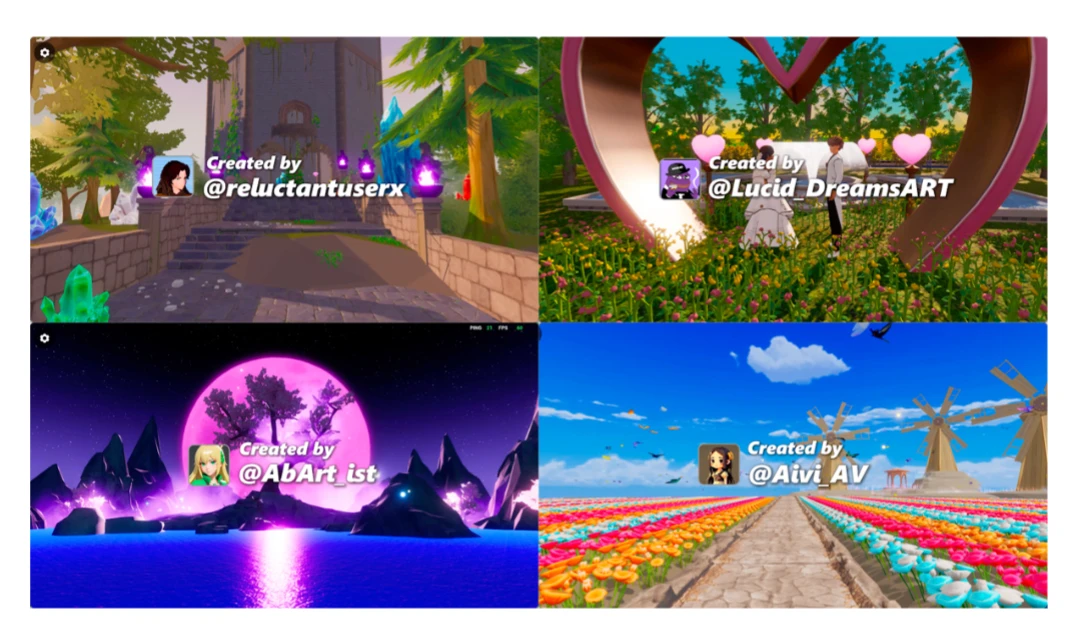
游戏中的 20 多张地图,全部由社区用户使用游戏内置的编辑器搭建而成,主题有未来城市,爱情圣地,赛博音乐节,郁金香田野,废土乐园,死宅电竞房…创意满满,十分精美。

UGC 的优势是多元,吸引不同的游戏爱好者。创作者为游戏玩家提供游戏和代币奖励,游戏玩家为创作者提供流量和代币消费,共同为项目带来代币通缩、锁仓与更庞大的用户社区,项目方则为二者提供代币激励和生态支持,实现代币与流量的正向循环。

这条道路确实不易,但一旦落地就能出奇制胜长盛不衰。这是 MOBOX 目前得天独厚的优势之一。
MOBOX新作Dragonverse Neo深度体验:不止于Web3原神的诚意之作

三、社交与文化:没想到真正的 SocialFi 由上一轮 GameFi 龙头做出来了

游戏内社交也是延长游戏生命的关键。例如最终幻想 14 就依托无比丰富的生活化和社交功能,才能 diy 出各种拉拉肥春游、月雫话剧团自己装修排练卖票而且买票排长队等社区自发的文化现象。

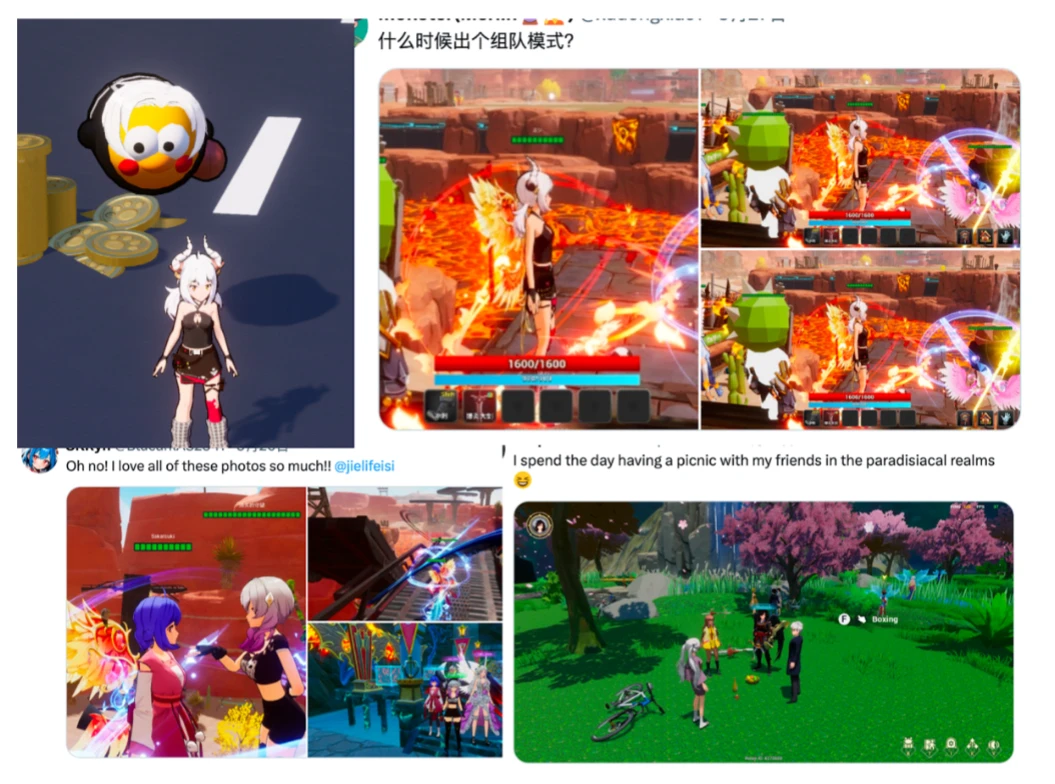
依托游戏本身出色的可玩性和 MOBOX 深耕多年的社区积累,龙宇宙内测期间处处可见社区蓬勃的生命力。虽然内测版本官方未设计组队机制,但玩家自发开辟出了五花八门的社交方式,甚至自发研究出各种有趣的游戏内梗文化。期待下个赛季官方能够引入更多社交机制,甚至直接在游戏里发行 Meme,进一步放大这种氛围,这是 MOBOX 目前得天独厚的优势之二。
MOBOX新作Dragonverse Neo深度体验:不止于Web3原神的诚意之作

四、代币即矿机:去 NFT 化才是链游的破局方向

最后说回经济模型。

过去的链游经济模型,核心逻辑都是购买 NFT,产出代币。在这种模式下,NFT 价格高昂,游戏玩家难以竞争过打金工作室,这导致游戏的主要参与者变成了精明的“挖提卖”专家。一旦进入“挖提卖”模式,游戏内消耗代币的平衡点很容易被计算出来。加之初始流通量普遍极小,在挖提卖的压力下,代币价格很快下跌,用户只能降低消耗,更早地开始挖提卖,导致游戏进入死亡螺旋。

因此,避免“死亡螺旋”的关键在于,让代币的抛压小于项目建设带来的买力。

回看龙宇宙,在每个节点都做了的反脆弱设计:赋能代币、动态博弈、生态资产通缩。

资产方面,$MDBL 代币取代传统 NFT 的生态位,成为核心资产,而不是 NFT 出货的手段。所有活动均围绕 $MDBL 展开,直接赋能代币本身。机制方面,奖励采用排行榜形式发放,结合有趣的玩法,计算“代币消耗平衡点”不再是游戏的重心。

至此,大量持币用户成为了生态的重要节点,项目方、游戏玩家、创作者三者在生态中达成利益一致,而非对手盘关系,实现“项目方通过代币激励玩家与创作者 - 创作者带来更多增量玩家 - 更多的玩家为创作者带来更多收益 - 繁荣的生态带来更多的代币消耗与通缩”的正向循环。

五、续命能力:无限的可拓展性

在 Web 3.0 的世界,大厂当然可以花 2-3 年打磨出一款质量比肩 Web2.0 的 3A 大作,但过去一个季度的表现已经反应了市场对这种传统叙事的性质缺缺。

毕竟 Web2 玩家是来游戏里花钱的,Web3 玩家是来游戏里赚钱的。

但如果比如说,一款游戏能在一年内推出 10 款品质可控、玩法各异的副本,甚至让用户深度参与到这个迭代过程中,那将具备相当强大的跟随市场反应的灵活性。

笔者认为这就是 MOBOX 正在走的独特路线。

老牌团队的产研实力 + 落地的 UGC 叙事 + 浓厚的社交氛围 + 代币即矿机的模型。

以上四点赋予其无限绵长的生命力。并且在其中每一点,MOBOX 都已建立了自己的壁垒,是其他链游轻易不可复制的模式。

Dragonverse Neo,远不止 “Web3 原神” 。

Related Reads

Dalio's Latest Warning: Don't Get Carried Away by AI, Real Returns on US Stocks in the Next 5-10 Years Could Be -5% to -10%

Ray Dalio, founder of Bridgewater Associates, warns investors against excessive concentration in AI stocks. He argues the current market, dominated by a few AI giants, mirrors historical patterns where revolutionary new technologies lead to high risk, volatility, and uncertainty. While acknowledging AI's transformative potential, Dalio emphasizes that most investors fail at this stage of the cycle by over-concentrating in a handful of leading companies. He cites inherent risks: companies cannot accurately forecast investment needs or external shocks (e.g., monetary policy, geopolitics, taxes), face potential disruption from future technologies and international competition (notably from China), and experience significant price swings. Dalio's core advice is diversification, calling it his "Holy Grail of Investing." He presents a mathematical case that a well-diversified portfolio of 15-20 uncorrelated, good bets offers a superior risk-adjusted return compared to a concentrated position. Dalio also offers a cautious outlook, suggesting U.S. stocks may deliver real returns of -5% to -10% over the next 5-10 years based on valuation and bubble indicators. He concludes that in the face of high uncertainty, the prudent strategy is not to avoid betting entirely, but to avoid large, concentrated bets where one lacks sufficient informational edge. Instead, investors should build a strategically balanced, diversified portfolio.

marsbit1h ago

Dalio's Latest Warning: Don't Get Carried Away by AI, Real Returns on US Stocks in the Next 5-10 Years Could Be -5% to -10%

marsbit1h ago

Rain Valuation Approaches $20 Billion: The Battle for U-Cards Extends to Rewards Systems

Rain, a stablecoin payments infrastructure company, is shifting the competitive focus for U Cards from simple issuance to user retention and repeated usage. On June 15, Rain launched "Rain Rewards," an embedded loyalty program capability within its card-issuing infrastructure. This allows partner businesses—like fintech platforms and neobanks—to configure branded loyalty points, earning rules, redemptions, and merchant promotions directly within their card products. The system, built from the 2025 acquisition of Uptop, ensures points are only issued upon final transaction settlement, preventing liabilities from refunds. Trials, such as with Avalanche Card, reportedly boosted spending by 25% among enrolled users. Founded by Farooq Malik and Charles Yoo-Naut, Rain evolved from a tool for managing Web3 company expenses into a full-stack enterprise platform. It is a Principal Member of Visa and Mastercard, enabling partners to issue stablecoin-backed cards and wallets while leveraging traditional payment networks. Notably, the popular U Card Plasma One is issued by Rain under Visa's authority. Rain also integrates with Visa's stablecoin settlement pilot, using USDC for network settlement. Rain's rapid funding reflects growing institutional interest in stablecoin payment infrastructure. It raised a $245 million Series A in March 2025, a $58 million Series B in August 2025, and a $250 million Series C in January of this year, reaching a $19.5 billion valuation. Annualized transaction volume exceeds $3 billion, serving over 200 partners including Western Union and Nuvei. Beyond cards, Rain is expanding into programmable payments. Its June 2026 "Agent Control Layer" allows businesses to set spending rules—like merchant categories, amounts, and frequency—for AI agents before transactions occur. This positions Rain not as a single product but as an operating system for stablecoin payments, handling everything from card issuance and wallet management to rewards, on/off-ramps, and automated compliance. The goal is to enable seamless, often invisible, real-world spending of on-chain assets.

Foresight News1h ago

Rain Valuation Approaches $20 Billion: The Battle for U-Cards Extends to Rewards Systems

Foresight News1h ago

Google TPU Shipments Revised Up by 50%

Recent industry research indicates a significant upward revision in the shipments of Google's TPU (Tensor Processing Unit) chips. Previous expectations for 2027 were set at around 10 million units, but new estimates now point to 15 million units, a 50% increase. This substantial boost directly translates to higher demand across the entire supporting supply chain. Google's TPU clusters utilize a standardized all-optical interconnect architecture. Consequently, key hardware components are deeply integrated and scaled in fixed ratios with the chips. The 15 million TPU target will drive corresponding demand increases for NPO optical engines (roughly a 1:1 match), 1.6T optical modules, OCS optical switches, high-end server power supplies, fiber optics & MPO connectors, and liquid cooling solutions. Among these, liquid cooling is highlighted as the sector experiencing the most significant transformation and offering the most stable potential for excess returns. As next-generation TPU chips reach power levels where traditional air cooling is insufficient, liquid cooling becomes essential. 2026 is forecasted as the first year of substantial adoption for Google's liquid cooling solutions. This shift, coupled with delivery and capacity bottlenecks faced by incumbent overseas manufacturers, is creating a prime window for domestic Chinese suppliers to enter and secure Google's core supply chain. The market size for Google-specific liquid cooling is projected to potentially triple from a baseline of hundreds of billions to around 300 billion units by 2028. The logic for the fiber optic sector is also being rewritten. Once considered a cyclical commodity tied to telecom operator procurement, fiber is now a strategic and scarce resource for AI Data Centers (AIDC). A severe supply-demand imbalance, driven by the long lead time for preform production (18-24 months) and surging demand from cloud giants, is supporting strong performance. Chinese fiber manufacturers are well-positioned to capture a significant share of global AIDC demand, with exports potentially reaching 200-300 million core kilometers in 2026. Overall, the investment focus within the AI computing industry is shifting from pure "chip performance speculation" towards the more certain incremental growth in computing infrastructure and its supporting ecosystem. The upward revision in Google TPU shipments, along with the potential for further doubling by 2028, is seen as solidifying performance visibility for the entire supporting supply chain over the next two years.

marsbit2h ago

Google TPU Shipments Revised Up by 50%

marsbit2h ago

Trading

Spot
Futures

Hot Articles

How to Buy NEO

Welcome to HTX.com! We've made purchasing NEO (NEO) simple and convenient. Follow our step-by-step guide to embark on your crypto journey.Step 1: Create Your HTX AccountUse your email or phone number to sign up for a free account on HTX. Experience a hassle-free registration journey and unlock all features.Get My AccountStep 2: Go to Buy Crypto and Choose Your Payment MethodCredit/Debit Card: Use your Visa or Mastercard to buy NEO (NEO) instantly.Balance: Use funds from your HTX account balance to trade seamlessly.Third Parties: We've added popular payment methods such as Google Pay and Apple Pay to enhance convenience.P2P: Trade directly with other users on HTX.Over-the-Counter (OTC): We offer tailor-made services and competitive exchange rates for traders.Step 3: Store Your NEO (NEO)After purchasing your NEO (NEO), store it in your HTX account. Alternatively, you can send it elsewhere via blockchain transfer or use it to trade other cryptocurrencies.Step 4: Trade NEO (NEO)Easily trade NEO (NEO) on HTX's spot market. Simply access your account, select your trading pair, execute your trades, and monitor in real-time. We offer a user-friendly experience for both beginners and seasoned traders.

2.0k Total ViewsPublished 2024.03.29Updated 2026.06.02

How to Buy NEO

Discussions

Welcome to the HTX Community. Here, you can stay informed about the latest platform developments and gain access to professional market insights. Users' opinions on the price of NEO (NEO) are presented below.

活动图片













