落袋为安,加密牛市中如何才能正确止盈?

Web3动向Published on 2024-02-20Last updated on 2024-02-20

Abstract

很多人在上一轮牛市中赚了大钱,但真正重要的不是你赚了多少钱。 而是当不可避免的熊市到来时,你能保留下多少利润。 许多在上一个周期中成功的人最终因为贪婪、害怕错过未来潜在收益的恐惧或糟糕的退出计划而失去了一切盈利。 鉴于此,今天我将分享我的加密货币获利策略,以最大化我在牛市中的利润。

很多人在上一轮牛市中赚了大钱,但真正重要的不是你赚了多少钱。

而是当不可避免的熊市到来时,你能保留下多少利润。

许多在上一个周期中成功的人最终因为贪婪、害怕错过未来潜在收益的恐惧或糟糕的退出计划而失去了一切盈利。

鉴于此,今天我将分享我的加密货币获利策略,以最大化我在牛市中的利润。

获利策略

你的获利策略应该基于两件事进行调整:

你的时间范围

你是一个基于技术分析的交易者还是一个基于基本面的投资者

我大部分的资本都投入到了长期投资中,我偶尔也会根据基本面和波动性进行短期交易。
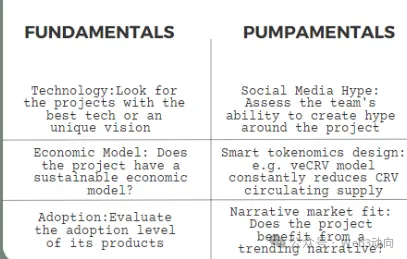
因此,在这篇文章中,我将主要关注我对长期头寸和短期叙事投资获利的策略。

但在开始之前,这里有一个提示:

无论你的是长期还是短期投资者,都努力别成为一个永远不卖出的忠诚加密社区成员,因为没有什么东西会永远上涨。

许多人难以获利的主要原因是,他们觉得自己成为了项目社区的一部分,不再客观思考。

残酷的事实是,95%的加密货币最终都会消亡,如果你不获利,别人肯定会获利止盈。

短期头寸

我根据我预期将获得巨大关注的加密叙事建立短期头寸。

在尝试预测时,我会考虑很多事情,但最重要的三件事是:

社交媒体炒作,目前在加密推特上哪些项目正在流行?

即将到来的催化剂(新产品的发布、多链扩展等)

聪明钱最近购买的代币

我会根据基本面和技术面因素对这些头寸获利。

首先,作为一个叙事交易者需要记住的最重要的事情是,90%的炒作事件最终都会变成卖出新闻(sell the news)事件。

让我们来看看比特币ETF批准后的BTC价格走势。
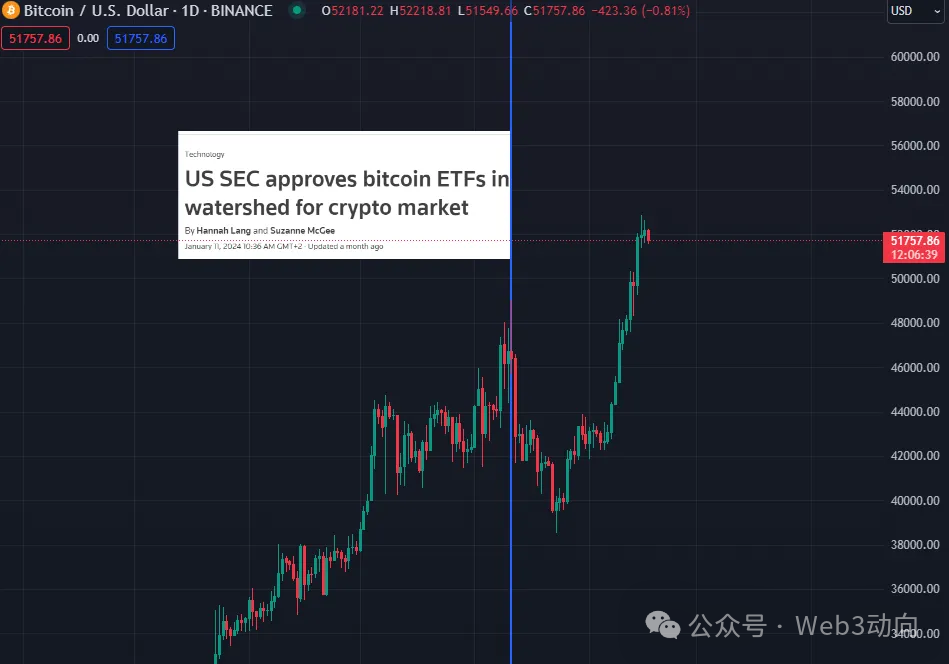
尽管现在比特币ETF见证了巨大的资金流入,但从短期来看,其批准最终成为了一个重大的卖出新闻事件。

这可能是因为由于加密推特上围绕这一事件的疯狂炒作,市场已经提前为比特币定价(price in)了。

因此,当我购买一个计划因为即将到来的催化剂而短期持有的代币时,我通常会在那个催化剂落地的日期之前对我的头寸获利止盈一部分甚至完全卖出。

接下来,正如我上面所说,我还使用技术面的触发因素来获利了结短期头寸。

我不是一个擅长交易分析的人,但我相信价格试图突破之前的阻力位存在心理因素。

例如,以下是FXS价格的K线图。
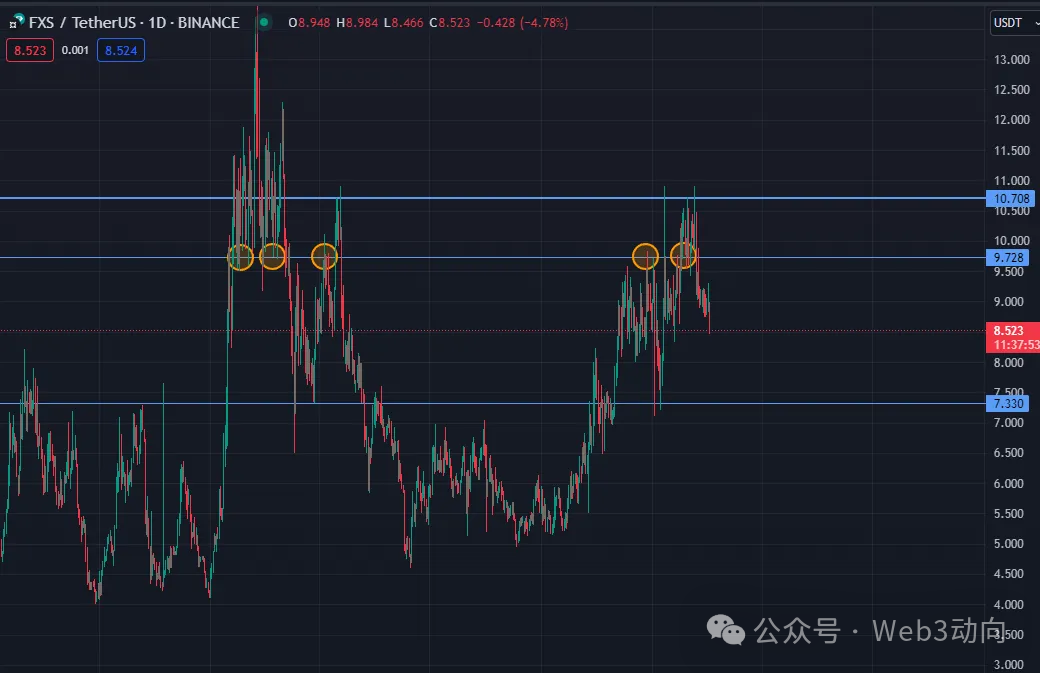
如你在上图中看到的,我用蓝线标记了该代币过去多次努力突破的价格水平。

要在加密头寸上逐步获利的一种方式是,标记该代币的所有关键阻力区域,并在该代币达到另一个阻力区域时卖出仓位里的一部分。

你可以在TradingView上轻松做到这一点,并在那里创建一个包含你当前持有的代币的观察列表。

现在让我们再看一个例子。

PENDLE,一个我多次提到的代币,最近已经涨至其之前的历史最高价并超越了。

这次涨幅的原因是,由于其新的收益交易池为Eigenlayer的流动性再质押代币,Pendle的TVL最近也飙升了。
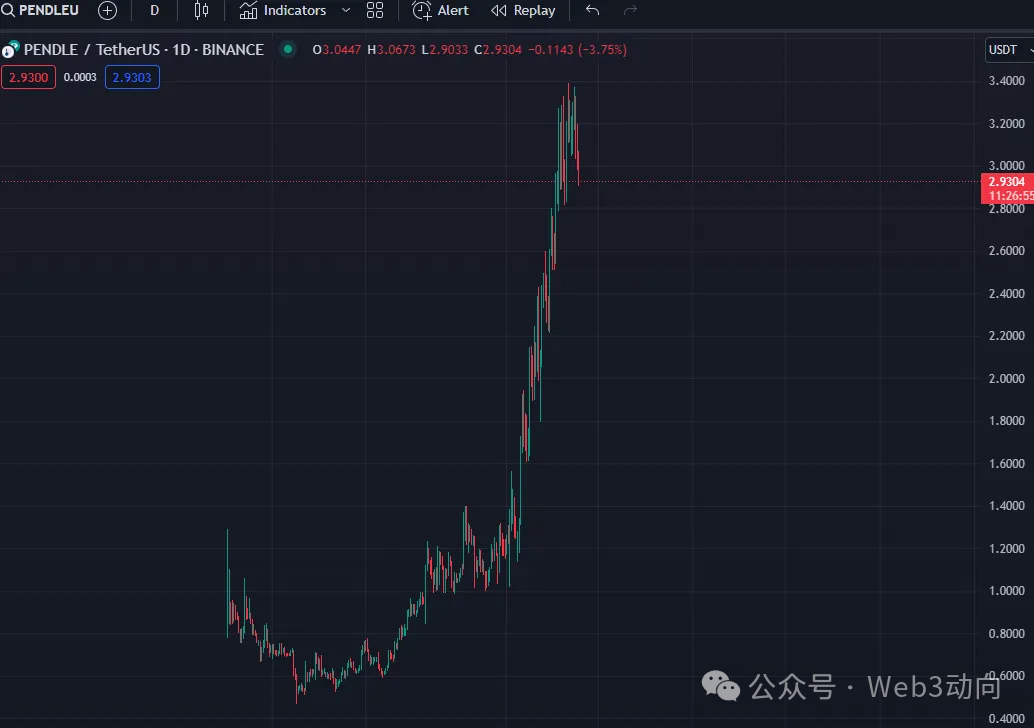
对于像这样进入价格发现阶段并不断创下新高的代币,你不能根据我上面提到的技术触发因素来获利。

然而,有一个策略你可以使用:逆向定投。

逆向定投与定投相反,它涉及定期从投资中提取相同数量的资金。

例如,你可以每周卖出你仓位中的20%。

这不是一个完美的策略,但通过这种方式,你将能够锁定一些利润,同时还让你仓位中剩下的部分在继续涨的情况下运行。

长期头寸

说到长期投资,我的意思不是我想要在接下来的5年内长期持有的代币。而是那些我计划保持到牛市后期阶段的代币。

我相信加密市场将继续是周期性的。所以,在牛市中不卖出我的仓位,然后在熊市中以更低的价格再次购买它们是没有意义的。

我主要根据基本面触发因素在我认为那个牛市周期的顶点到来时对我的长期头寸获利。

在那之前,我只会持有我的长期投资头寸。

我在下图中总结了上一轮牛市的一些加密顶部信号:
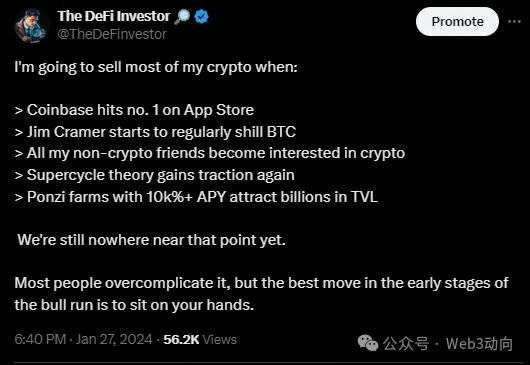
其他一些更好的见顶信号是:

在加密推特上,你经常刷到奢侈品等昂贵物品

无论基本面如何,每个垃圾币都会大涨

“加密”一词的Google搜索流量飙升并创新高

当这些事情开始发生时,你可以假设我们处于牛市的最后阶段,是时候卖掉大部分的头寸了。

我计划在这些顶部信号出现时使用逆向定投策略来这样做。

接下来,这可能看起来疯狂,但有一个技术指标实际上预测了比特币过去三个牛市周期的顶部。
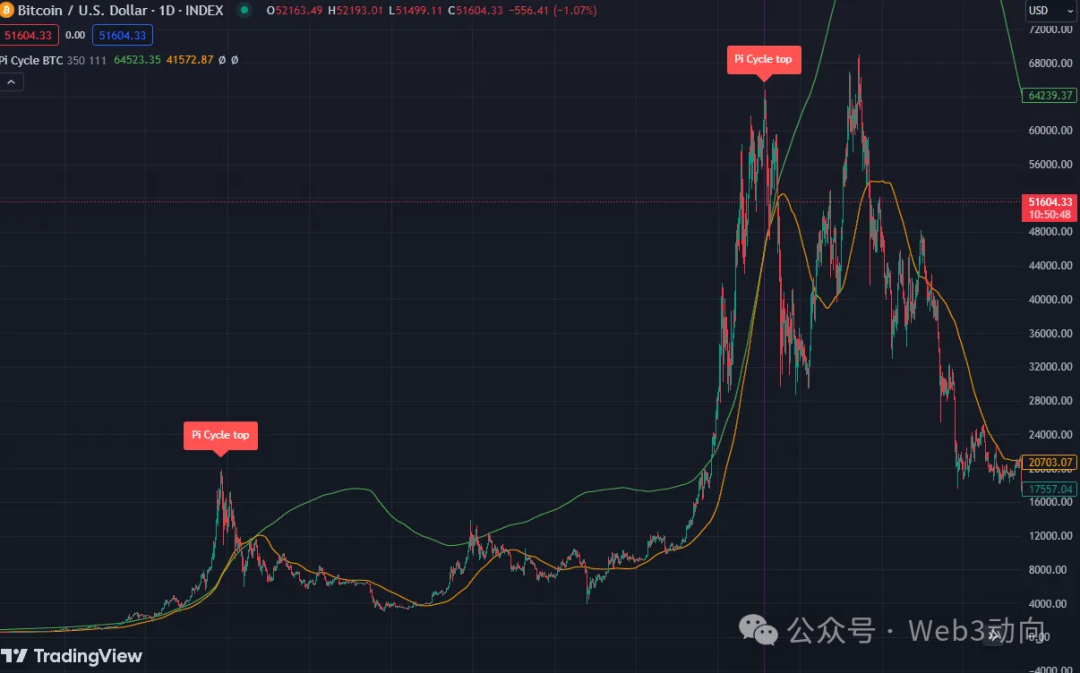
那个指标叫做“Pi Cycle”,可以在Tradingview上找到。

Pi Cycle 的顶部信号是通过将 2 个每日移动平均线组合在一起生成的。

当这些均线中的一个穿过另一个时,Pi Cycle就会发出信号,表示该牛市周期的比特币历史最高价到来了。(如上图所示)

基于历史数据,Pi Cycle是迄今为比特币最准确的指标。

为什么这个指标这么有效?这是个谜,但我个人计划在Pi Cycle下次给出卖出信号时也对我的长期头寸获利。

没人真正知道金融市场接下来会发生什么,但在很多情况下,通过研究历史数据,你可以增加成功的机会。

今天就到这里,我相信我们离这个牛市的顶部还很远。但从现在开始制定你的获利策略是个好主意。

当达到市场极度火热的阶段时,如果你还没有一个退出止盈的计划,那么说服自己获利会很困难。

Trending Cryptos

Related Reads

What If the CLARITY Act Ultimately Fails to Pass?

This article examines the potential consequences if the CLARITY Act, a major US crypto market structure bill, fails to pass in the Senate. Having cleared the House in July 2025 and a key committee in May 2026, the bill's passage into law this year is now considered uncertain, with prediction markets showing its probability dropping from 82% in February to 35%. The article analyzes three main areas of impact should the bill fail. First, for the crypto market, analysts believe a negative reaction is limited and partially priced in already, with Bitcoin's recent weakness attributed more to macro factors. The specific details of the failed bill would matter more than its failure alone. Second, for US stocks, Coinbase (COIN) could see short-term pressure, with analysts citing a potential drop to the $140-$160 range, though its long-term thesis is not solely tied to the bill. For Circle, failure might be neutral or even positive long-term, as a passed bill could invite more stablecoin competition. Bitcoin-treasury firms like Strategy (MSTR) are seen as more directly tied to Bitcoin's price than the legislation. Third, in Washington, the failure is framed within a broader political struggle. Democratic resistance is partly linked to concerns over former President Trump's crypto holdings, making the bill a political tool. If it fails in 2026, the industry would likely rely on existing frameworks like the GENIUS Act and agency-level rules. Missing the August window likely pushes any significant progress to 2027, a period of political reshuffling after midterm elections, making consensus harder to achieve.

Odaily星球日报8m ago

What If the CLARITY Act Ultimately Fails to Pass?

Odaily星球日报8m ago

SK Hynix Q2 Profit Soars Sixfold, Still 'Misses Expectations'; Secures Long-Term Agreements with 10 Clients, HBM4 to Accelerate Volume Ramp in Second Half

SK Hynix reported record-breaking Q2 2026 financial results, with operating profit soaring 557% year-over-year to 60.5 trillion won and revenue increasing 257% to 79.3 trillion won, driven by strong demand for AI server memory, HBM, and enterprise SSDs. The operating profit margin reached 76.3%. However, both figures fell short of analyst expectations, leading to a drop in its share price. The company attributed the earnings miss to three factors: a high sales mix of HBM, which limited upside from surging prices of general-purpose DRAM; a deceleration in memory price increases compared to Q1; and long-term supply agreements (LTAs) with major customers that lock in prices, reducing sensitivity to spot market gains. SK Hynix has signed LTAs with about 10 clients, covering roughly half of its sales. Despite the miss, the company remains optimistic about AI-driven demand. Its net profit of 93.9 trillion won was significantly boosted by a one-time gain from the partial sale of its Kioxia stake. Financially, it strengthened its cash position, ending the quarter with a net cash position of 69.4 trillion won. Looking ahead, SK Hynix plans capital expenditures at the high end of its 40-50 trillion won range for 2026 to expand capacity for HBM and advanced NAND products, including accelerating the mass production of HBM4 in the second half of the year.

marsbit28m ago

SK Hynix Q2 Profit Soars Sixfold, Still 'Misses Expectations'; Secures Long-Term Agreements with 10 Clients, HBM4 to Accelerate Volume Ramp in Second Half

marsbit28m ago

Behind the 67,000 Semiconductor Talent Shortage: U.S. Industrial Policy Game and Implications for China

The U.S. push to reshore semiconductor manufacturing faces a core challenge: a significant talent shortage. While over $770 billion in investments are planned across 160 projects, a key hurdle is finding enough people to run the new fabs. According to industry projections, the U.S. could face a shortage of approximately 67,000 technicians, engineers, and computer scientists by 2030. This shortage is multi-faceted. It includes not only high-level chip design engineers requiring advanced degrees but also a substantial need for technicians to operate and maintain fab equipment. Technician roles, while often requiring less formal education, are hard to fill due to factors like shift work, factory locations, and local community infrastructure. Conversely, for high-end engineers, the issue is less about salary—which is already competitive—and more about intense competition for specialized skills from other tech sectors and the long lead time to develop such expertise. The geographic dispersion of new investments complicates recruitment, as fabs need large numbers of local, stable employees. In response, U.S. policy emphasizes building workforce development as critical infrastructure. Strategies include expanding community college programs for technician training, fostering industry-education partnerships, and pursuing immigration reforms for high-skilled talent, aiming to balance immediate needs with long-term domestic pipeline development. For China, the key takeaway is the need to integrate talent supply planning with factory construction from the outset. This involves requiring companies to submit workforce plans, strengthening vocational education aligned with industry needs, and building supportive local ecosystems to retain talent. Ultimately, a sustainable semiconductor industry depends not just on building fabs, but on cultivating a continuous, local talent pipeline capable of keeping them running and advancing.

marsbit1h ago

Behind the 67,000 Semiconductor Talent Shortage: U.S. Industrial Policy Game and Implications for China

marsbit1h ago

Trading

Spot

Hot Articles

What is $BITCOIN

DIGITAL GOLD ($BITCOIN): A Comprehensive Analysis Introduction to DIGITAL GOLD ($BITCOIN) DIGITAL GOLD ($BITCOIN) is a blockchain-based project operating on the Solana network, which aims to combine the characteristics of traditional precious metals with the innovation of decentralized technologies. While it shares a name with Bitcoin, often referred to as “digital gold” due to its perception as a store of value, DIGITAL GOLD is a separate token designed to create a unique ecosystem within the Web3 landscape. Its goal is to position itself as a viable alternative digital asset, although specifics regarding its applications and functionalities are still developing. What is DIGITAL GOLD ($BITCOIN)? DIGITAL GOLD ($BITCOIN) is a cryptocurrency token explicitly designed for use on the Solana blockchain. In contrast to Bitcoin, which provides a widely recognized value storage role, this token appears to focus on broader applications and characteristics. Notable aspects include: Blockchain Infrastructure: The token is built on the Solana blockchain, known for its capacity to handle high-speed and low-cost transactions. Supply Dynamics: DIGITAL GOLD has a maximum supply capped at 100 quadrillion tokens (100P $BITCOIN), although details regarding its circulating supply are currently undisclosed. Utility: While precise functionalities are not explicitly outlined, there are indications that the token could be utilized for various applications, potentially involving decentralized applications (dApps) or asset tokenization strategies. Who is the Creator of DIGITAL GOLD ($BITCOIN)? At present, the identity of the creators and development team behind DIGITAL GOLD ($BITCOIN) remains unknown. This situation is typical among many innovative projects within the blockchain space, particularly those aligning with decentralized finance and meme coin phenomena. While such anonymity may foster a community-driven culture, it intensifies concerns about governance and accountability. Who are the Investors of DIGITAL GOLD ($BITCOIN)? The available information indicates that DIGITAL GOLD ($BITCOIN) does not have any known institutional backers or prominent venture capital investments. The project seems to operate on a peer-to-peer model focused on community support and adoption rather than traditional funding routes. Its activity and liquidity are primarily situated on decentralized exchanges (DEXs), such as PumpSwap, rather than established centralized trading platforms, further highlighting its grassroots approach. How DIGITAL GOLD ($BITCOIN) Works The operational mechanics of DIGITAL GOLD ($BITCOIN) can be elaborated on based on its blockchain design and network attributes: Consensus Mechanism: By leveraging Solana’s unique proof-of-history (PoH) combined with a proof-of-stake (PoS) model, the project ensures efficient transaction validation contributing to the network's high performance. Tokenomics: While specific deflationary mechanisms have not been extensively detailed, the vast maximum token supply implies that it may cater to microtransactions or niche use cases that are still to be defined. Interoperability: There exists the potential for integration with Solana’s broader ecosystem, including various decentralized finance (DeFi) platforms. However, the details regarding specific integrations remain unspecified. Timeline of Key Events Here is a timeline that highlights significant milestones concerning DIGITAL GOLD ($BITCOIN): 2023: The initial deployment of the token occurs on the Solana blockchain, marked by its contract address. 2024: DIGITAL GOLD gains visibility as it becomes available for trading on decentralized exchanges like PumpSwap, allowing users to trade it against SOL. 2025: The project witnesses sporadic trading activity and potential interest in community-led engagements, although no noteworthy partnerships or technical advancements have been documented as of yet. Critical Analysis Strengths Scalability: The underlying Solana infrastructure supports high transaction volumes, which could enhance the utility of $BITCOIN in various transaction scenarios. Accessibility: The potential low trading price per token could attract retail investors, facilitating wider participation due to fractional ownership opportunities. Risks Lack of Transparency: The absence of publicly known backers, developers, or an audit process may yield skepticism regarding the project's sustainability and trustworthiness. Market Volatility: The trading activity is heavily reliant on speculative behavior, which can result in significant price volatility and uncertainty for investors. Conclusion DIGITAL GOLD ($BITCOIN) emerges as an intriguing yet ambiguous project within the rapidly evolving Solana ecosystem. While it attempts to leverage the “digital gold” narrative, its departure from Bitcoin's established role as a store of value underscores the need for a clearer differentiation of its intended utility and governance structure. Future acceptance and adoption will likely depend on addressing the current opacity and defining its operational and economic strategies more explicitly. Note: This report encompasses synthesised information available as of October 2023, and developments may have transpired beyond the research period.

1.1k Total ViewsPublished 2025.05.13Updated 2025.05.13

What is $BITCOIN

Discussions

Welcome to the HTX Community. Here, you can stay informed about the latest platform developments and gain access to professional market insights. Users' opinions on the price of BTC (BTC) are presented below.

活动图片