3 reasons why Ethereum price can't break $2K

CointelegraphPublished on 2023-10-08Last updated on 2023-10-08

Abstract

A bearish Ethereum fractal meets lower network activity as Ether's price struggles to break above $2,000.

The price of Ethereum's native token, Ether has gained around 35% so far in 2023. But its attempts to break above $2,000, a psychological resistance level, have witnessed strong bearish rejections multiple times.
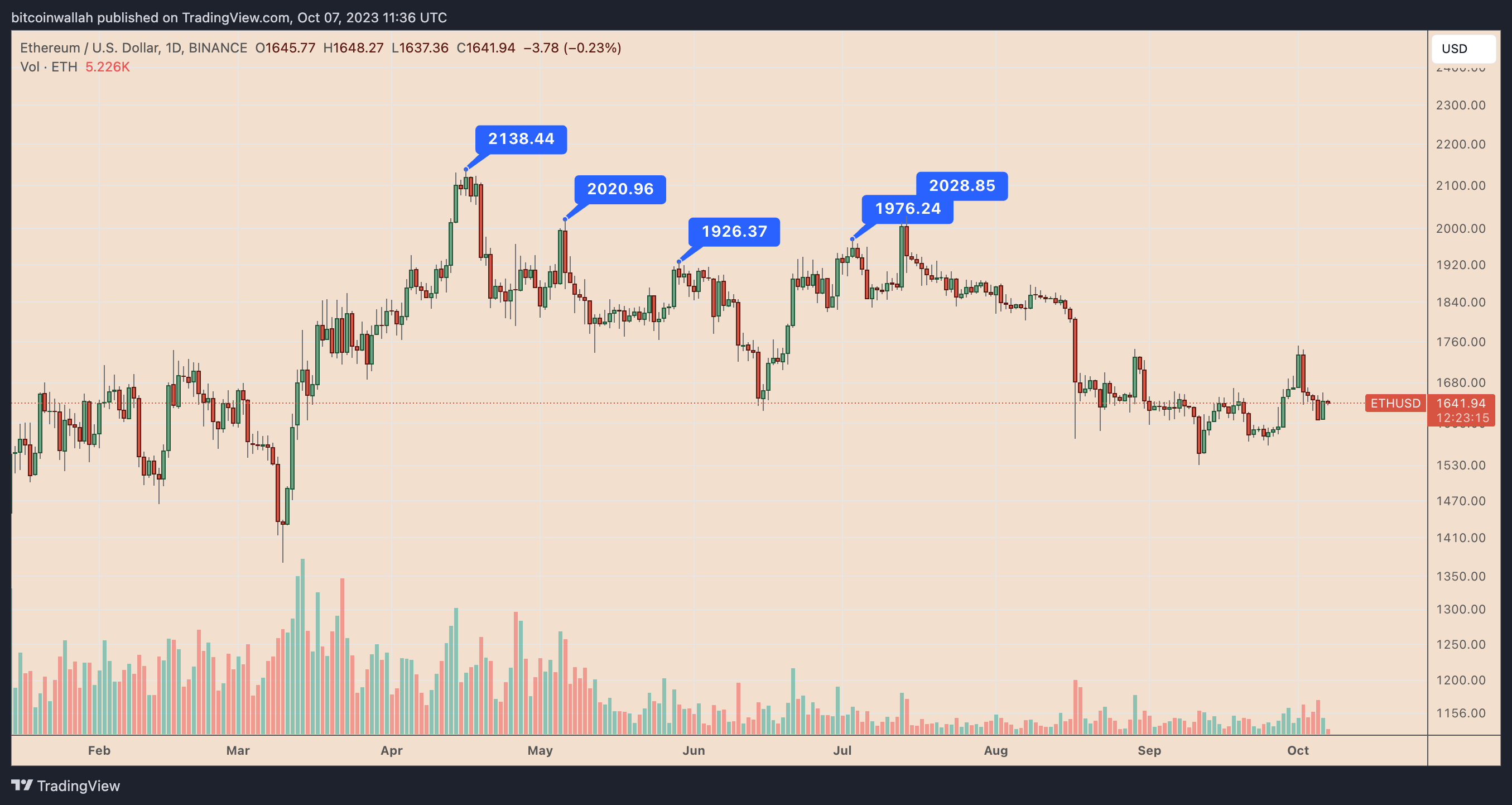
ETH/USD daily price chart. Source: TradingView

Let's take a closer looks at the three likely reasons why Ethereum price has failed to decisively retake $2,000 since May 2022.

Ethereum price paints bear cycle fractal

Ethereum's inability to cross above $2,000 in 2023 resembles the bearish rejection near $425 in 2018-2019.
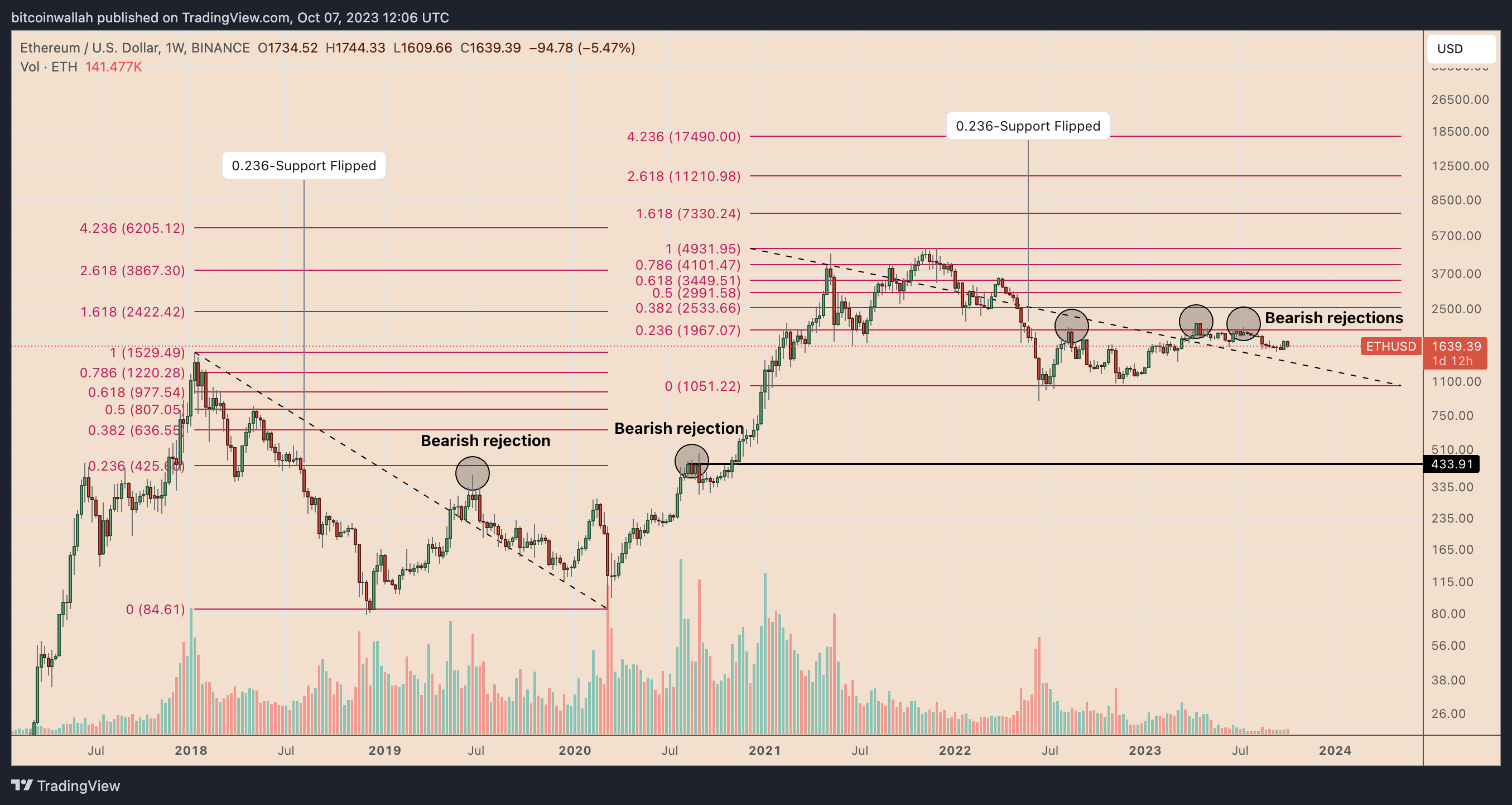
ETH/USD weekly price chart. Source: TradingView

In both cases, Ether appears to be in a recovery phase while eying close above its 0.236 Fib line of the Fibonacci retracement graph.

In 2018-2019, the 0.236 Fib line was near $425 and was instrumental in limiting Ether's recovery attempts. In 2023, the same line is near $2,000, enforcing itself again as a selling area and, thus, pressuring ETH's price lower.

Stronger U.S. dollar, Bitcoin

A strengthening U.S. dollar has dampened demand for Ethereum in recent months, thus reducing its ability to close decisively above $2,000.

The prevailing negative correlation between top cryptocurrencies and the dollar has been the main culprit. In 2023, in particular, the weekly correlation coefficient between Ether and the U.S. dollar index (DXY) has been consistently negative, as shown below.
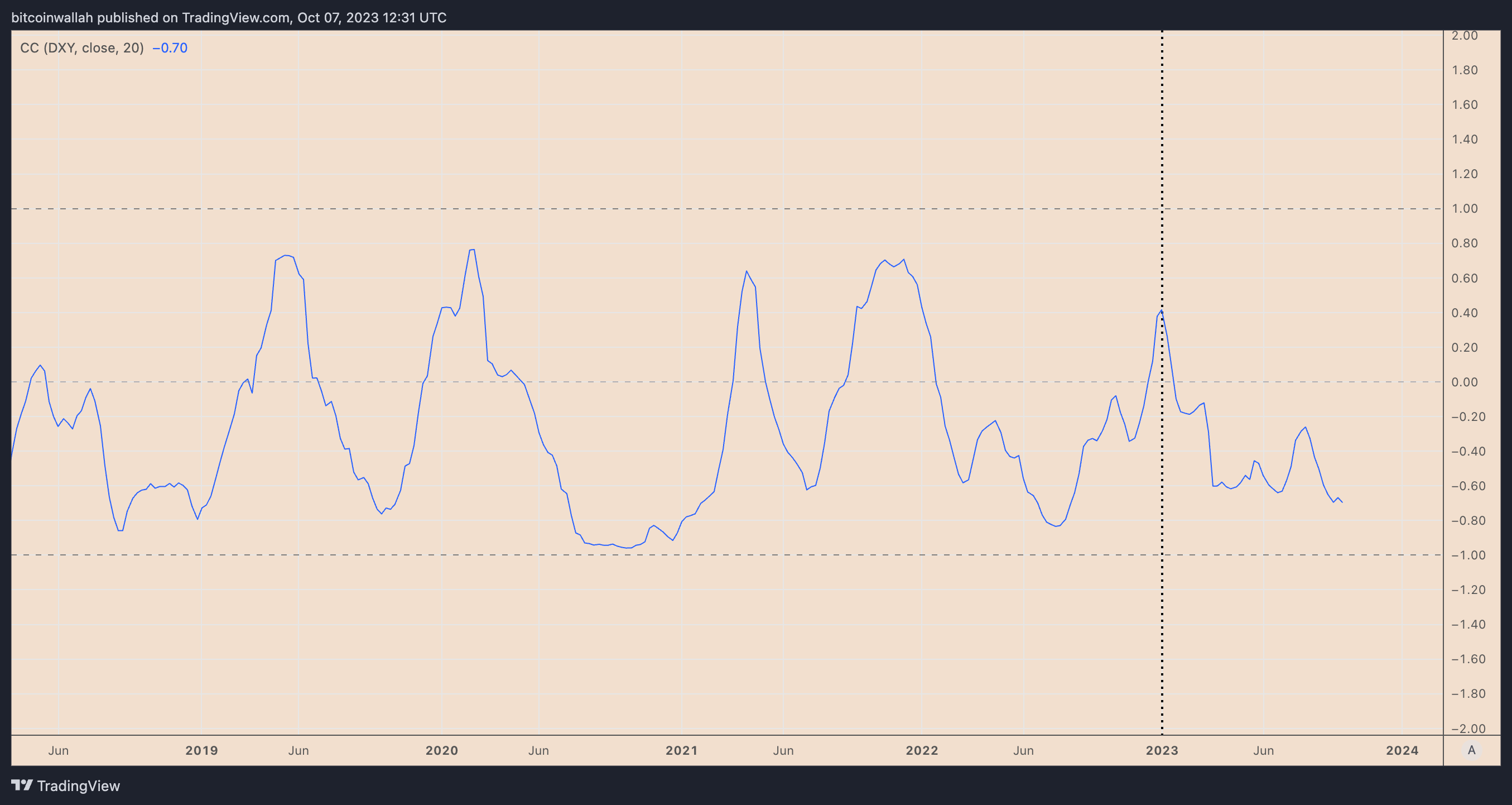
ETH/USD and DXY weekly correlation coefficient chart. Source: TradingView

Meanwhile, Ethereum has largely underperformed Bitcoin in 2023 due to the ongoing spot Bitcoin ETF hype. For instance, the widely-tracked ETH/BTC pair is down 20% year-to-date (YTD).
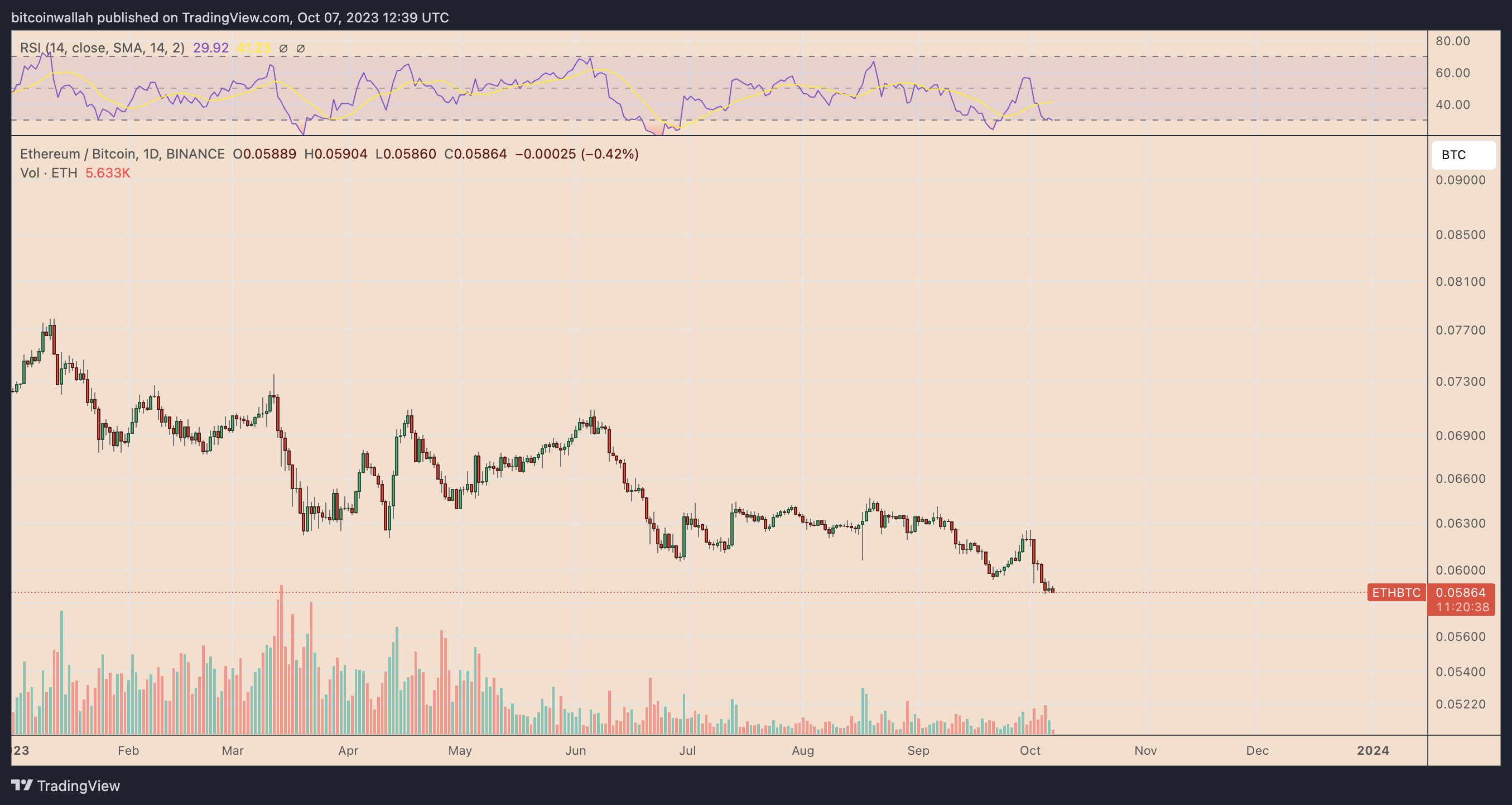
ETH/BTC daily price chart. Source: TradingView

Additionally, the net capital held by Ethereum-tied investment funds has dropped by $114 million so far in 2023, according to CoinShares' weekly report. In comparison, Bitcoin-based funds have attracted $168 million in the same period.

Ethereum network activity dips

The total-value-locked (TVL) across the Ethereum ecosystem has dropped from 18.41 million ETH to 12.79 million ETH so far in 2023. That underscores a reduced availability of funds, resulting in lower yields for investors, as JP Morgan analysts also warned recently.
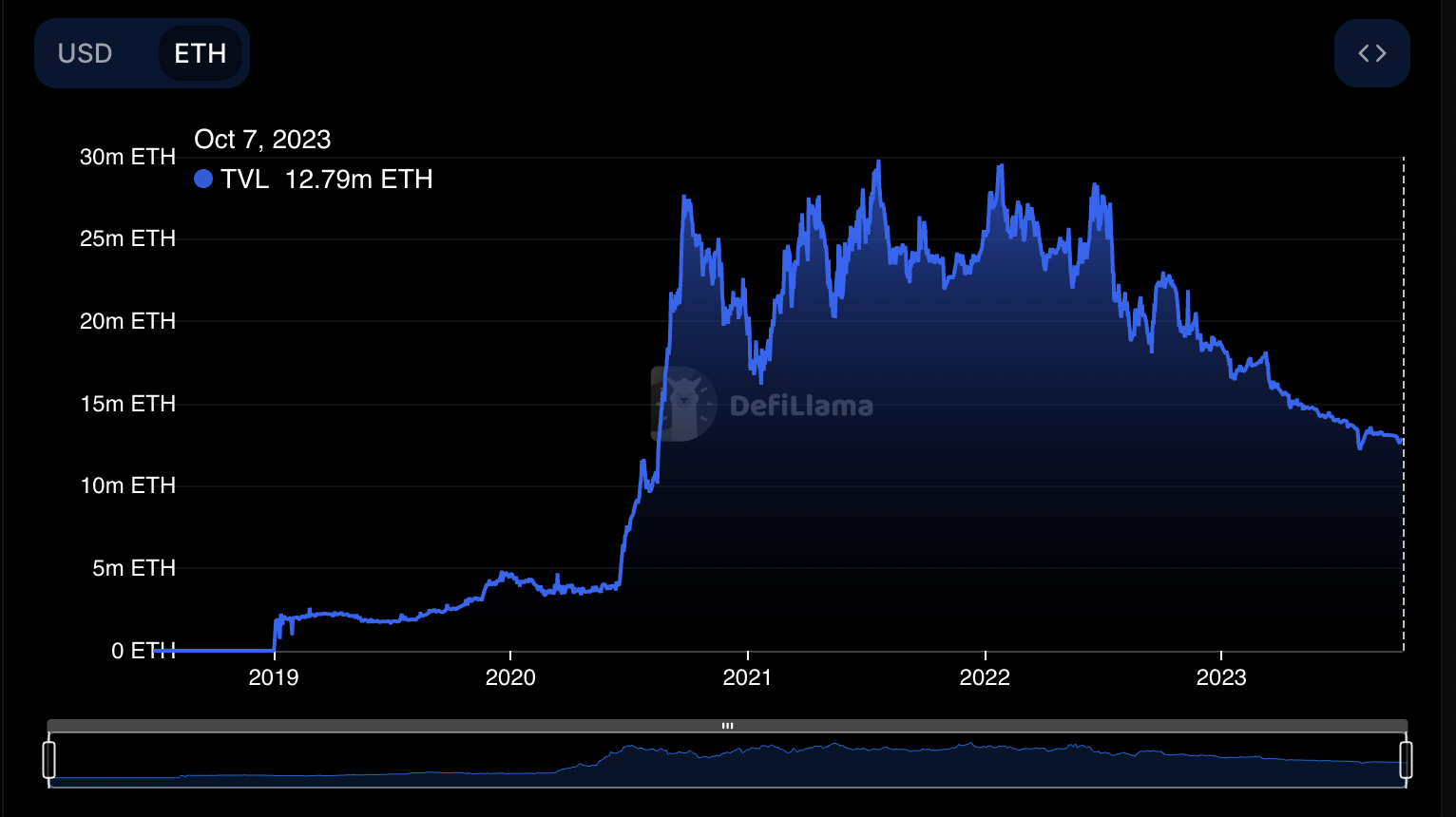
Ethereum TVL since 2019. Source: Defi Llama

The declining TVL has accompanied a drop in the Ethereum network's gas fees, which reached a yearly low on Oct. 5.
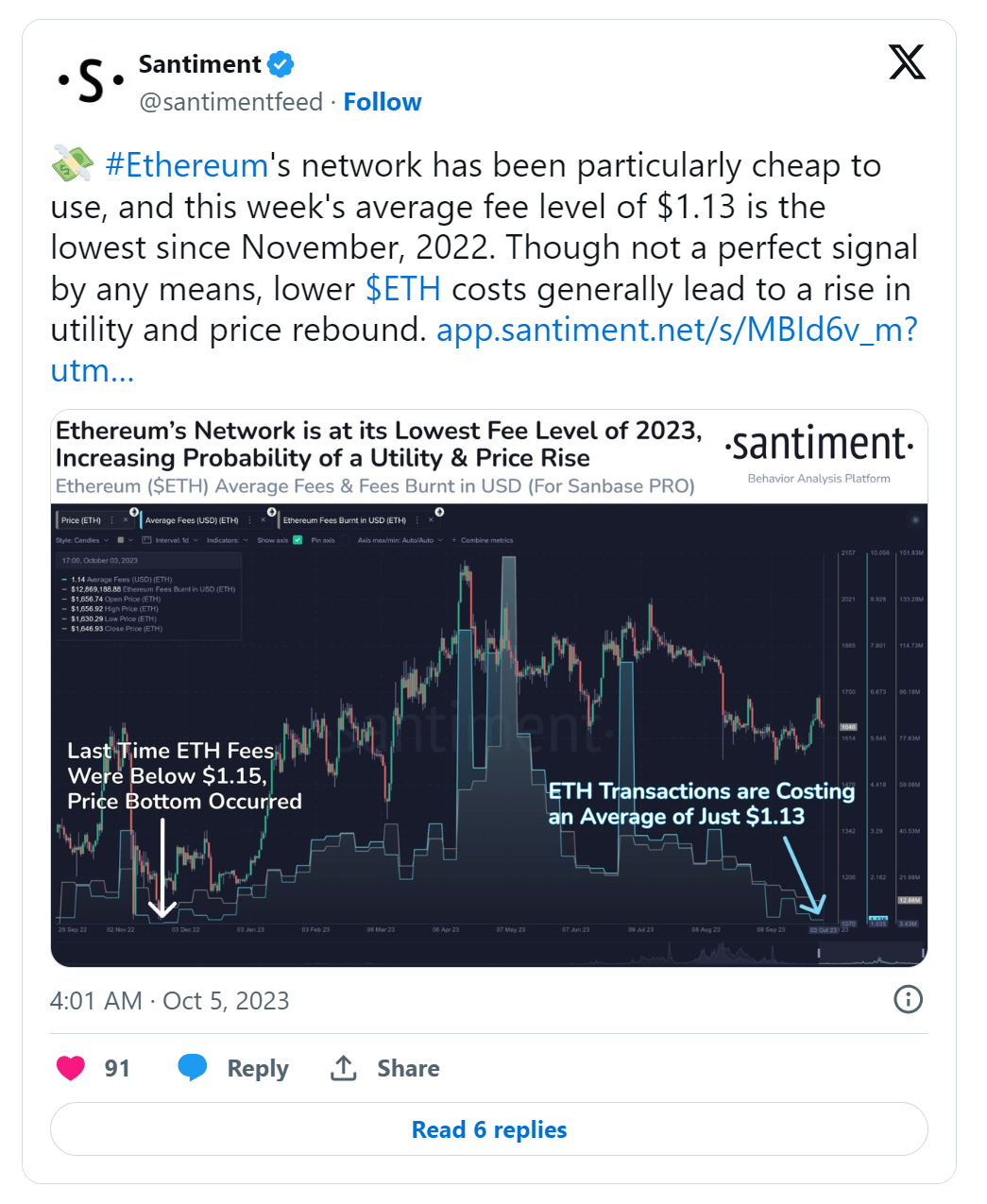
Ethereum's NFT volumes and unique active wallets have also dropped by 30% and 16.5% in the last 30 days, according to Dapp Radar.

That includes declines in the key metrics of popular apps, including decentralized exchange Uniswap V2, DEX aggregator 1inch Network, Ethereum staking provider Lido, and others.

Ethereum technical analysis

Ethereum price technicals meanwhile show a potential rebound toward its 50-day exponential moving average (50-day EMA; the red wave) near $1,665.

However, looking broadly, ETH/USD has been paining a bearish continuation pattern called an ascending triangle.

As a result, a break below the triangle's lower trendline risks crashing the price by as much as the pattern's maximum height. In this case, ETH's price can drop to $1,465 and $1,560 in October 2023, depending on the breakdown point.
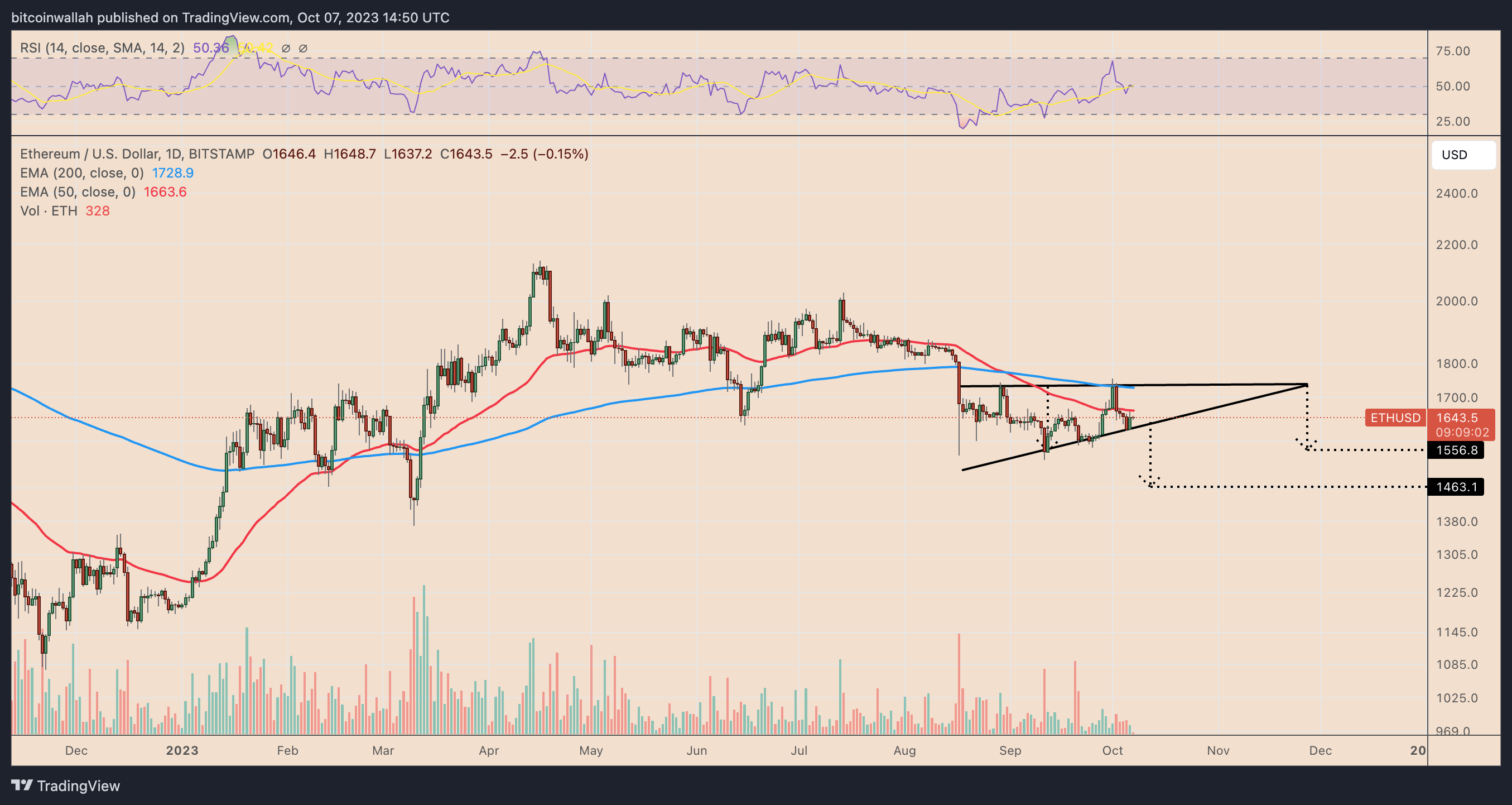
ETH/USD daily price chart. Source: TradingView

Short-term, a break above the 50-day EMA could have ETH's price rise toward the triangle's upper trendline near $1,730 in October 2023, coinciding with the 200-day EMA (the blue wave).


Trending Cryptos

Related Reads

Canada MSB, Why is it More Suitable for Teams Focused on Long-Term Payment Solutions?

**Canada MSB: Why Is It More Suitable for Teams Focused on Long-Term Payments?** Many crypto payment projects initially obtain a U.S. MSB registration for its cost-effectiveness and market recognition. However, as they scale operations, they often find it insufficient for sustainable, real-world payment business. This is where the Canadian MSB, regulated by FINTRAC, gains serious consideration. Unlike the U.S. framework, the Canadian MSB is not a "lightweight alternative" but a choice for projects committed to long-term, compliant operations, especially in B2B payments, cross-border settlements, and stablecoin transactions. **Key Distinctions:** The Canadian MSB emphasizes substantive, ongoing regulation. It requires establishing a full-fledged AML/CTF framework *before* launching operations, with continuous obligations for KYC, transaction monitoring, and reporting. This positions the holder as a regulated financial service provider from day one. **Operational Scope:** A properly structured Canadian MSB can support businesses like stablecoin/crypto payments and transfers, fiat-crypto exchange, B2B batch settlements, payment APIs for merchants, and underlying structures for services like crypto cards. **Strategic Advantages:** 1. **Bank & Partner Relations:** Its clear regulatory framework and operational requirements make it easier to explain compliance to banks and institutional partners, which is crucial for securing stable banking relationships. 2. **Centralized Path:** It offers a nationally unified system, avoiding the complexity and cost of navigating multiple U.S. state-level Money Transmitter Licenses (MTLs). 3. **Business Model Clarity:** It fosters long-term stability by requiring clear business structures, transparent fund flows, and real risk management from the outset, reducing future uncertainties. **Ideal Candidates:** The Canadian MSB is particularly suitable for B2B crypto payment platforms, cross-border stablecoin services, enterprise payment solutions, Web3 financial infrastructure projects, and teams building a "compliance benchmark" for sustainable growth. **Choosing Between U.S. and Canadian MSB:** The choice depends on the project's stage and goals. The **U.S. MSB** is better for **speed, initial validation, and early launch**. The **Canadian MSB** is better for **stability, substantive compliance, and long-term operation**, especially when serving B2B/enterprise clients and requiring reliable banking channels. In essence, while the Canadian MSB involves higher initial compliance rigor, it provides a more solid foundation for building a payment business that banks, partners, and regulators can accept over the long term.

marsbit19m ago

Canada MSB, Why is it More Suitable for Teams Focused on Long-Term Payment Solutions?

marsbit19m ago

Trading

Spot
Futures

Hot Articles

What is $BITCOIN

DIGITAL GOLD ($BITCOIN): A Comprehensive Analysis Introduction to DIGITAL GOLD ($BITCOIN) DIGITAL GOLD ($BITCOIN) is a blockchain-based project operating on the Solana network, which aims to combine the characteristics of traditional precious metals with the innovation of decentralized technologies. While it shares a name with Bitcoin, often referred to as “digital gold” due to its perception as a store of value, DIGITAL GOLD is a separate token designed to create a unique ecosystem within the Web3 landscape. Its goal is to position itself as a viable alternative digital asset, although specifics regarding its applications and functionalities are still developing. What is DIGITAL GOLD ($BITCOIN)? DIGITAL GOLD ($BITCOIN) is a cryptocurrency token explicitly designed for use on the Solana blockchain. In contrast to Bitcoin, which provides a widely recognized value storage role, this token appears to focus on broader applications and characteristics. Notable aspects include: Blockchain Infrastructure: The token is built on the Solana blockchain, known for its capacity to handle high-speed and low-cost transactions. Supply Dynamics: DIGITAL GOLD has a maximum supply capped at 100 quadrillion tokens (100P $BITCOIN), although details regarding its circulating supply are currently undisclosed. Utility: While precise functionalities are not explicitly outlined, there are indications that the token could be utilized for various applications, potentially involving decentralized applications (dApps) or asset tokenization strategies. Who is the Creator of DIGITAL GOLD ($BITCOIN)? At present, the identity of the creators and development team behind DIGITAL GOLD ($BITCOIN) remains unknown. This situation is typical among many innovative projects within the blockchain space, particularly those aligning with decentralized finance and meme coin phenomena. While such anonymity may foster a community-driven culture, it intensifies concerns about governance and accountability. Who are the Investors of DIGITAL GOLD ($BITCOIN)? The available information indicates that DIGITAL GOLD ($BITCOIN) does not have any known institutional backers or prominent venture capital investments. The project seems to operate on a peer-to-peer model focused on community support and adoption rather than traditional funding routes. Its activity and liquidity are primarily situated on decentralized exchanges (DEXs), such as PumpSwap, rather than established centralized trading platforms, further highlighting its grassroots approach. How DIGITAL GOLD ($BITCOIN) Works The operational mechanics of DIGITAL GOLD ($BITCOIN) can be elaborated on based on its blockchain design and network attributes: Consensus Mechanism: By leveraging Solana’s unique proof-of-history (PoH) combined with a proof-of-stake (PoS) model, the project ensures efficient transaction validation contributing to the network's high performance. Tokenomics: While specific deflationary mechanisms have not been extensively detailed, the vast maximum token supply implies that it may cater to microtransactions or niche use cases that are still to be defined. Interoperability: There exists the potential for integration with Solana’s broader ecosystem, including various decentralized finance (DeFi) platforms. However, the details regarding specific integrations remain unspecified. Timeline of Key Events Here is a timeline that highlights significant milestones concerning DIGITAL GOLD ($BITCOIN): 2023: The initial deployment of the token occurs on the Solana blockchain, marked by its contract address. 2024: DIGITAL GOLD gains visibility as it becomes available for trading on decentralized exchanges like PumpSwap, allowing users to trade it against SOL. 2025: The project witnesses sporadic trading activity and potential interest in community-led engagements, although no noteworthy partnerships or technical advancements have been documented as of yet. Critical Analysis Strengths Scalability: The underlying Solana infrastructure supports high transaction volumes, which could enhance the utility of $BITCOIN in various transaction scenarios. Accessibility: The potential low trading price per token could attract retail investors, facilitating wider participation due to fractional ownership opportunities. Risks Lack of Transparency: The absence of publicly known backers, developers, or an audit process may yield skepticism regarding the project's sustainability and trustworthiness. Market Volatility: The trading activity is heavily reliant on speculative behavior, which can result in significant price volatility and uncertainty for investors. Conclusion DIGITAL GOLD ($BITCOIN) emerges as an intriguing yet ambiguous project within the rapidly evolving Solana ecosystem. While it attempts to leverage the “digital gold” narrative, its departure from Bitcoin's established role as a store of value underscores the need for a clearer differentiation of its intended utility and governance structure. Future acceptance and adoption will likely depend on addressing the current opacity and defining its operational and economic strategies more explicitly. Note: This report encompasses synthesised information available as of October 2023, and developments may have transpired beyond the research period.

455 Total ViewsPublished 2025.05.13Updated 2025.05.13

What is $BITCOIN

Discussions

Welcome to the HTX Community. Here, you can stay informed about the latest platform developments and gain access to professional market insights. Users' opinions on the price of BTC (BTC) are presented below.

活动图片