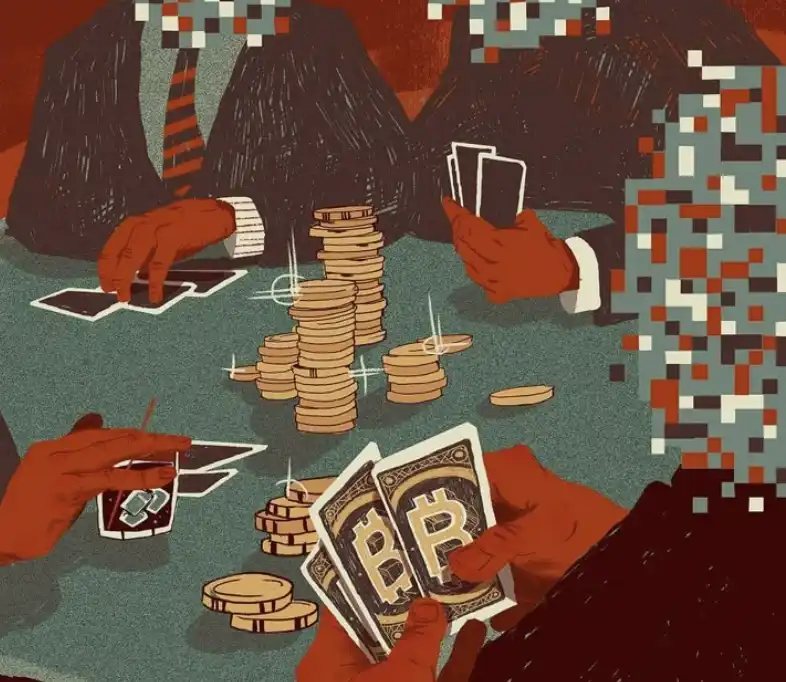
Ethereum price sees new low versus Bitcoin since switching to Proof-of-Stake

CointelegraphPublished on 2023-09-20Last updated on 2023-09-22

Abstract

Ether (ETH) has seen a 36% year-to-date increase in its price in 2023 in U.S. dollar terms. This recovery, however, is modest given that ETH is currently trading 66% below its November 2021 peak of $4,870.

Ether (ETH) has seen a 36% year-to-date increase in its price in 2023 in U.S. dollar terms. This recovery, however, is modest given that ETH is currently trading 66% below its November 2021 peak of $4,870.
Ethereum vs. Bitcoin: 14-month downtrend and counting 
Moreover, on Sept. 20, Ether reached its lowest levels against Bitcoin (BTC) in 14 months, breaching the critical 0.06 BTC support. This has raised questions among Ether investors about the factors behind this price decline and what it will take to reverse the trend.

Ether price / BTC at Coinbase. Source: TradingViewETH buyers placed their biggest hopes on protocol upgrades that significantly reduced the need for new coin issuance when the network transitioned to a Proof-of-Stake consensus mechanism.
These hopes were realized in mid-September 2022, resulting in an annualized issuance rate of just 0.25% of the supply. This transformation aligned with the Ethereum community's vision of "ultrasound money."
Furthermore, the subsequent Shapella upgrade on April 12 allowed for withdrawals from the native staking protocol, addressing a major concern for investors. Previously, both the 32 ETH deposits and the yield from participating in the network consensus were locked up indefinitely.
Confidence among Ethereum enthusiasts grew as these significant hurdles were crossed with minimal issues. They anticipated that the price of Ether would surpass $2,000, a prediction that came true on April 14.
However, this optimism was short-lived, as ETH's price promptly fell back to the same $1,850 level just a week later.
Notably, instead of witnessing a net withdrawal, Ethereum staking experienced a net inflow of 3.1 million ETH in the 30 days following the Shappela upgrade, surpassing even the most optimistic expectations.
Given that the Ethereum network's planned developments have generally been on track, albeit with the customary delays, investors now need to explore other potential catalysts for reversing the current downtrend in Ether's price relative to BTC.
External factors present important triggers for ETH price
One of these potential catalysts lies in the ongoing legal battle between Ripple (formerly Ripple Labs) and the U.S. Securities and Exchange Commission (SEC), which could significantly impact Ether's price momentum.
The SEC contends that XRP sales to retail investors constitute a security offering. However, in July, Judge Analisa Torres ruled that XRP generally does not qualify as a security under SEC guidelines, especially when distributed through exchanges.
As noted by the "American Lawyer and Bitcoiner" Bryan Jacoutot on a social network, the Ethereum Foundation remains exposed due to the pre-sale of ETH directed toward institutional investors and subject to a lock-up period.
(1/12) ANALYSIS: I've reviewed the district court ruling on XRP and it rests on very shaky ground. Expect an appeal.

AND Ethereum Foundation remains at risk even if its upheld because of important distinctions in the methods used by Ripple to sell the "pre-mine"

⬇️⬇️
— Bryan Jacoutot (@BryanJacoutot) July 13, 2023
According to Jacoutot, even if Ripple were to secure a favorable outcome, it wouldn't immediately mitigate the risks for Ethereum. Nevertheless, it's undeniable that the regulatory uncertainty surrounding the Ether ICO remains a source of concern for investors.
On Sep. 20, an Ethereum address associated with the ICO era showed its first activity, transferring 32.1 ETH (valued at $52,000 at the time) directly to Coinbase. This additional movement only amplified regulatory concerns since there are no apparent incentives for addresses that have remained dormant for four to eight years to divest at this particular point in the market cycle.
An Ethereum ICO participant who has been dormant for 8 years transferred 32.1 $ETH to #Coinbase just now.

The address received 200 $ETH at Ethereum Genesis.

And the address appears to be related to shemnon.eth (@shemnon).https://t.co/nj5eF8iRT0 pic.twitter.com/6Viytn4dU5
— Lookonchain (@lookonchain) September 20, 2023
A similar occurrence unfolded with an address linked to Vitalik Buterin, which sent 300 ETH (worth $490,000 at the time) to the Kraken exchange on Sep. 19.
More positive news gives hope for Ethereum investors
On the news side, Ethereum has seen some positive surprises, such as the unexpected request for a spot Ether exchange-traded fund (ETF) by ARK Invest and 21Shares on Sep. 6. This development reduced the risks associated with excessive institutional concentration in Bitcoin, particularly if the ETF is approved.
Additionally, Canto, a layer-1 Cosmos-native blockchain, announced its migration to Ethereum's layer-2 on Sep. 18. This Zero-Knowledge, permissionless rollup, compatible with the Ethereum Virtual Machine (EVM), is primarily focused on bringing traditional finance into the Ethereum ecosystem.
Should Bitcoin's price surge be driven solely by the approval of a spot Bitcoin ETF or inflation concerns in the U.S., Ether is well-positioned to follow suit, benefiting from the same catalysts.
Meanwhile, Ethereum's primary competitors in the decentralized applications sector, namely Solana (SOL) and BSC Chain (BNB), face similar risks pertaining to ICO and securities regulations, making it unlikely for them to challenge Ethereum's dominance in terms of total value locked, or TVL, and trading volumes.
This article is for general information purposes and is not intended to be and should not be taken as legal or investment advice. The views, thoughts, and opinions expressed here are the author’s alone and do not necessarily reflect or represent the views and opinions of Cointelegraph.


Trending Cryptos

Related Reads

He Personally Built o1 and o3, but Suddenly Announced: Humans Can Retire Forever

AI researcher Jerry Tworek, former lead of OpenAI's reasoning models (o1/o3), predicts human AI researchers will be largely obsolete within two years. He argues that while AI agents currently excel at execution (reducing experiment cycles from a month to a day), their creative idea generation remains low-quality. True frontier AI development, he claims, is driven by only 30-50 people globally, with everyone else in supporting roles. A core bottleneck is the Transformer architecture, which he believes is suboptimal but has seen only 3-4 serious replacement attempts at OpenAI in seven years due to massive computational and validation hurdles. He highlights a key paradox: you need significant compute to prove a new direction, but you need proof to get the compute. A breakthrough came when he received dedicated GPU resources, leading to scaling reinforcement learning and the o1 model. Now, through his company Core Automation, he uses AI agents to automate costly R&D tasks. In one case, a $100k AI effort optimized a GPU kernel by 60x, matching rare expert-level performance. This acceleration, he argues, will soon automate even the remaining creative and architectural work of the few top researchers. Looking ahead, Tworek envisions a post-work future where humans pursue excellence for its own sake—like ancient philosophers or dedicated athletes—free from the necessity of labor for societal function. He acknowledges the personal challenge of deriving self-worth from work but is actively building the tools that will make his own expert role, and those of his peers, redundant. The prevailing sentiment among researchers, he notes, is a mix of exhaustion and exhilaration in what may be the final, pivotal chapter of human-led AI advancement.

marsbit1m ago

He Personally Built o1 and o3, but Suddenly Announced: Humans Can Retire Forever

marsbit1m ago

Veterans of the 'Little Smart' Era Return, This Time Leading a Robot Company in a Sprint to an IPO

UTStarcom Veteran Returns: Robot Maker Rushes for IPO On August 24, UDI Robot passed the listing hearing for the Hong Kong Stock Exchange main board. Known for its delivery robots in hotels and KTVs, the company was founded in 2013 by Lu Ying, former CEO of the once-dominant "PHS" phone maker UTStarcom, and other ex-colleagues. UDI has five main product series, including indoor delivery, outdoor delivery, and cleaning robots. Significantly, its business model is shifting from hardware sales to recurring service revenue. In 2025, AI vision model solutions contributed 37.5% of its total revenue of ~318 million RMB, while robot product sales accounted for 42.5%. However, its overall business remains unprofitable, with a cumulative net loss of 5.44 billion RMB from 2023 to Q1 2026. A key challenge is low hardware毛利率 (gross margin for robot products was 8.3% in 2025). Despite losses common in the robotics sector, UDI's deficit is narrowing. It has raised ~989 million RMB over 13 pre-IPO rounds from investors including Alibaba (Ele.me, Yunfeng Capital), Legend Capital, SenseTime, and hotel chains like Huazhu. The founding team, largely from UTStarcom, collectively controls 33.40% of the company. UDI ranks as China's third-largest commercial service robotics company with an 8.9% market share in 2025. Its IPO, sought via Hong Kong's special tech chapter 18C, aims to fund R&D, expansion, and working capital, marking a comeback attempt for the "PHS" veterans in a new technological era.

marsbit5m ago

Veterans of the 'Little Smart' Era Return, This Time Leading a Robot Company in a Sprint to an IPO

marsbit5m ago

Zuck refuses to give up, secretly develops one of his own called 'Hatch', but the model uses Claude...

Meta, led by Mark Zuckerberg, is developing a new AI agent platform called "Hatch" after its reported unsuccessful attempt to acquire Manus. Described as a "consumer version of OpenClaw," Hatch aims to automate tasks across various digital services. The platform is trained on simulated versions of services like DoorDash, Etsy, Reddit, Yelp, and Outlook, and is deeply integrated with Meta's own ecosystem, including Instagram, Facebook, and WhatsApp. Its goal is to enable end-to-end task completion, such as identifying a product in a social media post, comparing prices, and facilitating purchases. During development, Hatch is reportedly relying on Anthropic's Claude model. However, Meta plans to transition to its proprietary model, Muse Spark, for the official launch, with a newer model named Watermelon expected in October. This phased migration highlights potential technical challenges, as switching core models can affect performance and user experience. Priced at up to $199.99 per month, Hatch targets consumers willing to pay for significant time savings. Its key advantage is default distribution within Meta's vast suite of apps, potentially giving it access to rich user context. However, it faces major hurdles in real-world reliability, needing to handle complex, dynamic web environments, authentication changes, and anti-bot measures that differ from its controlled training simulations. The move represents Meta's strategic push to monetize AI directly beyond its core advertising business.

marsbit7m ago

Zuck refuses to give up, secretly develops one of his own called 'Hatch', but the model uses Claude...

marsbit7m ago

IOSG: U.S. Bonds, AI, and Inflation Can't All Be Had. Which Side Should BTC Bet On?

**Title: IOSG: Can't Have It All – Treasury Bonds, AI, and Inflation. Where Should BTC Bet?** **Core Thesis:** Washington is likely to prioritize stabilizing the Treasury market and sustaining the AI investment cycle, accepting higher inflation for longer as the trade-off. This creates sustained tailwinds for both gold and Bitcoin by injecting liquidity and shifting duration risk away from private balance sheets. **Key Issue:** The critical macro price is no longer the Fed funds rate, but the yield investors demand to hold long-term US Treasuries. Recent surges in 10-year and 30-year yields stem from a combination of persistent inflation risks, heavy fiscal supply, thinning demand for duration, and new competition for capital from massive AI infrastructure investments. **The Trilemma:** The US faces a difficult choice between controlling inflation, maintaining Treasury market stability, and fostering the AI growth cycle. Political pressure suggests inflation control is the most likely sacrifice. **Treasury's Response:** Measures by Treasury Secretary Besant focus on defending the bond market: supporting the Yen to prevent forced Japanese Treasury sales, increasing long-end liquidity via repos (effectively shortening government debt maturity), and a potential shift toward more short-term bill issuance. This could generate significant liquidity, reigniting "currency debasement" trades. **Gold's Role:** Gold's ~90% surge since mid-2024 is not just an inflation hedge but a bet on monetary debasement as a politically viable path out of the debt cycle, driven by declining dollar trust. **Bitcoin's Positioning:** Bitcoin has historically failed to correlate with gold during "debasement" rallies. However, its recent strong performance alongside Treasury's liquidity actions suggests the market may be treating it as a "stealth QE" trade—a scenario where crypto assets typically thrive amid expanding global liquidity. For BTC to firmly join the "debasement hedge" category, this correlation needs to persist. **Conclusion & Risks:** The framework suggests that preserving market stability and the AI cycle will likely mean shorter debt maturity,常态化 liquidity backstops, and tolerance for higher inflation—favorable for gold and BTC. This outlook would be undermined if inflation falls toward 2%, a credible fiscal path emerges, AI becomes self-funding, or private demand absorbs debt without higher term premiums. The key question is which corner of the trilemma breaks first; accelerated "duration transfer" by the Treasury would mean a longer tailwind for Bitcoin.

marsbit22m ago

IOSG: U.S. Bonds, AI, and Inflation Can't All Be Had. Which Side Should BTC Bet On?

marsbit22m ago

How 5G Will Be Launched in Russia: The Digital Ministry's Proposal and the Roadmap to 2035

Russia's Ministry of Digital Development has proposed a plan for launching 5G networks. It allows the "Big Four" mobile operators (Beeline, Megafon, MTS, T2) to deploy 5G on existing 4G/LTE base stations and frequencies, and will allocate them the new 4.63–4.99 GHz band. A key element is "technological neutrality," permitting the use of foreign equipment until September 2026. The new 4.63–4.99 GHz band is intended for more advanced services and industrial applications. However, a phased transition to Russian-made base stations will begin in 2027, with a target of at least 50% domestic equipment by 2030. The rollout timeline aims for 5G in cities with over 1 million people by the end of 2027, expanding to 84 cities by 2035. Initial "5G Ready" service, operating over existing infrastructure, will offer minimal speed improvements. Significant speed gains (4-10x over LTE) will require the new band and corresponding equipment. The plan addresses long-standing regulatory delays, including the military's hold on the global standard 3.4–3.8 GHz band. This forced Russia to adopt the 4.63–4.99 GHz range, overlapping with a Chinese band, making Chinese equipment a potential transitional solution. The success of the rollout will depend on equipment supply and the pace of production localization, while a challenge lies in smartphone compatibility with this non-standard frequency band.

cryptonews.ru3h ago

How 5G Will Be Launched in Russia: The Digital Ministry's Proposal and the Roadmap to 2035

cryptonews.ru3h ago

Trading

Spot

Hot Articles

What is $BITCOIN

DIGITAL GOLD ($BITCOIN): A Comprehensive Analysis Introduction to DIGITAL GOLD ($BITCOIN) DIGITAL GOLD ($BITCOIN) is a blockchain-based project operating on the Solana network, which aims to combine the characteristics of traditional precious metals with the innovation of decentralized technologies. While it shares a name with Bitcoin, often referred to as “digital gold” due to its perception as a store of value, DIGITAL GOLD is a separate token designed to create a unique ecosystem within the Web3 landscape. Its goal is to position itself as a viable alternative digital asset, although specifics regarding its applications and functionalities are still developing. What is DIGITAL GOLD ($BITCOIN)? DIGITAL GOLD ($BITCOIN) is a cryptocurrency token explicitly designed for use on the Solana blockchain. In contrast to Bitcoin, which provides a widely recognized value storage role, this token appears to focus on broader applications and characteristics. Notable aspects include: Blockchain Infrastructure: The token is built on the Solana blockchain, known for its capacity to handle high-speed and low-cost transactions. Supply Dynamics: DIGITAL GOLD has a maximum supply capped at 100 quadrillion tokens (100P $BITCOIN), although details regarding its circulating supply are currently undisclosed. Utility: While precise functionalities are not explicitly outlined, there are indications that the token could be utilized for various applications, potentially involving decentralized applications (dApps) or asset tokenization strategies. Who is the Creator of DIGITAL GOLD ($BITCOIN)? At present, the identity of the creators and development team behind DIGITAL GOLD ($BITCOIN) remains unknown. This situation is typical among many innovative projects within the blockchain space, particularly those aligning with decentralized finance and meme coin phenomena. While such anonymity may foster a community-driven culture, it intensifies concerns about governance and accountability. Who are the Investors of DIGITAL GOLD ($BITCOIN)? The available information indicates that DIGITAL GOLD ($BITCOIN) does not have any known institutional backers or prominent venture capital investments. The project seems to operate on a peer-to-peer model focused on community support and adoption rather than traditional funding routes. Its activity and liquidity are primarily situated on decentralized exchanges (DEXs), such as PumpSwap, rather than established centralized trading platforms, further highlighting its grassroots approach. How DIGITAL GOLD ($BITCOIN) Works The operational mechanics of DIGITAL GOLD ($BITCOIN) can be elaborated on based on its blockchain design and network attributes: Consensus Mechanism: By leveraging Solana’s unique proof-of-history (PoH) combined with a proof-of-stake (PoS) model, the project ensures efficient transaction validation contributing to the network's high performance. Tokenomics: While specific deflationary mechanisms have not been extensively detailed, the vast maximum token supply implies that it may cater to microtransactions or niche use cases that are still to be defined. Interoperability: There exists the potential for integration with Solana’s broader ecosystem, including various decentralized finance (DeFi) platforms. However, the details regarding specific integrations remain unspecified. Timeline of Key Events Here is a timeline that highlights significant milestones concerning DIGITAL GOLD ($BITCOIN): 2023: The initial deployment of the token occurs on the Solana blockchain, marked by its contract address. 2024: DIGITAL GOLD gains visibility as it becomes available for trading on decentralized exchanges like PumpSwap, allowing users to trade it against SOL. 2025: The project witnesses sporadic trading activity and potential interest in community-led engagements, although no noteworthy partnerships or technical advancements have been documented as of yet. Critical Analysis Strengths Scalability: The underlying Solana infrastructure supports high transaction volumes, which could enhance the utility of $BITCOIN in various transaction scenarios. Accessibility: The potential low trading price per token could attract retail investors, facilitating wider participation due to fractional ownership opportunities. Risks Lack of Transparency: The absence of publicly known backers, developers, or an audit process may yield skepticism regarding the project's sustainability and trustworthiness. Market Volatility: The trading activity is heavily reliant on speculative behavior, which can result in significant price volatility and uncertainty for investors. Conclusion DIGITAL GOLD ($BITCOIN) emerges as an intriguing yet ambiguous project within the rapidly evolving Solana ecosystem. While it attempts to leverage the “digital gold” narrative, its departure from Bitcoin's established role as a store of value underscores the need for a clearer differentiation of its intended utility and governance structure. Future acceptance and adoption will likely depend on addressing the current opacity and defining its operational and economic strategies more explicitly. Note: This report encompasses synthesised information available as of October 2023, and developments may have transpired beyond the research period.

2.3k Total ViewsPublished 2025.05.13Updated 2025.05.13

What is $BITCOIN

Discussions

Welcome to the HTX Community. Here, you can stay informed about the latest platform developments and gain access to professional market insights. Users' opinions on the price of BTC (BTC) are presented below.

活动图片