FTX本周或获批清算34亿美元代币,对市场有何影响?

PanewsPublished on 2023-09-11Last updated on 2023-09-13

Abstract

FTX可能会在9月13日获得法院批准清算资产,34亿抛压之下,事情或许没想象中的那么糟糕。

综编:Felix, PANews
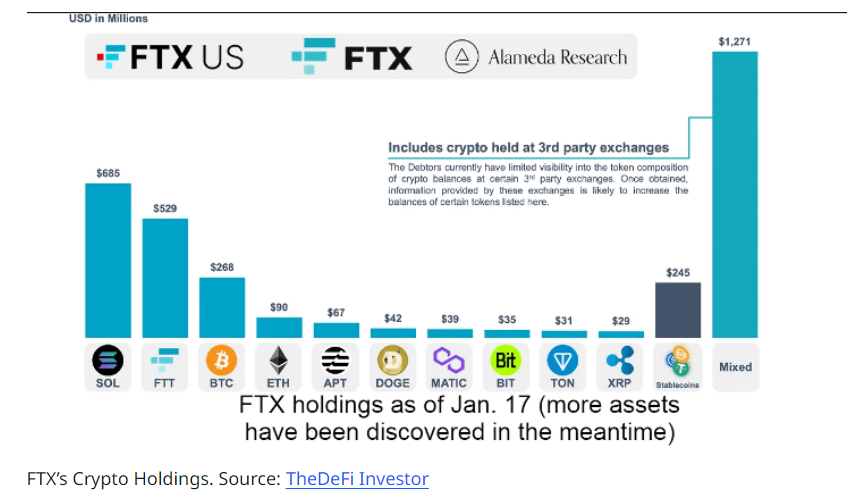
本周市场最关心的事情之一莫过于,FTX将在9月13日进行关于代币销售申请的法庭审理,根据8月23日FTX提交的法庭文件,FTX希望开始出售、质押和对冲其大量加密货币资产。FTX希望以法定货币而不是比特币或以太币的形式向债权人返还资金。截至今年4月,FTX持有价值34亿美元的加密货币,如果审理通过就意味着巨大的抛压。因此,从上周开始便引发市场广泛关注,FUD情绪四起。
此事尚未定论,一方面FTX代币销售申请将于美东时间9月13日下午1点由特拉华州破产法院审理,法庭能否通过尚属未知。而即使FTX在9月13日获得批准,清算也可能不会立即一次性展开,将逐周分批进行出售,而或许为出售做准备,上周FTX的钱包就一直在进行转移。
山寨币受影响
FTX可能的抛售引发了市场担忧,尤其是FTX所拥有的山寨币。记录显示,Solana是其资产中最大的部分,价值约6.85亿美元。
这种不确定性引发了SOL投资者的恐慌,截至9月11日12:00(北京时间),SOL在过去24小时内价格下跌4.6%,目前徘徊在18.36美元左右。这种低迷与大多数其他代币形成鲜明对比,其他代币基本上维持了原有价格或小幅下跌。
此外,该交易所的专有代币 FTT占待清算资产的5.29亿美元。FTT有限的流动性和市场深度引发了对FTX清算策略的质疑。
FTX 的投资组合还包含大量其他加密货币,例如Aptos、Dogecoin、Polygon的MATIC、XRP等。

FTX本周或获批清算34亿美元代币,对市场有何影响?


市场观点不一
恐慌可能还为时过早。实际上,FTX担心一次性出售会导致价格暴跌,导致其持有的超过30亿美元的加密货币价值减损。因此,根据其提交的文件,抛售限额为每周1亿美元代币,最高限额为每周2亿美元。
此外,业内人士也普遍认为出售不会通过交易所,而是通过OTC以不影响市场的形式进行。
加密KOL MartyParty认为FTX资产不会进入公开市场,而且不通过交易所的订单簿进行交易,不会影响市场。加密货币分析师Lark Davis也表示,FTX所持的代币不会在场内出售,大多数都会通过OTC的形式。BTC和ETH的数量很大,但却是市场可以吸收的抛压。Aptos可能是唯一值得担心的,但只有当所有Aptos一次性抛售时才会引发大跌。但此事不会发生,因为FTX债权人想从这些代币中获取最大价值。
但市场还是对可能产生的不利影响感到担忧。加密分析机构IntoTheBlock强调,ETH和SOL的看涨消息似乎被恐惧驱动的市场动态所盖过。尽管市场存在与Visa(Visa正在将其稳定币结算功能扩展到Solana区块链,并与商家收单机构Worldpay和Nuvei合作)和以太坊现货ETF可能获批的积极消息,但FTX即将发生的34亿美元清算可能会决定市场走势。
FTX正加速恢复措施
近期,除了出售代币,FTX在财务困境中不断寻求收回资产的途径,并采取了一系列法律手段。
9月10日,FTX向全链互操作平台LayerZero提起追回诉讼,希望追回2100万美元。此外,还对LayerZero首席运营官Ari Litan提起法律诉讼,要求支付1300万美元,并向Litan旗下的Skip & Goose公司追讨650万美元。
此外,FTX 正在重新考虑追回向体育名人发放的推广费。9月11日,FTX现任管理层向破产法院提交的一份法庭文件中披露了多年来为该交易所推广的名人、企业和运动队的详细清单。其中,FTX向前NBA球星沙奎尔·奥尼尔支付了近75万美元,向大坂直美支付了约30.8万美元,向特美国橄榄球运动员雷弗·劳伦斯支付了近20.6万美元,向棒球明星大卫·奥尔蒂斯支付了约27.1万美元。
FTX承认,该清单本身可能无法反映所有存款和还款的详尽清单,但正努力查明前几年的所有未偿付款,以了解其中有多少可以收回来偿还债务。目前尚不清楚是否所有款项都可以追回,或者是否有运动员或团队已经提出退还款项。

Trending Cryptos

Related Reads

Circle CEO: Stablecoins Are at the Internet's 2002 Stage, Will Reach Trillions of Dollars in the Future

Circle CEO Jeremy Allaire, in a Q2 2026 earnings AMA, discussed the current state and future of stablecoins and Circle's strategy. He compared stablecoins today to the internet in 2002, predicting they will grow from hundreds of billions to trillions of dollars. Key points include: * **Current Use Cases**: Stablecoins have achieved product-market fit in digital asset markets (for trading/settlement), as a digital dollar store of value in emerging markets, and for cross-border payments and settlement. * **Future Growth Areas**: Allaire highlighted opportunities in the AI agent economy, merchant payments (especially via QR codes and stablecoin cards), and the convergence of traditional and on-chain finance. * **Circle's Strategy**: Circle aims to grow USDC through global partnerships. Its economic engines will include reserve income, transaction fees from its on-chain payment network (CPN), and its upcoming "economic operating system," Arc. * **Arc's Vision**: Arc, launching its mainnet on September 16, is a stablecoin-native blockchain designed for seamless user and developer experience. It aims to power the future "on-chain" economy where businesses and AI agents operate. * **Global Adoption**: Allaire emphasized that stablecoin adoption is a global phenomenon, driven by regulatory clarity in regions like Europe (MiCA) and the US (GENIUS Act), and will continue regardless of specific US legislation like the CLARITY Act. * **EURC Growth**: Circle's euro stablecoin, EURC, has surpassed €400 million in circulation, benefiting from early preparation for European regulations and existing distribution networks. Allaire expressed confidence in Circle's execution, citing strong team cohesion and the adoption of AI tools, while identifying cybersecurity and global local operations as key areas for continued strengthening.

marsbit10m ago

Circle CEO: Stablecoins Are at the Internet's 2002 Stage, Will Reach Trillions of Dollars in the Future

marsbit10m ago

With Revenue 3.8 Billion Lower Than CXMT, Net Profit Is 8.6 Billion Higher: What Secrets Are Hidden in YMTC's IPO?

Chinese NAND flash giant Changcun Holdings has submitted its IPO prospectus to the Shanghai Stock Exchange. In Q1 2026, the company reported revenue of 47.042 billion yuan and a net profit attributable to parent company shareholders of 33.379 billion yuan. This presents a striking contrast with its competitor Changxin Technology, which had higher revenue (50.8 billion yuan) but a significantly lower net profit of 24.762 billion yuan. The key to this discrepancy lies in their ownership structures of core assets. Changcun Holdings fully owns its main operating entity, Yangtze Memory Technologies Co., Ltd., allowing nearly all group profits to flow to the parent company. In contrast, Changxin Technology controls but does not fully own its key production subsidiaries, meaning a substantial portion of its consolidated profits (approximately 8.25 billion yuan in Q1 2026) belongs to minority shareholders, reducing its reported net profit. Despite Changcun's higher net profit, its pre-IPO valuation is estimated lower than Changxin's. Analysts attribute this to differing market expectations: Changxin, focused on DRAM and the high-growth HBM market for AI servers, is seen as having greater long-term growth potential. Changcun, while dominant in NAND flash, operates in a market with inherent size constraints, making its future valuation more dependent on successfully upgrading its product mix toward higher-value segments like enterprise SSDs.

marsbit21m ago

With Revenue 3.8 Billion Lower Than CXMT, Net Profit Is 8.6 Billion Higher: What Secrets Are Hidden in YMTC's IPO?

marsbit21m ago

Perpetual Contract Liquidation Wave Resurges, Bitcoin $62k - $67k May Become the 'Disaster Zone'

A wave of liquidations has hit the crypto perpetual futures market, with analysts warning of continued volatility. Following Bitcoin's drop below $76,000 and subsequent rebound, over $84 million in long positions were liquidated in one hour, demonstrating the amplified impact of leverage. The U.S. CFTC's recent approval of a spot Bitcoin perpetual contract on the Kalshi exchange has opened this "previously closed" asset class to American institutions, with the platform reporting $5.5 billion in volume in its first two weeks. However, critics like Better Markets warn that perpetuals are "among the most dangerous crypto products" for retail investors due to a lack of enhanced protections. Recent price action saw a massive $529 million in hourly liquidations, predominantly longs. Analysts note that while a $3.3 billion short squeeze cleared liquidity above $80,000, a significant pool of long liquidations now sits between $62,000 and $67,000, posing a downside risk if key resistance holds. Experts caution new traders against using leverage or options, which can expire worthless, without proper experience and risk management. Despite the dangers, the demand for leveraged products persists, with some institutional players preferring on-chain platforms for their transparency and self-custody. As Kalshi expands its perpetual offerings beyond crypto, the core warning remains: leverage can lead to sudden, severe losses for unprepared investors.

marsbit22m ago

Perpetual Contract Liquidation Wave Resurges, Bitcoin $62k - $67k May Become the 'Disaster Zone'

marsbit22m ago

Trading

Spot

Hot Articles

What is $BITCOIN

DIGITAL GOLD ($BITCOIN): A Comprehensive Analysis Introduction to DIGITAL GOLD ($BITCOIN) DIGITAL GOLD ($BITCOIN) is a blockchain-based project operating on the Solana network, which aims to combine the characteristics of traditional precious metals with the innovation of decentralized technologies. While it shares a name with Bitcoin, often referred to as “digital gold” due to its perception as a store of value, DIGITAL GOLD is a separate token designed to create a unique ecosystem within the Web3 landscape. Its goal is to position itself as a viable alternative digital asset, although specifics regarding its applications and functionalities are still developing. What is DIGITAL GOLD ($BITCOIN)? DIGITAL GOLD ($BITCOIN) is a cryptocurrency token explicitly designed for use on the Solana blockchain. In contrast to Bitcoin, which provides a widely recognized value storage role, this token appears to focus on broader applications and characteristics. Notable aspects include: Blockchain Infrastructure: The token is built on the Solana blockchain, known for its capacity to handle high-speed and low-cost transactions. Supply Dynamics: DIGITAL GOLD has a maximum supply capped at 100 quadrillion tokens (100P $BITCOIN), although details regarding its circulating supply are currently undisclosed. Utility: While precise functionalities are not explicitly outlined, there are indications that the token could be utilized for various applications, potentially involving decentralized applications (dApps) or asset tokenization strategies. Who is the Creator of DIGITAL GOLD ($BITCOIN)? At present, the identity of the creators and development team behind DIGITAL GOLD ($BITCOIN) remains unknown. This situation is typical among many innovative projects within the blockchain space, particularly those aligning with decentralized finance and meme coin phenomena. While such anonymity may foster a community-driven culture, it intensifies concerns about governance and accountability. Who are the Investors of DIGITAL GOLD ($BITCOIN)? The available information indicates that DIGITAL GOLD ($BITCOIN) does not have any known institutional backers or prominent venture capital investments. The project seems to operate on a peer-to-peer model focused on community support and adoption rather than traditional funding routes. Its activity and liquidity are primarily situated on decentralized exchanges (DEXs), such as PumpSwap, rather than established centralized trading platforms, further highlighting its grassroots approach. How DIGITAL GOLD ($BITCOIN) Works The operational mechanics of DIGITAL GOLD ($BITCOIN) can be elaborated on based on its blockchain design and network attributes: Consensus Mechanism: By leveraging Solana’s unique proof-of-history (PoH) combined with a proof-of-stake (PoS) model, the project ensures efficient transaction validation contributing to the network's high performance. Tokenomics: While specific deflationary mechanisms have not been extensively detailed, the vast maximum token supply implies that it may cater to microtransactions or niche use cases that are still to be defined. Interoperability: There exists the potential for integration with Solana’s broader ecosystem, including various decentralized finance (DeFi) platforms. However, the details regarding specific integrations remain unspecified. Timeline of Key Events Here is a timeline that highlights significant milestones concerning DIGITAL GOLD ($BITCOIN): 2023: The initial deployment of the token occurs on the Solana blockchain, marked by its contract address. 2024: DIGITAL GOLD gains visibility as it becomes available for trading on decentralized exchanges like PumpSwap, allowing users to trade it against SOL. 2025: The project witnesses sporadic trading activity and potential interest in community-led engagements, although no noteworthy partnerships or technical advancements have been documented as of yet. Critical Analysis Strengths Scalability: The underlying Solana infrastructure supports high transaction volumes, which could enhance the utility of $BITCOIN in various transaction scenarios. Accessibility: The potential low trading price per token could attract retail investors, facilitating wider participation due to fractional ownership opportunities. Risks Lack of Transparency: The absence of publicly known backers, developers, or an audit process may yield skepticism regarding the project's sustainability and trustworthiness. Market Volatility: The trading activity is heavily reliant on speculative behavior, which can result in significant price volatility and uncertainty for investors. Conclusion DIGITAL GOLD ($BITCOIN) emerges as an intriguing yet ambiguous project within the rapidly evolving Solana ecosystem. While it attempts to leverage the “digital gold” narrative, its departure from Bitcoin's established role as a store of value underscores the need for a clearer differentiation of its intended utility and governance structure. Future acceptance and adoption will likely depend on addressing the current opacity and defining its operational and economic strategies more explicitly. Note: This report encompasses synthesised information available as of October 2023, and developments may have transpired beyond the research period.

2.1k Total ViewsPublished 2025.05.13Updated 2025.05.13
What is $BITCOIN

Discussions

Welcome to the HTX Community. Here, you can stay informed about the latest platform developments and gain access to professional market insights. Users' opinions on the price of BTC (BTC) are presented below.

活动图片