周二CPI会推升美股?摩根大通:标普可能至少涨1.5%

华尔街见闻Published on 2023-02-14Last updated on 2023-02-14

Abstract

摩根大通认为,1月CPI同比增长6.0%到6.3%的几率为65%,若这样增长,标普500会涨1.5%到2%,然后涨势消退;CPI同比增长6.4%到6.5%的几率为25%,若这样增长,标普会跌0.75%到1.5%。

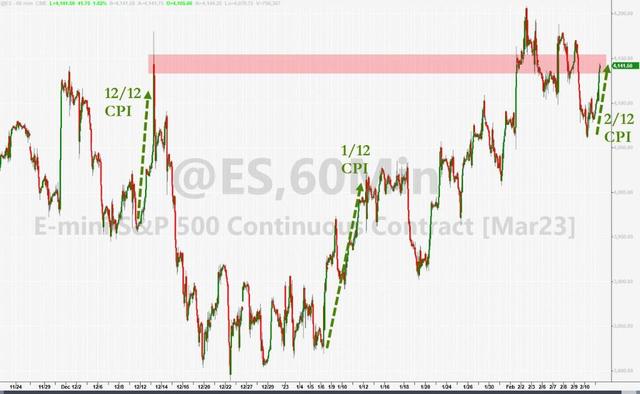
上月摩根大通曾准确预测到12月美国CPI公布后美股上涨。当时摩根大通的交易室在CPI公布前预计,标普500指数有85%的概率至少涨超1.5%。

本周二公布的1月美国CPI还很可能继续推升美股。

摩根大通首席经济学家Michael Feroli预计,1月美国CPI将环比增长0.5%,同比增长6.4%,1月核心CPI环比增长0.46%,同比增长5.6%,增速都高于共识预期。他认为通胀上行的动力包括能源、房产/房租和汽车的价格。此外,需关注提出房产的核心服务业通胀,这是美联储目前观察通胀的重点之一。

对于CPI发布后的市场反应,摩根大通的首席美国衍生品策略师Bram Kaplan认为,标普期权定价体现了,市场预计CPI发布伴随2%的隐形波动,和过去一年CPI公布后的市场平均实际波动水平一致,但低于1月和12月观察到的水平。

摩根大通交易室对CPI公布当天具体的市场反应预测情形如下:

⠀⠀

1月CPI同比增长超过6.5%的几率为5%,若这样增长,标普500会下跌2.5%。这种看跌的情形将符合高通胀卷土重来的设想,可能由服务业通胀驱动。任何超过6.7%的增速都代表尾部事件。

1月CPI同比增长在6.4%到6.5%的几率为25%,若这样增长,标普500会下跌0.75%到1.5%,若标普保持在4000点上方,则更有可能跌0.75%。鉴于下次美联储会议前还会公布3月美国CPI,而且近期美债收益率回升幅度可能足够,因此,美债定价不会预计会再多一次加息。

1月CPI同比增长在6.0%到6.3%的几率为65%,若这样增长,标普会涨1.5%到2%,然后涨势消退。这种看涨的结果可能推动美债收益率和美元下行,提振风险资产。美股可能由科技股领涨,表现会强于周期股。

1月CPI同比增长低于6.0%的几率为5%,若这样增长,标普会涨2.5%到3%。这种程度的CPI可能令创重新定价市场对美联储的预期,预期将联储从还需要加息两次完成这轮加息变为,只需要再加息一次。美元和美债收益率下降将共同助推美股走高。

上周五摩根大通还指出,其预计CPI增速将和彭博社调查的市场预期一致。鉴于目前的仓位比2022年时更偏中性,任何增速超预期增长或是超预期下降,都不会发生像2022年出现过的那种剧烈市场波动。TMT/非必需消费品的仓位仍低,因此偏鸽派的CPI数据会压低美债收益率和美元,可能吸引更多资金流入这些行业的大盘股,不过流入可能需要数日时间。

上周五俄罗斯意外宣布计划3月单方面减产后,国际原油反弹至两周高位,收涨逾2%。摩根大通认为,美国WTI原油不需要涨到150美元就能让市场预期更为悲观,如果美油突破90美元,市场对通胀的担忧就会成为主流。摩根大通青睐做多科技股(相关标的QQQ和SMH)、中国股市(相关标的KWEB和FXI)和能源(相关标的USO和OIH),并认为,目前采用市场中性策略是有意义的。

相比摩根大通看重CPI同比增长,摩根士丹利的交易室更看重环比增长。该行的经济学家预计1月CPI将环比增长0.4%。假如CPI环比增速回落到0.2%左右,该行预计,科技股和消费类股将和固定收益产品共同走高。而如果环比增速超预期增长0.6%,该行预计将引发避险波动,甚至连周期股都可能下跌。


Trending Cryptos

Related Reads

In Conversation with Ray Dalio: We Are Currently in an AI Bubble, with 1% of My Portfolio in Bitcoin

Ray Dalio, founder of Bridgewater Associates, warns in an interview that the current AI boom shows classic bubble characteristics, which could lead to significant economic downturns as seen in past cycles like 1929 or 2000. He explains that speculative enthusiasm, fueled by debt and overvaluation, often precedes a crash when rising rates or taxation force asset sales, causing widespread losses and recession. Dalio also outlines his "Big Cycle" theory, describing an approximate 80-year pattern where widening wealth gaps, massive government deficits, and shifting geopolitical power (like China's rise) create internal conflict and global instability. He emphasizes that we are in a late-cycle, transitional phase where traditional powers like the US and UK face decline. For personal wealth protection, Dalio advises diversification beyond cash into assets like stocks, bonds, real estate, and particularly gold, which he prefers over Bitcoin. While he holds about 1% of his portfolio in Bitcoin as a non-printable hard asset, he views gold as more secure from technological or governmental threats. Regarding AI's impact, Dalio believes it will disproportionately benefit capital owners, worsening inequality by replacing both physical and cognitive labor. He suggests that human intuition and emotional intelligence, combined with AI, will be key for future workers. On taxation, Dalio argues that wealth taxes are impractical and risk triggering asset sell-offs, reducing productive investment. He points to the UK as a cautionary example of debt, low productivity, and political strife. Geopolitically, Dalio foresees a more regionalized world, with the US showing weakness in prolonged conflicts like with Iran, akin to past imperial declines. The ideal outcome, he suggests, is coexisting powerful blocs (e.g., Americas, China-Asia Pacific) without major war.

marsbit1h ago

In Conversation with Ray Dalio: We Are Currently in an AI Bubble, with 1% of My Portfolio in Bitcoin

marsbit1h ago

Daily 7.2 Trillion KRW: Foreign Capital's Record Net Buying on Friday! Wall Street Says Headwinds for Korean Stock Fund Flows Have Subsided

South Korean stock market sees a dramatic shift in fund flows. On July 31, foreign investors made a record net purchase of approximately KRW 7.2 trillion in KOSPI stocks, marking a fundamental reversal from the persistent large-scale net outflows seen in previous months. This contributed to a significant narrowing of foreign net selling in July to KRW 9.8 trillion, down sharply from KRW 48.4 trillion in June and KRW 44.5 trillion in May. Simultaneously, domestic institutional pressure eased. South Korean pension funds and asset managers turned to a net buying position in July, purchasing KRW 1.0 trillion worth of KOSPI shares, contrasting with net sales in May and June. Market volatility is expected to be dampened by new financial regulations. Effective July 31, the Financial Services Commission tightened access for retail investors to single-stock leveraged ETFs by raising the minimum cash deposit requirement. Trading volumes for these products subsequently dropped to about 50% of their monthly average. Citigroup Research maintains its year-end KOSPI target of 10,000 points. The firm cites several supportive factors: the substantial easing of headwinds from capital outflows, a robust fundamental outlook for the semiconductor sector, historically low market valuations, strong economic fundamentals, and the potential for policy support from financial authorities if needed.

marsbit1h ago

Daily 7.2 Trillion KRW: Foreign Capital's Record Net Buying on Friday! Wall Street Says Headwinds for Korean Stock Fund Flows Have Subsided

marsbit1h ago

Thanks to Dice Rolls, Bitcoin Keys Are Stored Offline, But Not Everyone Will Do It

The article discusses using dice rolls to generate secure Bitcoin wallet seeds, providing entropy independent of potentially flawed hardware random number generators. It explains that each fair dice roll offers about 2.585 bits of entropy, with around 50 rolls needed for a standard 12-word seed phrase and 99+ recommended for higher security. This method gained attention after a vulnerability was revealed in some Coldcard hardware wallets, where a faulty firmware RNG (dating back to 2021) compromised generated keys. The analysis notes that while a dice-generated main seed was safe from this specific flaw, other Coldcard functions (like creating paper wallets, backup keys, or passwords) could still be vulnerable if they used the defective RNG. The piece argues that while dice-based entropy is technically robust, the manual process is error-prone, tedious, and unrealistic for most new users, who might make mistakes in recording or inputting rolls. It concludes that while manual entropy generation should remain an option for advanced users, the long-term goal is to develop reliable, user-friendly hardware and software that securely generates randomness without requiring specialized knowledge. Coldcard users are advised to check their firmware version and replace any secondary secrets (like paper wallet keys) created with vulnerable devices, while also considering multi-signature setups with devices from different manufacturers for added security.

cryptonews.ru6h ago

Thanks to Dice Rolls, Bitcoin Keys Are Stored Offline, But Not Everyone Will Do It

cryptonews.ru6h ago

Trading

Spot

Hot Articles

Discussions

Welcome to the HTX Community. Here, you can stay informed about the latest platform developments and gain access to professional market insights. Users' opinions on the price of ETH (ETH) are presented below.

活动图片