ChangXin Technology: A Cyclical Stock Standing Atop the Cycle Peak

marsbitОпубликовано 2026-07-29Обновлено 2026-07-29

Введение

Changxin Technology: A Cyclical Stock at the Peak On July 27, 2026, Changxin Technology topped the A-share market with a market capitalization of 3.28 trillion yuan, surging 465% on its first trading day. The company, which lost 16.3 billion yuan in 2023, reported an estimated net profit of 50-57 billion yuan for the first half of 2026. Its dramatic reversal mirrors the volatile DRAM (Dynamic Random Access Memory) cycle. The DRAM industry is inherently cyclical, with booms and busts every 3-4 years. This is due to product standardization and a significant time lag in supply adjustment. When prices rise, manufacturers expand capacity, but new production takes 2-3 years to come online, often leading to oversupply and price crashes when demand cools. Changxin's performance perfectly tracks this cycle. It recorded deep losses in 2023-2024 during the industry downturn, turned its first annual profit in 2025, and saw profits skyrocket in Q1 2026. This surge is primarily price-driven. The AI boom has led major players like Samsung and SK Hynix to shift 70-80% of new capacity to high-margin HBM (High Bandwidth Memory), creating a severe shortage and price explosion in general-purpose DRAM markets where Changxin competes. However, a massive global capacity expansion is underway. The top three manufacturers have announced nearly $70 billion in capital expenditure for 2026. Changxin itself plans to expand from three to seven 12-inch wafer fabs. This investment will translate into si...

Article | Zhi Xie Dao, Author | Shen Huaizheng

On July 27, 2026, ChangXin Technology topped the A-share market with a market capitalization of 3.28 trillion yuan. On its first day of trading, its stock price surged 465%, with trading volume reaching 141.1 billion yuan, setting a new A-share historical record.

A company that reported a loss of 16.3 billion yuan in 2023 achieved a stunning reversal in just over two years, with projected net profit for the first half of 2026 estimated between 50 billion and 57 billion yuan.

Retail investors swarmed to subscribe, institutions competed to grab shares, Hefei State-Owned Assets saw floating profits exceeding one trillion yuan, and thousands of employees joined the ranks of millionaires. Driven by the dual narratives of domestic substitution and AI dividends, market sentiment was pushed to extremes.

Whether ChangXin Technology is worth three trillion yuan depends on how one views its identity.

If it is a growth stock, AI-driven demand growth and the vast space for domestic substitution are sufficient to support a high valuation. If it is a cyclical stock, then the current peak profit levels corresponding to peak-cycle pricing paint a different picture.

The greatest common denominator between these two perspectives points to an unavoidable question: Is ChangXin Technology's explosive performance due to a qualitative change in the company's fundamentals, or is it a gift from the industry cycle?

ChangXin Technology's performance curve is a perfect mirror of the DRAM cycle.

I. DRAM DNA: An Industry Unable to Escape the Cycle

Understanding ChangXin Technology requires first understanding the endogenous laws of the DRAM industry.

DRAM, or Dynamic Random-Access Memory, is a fundamental component indispensable to all electronic devices like mobile phones, computers, and servers. It sounds like a stable business, but in fact, it is known for its severe cyclical fluctuations, completing a cycle from prosperity to recession approximately every three to four years.

This cyclicality is rooted in two structural characteristics of the industry.

First, DRAM products are highly standardized. Chips of the same specifications produced by different manufacturers have almost no functional difference; customers only care about price and supply stability. This means the essence of competition is a contest of scale and cost. Whoever has greater capacity, higher yield, and lower unit cost can survive price wars.

Second, adjustments on the supply side suffer from significant time lags. Building a wafer fab takes two to three years, and another one to two years from production start to yield ramp-up. When prices rise, all manufacturers simultaneously initiate capacity expansion, but these new capacities only translate into actual supply two to three years later. By the time capacities are concentratedly released, demand may have already cooled, leading to oversupply and price crashes.

The combination of these two factors causes the DRAM industry to perpetually swing like a pendulum between shortage and surplus. This is unrelated to management level or strategic choices; it is an inevitable law determined by the industry's underlying structure.
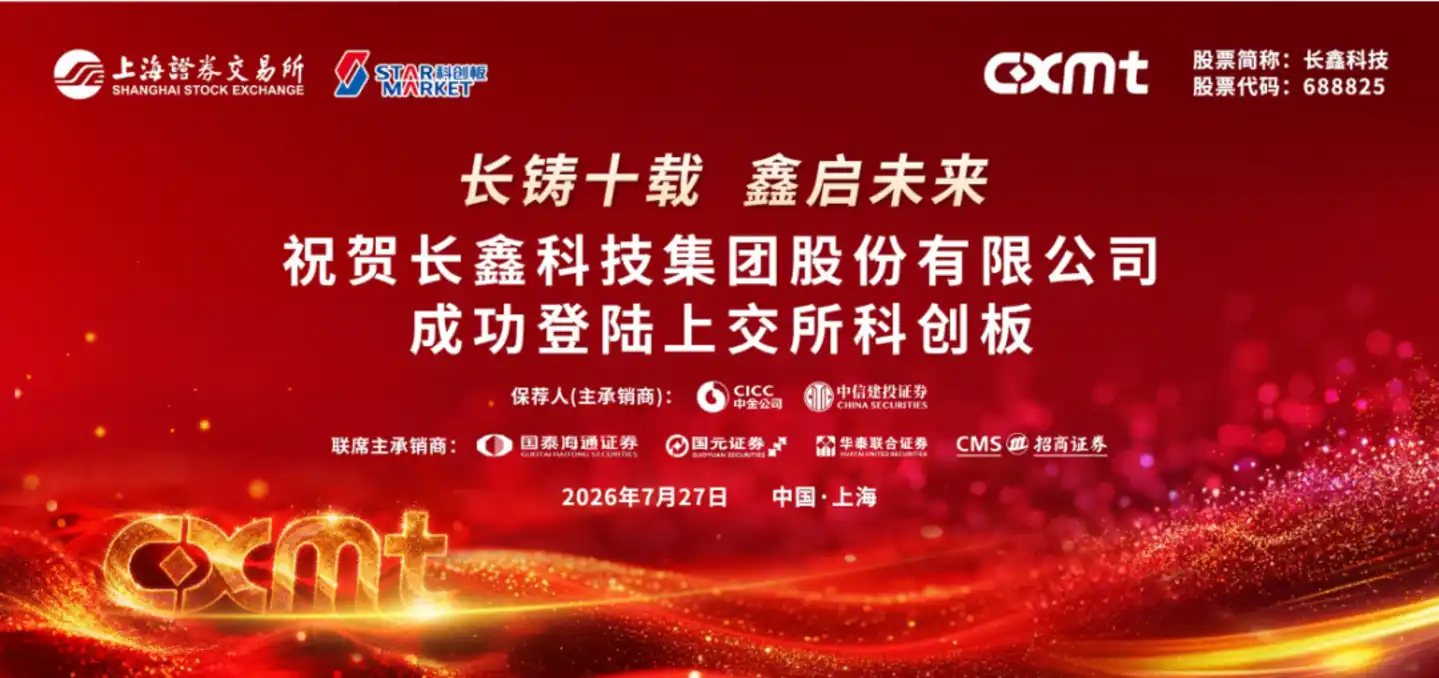
Image Source: ChangXin Technology

ChangXin Technology's growth trajectory has precisely and completely experienced such a cycle. In 2023, when the industry bottomed out, the company's revenue was only 9.087 billion yuan, with a net loss attributable to shareholders as high as 16.34 billion yuan. In 2024, the market began to recover, narrowing the loss to 7.145 billion yuan. In 2025, the explosion of AI demand triggered storage price hikes, with revenue jumping to 61.799 billion yuan and achieving its first annual profit of 1.875 billion yuan.

By the first quarter of 2026, its single-quarter net profit attributable to shareholders soared to 24.762 billion yuan—thirteen times the profit of the entire year 2025.

Going from a loss of tens of billions to earning 300 million per day took only two years. Such a speed of reversal is the most typical performance characteristic of a cyclical stock. Placing the DRAM price trend chart alongside ChangXin's profit curve shows almost perfectly aligned movements.

The steep profit climb did not stem from a sudden market share shift due to technological generational leaps; it was a systemic红利 release granted by the industry to all incumbents.

II. The Cycle Pendulum: How Long Can the Price Rise Last?

The core driver of this surge in performance boils down to one word: price.

In the first quarter of 2026, DRAM contract prices rose by 93% to 98% quarter-on-quarter. In the second quarter, general-purpose DRAM contract prices continued to rise by 58% to 63%. The company's gross profit margin consequently leapt from -2.19% in 2023 to 41.02% in 2025, approaching 65% in Q1 2026. The vast majority of the profit explosion came from the price surge.

The root cause of the price increase lies in the reallocation of capacity triggered by AI.

The three giants—Samsung, SK Hynix, and Micron—allocated 70% to 80% of their new capacity to HBM, the High Bandwidth Memory most critical for AI servers, which yields far higher profits than general-purpose products. This directly led to a significant contraction in the supply of general-purpose DRAM. Simultaneously, the DRAM demand for AI servers is eight to ten times that of traditional servers.

With supply being siphoned away and demand multiplying, a supply-demand gap was torn open. The money ChangXin earned in this round essentially came from the market space released when giants shifted production to HBM—it's the territory yielded by industry leaders pursuing higher profits.

However, the reverse movement of the cycle is already gathering force.

A wave of capacity expansion is sweeping the globe. The combined capital expenditure of the three giants is approaching $70 billion: Samsung's total investment in 2026 exceeds 110 trillion won, breaking the 100 trillion won mark for the first time; SK Hynix's capital expenditure is projected at $20.5 billion; Micron's capital expenditure for fiscal year 2026 is expected to exceed $25 billion, a year-on-year increase of over 80%.

ChangXin itself is also expanding, planning to grow from its current three 12-inch wafer fabs to seven, with a new Shanghai factory expected to commence operations in 2027.

Massive capital expenditure signifies a cliché yet harsh reality: today's high prices are breeding tomorrow's oversupply.

It takes two to three years for a wafer fab to be built and reach mass production. Every dollar invested today will translate into specific capacity figures in the next two to three years. When these new capacities are concentratedly released, whether demand remains robust is a question all storage manufacturers must face squarely.

The pace of price increases is also changing. TrendForce predicts that DRAM contract price increases will narrow to 13% to 18% in the third quarter of 2026. Downstream customers' wallets are stretched thin; some manufacturers are beginning to cut configurations or lower shipment forecasts.

Although prices are still rising, the slope has noticeably flattened. Multiple institutions judge that from the second half of 2026 to 2027, DRAM contract prices will maintain a high level with fluctuating increases, but the rate of increase will gradually narrow. Around 2028, as overseas new factory capacities complete their ramp-up, the supply-demand relationship may reverse and enter a downward channel.

The most critical variable in this process is HBM itself. HBM is currently the most profitable and rapidly growing segment of the memory market, and also ChangXin's most obvious shortcoming. ChangXin's HBM3 samples have been delivered to leading customers for verification, with mass production expected in 2026. However, Samsung and SK Hynix are already mass-shipping the more advanced HBM3E and moving towards HBM4.

The gap objectively exists; catching up takes time, and the cycle's pendulum won't stop and wait. Whether ChangXin can successfully tackle the HBM challenge before the next price decline determines whether it merely enjoyed this round's price increase红利 or truly gained the ability to穿越 cycles.

III. Conclusion

ChangXin Technology is a good company; this is beyond doubt.

It broke the monopoly of overseas giants in the DRAM market over a decade, giving China genuine话语权 in the global storage industry; its business is about the infrastructure of the digital economy; its growth is related to the security and autonomy of the national supply chain.

From an industrial perspective, ChangXin's rise is one of the most significant breakthroughs worthy of documentation in China's semiconductor field.

However, between a good company and a good investment often lies a清醒 recognition of the cycle.

In today's market, ChangXin Technology simultaneously carries two different narratives.

One narrative views it as a growth stock: vast space for domestic substitution, continuously climbing global market share, AI红利 just beginning to be released—these stories are real, forming the solid foundation for ChangXin's long-term value.

The other narrative views it as a cyclical stock: calculated based on projected 2026 profits, the dynamic price-to-earnings ratio is about 5 to 6 times,恰好 falling within the typical valuation range for cyclical stocks at peak prosperity; a market capitalization of 3.28 trillion yuan has already提前 digested growth expectations for many years to come.

These two judgments are not contradictory. ChangXin is an excellent company while also being a typical cyclical stock.

The cycle of the DRAM industry will not disappear because of the rise of a Chinese company. AI has indeed extended the duration of this cycle, but it has only changed the slope; it has not eliminated the cycle itself.

For investors, facing a cyclical stock at the peak of the cycle, what truly requires deep thought is: When the tide recedes, will there be sufficient preparation to handle the pullback?


Трендовые криптовалюты

Связанные с этим вопросы

QAccording to the article, what are the two key structural characteristics of the DRAM industry that create its inherent cyclical nature?

AThe two key structural characteristics are: 1. DRAM products are highly standardized, with competition based primarily on scale and cost. 2. Supply adjustments have a significant time lag, as building and ramping up a new wafer fab takes several years, often leading to supply overshooting demand.

QWhat is identified as the primary driver behind ChangXin Technology's dramatic profit surge from 2023 to 2026 Q1?

AThe primary driver is the sharp increase in DRAM prices. The article states that the core reason for the profit surge is essentially one word: 'price'. The profit growth is largely attributed to price increases driven by AI-induced supply shortages.

QHow has the AI boom specifically affected the supply and demand dynamics for general-purpose DRAM, creating the opportunity for ChangXin?

AThe AI boom has redirected the major global memory makers (Samsung, SK Hynix, Micron) to allocate 70-80% of their new capacity to HBM production, which is more profitable. This has severely contracted the supply of general-purpose DRAM. Meanwhile, the demand for DRAM in AI servers is 8-10 times that of traditional servers. This supply-demand gap is the opportunity ChangXin captured.

QWhat is the author's view on whether AI has eliminated the cyclical nature of the DRAM industry for ChangXin Technology?

AThe author believes AI has not eliminated the cycle. The view is that 'AI has indeed extended the duration of this cycle and changed its slope, but it has not eliminated the cycle itself.' The inherent cyclicality of the DRAM industry remains.

QWhat two contrasting narratives does the market hold about ChangXin Technology according to the article's conclusion?

AThe market holds two narratives: 1. A growth stock narrative, focusing on its vast domestic substitution potential, rising global market share, and the early stages of AI红利 (AI红利). 2. A cyclical stock narrative, where its current high valuation at the peak of the cycle already prices in years of future growth, and its P/E ratio is typical for a cyclical stock at a peak.

Похожее

Белый дом обещает довести закон CLARITY до финиша в сентябре

Администрация президента США Дональда Трампа по-прежнему намерена добиться принятия закона CLARITY в сентябре, несмотря на решение Сената отложить рассмотрение до окончания августовских каникул. Об этом заявил высокопоставленный представитель Белого дома по вопросам криптовалютной политики. Патрик Уитт, исполнительный директор Совета советников президента по цифровым активам, сообщил, что администрация будет вести переговоры с демократами вплоть до голосования в сентябре. Сенат планирует провести голосование по прекращению прений (cloture) в середине сентября, что является процедурным шагом, требующим 60 голосов для продвижения законопроекта к окончательному голосованию. Закон CLARITY установит федеральную структуру регулирования рынка цифровых активов, определит правила отнесения криптотокенов к ценным бумагам или товарам, а также принципы регулирования торговых платформ. Перед сентябрьским голосованием остаются нерешённые разногласия, включая требования демократов о более строгих нормах этики в отношении связанных с Трампом криптоинтересов и предложения банковских групп по изменению правил выплат вознаграждений держателям стейблкоинов.

cointelegraph19 мин. назад

Белый дом обещает довести закон CLARITY до финиша в сентябре

cointelegraph19 мин. назад

Уолл-стрит: ажиотаж FOMO продолжает набирать обороты — как рост за четыре дня превысил волатильность за три месяца?

За последние четыре торговых дня индекс S&P 500 вырос на 5,8%, что превысило весь диапазон колебаний его цен закрытия за предыдущие три месяца. Такой стремительный рост, находящийся на уровне 99,32-го процентиля за последние десять лет, указывает на сильные настроения FOMO («страх упустить выгоду») на рынке. При этом, вопреки обычной динамике, на фоне роста индекса волатильность (VIX) также увеличилась. Данные по опционам показывают одновременный всплеск как спроса на страховку (рост VIX), так и агрессивных ставок на рост — скос в сторону колл-опционов достиг максимума за два года, а соотношение колл/пут находится на самом высоком за четыре года уровне, что отражает смешанные настроения участников рынка: оптимизм в отношении роста цен, сочетающийся с осторожностью.

marsbit22 мин. назад

Уолл-стрит: ажиотаж FOMO продолжает набирать обороты — как рост за четыре дня превысил волатильность за три месяца?

marsbit22 мин. назад

Утренний бюллетень Wall Street: Фондовый индекс SOX упал почти на 3%, загадка "циклического финансирования" Nvidia вызвала коррекцию акций технологического сектора, акции оптической связи и чипов резко упали

Ежедневный обзор рынков от PANews: рост геополитических рисков и опасения по поводу финансирования ИИ вызвали коррекцию. **Ключевые события на макроуровне:** Напряженность в Ормузском проливе вновь выросла после заявлений Трампа, что снизило ожидания скорейшего открытия. Цены на нефть (Brent выше $87, WTI выше $82) и газ выросли. Золото достигло максимума за 2 месяца ($4400/унция). Доходность 10-летних казначейских облигаций выросла до 4.71%, рынки оценивают вероятность повышения ставки ФРС в сентябре в ~54%. **Давление на технологические акции:** Индекс Philadelphia Semiconductor упал почти на 3%. Акцент сместился на **Nvidia** (-2.86%) из-за сообщений о планах создания платформы для привлечения стороннего капитала (до $500 млрд) для инфраструктуры ИИ. Это вызвало опасения рынка по поводу "цикличного финансирования" и реальной окупаемости таких проектов. Гендиректор Nvidia Дженсен Хуан пояснил, что компания лишь оказывает частичную поддержку. **Значительные движения акций:** * **Полупроводники:** ARM (-5.21%), AMD (-2.6%), Intel (-4% из-за дополнительной эмиссии акций). * **Оптическая связь (пострадала больше всего):** Coherent (-14%), Lumentum (-8%). * **Программное обеспечение (выросло):** Microsoft (+1.21%), Amazon (+1.32%), Palantir (+1.85%). * **Энергетика:** выросла на фоне геополитики. * **SpaceX:** +4.23%, восстановила цену размещения. **В центре внимания:** Решение РБА по ставкам (11 августа) и отчетность Lumentum, CoreWeave и Super Micro Computer (12 августа), которые дадут представление о реальном состоянии спроса на инфраструктуру ИИ.

marsbit23 мин. назад

Утренний бюллетень Wall Street: Фондовый индекс SOX упал почти на 3%, загадка "циклического финансирования" Nvidia вызвала коррекцию акций технологического сектора, акции оптической связи и чипов резко упали

marsbit23 мин. назад

Заметки из подкаста | Исследовательский руководитель цифровых активов VanEck: нынешний тренд на AI-инфраструктуру - не пузырь; затишье на крипторынке вызвано разочарованием институтов в L1

Глава отдела исследований цифровых активов VanEck Мэттью Сигел в подкасте The Rollup представил анализ рынка. Он считает, что текущий бум инфраструктуры ИИ — это не пузырь, в отличие от железнодорожной лихорадки XIX века, поскольку он подкреплен долгосрочными частными контрактами и предоплатами. Сигел отмечает сдвиг на рынке: в первой половине года росли компании с высокими капитальными затратами, но с июня их начали наказывать. Криптовалюты, будучи «программным обеспечением», также испытывают давление. Его ETF NODE значительно опередил Bitcoin благодаря ставке на майнинговые компании, перепрофилирующие мощности под центры обработки данных для ИИ. Это создает для них гибкость и ценность. Основное давление на крипторынок, по его мнению, исходит не от макроэкономики, а от разочарования институтов в основных блокчейнах L1 (Ethereum, Solana). Институциональные игроки предпочитают корпоративные или разрешенные цепи (как у Circle, Stripe), что размывает эффект победителя получает все. Сигел сократил exposure в L1 и считает, что для восстановления доверия необходимо принятие закона CLARITY Act, который установит правила раскрытия информации. Снижение инфляции эмиссии в сетях L1 он оценивает позитивно, но отмечает важность деталей реализации.

marsbit27 мин. назад

Заметки из подкаста | Исследовательский руководитель цифровых активов VanEck: нынешний тренд на AI-инфраструктуру - не пузырь; затишье на крипторынке вызвано разочарованием институтов в L1

marsbit27 мин. назад

Шэньчжэнь "охотится" на выходцев из Tsinghua

В статье «Шэньчжэнь активно привлекает выпускников Университета Цинхуа» описывается мероприятие «X-Day», прошедшее в научно-технологическом кластере Силиху в Шэньчжэне, где представили свои проекты шесть стартапов, основанных выпускниками и преподавателями Цинхуа. Проекты охватывают такие области, как AI-чипы для периферийных устройств (Zhichen Semiconductor), системы домашней безопасности на основе компьютерного зрения (Guangsu Evolution), технологии «само-сверхскольжения» для микроэлектромеханических систем (Qingli Technology), AI-агенты для проектирования чипов (Shuyu Technology), интеллектуальные системы управления зданиями (Heyi Zhikong) и AI-решения для вспомогательной репродукции (Shengsheng Yi). В статье отмечается, что Шэньчжэнь, особенно район Наньшань, стал ключевой площадкой для коммерциализации передовых технологий. За последние два года на ранние технологические стартапы в Шэньчжэне было привлечено около 280 млрд юаней, причём почти 30% этой суммы получили проекты выпускников Цинхуа. Инициатива «Южного Цинхуа» за год провела 17 питч-сессий, представив 117 проектов. Мероприятие «X-Day» в Силиху, организовавшее уже 19 тематических сессий, способствовало привлечению более 33 млрд юаней инвестиций для 58 компаний. Успешные примеры включают компанию Kuavei Intelligent, которая после выхода на сцену Силиху привлекла 10 млрд юаней в раунде B, и стартап Lingcifang, достигший выручки в 1 млрд юаней за 18 месяцев. Эти случаи иллюстрируют растущую тенденцию венчурных инвестиций к более раннему вовлечению — на стадии исследований и лабораторных разработок, что создаёт благоприятную среду для выхода на рынок глубоких технологий из академической среды.

marsbit28 мин. назад

Шэньчжэнь "охотится" на выходцев из Tsinghua

marsbit28 мин. назад

Торговля

Спот

Популярные статьи

Как купить DAO

Добро пожаловать на HTX.com! Мы сделали приобретение DAO Maker (DAO) простым и удобным. Следуйте нашему пошаговому руководству и отправляйтесь в свое крипто-путешествие.Шаг 1: Создайте аккаунт на HTXИспользуйте свой адрес электронной почты или номер телефона, чтобы зарегистрироваться и бесплатно создать аккаунт на HTX. Пройдите удобную регистрацию и откройте для себя весь функционал.Создать аккаунтШаг 2: Перейдите в Купить криптовалюту и выберите свой способ оплатыКредитная/Дебетовая Карта: Используйте свою карту Visa или Mastercard для мгновенной покупки DAO Maker (DAO).Баланс: Используйте средства с баланса вашего аккаунта HTX для простой торговли.Третьи Лица: Мы добавили популярные способы оплаты, такие как Google Pay и Apple Pay, для повышения удобства.P2P: Торгуйте напрямую с другими пользователями на HTX.Внебиржевая Торговля (OTC): Мы предлагаем индивидуальные услуги и конкурентоспособные обменные курсы для трейдеров.Шаг 3: Хранение DAO Maker (DAO)После приобретения вами DAO Maker (DAO) храните их в своем аккаунте на HTX. В качестве альтернативы вы можете отправить их куда-либо с помощью перевода в блокчейне или использовать для торговли с другими криптовалютами.Шаг 4: Торговля DAO Maker (DAO)С легкостью торгуйте DAO Maker (DAO) на спотовом рынке HTX. Просто зайдите в свой аккаунт, выберите торговую пару, совершайте сделки и следите за ними в режиме реального времени. Мы предлагаем удобный интерфейс как для начинающих, так и для опытных трейдеров.

721 просмотров всегоОпубликовано 2024.04.12Обновлено 2026.06.02

Как купить DAO

Объяснение Залога Ликвидности HTX DAO

"Залог ликвидности" - это инновационная стратегия управления токенами, представленная HTX DAO.

1.9k просмотров всегоОпубликовано 2024.08.09Обновлено 2024.08.09

Объяснение Залога Ликвидности HTX DAO

Обсуждения

Добро пожаловать в Сообщество HTX. Здесь вы сможете быть в курсе последних новостей о развитии платформы и получить доступ к профессиональной аналитической информации о рынке. Мнения пользователей о цене на DAO (DAO) представлены ниже.

活动图片