岗位扩招增速达16.6%,年轻人都在元宇宙做什么工作?

元宇宙之道Published on 2022-12-01Last updated on 2022-12-01

Abstract

近年来,“虚拟现实”、“元宇宙”概念火爆,不少高校开设“元宇宙院系”为行业培养专业人才,23届毕业生秋招接近尾声,你拿到心动的offer了吗?今年不少年轻人不愿在传统行业求职,渴望去新赛道掘金。

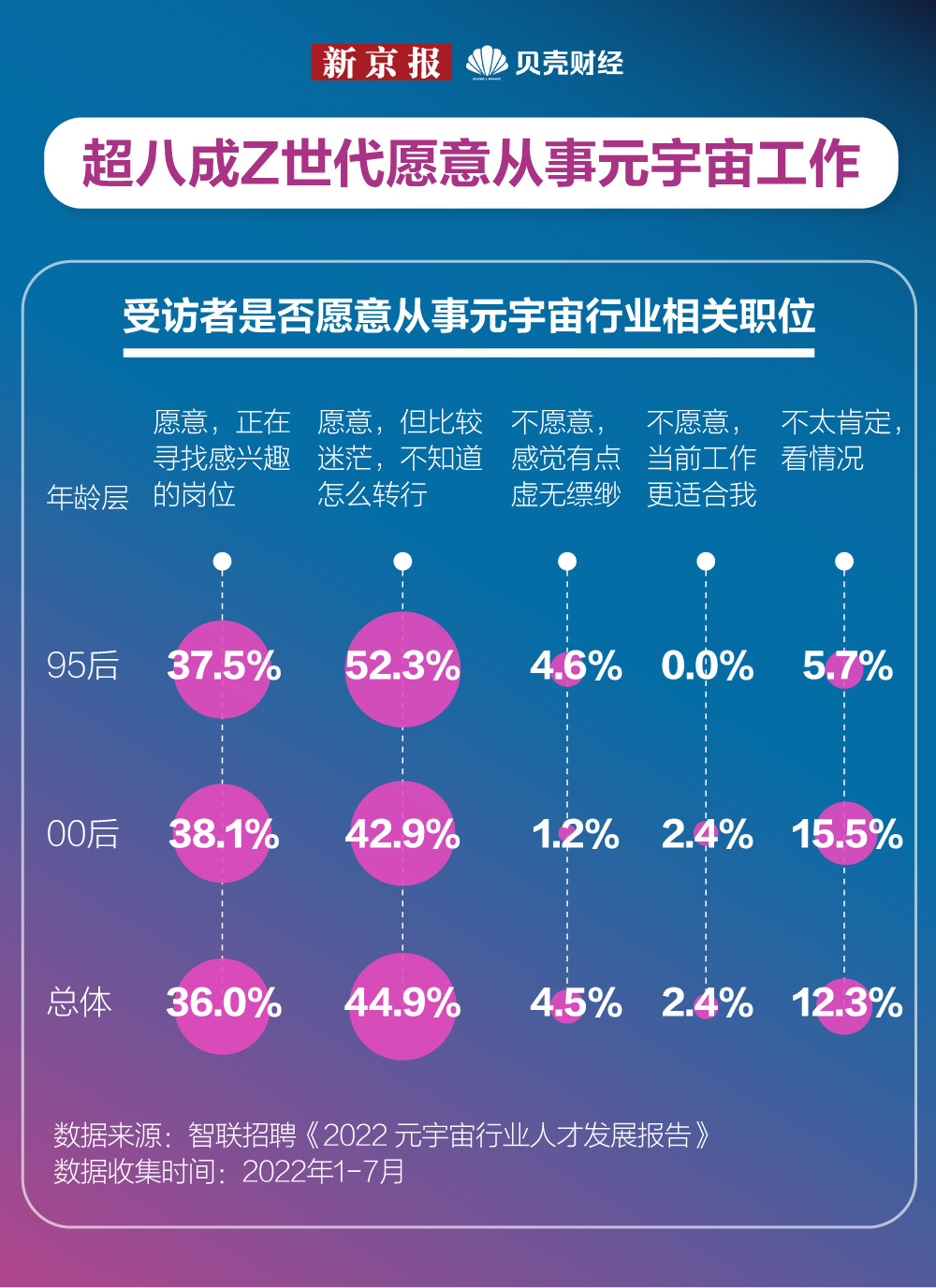
超八成Z世代愿意从事元宇宙工作,程序员最想转行元宇宙

元宇宙最吸引哪些人群就业?智联招聘此前发布数据显示,80.8%受访者愿意从事元宇宙行业。Z 世代的这一比例更高,分别有89.8%的 95 后和81.0%的00后愿意从事元宇宙行业。
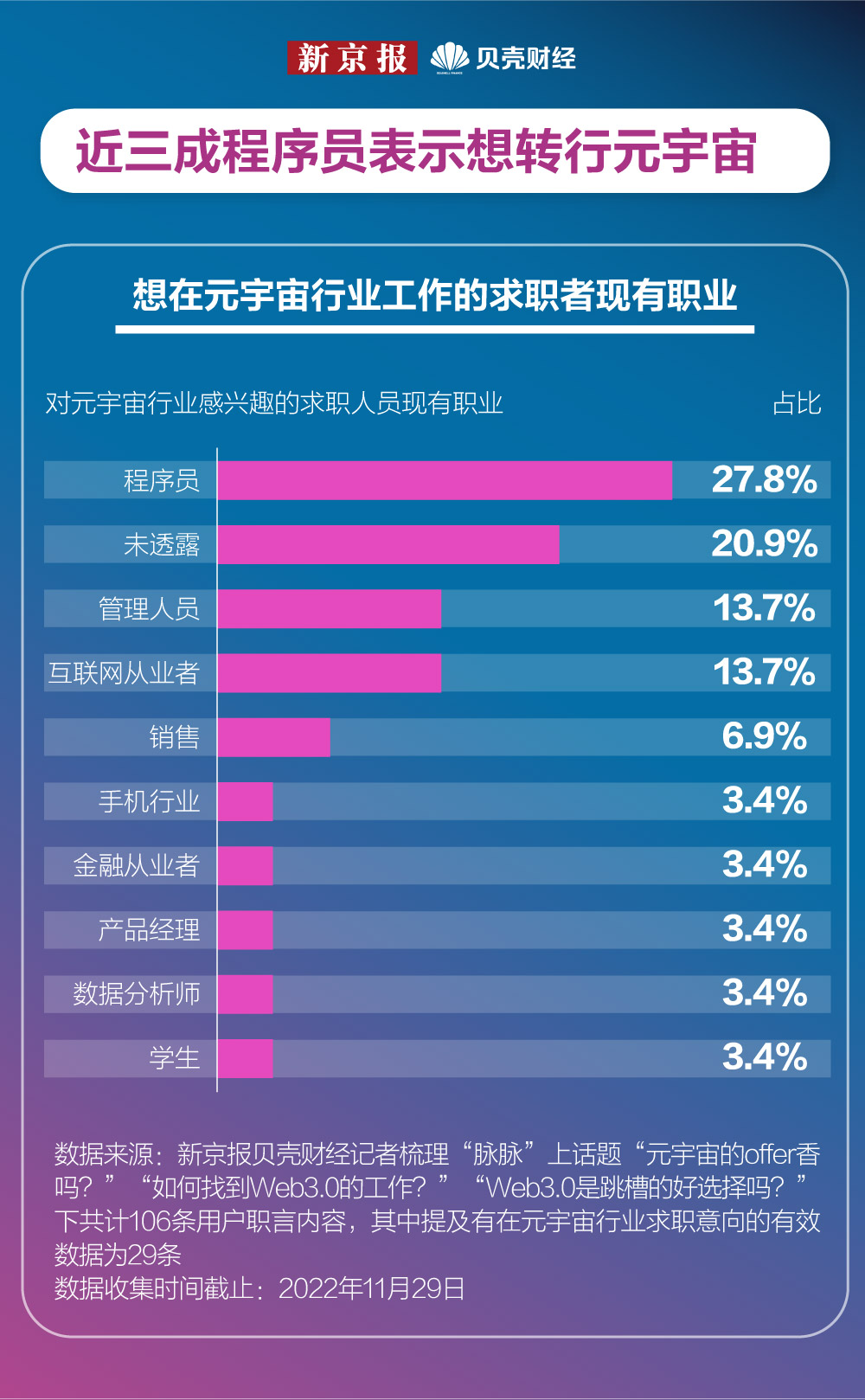
资本纷纷入局元宇宙赛道,创造了大量新兴工作岗位,不少程序员也渴望跳槽至元宇宙行业。新京报贝壳财经记者梳理脉脉上话题“元宇宙的offer香吗?”“如何找到Web3.0的工作?”和“Web3.0是跳槽的好选择吗?”下的用户发言发现,近三成程序员表示想转行元宇宙。
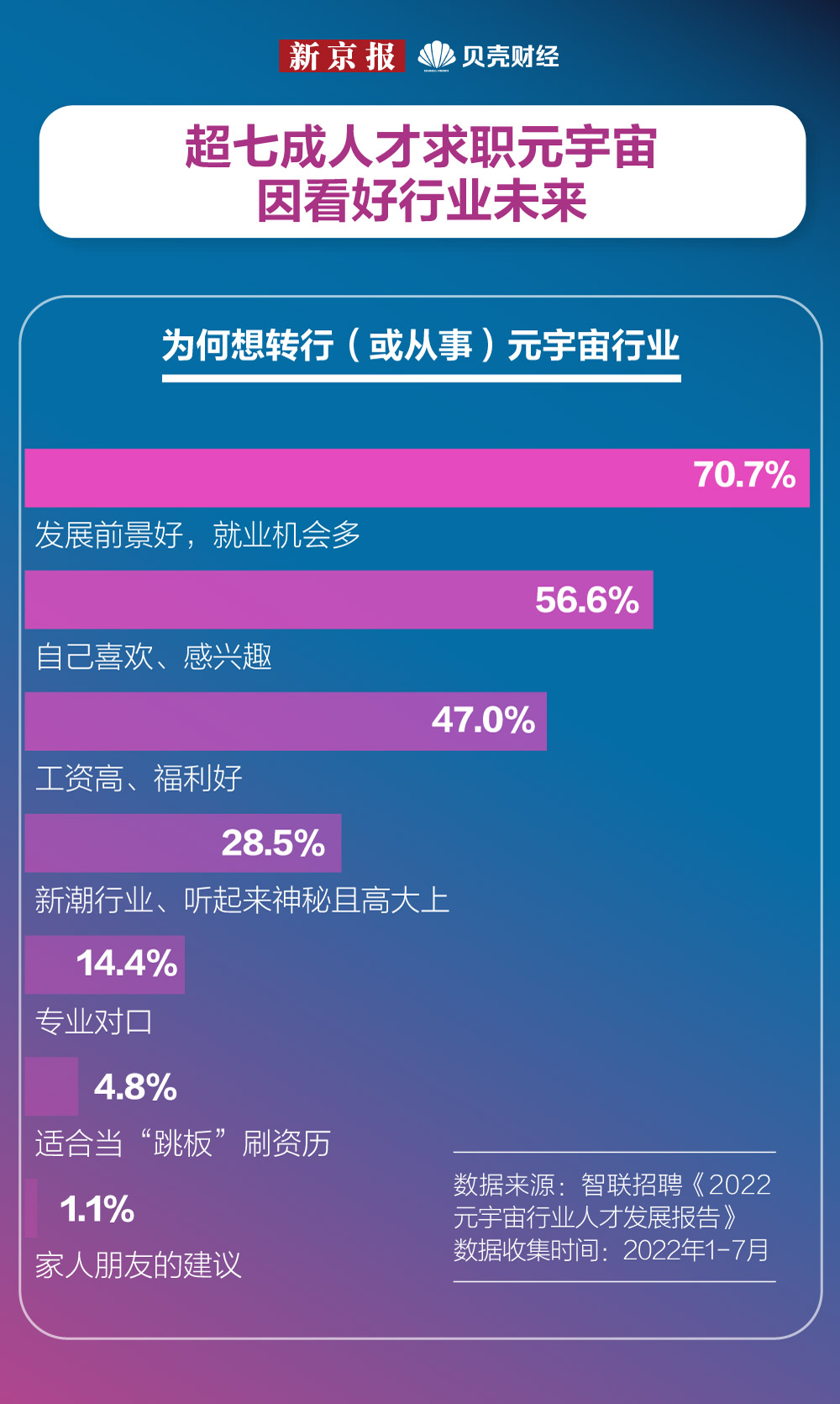
求职者为何渴望在元宇宙就业?超七成受访者表示是因为看好该行业未来而选择在元宇宙领域求职,近半数看中高薪资。智联招聘数据显示,70.7%受访者认为,元宇宙行业发展前景好,就业机会多;56.6%的受访者认为是自己喜欢、感兴趣;47.0%的受访者认为元宇宙行业工资高、福利好。
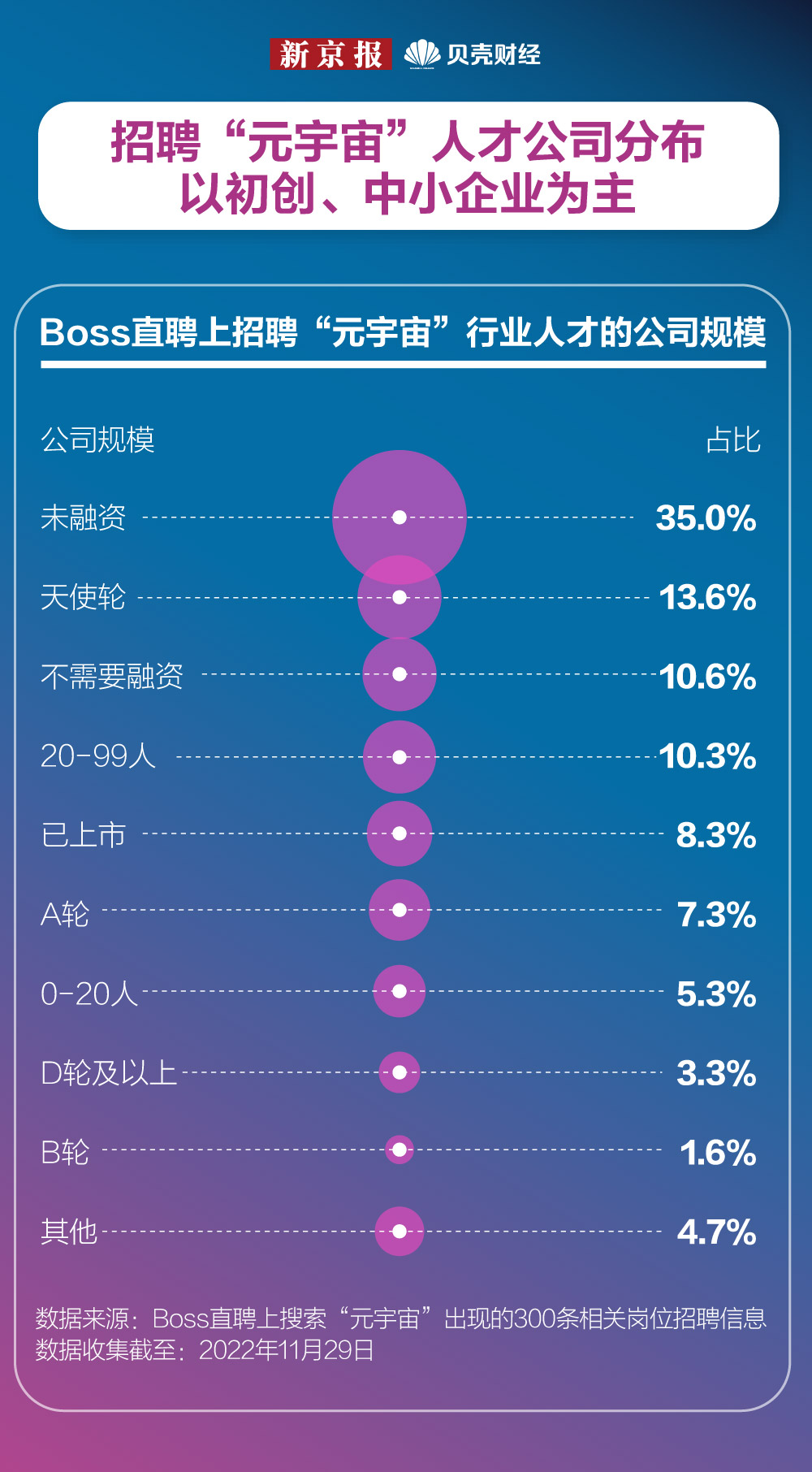
元宇宙招聘企业超三成尚未获得融资,上市公司占比仅8.3%

目前元宇宙相关企业主要以中小企业为主。由于目前元宇宙仍处于行业发展的初级阶段,大多数招聘元宇宙人才的企业是初创、中小企业。新京报贝壳财经梳理Boss直聘 “元宇宙”相关岗位招聘信息发现,发布招聘信息的企业以初创、中小企业为主,上市公司比例仅8.3%。
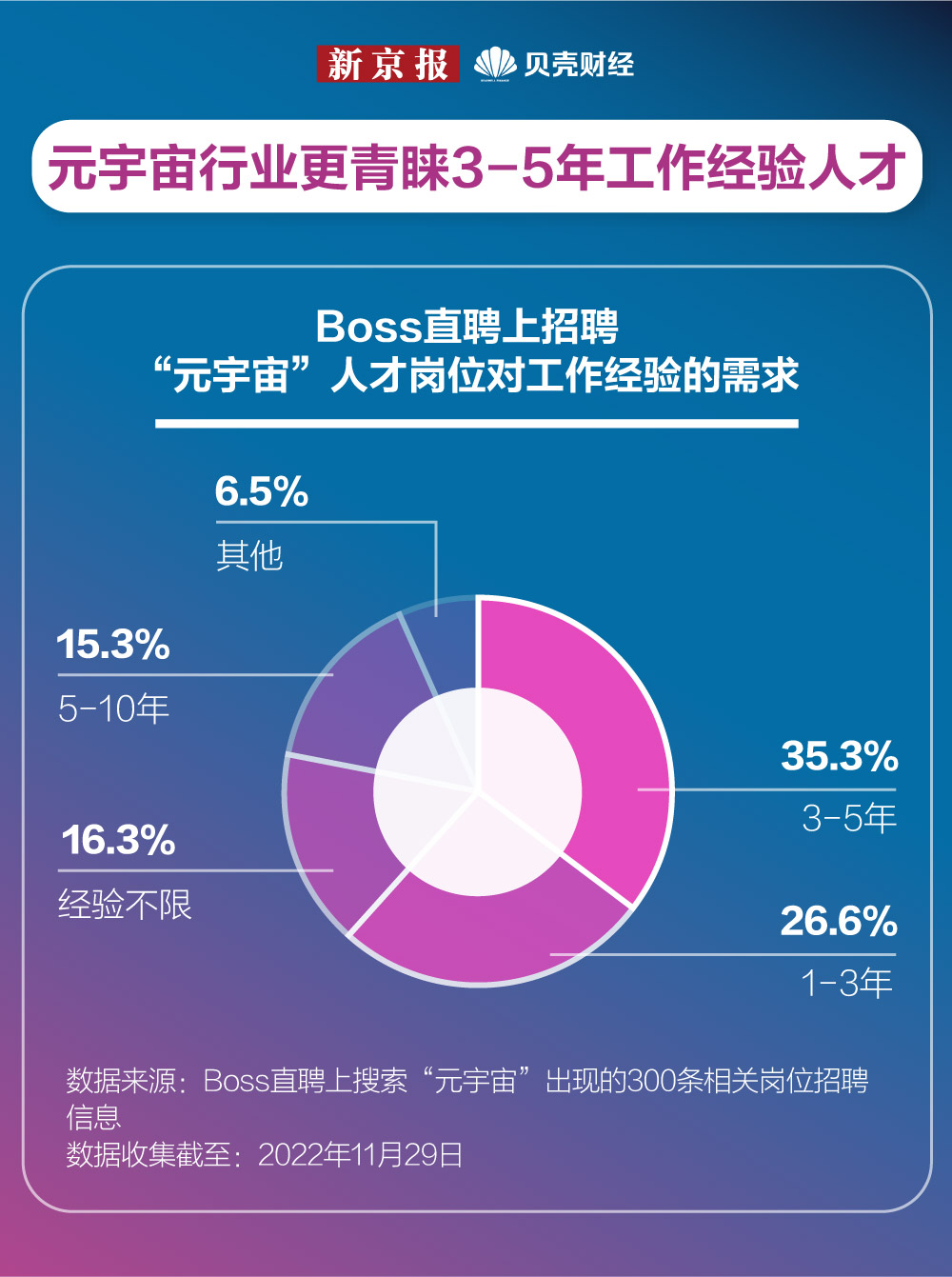
元宇宙相关企业更青睐哪类型工作经验人才?新京报贝壳财经记者梳理Boss直聘上“元宇宙”相关岗位招聘信息发现,35.3%的元宇宙企业偏好招聘具备3-5年工作经验的候选者,26.6%的企业希望招聘具有 1-3年工作经验的候选者,15.3%的企业希望招聘具有5-10年工作经验的候选者。
VR/AR 领域最缺人才,深度学习岗平均招聘薪酬近四万元

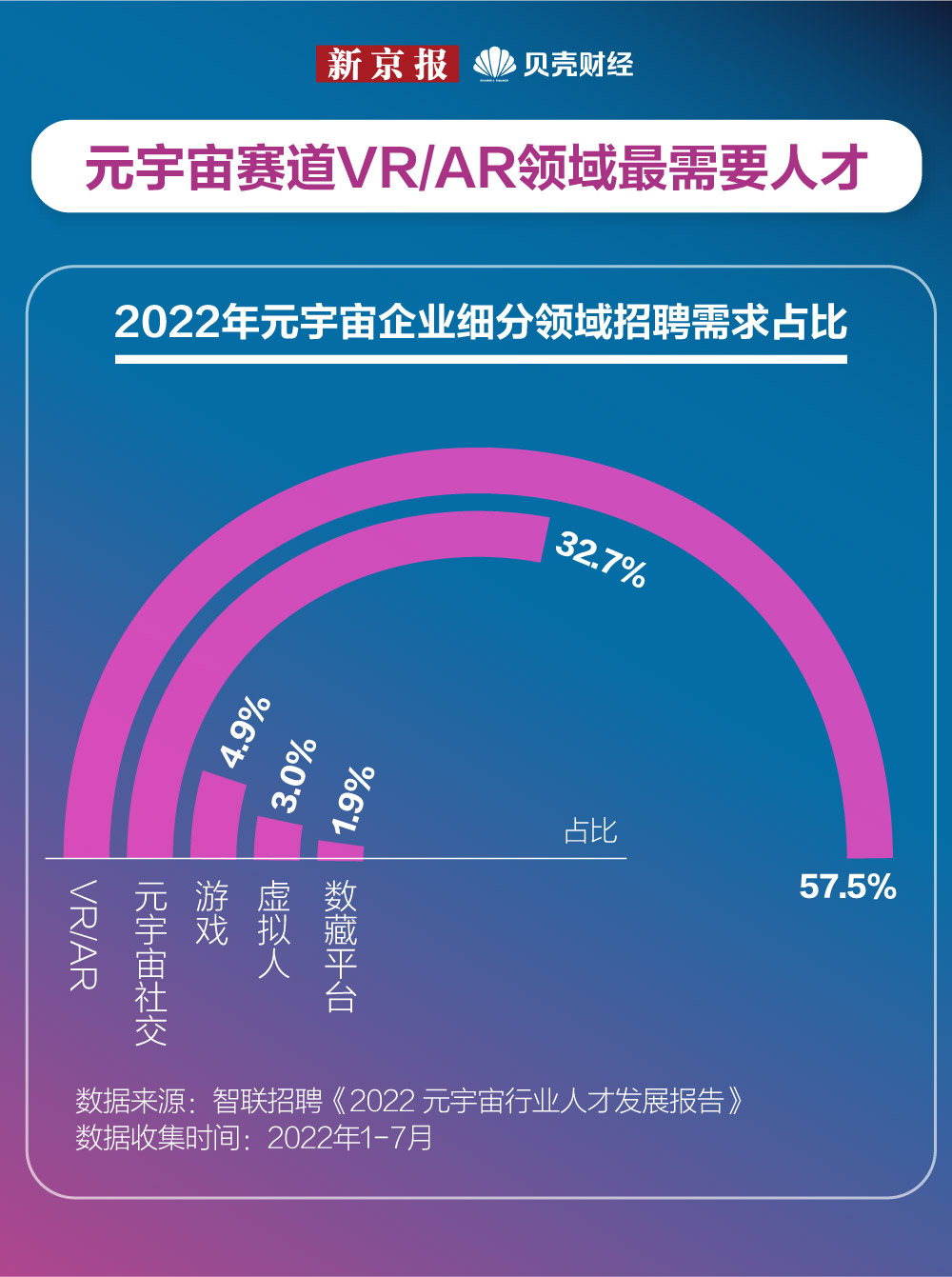
今年“元宇宙”概念下,VR头显产品热度居高不下,国产VR头显也不断更新迭代。大厂纷纷入局VR/AR赛道,该细分领域的人才缺口也较大。智联招聘数据显示,在2022年元宇宙企业细分领域中,VR/AR 领域是企业招聘需求最多的赛道。其次是元宇宙社交,占比为32.7%。
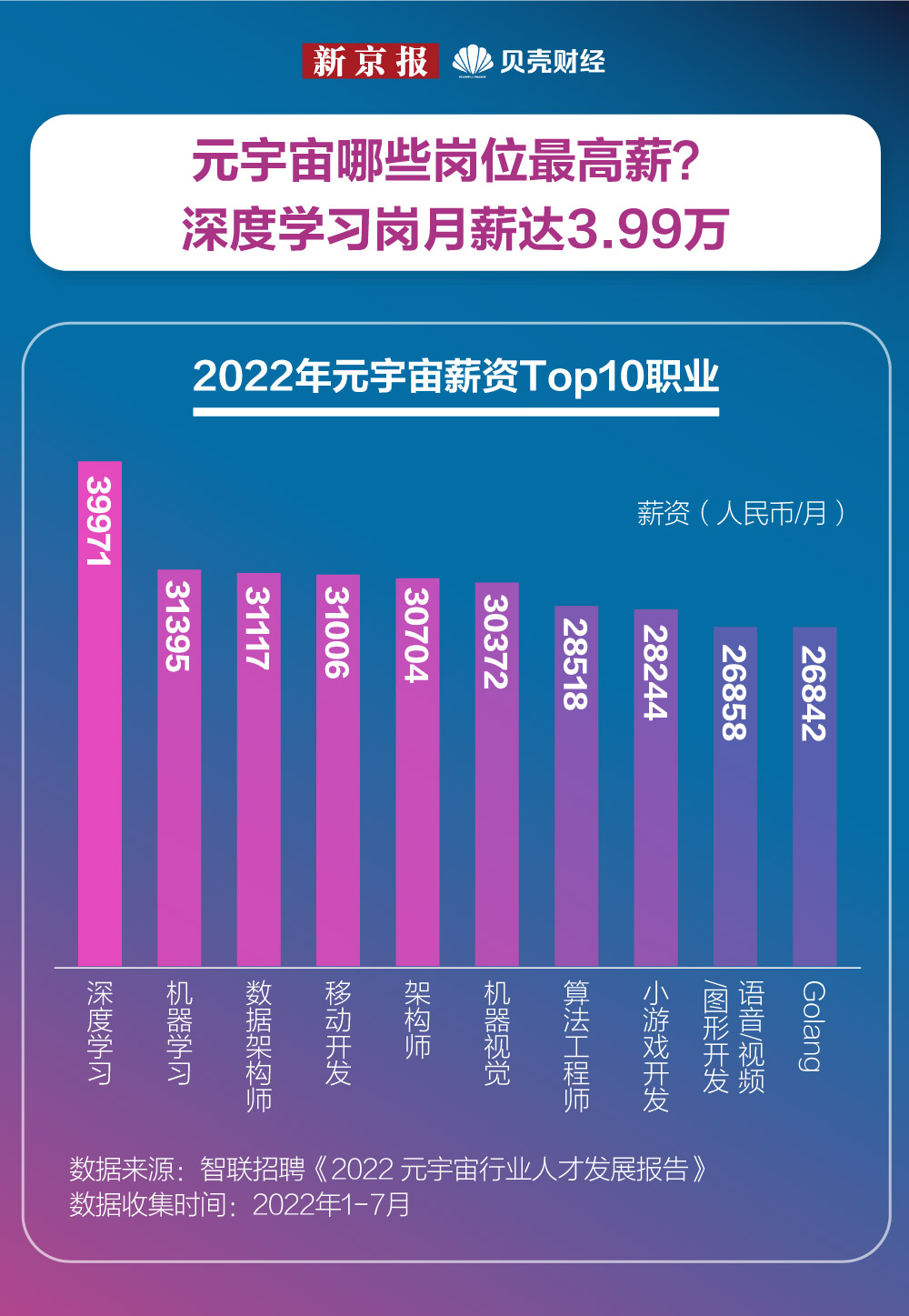
年轻人在“元宇宙”打工,月薪过万不是梦?智联招聘数据显示,2022 年 1-7 月全平台元宇宙相关岗位的平均招聘薪酬为 18515 元/月。深度学习岗位的招聘薪酬最高,达39971 元/月,其次是机器学习、数据架构师和移动开发,薪酬均超过3万/月。
北上深最需要元宇宙人才,多地推元宇宙产业扶持政策

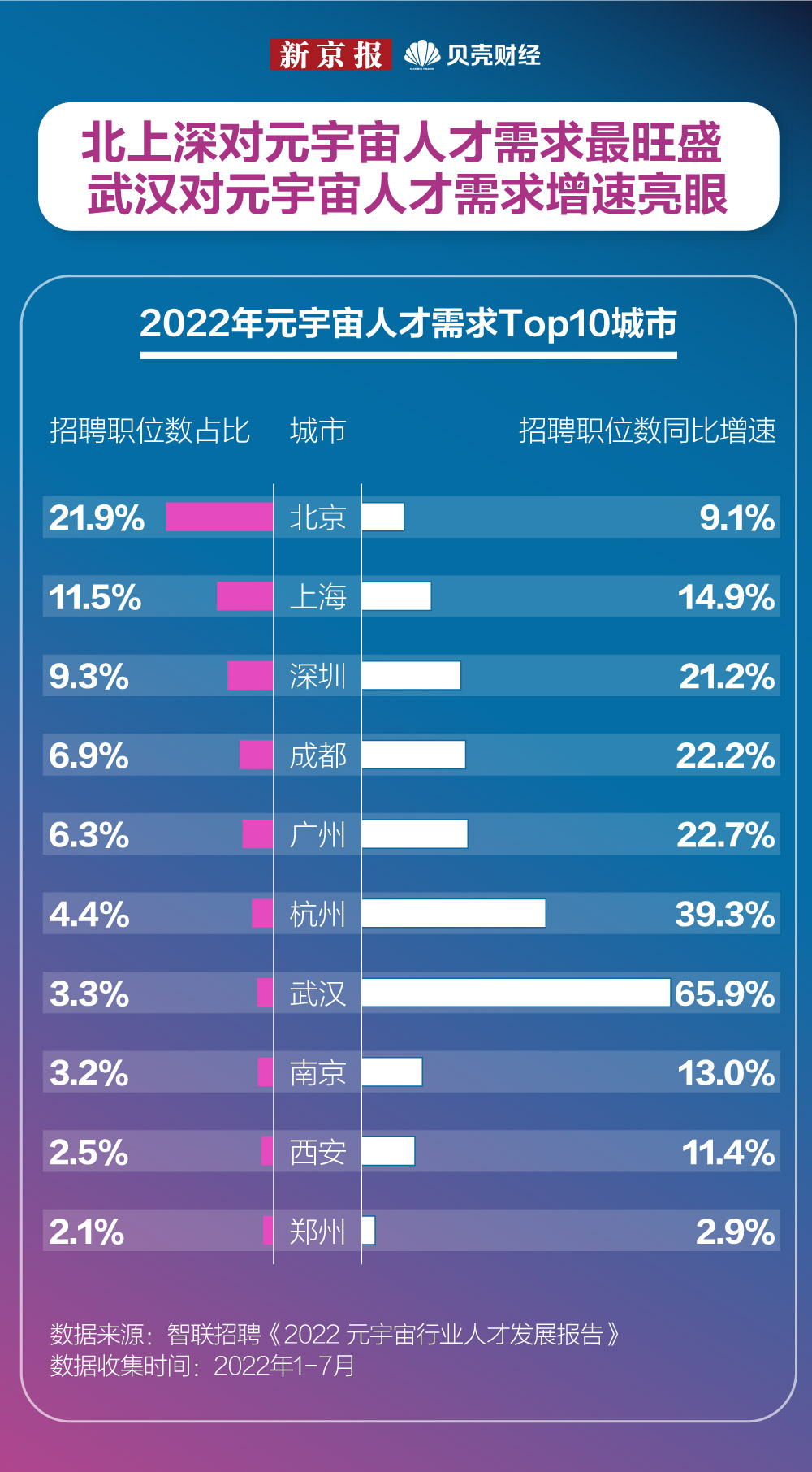
北上深这三座一线城市对元宇宙人才需求最旺盛,其中北京招聘岗位占比达21.9%。武汉、杭州这两座新一线城市对元宇宙人才需求快速增长。智联招聘数据显示,2022 年 1-7 月招聘元宇宙岗位 TOP10 城市中,除北上广深外,成都、杭州、武汉、南京等新一线城市位居前列。从招聘增速看,武汉、杭州增速亮眼,分别为 65.9%和39.3%。
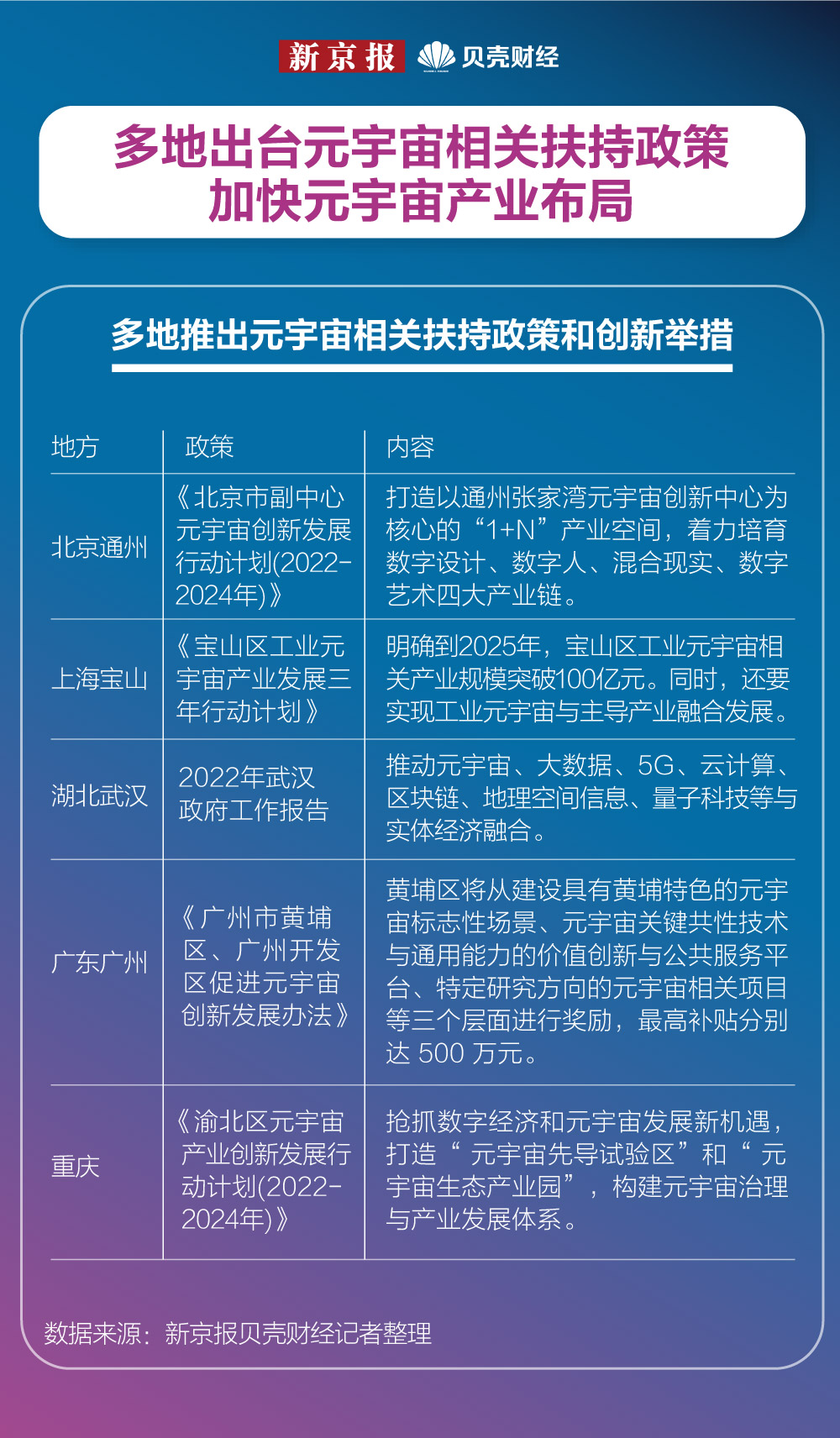
今年以来,多地陆续推出元宇宙相关扶持政策加快元宇宙产业布局。武汉在今年初将元宇宙写入“政府工作报告”,提到要推动元宇宙与实体经济融合;杭州在元宇宙产业发展上具备政策扶持和研发团队优势,国内首个文化产业元宇宙专委会也于今年9月初落户杭州,为吸引人才提供了强大助力。
Trending Cryptos

Related Reads

OpenAI's "Most Open" Move: Codex No Longer Exclusively Favors GPT

OpenAI has significantly opened up its Codex programming agent by introducing a "model provider" configuration layer that allows users to connect it with various open-source models, not just its proprietary GPT. Through a configuration file or a simple `--oss` command-line flag, Codex can now route requests to local services like Ollama or LM Studio, or to third-party APIs such as Mistral or DeepSeek. This move is seen as one of OpenAI's most "open" steps, potentially lowering costs and enhancing privacy for developers who can run code generation offline. However, integration isn't seamless for all models. Codex primarily uses OpenAI's newer Responses API, while many open-source models rely on the older Chat Completions interface. This creates compatibility issues, especially for advanced features like function calling. The developer community is already building "routing" or adapter layers (e.g., CC Switch, LiteLLM) to translate between these protocols, enabling hybrid setups where GPT handles planning and open-source models handle execution. Analysts interpret this as a strategic shift for OpenAI: from competing solely on model superiority to controlling the platform and interface standards. By making Codex a flexible, pluggable entry point for AI-assisted programming, OpenAI aims to become the central hub in the developer toolchain ecosystem, even as users gain the freedom to switch underlying models.

marsbit7m ago

OpenAI's "Most Open" Move: Codex No Longer Exclusively Favors GPT

marsbit7m ago

When 500 Million People Abandon ChatGPT

ChatGPT's Global AI Assistant Market Share Drops Below 50% Three and a half years after its groundbreaking launch, ChatGPT faces a pivotal moment. While it remains the largest AI assistant globally, its market share has fallen below 50% for the first time, reaching 46.4% as of May, according to Sensor Tower's 2026 AI landscape report. Google's Gemini (27.7%) and Anthropic's Claude (10.3%) are now its main competitors, with Grok, Perplexity, and others also gaining ground. The market has evolved from awe and initial adoption into a phase of product comparison, ecosystem integration, and commercialization. User behavior has matured significantly. Loyalty is low; users readily switch between assistants for specific tasks. Gemini benefits from deep integration within Google's ecosystem (Search, Gmail, Android), while Claude has carved a niche among productivity-focused users with strong retention, nearly matching ChatGPT's. User choice is now influenced by a complex mix of capability, ecosystem, price, use case, and even brand trust. Commercialization is accelerating. AI app downloads continue but growth is slowing, while user spending is rising. Over $4.2 billion was spent in-app during H1 2026. Claude leads in premium subscription conversion rates (13%). OpenAI is expanding its revenue streams, testing ads shown to 17% of ChatGPT users daily by May. This shift highlights the immense financial pressure of model training and inference costs. Despite revenue growth, OpenAI's cash burn is intense, reaching $3.7 billion in Q1 2026. The company projects this could rise to $25-57 billion in the coming years, underscoring the industry-wide challenge of scaling profitably. The symbolism is clear: ChatGPT no longer defines the AI assistant market alone. The era of a single dominant product is over. Gemini, Claude, and specialized tools are collectively shaping user habits and business models. As AI assistants move from novelty to utility—judged on accuracy, efficiency, and value—they are becoming embedded in everyday digital life. ChatGPT may have lost its majority, but AI as a whole is winning, entering a mature, competitive, and diverse new phase.

marsbit9m ago

When 500 Million People Abandon ChatGPT

marsbit9m ago

Trading

Spot
Futures

Hot Articles

What is $BITCOIN

DIGITAL GOLD ($BITCOIN): A Comprehensive Analysis Introduction to DIGITAL GOLD ($BITCOIN) DIGITAL GOLD ($BITCOIN) is a blockchain-based project operating on the Solana network, which aims to combine the characteristics of traditional precious metals with the innovation of decentralized technologies. While it shares a name with Bitcoin, often referred to as “digital gold” due to its perception as a store of value, DIGITAL GOLD is a separate token designed to create a unique ecosystem within the Web3 landscape. Its goal is to position itself as a viable alternative digital asset, although specifics regarding its applications and functionalities are still developing. What is DIGITAL GOLD ($BITCOIN)? DIGITAL GOLD ($BITCOIN) is a cryptocurrency token explicitly designed for use on the Solana blockchain. In contrast to Bitcoin, which provides a widely recognized value storage role, this token appears to focus on broader applications and characteristics. Notable aspects include: Blockchain Infrastructure: The token is built on the Solana blockchain, known for its capacity to handle high-speed and low-cost transactions. Supply Dynamics: DIGITAL GOLD has a maximum supply capped at 100 quadrillion tokens (100P $BITCOIN), although details regarding its circulating supply are currently undisclosed. Utility: While precise functionalities are not explicitly outlined, there are indications that the token could be utilized for various applications, potentially involving decentralized applications (dApps) or asset tokenization strategies. Who is the Creator of DIGITAL GOLD ($BITCOIN)? At present, the identity of the creators and development team behind DIGITAL GOLD ($BITCOIN) remains unknown. This situation is typical among many innovative projects within the blockchain space, particularly those aligning with decentralized finance and meme coin phenomena. While such anonymity may foster a community-driven culture, it intensifies concerns about governance and accountability. Who are the Investors of DIGITAL GOLD ($BITCOIN)? The available information indicates that DIGITAL GOLD ($BITCOIN) does not have any known institutional backers or prominent venture capital investments. The project seems to operate on a peer-to-peer model focused on community support and adoption rather than traditional funding routes. Its activity and liquidity are primarily situated on decentralized exchanges (DEXs), such as PumpSwap, rather than established centralized trading platforms, further highlighting its grassroots approach. How DIGITAL GOLD ($BITCOIN) Works The operational mechanics of DIGITAL GOLD ($BITCOIN) can be elaborated on based on its blockchain design and network attributes: Consensus Mechanism: By leveraging Solana’s unique proof-of-history (PoH) combined with a proof-of-stake (PoS) model, the project ensures efficient transaction validation contributing to the network's high performance. Tokenomics: While specific deflationary mechanisms have not been extensively detailed, the vast maximum token supply implies that it may cater to microtransactions or niche use cases that are still to be defined. Interoperability: There exists the potential for integration with Solana’s broader ecosystem, including various decentralized finance (DeFi) platforms. However, the details regarding specific integrations remain unspecified. Timeline of Key Events Here is a timeline that highlights significant milestones concerning DIGITAL GOLD ($BITCOIN): 2023: The initial deployment of the token occurs on the Solana blockchain, marked by its contract address. 2024: DIGITAL GOLD gains visibility as it becomes available for trading on decentralized exchanges like PumpSwap, allowing users to trade it against SOL. 2025: The project witnesses sporadic trading activity and potential interest in community-led engagements, although no noteworthy partnerships or technical advancements have been documented as of yet. Critical Analysis Strengths Scalability: The underlying Solana infrastructure supports high transaction volumes, which could enhance the utility of $BITCOIN in various transaction scenarios. Accessibility: The potential low trading price per token could attract retail investors, facilitating wider participation due to fractional ownership opportunities. Risks Lack of Transparency: The absence of publicly known backers, developers, or an audit process may yield skepticism regarding the project's sustainability and trustworthiness. Market Volatility: The trading activity is heavily reliant on speculative behavior, which can result in significant price volatility and uncertainty for investors. Conclusion DIGITAL GOLD ($BITCOIN) emerges as an intriguing yet ambiguous project within the rapidly evolving Solana ecosystem. While it attempts to leverage the “digital gold” narrative, its departure from Bitcoin's established role as a store of value underscores the need for a clearer differentiation of its intended utility and governance structure. Future acceptance and adoption will likely depend on addressing the current opacity and defining its operational and economic strategies more explicitly. Note: This report encompasses synthesised information available as of October 2023, and developments may have transpired beyond the research period.

414 Total ViewsPublished 2025.05.13Updated 2025.05.13

What is $BITCOIN

Discussions

Welcome to the HTX Community. Here, you can stay informed about the latest platform developments and gain access to professional market insights. Users' opinions on the price of BTC (BTC) are presented below.

活动图片